
AI泡沫

Search documents
X @外汇交易员
外汇交易员· 2025-11-18 07:53
Market Sentiment & Positioning - Bank of America's global fund manager survey indicates that bullish positioning is a headwind for risk assets, not a tailwind [1] - Extremely low cash levels at 37% are considered a "sell signal" [1] - Global investors are most overweight on stocks since February 25 and most overweight on commodities since September 2022 [1] Investment Concerns & Risks - Fund managers believe corporations are "overinvested" for the first time in nearly 20 years [1] - 54% of respondents view long positions in the Magnificent Seven as the most crowded trade [1] - 45% of respondents consider an AI bubble to be the biggest tail risk [1] - Overheated conditions will face further correction if the Federal Reserve does not cut interest rates [1] Vulnerable Markets - Emerging markets and banks are most susceptible to a typical risk-off move in the fourth quarter [1]
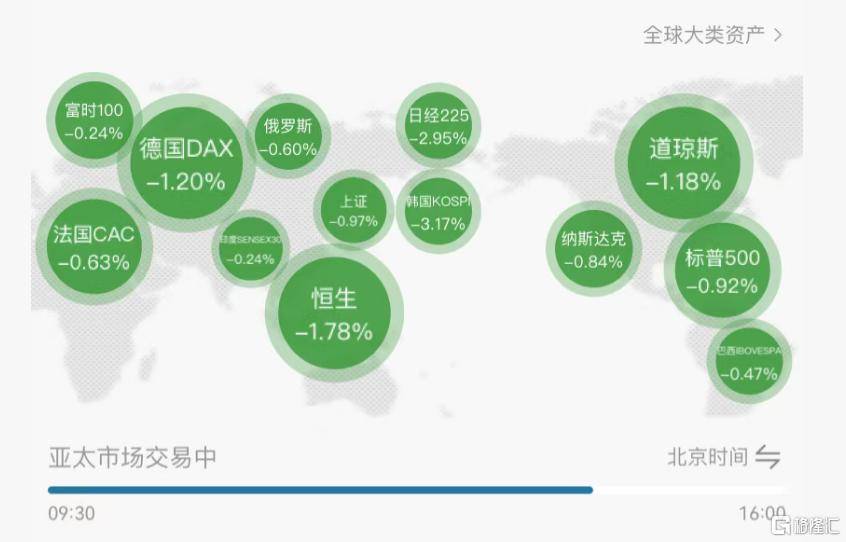
暴跌1400点!高市之“祸”拖垮日股,AI泡沫“杀跌”全球?
Sou Hu Cai Jing· 2025-11-18 06:39
Core Viewpoint - The global financial markets are experiencing heightened anxiety over the technology and AI bubble, particularly ahead of Nvidia's earnings report, which is seen as pivotal for market sentiment regarding AI investments [1][9]. Group 1: Market Performance - Asian markets, particularly Japan and South Korea, are leading declines, with the Nikkei 225 index dropping over 1400 points, a decline of more than 3%, falling below the 49000 mark [3][5]. - The Hong Kong and A-share markets are also experiencing significant downturns, with the Hang Seng Index down over 1.95% and the ChiNext Index down 1.62% [4][3]. Group 2: Technology Sector Concerns - The recent sell-off in the technology sector is attributed to growing concerns over an AI bubble, with the S&P 500 index having risen 38% from its April low to its October high, driven by strong tech stock performance [5][6]. - Major tech stocks, including Tesla, Meta, and Nvidia, have seen significant declines, with Tesla down over 10% and both Meta and Nvidia down over 7% [6][10]. Group 3: Nvidia's Impact - Nvidia is at the center of the current market anxiety, with its upcoming earnings report being crucial for maintaining investor confidence in AI [9][10]. - Notable hedge funds, including Bridgewater, have significantly reduced their holdings in Nvidia, with a nearly two-thirds reduction reported [10][11]. Group 4: Broader Economic Implications - Analysts express concerns that the current market dynamics may be influenced by expectations of tighter monetary policy from the Federal Reserve, which could further impact market stability [20][21]. - Morgan Stanley predicts a "risk reset year" in 2026, with a shift in focus from macroeconomic factors to microeconomic performance, potentially driving strong corporate earnings growth [22]. Group 5: Outlook for Chinese Assets - Foreign investment banks remain optimistic about Chinese assets, with UBS forecasting a continued upward trend in the Chinese stock market by 2026, driven by earnings growth rather than valuation [24]. - Morgan Stanley also anticipates moderate gains in the Chinese stock market, with specific indices expected to see up to 5% upside by the end of 2026 [25].


顶尖AI大会调研“你会做空哪家初创公司?”,排名第一是Perplexity,第二是OpenAI
Hua Er Jie Jian Wen· 2025-11-18 06:31
Core Insights - The AI industry is experiencing growing skepticism despite unprecedented capital inflow, with concerns about the sustainability of valuations for leading startups like Perplexity and OpenAI [1][2] - An informal survey at the "Cerebral Valley" summit revealed that Perplexity and OpenAI are viewed as the most likely companies to fail among those valued over $1 billion [1][2] Group 1: Perplexity - Perplexity has become a symbol of the AI bubble, with its valuation skyrocketing from $14 billion to as high as $50 billion due to rapid fundraising rounds [3] - The company’s spokesperson dismissed the survey results as mere speculation from the summit [3] Group 2: OpenAI - OpenAI, despite being seen as a major winner in the AI revolution, faces concerns over its massive infrastructure spending commitments, which reportedly could reach trillions of dollars [4] - CEO Sam Altman defended the company's valuation against skepticism, emphasizing confidence in its financial strategy [4] Group 3: Market Sentiment - There is a notable divergence in market sentiment, as both Perplexity and OpenAI also appeared on a list of companies investors are willing to bet on, indicating high-risk, high-reward dynamics in the AI sector [5][6] - Anthropic topped the bullish list with a potential valuation of $350 billion, reflecting ongoing interest in AI despite concerns of a bubble [6]
和讯投顾魏玉根:建议先观望,不宜盲目抄底
Sou Hu Cai Jing· 2025-11-18 05:38
Core Insights - The market appears to be stable with only a 0.56% decline in indices, but this is largely supported by major brokerages, masking the poor performance of individual stocks [1] - Over 4,000 stocks declined, with more than 1,000 experiencing drops exceeding 3%, and 24 stocks hitting the daily limit down [1] - Popular sectors like lithium batteries faced significant sell-offs, with lithium carbonate prices rising sharply before plummeting, and many stocks in this sector dropping over 10% [1] - The day's losses have effectively erased about one-third of the profits made in November [1] - Following the opening of Japanese and South Korean markets, there was a sharp decline with both markets dropping over 3%, indicating a shift in investor sentiment [1] - It is advised not to blindly buy the dip at this moment due to low cost-effectiveness, and a recommendation to observe the market to understand the underlying reasons for the decline [1] - The market downturn may not solely be attributed to factors such as the Federal Reserve's decision not to cut interest rates, the AI bubble in the U.S., the decline in U.S. stocks, and related events in Japan [1]
比特币:美联储与AI泡沫或致其持续下跌
Sou Hu Cai Jing· 2025-11-18 04:40
Core Insights - The Federal Reserve and AI bubble are identified as the two main adverse factors for cryptocurrencies and risk assets before the end of the year [1] - The potential increase in AI-related risks may exacerbate market sentiment regarding cryptocurrencies [1] - Statements from Federal Reserve officials suggest that Bitcoin is likely to continue its downward trend [1]
Kaiko:美联储和AI泡沫的话题是年底前加密货币和风险资产面临的两大主要不利因素
Sou Hu Cai Jing· 2025-11-18 04:10
格隆汇11月18日|Kaiko研究分析师Adam McCarthy表示,美联储和AI泡沫的话题是年底前加密货币和 风险资产面临的两大主要不利因素。AI风险可能会加剧并影响加密货币市场的风险情绪,再加上联储 公开市场委员会官员的言论,比特币很可能持续下跌。 来源:格隆汇APP ...
反其道而行?“黑天鹅之王”现在在卖科技巨头CDS
Xin Lang Cai Jing· 2025-11-18 03:36
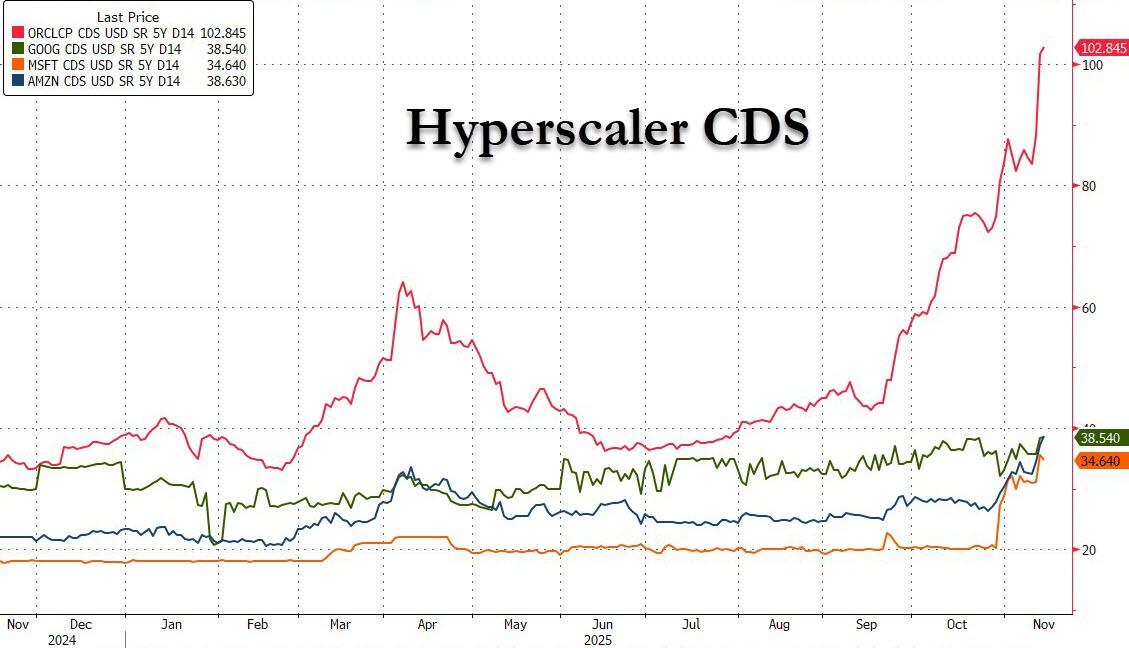
Core Viewpoint - The article discusses the growing trend among financial institutions to hedge against potential risks associated with the rising debt burdens of major tech companies, particularly in the context of the AI investment boom. This is exemplified by the actions of Boaz Weinstein's Saba Capital Management, which is selling credit default swaps (CDS) on companies like Oracle and Microsoft while banks are seeking protection against potential defaults [1][4][7]. Group 1: Market Dynamics - Financial institutions are purchasing CDS to hedge their positions in tech giants' bonds, indicating a rising concern over the potential for defaults amid increasing debt levels [2][4]. - The demand for CDS related to Oracle has surged, with trading volumes reaching approximately $4.2 billion in six weeks, significantly higher than the $200 million from the same period last year [4][5]. - The cost of CDS for Oracle and Alphabet has reached a two-year high, reflecting the heightened demand for credit protection in the tech sector [5]. Group 2: Investment Strategies - Saba Capital is actively increasing risk leverage by betting that credit defaults are unlikely to occur, contrasting with the broader market's cautious stance [2][5]. - The strategy employed by Saba may involve synthetic purchases of bonds from major tech companies, suggesting confidence in the stability of these firms despite market fears [8][9]. - Historical context shows that Weinstein has previously succeeded in similar strategies, indicating a potential for capital structure arbitrage in the current market [9].





黄仁勋抛出5000亿美元AI算力蓝图 英伟达(NVDA.US)站在AI盛世与泡沫争议的十字路口
智通财经网· 2025-11-18 02:04
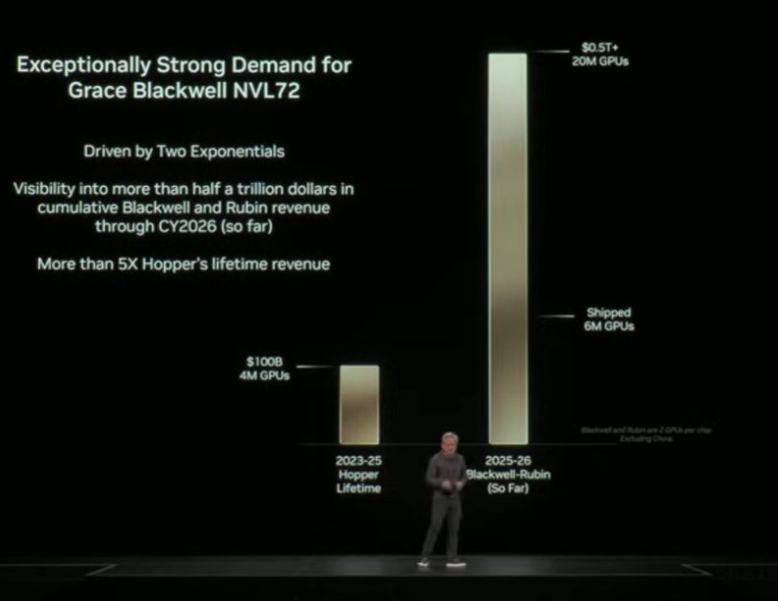
Core Insights - Nvidia's CEO Jensen Huang announced at the GTC conference that the company has up to $500 billion in AI GPU infrastructure orders for the years 2025 to 2026, driven by the Blackwell architecture and the upcoming Rubin architecture [1][3][4] - Huang's statement has sparked significant interest among investors, as it suggests a strong growth outlook for Nvidia amidst ongoing debates about an "AI bubble" in the market [1][2][6] Financial Performance - Nvidia's revenue has grown nearly 600% over the past four years, indicating strong market demand for AI chips [2] - Analysts expect Nvidia's Q3 earnings per share to be $1.25, with revenue around $54.9 billion, reflecting a year-over-year growth of 56% [7] - The anticipated revenue for Nvidia in 2026 is projected to be approximately $286.7 billion, significantly higher than previous Wall Street estimates [7][6] Market Dynamics - The demand for AI computing power is surging globally, supported by substantial investments from the U.S. government and major tech companies [2][4] - Nvidia's market share in the AI GPU sector exceeds 90%, but competition is increasing from companies developing custom AI chips [11][12] - Major clients like Amazon and Google are increasingly promoting their own AI ASIC chips, which could impact Nvidia's market position [11] Strategic Partnerships - Nvidia has made significant investments, including a potential $100 billion investment in OpenAI, which will purchase millions of Nvidia GPUs [10] - The company has also invested $5 billion in Intel to enhance collaboration between their CPU and GPU technologies [10] - Nvidia's recent $1 billion investment in Nokia aims to integrate its AI GPU infrastructure into Nokia's cellular network hardware [10] Future Outlook - Huang expressed confidence in achieving the $500 billion revenue target, indicating a "clear visibility" of this growth [8] - Analysts believe that the ongoing AI capital expenditure trend reflects a persistent demand for AI computing resources, despite concerns about potential overinvestment [10][12] - The potential for the Chinese market remains uncertain, with Nvidia's previous AI chip sales being restricted, but analysts see it as a future opportunity [12]
策略周观点:三季报看点和行业配置启示
2025-11-18 01:15
Summary of Conference Call Notes Industry or Company Involved - The discussion primarily revolves around the Hong Kong stock market (港股) and the A-share market (A 股), focusing on their recent performance and outlook. Core Points and Arguments 1. **Market Weakness Factors** The recent weakness in the Hong Kong stock market is attributed to multiple factors, including concerns over the overseas AI bubble, performance divergence in global growth stocks, tightening global liquidity, and seasonal weakness in southbound capital. These factors collectively exert pressure on the market [1][2][4]. 2. **Sentiment Indicators** Current sentiment indicators suggest that the market has entered a pessimistic zone, with indicators around 40, but have not reached panic levels below 30. This indicates a potential for further adjustments before a recovery [5]. 3. **Future Liquidity Expectations** It is anticipated that liquidity in the U.S. may improve in December, with the potential release of approximately $100 billion from the TGA account and a halt in balance sheet reduction, which could alleviate pressure on reserves [5]. 4. **Sector Performance in Q3 Reports** The Q3 reports for Hong Kong stocks show that around 40% of Hang Seng Index constituent companies have reported earnings, with a year-on-year growth rate of 2.4%, exceeding expectations by 3%. However, excluding the financial sector, earnings expectations have been revised down by 0.7% [8]. 5. **Sectoral Earnings Adjustments** Earnings expectations have been revised upwards for sectors such as non-bank financials, pharmaceuticals, financial dividends, and new consumption, while downward revisions were noted for real estate, automotive, technology hardware, and internet sectors [8]. 6. **A-Share Market Trends** The A-share market has shown a lackluster performance, with defensive value stocks outperforming growth stocks. The market is expected to experience wide fluctuations due to declining interest rate expectations and concerns over the overseas AI bubble [9]. 7. **Investment Strategy Recommendations** A balanced allocation strategy is recommended, focusing on sectors with potential for recovery, such as service consumption, construction, housing services, and home appliances. This approach is suggested due to the lack of strong fundamental support for current market styles [6][7]. 8. **Capacity Cycle Insights** The capacity cycle is expected to stabilize in the first half of next year, with a focus on industries that significantly expanded capacity between 2021 and 2023 but currently have low utilization rates. Industries are categorized based on their proximity to capacity cycle inflection points [13]. Other Important but Possibly Overlooked Content 1. **Market Behavior Influences** The current market behavior is driven more by capital flows and future expectations rather than fundamental data, indicating a speculative trading environment [6]. 2. **Potential for Small-cap Stocks** There are signs of relaxation in private equity securities registration, which may support small-cap stocks, suggesting a potential area of focus for investors [9][10]. 3. **Trends in Q3 Financial Reports** The Q3 financial reports indicate a positive trend with revenue and profit growth showing upward inflection points, suggesting a recovery trajectory that may continue into the future [12]. 4. **Investment Style Adaptation** Historical data suggests that October is typically a period where performance factors are less effective, indicating that a "barbell" strategy, which includes both dividend and small-cap stocks, may be more suitable during such times [11].
Peter Thiel,也清仓了英伟达
3 6 Ke· 2025-11-18 00:28
继软银清仓、桥水大幅减持英伟达后,亿万富翁、硅谷最具影响力的投资人之一Peter Thiel(彼得·蒂 尔)也已清仓离场。 多位投资巨头的接连减持,无疑向狂热的AI市场发出了一个明确的谨慎信号。 根据向美国证券交易委员会(SEC)提交的最新13F持仓报告,Thiel Macro LLC在第三季度完全退出 了对英伟达的投资。 这一举动尤为引人注目,因为它发生在英伟达市值突破5万亿美元、华尔街分析师普遍将其视为"不可动 摇"的领头羊之际。并且,11月19日英伟达即将发布最新财报。 与清仓同步进行的,是一次彻底的投资组合重塑。该基金大幅削减了其美股总持仓,从第二季度的约 2.12亿美元降至仅7440万美元。与此同时,基金建立了在微软和苹果的大额新头寸。 投资组合大换血:清仓AI龙头,总持仓缩水三分之二 Thiel Macro LLC在第三季度的操作堪称激进。文件显示,该基金不仅清仓了占其上一季度投资组合权 重高达40%的英伟达、卖出了全部53.77万股,还抛售了另一笔占权重19%的重要持仓Vistra Energy。 此举与英伟达自身强劲的基本面形成了鲜明对比。据报道,英伟达的季度销售额从393亿美元飙升至467 ...