双碳目标

Search documents
【快讯】每日快讯(2026年3月6日)
乘联分会· 2026-03-06 08:49
Domestic News - The government work report emphasizes that by 2025, China's development will focus on new and superior growth, showcasing vibrant vitality. Key sectors such as high-tech manufacturing and equipment manufacturing have seen value-added growth of 9.4% and 9.2% respectively, with the production of industrial robots and integrated circuits increasing by 28% and 10.9% respectively. The annual production of new energy vehicles has exceeded 16 million, and the number of electric vehicle charging facilities has surpassed 20 million [7] - The Minister of Industry and Information Technology, Li Lecheng, stated that in 2026, the ministry will vigorously promote the dual development of artificial intelligence (AI) and manufacturing, aiming to produce more world-class intelligent products. The focus will be on advancing AI computers, AI smartphones, and smart home devices to better meet the public's needs [8] - A new group standard for "Requirements and Test Methods for Drive Motor Systems of Flying Cars" has been approved, filling a gap in the domestic flying car industry regarding core power components and providing key technical support for cross-industry integration [9] - BYD has launched its second-generation blade battery, which has a 5% increase in energy density. The charging time from 10% to 70% is 5 minutes, and from 10% to 97% is 9 minutes. Models equipped with this battery include several new vehicles with a range of up to 1,036 km [10] - NIO has established a battery research and development base in Shanghai, focusing on core technology development and holding nearly 10,000 patents [11] - Zeekr has announced plans to launch four new models in the second quarter of 2026, including a brand new model, Zeekr 8X [12] - GAC Aion's RT battery swap version will be launched in April, with a battery swap time of just 99 seconds, significantly faster than refueling [13] - The Firefly brand from NIO has officially entered the Thai market, expanding its presence to 10 countries globally [14] Foreign News - The European Union has officially approved the revised European Climate Law, which mandates a 90% reduction in greenhouse gas emissions by 2040 compared to 1990 levels [16] - Tata Motors and Stellantis have signed a memorandum of understanding to expand their long-term cooperation into hybrid system development and lightweight engineering for engines and battery components [17] - BMW will adopt smart connectivity technology from Japan's NTT Docomo for its new electric vehicle models set to launch in 2026, marking a significant shift in its connectivity infrastructure [18] - Subaru will release a new electric SUV, "Trailseeker," developed in collaboration with Toyota, on April 9 in Japan [19] Commercial Vehicles - Geely's sub-brand Riddara plans to assemble its pure electric pickup RD6 in Thailand to meet local electric vehicle demand and establish Thailand as a regional production hub for the ASEAN market. The RD6 is expected to launch in Thailand in October 2024 [21] - Hunan province will build 48 heavy-duty truck charging and battery swap stations across 24 highway service areas, aiming to create a comprehensive green energy supply system for heavy-duty trucks [22] - A new group standard for "General Technical Conditions for Functional Unmanned Vehicles" has been approved, marking the first comprehensive technical standard in the field of functional unmanned vehicles in China [23] - Li Shufu, chairman of Geely, proposed promoting methanol electric trucks to support the green transition in the freight sector, highlighting the high energy consumption and emissions associated with traditional diesel engines [24][25]



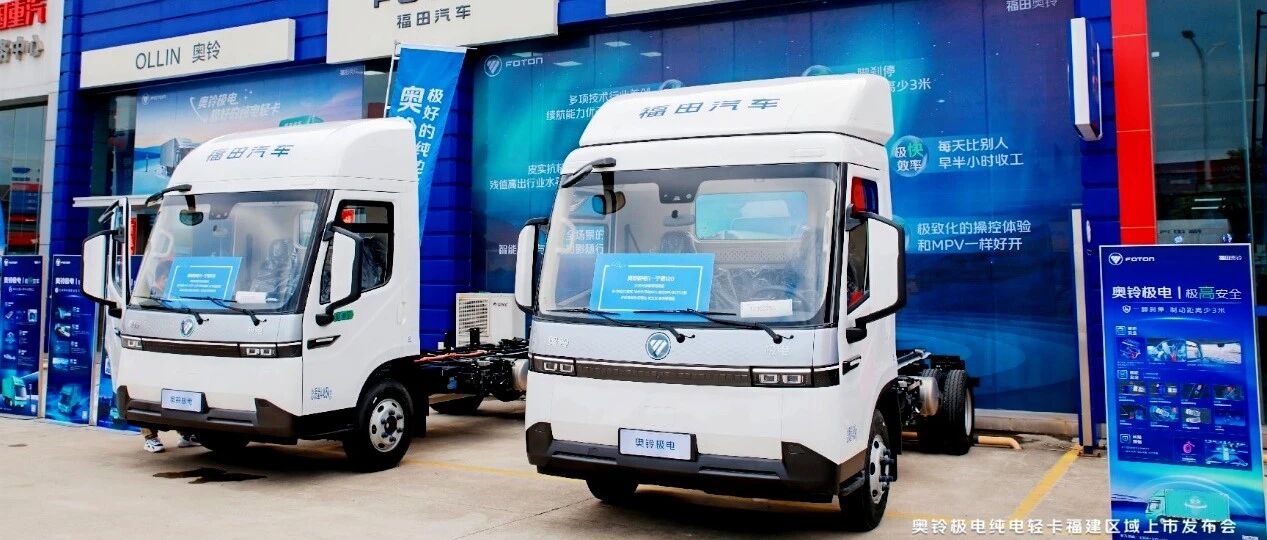
奥铃极电福建上市 开启东南沿海高效物流新篇章!| 头条
第一商用车网· 2026-03-06 08:11
Core Viewpoint - The launch of the Aoling Extreme Electric pure electric light truck marks a significant step towards green logistics in the southeastern coastal region of China, aligning with the country's dual carbon goals and addressing the urgent demand for cost-effective logistics solutions [1][3][12]. Group 1: Product Features and Innovations - The Aoling Extreme Electric light truck is developed on the Foton Qixing platform, representing a technological leap from traditional "oil-to-electric" platforms, transitioning from the 1.0 era of basic functionality to a 2.0 era focused on user value [6]. - The vehicle features a rapid charging capability, allowing for a 20% to 80% charge in just 18 minutes, and utilizes advanced thermal management technology to enhance charging speed [8]. - It is equipped with the latest CATL battery technology, offering a range of 300 to 607 kilometers, significantly reducing range anxiety for users [8]. - The truck is designed for high reliability, with a B10 lifespan of up to 600,000 kilometers and an IP68 rating for water resistance, validated through rigorous testing in various environmental conditions [10]. Group 2: Market Strategy and User Benefits - The launch event highlighted the strategic choice of Quanzhou as a logistics hub, leveraging its robust transportation network and logistics industry to meet diverse user needs [5]. - Aoling Extreme Electric aims to provide comprehensive solutions for various logistics scenarios, enhancing operational efficiency for users in urban and intercity transport [5][12]. - The company offers exclusive purchase and service benefits for users in the Fujian region, including financial subsidies and lifetime warranties on key components for the first 2,000 owners [12]. - The strategic partnerships formed with local logistics companies during the launch are intended to bolster green, intelligent, and efficient logistics support in the region [12]. Group 3: Industry Context and Future Outlook - The ongoing trend towards green transformation in urban logistics is driving demand for electric vehicles, positioning Aoling Extreme Electric as a competitive option in the market [2][3]. - The company is expected to gain traction among urban distribution users from South China to the East Coast, thanks to its high cost-performance ratio and user-centric design [14].

下一代工业生物技术低成本生产高性能PHA--4月1日杭州【生物基化学品与材料专场】免费报名中!
synbio新材料· 2026-03-06 06:26
Core Viewpoint - The article emphasizes the importance of bio-based chemicals and materials as a key pillar of the bio-manufacturing industry, highlighting their potential to replace traditional petroleum-based products in various sectors such as packaging, textiles, and automotive, driven by global green transition and carbon neutrality goals [2]. Event Details - The "5th China Synthetic Biology and Bio-Manufacturing Conference" will be held in Hangzhou from March 31 to April 1, 2026, with a focus on bio-based chemicals and materials [3]. - The conference is expected to gather around 1,000 participants and is organized by synbio深波, with support from various media outlets [3]. Forum Setup - The conference will feature multiple sessions, including a dedicated session on bio-based chemicals and materials, aimed at fostering high-quality development in the industry [5]. - Notable topics include low-cost production of high-performance PHA, key technologies for non-grain straw sugar development, and the research and application of bio-based materials like FDCA and PEF [5][6]. Key Speakers - Zhang Kechun, a professor at Westlake University and founder of Element Driven, will lead discussions on bio-based materials [11]. - Lan Yuxuan, co-founder of Beijing Microstructure Biotechnology Co., will present on next-generation industrial biotechnology for PHA production [14]. - Luo Zhao, Deputy General Manager of Lif Bio, will discuss the application of furfural bio-based materials in various industries [17].

光储月话-HALO策略与地缘冲突下-光储的反转与成长以及电力的重估
2026-03-06 02:02
Summary of Key Points from Conference Call Records Industry Overview - The conference call primarily discusses the solar energy and power generation sectors, focusing on the photovoltaic (PV) industry and its supply chain dynamics, particularly in the context of geopolitical tensions and market strategies like the "Halo" strategy. Core Insights and Arguments 1. **Silver Price Impact on Component Costs**: The price of silver significantly affects component costs, with a change of 1,000 CNY/kg in silver price corresponding to a cost change of 0.01 CNY/W. The foundation for stabilizing component prices in 2026 is established [1][2][3]. 2. **Production Capacity and Cost Reduction**: The introduction of silver-copper technology is expected to reduce costs by 0.02-0.03 CNY/W as companies like Jinko and Longi plan to upgrade production lines to produce 20-40 GW of silver-copper components by mid-2026 [1][3]. 3. **Silicon Material Prices**: High inventory levels (400,000 tons) are suppressing silicon material prices, with N-type silicon prices dropping by 6.58% month-on-month. The downward pressure on prices remains, but the decline is constrained by cost-based pricing [1][10]. 4. **Seasonal Demand in Energy Storage**: The energy storage sector is experiencing unexpected demand growth in Q1 2026, with companies like Airo increasing production by 80% due to rising energy costs driven by geopolitical factors and subsidies in Europe and Australia [1][15]. 5. **"Halo" Strategy Emergence**: The "Halo" strategy emphasizes investment in heavy assets with low obsolescence rates, which are seen as defensive against AI disruption. This strategy is gaining traction among investors seeking stable returns [1][30][31]. 6. **Profitability of Thermal Power**: Thermal power profitability may decline by 20%-30% in 2026 due to falling electricity prices, but the return on equity (ROE) is expected to remain sustainable at around 7% due to the scarcity of quality existing units as carbon peak approaches [1][37]. 7. **Photovoltaic Glass Inventory**: Inventory levels for photovoltaic glass have reached a high of 41.68 days, with expectations of hitting historical highs in March-April 2026. Price increases are limited, and profitability improvements depend on overseas demand adjustments [1][26]. 8. **Market Dynamics and Pricing**: Domestic component prices have stabilized around 0.9 CNY/W, while overseas prices have risen to 11.5-12 cents/W. The price increase is driven by commodity cost pressures, particularly from silver, and is expected to remain stable throughout 2026 despite potential short-term fluctuations due to policy changes [2][3]. 9. **Supply Chain Adjustments**: The supply chain is adapting to geopolitical tensions, with concerns about delivery disruptions in the Middle East being mitigated by existing factory setups in the region. The overall impact on costs and delivery is deemed manageable [4][5]. 10. **Investment Opportunities**: Companies that can effectively reduce costs and realize premium pricing through technological advancements are expected to outperform. The focus is on companies that can achieve profitability first, particularly in the context of the evolving market landscape [3][18]. Additional Important Insights - **Geopolitical Tensions**: The ongoing geopolitical conflicts are influencing energy prices and market dynamics, particularly in Europe, where energy security concerns are driving demand for energy storage solutions [1][15][25]. - **Regulatory Environment**: The regulatory landscape is evolving, with suggestions to integrate solar manufacturing into national energy planning and to include polysilicon in energy security reserves, which could enhance industry resilience [14]. - **Long-term Market Trends**: The long-term outlook for the energy storage market remains positive, with expectations of over 30% growth driven by low penetration rates and increasing energy security demands in regions reliant on energy imports [15][16]. - **Valuation and Performance Recovery**: The valuation of utility stocks is expected to recover as the market shifts towards recognizing the value of heavy assets, particularly in light of the "Halo" strategy's principles [30][42]. - **Focus on Key Players**: Recommendations for investment focus on leading companies in waste-to-energy, thermal power, and renewable energy sectors, particularly those with strong cash flow and dividend potential [43]. This summary encapsulates the key points discussed in the conference call, highlighting the dynamics of the solar energy industry, the impact of geopolitical factors, and the strategic shifts in investment approaches.
两会-发改委专家解读政府工作报告
2026-03-06 02:02
Summary of Key Points from the Conference Call Industry or Company Involved - The conference call primarily discusses the macroeconomic outlook and government policies in China for 2026, focusing on GDP growth, fiscal and monetary policies, and industry regulations. Core Points and Arguments 1. **GDP Growth Target for 2026**: The GDP growth target is set in a range of 4.5% to 5%, with an actual growth rate of 5% but a nominal growth rate of only 4% due to weak pricing, indicating a shift in policy focus towards "bottoming out and recovery" and supply-demand rebalancing [1][5][20]. 2. **Fiscal Deficit and Special Bonds**: The fiscal deficit rate is maintained at 4%, with the deficit scale increasing to 14 trillion yuan. Special government bonds of 1.3 trillion yuan will continue, along with 250 billion yuan in consumer subsidies and 800 billion yuan in policy financial tools to stimulate investment [1][4][8]. 3. **Regulation of "Involution" Competition**: The government emphasizes the need to regulate "involution-style competition" and has elevated the "National Unified Market Construction Regulations" to a State Council level, prohibiting local governments from maliciously subsidizing investments [1][4][11]. 4. **Innovation and R&D Investment**: The report prioritizes innovation, aiming for an average annual growth of 7% in R&D investment, which is significantly higher than GDP growth. The R&D intensity target is set at 2.8 [1][6][30]. 5. **Dual Carbon Goals**: The focus shifts from "energy consumption dual control" to "carbon emission dual control," with a target to reduce carbon emission intensity by 17%. A national low-carbon fund will be established, focusing on hydrogen energy and green fuels [1][7][31]. 6. **Real Estate Market Dynamics**: The real estate policy will adhere to a "city-specific" approach, with new and second-hand housing prices continuing to diverge. The market is still in a downward trend, and the recovery of real estate prices may lag behind CPI/PPI [1][18][20]. 7. **Investment and Consumption Policies**: The government plans to enhance investment through a combination of budgetary funds and special bonds, with a total investment scale exceeding 2 trillion yuan. The aim is to stabilize and improve fixed asset investment performance in the first quarter [1][8][28]. 8. **Employment and Social Stability**: The employment target remains at 12 million, with significant pressure, especially for college graduates. Various new employment forms and public welfare positions will be utilized to expand employment opportunities [1][29]. Other Important but Possibly Overlooked Content 1. **Market Monitoring and Price Control**: The government will continue to monitor key industries and products, with monthly price disclosures and potential guidance during significant price fluctuations [1][4][19]. 2. **Long-term Strategy for Domestic Demand**: The government plans to introduce a long-term strategy for expanding domestic demand, including a rural income growth plan and a potential "Domestic Demand Expansion Strategy Implementation Plan" for 2026-2030 [1][9]. 3. **Regulatory Framework for Local Government Subsidies**: New regulations will clarify what local governments can and cannot do regarding investment subsidies, shifting focus towards public goal-oriented investments [1][13]. 4. **Investment in New Industries**: The focus will be on new infrastructure and future industries, with significant funding allocated for equipment updates and technological innovation [1][10][28]. 5. **Potential Risks of Stagflation**: There are concerns about stagflation, where rising costs could lead to inflation without corresponding demand improvements, impacting economic growth [1][20][25]. This summary encapsulates the key points discussed in the conference call, providing insights into the economic outlook and policy directions for 2026.
嘉澳环保20260305
2026-03-06 02:02
Summary of the Conference Call for Jiaao Environmental Protection Industry Overview - The focus is on the SAF (Sustainable Aviation Fuel) and HVO (Hydrotreated Vegetable Oil) production industry, with specific emphasis on the company's production capabilities and market dynamics. Key Points and Arguments - **Production Targets**: The SAF/HVO flexible production line aims for a shipment target of 374,000 to 375,000 tons in 2026, requiring a 100% load rate starting from March to meet this goal [2][5]. - **SAF Pricing Dynamics**: SAF prices are driven by oil prices and seasonal demand in Europe, showing a tendency to rise without decline. The UK’s blending ratio is expected to increase from 2% to 3.6% in 2026 [2][4]. - **Cost Structure**: The processing cost per ton is approximately 2,000 RMB, including depreciation of 500-600 RMB. The core competitive advantage lies in the conversion rate, which is expected to improve with the second phase of production [2][11][12]. - **Second Phase Capacity**: The construction of the second phase with a capacity of 500,000 tons depends on the clarity of policies in 2026, with capital expenditure expected to decrease by 40%-50% compared to the first phase [2][19]. - **Raw Material Procurement**: The company has shifted to a bidding model for raw material procurement, covering 100-200 suppliers, with pricing based on market conditions [2][9]. - **Customer Concentration**: The customer base is highly concentrated, primarily consisting of 4-5 international energy giants such as BP and Shell [2][18]. - **Market Price Observations**: The FOB price in China is more aligned with spot prices, while European prices reflect forward pricing. Future price trends should focus on European price movements [2][8]. Additional Important Insights - **Production Cost Components**: Apart from raw material costs, unit production costs are significantly influenced by auxiliary materials and energy consumption, particularly electricity and natural gas [2][11]. - **Impact of Geopolitical Factors**: Recent price rebounds in SAF are attributed to geopolitical tensions affecting oil prices and seasonal demand increases in Europe [2][4]. - **Regulatory Environment**: The company is monitoring regulatory changes, particularly in the EU and UK, which could impact blending ratios and overall demand [2][4][17]. - **Future Supply Expectations**: There is uncertainty regarding the actual supply release of domestic SAF, with a need for ongoing monitoring of data and developments [2][14]. - **Traditional Products Outlook**: The traditional plasticizer business is expected to maintain its current state, with no expansion plans for the first-generation biodiesel products [2][21]. This summary encapsulates the critical aspects of the conference call, highlighting the company's strategic direction, market conditions, and operational insights.

绿氢项目产得出、用不上、不赚钱,代表委员建议配套专项电价政策
第一财经· 2026-03-05 14:11
Core Viewpoint - Hydrogen energy is recognized as a crucial pathway to achieve the "dual carbon" goals, with significant government support and initiatives aimed at fostering the green hydrogen industry [3]. Group 1: Government Initiatives and Industry Development - The 2026 government work report emphasizes the establishment of a national low-carbon transition fund to cultivate new growth points in hydrogen energy and green fuels [3]. - Multiple representatives at the national two sessions have proposed recommendations for the development of hydrogen energy, focusing on the green hydrogen-based energy industry [3]. - By the end of 2025, China plans to have 860 wind and solar hydrogen production projects with a total hydrogen production capacity of approximately 10 million tons per year [3]. Group 2: Challenges in Green Hydrogen Projects - The green hydrogen industry faces systemic obstacles, including an inefficient electric-hydrogen coupling mechanism, leading to issues where green hydrogen projects produce hydrogen but cannot utilize it profitably [4][5]. - Key challenges include high comprehensive costs of off-grid hydrogen production, weaker market competitiveness compared to gray hydrogen, and misalignment between renewable energy policies and investment decision-making processes [3][5]. - The economic viability of green hydrogen projects is hindered by declining revenue levels, increased uncertainty in investment returns, and rising cost burdens from demonstration projects [5][6]. Group 3: Economic Viability and Recommendations - The operational model of green hydrogen projects primarily relies on self-consumption, with surplus electricity sales providing essential support for balancing investment costs [5]. - Recent policy changes have led to a significant decline in expected revenue from surplus electricity sales, with a 40% drop in electricity price expectations due to market competition and declining trading prices [5][6]. - Recommendations include improving the electric-hydrogen coupling mechanism, ensuring a higher proportion of renewable energy for green hydrogen projects, and implementing supportive pricing policies to stabilize long-term revenue expectations [6].

全国人大代表韩峰:推动生物质燃料产业多元协同发展
中国能源报· 2026-03-05 13:23
Core Viewpoint - Biomass fuel is a renewable energy source with low carbon attributes throughout its lifecycle, applicable in various sectors such as aviation, shipping, road transport, and industrial heating, playing a crucial role in achieving carbon neutrality goals and transforming the energy structure [2]. Group 1: Industry Development - China's biomass fuel production is projected to reach 22 million tons by 2024, indicating that while the industry has begun to scale, it still faces challenges such as high costs, an incomplete policy framework, and unstable raw material supply [2]. - The industry needs to transition towards large-scale and high-end development, necessitating breakthroughs in core technologies and optimized industrial layouts [2]. Group 2: Policy Recommendations - A comprehensive policy support system is essential, including a detailed development plan aligned with the 14th Five-Year Plan, setting clear consumption targets and mandatory application ratios based on EU standards [3]. - Financial support policies should be optimized, including the establishment of a special fund for biomass fuel industry development and differentiated subsidies for various product categories [3]. Group 3: Raw Material Supply - A diversified supply system for raw materials must be established, with enterprises leading the creation of a standardized raw material recovery system and a full-chain regulatory mechanism [3]. - The recovery of kitchen waste oil and agricultural and forestry waste should be integrated into relevant performance indicators, supported by fiscal subsidies to promote the large-scale development of recovery enterprises [3].

全国人大代表付胜利:加快构建全国锂电池多式联运体系
中国能源报· 2026-03-05 12:53
End 对此, 全国人大代表, 中国石化荆门分公司 机电仪中心电气维修首席技师付胜利 建议: 一是加强国家顶层设计与标准统一,打通铁路运输主动脉。 制定并颁布国家统一的 锂电池铁路运输全链条技术标准、安全规范和操作规程,消除跨地区、跨路局的运输 政策壁垒。规划锂电池铁路运输骨干通道网络,优先连接中西部重点生产基地与东部 沿海消费市场、主要出口港口,推动开行常态化、班列化的锂电池专列或固定编组车 厢。研究推动锂电池通过中欧班列等国际铁路联运的安全运输方案。 二是创新安全监管模式,推动公路运输豁免试点扩容与规范。 在严格评估首批试点 成效基础上,审慎、有序扩大道路运输豁免试点的地域范围、产品品类和企业范围, 特别是惠及符合条件的中小企业。研究制定《锂电池道路运输有条件豁免全国管理办 法》,统一全国豁免条件下的产品技术门槛、企业准入、安全管理流程及动态监管要 求。强化数字化、智能化全程监管,建设或升级国家级危险货物道路运输安全监管信 息平台。 三是建设国家级协同平台,促进数据互联与规则衔接。 推动建设国家级锂电池供应 链公共服务与数据交换平台,促进主要生产企业、多式联运经营人、铁路、港口、物 流企业间的关键物流数据 ...

全国政协委员马永生:统筹氢能产业链科产融合
中国能源报· 2026-03-05 09:26
发展氢能是实现"双碳"目标的重要路径。当前,我国氢能产业规模稳居全球第一, 2 025年产量超3700万吨,其中绿氢产能超2 5万吨/年,电解槽等核心装备制造能力跃 居世界前列。绿氢应用正由交通示范向炼化、化工、冶金等高耗能行业深度渗透,有 效支撑工业脱碳,同时作为柔性负荷为电网调峰提供支撑。截至2 0 2 5年底,全国规 划风光制氢项目达8 6 0个,制氢规模约1000万吨/年。 然而,我国氢能产业迈向规模化发展面临系统性梗阻,一是储运环节结构性薄弱,产 销严重脱节。二是配套规划与管理机制滞后,缺乏国家层面的专项建设规划与技术标 准 。 三 是 电 氢 耦 合 机 制 不 畅 , 导 致 绿 氢 项 目 产 得 出 、 用 不 上 、 不 赚 钱 。 四 是 产 业 链"孤岛化",缺乏全链条的系统性集成。对此, 全国政协委员、中国工程院院士马 永生 建议,统筹氢能产业链科产融合,推动氢能尽快实现规模化高质量发展。 欢迎分享给你的朋友! 一是强化顶层设计,构建国家氢能基础设施一张网。 建议将氢能管网纳入国土空间 规划"一张图"及国家能源基础设施建设专项规划,编制国家中长期氢能管网规划,统 筹布局"西氢东送"战 ...