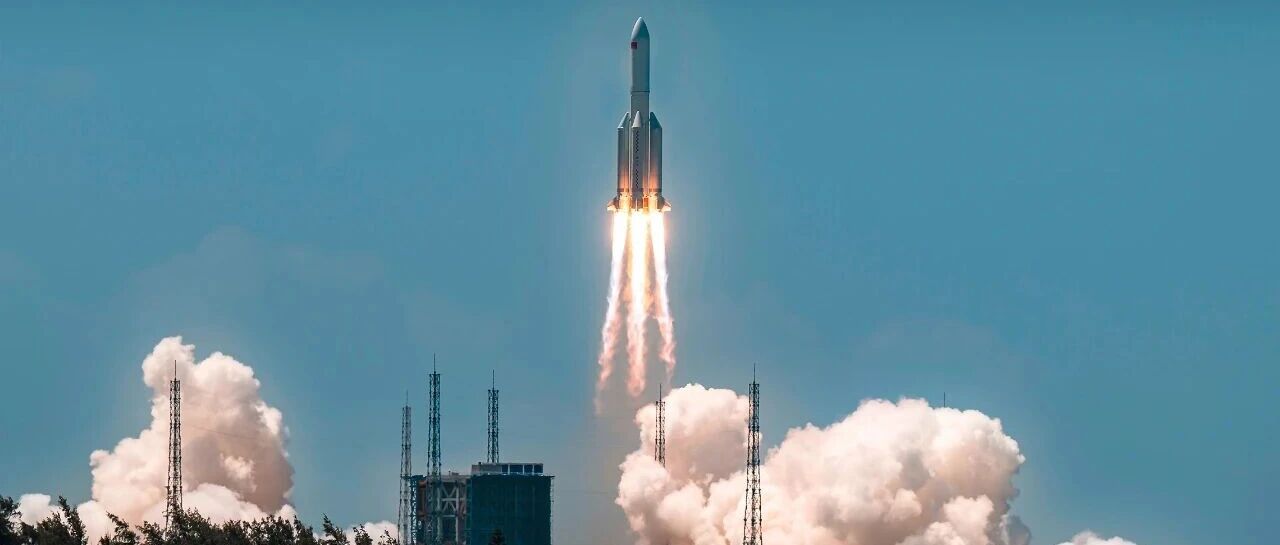
可回收火箭

Search documents
商业航天专家交流系列电话
2025-12-01 16:03
Summary of the Conference Call on China's Commercial Space Industry Industry Overview - The conference call focused on the **Chinese commercial space industry**, highlighting the competition among various companies developing **reusable rockets** such as **Zhuque-3**, **Tianlong-3**, **Shuangqiuxian-3**, **Xingyun-1**, and **Long March 12** [1][2][4] - The industry is at a critical juncture of **technological breakthroughs** and **industrialization** [2] Key Points and Arguments - **Zhuque-3** has faced delays not only due to environmental factors but also due to strategic adjustments by the **National Space Administration** and technical reviews, with **Long March 12** set to undertake the initial launch [1][4] - The **fuel choice** for Chinese reusable rockets is leaning towards **liquid oxygen and methane**, which is cheaper compared to **liquid oxygen and kerosene** used by SpaceX [4][18] - Current launch costs for the **Long March series** are approximately **70,000-100,000 RMB/kg** (around **10,000-14,000 USD/kg**), while the goal for new reusable rockets is to reduce this to **20,000-30,000 RMB/kg** (approximately **2,800-4,200 USD/kg**) [4][5] - The **expected increase** in launch numbers for 2026 is projected to be **2-3 times** that of 2025, with a **5-fold increase** in capacity, driven by various satellite projects and advancements in reusable rocket technology [3][21] Technical Differences and Challenges - Reusable rockets differ significantly from traditional rockets in terms of **structural design**, **engine capabilities**, and **control systems** [6][8] - The **engine** of reusable rockets must support **variable thrust**, multiple ignitions, and precise landing controls, which presents higher technical demands [6][11] - The **fairing**, a critical component, requires materials that are **lightweight** and can withstand high temperatures, typically made from **carbon fiber composites** and **aluminum honeycomb structures** [3][9][10] Market Competitiveness - The **Chinese commercial space sector** aims to enhance its global competitiveness by narrowing the cost gap with international players like SpaceX, which has significantly lower launch costs [5][22] - Companies like **Nanjing Aerospace** and **Deep Blue Aerospace** are leading in the development of **3D printing technologies** for rocket engines, which can reduce costs by about **40%** and improve production efficiency [13][14] Future Outlook - The establishment of the **Commercial Space Administration** by the National Space Administration indicates a strategic focus on the development and launch of commercial space projects [4] - The industry faces challenges in ensuring successful multiple launches in 2026 and improving production capabilities, but ongoing collaborations between governments and commercial companies are expected to address these limitations [22]
商业航天司官宣!回顾前期天上能源及商业火箭推荐观点
2025-12-01 00:49
Summary of Key Points from the Conference Call Industry Overview - The conference call focuses on the commercial aerospace industry, particularly developments in satellite launches and space computing capabilities [1][2][4]. Core Insights and Arguments - **Satellite Launches**: China Star Network is accelerating satellite launches, with an expectation to complete around 120 first-generation satellites by the end of 2025. A total of 324 enhanced satellites will be launched in the coming years, with a large-scale tender for second-generation satellites expected to start in early 2026, potentially reaching close to 1,000 satellites [1][2][3]. - **Production Capacity**: The Hainan Wenchang Aerospace City is set to produce its first satellite by the end of this year, aiming for a production capacity of 100 rockets and 1,000 satellites by 2027, and increasing to 150 rockets and 1,500 satellites by 2028 [1][3]. - **Reusable Rocket Technology**: Breakthroughs in reusable rocket technology are anticipated by 2027, which will significantly reduce launch costs. The cost per kilogram for heavy rockets could drop to a few hundred dollars with multiple recoveries [2][3][12]. - **Space Data Centers**: Beijing's "Starry Future" and "Orbital Dawn" are developing a space data center with a capacity of 1 GW, planned to be operational in phases from 2025 to 2035. The first phase aims for 200 kW and 1,000 PFlops of computing power [4][5]. - **Commercialization of Space Computing**: Domestic space computing has begun commercial operations, with "Trinity Computing" deploying 12 satellites with 5 PFlops of computing power, planning to expand to 2,800 satellites for a total of 10 billion FLOPS [4][5]. Additional Important Content - **Advantages of Space Data Centers**: Space data centers can operate 24/7 using solar energy, achieving five times the efficiency of ground-based systems. Their deployment and operational costs are significantly lower, with costs being one-fourth of ground-based centers [9][10]. - **Challenges in Space Computing**: The demand for data processing in space is increasing, with traditional methods being inefficient. The need for onboard processing to reduce data transmission back to Earth is critical [7][8]. - **Investment Opportunities**: Companies involved in solar energy systems for space data centers, such as Shanghai Port Bay and Tianzhou Optoelectronics, are highlighted as potential investment opportunities. The demand for solar arrays is expected to surge, with significant market potential for companies providing these technologies [10][18]. Conclusion - The commercial aerospace industry is poised for significant growth, driven by advancements in satellite technology, reusable rockets, and space computing capabilities. Investors are encouraged to focus on companies that are positioned to benefit from these trends, particularly in the areas of satellite production and space data center development [11][16][17].




商业航天那些事儿
2025-12-01 00:49
Summary of the Conference Call on China's Commercial Space Industry Industry Overview - The Chinese commercial space industry is seen as a significant supplement to the traditional state-owned aerospace sector, benefiting from strong policy support despite its late start in 2015 [1][2][3] - The industry is transitioning from a narrative-driven phase (1.0) to a product and service-oriented phase (2.0), focusing on cost, quality, and innovation [2] Key Insights and Arguments - **Market Dynamics**: The satellite subsystem market shows significant disparities, with state-owned units dominating areas like structure and thermal control, while emerging companies like Hot Number Technology and Micro Cold are gaining traction [1] - **Propulsion Systems**: Commercial Hall effect propulsion systems are priced around 1 million yuan per set for 500 kg satellites, but domestic technology lags behind SpaceX, which uses cheaper propellants [1][9] - **Energy Systems**: State-owned suppliers dominate the energy systems market, but companies like Electric Science Blue Sky and Fuxi Starry Sky are emerging [1][10] - **Flexible Solar Wings**: The future trend is towards flexible solar wings, priced at 500,000 to 550,000 yuan per square meter, which are lighter and more suitable for multi-satellite launches compared to traditional rigid solar wings [1][12] - **SADA Deployment Mechanisms**: The market for SADA deployment mechanisms is primarily held by state research institutes, but commercial suppliers like Micro Differential Aerospace are also participating, with mainstream products priced around 1.4 to 1.5 million yuan per set [1][13] Emerging Companies - Notable emerging companies in the rocket sector include Blue Arrow, Tianbing, and China Aerospace Science and Industry Corporation, while in the satellite sector, companies like Galaxy Aerospace and Changguang Satellite are making strides [6] - Specific subfields are seeing progress from companies like Tianjin Aisda in structural products and Hot Number Technology in thermal control [6] Cost Structure and Challenges - The cost structure of rockets shows that engines account for about 50% of total costs, with structures at 25%, and electronics at around 10% [2][24] - The domestic reusable rocket development is still in the R&D phase, with companies like Blue Arrow and Tianbing making rapid progress, aiming for launches by 2025 [2][25] - The cost of launching a kilogram with state-owned rockets is currently around 60,000 yuan, while commercial satellites aim to reduce this to 50,000 to 60,000 yuan [2][29] Future Directions - The Chinese commercial space industry aims to enhance product quality and reduce costs while improving service capabilities, leveraging state support and advanced technologies [8] - The industry is expected to continue evolving towards a more competitive and innovative landscape, with new companies contributing diverse and efficient solutions [8] Additional Insights - The development of satellite payloads varies significantly, with remote sensing cameras and SAR payloads showing different market dynamics and pricing structures [17][18] - Laser communication technology is becoming standard in modern satellites, with several companies working on high-performance laser terminals to enhance data transmission efficiency [18] - The market for satellite routers is emerging, with both state-owned and commercial companies competing without a clear leader [19] This summary encapsulates the key points discussed in the conference call regarding the current state and future prospects of China's commercial space industry, highlighting the competitive landscape, cost structures, and emerging technologies.
航天局印发重磅文件,国内首款可回收火箭也将首飞
Xuan Gu Bao· 2025-11-25 23:14
Group 1: Industry Developments - The National Space Administration has issued an action plan for the high-quality and safe development of commercial space from 2025 to 2027, encouraging the strengthening of satellite and rocket manufacturing, expanding application services, and enhancing measurement and control operations [1] - The Beijing Blue Arrow Aerospace's Zhuque-3 rocket is set for its maiden flight on November 29, 2023, marking a significant milestone in commercial space endeavors [1] - Zhuque-3 is the world's first all-stainless steel liquid oxygen-methane rocket, designed for reusability and future scalability, with capabilities comparable to SpaceX's Falcon 9 [1] Group 2: Company Insights - Parker New Materials is focusing on developing new generation lightweight alloys such as aluminum-lithium and magnesium alloys to significantly reduce structural weight and enhance rocket reusability, with Blue Arrow Aerospace as a key client [2] - Aerospace Morning Light has developed metal hoses for critical fuel delivery systems in rockets, with Blue Arrow Aerospace also being one of its clients; the company has recently completed assembly of the largest domestic nuclear fusion test device's key component [2]
多因素影响,军工板块再度起飞!机构预测多股全年业绩大增
Zheng Quan Shi Bao· 2025-11-17 05:28
Core Viewpoint - The defense and military industry is expected to experience another upward trend due to multiple influencing factors, including geopolitical risks, technological advancements, and policy support [1]. Group 1: Market Performance - The military sector has continued its strong performance, with notable stocks such as Aerospace Development (000547) and Great Wall Military (601606) showing significant gains, including a net inflow of 1.828 billion yuan [1]. - The average stock price increase for military concept stocks this year is 30.94%, with North China Long Dragon leading with a 342.24% increase [2]. - Six military concept stocks have received institutional research attention in November, indicating strong interest from investors [2]. Group 2: Company Performance - Major companies in the military sector, including China Shipbuilding (600150) and AVIC Chengfei (302132), reported net profits exceeding 1 billion yuan in the first three quarters [3]. - Several companies, such as Zhenray Technology and North China Long Dragon, have turned losses into profits, with some achieving over 100% year-on-year profit growth [3]. - Institutions predict that nine military stocks will see significant profit increases by 2025, with expected growth rates exceeding 100% [3]. Group 3: Future Outlook - The military industry is poised to benefit from rising geopolitical risks, modernization goals, and expanding military trade markets, with high-end weapon exports expected to increase [1]. - Technological innovations, such as 3D printing and recyclable rockets, are anticipated to drive growth in the sector [1].


“朱雀三号”液体可回收火箭11月中下旬首飞 马斯克盛赞
Sou Hu Cai Jing· 2025-11-10 02:10
Core Insights - The "Zhuque-3" rocket is set to make its maiden flight in mid-November, marking a significant milestone as China's first operational reusable launch vehicle [1] - "Zhuque-3" is the world's first all-stainless steel liquid oxygen-methane rocket, designed for enhanced reusability and future scalability, similar to SpaceX's "Starship" [1] - The launch cost target for "Zhuque-3" is under 20,000 yuan per kilogram, comparable to SpaceX's Falcon 9, which costs approximately 3,000 USD per kilogram [1] Industry Impact - The debut of "Zhuque-3" has garnered significant attention both domestically and internationally, including interest from SpaceX founder Elon Musk, who noted its potential to disrupt the reusable rocket market [3] - Musk predicts that "Zhuque-3" could surpass the Falcon series within five years if development proceeds smoothly [3] - The Chinese aerospace sector is experiencing rapid growth, with other projects like Tianbing Technology's "Tianlong-3" and CAS Space's "Lijian-2" also preparing for their maiden flights [5]
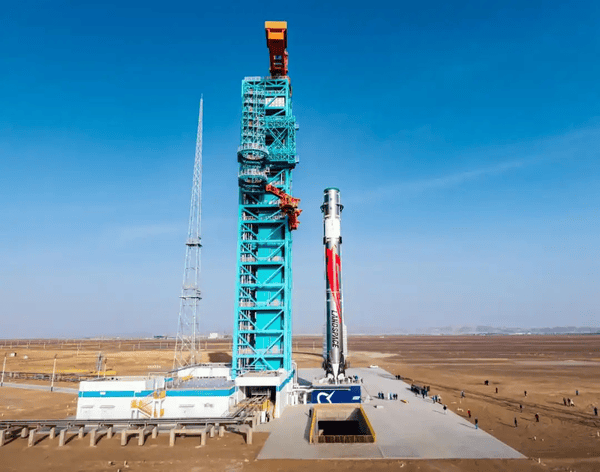
机构称火箭运力瓶颈有望突破!卫星产业ETF(159218)近五日“吸金”超5000万元
2 1 Shi Ji Jing Ji Bao Dao· 2025-11-06 03:26
Core Viewpoint - The satellite industry in China is experiencing rapid advancements, with significant upcoming missions and increased investment in satellite technology and launch capabilities [1][2]. Group 1: Market Performance - The satellite sector saw a midday surge on November 6, with the Satellite Industry ETF (159218) rising by 0.42%, and several companies like Parker New Materials hitting the daily limit and others like Aerospace Microelectronics increasing by over 7% [1]. - As of November 5, the Satellite Industry ETF (159218) has received a net inflow of over 52 million yuan in the past five days [1]. Group 2: Upcoming Missions - China plans to conduct four significant space missions in 2026, including the Tianzhou-10, Shenzhou-22, Shenzhou-23, and the Mengzhou-1, with both the Mengzhou-1 crewed spacecraft and the Long March 10A rocket set for their inaugural flights [1]. - In 2024, China is expected to complete 68 orbital launches, with 35 rocket launches planned for the first half of 2025 and an accelerated frequency of satellite networking in the second half [1]. Group 3: Industry Developments - According to Zhongtai Securities, private companies are making strides in the reusable rocket sector, with potential breakthroughs in launch capacity expected between Q4 2025 and 2026, including multiple new rocket types [2]. - The Satellite Industry ETF (159218) tracks the CSI Satellite Industry Index, covering upstream and downstream companies involved in satellite manufacturing, launching, and navigation communication applications, with a year-to-date growth of 393.56% in ETF shares as of November 5 [2].





商业航天与卫星互联网:三重拐点强化确认,建议左侧布局
2025-10-27 00:31
Summary of Key Points from Conference Call on Commercial Aerospace and Satellite Internet Industry Overview - The conference call focuses on the **commercial aerospace industry** in China, highlighting its current challenges and future opportunities, particularly in satellite internet and rocket technology [1][2][3]. Core Insights and Arguments 1. **Underperformance of Domestic Commercial Aerospace**: The development of China's commercial aerospace has been below expectations due to insufficient rocket production capacity and limited downstream application scenarios [1][2]. 2. **Significant Progress by SpaceX**: SpaceX has made notable advancements in technology, policy, and commercialization, significantly reducing space payload costs and enhancing capacity, serving as a model for domestic development [1][2]. 3. **Three Critical Turning Points**: The industry is experiencing three turning points: - **Policy Turning Point**: The government has emphasized building a strong aerospace nation, leading to increased policy support [3][7]. - **Performance Turning Point**: Accelerated launches are expected to boost the performance of listed companies, with a forecast of 2 to 4 launches per month starting in 2025 [3]. - **Technical Turning Point**: Innovations in reusable rockets and mobile direct connection technology are anticipated to break through existing limitations [3][4]. 4. **Impact of Reusable Rockets**: The introduction of reusable rockets is projected to reduce launch costs significantly, from 60,000-80,000 RMB per kilogram to 200-300 USD, representing a 30-fold decrease [4][5]. 5. **Mobile Direct Connection Technology**: This technology is expected to integrate satellite communication with terrestrial cellular networks, enhancing user access and expanding coverage [6]. Important but Overlooked Content 1. **Investment Opportunities**: The investment landscape in the commercial aerospace sector is shifting towards rocket manufacturing, satellite production, and NTN (Non-Terrestrial Network) applications, particularly those related to low Earth orbit satellite networks [2][10][11]. 2. **Government Support**: The strategic elevation of commercial aerospace as a key industry by the government is expected to provide clear direction and accelerate industry growth through local government initiatives [7]. 3. **Comparative Development**: The call outlines the contrasting development trajectories of China and the US in commercial aerospace, with China starting from a nascent stage in 2015 and the US advancing rapidly with projects like Starlink [8][9]. Conclusion - The commercial aerospace industry in China is at a pivotal moment, with significant policy support, technological advancements, and emerging investment opportunities that could reshape the landscape in the coming years [1][10].
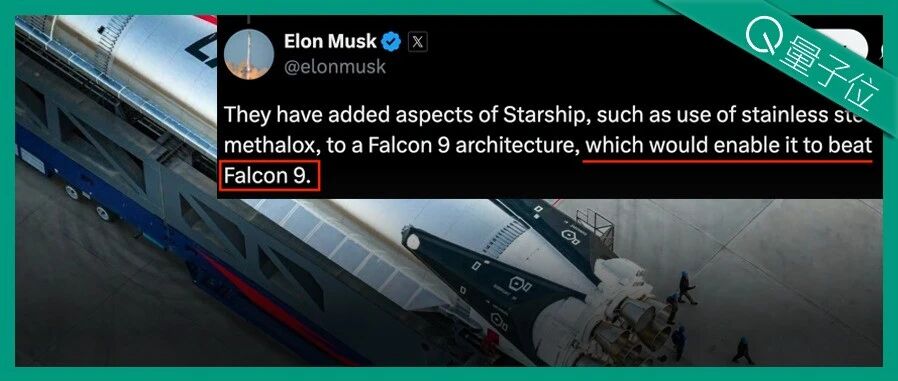
马斯克盛赞朱雀三号:能够击败SpaceX猎鹰9号
量子位· 2025-10-25 08:30
Core Viewpoint - The article discusses the potential of China's reusable rocket, Zhuque-3, to surpass SpaceX's Falcon 9 in the near future, highlighting advancements in China's aerospace technology [1][2][3]. Group 1: Zhuque-3 Overview - Zhuque-3 is expected to be China's first truly reusable launch vehicle, with its maiden flight scheduled for November [7][9]. - The rocket features a stainless steel structure, a diameter of 4.5 meters, a length of 66.1 meters, and a launch mass of approximately 570 tons [11]. - It is equipped with nine Tianque-12A liquid oxygen-methane engines, providing a thrust of over 750 tons [11]. Group 2: Technological Advancements - Zhuque-3 utilizes a liquid oxygen-methane fuel combination, which offers advantages such as cleanliness, reusability, and cost-effectiveness compared to traditional fuels [12]. - The rocket is designed for high-precision autonomous return and soft landing for reuse after missions, embodying the concept of "fly, recover, and fly again" [12]. Group 3: Cost Competitiveness - Zhuque-3 aims to reduce launch costs to below 20,000 yuan per kilogram, making it competitive with Falcon 9, which costs approximately 3,000 USD per kilogram [13].
中国民营火箭急了!密集上天、扎堆上市
经济观察报· 2025-10-25 05:56
Core Viewpoint - The "star-rich, rocket-poor" dilemma in China's commercial space industry is being addressed through advancements in technology, capital investment, and policy support, indicating that the "spring of launch capacity" may arrive sooner than expected [6] Group 1: Recent Developments in Satellite Launches - On October 17, 2025, Shanghai Yuanxin Satellite Technology Co., Ltd. successfully launched the sixth batch of satellites for its "Qianfan Constellation," bringing the total number of satellites in orbit to 108 [3] - As of September 2025, major telecom operators in China have received licenses for satellite mobile communication services, enabling direct satellite connections for mobile phones [3] - The domestic satellite internet market is experiencing significant growth, but the launch capacity remains constrained, necessitating the involvement of private rocket companies to alleviate this bottleneck [3][4] Group 2: Progress of Private Rocket Companies - Beijing Tianbing Technology Co., Ltd. announced successful sea trials for its "Tianlong-3" rocket, which has a near-Earth orbit capacity of 17 to 22 tons and can deploy up to 36 satellites in one launch [4][9] - Blue Arrow Aerospace successfully completed the first phase of its "Zhuque-3" rocket's launch preparations, with plans for its first flight by the end of the year [5][11] - Other companies, such as Zhongke Aerospace and Xinhai Power, are also making strides in their respective rocket developments, with plans for upcoming launches [11][12] Group 3: Market Dynamics and Investment Trends - The demand for satellite launches is high, with estimates indicating that the "Qianfan Constellation" requires 200 to 300 satellite launches annually, necessitating multiple rockets with capacities exceeding 10 tons [8] - Recent financing rounds have seen significant investments in private rocket companies, with Xinhai Power raising 2.4 billion yuan and Tianbing Technology securing nearly 2.5 billion yuan for production and development [16][17] - The Chinese Securities Regulatory Commission has opened a window for IPOs in the commercial space sector, prompting several companies to initiate the listing process [17][18] Group 4: Cost Reduction Strategies - The cost of launching a 10-ton capacity rocket by state-owned companies is estimated at over 200 million yuan, while private rockets aim to reduce this cost to around half [24] - The potential for cost reduction through reusable rocket technology is significant, with estimates suggesting a 40% to 60% decrease in launch costs if successful [25][26] - Companies are exploring innovative manufacturing techniques, such as 3D printing and the use of stainless steel, to lower production costs and improve efficiency [26][27][28]