多元化投资

Search documents
八科两金撑起四成市值,该高兴还是担心?
伍治坚证据主义· 2025-08-21 06:27
Core Viewpoint - The concentration of technology stocks in the S&P 500 is significant, with the top ten companies accounting for 40% of the index's market value, and eight of these being technology firms. This concentration has led to these companies contributing over half of the S&P 500's gains since April, raising concerns about systemic risks associated with such concentration [2][3]. Group 1: Benefits of Concentration - Market concentration can reflect efficiency, where companies that leverage economies of scale and network effects achieve higher profits and faster growth, benefiting index investors [3]. - Concentration can accelerate the diffusion of new technologies, such as cloud computing and artificial intelligence, by directing capital to the most productive enterprises [3]. Group 2: Risks of Concentration - Systemic vulnerabilities increase as market movements become heavily influenced by a few companies. For instance, Nvidia's market cap of $4.4 trillion could lead to significant market impacts if its AI returns fall short of expectations, potentially erasing $1 trillion in value [3][4]. - Large companies become targets for regulatory scrutiny, with potential impacts from antitrust actions and data privacy regulations, as seen in historical cases like Standard Oil [4]. - Investors may fall into a "diversification illusion," believing they hold a diversified portfolio by investing in the S&P 500, while in reality, the performance is heavily dictated by the top ten companies [4][5]. Group 3: Historical Context and Lessons - Historical examples show that when a single industry dominates market weight and narrative, it often leads to adverse outcomes, such as the decline of railroad stocks in the late 19th century and the tech bubble burst in 2000 [5][6]. - Current tech giants are profitable and possess strong cash flows, distinguishing them from past speculative bubbles, yet the concentration of narratives can still create systemic fragility [6]. Group 4: Recommendations for Investors - Investors should avoid oversimplifying classifications by grouping all major companies under the "tech" label. Instead, they should categorize companies based on their cash flow sources to better understand their risk exposures [6]. - Ensuring a globally diversified portfolio that includes various asset classes can provide a buffer against potential market corrections driven by concentrated narratives [6][7].


CWG外汇:全球布局助力投资机会拓展
Sou Hu Cai Jing· 2025-08-20 02:17
Core Insights - CWG Forex is enhancing its global strategy to capture diverse investment opportunities and improve wealth growth for investors [1][2] Group 1: Global Market Coverage and Strategic Expansion - The expansion of global market coverage is crucial for enhancing international competitiveness and brand influence [2] - CWG Forex strategically enters emerging markets to leverage local growth potential and expand business impact [2] - The company establishes offices in multiple regions to better serve a diverse customer base [2] Group 2: Diversified Investment Platform and Technological Innovation - A diversified investment platform is key to meeting the needs of different investors, offering various financial instruments and innovative technologies [4] - CWG Forex provides a wide range of trading products, including forex, CFDs, commodities, and indices, to enhance investor choice [4] - Continuous optimization of the trading platform ensures investors receive the best user experience and investment outcomes [4][6] Group 3: Localization and Compliance - The advantage of localized services lies in providing tailored financial solutions based on regional cultures and market demands [4] - CWG Forex collaborates closely with local regulatory bodies to ensure compliance and transparency, enhancing market credibility [4] Group 4: Risk Management Strategies - CWG Forex employs diversified risk management strategies to protect investor capital in volatile markets [10] - The company utilizes advanced technology platforms to monitor market dynamics and swiftly identify potential risks [10] - Regular stress testing is conducted to assess the robustness of investment portfolios under various economic scenarios [10] Group 5: International Partnerships and Technological Advancements - Strong relationships with international partners enable CWG Forex to effectively respond to global market changes and offer competitive trading conditions [5] - Collaborations with leading financial institutions and technology providers enhance the trading platform's technological advancements and market insights [5] Group 6: User Experience and Interface Innovation - Innovations in user interface play a crucial role in enhancing user trading experience, allowing investors to analyze markets more intuitively and efficiently [7] - Personalized dashboards and real-time market information simplify the decision-making process for investors [7] Group 7: Educational Resources for Investors - CWG Forex provides comprehensive educational resources for novice investors, including online courses and market analysis reports [14] - The company offers a professional customer support team to assist investors with inquiries and guidance [14]
结束3连降,中国破天荒增持美债,特朗普变了,暂缓对华加税但有个前提!
Sou Hu Cai Jing· 2025-08-18 08:25
Group 1 - China's slight increase in US Treasury holdings by $100 million in June, after three months of reduction, has drawn significant attention despite being a small figure in the vast debt market [1][3] - China's total US Treasury holdings now stand at $756.4 billion, making it the third-largest holder, contrasting sharply with Japan's increase of $12.6 billion and the UK's surge of $48.7 billion [1] - The Federal Reserve's interest rate hike expectations have led to fluctuations in US Treasury prices, with an overall increase of about 1% in June, reflecting a potential opportunity for China to "buy the dip" [3] Group 2 - China's cautious approach in increasing its US Treasury holdings indicates a need for flexibility in foreign exchange reserves and a strategy to stabilize external environments amid global market volatility [3][5] - Trump's recent decision to delay tariffs on China, following a meeting with Putin, suggests a strategic adjustment in response to the complex international situation, providing room for reevaluation [3][5] - The extension of the US-China trade truce allows Trump to avoid escalating tensions that could destabilize markets, highlighting the necessity for China as a buyer to alleviate the US's $37 trillion debt burden [5] Group 3 - The ongoing Russia-Ukraine conflict directly impacts US-China relations, with potential for continued restraint from Trump if a ceasefire is achieved, but risks of renewed tensions if the situation deteriorates [7] - The interplay of US Treasury holdings, tariffs, and international dynamics reflects the multifaceted nature of great power competition, emphasizing the need for both countries to remain vigilant and seek cooperative opportunities to prevent strategic miscalculations [7]

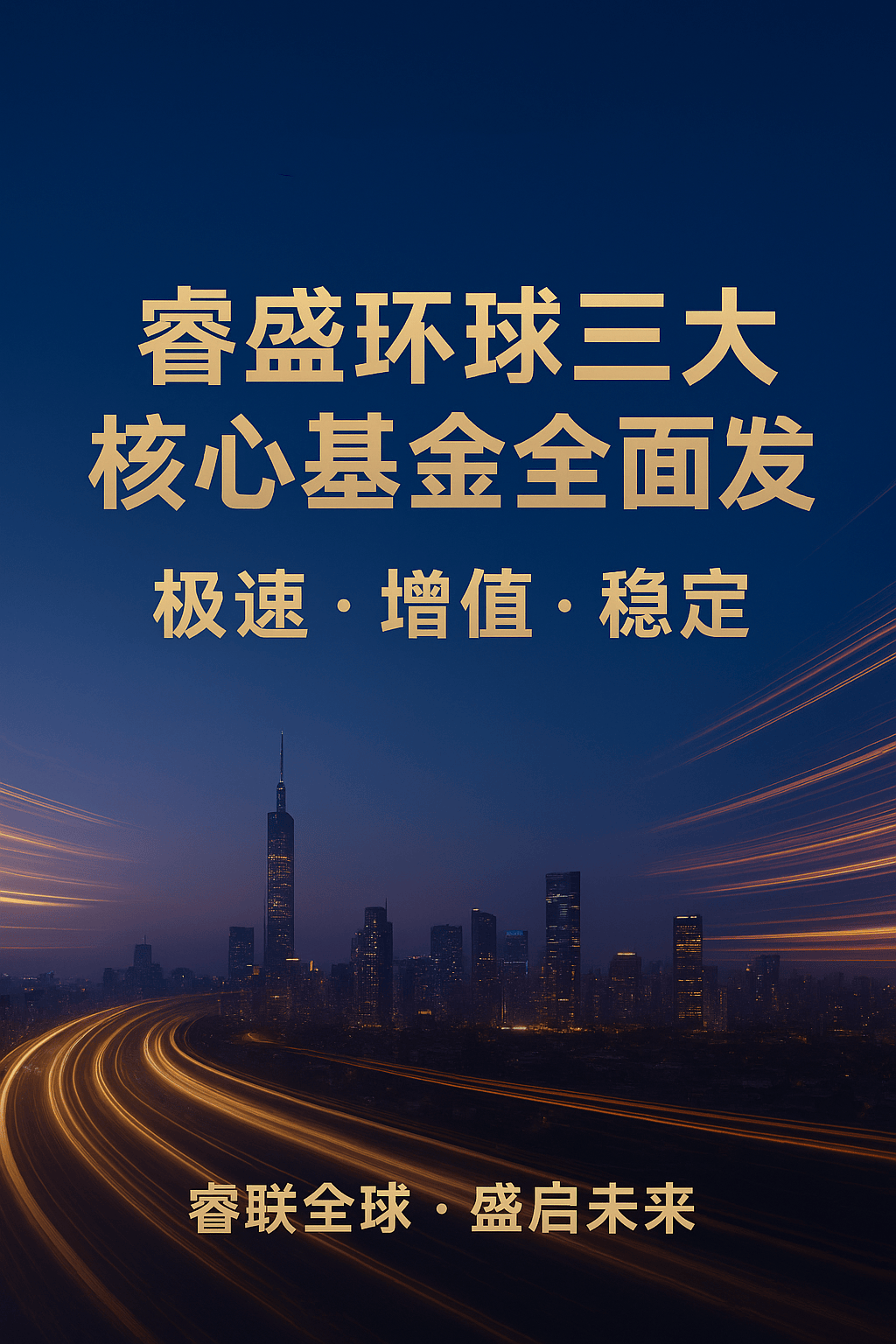
睿盛环球重磅发布三大核心基金产品,全方位布局多元化投资赛道
Sou Hu Cai Jing· 2025-08-17 14:03
Core Viewpoint - The company, Ruisheng Global, has launched three new fund products to meet diverse investor needs in risk tolerance, asset cycles, and return objectives, creating a comprehensive investment product matrix [1][8]. Fund Summaries - **Speed Fund**: Focuses on efficient contract trading with a day trading strategy, targeting highly volatile financial assets like Bitcoin, Ethereum, and gold. It aims for steady and efficient asset appreciation, suitable for investors with a certain risk tolerance seeking high turnover and immediate market opportunities [3]. - **Value Fund**: Aims for medium to long-term asset appreciation by investing in high-quality ETFs that balance stability and growth potential. It includes prominent indices from both mature and emerging markets, such as the S&P 500 ETF and the Nasdaq 100 ETF, striving for a dynamic balance between risk and return through rigorous asset allocation and long-term holding strategies [4]. - **Stability Fund**: Adheres to a steady appreciation philosophy by diversifying into low-volatility assets with long-term value, including the S&P 500 Index, Hang Seng Index, Bitcoin, Ethereum, and London gold. The fund aims to reduce systemic risk through a diversified investment strategy, providing investors with a sustainable growth pathway over the long term [5]. Strategic Vision - The president of Ruisheng Global stated that the launch of these three funds aims to provide flexible, precise, and secure asset allocation solutions in an era of rapid integration between the global economy and digital finance. The products cater to short-term traders, long-term investors, and clients seeking stable returns [8]. - The company emphasizes that all three funds are equipped with comprehensive risk control systems and real-time monitoring mechanisms, supported by a strong international research and investment team, ensuring a transparent, controllable, and sustainable investment process [8][9]. Market Positioning - In recent years, Ruisheng Global has been deeply engaged in global financial markets, integrating high-quality international resources and applying advanced financial technology tools. The launch of these three fund products not only expands the company's business lines but also accurately responds to the diverse needs of clients [9]. - Moving forward, Ruisheng Global aims to continue its mission of "Connecting the World, Opening the Future," exploring more innovative products in the diversified investment sector to help investors navigate market cycles and achieve steady wealth growth and long-term value [9].
突然升温!A股逼近3700点该怎么操作?切记 这是上涨中最容易犯的错
Zheng Quan Shi Bao· 2025-08-17 01:54
Core Viewpoint - The articles emphasize the importance of long-term investment strategies, particularly the concept of holding onto high-quality stocks rather than selling them prematurely due to short-term price increases. This approach is illustrated through anecdotes from renowned investors like Peter Lynch and Warren Buffett, highlighting the potential for significant returns when investors remain patient and informed about their investments [1][2][4][5]. Group 1: Investment Strategies - Investors should focus on high-quality stocks with a safety margin and hold them for the long term, as this often yields better returns than frequent trading [1][3]. - The concept of "pulling out flowers and watering weeds" serves as a caution against selling good stocks simply because they have risen in price, which can lead to missed opportunities for greater gains [2][3]. - Successful investing requires understanding the reasons for purchasing a stock, which helps in making informed decisions about when to sell [4][5]. Group 2: Insights from Renowned Investors - Peter Lynch achieved a 20-fold investment return during his management of the Fidelity Magellan Fund, emphasizing the importance of patience and understanding in investment decisions [2]. - Warren Buffett's investment philosophy aligns with Lynch's, as he often profits from stocks that others sell prematurely, reinforcing the idea that time is a critical factor in realizing investment gains [2][4]. - Both Lynch and Buffett advocate for investing in companies with proven success and strong management, suggesting that investors should not abandon these investments without good reason [4][5]. Group 3: Market Behavior and Investor Psychology - The current market sentiment is improving, with the Shanghai Composite Index reaching around 3700 points and daily trading volumes increasing by over 50% compared to earlier this year [1]. - Many investors tend to sell stocks once they recover their initial investment, indicating a lack of confidence in holding quality stocks for the long term [1][4]. - The articles suggest that ordinary investors should focus on companies with simple, understandable business models and sustainable operations to benefit from the compounding effect of time [5][6].
A股逼近3700点,该怎么操作?切记,这是上涨中最容易犯的错
Zheng Quan Shi Bao· 2025-08-16 23:49
Core Viewpoint - The article emphasizes the importance of long-term investment strategies and the pitfalls of short-term trading, particularly the mistake of selling quality stocks prematurely due to short-term price increases [1][2][3]. Group 1: Investment Strategies - Investors should focus on holding high-quality stocks with a safety margin, as long-term holding is more beneficial than frequent trading [1][2]. - The concept of "pulling out flowers and watering weeds" highlights the error of selling winning stocks too early, which can lead to significant missed profits [2][3]. - Successful investing requires understanding the companies in which one invests, leading to better decision-making regarding when to sell [4][5]. Group 2: Historical Examples - Legendary fund manager Peter Lynch achieved a 20-fold investment return over 13 years, illustrating the potential of long-term investment [2]. - Warren Buffett's investment philosophy aligns with Lynch's, emphasizing the importance of holding onto successful stocks rather than selling them prematurely [2][4]. Group 3: Investment Philosophy - Investors should build a portfolio of companies they understand and trust, focusing on a few high-conviction investments rather than diversifying too broadly [5][6]. - The article suggests that patience and a clear understanding of a company's fundamentals are crucial for achieving substantial returns over time [6].
观点直击 长实指有兴趣在香港做多些投资
Jin Rong Jie· 2025-08-14 18:31
Core Viewpoint - The company reported a significant decline in net profit for the first half of the year, with a 26.75% drop year-on-year, amounting to HKD 6.302 billion, while maintaining a stable interim dividend of HKD 0.39 per share [1] Financial Performance - The company's investment property revaluation profit increased by 1.2% to HKD 6.805 billion, while property sales revenue surged by 58.9% to HKD 7.366 billion, although sales profit decreased by 2.9% to HKD 1.768 billion due to discounts offered in a weak market [2] - Hong Kong property sales revenue rose by 7.8% to HKD 2.803 billion, but sales profit plummeted by 92.9% to HKD 74 million [2] - The company reported a bank balance and fixed deposits of HKD 33 billion, with a net debt of HKD 21.4 billion, resulting in a net debt to total capital ratio of approximately 5% [5] Business Strategy - The company aims to maintain a diversified investment and asset portfolio, leveraging its financial strength and low capital debt ratio to seize global market opportunities [1] - There is a strong interest in investing more in commercial and retail properties in Hong Kong, as well as land acquisition, contingent on attractive returns and pricing [2][4] - The company plans to continue selling Blue Coast II and pre-selling Kai Tak Flower Sea in the second half of the year [4] Market Conditions - The retail and commercial property leasing sector in Hong Kong remains weak, with rental income and profits from the company's properties showing slight declines compared to the same period in 2024 [1] - The overall occupancy rate of the Hong Kong investment property portfolio is approximately 86%, with specific properties like the Changjiang Center Phase I at 75% occupancy [4] - The hotel business showed a slight increase in revenue, with an occupancy rate of 89.1% for overnight hotels and 88.4% for long-term serviced apartments [5]

中原高速20250812
2025-08-12 15:05
Summary of Zhongyuan Expressway Conference Call Industry and Company Overview - Zhongyuan Expressway primarily operates in the toll road industry, with over 90% of its revenue derived from toll fees, making it a significant player in the highway sector in Henan Province, China [2][4][3]. Core Points and Arguments - **Revenue Composition**: The company's revenue is predominantly from toll road operations, with minimal contributions from real estate and other services [2][4]. - **Profit Performance**: The company has shown stable profit performance over the years, with notable fluctuations in 2020 and 2022 due to the pandemic's impact on traffic volume and toll fee exemptions [2][6]. - **Future Profitability**: It is anticipated that as the macro economy recovers, traffic volume will increase, particularly with the expected opening of the Zhenglu Expressway by the end of 2026, which will provide additional profit elasticity [2][7][10]. - **Gross Margin Improvement**: The gross margin is expected to improve from 2025 to 2027 due to ongoing financial and management optimizations [5][7]. - **Dividend Policy**: The company has a relatively low dividend payout ratio compared to its peers, committing to a 40% payout, with an actual payout of approximately 43% last year, below the industry average of 52% [2][8]. The expected dividend yield for 2025 is around 4%, increasing to 4.6% by 2026 [8]. Additional Important Insights - **Asset Optimization**: The company is actively optimizing its assets and reducing financial costs, which may lead to a revaluation of its overall value [3][5]. - **Real Estate Focus**: There is a strategic focus on consolidating the real estate segment, with potential divestment from non-core real estate operations to enhance focus on the main toll road business [2][9]. - **Long-term Cash Flow Stability**: The weighted average toll collection period exceeds 17 years, ensuring long-term stable cash flow, with all road assets having a remaining life of over 10 years [2][9]. This summary encapsulates the key points discussed in the conference call regarding Zhongyuan Expressway's operations, financial performance, and strategic outlook.

韩国人,涌入中国股市
投资界· 2025-08-12 07:41
Core Viewpoint - The article discusses the increasing interest of South Korean investors in the Chinese stock market, highlighting a shift in investment strategies due to market conditions and the pursuit of higher returns [5][11][22]. Group 1: Investment Trends - As of July 25, 2023, China has become the second-largest overseas stock market for South Korean investors, surpassing Japan and the EU in trading volume [5]. - The total trading volume of the Chinese stock market, including Hong Kong and A-shares, reached approximately $57.64 billion, second only to the U.S. market [6]. - South Korean investors show a preference for Hong Kong stocks over A-shares, focusing on technology and consumer sectors [5][9]. Group 2: Notable Stock Purchases - The top net purchases by South Korean investors include Xiaomi Group-W and BYD Company, with net buy amounts exceeding $1 billion [7][8]. - Other significant stocks include Ningde Times and Alibaba, indicating a strong interest in technology and consumer goods [8][9]. Group 3: Market Dynamics - The trading volume from South Korean investors in the Chinese stock market surged to $782 million in February 2023, marking a 179% month-on-month increase [12]. - In the first quarter of 2025, South Korean investors had a net inflow of 6.54 trillion KRW into Chinese stock funds, with 2.739 trillion KRW in April alone [12][13]. - The average return rate of Chinese stock funds in South Korea reached 43.56% over six months, significantly higher than domestic and U.S. stock funds [13]. Group 4: Broader Investment Context - The shift towards Chinese stocks is partly driven by volatility in the U.S. market, prompting South Korean investors to diversify their portfolios [13][14]. - Despite the growing interest in China, the U.S. market still dominates South Korean offshore trading, accounting for nearly 96% of transactions [14]. - The total assets of overseas investment funds in South Korea reached 134 trillion KRW by the end of 2024, reflecting a 62% year-on-year increase [15]. Group 5: Socioeconomic Factors - The article notes a prevailing negative sentiment in South Korea, with low employment rates and stagnant wages pushing individuals to seek alternative investment opportunities [20][21]. - A Gallup survey indicated that 31% of respondents now view stocks as the most favorable investment, surpassing real estate for the first time since 2006 [20]. - The number of active stock trading accounts in South Korea has risen to 69.3 million, indicating a widespread engagement in stock trading among the population [20].




韩国人,大量涌入中国股市
虎嗅APP· 2025-08-10 13:24
Core Viewpoint - The article discusses the increasing interest of South Korean investors in the Chinese stock market, highlighting a shift in investment strategies due to market conditions and the pursuit of higher returns [4][11][20]. Group 1: Investment Trends - As of July 25, 2023, China has surpassed Japan and the EU to become the second-largest overseas stock market for South Korean investors, with a cumulative trading volume of $5.63 billion [5][4]. - In 2025, the cumulative trading volume of the Chinese stock market is projected to reach $4.08 billion, indicating a growing trend in South Korean investments [5]. - South Korean investors have shown a preference for Hong Kong stocks over A-shares, with significant net purchases in companies like Xiaomi and BYD, each exceeding $100 million [8][10]. Group 2: Market Dynamics - The net inflow of funds into Chinese stock funds reached 654 billion KRW in the past three months, with a notable 273.9 billion KRW in April alone, reflecting a sustained interest [13][14]. - The average return of Chinese stock funds in Korea was 43.56% over six months, significantly higher than the returns from Korean and US stock funds, which were 1.6% and 13.08% respectively [16]. - The shift in focus towards Chinese stocks is partly driven by the volatility in the US market, prompting South Korean investors to diversify their portfolios [16][17]. Group 3: Socioeconomic Factors - The rising interest in overseas markets, including China, is influenced by stagnant domestic economic conditions, such as a declining job market and low-interest rates, leading to a search for alternative investment opportunities [24][26]. - A survey indicated that 31% of respondents view stocks as the most favorable investment method, surpassing real estate for the first time since 2006, reflecting a significant change in investment preferences [26][27]. - The number of active stock trading accounts in South Korea reached 69.3 million by the end of 2023, indicating a widespread engagement in stock trading among the population [27][28]. Group 4: Regulatory and Market Environment - The South Korean government is taking steps to enhance the attractiveness of the domestic stock market, aiming to address the "Korean discount" phenomenon and encourage investment [29]. - Despite the focus on overseas markets, South Korean investors still maintain a significant interest in the US market, with 96% of offshore trading volume attributed to US stocks as of July 2023 [17][18].