改革开放

Search documents
二○二五,中国经济顶压前行、向新向优的发展逻辑
Xin Lang Cai Jing· 2025-12-28 23:34
全年经济总量有望达到140万亿元左右,科技创新成果丰硕,改革开放迈出新步伐……面对外部环境变 化影响加深、国内供强需弱矛盾突出等老问题、新挑战,中国经济何以顶住压力、破浪前行? 一定的发展实践都是由一定的发展理念来引领的,发展理念从根本上决定发展成效乃至成败。很不平凡 的这一年,透过这份难能可贵、成色十足的发展答卷,我们更加深刻感受到指引发展的思想力量。 推动传统产业升级,培育壮大新兴产业 产业是观察一国经济的重要维度。习近平总书记今年深入一线,既关注传统产业转型,也聚焦新产业布 局。 先说传统产业。1月辽宁本钢,5月河南洛轴,7月山西阳阀,习近平总书记今年3次考察企业,都来到制 造业企业,看传统产业如何以新技艺、新产品焕发新生,强调"实体经济里边的传统产业不能丢,要通 过科技创新实现转型升级"。 再说新产业。从中央政治局第二十次集体学习,到考察上海"模速空间",再到出席亚太经合组织第三十 二次领导人非正式会议,总书记反复提及人工智能,这"是年轻的事业,也是年轻人的事业"。 "顶压前行、向新向优"——在日前召开的中央经济工作会议上,习近平总书记这样总结2025年的中国经 济。 今年前11个月,我国规模以上高技 ...


坚决扛牢经济大区挑大梁的使命担当 在奋力谱写中国式现代化沈阳篇章中走在前、作表率
Xin Lang Cai Jing· 2025-12-27 18:42
Group 1 - The core message emphasizes the commitment of the Tiexi District to implement the spirit of the municipal economic work meeting, aiming to be a key player in building Shenyang as an international center in Northeast Asia [1] - The district plans to sign 400 projects, start and resume work on 500 projects, and complete 150 projects by the end of the year, focusing on large and impactful projects to boost economic growth [1][2] - There is a strong focus on expanding domestic demand and exploring new consumption models, particularly in the automotive sector and through the development of vibrant commercial areas [1][2] Group 2 - The strategy includes fostering new industrial growth by enhancing the industrial structure and promoting technological innovation, particularly in emerging sectors like biomedicine and renewable energy [2] - The district aims to create a first-class business environment by prioritizing service optimization and addressing the needs of enterprises, thereby enhancing the overall development climate [2] - Continuous reform and opening-up efforts are highlighted to stimulate internal growth, with a focus on strengthening state-owned enterprises and supporting businesses in accessing international markets [2] Group 3 - The district is committed to meeting the new expectations of the public by improving services related to employment, education, and social welfare, thereby enhancing the overall quality of life for residents [3]
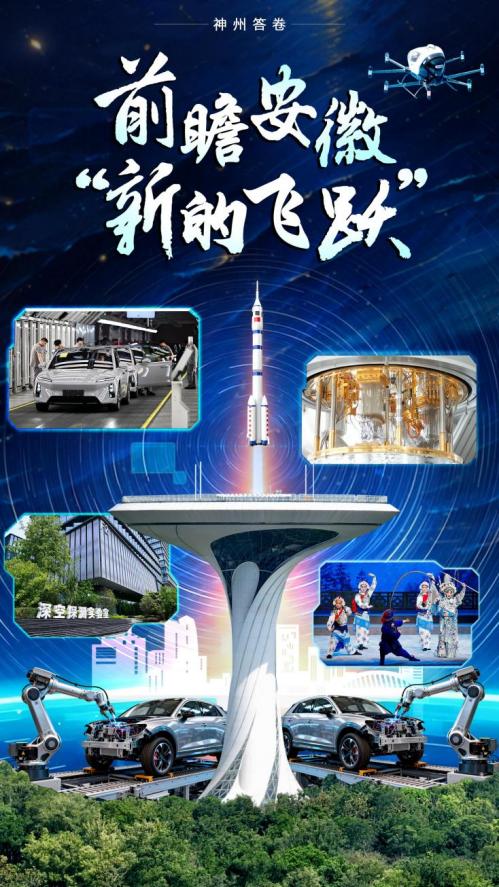
神州答卷|前瞻安徽“新的飞跃”
Xin Hua Wang· 2025-12-26 01:24
安徽,站上新的起点。 从"十一五""十二五"到"十三五",每一个五年安徽经济总量跨越1个万亿元台阶,而"十四五"这五 年连跨4万亿元、5万亿元两个台阶。从传统农业大省到科技大省、新兴工业大省、制造大省,"新的飞 跃"让安徽日新向上,备受瞩目。 "十五五"安徽,还将创造什么"新的飞跃"? 安徽将"十五五"确立为"夯实基础、全面发力、创先争优、奋力追赶的关键时期"。前瞻未来,既看 历史中的发展规律,又看时势下的运筹帷幄。新华社记者从实验基地、工厂车间、江河港口、网红地 标,从"十四五"数据,从新近公布的《中共安徽省委关于制定国民经济和社会发展第十五个五年规划的 建议》和2025年安徽省委经济工作会上,进行了探寻。 一问科技创新"新的飞跃" "十五五"时期,这里将打造全球领先的重大科技基础设施集群。BEST预计2027年建成,有望在 2030年全球首次演示聚变发电。深空科学城将建成大型深空飞行器总装集成测试中心、行星保护研究中 心等。 2025年中央经济工作会议提出建设三大国际科技创新中心,"这是一个重大任务"。其中上海国际科 创中心扩围至长三角,安徽历史性跃上国家区域创新体系的最高层级。 加快形成我国原始创新的主 ...
奋进的河南 决胜“十四五”·济源篇丨砥砺愚公志 奋进谱新篇
He Nan Ri Bao· 2025-12-25 23:43
Core Viewpoint - The article emphasizes the development and transformation of Jiyuan as a modern demonstration zone, focusing on innovation, urban-rural integration, ecological development, deepening reforms, and improving people's livelihoods to achieve high-quality economic growth [3][4][6][8][10]. Group 1: Innovation and Industry Upgrade - Jiyuan is committed to innovation-driven industrial upgrades, establishing a vibrant innovation ecosystem that enhances its industrial advantages [3]. - The annual output value of the non-ferrous metal industry is approaching 200 billion, with strategic emerging industries accounting for 25.4% of the added value of industrial enterprises from January to October [3][4]. Group 2: Urban-Rural Integration - Jiyuan is the only national demonstration zone for integrated urban-rural development, achieving a 70% urbanization rate and over 80% integration [4]. - The city has passed various national reviews, enhancing urban quality and residents' happiness [4][5]. Group 3: Ecological Development - Jiyuan is focused on green transformation, achieving significant progress in ecological protection and restoration, with a forest coverage rate of 41.55% [6][7]. - The city has created 11 national-level green factories, with industrial solid waste utilization rates at 95% and hazardous waste utilization at 90% [7]. Group 4: Reform and Opening Up - Jiyuan is advancing deep reforms to stimulate internal motivation and integrate into the national market, with significant progress in state-owned enterprise reforms [8]. - The city is developing a multi-modal transport network and attracting high-quality investments, maintaining a strong position in import and export values [8]. Group 5: Livelihood Improvement - Jiyuan invests over 70% of its financial resources in people, enhancing the quality of life for its residents [10]. - The per capita disposable income ranks second in the province, with a focus on social security and public services [10][11].

抓住关键 纲举目张
Xin Hua Ri Bao· 2025-12-25 21:11
□ 本报评论员 经济工作千头万绪,抓住关键,就能做到纲举目张,以重点带动全局。日前召开的江苏省委经济工作会 议,深入学习贯彻落实中央经济工作会议精神,紧密结合省情实际和发展阶段性特征,系统部署了八项 重点任务,为我省做好明年经济工作明确了主攻方向。 促进城乡区域协调发展,是拓展高质量发展新空间的重要举措。要联动推进长三角一体化发展和长江经 济带发展,深化"1+3"重点功能区建设,做好区域互补、跨江融合、南北联动大文章。同时,必须更好 统筹发展和安全,守牢安全稳定底线。着力稳定房地产市场,稳妥化解地方政府债务风险,深化安全生 产整治,确保社会大局和谐稳定。 凡事有其要,执其要者事成。全省各地各部门要深刻领会省委经济工作会议精神,紧扣八项重点任务, 将其实化细化为抓经济工作的具体举措,以实际行动体现"走在前、做示范"的责任担当。 要有效释放内需潜力,在保障和改善民生中扩大消费需求。当前,经济运行中供需矛盾较为突出,这要 求我们一方面扩大优质商品和服务供给,增强供需适配性;另一方面把民生关切作为扩大内需的着力 点,通过实施城乡居民增收计划、健全社会保障体系、优化公共服务供给,切实提升居民消费能力和意 愿。同时,要切 ...
全国人大代表呼吁延长春节假期 郑栅洁:积极推动并减少调休
Nan Fang Du Shi Bao· 2025-12-25 13:02
Core Viewpoint - The National Development and Reform Commission (NDRC) is actively addressing the suggestions and criticisms from representatives at the National People's Congress, focusing on infrastructure, industry development, social welfare, green low-carbon development, and major projects [1] Group 1: Suggestions and Responses - The NDRC has handled 2,933 suggestions this year, primarily related to infrastructure, industry, social welfare, green development, and major projects [1] - The NDRC is integrating valuable suggestions into policy measures to enhance the effectiveness of its work [1] - A notable response includes extending the Spring Festival holiday to 9 days in 2026, which has received a positive sentiment rate of 92.9% based on big data monitoring [1] Group 2: 14th Five-Year Plan - The NDRC is drafting the outline of the 14th Five-Year Plan, with 242 suggestions related to this plan, proposing significant policies and projects [1] - The NDRC is combining the handling of these suggestions with the planning activities to ensure comprehensive research and adoption [1] Group 3: Economic Governance and Innovation - The NDRC is working to enhance macroeconomic governance efficiency, with 347 representatives providing over 700 specific suggestions on technology and industry innovation [1] - The NDRC is categorizing and analyzing 246 suggestions related to the development of revolutionary old areas, aiming to incorporate them into relevant policy documents to boost local development [1]
省委经济工作会议举行坚持稳中求进提质增效 确保“十五五”良好开局信长星讲话 刘小涛作会议总结 张义珍出席
Xin Hua Ri Bao· 2025-12-22 23:16
Core Viewpoint - The meeting emphasized the importance of maintaining economic stability and growth in Jiangsu Province, highlighting the need for strategic planning and implementation of policies to ensure a successful start to the 14th Five-Year Plan [1][2][3]. Economic Performance and Outlook - Jiangsu's economy has shown resilience and vitality, successfully navigating various challenges over the past five years, with significant achievements in high-quality development [1][2]. - The meeting acknowledged the complex global and domestic economic landscape but affirmed the long-term positive trends supporting China's economy, particularly in Jiangsu [2][3]. Strategic Focus for 14th Five-Year Plan - The meeting outlined the necessity to adhere to the guiding principles of Xi Jinping's thought, emphasizing the importance of expanding domestic demand, optimizing supply, and enhancing both qualitative and quantitative economic growth [2][3]. - Key strategies include deepening reform and opening up, stabilizing employment and market expectations, and ensuring social harmony [2][3][4]. Policy Implementation - The meeting stressed the need for a coordinated approach to policy support and innovation, focusing on enhancing the foundation of the real economy and fostering self-innovation capabilities [3][4]. - Specific actions include boosting consumer demand, promoting major projects, and enhancing the integration of technology and industry [4][5]. Regional Development and Coordination - Emphasis was placed on promoting coordinated development across regions, particularly in the Yangtze River Delta and other key areas, to enhance urban-rural integration and overall economic synergy [4][5]. - The meeting highlighted the importance of expanding high-level foreign trade and investment, aiming for quality improvements in these sectors [5][6]. Social Welfare and Stability - The meeting underscored the commitment to improving people's livelihoods, ensuring employment stability for key groups, and enhancing public resource allocation [5][6]. - It called for a focus on education, healthcare, and social services to promote common prosperity and social stability [5][6].
理响中国·聚焦2026中国经济丨不断巩固拓展经济稳中向好势头
Yang Guang Wang· 2025-12-22 02:40
Economic Overview - The Central Economic Work Conference was held from December 10 to 11 in Beijing, focusing on the current economic situation and key tasks for the new phase of the 14th Five-Year Plan [1] Industrial and Service Sector Performance - The industrial added value of enterprises above designated size increased by 6.0% year-on-year [4] - The service production index rose by 5.6% year-on-year [4] - The production of automobiles and integrated circuits grew by 10.8% and 10.6% respectively [4] - The added value of high-tech manufacturing increased by 9.2% year-on-year [4] - The smart consumer equipment manufacturing sector saw a 7.6% increase in added value [4] - Production of new energy vehicles and lithium-ion power batteries for automobiles surged by 26.5% and 42.2% respectively [4] Cross-Border E-commerce and Foreign Investment - By the third quarter of 2025, cross-border e-commerce imports and exports reached approximately 2.06 trillion yuan, marking a 6.4% increase [6] - The removal of foreign investment restrictions in the manufacturing sector led to a 1.1% increase in imports by foreign-invested enterprises [6] - The number of foreign trade enterprises with import and export performance reached 700,000, an increase of 52,000 year-on-year [6] Real Estate Market Developments - In the first ten months of 2025, the sales area and sales amount of new commercial housing saw a year-on-year decline that narrowed by 9 and 11.3 percentage points respectively [8] - Policies aimed at controlling new supply and optimizing existing stock in the real estate sector continue to show positive effects [8] Government Financial Measures - A total of 2.78 trillion yuan in new local government special bonds have been issued [9] - Among these, 800 billion yuan is allocated to support local governments in debt reduction [10] Social Security and Welfare - The number of participants in the basic pension insurance system has exceeded 1.07 billion [13] - Over 450 million people are receiving basic living assistance [15] - More than 500,000 administrative villages have been connected to paved roads [16] - The waste collection and treatment ratio has reached over 90% [17]

贵州黔西南州 聚力高质量发展 推进现代化建设
Ren Min Ri Bao· 2025-12-21 22:46
Core Insights - The article emphasizes the high-quality development strategy of Qianxinan Bouyei and Miao Autonomous Prefecture, focusing on economic growth, infrastructure investment, and social welfare improvements during the "14th Five-Year Plan" period [1][2][8] Economic Development - The GDP of Qianxinan is projected to increase from 132.2 billion yuan at the end of the "13th Five-Year Plan" to 147.9 billion yuan by 2024, indicating a solid economic foundation for the "15th Five-Year Plan" [2] - Average annual growth rates for infrastructure and industrial investments are 12.3% and 6.4%, respectively [2] - Per capita disposable income for urban and rural residents is expected to rise to 43,248 yuan and 15,459 yuan by 2024, reflecting annual growth rates of 5.3% and 7.8% [2] Reform and Opening Up - Comprehensive reforms and opening-up initiatives are enhancing development momentum, with the number of business entities increasing from 246,700 at the end of the "13th Five-Year Plan" to 322,200 by 2024 [3] - The region is actively integrating into national strategic frameworks, such as the Guangdong-Hong Kong-Macao Greater Bay Area and the Western Land-Sea New Corridor [3] Industrial Development - The first industry is growing steadily, with significant advancements in tea, vegetables, and other specialty products, and the agricultural product processing rate is expected to rise from 49% to 58% by 2024 [4] - The second industry is thriving, with coal production increasing from 122 million tons to 149.4 million tons by 2024, and electricity generation expected to rise from 34 billion kWh to 44 billion kWh [4] - The service sector's contribution to GDP is projected to increase from 50.4% to 53.3% by 2024, highlighting its role as a key driver of economic growth [4] Tourism Development - The region is focusing on becoming a "health and wellness destination," with an annual growth rate of 14.82% in overnight tourist arrivals [5] - The completion of the world's highest bridge, the Huajiang Grand Canyon Bridge, and the establishment of a national 5A-level tourist attraction at the Wanfenglin Scenic Area are expected to boost tourism [5] Social and Environmental Initiatives - The region is committed to maintaining five key bottom lines, including poverty alleviation, food security, ecological protection, public welfare, and safety stability [7] - Significant achievements in poverty alleviation have been noted, with 17,600 households and 73,000 individuals successfully removed from poverty risk [7] - The forest coverage rate has reached 63.19%, and the air quality has maintained a high standard, with over 99% of days classified as good [7]
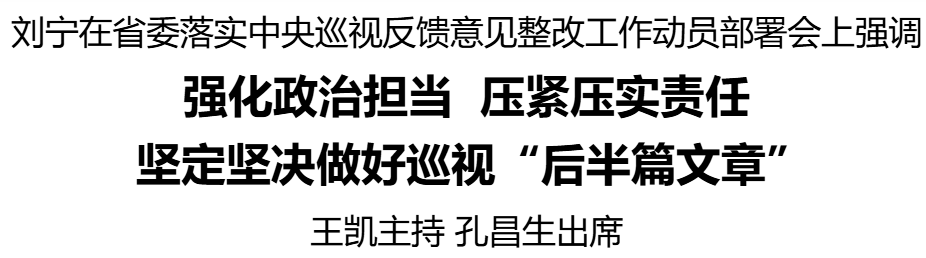
省委落实中央巡视反馈意见整改工作动员部署会召开 刘宁出席并讲话 王凯主持 孔昌生出席
He Nan Ri Bao· 2025-12-21 10:23
Core Viewpoint - The meeting emphasized the importance of implementing the feedback from the central inspection, aiming to ensure effective governance and high-quality development in Henan province, aligning with the strategic directives from the central government [2][3]. Group 1: Implementation of Inspection Feedback - The provincial leadership is committed to addressing the central inspection feedback thoroughly, ensuring that all issues are resolved and actions are taken promptly [3][4]. - There is a focus on enhancing political awareness and responsibility in executing the central government's strategic plans, particularly in ecological protection and rural revitalization [3][4]. Group 2: Governance and Reform - The meeting highlighted the need for strict governance and the continuation of anti-corruption efforts, emphasizing the importance of a disciplined approach to party management and talent selection [3][4]. - A systematic approach to governance is encouraged, including legal and comprehensive measures to improve social security and community governance [3][4]. Group 3: Risk Management and Economic Development - The leadership aims to address financial risks associated with local government debts and enhance the safety of production processes [3][4]. - There is a push for deeper reforms and opening up to create a more favorable business environment and promote the development of industrial parks [3][4].