精细化运营

Search documents
七鲜小厨在京扩张 即时零售流量战转向效率战
Bei Jing Shang Bao· 2025-12-25 14:24
Core Insights - The e-commerce industry is transitioning from scale expansion to efficiency and sustainability as it enters a period of stock competition, with major players like JD, Meituan, and Alibaba competing fiercely in instant retail [1][8] - The year 2025 is anticipated to be a breakout year for instant retail, with significant marketing activities driving order volumes, as seen with 7Fresh's stores in Beijing [2][4] Group 1: Market Dynamics - Major e-commerce platforms are engaging in intense competition, with JD, Meituan, and Alibaba employing various strategies to capture market share in instant retail [4][5] - JD has launched initiatives such as 0 commission and social security for delivery personnel, resulting in a rapid increase in daily order volume [4][7] - Alibaba has invested heavily in subsidies to compete, with a reported 500 billion yuan allocated to capture market share in the instant retail sector [4][6] Group 2: Sales and Promotions - During the holiday season, e-commerce platforms are heavily promoting gift items, with significant sales increases expected for products like beauty gift sets and festive food items [2][3] - 7Fresh's promotional activities, including free chocolate giveaways, have significantly boosted order volumes, demonstrating the effectiveness of marketing strategies [2][3] Group 3: Financial Performance - Instant retail revenue for Alibaba grew by 60% year-on-year in Q3, while JD's new business segment, including delivery services, saw a 12.56% quarter-on-quarter increase [7] - Despite revenue growth, Alibaba's operating profit fell by 85% year-on-year, highlighting the challenges of sustaining profitability amid heavy subsidies [7] Group 4: Future Outlook - The instant retail market in China is projected to reach 971.4 billion yuan by 2025, with expectations to exceed 1 trillion yuan by 2026 [8] - The competition will increasingly focus on operational efficiency, ecosystem collaboration, and the ability to extract value from existing customers rather than just on subsidies and order volume [8]



驱动医药产业智能革命 中康科技发布《2025年度AI实战成果 》
Zheng Quan Ri Bao Wang· 2025-12-25 11:45
Core Insights - The report from Zhongkang Digital Technology Co., Ltd. indicates a significant shift in the pharmaceutical industry from "conceptual trials" to "practical implementation" of AI technologies [1] - Zhongkang Technology has established a comprehensive AI service ecosystem covering the entire industry chain, serving 1,685 clients, including 182 pharmaceutical companies and over 51 hospitals [1] Group 1: AI Implementation in Various Sectors - In marketing, Zhongkang Technology has launched the AI For Marketing Lab, marking a transition to a "trust-driven" marketing era, enhancing ROI visualization and maximization [2] - In the medical sector, the company supports over 510 hospitals with its self-developed "Zhuo Mu Niao Medical Model," which provides evidence-based decision-making tools for complex medical diagnoses [2] - The retail pharmacy sector has seen the deployment of AI systems in over 10,993 pharmacies, transforming operational logic and enhancing professional service capabilities [2] Group 2: Consumer Health Management - Zhongkang Technology has developed an AI system for comprehensive health management, utilizing a user base of over 3 million to provide personalized health interventions and risk warnings [3] - The company focuses on chronic disease and critical illness management, offering medication management and rehabilitation guidance while integrating humanistic care and policy interpretation [3][4] Group 3: Unique Data and Model Capabilities - Zhongkang Technology has transitioned from "data services" to "AI decision-making and intelligent services," creating a unique capability that combines data, models, scenarios, and ecosystems [5] - The company has developed specialized AI models, such as the Zhuo Mu Niao Medical Model, trained on extensive medical literature and knowledge graphs, ensuring high accuracy and relevance [5] - Zhongkang Technology possesses a high-quality data system that spans the entire industry chain, providing deep insights into market trends and patient behaviors [6] Group 4: Industry Challenges and Future Outlook - The pharmaceutical industry is entering a phase of "refined operations," where AI is becoming a fundamental capability rather than a mere vision, addressing challenges like normalized procurement and compliance pressures [7] - Zhongkang Technology aims to establish a "central operating system" for the health industry, integrating the entire value chain and covering all lifecycle application scenarios from prevention to management [7]
银行年末加码汽车消费金融
Jing Ji Wang· 2025-12-25 02:12
Core Viewpoint - Banks are intensifying support for automotive consumer finance to stimulate the automotive market and align with national consumption policies, utilizing various loan schemes to meet consumer needs [1][4]. Group 1: Bank Initiatives - Multiple banks are launching targeted year-end purchase incentives, such as Ping An Bank's "minimum 0% interest" campaign with loan amounts ranging from 30,000 to 5 million yuan, and Postal Savings Bank's financial plan offering up to 4,500 yuan in subsidies for specific new models [2][3]. - Credit card installment plans are becoming a key focus for banks in automotive consumer finance, with ICBC offering up to 60 months of financing at minimum 0% interest for specific models purchased with their credit card [2]. Group 2: Customer Experience Enhancements - Some banks are upgrading automotive benefits for credit card holders to enhance customer experience, such as Industrial Bank's "monthly rewards" program for cardholders, allowing them to save up to 1,800 yuan annually [3]. Group 3: Industry Trends - The increase in automotive consumer finance by banks is a response to policy directives and a proactive measure to address slowing retail credit growth and the scarcity of quality assets [4]. - Experts predict a shift towards refined operations in automotive consumer finance, moving away from high-interest models to compliance-based, demand-driven service models, with a focus on electric vehicles and used car transactions [4][5].



银行年末加码汽车消费金融 低息让利与服务升级齐发力
Zheng Quan Ri Bao· 2025-12-24 15:49
Core Insights - Banks are intensifying support for automotive consumer finance to stimulate the car market and align with national consumption policies, utilizing low-interest loans, substantial subsidies, and high credit limits to meet consumer demand [1][4] Group 1: Banking Strategies - Multiple banks are launching targeted year-end car purchase promotions, such as Ping An Bank's "lowest 0% interest" campaign with loan amounts ranging from 30,000 to 5 million yuan, and Postal Savings Bank's financial plan offering up to 4,500 yuan in subsidies with interest rates between 0% and 6% [2] - Credit card installment plans are becoming a key focus for banks in automotive consumer finance, with Industrial and Commercial Bank of China offering up to 60 months of 0% interest for specific vehicle purchases [2][3] Group 2: Customer Experience Enhancements - Some banks are upgrading automotive service benefits for credit card holders, such as Industrial Bank's "monthly rewards" program, allowing customers to choose from various benefits like charging or fuel discounts [3] Group 3: Industry Trends - The increase in automotive consumer finance by banks is a response to policy directives aimed at boosting consumption and addressing the slowdown in retail credit growth, with a focus on high-quality asset allocation [4] - Experts predict a shift towards refined operations in automotive consumer finance, moving away from high-commission models to compliance-based, demand-driven service models, with an emphasis on digitalization and customer experience [4][5]
公交“瘦身”更要“健身”
Xin Lang Cai Jing· 2025-12-22 20:23
Group 1 - The core idea of the articles revolves around the transformation of public transportation systems in various cities, focusing on the shift from traditional large buses to smaller, more flexible models to better meet urban mobility needs [1][2] - Beijing has implemented 19 "short, frequent, and fast" bus routes with intervals reduced to under 5 minutes, achieving an average daily passenger volume of 51,000, effectively connecting over 10 subway lines and 31 residential communities [1] - Chengdu has introduced a "food special line" with bus stops set every 300 meters, integrating into a 15-minute living circle, demonstrating the inadequacy of linear transportation models in modern urban networks [1] Group 2 - The transition from large to small buses signifies a deeper change in service logic, with Zhejiang Lishui's "dynamic micro-bus" breaking fixed routes and offering point-to-point service through mobile app orders [1] - The article warns against three major pitfalls in the "thinning" of bus services: lowering service standards, neglecting the needs of remote and elderly communities, and compromising safety and accessibility features [2] - The success of this transformation requires enhanced operational capabilities, system integration with other transport modes, and maintaining public service commitments, particularly for vulnerable populations [2]
年度个人养老金缴存进入尾声 银行花式优惠揽客
Zheng Quan Ri Bao· 2025-12-22 16:17
Core Insights - The personal pension contribution for 2025 is nearing its deadline, prompting banks to intensify marketing efforts to attract customers for annual contributions [1] - Financial institutions are implementing tiered rewards to incentivize customers, helping them secure tax benefits and additional rights [1] Group 1: Marketing Strategies - Various banks are offering tiered and differentiated incentives for personal pension contributions, catering to different customer segments [2] - For instance, Bank of China in Beijing has set up five levels of rewards for account opening and contributions, while Industrial and Commercial Bank of China offers dual promotions for new account holders [2] - Other banks like Everbright Bank and Bohai Bank are also launching multiple promotional activities to boost year-end contributions [2] Group 2: Industry Trends - The competition among banks is shifting from merely opening accounts to encouraging actual contributions, reflecting a more refined operational focus [3][4] - Banks are increasingly viewing contribution scale, customer retention, and asset accumulation as core performance metrics [3] - The competitive landscape is evolving from being policy-driven to market-driven, emphasizing product competitiveness and customer service [4] Group 3: Future Directions - Future competition in the pension finance market will focus on channels, branding, and research capabilities, with banks needing to enhance both product and service appeal [5] - Key areas for development include improving asset allocation and research capabilities, enhancing customer engagement, and leveraging digital services for efficiency [5][6] - A comprehensive service system integrating products, services, and customer support is essential for establishing a competitive edge in the pension finance sector [6]
赤子城科技(09911.HK):社交基本盘增势良好 布局短剧等新赛道
Ge Long Hui· 2025-12-16 14:25
Company Dynamics - The company recently conducted a non-trading roadshow where management shared developments in new business areas such as social media, short dramas, and games, along with future strategic outlooks [1] - MICO has stabilized, with SUGO and TopTop continuing to show high growth in user acquisition and revenue. The company expects operational efficiency to improve following organizational adjustments, with revenue stabilizing quarter-on-quarter and YoHo maintaining year-on-year growth [1] Revenue and Growth Projections - The company anticipates a 30% year-on-year increase in social revenue for the second half of the year, driven by the expansion of SUGO and TopTop, which are expected to remain core growth drivers [1] - The company has a significant pipeline of new products, with one expected to reach flagship revenue levels, potentially supporting income in the coming years [1] Strategic Exploration - The company is steadily advancing in short dramas and games. For short dramas, it is exploring global distribution through self-developed and acquired content, currently in an investment phase with manageable losses [2] - In gaming, the main product, a mobile game titled "Alice's Dream," is entering a recovery phase, with new games expected to launch in the first half of 2026, contributing to incremental revenue [2] AI and Operational Efficiency - The company is leveraging AI technology and refined operations to enhance profitability while expanding. It aims to balance growth investments with profit release based on different product development stages [2] - The company maintains a revised net profit estimate of 1.1 billion yuan for the year, with expectations for operational leverage optimization, particularly for SUGO and TopTop as they mature [2] Earnings Forecast and Valuation - The company maintains its revenue and profit forecasts for 2025 and 2026, with a target price of HKD 14.5, corresponding to a 14x 2026 Non-IFRS P/E ratio, indicating a 38% upside from current trading levels [2]
中金:维持赤子城科技(09911)“跑赢行业”评级 目标价14.5港元
智通财经网· 2025-12-16 02:01
Core Viewpoint - The report from CICC maintains the revenue and profit forecasts for Zhizi City Technology (09911) for 2025 and 2026, with an outperform rating and a target price of HKD 14.5, indicating a 38% upside potential based on a 14x 2026 Non-IFRS P/E ratio [1] Group 1: Revenue and Growth - MICO has stabilized, with SUGO and TopTop continuing to show high growth in user acquisition and revenue. The company expects a quarter-on-quarter stabilization in revenue since Q4, with YoHo revenue maintaining year-on-year growth. Mature product lines are contributing stable profits, while new products SUGO and TopTop are prioritizing user scale, showing double-digit growth in global MAU [2] - The company anticipates a 30% year-on-year increase in social revenue for the second half of the year, driven by regional expansion and the core growth of SUGO and TopTop, along with a pipeline of new products expected to support revenue in the coming years [2] Group 2: Strategic Initiatives - Short dramas and games are being explored as strategic initiatives. The company is testing global distribution of translated and self-produced dramas, currently in an investment phase with manageable losses, and sees potential for synergy with its social ecosystem [3] - The main product, the mobile game "Alice's Dream," is entering a recovery phase, with expectations for stable profit contributions. New games are in testing, with a potential launch in the first half of 2026, which may provide additional revenue [3] Group 3: AI and Operational Efficiency - The company is focused on enhancing profitability quality while expanding, utilizing AI technology and refined operations. It aims to balance growth investments with profit release based on the different development stages of its products, maintaining an adjusted net profit forecast of 1.1 billion for the year [4] - Looking ahead, there is potential for optimizing operational leverage, with expectations for gradual profit release as the market and products mature [4]
绿景佐阾香颂焕新,房企型社区商业“玩家”的困境与自救
Xin Lang Cai Jing· 2025-12-15 13:33
Core Viewpoint - The liquidity and expansion capabilities of community commercial players like Greentown are significantly constrained, directly limiting the investment and development pace of their commercial segments [1][10][14] Company Overview - Greentown Group established its first community commercial brand, Zoyun, in 2011, which now includes three product lines: Zoyun Shopping Center, Zoyun Li, and Zoyun Hui, catering to different community needs [2][11] Product Line Summary - The community commercial product lines of Greentown include: - Zoyun Shopping Center: Regional community life center, 50,000-70,000 m², with typical projects like Zoyun Xiangsong and Zoyun Hongwan - Zoyun Hui: Stylish community life center, 40,000-50,000 m², with projects like Zoyun Hui (1866) - Zoyun Li: Neighborhood micro-commercial center, 10,000-30,000 m², with projects like Zoyun Jinhua [3][12] Development Challenges - As of now, Greentown operates only seven community commercial projects with a total commercial area of approximately 300,000 m², significantly below the initial target of 1,000,000 m², indicating slow development [2][12] - The slow progress is attributed to a lack of commercial operation experience and financial pressures, as community commercial projects primarily serve residential needs [5][12] - 90% of Greentown's projects are urban renewal projects in Shenzhen, which typically require 5-10 years from initiation to completion, far exceeding the 2-3 years for conventional projects, leading to delays in commercial support [4][13] Financial Strategies - To alleviate financial pressure, Greentown has attempted to raise funds through asset securitization and the sale of core asset rights [5][13] - In April 2021, Greentown issued its first CMBS, raising 1.45 billion yuan, backed by rental income rights from its Zoyun series community commercial properties [5][13] - However, subsequent attempts at issuance have not been successful, likely due to low operational yield of core assets and high financing costs [5][14] Asset Management - Greentown has adopted a sale-and-leaseback model for some community commercial projects, allowing for cash recovery while retaining operational rights [5][14] - In 2024, Greentown sold the core asset of Zoyun Hongwan for 814 million yuan, with a significant fair value loss of approximately 392 million yuan [5][14] Market Position and Competition - Greentown's community commercial projects face challenges such as industry downturns, high debt, and tight cash flow, necessitating refined operations of core assets for survival [6][15] - Over 60% of community commercial projects in the market suffer from low space utilization and high vacancy rates due to their dependence on residential development [15] - Greentown's projects, while smaller than those of leading firms like Vanke and Country Garden, also struggle with homogenization of offerings and significant customer flow loss [15][16] Project Upgrades - The recent upgrade of Zoyun Xiangsong to version 3.0 includes partnerships with brands like Walmart Community Store and aims to enhance customer experience through thematic spaces and diverse offerings [1][9][17] - The project will feature a "Funsong Time" theme space, with a food market and a combination of family-oriented activities, aiming to attract local families [9][17] - The success of this upgrade will depend on attracting more unique brands that meet local customer needs and creating a competitive mix of offerings [17]


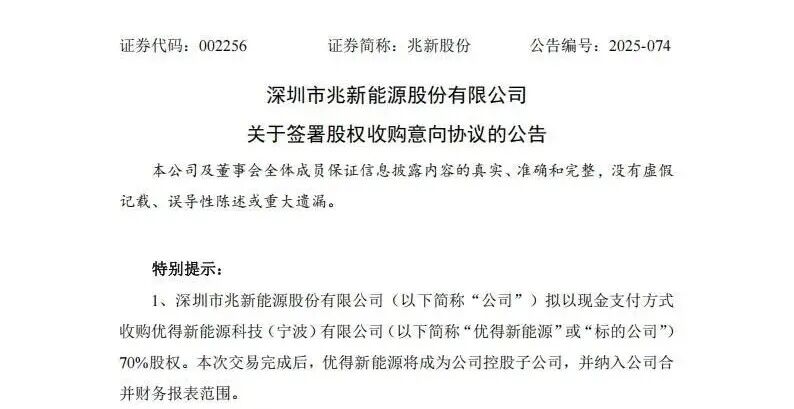
刚扭亏就“砸钱”!光伏上市公司2.2亿下场收购运维龙头
Xin Lang Cai Jing· 2025-12-12 14:13
Core Viewpoint - The photovoltaic industry is experiencing a bifurcated landscape, with some companies struggling due to oversupply and price competition, while others are seizing opportunities in niche markets to accelerate expansion [1][13]. Acquisition Details - On December 11, 2025, the company announced a significant acquisition, proposing to purchase 70% of the shares of Youde New Energy Technology (Ningbo) Co., Ltd. for a maximum price of 220 million yuan [2][14]. - Youde New Energy will become a subsidiary and included in the consolidated financial statements of the company [2][14]. Market Reaction - Following the announcement, the company's stock price surged to a limit-up of 3.91 yuan per share on December 12, reflecting positive market feedback [4][16]. - The acquisition is initially valued based on a dynamic price-to-earnings ratio not exceeding 12 times the target company's promised net profit over the next three years, although the final price will depend on audit and performance results [4][16]. Target Company Overview - Youde New Energy is a leading player in the new energy operation and maintenance sector, established in December 2016 with a registered capital of 50 million yuan [6][18]. - The company has over 100 operation and maintenance centers nationwide, covering key high-price areas in East and South China, and has managed over 2,000 operational power stations with a cumulative capacity exceeding 10 GW [6][18]. Strategic Intent - The acquisition aims to strengthen the company's capabilities in the new energy operation and maintenance sector, enhancing its strategic deployment and expanding its business development space [7][18]. - The company has successfully developed a dual business model of "fine chemicals + new energy," with new energy revenue accounting for 49.87% of total revenue in the first half of 2025 [19]. Financial Performance - The company has faced significant financial volatility, with cumulative losses exceeding 750 million yuan from 2021 to 2024, but it achieved a net profit of 4.91 million yuan in the first three quarters of 2025 [10][21]. - As of the end of the third quarter of 2025, total assets amounted to 1.69 billion yuan, with a debt of 538 million yuan, resulting in a debt-to-asset ratio of 31.81%, indicating manageable debt pressure [21][22]. Industry Context - The current state of the new energy industry is characterized by a shift from project development to full lifecycle operations, with maintenance becoming a core demand area as the scale of existing power stations expands [12][24]. - The acquisition of a leading company in the sector allows the company to quickly capture market share and synergize with its existing photovoltaic operations and EPC business [12][24].