辅助驾驶

Search documents
比亚迪汉L新车色及OTA发布
Chang Sha Wan Bao· 2025-11-21 08:42
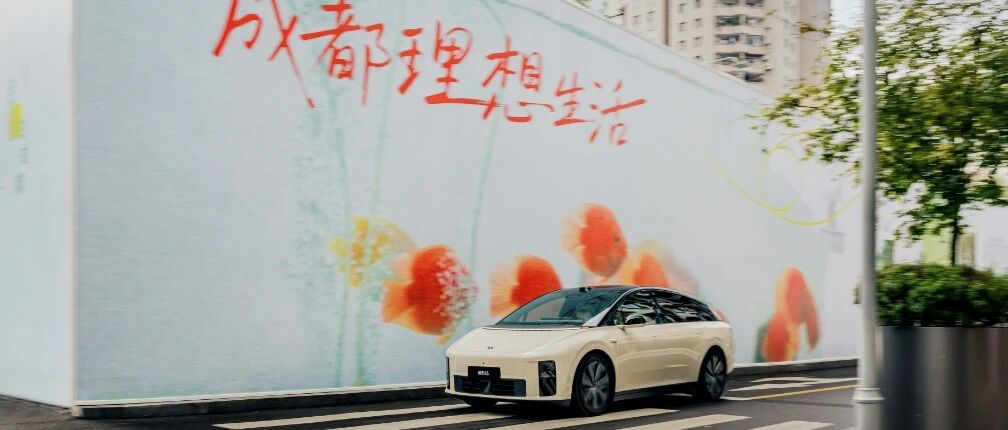
Core Insights - BYD has officially launched its flagship sedan Han L with new color options and OTA updates, offering three EV models priced between 204,800 to 264,800 yuan after subsidies, and three DM models priced between 194,800 to 244,800 yuan after subsidies [1][2] Pricing and Promotions - The Han L EV models are priced at 204,800 yuan for the base model and up to 264,800 yuan for the top model after subsidies, while the Han L DM models range from 194,800 yuan to 244,800 yuan after subsidies [1][2] - Customers can enjoy a maximum of 52,000 yuan in value-added benefits, including trade-in subsidies [1][2] Vehicle Specifications - The Han L EV features the world's first mass-produced passenger vehicle with a full-domain kilovolt high-voltage architecture, equipped with a fast-charging battery and a 30,000 RPM motor [1][2] - The peak charging power of the Han L EV reaches 1000 kW, allowing for a 400 km range to be charged in just 5 minutes [1][2] - The single motor power reaches 580 kW, with a total horsepower of 1102 for the all-wheel-drive version, achieving 0-100 km/h in just 2.7 seconds and a top speed of 305 km/h [1][2] Hybrid Technology - The Han L DM utilizes the fifth-generation DM technology, offering the DM-p king hybrid and DM-i super hybrid options, with a fastest 0-100 km/h acceleration of 3.9 seconds and a minimum fuel consumption of 3.9 L/100 km [3] Design and Aesthetics - The Han L features a design inspired by "Loong Face" aesthetics, appealing to younger consumers with new color options like olive green and Xizi blue, along with a blackened sports package [5] - The interior includes a high-end smart cockpit with OTA upgrades, featuring a new UI design that adapts to ambient light and incorporates seasonal themes [5] Intelligent Features - The Han L is equipped with the "DiPilot 300" advanced driving assistance system, enabling features like "parking to parking" navigation and automatic parking without human intervention [5] - BYD has partnered with various companies to create a "human × car × home" ecosystem, allowing users to control home appliances from the vehicle and vice versa [6] Limited-Time Offers - A limited-time offer allows customers to purchase the exterior package for 5,000 yuan, which includes features originally priced at 13,000 yuan, along with a trade-in benefit of up to 15,000 yuan [6]


雷军宣布小米YU7安全辅助测试成功,四大场景全部通过
Xin Lang Ke Ji· 2025-11-21 07:50
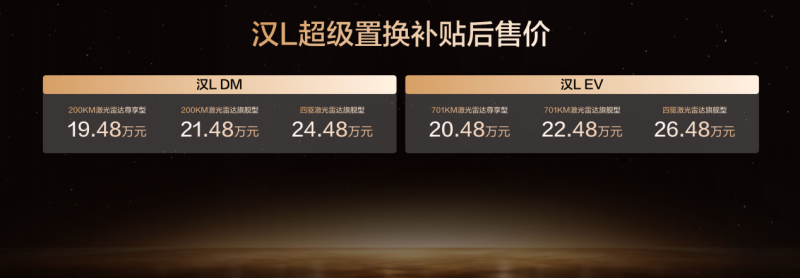
1、摩托车逆行变道切入 2、消失的前车+多车连撞事故现场 3、前后车夹击+有遮挡儿童横穿 4、摩托车强行变道+前方遇事故车 小米搭载HAD增强版的车型将支持20项安全辅助配置,为小米汽车行车安全提供更全面的保障。 不过小米汽车业强调,辅助驾驶不是自动驾驶 ,驾驶仍需时刻保持专注。 【#雷军称小米YU7安全辅助测试成功#:120km/h前后车夹击+儿童鬼探头】小米创办人、董事长兼 CEO@雷军 宣布,中国汽研安全辅助功能四大场景测试,小米AES紧急转向辅助功能,全部测试成 功。 四大场景分别为: 据介绍,在避让空间和车道条件允许情况下,AES紧急转向辅助能在AEB无法有效避免或降低碰撞风险 时,紧急转向辅助进行避让。 PIC CIRCH IN THOUGHT 6 @新浪科技 日间 100km/h 摩托车强行变道+前方遇事故车 NEAR AND AND AND AND AND AND AND AND A BEACH AND A B 63 @新浪科技 00-540 ...

小米集团CEO雷军:小米智驾团队超1800人,博士达108人!2025年,小米在AI领域研发投入超70亿
Sou Hu Cai Jing· 2025-11-21 02:57
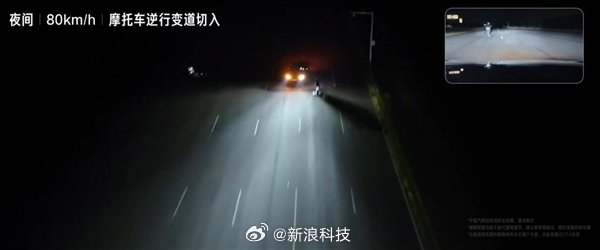
Group 1 - Xiaomi Auto will increase investment in the field of assisted driving, with over 7 billion yuan allocated to AI research and development by 2025 [1] - The Xiaomi intelligent driving team consists of over 1,800 members, including 108 PhD holders [1] - Key members of the team include Dr. Ye Hangjun, Dr. Chen Guang, Dr. Chen Long, and Dr. Wang Naiyan, each responsible for different aspects of the project [1]
问界系列车型累计交付突破90万辆
Xin Lang Cai Jing· 2025-11-21 02:32
Core Insights - AITO Wenjie series vehicles have achieved cumulative deliveries exceeding 900,000 units, showcasing strong market performance [1] Delivery Breakdown - Wenjie M9 has delivered 260,000 units - Wenjie M8 has delivered 130,000 units - Wenjie M7 has delivered 350,000 units - Wenjie M5 has delivered 160,000 units [1] Autonomous Driving Initiatives - All new Wenjie vehicles will be test-driven by executives immediately upon release, with a requirement to activate assisted driving upon entry, or face penalties - The total mileage for assisted driving in the Wenjie series has reached 4.45 billion kilometers [1]

8点1氪丨西贝回应门店一线全员涨薪;谷歌发布Gemini 3;苹果回应iPhone 17 Pro Max掉色;
3 6 Ke· 2025-11-19 00:25
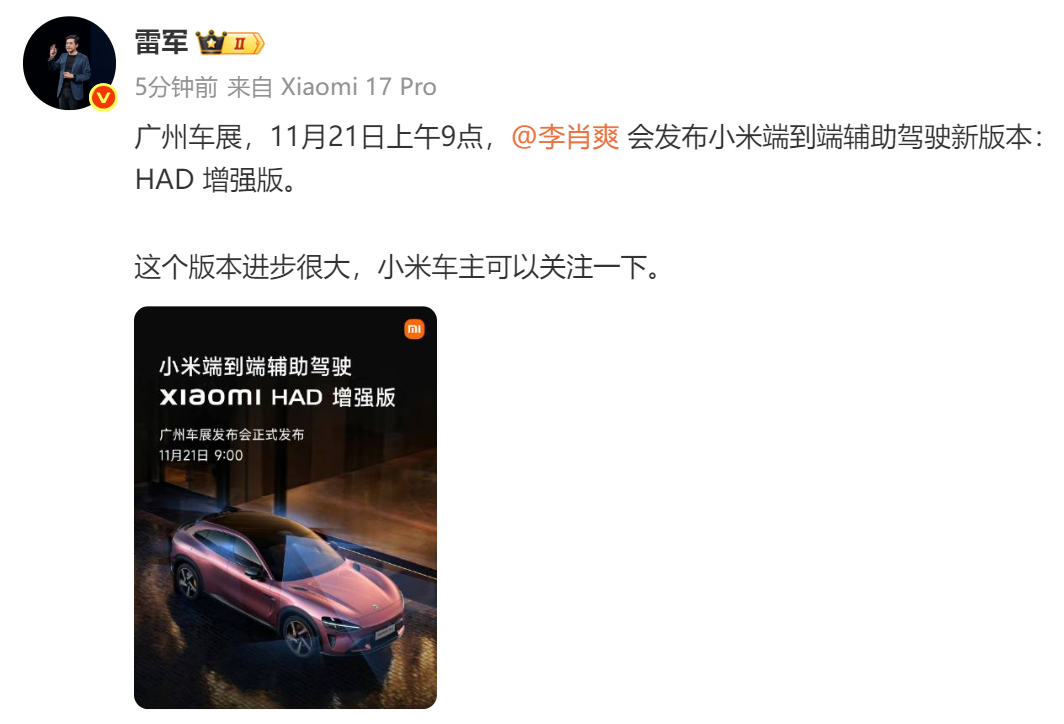
Group 1 - Xiaomi will release an upgraded version of its end-to-end assisted driving system, HAD Enhanced Version, at the Guangzhou Auto Show on November 21 [5] - Dazhong City, a state-owned real estate enterprise, has announced its plan to delist from the Hong Kong Stock Exchange, with the delisting expected to take effect on November 27 [3] - Wahaha's general manager represented the company at the 2025 sales meeting, while the founder, Zong Fuli, was absent [4] Group 2 - Google has launched its latest AI model, Gemini 3, which aims to compete with OpenAI's ChatGPT, boasting improved reasoning and multimodal capabilities [2] - Apple's designer Abidur Chowdhury has reportedly left the company to join an AI startup, causing a stir within Apple's design team [6] - The tax authorities are cracking down on tax evasion practices involving income splitting, with several cases exposed this year [11] Group 3 - Meta's Chief Revenue Officer, John Hegeman, announced his departure to start his own company, marking a significant leadership change for the social media giant [7] - Meta won a federal antitrust lawsuit regarding its acquisitions of Instagram and WhatsApp, with the court ruling that the transactions did not violate antitrust laws [7] - The U.S. stock market saw a collective decline, with major indices falling, and many large tech stocks also experienced drops [8] Group 4 - Amazon is set to issue bonds for the first time in three years, raising $15 billion to support AI development [18] - "Material Science Source Map" has completed a multi-million angel round of financing, which will focus on core technology development [19] - Weibo reported a 5% year-on-year decline in total revenue for Q3, amounting to approximately 3.156 billion yuan [20]




雷军:将发布小米端到端辅助驾驶新版本
Mei Ri Jing Ji Xin Wen· 2025-11-18 02:53
Core Insights - The article discusses the recent financial performance of a leading technology company, highlighting a significant increase in revenue and net income compared to the previous year [1][2][3] - It emphasizes the company's strategic investments in research and development, which are expected to drive future growth and innovation [4][5] Financial Performance - The company reported a revenue of $50 billion for the last quarter, representing a 20% increase year-over-year [6] - Net income reached $10 billion, up from $8 billion in the same quarter last year, indicating a 25% growth [7][8] - Earnings per share (EPS) rose to $5, compared to $4 in the previous year, reflecting a 25% increase [9] Strategic Initiatives - The company has allocated $5 billion towards R&D, which is a 15% increase from the previous year, aiming to enhance product offerings and technological advancements [10][11] - Partnerships with other tech firms are being pursued to expand market reach and leverage complementary technologies [12] Market Position - The company maintains a strong market share of 30% in its primary sector, positioning it as a leader among competitors [13] - Recent acquisitions have strengthened its portfolio, contributing to a more diversified revenue stream [14][15]
宇通客车:龙头地位稳固,出口拉动业绩
市值风云· 2025-11-17 10:12
Core Viewpoint - The bus industry is experiencing a strong recovery after years of adjustment, with Yutong Bus showing significant profit growth and robust cash flow, alongside high dividends [4][30]. Financial Performance - In Q3 2025, Yutong Bus achieved a net profit of 1.36 billion yuan, a year-on-year increase of 79% [4][27]. - For the first three quarters of 2025, the company reported a revenue of 26.37 billion yuan, up 9.5% year-on-year [5]. - The net profit attributable to shareholders reached 3.29 billion yuan, reflecting a 35.4% increase, while the non-recurring net profit was 2.62 billion yuan, up 26.3% [7][27]. - The company's cash flow from operating activities decreased by 60.4% to 1.796 billion yuan, primarily due to increased payments to suppliers [27]. Market Position and Competition - Yutong Bus maintains a leading position in the bus market, with a market share of 35% to 38% since 2018, despite challenges such as overcapacity and intensified competition [11][12]. - The company holds significant market shares in various segments: 49.5% in the seating bus market, 68.9% in the school bus market, and 23.9% in the public transport market [10]. - The domestic bus market is becoming saturated, prompting companies to expand globally, with Yutong's overseas revenue growing nearly 25% in 2022 [14][17]. Growth Drivers - The recovery in demand for buses, particularly in exports and new energy vehicles, has been a key driver of Yutong's performance, with export sales increasing by 78.9% in 2023 [9][17]. - The company has transitioned from a "manufacturing" to a "manufacturing service" model, exporting to over 60 countries and regions [18]. Research and Development - Yutong Bus invests heavily in R&D, with a research expense ratio of 7.8% in 2022, significantly higher than its competitors [22][23]. - The company focuses on key technologies such as electric drive, control, and battery systems, collaborating with leading suppliers to achieve breakthroughs [25]. Dividend Policy - Yutong Bus has a generous dividend policy, with cumulative dividends of 26 billion yuan over 28 years, exceeding its total fundraising amount by 4.2 times [30].


10万元级就带激光雷达 2025广州车展上能看到的高性价比辅助驾驶车型盘点
Zhong Guo Zhi Liang Xin Wen Wang· 2025-11-17 09:28
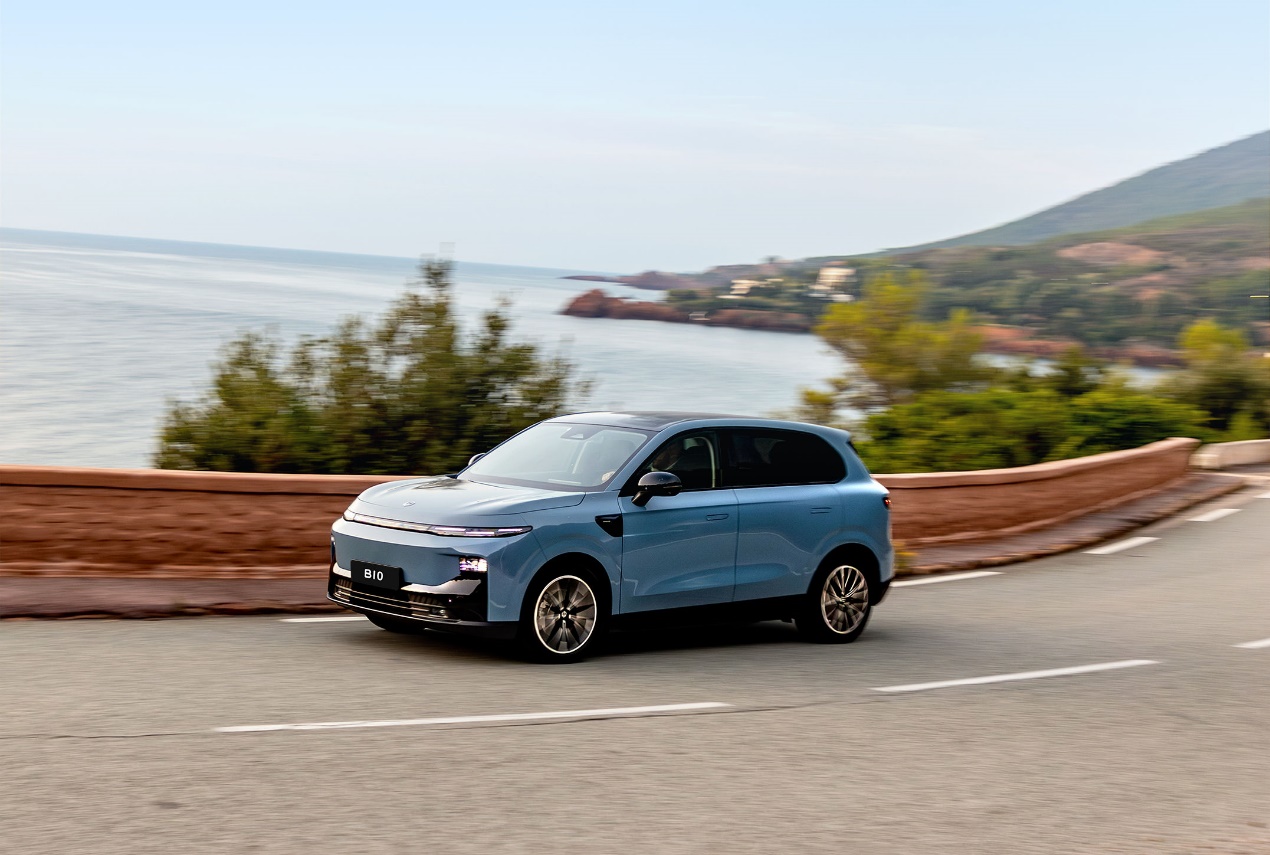
Core Insights - The integration of lidar technology, previously exclusive to high-end vehicles, is now being adopted in lower-priced models, indicating a shift in the automotive industry towards more advanced safety features in budget-friendly cars [1] Group 1: Vehicle Models and Specifications - Leap B10 is priced between 99,800 to 149,800 yuan and is built on the LEAP3.5 technology platform, featuring CTC2.0 battery integration, an 800V fast-charging system, and an intelligent cockpit [2] - The B10 has dimensions of 4515×1885×1655mm and a wheelbase of 2735mm, designed for comfort with a rear-wheel drive system and acceleration from 0 to 100 km/h in as fast as 6.8 seconds [4] - The Toyota Platinum 3X is priced between 109,800 to 159,800 yuan, designed for the Chinese market with a futuristic design and dimensions of 4600×1875×1645mm [8][10] - The AION RT is priced from 99,800 to 123,800 yuan, built on the AEP 3.0 platform, featuring a sleek design with dimensions of 4865×1875×1520mm and a wheelbase of 2775mm [13][15] - The BYD Seagull is priced between 69,800 to 82,800 yuan, built on the e-platform 3.0, with dimensions of 3780×1715×1540mm and a wheelbase of 2500mm [18][20] - The XPeng MONA M03 is priced between 119,800 to 139,800 yuan, featuring a low-slung coupe style with dimensions of 4780×1896×1445mm and a wheelbase of 2815mm [23][25] Group 2: Advanced Driving Assistance Systems - The B10 features lidar with a detection range of up to 300 meters and a 140-degree field of view, positioning it in the mid-to-high-end intelligent driving market [5][7] - The AION RT is equipped with a 126-line lidar and an NVIDIA Orin-X chip with 254 TOPS of computing power, supporting high-level autonomous driving capabilities without the need for high-precision maps [17] - The BYD Seagull includes a driving assistance platform with a combination of 5 millimeter-wave radars and 12 cameras, enabling features like highway navigation and obstacle avoidance [22] - The XPeng MONA M03 offers two levels of intelligent driving, with the high-end version featuring two NVIDIA Orin X chips and a total computing power of 508 TOPS, supporting full-scene intelligent driving capabilities [27]
比亚迪汽车:10月比亚迪辅助驾驶车型销售316759辆,每天生成辅助驾驶数据超1.3亿公里
Xin Lang Cai Jing· 2025-11-14 11:14
Core Insights - In October, BYD sold 316,759 units of vehicles equipped with advanced driver assistance systems, indicating strong demand for its technology [1] - The company generates over 130 million kilometers of driving data daily from its assisted driving models, showcasing the extensive data collection capabilities [1] Group 1 - BYD's sales of assisted driving vehicles reached 316,759 units in October [1] - The daily generation of assisted driving data exceeds 130 million kilometers [1]
i6首个完整自然月交付5775|理想25年10月记录
理想TOP2· 2025-11-11 06:19
Core Insights - The article discusses the delivery performance of Li Auto in September 2025, highlighting a total delivery of 31,767 vehicles, with 18,430 being incremental and 13,427 being pure electric [1][2] - It also mentions various developments and announcements from Li Auto, including product design philosophy, autonomous driving technology, and strategic partnerships [3][4] Delivery Performance Summary - Total deliveries in September 2025 reached 31,767, a decrease from 33,951 in August 2025 [2] - Pure electric vehicle deliveries were 13,427 in September, down from 24,554 in August [2] - Breakdown of specific models for September includes L6 (9,680), L7 (4,347), L8 (2,183), L9 (2,130), i6 (5,775), i8 (5,749), and MEGA (1,903) [1][2] Recent Developments - On September 22, 2025, a user highlighted that many L6 owners seek self-expression rather than conforming to traditional family narratives [2] - Li Auto announced a successful trial of a new component aimed at enhancing vehicle safety on October 11, 2025 [4] - The company held a global partner conference on October 30, 2025, to share strategic outlooks for the next three years [3] Product and Technology Innovations - Li Auto released a new model of autonomous driving technology on September 24, 2025, aimed at improving user confidence in assisted driving [2] - The company is focusing on enhancing its operating system architecture, with a presentation on the technical advantages of its Star Ring OS on October 22, 2025 [2] Customer Feedback and Market Perception - There are reports of a certain percentage of users expressing dissatisfaction with recent delivery experiences as of October 13, 2025 [2] - Li Auto's CEO discussed the challenges of transitioning to AI and the anticipated growth in computing power needs during a video interview on October 18, 2025 [2]