AI硬件

Search documents
国轩高科:拟定增募资不超过50亿元;欣旺达:人形机器人电池处于研发与客户对接阶段 | 新能源早参
Mei Ri Jing Ji Xin Wen· 2026-02-05 23:13
Group 1 - Guoxuan High-Tech plans to raise no more than 5 billion yuan for projects including a 20GWh power battery project and a new lithium-ion battery manufacturing base, aiming for a total capacity of 60GWh to enhance market share and competitiveness [1] - The company aims to leverage economies of scale to reduce costs amid intense industry competition and ongoing price wars, with the fundraising providing essential liquidity and supporting advanced capacity iteration [1] Group 2 - Sunwoda is actively researching and engaging with clients in the humanoid robot battery sector, indicating a strategic extension into emerging markets [2] - The company has established battery technology and product development capabilities, with existing applications in cleaning and service robots, positioning itself to capitalize on the AI hardware trend [2] Group 3 - GCL-Poly has not yet secured any orders in the "space photovoltaic" sector, which remains in the exploratory phase with uncertain technological and commercial prospects [3] - The company emphasizes the distinction between speculative market interest in "space photovoltaic" and its actual business performance, urging investors to focus on its core ground photovoltaic operations [3]


帮主郑重收评:银行股午后为何暴拉?市场分化中看懂资金调仓
Sou Hu Cai Jing· 2026-02-05 08:57
Core Viewpoint - The market is experiencing a divergence characterized by "defensive reallocation" meeting "policy-driven support," with significant movements in the financial and consumer sectors while precious metals and tech hardware continue to decline [3][4][6] Group 1: Market Dynamics - The market's downturn is primarily affecting precious metals and certain tech hardware sectors due to external market sentiment and profit-taking, indicating a low risk appetite among investors [3] - Funds are reallocating towards large consumer and financial sectors, driven by the "Spring Festival effect" and supportive policies [3][4] Group 2: Financial Sector Insights - The surge in bank stocks is attributed to three main factors: policy support from the central bank, the defensive characteristics of high dividends and low valuations, and anticipatory positioning for economic stabilization [4][5] - The recent announcement of zero tariffs for residents in Hainan's free trade port is expected to boost consumer spending, particularly benefiting retail and film sectors [4] Group 3: Investment Strategies - Investors are advised to recognize the current market phase and adopt a "structural defense" approach, focusing on stable performance and policy-friendly sectors [5] - For strong financial and consumer sectors, it is recommended to follow trends cautiously and avoid chasing stocks that have seen excessive intraday gains [5] - Growth sectors undergoing adjustments should be closely monitored, with a focus on identifying strong industry leaders for potential long-term investment [5] - A balanced investment strategy is suggested, utilizing a "barbell" approach to allocate assets between defensive sectors and maintaining cash reserves for future opportunities [5][6] Group 4: Future Market Observations - Attention should be given to the sustainability of the financial sector's performance and whether market volume can increase effectively [6] - The response of the U.S. stock market to significant tech events, such as SpaceX's satellite system application, may influence the sentiment of the tech sector in the A-share market [6]

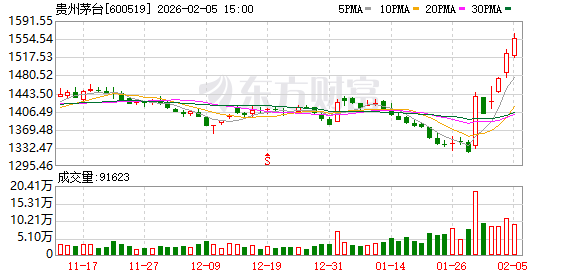
1322元→1565元!一周之前 为什么没人相信“茅台会涨”?
Mei Ri Jing Ji Xin Wen· 2026-02-05 07:35
2月5日,三大指数午后跌幅收窄。截至收盘,沪指跌0.64%,深成指跌1.44%,创业板指跌1.55%。 板块来看,大消费板块大涨,大金融板块午后走强,算力租赁概念回暖。下跌方面,有色金属、电网设备、油气等板块跌幅居前。 全市场超3700只个股下跌。沪深两市成交额2.18万亿元,较上一个交易日缩量3048亿。 A股市场仍在震荡,昨天领涨的光伏今天领跌。 二是,在茅台持续上攻的影响下,虽然大盘轮动节奏快,但大消费板块仍得到资金关注,不少分支题材开始活跃。 而关于"股王"茅台的故事,又有新篇章。 上周三(1月28日),白酒板块创出阶段新低后小幅反弹,但"无人在意"——当天贵金属还在暴涨; 这天盘中,贵州茅台最低触及1322.01元/股,尽管仍是"股王",但股价也只比寒武纪高出几十块,有些摇摇欲坠。 上周四(1月29日),白酒板块放出巨量,来了个"旱地拔葱",终于被市场注意到,但持续性仍然存疑——毕竟贵金属还在涨。 | 2月5日 | 2月4日 2月3日 | | 2月2日 | 1月30日 | 1月29日 | 1月28日 | | | --- | --- | --- | --- | --- | --- | --- | -- ...

马云现身阿里千问办公点;小米回应SU7起火丨科技风向标
2 1 Shi Ji Jing Ji Bao Dao· 2026-02-05 02:18
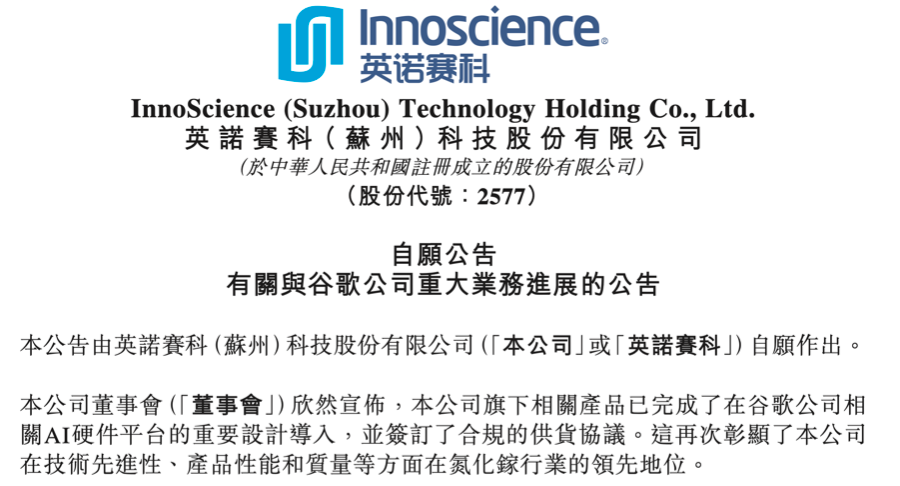
Group 1 - Xiaomi's SU7 vehicle fire incident was caused by residual fire sources igniting surrounding combustible materials, not due to the vehicle itself [2] - Baidu announced a new stock buyback plan with a maximum amount of $5 billion and plans to distribute dividends for the first time in 2026 [4] - Long光华芯 denied rumors of a 4.5 billion investment from Huawei, stating the information was false and misleading [5] Group 2 - Tencent's mixed AI Infra team launched an open-source high-performance LLM inference core operator library, achieving significant performance improvements in various models [6] - In response to rumors about space photovoltaic business, JinkoSolar confirmed no collaboration with Elon Musk's team, while GCL Group acknowledged their visit [7] - Tencent launched a standalone comic drama app, Fire Dragon Comic, joining the competitive market alongside ByteDance and Baidu [8] Group 3 - Vivo confirmed the internal project for a Vlog camera, targeting the DJI Pocket series, with an expected release in 2026 [9] - 中文在线 plans to collaborate with Tencent on animation micro-short drama licensing, with an estimated cooperation amount of 23.2 million yuan [10] - Dassault Systèmes and NVIDIA announced a strategic partnership to build an industrial AI platform supporting virtual twins [12] Group 4 - 英诺赛科's gallium nitride products have been integrated into Google's supply chain for AI hardware platforms, focusing on high-growth areas [13] - 云天励飞 announced a three-year strategy for high-performance AI inference chips, aiming to reduce the cost of large model inference significantly [16] - 锐新科技 is planning a major asset restructuring to acquire control of Wuhu Deheng Automotive Equipment Co., with details to be disclosed soon [17] Group 5 - iQOO launched the iQOO 15 Ultra smartphone, featuring advanced specifications and a focus on high-end performance, starting at a promotional price of 5499 yuan [19]

两大龙头中际旭创、新易盛为何大跌?四个原因曝光
Zhong Guo Zheng Quan Bao· 2026-02-04 05:18
Group 1 - The core viewpoint of the news is that the leading optical module stocks, Zhongji Xuchuang and Xinyi Sheng, experienced significant declines, which negatively impacted the AI hardware sector as a whole [1][4]. - The recent clarity in the deployment timeline of CPO (Co-Packaged Optics) technology has raised market concerns about its potential impact on the optical module industry, as CPO can enhance transmission speed and efficiency while reducing size and power consumption [2][3]. - Zhongji Xuchuang and Xinyi Sheng's performance forecasts for 2025 indicate substantial profit growth, with Zhongji Xuchuang expecting a net profit of 9.8 billion to 11.8 billion yuan (approximately $1.4 billion to $1.7 billion), representing a year-on-year increase of 89.5% to 128.17%, and Xinyi Sheng projecting a net profit of 9.4 billion to 9.9 billion yuan (approximately $1.3 billion to $1.4 billion), with a year-on-year increase of 231.24% to 248.86% [3]. - The phenomenon of stocks that become the top holdings in public funds often experiencing subsequent declines is highlighted, with Zhongji Xuchuang recently taking this position, which coincided with a drop in its stock price [3]. Group 2 - The decline in U.S. stocks such as Nvidia and Broadcom has affected market sentiment towards A-share computing hardware stocks, contributing to the overall downturn in the AI application sector [4]. - Concerns about the potential replacement of core business functions in software companies by AI technology have led to a significant drop in the software services sector in the U.S. market [5]. - The ongoing debate about whether large AI models will overshadow software companies is noted, with insights suggesting that AI's impact is not limited to software, and various companies are adapting to leverage AI opportunities [6].


深圳投资人,难进“大疆圈”
3 6 Ke· 2026-02-03 09:44
Core Insights - The Shenzhen smart hardware market is experiencing rapid growth, with significant investments from USD institutions leading to skyrocketing valuations for startups [2][3][25] - Local investment firms in Shenzhen are struggling to compete with faster decision-making and higher valuations from USD funds, resulting in a lack of presence in high-potential projects [3][23][29] - The emergence of "AI+" hardware products has shifted the narrative, allowing companies to tell compelling growth stories that attract investment [7][8][42] Investment Trends - In 2025, Shenzhen saw 77 smart hardware companies complete 106 investments, with a total disclosed investment amount of approximately 10.049 billion yuan, a nearly sevenfold increase from 2024 [2] - USD institutions are increasingly willing to make quick investment decisions, with some able to finalize deals within days, contrasting with the slower processes of local RMB funds [9][10][27] - The competition among investment firms has intensified, with top firms like Sequoia China and Hillhouse Capital leading the charge in securing early-stage investments [15][21] Market Dynamics - The influx of USD funds has led to a "circle" game in investment, where access to high-quality projects is limited to a select group of investors [14][21] - Local RMB funds are often constrained by their conservative investment strategies and lengthy decision-making processes, making it difficult to capitalize on emerging opportunities [26][27][30] - The narrative around Shenzhen's hardware sector has evolved, with successful companies now able to present strong growth stories, making them more attractive to investors [8][42] Competitive Landscape - The competition for talent from leading companies like DJI has become a critical factor in securing successful investments, as these individuals often have proven track records [16][41] - Local RMB funds are adapting by focusing on unique projects and leveraging their connections, but they still face challenges in competing with the speed and flexibility of USD funds [20][40] - The investment landscape is characterized by a divide between aggressive USD funds and more cautious local RMB funds, each playing distinct roles in the market [41][44]
歌尔股份加码回购最高至15亿 两笔关键收购完善AI硬件生态
Chang Jiang Shang Bao· 2026-02-03 00:28
Group 1 - The core viewpoint of the article highlights that GoerTek (歌尔股份) has increased its share repurchase plan, raising the total repurchase amount from a minimum of 5 billion yuan to a minimum of 10 billion yuan, reflecting the company's confidence in its future business prospects and commitment to shareholder returns [1][2] - GoerTek's net profit attributable to shareholders for the first three quarters of 2025 reached 2.587 billion yuan, representing a year-on-year increase of 10.33%, demonstrating resilience in a slowing consumer electronics market [1][3] - The company has strategically positioned itself in the AI hardware sector, completing significant investments in Micro-LED technology and acquiring key optical firms, thereby establishing a comprehensive AI hardware optical supply chain [1][4][5] Group 2 - GoerTek's revenue has shown steady growth, increasing from 23.75 billion yuan in 2018 to 104.9 billion yuan in 2022, with a recovery in net profit to 2.665 billion yuan in 2024 after a temporary decline [3][4] - The company has maintained a robust financial position, with total assets reaching 94.82 billion yuan, a 14.65% increase compared to the previous year [3] - GoerTek's strategic acquisitions in the AI hardware space are expected to enhance its competitive edge, particularly in the fields of virtual/augmented reality and smart glasses [4][5]

AI硬件3个一线信号,决定谁能活过2026
虎嗅APP· 2026-01-30 10:57
Core Insights - The article emphasizes a significant shift in the AI hardware industry, indicating that only products that solve specific problems and have user willingness to pay will survive post-capital frenzy [9][12]. Market Opportunities - Focusing on specific, high-frequency, and payable pain points is more viable than creating "all-powerful" products, leading to a division between opportunity zones and concept zones [11]. - Products like AI recording pens, smart translation headphones, and pet companionship robots represent "AI enhancement of traditional categories," providing immediate and perceivable value [12]. - The AI recording and audio efficiency hardware are identified as core opportunity points for 2026, with examples like the iFlytek headphones addressing business and academic needs [12]. - The pet companionship robot market is characterized by a young female consumer base, but faces challenges due to severe functional homogeneity [13]. - A more complex product design combining robotics and emotional feedback is suggested as a way to differentiate in the pet market [13][15]. Concept Zone - General-purpose humanoid robots and all-functional AI office assistants remain in the conceptual exploration phase, often failing to meet real needs due to high costs and unclear applications [16]. - The necessity of independent AI office devices is questioned, with a potential future shift towards an "AI hub + multiple smart terminals" model [16]. Cost Control - Effective cost control is essential for profitability, with a focus on managing hardware costs, particularly motors and sensors [18]. - The current limitation is not computational power but rather the cost of hardware components, with a recommendation to utilize cost-effective domestic models [18]. - Companies must either incorporate AI functionality costs into hardware pricing or adopt a subscription model to align price and cost [19]. - The supply chain landscape is evolving, with smaller teams facing challenges in assembly and needing to innovate in branding and market positioning [20]. - The growth of domestic AI chips is driven by government and market demands, influencing the technology choices of hardware manufacturers [21]. Commercial Validation - 2026 is highlighted as a pivotal year for commercial validation in AI hardware, where success will be measured by tangible business results rather than flashy concepts [23]. - Sales data, including monthly sales and shipment volumes, are becoming essential metrics for industry players [24]. - A balanced approach between technology and sales is recommended, with a focus on practical applications and market feedback to refine products [25]. - The prevailing business model for AI hardware is expected to be a combination of one-time hardware purchases and subscription-based AI services [26]. Conclusion - The article concludes that the future winners in the AI hardware space will be those who can clearly articulate the specific problems they solve, why users will pay for solutions, and their competitive advantages [28].

CPO概念股本周领涨科技,关注创业板ETF易方达(159915)等产品配置价值
Sou Hu Cai Jing· 2026-01-30 10:45
Group 1 - The technology sector shows mixed performance, with solid-state battery stocks continuing to adjust while CPO concepts strengthen against the trend [1] - The ChiNext Growth Index rose by 0.3%, while the ChiNext Index fell by 0.1%, and the ChiNext Mid-Cap 200 Index decreased by 4.1% [3] - According to Industrial Securities, as the annual report forecasts of A-share listed companies enter a peak disclosure period, the impact of performance on structure may become more significant [1][3] Group 2 - The current performance highlights are concentrated in AI hardware, batteries, pharmaceuticals, steel, and non-bank sectors, which have seen marginal upward revisions in profit expectations [1] - The rolling price-to-earnings (P/E) ratios for the ChiNext Index, ChiNext Mid-Cap 200 Index, and ChiNext Growth Index are 42.3x, 113.3x, and 40.5x respectively [3] - The ChiNext Mid-Cap 200 Index is composed of 200 stocks with medium market capitalization and good liquidity, reflecting the overall performance of representative companies in the ChiNext market [4]


AI投资“后共识阶段”:创投押注垂类应用与底层设施
2 1 Shi Ji Jing Ji Bao Dao· 2026-01-30 09:52
Group 1 - The AI large model sector is experiencing significant capital inflow, with companies like Zhiyu and MiniMax recently listing on the Hong Kong Stock Exchange, leading to substantial increases in their market valuations [1][5] - Zhiyu's market value surged from 57.9 billion HKD to approximately 100 billion HKD, while MiniMax's value rose from over 70 billion HKD to more than 150 billion HKD within a month [5] - The ongoing financing rounds for companies like Moonlight and StepStar indicate heightened interest and valuation growth in the AI sector, with Moonlight's pre-financing valuation reaching 4.8 billion USD [5][6] Group 2 - Investment in the AI industry is evolving into a more diversified phase, with a shift from seeking a singular "Open AI" to identifying companies that can effectively implement AI across various industries [2] - The potential for AI applications in China is vast, particularly in sectors like manufacturing, finance, and healthcare, where AI integration is still in its early stages [2] - The current entrepreneurial landscape in AI is likened to the mobile internet era of 2011, suggesting that foundational infrastructure is being established for future application explosions [2] Group 3 - Investors are increasingly focusing on vertical applications of AI and foundational infrastructure, such as energy, computing power, and security protocols, which are seen as critical areas for investment [3][9] - The AI industry is perceived as undergoing a significant transformation, with a shift from traditional elements like algorithms and data to a broader set of competitive factors including hardware and materials [8] - The emphasis on AI applications and infrastructure reflects the industry's recognition of the challenges posed by energy consumption and heat dissipation in achieving Artificial General Intelligence (AGI) [9] Group 4 - Despite the successful listings of Zhiyu and MiniMax, the industry is not nearing a conclusion, as many leading companies have not prioritized going public as a primary strategy [7] - The focus on establishing sustainable business models remains a core challenge for many AI companies, with public listings serving more as a means to enhance liquidity and visibility rather than a guarantee of commercial success [7] - The current landscape mirrors the early days of the electric vehicle industry, where companies sought public listings without clear paths to surpassing traditional competitors [7] Group 5 - The Microsoft incubator is targeting AI application companies led by Chinese founders, emphasizing the competitive edge of entrepreneurs from the Greater China region [9] - There is a growing interest in AI startups that focus on vertical applications and foundational infrastructure, with a strong emphasis on the speed of product commercialization and technological implementation [9][10] - Investors are particularly keen on entrepreneurs with significant experience, as the AI sector is still in its infancy, and those with extensive hands-on experience are seen as valuable assets [10]