风险管理

Search documents
Jackson(JXN) - 2025 Q2 - Earnings Call Transcript
2025-08-06 16:00
Financial Data and Key Metrics Changes - Adjusted operating earnings for the second quarter were $350 million, supported by strong performance from spread products and higher yields in the bond portfolio [17][19] - Adjusted operating earnings per share was $4.87, with an adjusted figure of $5.12 after accounting for notable items, reflecting a 5% increase from the previous year [20] - Total adjusted capital exceeded $5.3 billion, a 5% increase since year-end 2024, with risk-based capital estimated at 566% [13][34] Business Line Data and Key Metrics Changes - Retail annuity sales reached $4.4 billion, a 9% increase from the first quarter and a 4% increase year-over-year, driven by RILA and fixed annuity sales [7][19] - RILA account balances increased by nearly 80% year-over-year, with sales approaching $1.4 billion, up 16% from the previous quarter [6][20] - Variable annuity net outflows improved, totaling $2.2 billion, down 27% year-over-year and 39% from the first quarter [11][19] Market Data and Key Metrics Changes - Average retail annuity AUM grew to $249 billion, up from year-end 2024, supported by strong separate account returns [22] - The company experienced a 9.4% return on separate account assets, contributing approximately $19 billion to AUM [45] Company Strategy and Development Direction - The company remains committed to a balanced capital management strategy, focusing on disciplined investments, maintaining a strong balance sheet, and consistent capital returns to shareholders [15][32] - Jackson is exploring opportunities for risk transfer and potential M&A to create new streams of capital generation [55][74] - The company aims to enhance its product offerings and distribution capabilities to meet diverse market needs [62] Management's Comments on Operating Environment and Future Outlook - Management expressed confidence in the company's strong capital generation and ability to support future growth initiatives while returning capital to shareholders [14][29] - The need for financial security in retirement is emphasized, with a focus on providing flexible protection and income-oriented solutions [15][37] Other Important Information - The company launched a new digital experience for financial professionals to enhance service and support [11][12] - Jackson was recognized in Barron's annual 100 Best Annuities Guide, highlighting its commitment to product innovation [12] Q&A Session Summary Question: Excess capital position and potential uses of capital - Management reiterated the philosophy of generating excess capital first, then returning it to shareholders while maintaining a strong balance sheet [41][43] Question: AUM levels and equity market impact on earnings - Strong equity market performance contributed to AUM growth, with expectations of solid margins despite some variable expense components [45][46] Question: Strategic considerations for business remixing and risk transfer - Management is open to strategic partnerships and risk transfer opportunities that enhance shareholder value while maintaining a diversified product mix [50][55] Question: RILA product features and competition - RILA sales momentum is strong, with competitive offerings including income options, positioning the company well in the market [61][62] Question: Managing RILA and legacy VA risk - The company manages RILA and legacy VA business separately, leveraging natural offsets in equity risk for efficiency [72] Question: Potential for inorganic growth using Brook Re - Management sees opportunities to leverage Brook Re for M&A transactions, enhancing capital generation and free cash flow [74][83]

Itau Unibanco S.A.(ITUB) - 2025 Q2 - Earnings Call Transcript
2025-08-06 14:00
Financial Data and Key Metrics Changes - The company reported a net income of R11.5 billion, representing a 3.4% increase quarter over quarter and a 14.3% increase year over year [5] - The consolidated Return on Equity (ROE) reached 23.3%, expanding both quarter over quarter and year over year, with Brazil's ROE at 24.4% [6] - Net Interest Income (NII) with clients increased by 3.1% over the previous quarter and 15.4% year over year, while the Net Interest Margin (NIM) expanded to 9.2% on a consolidated basis [7][20] Business Line Data and Key Metrics Changes - The individual loan book grew by 8.0% year over year and 0.7% in the quarter, with credit card loans increasing by 1.6% quarterly [9] - The mortgage loan book grew by 2.1% in the quarter and 17.2% year over year, while the SME loan portfolio grew by 0.8% in the quarter [13] - The finance credit card portfolio grew by 5.4% in the quarter and 6.1% year over year, with 100% of annual growth coming from the Uniclass and Personality segments [15] Market Data and Key Metrics Changes - The total credit portfolio grew by 0.4% in the quarter, and excluding foreign exchange impacts, it would have grown by 1.3% [14] - The loan book in Brazil grew by 1%, while in Latin America, the portfolio declined by 2.3% due to the appreciation of the Brazilian real against other currencies [13] Company Strategy and Development Direction - The company is focused on digital acceleration and the One Itau initiative, with over 10 million clients migrated to the platform and a Net Promoter Score (NPS) of 80 points [44] - The strategy emphasizes a holistic view of client relationships rather than merely increasing market share, focusing on delivering value through personalized offerings [60] Management's Comments on Operating Environment and Future Outlook - Management expressed confidence in the bank's ability to generate capital organically and maintain strong credit quality despite potential increases in non-performing loans (NPL) [32] - The company reaffirmed its guidance for credit portfolio growth and updated expectations for NII with clients' growth to between 11% and 14% [41][42] Other Important Information - The company reported an 8.7% increase in non-interest expenses in Brazil compared to the previous year, with personnel and transactional expenses well controlled [37] - The efficiency ratio improved to 36.4% in Brazil for the first half of 2025, down from 37% in 2024, indicating better operational efficiency [39] Q&A Session Summary Question: Discussion on market share and strategy - Management emphasized that market share is a consequence of focusing on the right clients and providing a holistic view of relationships rather than a primary objective [60] Question: Initiatives for finance credit portfolio growth - Management highlighted the importance of product offerings and client journey improvements, noting that the finance credit card portfolio is expanding due to personalized offerings [66] Question: Extraordinary expenses and efficiency targets - Management clarified that the extraordinary expenses were non-recurring and part of a broader strategy to improve efficiency and digital transformation [75] Question: Stabilization of checking account revenue - Management acknowledged the decline in checking account revenue but emphasized strong transactionality in retail and the need to re-signify service packages [86] Question: Profitability of wholesale vs retail segments - Management noted that retail profitability is improving due to better credit management and digital initiatives, while wholesale profitability remains strong [99]

镍、不锈钢:短期震荡为主
Nan Hua Qi Huo· 2025-08-05 01:48
Group 1: Report Overview - The report is an August 4th risk management daily report on nickel and stainless steel, written by the New Energy & Precious Metals Research Team of Nanhua [1] Group 2: Price and Volatility Forecast - The predicted price range for Shanghai nickel is 118,000 - 126,000 yuan/ton, with a current 20 - day rolling volatility of 15.17% and a historical percentile of 3.2% [3] - The predicted price range for stainless steel is 12,500 - 13,100 yuan/ton, with a current 20 - day rolling volatility of 9.27% and a historical percentile of 1.8% [3] Group 3: Risk Management Strategies Nickel - **Inventory Management**: When product sales prices fall and inventory has impairment risk, sell Shanghai nickel futures (NI main contract) at a 60% hedging ratio and sell call options at a 50% hedging ratio, both with a strategy level of 2 [3] - **Procurement Management**: When concerned about rising raw material prices for future production needs, buy Shanghai nickel forward contracts (far - month NI contracts) according to the production plan, sell put options, and buy out - of - the - money call options according to the procurement plan, with strategy levels of 3 and 1 respectively [3] Stainless Steel - **Inventory Management**: When product sales prices fall and inventory has impairment risk, sell stainless steel futures (SS main contract) at a 60% hedging ratio and sell call options at a 50% hedging ratio, both with a strategy level of 2 [4] - **Procurement Management**: When concerned about rising raw material prices for future production needs, buy stainless steel forward contracts (far - month SS contracts) according to the production plan, sell put options, and buy out - of - the - money call options according to the procurement plan, with strategy levels of 3 and 1 respectively [4] Group 4: Core Contradictions - For nickel, the macro - level sentiment has faded. The inventory of Philippine nickel ore arriving at ports is stable, with a loosening price expectation. The August premium adjustment in Indonesia is limited. Nickel iron prices continue to decline, and iron mills have a certain price - holding sentiment. The new energy salt factories have some support, and the demand of some downstream precursor factories has increased [5] - For stainless steel, the spot price has increased, and the transaction has improved. Some steel mills have adjusted their production schedules in August, with some resuming production for the peak seasons in September and October. Attention should be paid to downstream demand trends [5] Group 5: Market Influencing Factors Positive Factors - Indonesia's APNI plans to revise the HPM formula by adding elements like iron and cobalt - Indonesia shortens the nickel ore quota license period from three years to one year - The construction of the Yarlung Zangbo River Hydropower Station may increase stainless steel demand [7] Negative Factors - Stainless steel enters the traditional off - season, with slow inventory reduction - Pure nickel inventory is high - Nickel ore seasonal inventory rises, weakening the bottom support - Sino - US tariff disturbances still exist [7] Group 6: Market Data Nickel Market - The latest value of Shanghai nickel main contract is 120,630 yuan/ton, with a 0% month - on - month change. The LME nickel 3M is 15,020 US dollars/ton, with a - 0.05% month - on - month change. The trading volume is 120,522 lots, and the open interest is 95,467 lots. The warehouse receipt quantity is 21,170 tons, with a - 0.95% month - on - month change [7] - The domestic social inventory of nickel is 39,486 tons, a decrease of 795 tons from the previous period; LME nickel inventory is 209,082 tons, unchanged; nickel pig iron inventory is 33,415 tons, an increase of 182 tons [9] Stainless Steel Market - The latest value of the stainless steel main contract is 12,925 yuan/ton, with a 0% month - on - month change. The trading volume is 122,249 lots, and the open interest is 87,475 lots. The warehouse receipt quantity is 102,925 tons, with a - 0.06% month - on - month change [8] - The stainless steel social inventory is 966,200 tons, a decrease of 1,200 tons from the previous period [9]
构建“投教+研究+科技”闭环式服务体系
Qi Huo Ri Bao Wang· 2025-08-05 01:23
为规避行情大幅波动给实体企业带来的经营压力,笔者所在期货公司通过深化投教、强化研究、科技赋 能三措并举,构建起覆盖风险识别、方案落地的全流程响应机制,形成闭环式服务体系。 三措并举形成闭环式服务体系 差异化投教 :为企业稳经营系上"安全带" 科技提效:智能平台打通服务"任督二脉" 金融科技赋能让服务提质进入"快车道"。正在使用的JoyAgent平台,通过智能体打通产业客户套保过程 中复杂的业务构建与分析流程,实现对市场信息的实时处理与深度分析,精准识别风险敞口。同时,完 善数据中台建设,整合内外部大宗商品市场数据资源,为企业提供全方位数据支撑,让决策更"有据可 依"。 细分场景中的"守门员" 风险管理公司 在服务产业客户的一线,期货风险管理公司承担着特殊使命,重点关注复杂结构衍生品(如累计期权及 其变体)的需求。这类产品因结构复杂、风险敞口非线性,在市场剧烈波动时可能引发超预期亏损,甚 至导致法律纠纷与行业声誉受损。为落实金融服务实体经济导向,期货风险管理公司强化三大投资者保 护措施: 一是加强认知风险防控。严格甄别企业衍生品交易经验与风险承受能力,禁止向无经验或能力不足的客 户推广复杂产品。 期货投研工作的 ...
汇聚多方合力 支持北京实体企业用好期货工具
Qi Huo Ri Bao Wang· 2025-08-05 01:15
Group 1 - The training program aims to enhance risk management capabilities of state-owned enterprises and listed companies in Beijing, focusing on practical applications of futures market tools [1][2][3] - The event was attended by over 150 executives and department heads from state-owned enterprises and listed companies involved in commodity trading [1][2] - The training covered key topics such as the current macroeconomic environment, internal control systems for futures market participation, and compliance in financial handling of derivatives [1][4][5] Group 2 - The Beijing Securities Regulatory Bureau emphasized the importance of utilizing futures tools for enterprises amid increasing global economic uncertainties [2][3] - The China Futures Market Monitoring Center highlighted the significant growth in the number of futures and options products, with 152 listed, covering major sectors of the national economy [3] - The training also addressed the rising participation rate in hedging activities, with 1,503 listed companies publishing hedging announcements in 2024, a year-on-year increase of 14.65% [3] Group 3 - The training included discussions on the challenges of internal control in hedging practices, proposing a comprehensive risk management framework [4] - A focus was placed on the necessity of digital systems for effective risk management, moving away from traditional record-keeping methods [4] - The training was seen as a collaborative effort among regulatory bodies, exchanges, and industry organizations to support the high-quality development of the futures market [5][6] Group 4 - The event was perceived positively by participants, who found the content relevant and practical for their operational needs [7] - The successful execution of the training is expected to deepen the integration of the futures market with the real economy, enhancing business resilience [7]
【私募调研记录】中欧瑞博调研国信证券
Zheng Quan Zhi Xing· 2025-08-05 00:07
Core Insights - The report highlights that Guosen Securities is expected to see a year-on-year increase in performance in the first half of 2025, driven by a focus on core business and business transformation [1] - The company has achieved significant growth in main business revenue, improved market share in brokerage services, and enhanced operational efficiency through internet services [1] - Guosen Securities has successfully implemented a full-account commission model in its investment advisory business, leading to rapid growth [1] - The proprietary investment business employs a diversified asset allocation strategy to control risks and ensure stability [1] - The acquisition of Wanhe Securities is progressing smoothly, which will leverage cross-border asset management advantages [1] - The company maintains a stable cash dividend policy, with a payout ratio exceeding 40%, positioning it as a leader among large listed brokerages [1] Company Overview - Shenzhen Zhongou Ruibo Investment Management Co., Ltd. was established in 2007 and is one of the earliest private fund management companies in China [2] - The company focuses on secondary market securities investment and has launched over 50 private equity products in collaboration with top domestic financial institutions [2] - Zhongou Ruibo emphasizes risk management in its investment culture, aiming to grow alongside great enterprises while respecting market trends [2] - The firm has received numerous industry accolades, including the "Morningstar Award" and "Golden Bull Award," reflecting its strong performance and reputation [2]

宁通信B: 关于中国电子科技财务有限公司的风险持续评估报告
Zheng Quan Zhi Xing· 2025-08-04 16:47
Core Viewpoint - The report evaluates the operational qualifications, business, and risk status of China Electronics Technology Finance Co., Ltd., confirming its compliance with regulatory requirements and effective internal control systems [1][9]. Group 1: Company Overview - China Electronics Technology Finance Co., Ltd. is a non-bank financial institution approved by the National Financial Supervision Administration, with a registered capital of 580 million RMB and established on December 14, 2012 [1]. - The company operates under a financial license and is subject to supervision by the National Financial Supervision Administration [1]. Group 2: Internal Control and Risk Management - The company has established a comprehensive internal control system with 13 categories and 191 items of regulations to ensure effective management and compliance [8]. - It has a structured governance framework including a board of directors and various committees to oversee risk management and internal controls [2]. - Risk assessment and management are conducted through a series of internal control systems tailored to different business operations [2][5]. Group 3: Financial Management - As of June 30, 2025, the total assets of the finance company amounted to 89.495 billion RMB, with a loan balance of 0.7 billion RMB and a deposit balance of 0.95 billion RMB [9]. - The company adheres to strict asset-liability ratio requirements and maintains a capital adequacy ratio above the minimum regulatory standards [9]. Group 4: Compliance and Operational Status - The finance company operates in compliance with national financial regulations and has not been found in violation of any regulatory requirements [9]. - The operational status is reported as good, with all business activities conducted in accordance with internal control systems and regulatory guidelines [9].
提高风险管理精细化水平 有国有大行试点信用卡逾期诉讼类费用计入账单
Zheng Quan Ri Bao· 2025-08-04 16:44
Core Viewpoint - A state-owned bank will start including litigation-related fees for overdue credit card accounts in the billing statements from September 14, 2025, which has attracted public attention [1]. Group 1: Announcement Details - The bank's announcement specifies that litigation-related fees include, but are not limited to, litigation fees, arbitration fees, property preservation fees, travel fees, execution fees, evaluation fees, auction fees, notarization fees, delivery fees, announcement fees, and attorney fees [1]. - These fees will be charged based on judicial or arbitration decisions, either individually or as a total amount if multiple fees are involved [1]. - The fees will only apply to amounts that are overdue and recognized by judicial processes as the responsibility of the cardholder, with no interest or penalties charged by the bank [1]. Group 2: Implementation and Scope - The pilot program will initially be implemented in the Shanghai branch of the bank, starting with the Changning sub-branch on September 14, followed by the Shanghai branch on October 11, and other branches on October 19 [1]. - The bank's credit card application agreements already indicate that cardholders are responsible for litigation-related fees arising from overdue accounts [2]. Group 3: Legal and Compliance Perspectives - Legal experts suggest that the bank's approach is a refinement of contract terms and does not violate existing laws, provided that the fees are based on effective judgments [3]. - The bank must ensure that cardholders are informed and have the right to dispute these charges to avoid compliance risks [3]. - The initiative is seen as a market-driven measure to enhance risk management and cost recovery within a compliant framework [3][4]. Group 4: Industry Implications - The move reflects a trend in the banking sector to manage rising overdue credit card accounts by transferring rigid costs like attorney fees to responsible parties, potentially reducing profit erosion [4]. - By making the costs of the entire litigation process transparent, the bank aims to deter malicious overdue behavior and encourage timely repayments from cardholders [4][5].
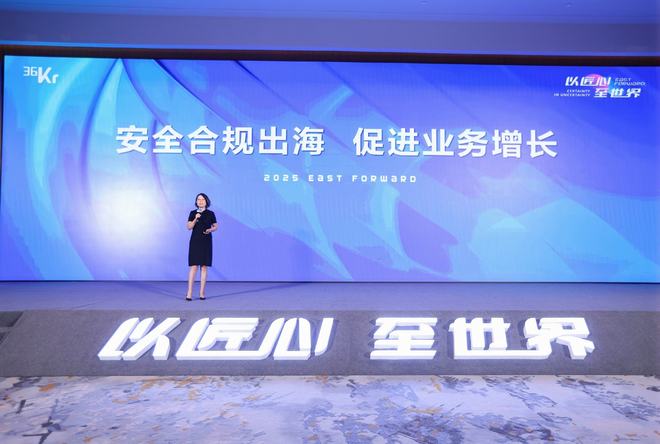
安全合规出海,加速业务增长| 2025出海大会
3 6 Ke· 2025-08-04 03:57
7月25日,由浙江省商务厅、金砖国家特殊经济区中国合作中心秘书处、杭州市商务局、钱塘区商务局 指导,36氪、钱塘建设集团联合主办的2025「以"匠心"至"世界"」出海大会将于杭州钱塘君澜大饭店盛 大启幕。作为36氪全新打造的聚焦全球化与出海领域的IP盛会,大会设立主会场及分会场"投资金砖"- 国别合作对接会。大会主会场将分为"不确定中确定"和"在全球做生意"两大篇章,聚焦消费、科技、电 商、金融、新能源等出海热门领域,涵盖10余主题演讲、5场圆桌对话与East Forward 2025出海全球化 创新名册发布环节,解码"产品 - 技术 - 生态"协同增长的确定性逻辑,为企业穿越全球化迷雾、构建可 持续出海能力提供可借鉴的全球化发展路径。 当日,TrustDecision跨境负责人 Celia带来「安全合规出海,加速业务增长」的主题分享。 Celia:谢谢主持人,谢谢36氪的邀请。我是来自TrustDecision的跨境业务负责人Celia。我今天给大家分 享的主题是《安全合规出海 促进业务增长》。我看到之前普华永道老师讲合规和风险,我今天的主题 更聚焦电商,尤其是做独立站,或者在一些建站平台有建独立站的电商的 ...

税优保障如何成为私募精英的“隐形铠甲”?
私募排排网· 2025-08-04 03:36
Core Insights - The A-share market showed a trend of fluctuating growth in the first half of 2025, with quantitative private equity becoming a prominent investment force, achieving an average return of 8.32% across all private equity securities products, and 10% for stock strategy private equity [1] - Among 1,243 quantitative long strategy products, 93.32% achieved positive returns, with an average return rate of 15.42%, significantly outperforming other sub-strategies [1] - A wave of dividends emerged in the industry, with 558 private equity products distributing dividends, accounting for 14.09% of the total, amounting to 5.655 billion yuan [1] - High income for private equity managers leads to increased tax burdens, prompting them to seek legal and compliant tax optimization strategies [1] Group 1: Investment Performance - The average return for private equity securities products in the first half of 2025 was 8.32% [1] - Stock strategy private equity led with an average return of 10% [1] - Quantitative long strategy products had a remarkable average return of 15.42%, with 93.32% achieving positive returns [1] Group 2: Dividend Distribution - By the end of June 2025, 558 private equity products had distributed dividends, representing 14.09% of the total products with performance data [1] - The total amount of dividends distributed reached 5.655 billion yuan [1] Group 3: Tax Optimization Strategies - High income levels for private equity managers result in significant tax liabilities, including corporate income tax and value-added tax [1] - The need for tax optimization strategies is emphasized due to the high tax burden faced by managers in the quantitative private equity sector [1] Group 4: Risk Management and Insurance - Private equity managers face core risks including compliance, investment, operational, liquidity, reputation, and ethical risks throughout the fundraising, investment, management, and exit processes [3] - Professional liability insurance is deemed essential for private equity managers to mitigate risks associated with investment decisions and internal management [3][4] - The selection of professional liability insurance should focus on coverage that matches core business risks, including management and professional liability [4] Group 5: Employee Benefits and Insurance - The importance of a comprehensive employee benefits and insurance system is highlighted for attracting and retaining top talent in private equity firms [5] - Group accident insurance and employer liability insurance are included in the core benefits to provide comprehensive protection for employees [5] Group 6: Tax-Advantaged Insurance - The organization considers tax-advantaged insurance options, such as supplementary medical insurance, which can be deducted from total wages within 5% to reduce tax burdens [6] - The focus is on balancing tax compliance, employee needs, and cost-effectiveness when selecting insurance products [6] Group 7: Insurance Configuration Recommendations - Recommendations for insurance configurations for different roles within private equity firms include high-end medical insurance, critical illness insurance, and professional liability insurance [10][12][13][15] - Specific insurance products are suggested based on the unique risks associated with investment research, marketing, and operational roles [10][12][13][15]