全国统一大市场

Search documents
11月15日晚间央视新闻联播要闻集锦
Yang Shi Xin Wen Ke Hu Duan· 2025-11-15 12:47
Group 1 - The concept of "building a community of shared future in cyberspace" proposed by Xi Jinping emphasizes the strategic importance of internet development for humanity's future [4][1] - Over the past decade, this concept has guided China's internet development, contributing Chinese wisdom and solutions to global internet governance [4][1] - The "14th Five-Year Plan" outlines top-level design and strategic planning for promoting high-quality economic development, focusing on building a modern industrial system and a unified national market [5] Group 2 - The "smart hand" technology developed by a young team in Shenzhen has broken through key technological barriers, leading to widespread applications in various scenarios [6] - This innovation aligns with the goals set by the 20th National Congress of the Communist Party of China to accelerate technological innovation and promote high-quality development in advanced manufacturing [6] Group 3 - The implementation of the "Yue Car Southbound" policy allows eligible Guangdong private car owners to drive into Hong Kong, enhancing connectivity and efficiency at border crossings [9] - The first approved Guangdong-registered vehicle successfully passed through the automated inspection process in under one minute, showcasing the effectiveness of the new policy [9]
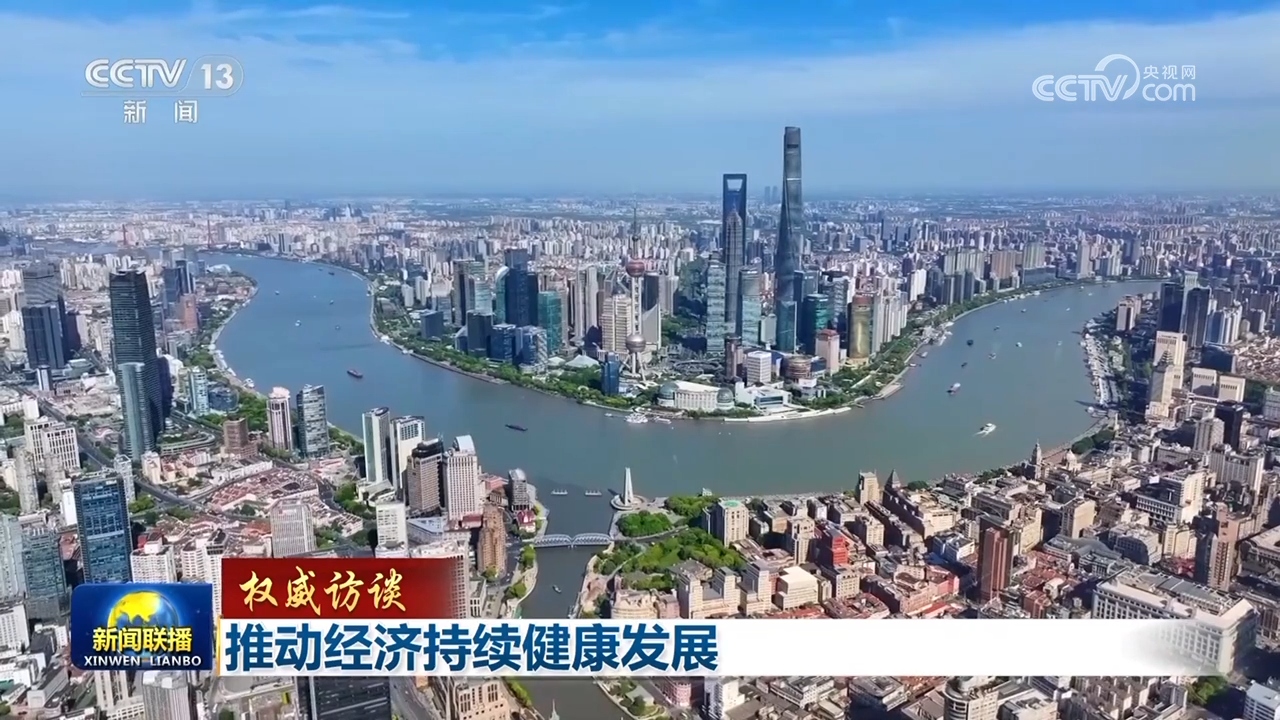
【权威访谈】推动经济持续健康发展
Yang Shi Wang· 2025-11-15 12:27
Core Viewpoint - The "14th Five-Year Plan" outlines a strategic framework aimed at promoting high-quality economic development, emphasizing the construction of a modern industrial system and a unified national market [1][3]. Group 1: Modern Industrial System - The plan prioritizes the construction of a modern industrial system and the strengthening of the real economy as the first strategic task, with a focus on optimizing and upgrading traditional industries and developing emerging pillar industries [3]. Group 2: Domestic Market and Economic Structure - The plan emphasizes the need to eliminate barriers to the construction of a unified national market, aiming to unleash the potential of China's vast market and enhance the internal dynamics and reliability of domestic circulation [5]. - It calls for the acceleration of the establishment of a high-level socialist market economy system, enhancing the driving force for high-quality development [5]. - The plan advocates for the improvement of the socialist basic economic system and the macroeconomic governance system to ensure stable and sustainable high-quality development [5].

郑州外贸再“提前”
Sou Hu Cai Jing· 2025-11-15 08:57
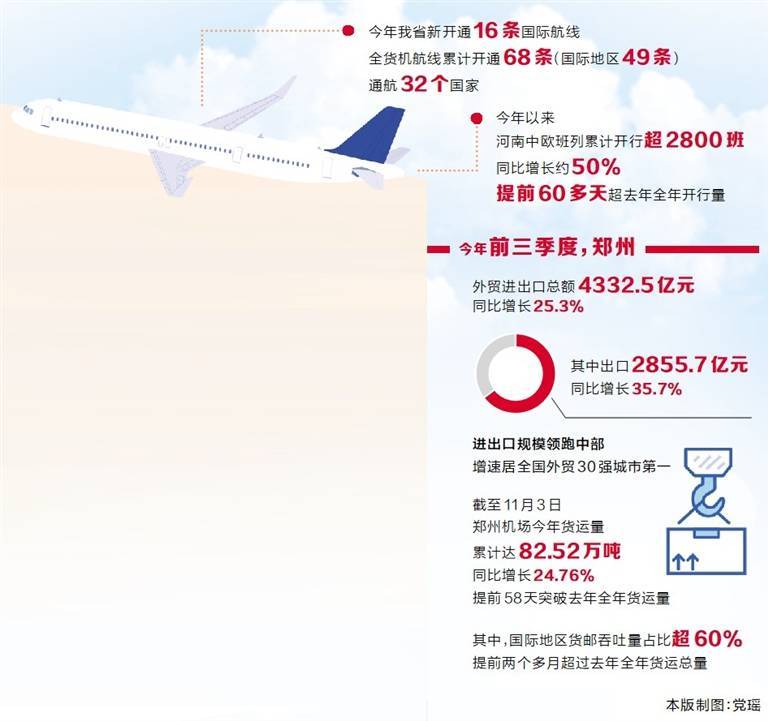
Core Insights - The article highlights the rapid growth of cross-border e-commerce in Zhengzhou, particularly during the "Double Eleven" shopping festival, with a significant increase in order volume and export value [2][4]. Group 1: Cross-Border E-Commerce Growth - Zhengzhou's cross-border e-commerce has seen a remarkable increase, with over 243 billion yuan in import and export value this year, marking a nearly 24% year-on-year growth [2]. - The average daily outbound orders have reached around 70,000, accounting for more than one-third of the total business volume at the Henan Bonded Logistics Center [2]. - On "Double Eleven," the order volume approached 200,000, showcasing the peak demand during the shopping festival [2]. Group 2: Air Cargo and Logistics Expansion - Zhengzhou Airport has achieved a cumulative cargo volume of 825,200 tons by November 3, representing a 24.76% year-on-year increase, surpassing last year's total cargo volume ahead of schedule [3]. - The airport's international cargo volume has consistently increased, with over 60% of the total cargo being international, supported by the "Air Silk Road" initiative [3]. - The number of international cargo flights has exceeded 50 per week, with a total of 68 all-cargo routes established, enhancing global connectivity [3]. Group 3: Overall Trade Performance - In the first ten months, Henan Province's total import and export value reached 741.12 billion yuan, reflecting a 14.5% year-on-year growth [4]. - Zhengzhou's total import and export value for the first three quarters was 433.25 billion yuan, with exports alone amounting to 285.57 billion yuan, indicating a 35.7% increase [4]. - The growth in exports is primarily driven by products such as computers, communication technology, mobile phones, and automobiles [4].
进一步全面深化改革向纵深推进(奋勇争先,决战决胜“十四五”)
Ren Min Ri Bao· 2025-11-14 22:49
习近平总书记强调:"要把全面深化改革作为推进中国式现代化的根本动力""坚持进一步全面深化改 革,注重运用改革办法破解发展难题,为发展增动力、激活力"。 "十四五"时期,在党的十八届三中全会提出的改革目标任务总体如期完成基础上,党的二十届三中全会 《决定》明确了进一步全面深化改革的总目标和各方面主要任务,中国改革事业矗立起新的里程碑。 浙江苍南县,一场"民资入核"的改革实践深入推进。"三澳核电从一期到二期,民资占比由2%升至 10%,民营资本参与核电建设的大门越开越大。"中广核苍南核电有限公司董事会办公室主任单思盟 说。 2%到10%,突破何以实现?一场项目推介会,敲定民资投资意愿。总投资超400亿元,整体投资回报周 期超60年……项目定向推介会上,中广核将三澳核电二期工程的投资计划、预期收益讲得明明白白。当 场,一半以上企业明确了投资意愿。 2%到10%,多的份额谁来让?一轮轮股权协商,保障"民资入核"通道。最终,浙江省级国资带头让出 4%的股份,市县两级国资各自让股2%,为民企腾出参股空间。 走进湖南省公共资源交易中心,工作人员轻点鼠标,几分钟后系统便生成一份投标核验报告。"这样操 作,真正让招投标在阳光下 ...
强化全链条管理 推动油气基础设施高质量发展——《石油天然气基础设施规划建设与运营管理办法》解读
中国能源报· 2025-11-14 14:53
Core Viewpoint - The article emphasizes the importance of optimizing the layout of energy infrastructure and enhancing the construction of new energy facilities, particularly in the oil and gas sector, to ensure energy security and improve service quality and efficiency [1][2][7]. Group 1: Policy and Regulatory Framework - The National Development and Reform Commission has issued the "Management Measures for the Planning, Construction, and Operation of Oil and Gas Infrastructure," marking a new phase in the standardized development of oil and gas infrastructure in China [1][2]. - The new measures aim to address the unbalanced and insufficient development of oil and gas infrastructure, which has become increasingly prominent due to rapid growth in natural gas demand and optimization of oil consumption structures [2][3]. Group 2: Planning and Investment - The "Management Measures" establish a comprehensive framework for the planning, implementation, evaluation, and adjustment of oil and gas infrastructure, emphasizing the authority and seriousness of planning [3]. - The measures promote multi-entity investment in infrastructure, allowing social capital to participate in pipeline projects and encouraging investment in oil and gas storage facilities and LNG receiving stations [3][4]. Group 3: Service Quality and Operational Efficiency - The measures focus on improving service quality across all operational levels, aiming to provide stable, efficient, and high-quality services [4][5]. - Specific requirements are set for gas storage and peak-shaving facilities, including a 5% storage capacity requirement for supply companies and a 5-day emergency response capability for local governments [5][6]. Group 4: Supervision and Management - The article highlights the need for enhanced supervision and management across the entire oil and gas supply chain, clarifying the responsibilities of national and provincial energy authorities [6]. - It emphasizes the importance of establishing a legal and standardized market environment to support the healthy development of the industry [6][7]. Group 5: Sustainable Development and Innovation - The measures establish "promoting green, low-carbon, and sustainable development" as a fundamental principle, requiring strict adherence to ecological and environmental protection measures throughout the project lifecycle [6]. - The integration of advanced information technologies, such as artificial intelligence, is encouraged to facilitate the digital and intelligent transformation of infrastructure [6][7].
统一大市场背景下,城投如何探索产业招商“新打法”?
Sou Hu Cai Jing· 2025-11-14 10:53
Core Viewpoint - The construction of a national unified market is reshaping the competitive landscape of local economies, requiring investment companies to shift from traditional local protectionist strategies to a more market-oriented approach [1][4]. Group 1: Structural Limitations of Traditional Investment Models - Investment companies have historically relied on land subsidies and tax rebates to attract businesses, which has led to market segmentation and inefficiencies in resource allocation [2]. - This approach has created barriers to the free flow of production factors across regions, negatively impacting the efficiency of investment companies' operations [2]. Group 2: Policy Adjustments and New Challenges - Recent policy documents emphasize the need to eliminate local protectionism and administrative barriers, guiding investment companies towards a more open and competitive market environment [3]. - The focus is on promoting the free flow of factors and enhancing market efficiency, which necessitates a transformation in investment strategies [3]. Group 3: Opportunities for Market Expansion - The national unified market framework allows investment companies to expand their market reach beyond local boundaries, attracting diverse resources from across the country [4]. - This shift not only diversifies the sources of investment but also fosters the formation of industrial clusters, enhancing regional economic vitality [4]. Group 4: Optimization of Resource Allocation - Optimizing resource allocation is crucial for effective investment under the new market conditions, with a focus on creating unified markets for various production factors [5]. - Investment companies can leverage data-sharing platforms to gain insights into industry trends and investment preferences, improving project matching efficiency [5]. Group 5: Unified Institutional Framework - A unified property rights protection system and streamlined market access regulations enhance the investment environment, reducing costs and disputes for investment companies [6]. - The implementation of fair competition laws further eliminates local protectionist practices, allowing for a more equitable competitive landscape [6]. Group 6: Strategic Transformation - Investment companies must redefine their roles from local government financing platforms to national market entities, focusing on market capabilities rather than policy dependence [7]. - This transformation involves a systematic redesign of operational frameworks and strategies to align with national market requirements [7]. Group 7: Mechanism Reform for Market Adaptation - Establishing a modern corporate governance structure is essential for investment companies to operate effectively in a market-driven environment [12]. - Attracting market-oriented talent and reducing administrative overhead will enhance the competitive edge of investment companies [13]. Group 8: Activation of Resources and Capital - Investment companies should explore innovative financial instruments to unlock the potential of existing assets, such as REITs and asset securitization [15]. - Establishing investment funds can facilitate the aggregation of capital for high-potential projects, driving regional economic development [16]. Group 9: Iteration of Investment Strategies - Investment companies need to shift from short-term incentives to long-term collaborative relationships with investors, fostering a sustainable investment ecosystem [17]. - Diversifying investment approaches and enhancing service offerings will improve the attractiveness of regions to potential investors [19][20]. Group 10: Embracing Technological Innovations - Utilizing big data and advanced technologies can enhance the precision and efficiency of investment strategies, allowing for better identification of potential projects [20]. - The integration of digital platforms will facilitate resource management and improve the overall investment process [20]. Group 11: Conclusion - The transition towards a national unified market presents both challenges and opportunities for investment companies, necessitating a strategic shift towards market-oriented operations and enhanced collaboration with various stakeholders [21].

上海证券研究所所长花小伟:A股有望迎来长期缓慢上涨
Zheng Quan Ri Bao Wang· 2025-11-14 10:46
Core Viewpoint - The article discusses the potential for A-shares to experience a long-term upward trend similar to the U.S. stock market, particularly in the context of the upcoming "15th Five-Year Plan" which is expected to significantly impact China's economic structure and present investment opportunities [1][9]. Group 1: Stock Index Dynamics - The performance of stock indices is positively correlated with the market capitalization of listed companies and negatively correlated with the number of listed companies [2]. - The U.S. stock market has seen an average annual growth of 13% in total market capitalization from 2010 to 2024, with a low expansion rate in the number of listed companies [3]. - The Nasdaq index has a high concentration of market capitalization, with the top 8 tech companies accounting for 53% of its total market value, which enhances overall profitability [4]. Group 2: A-share Market Analysis - A-shares have shown an average annual growth of 11% in total market capitalization from 2010 to 2024, indicating a foundation for long-term growth [5]. - The rapid expansion of the number of listed companies in A-shares, averaging 8% annually, has outpaced the U.S. market, contributing to longer intervals between new highs in total market capitalization [6]. - Recent trends show that A-share total market capitalization increased by 50% from August 2024 to September 2025, while the number of listed companies grew only by 1%, suggesting a potentially better performance in this cycle [7]. Group 3: Future Investment Opportunities - The "15th Five-Year Plan" is expected to create significant investment opportunities, particularly in areas such as technology independence, domestic substitution, and high-end manufacturing [10]. - The construction of a unified national market is anticipated to enhance domestic demand and may lead to a turnaround in cyclical industries like coal, steel, and chemicals [11][12]. - The emphasis on a comprehensive green transition is likely to accelerate opportunities in renewable energy sectors, including solar power, energy storage, and electric vehicles [13].
在服务高质量发展中贡献更多市场监管力量——访国家市场监督管理总局党组书记、局长罗文
Ren Min Ri Bao· 2025-11-14 08:01
Core Viewpoint - The construction of a unified national market is essential for building a new development pattern and promoting high-quality development, as emphasized by General Secretary Xi Jinping [1] Group 1: Quality Improvement Initiatives - The "Quality Strong Country" initiative is a key strategy for promoting high-quality economic and social development during the 14th Five-Year Plan period [2] - The market supervision department will focus on enhancing enterprise quality, supporting leading enterprises, and promoting quality management systems to improve product quality [2][3] - The initiative includes enhancing quality in industrial chains, promoting sustainable urban development, and establishing high-level quality infrastructure [3] Group 2: Promoting Fair Competition - The construction of a unified national market is a major strategic decision, with a focus on eliminating barriers to market entry and ensuring fair competition [4] - The market supervision department will work on unifying market rules, breaking local protectionism, and maintaining a healthy competitive market order [4][5] Group 3: Stimulating Business Vitality - The market supervision department aims to enhance the quality of business entities, reduce their burdens, and provide targeted support to stimulate economic growth [6] - Efforts will include regular evaluations of business quality, reducing illegal fees, and improving communication channels between businesses and regulatory bodies [6][7]
2025年10月宏观经济数据
Guan Tong Qi Huo· 2025-11-14 05:52
1. Report Industry Investment Rating There is no information provided in the report regarding the industry investment rating. 2. Core View of the Report In October 2025, under the strong leadership of the CPC Central Committee with Comrade Xi Jinping at its core, various regions and departments implemented the decisions and arrangements of the CPC Central Committee and the State Council, adhered to the general tone of making progress while maintaining stability, and the national economy maintained a generally stable and progressive development trend, with stable production and supply, overall stable employment, improved prices, and the cultivation and growth of new driving forces [2]. 3. Summary by Relevant Catalogs Industry - In October, the added value of industrial enterprises above designated size increased by 4.9% year - on - year and 0.17% month - on - month. The added value of the mining industry, manufacturing, and the production and supply of electricity, heat, gas, and water increased by 4.5%, 4.9%, and 5.4% respectively. The added value of the equipment manufacturing and high - tech manufacturing industries increased by 8.0% and 7.2% respectively, faster than the overall industrial enterprises above designated size. The output of 3D printing equipment, new energy vehicles, and industrial robots increased by 30.8%, 19.3%, and 17.9% respectively. From January to October, the added value of industrial enterprises above designated size increased by 6.1% year - on - year [2]. - In October, the manufacturing PMI was 49.0%, and the enterprise production and operation activity expectation index was 52.8%. From January to September, the total profit of industrial enterprises above designated size was 5373.2 billion yuan, a year - on - year increase of 3.2% [2]. Services - In October, the national service industry production index increased by 4.6% year - on - year. The production indexes of information transmission, software and information technology services, leasing and business services, and the financial industry increased by 13.0%, 8.2%, and 5.6% respectively, faster than the service industry production index. From January to October, the national service industry production index increased by 5.7% year - on - year. From January to September, the operating income of service enterprises above designated size increased by 7.6% year - on - year [3]. - In October, the service industry business activity index was 50.2%, and the service industry business activity expectation index was 56.1%. The business activity indexes of industries such as railway transportation, air transportation, postal services, accommodation, and culture, sports, and entertainment were in the high - level prosperity range of 60.0% and above [3]. Consumption - In October, the total retail sales of consumer goods were 4629.1 billion yuan, a year - on - year increase of 2.9% and a month - on - month increase of 0.16%. Retail sales in urban and rural areas increased by 2.7% and 4.1% respectively. Retail sales of goods and catering revenue increased by 2.8% and 3.8% respectively. Retail sales of basic necessities and some upgraded consumer goods grew rapidly. From January to October, the total retail sales of consumer goods were 41216.9 billion yuan, a year - on - year increase of 4.3%. The national online retail sales were 12791.6 billion yuan, a year - on - year increase of 9.6%. The retail sales of physical goods online were 10398.4 billion yuan, a year - on - year increase of 6.3%, accounting for 25.2% of the total retail sales of consumer goods. From January to October, the retail sales of services increased by 5.3% year - on - year, 0.1 percentage points faster than in the first three quarters [4]. Investment - From January to October, the national fixed - asset investment (excluding rural households) was 40891.4 billion yuan, a year - on - year decrease of 1.7%. Excluding real estate development investment, fixed - asset investment increased by 1.7%. Infrastructure investment decreased by 0.1%, manufacturing investment increased by 2.7%, and real estate development investment decreased by 14.7%. The sales area and sales volume of newly built commercial housing decreased by 6.8% and 9.6% respectively. Investment in the primary, secondary, and tertiary industries increased by 2.9%, 4.8%, and decreased by 5.3% respectively. Private investment decreased by 4.5%. Excluding real estate development investment, private investment increased by 0.2%. Investment in information services, aerospace equipment manufacturing, and computer and office equipment manufacturing in high - tech industries increased by 32.7%, 19.7%, and 4.1% respectively. In October, fixed - asset investment (excluding rural households) decreased by 1.62% month - on - month [5]. Import and Export - In October, the total volume of goods imports and exports was 3702.8 billion yuan, a year - on - year increase of 0.1%. Exports were 2171.6 billion yuan, a decrease of 0.8%, and imports were 1531.1 billion yuan, an increase of 1.4%. From January to October, the total volume of goods imports and exports was 37309 billion yuan, a year - on - year increase of 3.6%. Exports were 22114.6 billion yuan, an increase of 6.2%, and imports were 15194.4 billion yuan, remaining flat year - on - year. General trade imports and exports increased by 2.3%, accounting for 63.4% of the total import and export volume. Imports and exports to countries along the Belt and Road increased by 5.9%. Private enterprise imports and exports increased by 7.2%, accounting for 57.0% of the total import and export volume, 1.9 percentage points higher than the previous year. Exports of mechanical and electrical products increased by 8.7%, accounting for 60.7% of the total export volume [6]. Prices - In October, the national consumer price index (CPI) increased by 0.2% year - on - year and 0.2% month - on - month. Food and tobacco prices decreased by 1.6%, while clothing, housing, daily necessities and services, education, culture and entertainment, medical care, and other supplies and services prices increased. The core CPI excluding food and energy prices increased by 1.2% year - on - year, 0.2 percentage points higher than the previous month. From January to October, the national CPI decreased by 0.1% year - on - year. The national producer price index for industrial products (PPI) decreased by 2.1% year - on - year, with the decline narrowing by 0.2 percentage points, and increased by 0.1% month - on - month. The purchase price index for industrial producers decreased by 2.7% year - on - year, with the decline narrowing by 0.4 percentage points, and increased by 0.1% month - on - month. From January to October, the national PPI and the purchase price index for industrial producers decreased by 2.7% and 3.2% respectively [7]. Employment - From January to October, the average urban surveyed unemployment rate nationwide was 5.2%. In October, the urban surveyed unemployment rate was 5.1%, 0.1 percentage points lower than the previous month. The surveyed unemployment rate of local household registration labor force was 5.3%, and that of migrant labor force was 4.7%, among which the surveyed unemployment rate of migrant agricultural household registration labor force was 4.5%. The surveyed unemployment rate in 31 large - scale cities was 5.1%, 0.1 percentage points lower than the previous month. The average weekly working hours of enterprise employees nationwide were 48.4 hours [8].
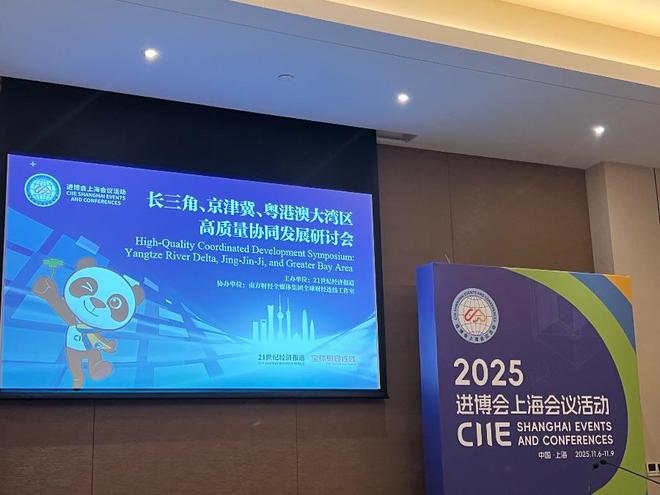
“十五五” 区域协同怎么做?专家建言:统一大市场+长三角经验
2 1 Shi Ji Jing Ji Bao Dao· 2025-11-14 04:31
Core Insights - The seminar focused on high-quality collaborative development among the Yangtze River Delta, Beijing-Tianjin-Hebei, and Guangdong-Hong Kong-Macau Greater Bay Area, aligning with the themes of the upcoming China International Import Expo and the 14th Five-Year Plan [1][3] Group 1: Innovation and Collaboration - The seminar emphasized the importance of building a collaborative innovation community to break down barriers and enhance regional cooperation [3][4] - Experts highlighted the construction of a unified national market as a significant variable influencing regional coordinated development, reshaping the economic landscape with new productivity factors like AI and computing networks [3][4] - Suggestions included addressing labor mobility barriers, regulatory discrepancies, and establishing a tax-sharing mechanism to facilitate resource flow among the three regions, which collectively account for 40% of the national GDP [4][5] Group 2: Strategic Development and Mechanisms - The discussion underscored the need for strategic alignment among major national strategies, with a focus on creating synergies that exceed the sum of individual efforts [5][6] - Experts proposed enhancing infrastructure, reducing talent mobility costs, and fostering talent exchange to strengthen regional connections and innovation [6][7] - The importance of a unified market to support the cross-regional flow of innovation elements and industrial integration was emphasized, with examples of successful collaborations between cities [6][8] Group 3: Business Perspectives - Companies are encouraged to leverage the unified national market to optimize resource allocation and enhance competitiveness in the global arena [8][9] - Strategies for businesses include restructuring based on technology, optimizing supply chains, and adhering to compliance standards to align with national strategies [9][10] - The healthcare sector's unique challenges in the Greater Bay Area were discussed, with a focus on patient-centered collaboration and breaking down regional barriers to improve service delivery [10][11] Group 4: Urban Development and Governance - The seminar explored urban cluster development and governance innovation, emphasizing the need for differentiated positioning and digital economy empowerment [10][11] - Recommendations included creating cross-regional industrial collaboration models and leveraging high-level openness to drive institutional innovation [11][12] - The importance of balancing market forces with government intervention to avoid market distortions was highlighted, alongside the need for equal public service access across regions [11][12] Group 5: Future Directions - The discussion concluded with a call for increased efforts in urban cluster construction to promote spontaneous regional collaboration and improve mechanisms for population mobility and social security integration [12][13] - The seminar highlighted the ongoing exploration of regional collaboration, indicating that the dialogue and initiatives will continue beyond the event [14]