
自动驾驶

Search documents
四会富仕:新兴产业多点开花,产能扩张赋能成长-20260123
Huaan Securities· 2026-01-23 13:25
Investment Rating - The report assigns a "Buy" rating for the company [9] Core Insights - The company, Si Hui Fu Shi, focuses on high-quality printed circuit board (PCB) research, production, and sales, targeting the industrial control, automotive electronics, communication equipment, and medical devices sectors. It has established a global production layout with a new factory in Thailand set to begin trial production in 2024 [4][16] - The global PCB market is experiencing rapid growth, particularly in automotive electronics, industrial control, and optical module PCBs, driven by the increasing demand for electric vehicles and automation technologies [6][38] - The company has a stable and high-quality customer base, including major firms like Hitachi, Panasonic, and Omron, which enhances customer loyalty and supports revenue growth [7][72] Summary by Sections Company Overview - Si Hui Fu Shi specializes in high-quality PCB production, focusing on small-batch, multi-variety, high-reliability, and fast delivery markets. The company was established in 2009 and went public in 2020 [4][16] - The product range includes high-layer boards, HDI boards, thick copper boards, and metal-based boards, serving various industries [4][16] Market Trends - The automotive electronics PCB market is projected to grow significantly, with a compound annual growth rate (CAGR) of 11.2% from 2020 to 2024, reaching a market size of $9.4 billion [6][49] - The industrial control market in China is growing faster than the global market, presenting opportunities for domestic PCB suppliers [6][52] - The demand for optical module PCBs is increasing due to advancements in AI and high-speed data transmission requirements [6][69] Financial Projections - The company is expected to achieve revenues of 1.91 billion, 2.71 billion, and 3.54 billion yuan in 2025, 2026, and 2027, respectively, with corresponding net profits of 215 million, 353 million, and 546 million yuan [9][81] - The projected earnings per share (EPS) for 2025, 2026, and 2027 are 1.34, 2.20, and 3.40 yuan, respectively, indicating a strong growth trajectory [9][81] Production Capacity and Expansion - The Thailand factory is set to have an initial capacity of 50,000 square meters per month, with plans to increase to 100,000 square meters per month [7][79] - Domestic projects are underway to expand production capacity significantly, with expectations of high utilization rates as the industry recovers [7][79]

轻舟智航亮出三张王牌:百万搭载、单征程6M城市NOA上车、VLA与世界模型重磅亮相
Zhong Guo Qi Che Bao Wang· 2026-01-23 12:37
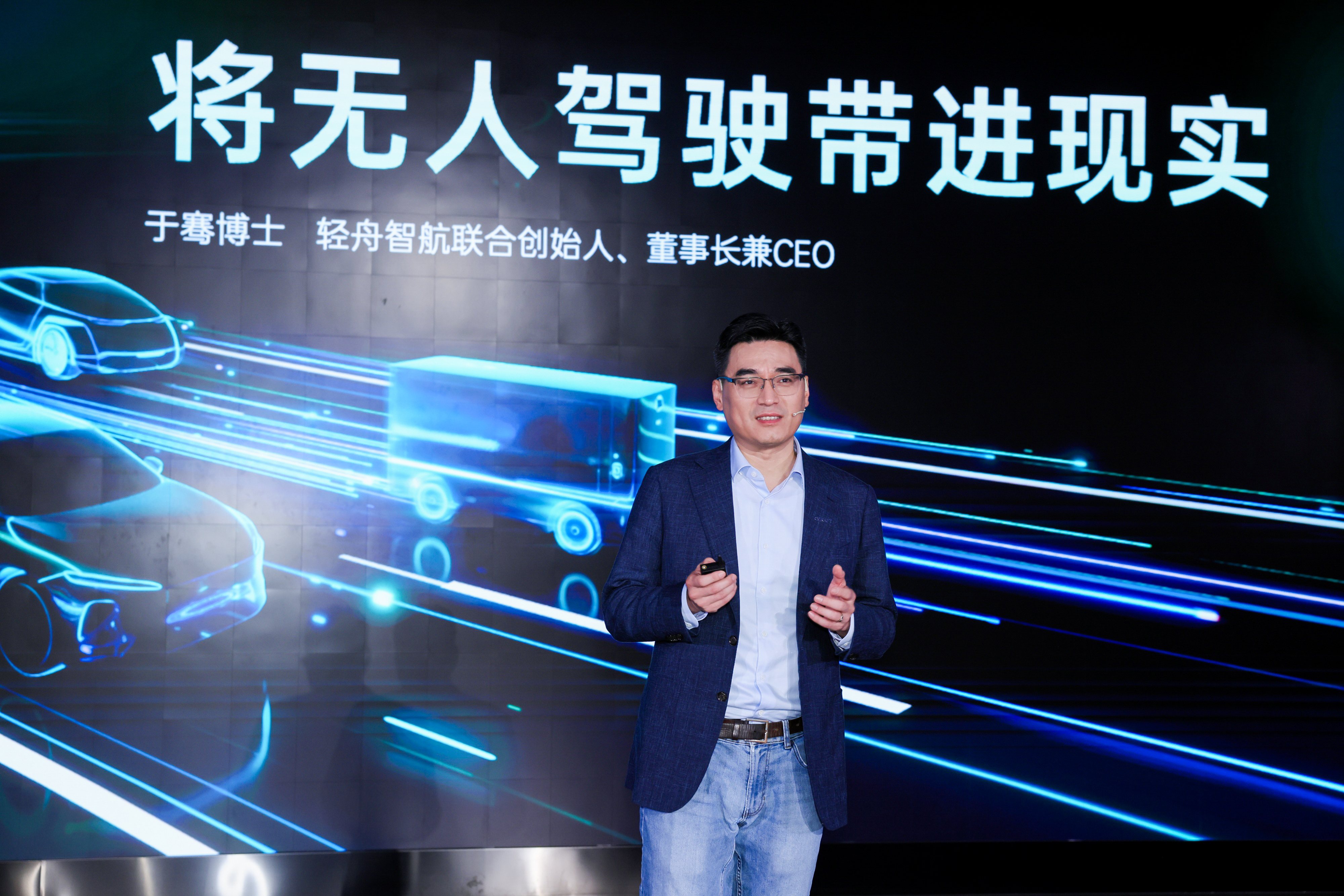
Core Insights - The era of transitioning from assisted driving to autonomous driving has officially begun, with QCraft showcasing significant advancements in its technology and production capabilities at the QCraft DAY 2026 event [1][5][19]. Group 1: Company Achievements - QCraft has achieved a milestone with over 1 million units of its assisted driving system deployed, marking a new phase of large-scale implementation [5][12]. - The company has introduced the first single-journey 6M city NOA (Navigation on Autopilot) solution, which has been successfully integrated into the latest model of the Li Auto L series [1][7]. - QCraft plans to launch approximately 50 new models equipped with city NOA in 2026, further expanding its market presence [1][12]. Group 2: Technological Advancements - QCraft has unveiled its upgraded "QCraft Chengfeng 2.0" solution, featuring a computing power exceeding 500 TOPS, aimed at enhancing the urban NOA experience [1][9]. - The company has developed a unified technical foundation for both L2 and L4 autonomous driving, emphasizing the shared AI model base for safety and comfort [13][16]. - QCraft's innovative "VLA + world model" architecture allows for advanced environmental understanding and decision-making capabilities, paving the way for L4 autonomous driving [18][26]. Group 3: Market Strategy and Partnerships - QCraft is entering the L4 unmanned logistics sector, collaborating with partners like Chery to create a "production and operation" model [19][21]. - The company has established partnerships with nearly 10 automotive manufacturers, including Li Auto and Chery, to produce 23 models, with expectations to exceed 50 models in 2026 [12][24]. - QCraft is accelerating its global expansion, setting up offices in key international markets and aiming to provide compliant autonomous driving solutions worldwide [24][26]. Group 4: Future Vision - The CEO of QCraft predicts that 2026 marks the beginning of a golden decade for autonomous driving, with significant trends expected, including a reduction in insurance premiums for autonomous driving [2][30]. - The company emphasizes a customer-centric approach, asserting that the success of its clients is foundational to its own success [2][5].

汽车行业2026年投资策略:汽车出海迈入深水区,智能化&机器人大展宏图
Southwest Securities· 2026-01-23 12:34
Investment Rating - The report provides a positive investment outlook for the automotive industry, particularly focusing on smart vehicles, new energy vehicles, commercial vehicles, and humanoid robots, indicating significant growth potential in these sectors [1][2]. Core Insights - The automotive industry is entering a transformative phase driven by policies that support the development of smart vehicles and the expansion of new energy vehicles. The report highlights the acceleration of intelligent driving technology and the increasing market penetration of new energy vehicles [3][4]. Summary by Relevant Sections Smart Vehicles - The report emphasizes that the intelligent vehicle sector is experiencing rapid advancements due to policy support, with L3 vehicle standards expected to be implemented by 2026. The adoption of advanced driving assistance systems (ADAS) is increasing, with new vehicle models showing significant growth in features like highway and urban NOA (Navigation on Autopilot) [4][68]. - The financing landscape for autonomous driving is booming, with 35 companies in the sector raising over 582 billion yuan in 2025, nearly three times the amount raised in 2023 [4][80]. New Energy Vehicles - The continuation of vehicle replacement policies is expected to bolster sales, with wholesale volumes of new energy passenger vehicles projected to reach 18.16 million units in 2026, a year-on-year increase of 18% [4][34]. - Exports of new energy vehicles have shown remarkable growth, with a 102.5% year-on-year increase in 2025, indicating strong demand in international markets [4][34]. Commercial Vehicles - The heavy truck sector is supported by ongoing vehicle replacement policies, with sales expected to reach 1.196 million units in 2026, reflecting a year-on-year growth of 4.6% [4][34]. - The report notes that the heavy truck market is benefiting from both domestic and international demand, with significant growth anticipated due to the continued penetration of new energy heavy trucks [4][34]. Humanoid Robots - The humanoid robot sector is poised for rapid growth, with applications in automotive manufacturing expected to enhance production efficiency. The report forecasts a compound annual growth rate of approximately 85% in humanoid robot shipments from 2024 to 2035 [4][34]. - The cost of humanoid robots is expected to decrease significantly, with projections indicating that the price of a standard humanoid robot could drop from $80,000-$90,000 to $15,000-$20,000 by 2030 [4][34]. Policy Environment - The report highlights a favorable policy environment that is increasingly supportive of the automotive industry's transition towards smart and electric vehicles. Key policies include the approval of L3 autonomous vehicle models and the establishment of unified standards for vehicle replacement subsidies [4][53]. Market Trends - The automotive market is witnessing a shift towards intelligent and electric vehicles, with consumer preferences evolving towards higher levels of automation and connectivity in vehicles. The report indicates that the penetration rate of intelligent driving features is expected to increase significantly in the coming years [4][68]. Capital Market Activity - The report notes a surge in investment activity within the autonomous driving sector, indicating a strong belief in the future growth of this industry. The capital market's enthusiasm is reflected in the substantial funding raised by various companies, signaling a robust outlook for the sector [4][80].



广汽埃安与滴滴自动驾驶合作R2车型正式交付,首批车辆已获广州路测牌照
Mei Ri Jing Ji Xin Wen· 2026-01-23 12:21
Group 1 - The core point of the article is the delivery of the new generation Robotaxi R2, developed jointly by GAC Aion and Didi Autonomous Driving, which has received road testing licenses in Guangzhou [1] - The first batch of R2 vehicles is equipped with 33 high-precision sensors and a three-domain fusion computing brain, boasting a computing power exceeding 2000 TOPS [1] - The R2 is planned to be gradually deployed for demonstration applications in cities such as Guangzhou and Beijing throughout this year [1]


轻舟智航于骞:今年轻舟城市NOA计划上车50款,要做自动驾驶领域的DeepSeek
IPO早知道· 2026-01-23 11:50
Core Viewpoint - Autonomous driving is not the end goal but a key to achieving "general intelligence in the physical world" [8] Group 1: Company Milestones - QCraft announced that as of January 2026, its passenger car assisted driving system has surpassed 1 million units, marking a new phase of large-scale implementation [2] - The company achieved a production delivery of 500,000 units from late 2021 to early 2024, and it took only 8 months to double that number to 1 million [4] Group 2: Product Development and Philosophy - QCraft's CEO emphasized that many current assisted driving products are more like "vitamins" rather than "painkillers," indicating a need for practical solutions that provide real user value without compromising safety or experience [4] - The company launched the world's first end-to-end city NOA solution based on a single journey 6M platform in April 2025, which was officially implemented in January 2026 [4] Group 3: Partnerships and Market Expansion - As of January 2026, QCraft has partnered with nearly 10 automotive manufacturers, aiding in the mass production of 23 vehicle models, with expectations to exceed 50 models in 2026, most featuring city NOA capabilities [5] - QCraft aims to become a leader in the autonomous driving sector by deeply understanding product essence and maximizing the potential of each TOPS while prioritizing safety [5] Group 4: Future Plans and Innovations - The company has outlined a product evolution roadmap from advanced assisted driving to large-scale operations of autonomous driving from 2025 to 2027, with a focus on L4 logistics solutions [7] - QCraft is also developing the "Robo-X" autonomous driving open platform, which aims to empower various products like Robobus and Robotaxi, facilitating efficient commercial deployment [7] Group 5: International Expansion - QCraft is accelerating its international presence, establishing offices in cities like Beijing, Suzhou, and Munich, and targeting markets in Europe, East Asia, the Middle East, and Singapore [8]
利扬芯片:“全天候超宽光谱叠层图像传感芯片”属于全球首创的多光谱第四代传感器
Zheng Quan Ri Bao· 2026-01-23 11:49
证券日报网讯 1月23日,利扬芯片在互动平台回答投资者提问时表示,叠铖光电的"全天候超宽光谱叠 层图像传感芯片",属于全球首创的多光谱第四代传感器,可有效解决目前第三代传感器(摄像头、激 光雷达、毫米波雷达)的痛点和难点,具有全天候、高识别率、弱化算力需求、时空同步信息等优势, 提升自动驾驶安全性!该传感器在无人驾驶、以及未来的人形机器人,应用广泛。 (文章来源:证券日报) ...

千方科技:公司将持续推进技术迭代与场景打磨
Zheng Quan Ri Bao Wang· 2026-01-23 11:21
Group 1 - The core viewpoint of the article is that Qianfang Technology (002373) is committed to advancing technology iteration and refining scenarios to promote the commercialization of autonomous driving technology in the trunk logistics sector [1] Group 2 - The company is actively engaging with investors through interactive platforms to communicate its strategic direction [1] - The focus on trunk logistics indicates a targeted approach within the broader logistics industry for the application of autonomous driving technology [1] - Continuous technological advancement and scenario refinement are emphasized as key components of the company's strategy [1]

蓝思科技:凭借“材料-模组-整机”的垂直整合及全球产能布局 在客户全系车型中占据主要份额
Zheng Quan Ri Bao Wang· 2026-01-23 11:18
Core Viewpoint - The company, Lens Technology, is a leading Tier 1 supplier for major domestic and international clients, with deep collaboration in the smart cockpit and autonomous driving hardware sectors [1] Group 1: Company Positioning - The company exclusively supplies critical components such as the smart B-pillar (integrating cameras/sensors), central control modules (core human-machine interaction), and charging station components, which are essential for clients' autonomous driving systems and future mass-market vehicles [1] - The company has achieved vertical integration across "materials-modules-complete machines" and has a global production capacity layout, securing a significant share in the full range of client vehicle models, including new models [1] Group 2: Market Opportunities - As clients' autonomous driving systems are implemented and new vehicle models are launched, the company is expected to benefit significantly from the expansion of market scale and the increase in per-vehicle value [1]

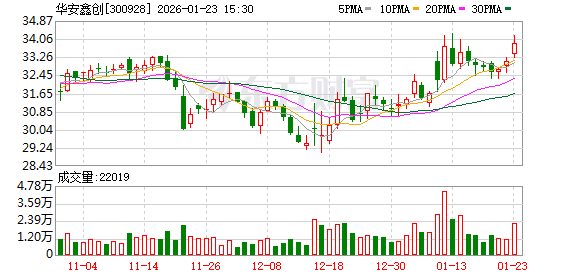
华安鑫创:公司通过控股子公司主要提供自动泊车、车道保持辅助等解决方案及相关产品、软件开发与芯片增值服务
Zheng Quan Ri Bao· 2026-01-23 11:17
Group 1 - The company emphasizes the importance of collaboration with leading automotive manufacturers [2] - The company provides solutions and related products in the fields of autonomous driving and intelligent driving assistance through its subsidiaries, including automatic parking and lane-keeping assistance [2] - Current business in these areas has not yet achieved significant revenue generation [2]
广汽埃安与滴滴自动驾驶联手打造 Robotaxi R2正式交付
Zheng Quan Shi Bao Wang· 2026-01-23 11:12
Core Insights - GAC Aion and Didi Autonomous Driving have jointly launched the next-generation Robotaxi, R2, marking a significant milestone in the autonomous driving sector in China [1][2] - The successful delivery of R2 signifies the establishment of a complete commercial closed loop for autonomous driving, encompassing technology research and development, intelligent manufacturing, and commercial operations [1] Group 1: Vehicle Specifications and Technology - The Robotaxi R2 is designed for commercial operation with three core objectives: unmanned operation, mass production, and commercialization [1] - R2 is equipped with 33 high-precision sensors and the industry's first mass-produced three-domain fusion computing brain, achieving over 2000 TOPS of computing power while reducing costs by 74% [1] - The vehicle meets both Chinese and European five-star safety standards, featuring a comprehensive safety redundancy system validated through rigorous functional safety tests and all-scenario testing [1] Group 2: Strategic Collaboration and Future Plans - GAC Group plans to deepen its strategic cooperation with Didi, leveraging their complementary strengths in vehicle manufacturing, autonomous driving technology development, mobility ecosystem, and scenario operations [1] - The R2 is built on the GAC GEP 3.0 platform, known for its high degree of interface openness and stability, integrating electric vehicle platform, open control platform, electronic steering, and redundant braking systems [2] - By 2026, R2 is expected to be deployed in a phased manner in cities like Guangzhou and Beijing, contributing to urban smart mobility [2]