AI医疗

Search documents
恒指收跌0.60% 恒生科技指数跌0.78%
Xin Lang Cai Jing· 2025-09-03 09:56
Market Overview - The Hong Kong stock market experienced a decline, with the Hang Seng Index falling by 0.60% to 25,343.43 points, the Hang Seng Tech Index down by 0.78% to 5,683.74 points, and the National Enterprises Index decreasing by 0.64% to 9,050.02 points [1] - The Hang Seng Index opened lower at 25,660.65 points, dropped significantly before stabilizing around 25,374 points in the afternoon session, ultimately closing down by 153.12 points with a total turnover exceeding 267.6 billion HKD [1] Stock Performance - A total of 935 stocks rose, while 1,248 stocks fell, and 985 stocks remained unchanged [1] - Notable gainers included: - Haotian International Construction Investment up by 5.77% - Fuyao Glass up by 4.36% - Changfei Optical Fiber Cable up by 12.61% - Heng Rui Medicine up by 8.32% [1] - Significant decliners included: - XPeng Motors down by 2.23% - China Resources Land down by 0.65% - Longfor Group down by 1.99% - China Pacific Insurance down by 2.49% - China Merchants Securities down by 2.55% [1] Top Traded Stocks - The top three traded stocks were: - Alibaba down by 0.45% with a turnover exceeding 14.1 billion HKD - Tencent Holdings down by 0.33% with a turnover exceeding 9.3 billion HKD - Xiaomi Group down by 2.06% with a turnover exceeding 7.4 billion HKD [2]



【港股收评】三大指数继续调整!券商股领跌,医药股逆市走强
Sou Hu Cai Jing· 2025-09-03 09:18
Market Overview - The Hong Kong stock market indices experienced a collective decline, with the Hang Seng Index down by 0.6%, the Hang Seng China Enterprises Index down by 0.64%, and the Hang Seng Tech Index down by 0.78% [2] Sector Performance - Chinese brokerage stocks led the declines, with notable drops including Guotai Junan down 5.02%, Zhongzhou Securities down 3.9%, and CICC down 3.26% [2] - The consumer sector also faced downward pressure, with companies like China Southern Airlines down 2.37% and BYD down 2.53% [2] - Real estate, property management, and building materials sectors showed weakness, with Shimao Group down 7.69% and Yuexiu Property down 2.46% [2] Emerging Trends - The robotics, Tesla, and brain-computer interface sectors also performed poorly, with Lijiang Technology down 7% and Nanjing Panda Electronics down 4.17% [3] - Conversely, the pharmaceutical sector saw gains, with companies like Chuangsheng Group-B up 33.25% and Sanleaf Biotech-B up 29.75% [3] Catalysts for Market Movements - Recent comments from the State-owned Assets Supervision and Administration Commission emphasized the need to accelerate the development of the biopharmaceutical industry, which has positively influenced related stocks [4] - The upcoming World Lung Cancer Conference is expected to showcase significant clinical data from domestic new drugs, further boosting investor sentiment in the biopharmaceutical sector [4] Commodity and Other Sectors - Gold and precious metals stocks rose due to increasing international gold prices, with Lingbao Gold up 6.09% and Zhaojin Mining up 4.03% [4] - The solar energy sector also showed positive momentum, alongside certain consumer stocks, including luxury goods and dairy products [5]


检测周期缩短90%,PreciseDx如何用 AI为乳腺癌患者抢出3周黄金治疗窗口?
3 6 Ke· 2025-09-03 03:03
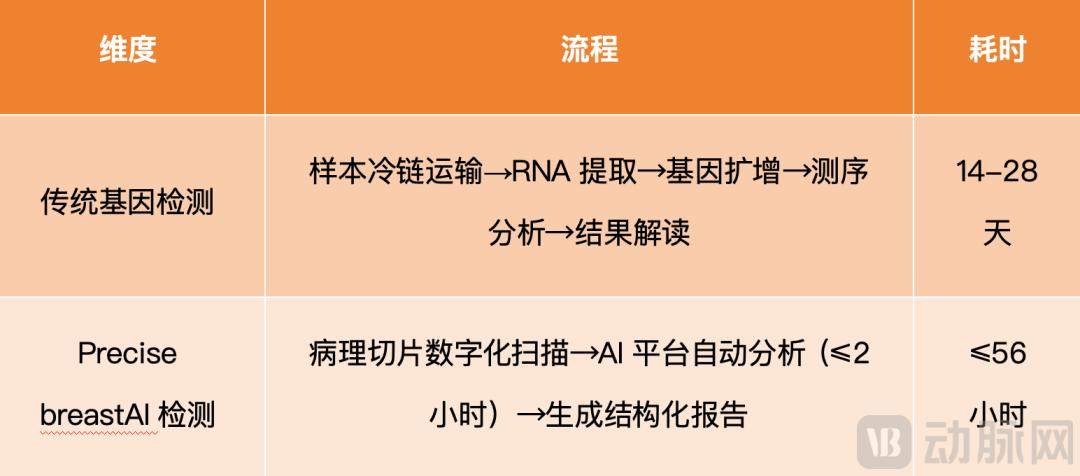
Core Insights - PreciseDx completed a $20.7 million Series B funding round in August 2024, with investors including LabCorp and Agilent Technologies, followed by an additional $11.2 million in June 2025, bringing total funding to $42.7 million [1][10] - The company’s proprietary technology, Precise breast, significantly reduces the time for breast cancer recurrence risk assessment from an average of 22 days to 56 hours, while cutting costs by 80% [1][6] Funding and Investment - The total funding raised by PreciseDx as of June 2025 is $42.7 million, with three rounds of financing: $10.8 million in Series A, $20.7 million in Series B, and an additional $11.2 million in Series B extension [10][11] - The involvement of industry capital, such as LabCorp, enhances the company's expansion efficiency by providing clinical laboratory networks for service implementation [11] Technology and Innovation - PreciseDx has developed a unique AI and pathology technology that includes 47 global patents, focusing on Morphometric Feature Array (MFA) algorithms and AI-based dynamic risk assessment models [2][7] - The technology allows for a three-step cancer detection process that is faster, more precise, and more reliable compared to traditional methods [3][4] Clinical Impact - The use of Precise breast has reduced the time from pathology confirmation to treatment decision from an average of 22 days to 56 hours, with a 37% increase in chemotherapy avoidance for low-risk patients [6][9] - The platform's accuracy in predicting breast cancer recurrence risk has improved by 41% compared to traditional pathology grading, particularly in challenging cases like triple-negative breast cancer [9] Market Strategy - PreciseDx's strategic partnership approach includes collaborations with COTA and Baptist Health for data optimization, and plans to integrate with major diagnostic companies like LabCorp and Quest Diagnostics for service expansion [10] - The company aims to penetrate multiple cancer types beyond breast cancer, with ongoing development for lung, colorectal, and prostate cancer AI models [9][10]
方舟健客盘初大涨9% 信达证券期待公司下半年业绩及AI布局双突破
Ge Long Hui· 2025-09-03 02:40
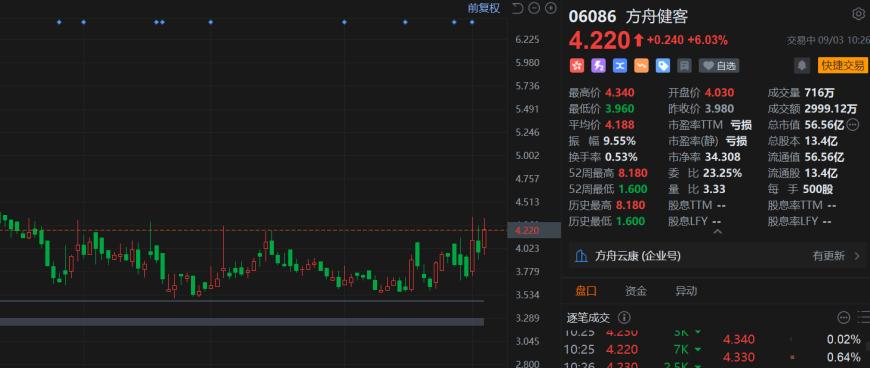
Core Insights - Ark Health (6086.HK), known as the "first stock in AI chronic disease management," saw its stock price surge by 9% at the beginning of trading, currently priced at 4.22 HKD, with a total market capitalization of 5.66 billion HKD [1] - The company reported a revenue of 1.494 billion HKD for the first half of 2025, representing a year-on-year growth of 12.9%. Net profit turned positive at 12.5 million HKD, while adjusted net profit reached a new high of 17.6 million HKD, up 16.8% year-on-year [1] Financial Performance - For the first half of 2025, Ark Health achieved a net profit turnaround, with expectations for further performance improvement in the second half of 2025 alongside advancements in AI initiatives [1] - The company has over 11 million monthly active users with a repurchase rate of 85% [1] - As of June 30, 2025, the platform registered 52.8 million users, with an average of 11.9 million monthly active users over the past twelve months [1] Business Model and AI Integration - The company focuses on specialized fields such as weight loss, metabolic disorders, and infectious diseases [1] - Ark Health has deployed an "AI triage assistant" to help patients select doctors and appropriate departments, and launched an "AI doctor assistant" to support physicians in diagnosis and treatment [1] - The company upgraded its "AI customer service assistant" to enhance medication management throughout the patient journey, creating an innovative business model that improves physician efficiency and manages patients' entire lifecycle [1]

数据交易破冰,政策催化千亿价值释放,一脉阳光凭“基座模型+数据资产”筑护城河
Tai Mei Ti A P P· 2025-09-03 00:35
Core Insights - The implementation of the "AI+" initiative is expected to accelerate both policy benefits and commercial monetization in the AI healthcare sector, with the market size projected to grow from 97.3 billion yuan in 2023 to 159.8 billion yuan by 2028, reflecting a compound annual growth rate of 10.5% [1] - The company Yimai Sunshine (02522) has developed a replicable profit model through "AI foundational model research and data governance," positioning itself as a leader in the AI healthcare space [1][2] Group 1: AI Model Development - The "Yinghe Miyan®" foundational model developed by Yimai Sunshine aligns with the policy directive to enhance foundational capabilities in AI, focusing on theoretical research and model architecture innovation [2] - This model has achieved a generalized capability covering over 200 common diseases and 12 imaging modalities, significantly reducing deployment costs for grassroots hospitals by 40% [2][3] - The upcoming launch of the chest CT AI diagnostic product (AIR) in October 2025 aims to enhance service penetration and revenue potential by enabling multi-disease detection from a single scan [2] Group 2: Clinical Value Transformation - The "Yinghe Miyan®" model facilitates a shift from rigid AI outputs to human-machine collaboration, improving efficiency in complex scenarios and reducing task completion times [3] - This efficiency boost is expected to enhance collaboration with grassroots hospitals, aligning with the policy goal of empowering primary healthcare [3] Group 3: Data Assetization - The policy emphasizes the construction of high-quality datasets and exploring revenue-sharing from data, which addresses industry challenges related to data quality and privacy [4] - Yimai Sunshine has established the largest medical imaging database in China, ensuring high-quality data for AI training through standardized collection and quality control [5] Group 4: Commercialization of Data Assets - Yimai Sunshine has pioneered a compliant data circulation and revenue cycle, successfully listing its "CT chest lesion annotation data" on the Shanghai Data Exchange [6][7] - The company has developed a clear path for monetizing data assets, transforming high-quality imaging data into tradable digital assets, thus diversifying revenue streams beyond traditional medical service fees [7] Group 5: Cross-Industry Integration - The integration of AI and healthcare is driven by mutual reinforcement, with Yimai Sunshine focusing on defining AI development based on clinical needs and involving medical professionals in product design [8][9] - This approach addresses the challenges of AI implementation in clinical settings and enhances the capabilities of grassroots healthcare services, creating a positive feedback loop between technology and medical practice [8][9] Group 6: Strategic Framework - The synergy of data as a resource, foundational models as engines, and clinical integration as a guiding principle forms the core competitive advantage of Yimai Sunshine, offering a sustainable value creation pathway for the industry [9]
美中嘉和20250902
2025-09-02 14:41
Summary of the Conference Call for Meizhong Jiahe Company Overview - Meizhong Jiahe focuses on oncology medical services, operating through a dual-driven model of ToC (patient-facing) hospital business and ToB (business-facing) empowerment services, primarily in economically developed regions such as the Yangtze River Delta, Guangdong-Hong Kong-Macao Greater Bay Area, and Beijing-Tianjin-Hebei [2][3] Key Financial Performance - In the first half of 2025, overall business revenue slightly decreased, but hospital business revenue grew by over 10%, significantly driven by Guangzhou Taihe Hospital, which saw a year-on-year increase of 107% and a quarter-on-quarter increase of 50% [2][7] - Guangzhou Taihe Hospital achieved a total revenue of 95 million yuan (approximately 14.5 million USD) in the first half of 2025, with a proton therapy pricing of 295,000 yuan (approximately 45,000 USD) per case [2][6] - The company reported its first positive gross profit, with the medical institution business turning profitable and net losses narrowing year-on-year [2][7] Hospital Operations and Expansion - Guangzhou Taihe Hospital is the first proton center in South China, with a self-pay ratio exceeding 90%. Future growth is expected to benefit from commercial insurance coverage [2][6] - The hospital's cash flow is nearly balanced, with an expected annual revenue of 300 million yuan (approximately 45.5 million USD) to achieve breakeven [4][15] - The company is constructing a tertiary oncology specialty hospital in Hebei in partnership with Shijiazhuang Pharmaceutical Group, expected to open in 2026 [5][21] Research and AI Developments - Meizhong Jiahe made progress in research and AI technology, including the establishment of a Guangdong Medical Research Fund project and the development of an automatic review system for radiation therapy data [2][8] - The company is working on AI-assisted diagnostic systems for MRI and PETCT, with registration applications pending [2][8] Market Position and Competitive Landscape - The domestic proton therapy market is currently not highly competitive, with Guangzhou Taihe Hospital ranked third among ten operational proton or neutron centers in China [11][13] - The hospital's patient base includes 50% from Guangdong and 50% from outside the province, with 5% from overseas [6][11] Future Development Strategy - Meizhong Jiahe plans to deepen international cooperation, particularly with MD Anderson Cancer Center and Mayo Clinic, while expanding into Southeast Asian markets [2][9] - The company aims to build a multi-tiered payment network to enhance the accessibility of proton therapy and maximize profitability through cost control [2][9] Insurance and Payment Dynamics - The company has signed reimbursement agreements with nearly 20 active insurance companies for proton therapy [10] - The proportion of patients covered by insurance has decreased to around 20%, with self-pay patients making up 80%, which is beneficial for high-margin projects like radiation therapy [16][17] Conclusion - Meizhong Jiahe is positioned to leverage its unique offerings in the oncology sector, with a focus on high-quality services and strategic partnerships to enhance its market presence and financial performance in the coming years [2][28]
久远银海20250902
2025-09-02 14:41
Summary of Jiuyuan Yinhai Conference Call Company Overview - **Company**: Jiuyuan Yinhai - **Industry**: Information Technology and Healthcare Services Key Points and Arguments Industry and Market Dynamics - Jiuyuan Yinhai benefits from the construction of information systems in public welfare sectors despite fiscal tightening, supported by special bonds and fiscal assistance [2][3] - The company has seen a year-on-year increase of approximately 5% in signed and pending orders in healthcare, medical insurance, digital governance, and smart city sectors [2][4] Financial Performance - In the first half of 2025, Jiuyuan Yinhai's revenue grew by 11% year-on-year, with net profit attributable to shareholders increasing by 160% [3][11] - Cash flow from operating activities rose by about 35% compared to the same period last year, indicating strong performance in the public welfare information sector [3] Growth Areas - Significant growth in the medical insurance business, with a year-on-year increase of 30%-35% to approximately 180 million yuan, and smart city business revenue surged nearly 400% due to large project completions and new demands from the national medical insurance information platform [5][11] - The company is actively expanding into data elements and AI healthcare, indicating future growth potential [4][12] Future Outlook - The second half of the year is critical for revenue confirmation, with many project verifications concentrated in this period. The company expects strong performance by year-end due to improved government payment capabilities and smoother local government operations [6][13] - The 14th Five-Year Plan is concluding, and the 15th Five-Year Plan is set to start, with expectations for more targeted policies and information construction directions in the healthcare and human resources sectors [7][14] AI and Data Integration - Jiuyuan Yinhai is fully engaged in AI, particularly in core medical insurance, regulation, payment methods, and services, aiming to enhance competitiveness in the healthcare sector [9][10] - The company has established an AI evaluation and validation capability system to support its core medical AI capabilities [10] Project Management and Efficiency - The company has reduced its workforce from approximately 4,800 to below 4,000 through refined management, enhancing performance and per capita productivity [5][17] - Internal information technology improvements and modular application development are being utilized to increase efficiency and reduce reliance on personnel [18][19] Government Support and Policy Impact - The issuance of special bonds is expected to increase, with local governments likely to boost spending on public welfare projects, including information construction [13][20] - The national emphasis on high-quality construction and standardization in information technology is anticipated to benefit companies like Jiuyuan Yinhai in securing new projects and managing costs effectively [20] Pilot Projects and Innovations - The company is expanding pilot projects in Tianjin and other cities, focusing on data services for commercial insurance and real estate sectors, which have garnered positive feedback from local governments [15][16] Additional Important Insights - The company is preparing for the integration of data elements on a national scale, with early-stage pilot projects showing promise for future applications [8][14] - The involvement of major internet companies in the Beijing model for medical insurance services is expected to accelerate the development of data elements [8]

A股9月“开门红” 贵金属、创新药板块涨势突出
Shang Hai Zheng Quan Bao· 2025-09-01 18:55
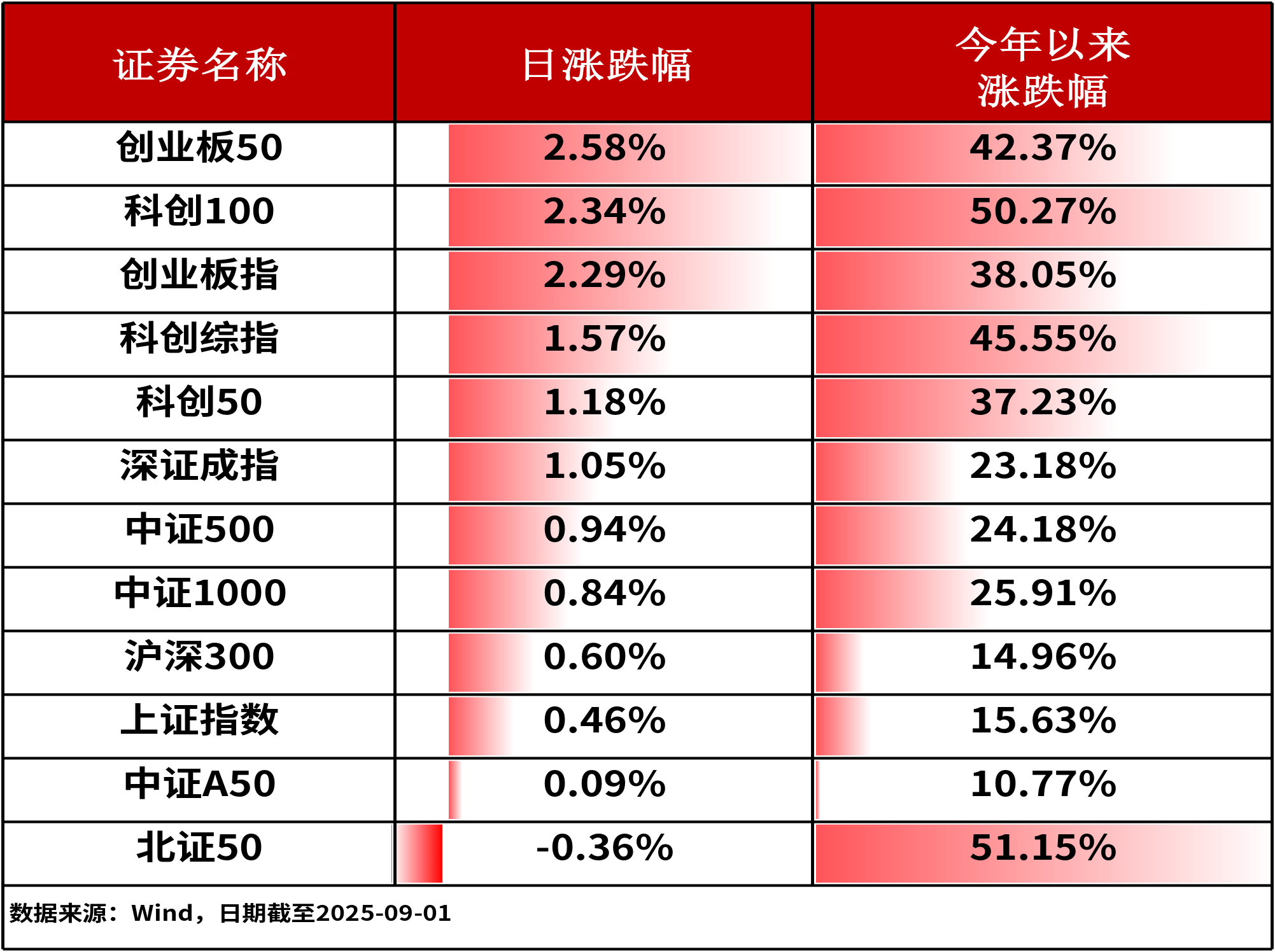
Market Performance - On the first trading day of September, the A-share market continued its strong performance, with all three major indices achieving gains, and the Shanghai Composite Index reaching a high of 3879.05 points, close to the late August high of 3888.60 points [1] - The Shanghai Composite Index closed at 3875.53 points, up 0.46%; the Shenzhen Component Index closed at 12828.95 points, up 1.05%; and the ChiNext Index closed at 2956.37 points, up 2.29% [1] - The total trading volume of the Shanghai and Shenzhen markets was 2.75 trillion yuan, a decrease of approximately 50 billion yuan compared to the previous Friday [1] Precious Metals Sector - The precious metals sector collectively rose, driven by new highs in international gold prices, with the Shenwan Precious Metals Index closing up 8.44% [2] - Major companies such as Zhongjin Gold, Hunan Gold, and Western Gold reached their daily limit, while Xiaocheng Technology surged over 13% [2] - COMEX gold futures reached $3557 per ounce, with a daily increase of over 1%, marking a cumulative increase of approximately 35% for the year [2] - Geopolitical risks and expectations of a Federal Reserve interest rate cut have supported the rise in precious metals [2] Innovative Pharmaceuticals - The pharmaceutical sector saw a significant rise, particularly in innovative drugs, brain-computer interfaces, and ophthalmic medical fields, contributing to the strength of the ChiNext Index [3] - Recent breakthroughs in medical innovation in China include the launch of the world's first "5G Brain-Heart Mobile" for Alzheimer's disease detection [3] - Heng Rui Pharmaceutical announced the conditional approval of its innovative drug, SHR2554, marking it as China's first self-developed EZH2 inhibitor [3] Growth Sectors - The technology growth sector has been highly active since July, with a focus on AI leading the gains [5] - Analysts suggest that investors should pay attention to growth sectors that have lagged behind but possess potential catalysts for future performance [5] - The shift from growth to value styles is also under discussion, with potential opportunities in sectors like agriculture and chemicals due to improving inflation expectations [6]

固生堂(02273):业绩稳健增长,AI赋能开启新篇章
SINOLINK SECURITIES· 2025-09-01 11:45
Investment Rating - The report maintains a "Buy" rating for the company, anticipating significant growth in the next 6-12 months [4][12]. Core Insights - The company achieved a revenue of 1.495 billion RMB in the first half of 2025, representing a year-on-year increase of 9.5%, and an adjusted net profit of 170 million RMB, up 15.2% year-on-year [2]. - The company is expanding its operations steadily, with offline medical institution revenue growing by 11.1% to 1.367 billion RMB, and total patient visits increasing by 15.3% to 2.747 million in the same period [2]. - The company has established a strong doctor resource barrier, with a total of 41,743 doctors, including 648 new offline practicing doctors, marking a 23.5% year-on-year increase [3]. - The company's in-house formulations business is experiencing rapid growth, with a revenue increase of 209% year-on-year, enhancing the revenue structure and reducing policy risk [3]. Summary by Sections Performance Review - In the first half of 2025, the company reported a revenue of 1.495 billion RMB, a 9.5% increase year-on-year, and a net profit attributable to shareholders of 152 million RMB, reflecting a 41.9% year-on-year growth [2]. Operational Analysis - The company is expanding its network, operating 84 medical institutions globally, with 83 in mainland China and 1 in Singapore, and has added 5 new self-built medical institutions in the first half of 2025 [2]. - Customer retention remains high, with a repeat visit rate of 69.3% [2]. - The company has formed partnerships with 37 medical alliance units, enhancing the supply of quality medical resources [2]. AI Application and Growth - The company has made significant progress in AI applications, launching its first "National Medicine AI Avatar" in June 2025, with a total of 10 avatars covering 8 core specialties by August [3]. - The introduction of the "AI Health Assistant" aims to improve patient experience and address the bottleneck in quality medical resource supply [3]. Profit Forecast and Valuation - The company is projected to achieve net profits of 410 million RMB, 524 million RMB, and 669 million RMB for 2025, 2026, and 2027 respectively, with year-on-year growth rates of 34%, 28%, and 28% [4]. - The earnings per share (EPS) are expected to be 1.74 RMB, 2.22 RMB, and 2.84 RMB for the same years, with corresponding price-to-earnings (PE) ratios of 19, 15, and 12 [4].
ETF复盘0901-A股三大股指迎来9月开门红,科创生物医药ETF(588250)收涨超4.5%
Sou Hu Cai Jing· 2025-09-01 09:24
Market Overview - On September 1, A-shares saw all three major indices rise, marking a positive start to September. The Shanghai Composite Index increased by 0.46%, the Shenzhen Component Index rose by 1.05%, and the ChiNext Index gained 2.29%, with over 3,200 stocks in the market rising [1] - The main broad-based indices included the STAR 100, which rose by 2.34%, leading the gains [1] Sector Performance - In the sector performance, the telecommunications sector led with a rise of 5.22%, followed by the comprehensive sector at 4.27%, and non-ferrous metals at 3.46%. Conversely, non-bank financials fell by 1.28%, banks by 1.03%, and household appliances by 0.54% [7] Key Highlights in Biotechnology - The innovative drug sector experienced significant gains, with several companies reporting strong mid-year results. Notably, Jingtai Holdings reported a 403.8% year-on-year revenue increase for H1, driven by drug discovery collaborations and substantial orders from top global pharmaceutical companies [7] - Junshi Biosciences saw an 18% increase in R&D investment year-on-year, with core product sales exceeding 800 million yuan and a $350 million dual-antibody licensing agreement with a multinational pharmaceutical company [7] - Pfizer plans to invest $13 billion in business development focused on oncology, with its Chief Strategy Officer visiting China to explore collaboration opportunities [7] Investment Insights - Pacific Securities suggests focusing on the pharmaceutical sector due to the impact of market pricing power and funding changes, particularly in AI healthcare and innovative drugs. The report emphasizes that the liquidity and risk appetite are expected to enhance the visibility of biotech catalysts [8] - In the non-ferrous metals sector, Goldman Sachs' research indicates investor optimism regarding China's 2025 GDP growth target, with an upward adjustment in short-term export expectations. This has led to increased attention on cyclical sectors like non-ferrous metals [8] - The report from Minmetals Securities highlights that the non-ferrous metals industry has reached a cost-cutting bottleneck, necessitating attention to corporate decision-making impacts on lithium supply and costs [8] Related Products - The report mentions various ETFs related to the non-ferrous metals sector, including ETF 159880 and its corresponding off-market links [9]