
对等关税

Search documents
白宫证实写信“催”贸易谈判伙伴“交方案”
证券时报· 2025-06-03 23:08
报道还称,该草案表明,美国政府内部对完成交易存在紧迫感。尽管白宫国家经济委员会主任凯文·哈西特反 复承诺多项协议即将达成,但迄今为止,美国仅与英国这一主要贸易伙伴达成协议,且该协议更像是持续谈判 的框架而非最终交易。报道称,目前尚不清楚这封信会具体发送给哪些国家,但目标是那些正在进行积极谈判 的包括日本、越南、印度等国家以及欧盟。 美国总统特朗普4月2日公布了面向全球广泛的"对等关税",引发全球贸易市场轩然大波。4月9日,特朗普暂停 了对大多数美国贸易伙伴的"对等关税",暂停期限为90天,将高额关税的生效期推迟到7月9日。 综合自:央视新闻 责编:李丹 校对: 王蔚 版权声明 证券时报各平台所有原创内容,未经书面授权,任何单位及个人不得转载。我社保留追 究相关 行 为主体 法律责任的权利。 白宫证实了。 当地时间6月3日,美国白宫新闻秘书表示,她可以确认有关贸易谈判截止日期的信函内容的真实性。她表示, 美国贸易代表办公室向贸易伙伴发送这封信只是为了提醒这些国家截止日期即将到来,美国总统特朗普期待达 成良好协议。 据路透社此前报道,距离"对等关税"恢复期限仅剩五周,特朗普政府发出紧急信函要求各国在本周三前提交贸 ...


媒体曝光信函,列出截止日期,美国想让谈判对象拿出“让步清单”
Huan Qiu Shi Bao· 2025-06-03 22:53
Core Viewpoint - The U.S. government is pressuring trade partners to present their best negotiation terms before the July 8 deadline for tariff exemptions, indicating a sense of urgency in trade negotiations [1][3]. Group 1: U.S. Trade Negotiation Strategy - The U.S. Trade Representative's draft letter outlines key areas of concern, including tariffs on U.S. products, quotas for purchasing U.S. agricultural goods, and non-tariff trade barriers [2]. - Potential recipients of the letter include the EU, Japan, Vietnam, and India, with the U.S. planning to evaluate the proposed terms quickly to determine possible trade agreements [2][3]. Group 2: Urgency and Challenges - The urgency in negotiations reflects the Trump administration's desire to finalize trade agreements before the expiration of the 90-day tariff exemption period [3][4]. - Despite claims of progress, actual negotiations have seen limited advancement, with only a framework agreement reached with the UK [3][4]. Group 3: Market Reactions and Implications - The unpredictability of U.S. tariff policies has caused significant volatility in the stock market, with major fluctuations observed in recent months [5]. - The potential reinstatement of tariffs could lead to market turmoil, while further delays may reinforce negative perceptions of the administration's trade strategy [5].
美国向贸易伙伴施压 要求周三前提供谈判“最佳方案”
Yang Shi Xin Wen· 2025-06-03 18:12
美国总统特朗普4月2日公布了面向全球广泛的对等关税,引发全球贸易市场轩然大波。4月9日,特朗普 暂停了对大多数美国贸易伙伴的对等关税,暂停期限为90天,将高额关税的生效期推迟到7月9日。 据路透社报道,距离对等关税恢复期限仅剩五周,特朗普政府发出紧急信函要求各国在本周三前提交贸 易谈判的最佳方案。 据路透社获得的美国贸易代表办公室的一份信件草案显示,美国政府正在向谈判伙伴施压,要求各国在 关键领域提供最佳方案,包括购买美国工农业产品的关税和配额方案。 报道称,该草案表明,美国政府内部对完成交易存在紧迫感。尽管白宫国家经济委员会主任凯文·哈西 特反复承诺多项协议即将达成,但迄今为止,美国仅与英国这一主要贸易伙伴达成协议,且该协议更像 是持续谈判的框架而非最终交易。报道称,目前尚不清楚这封信会具体发送给哪些国家,但目标是那些 正在进行积极谈判的包括日本、越南、印度等国家以及欧盟。 美提高进口钢铝关税欧盟称将反制 美欧关系近期因美国滥施关税持续紧张。欧盟委员会2日表示,本周将向美国提出强有力的理由,要求 美国降低或取消关税。 欧盟委员会发言人奥洛夫·吉尔2日称,欧盟对美国宣布将钢铁进口关税从25%提高到50%表示强 ...
特朗普对等关税法院受挫,有待更换法律依据
China Post Securities· 2025-06-03 08:12
Group 1: Legal and Trade Policy Implications - The U.S. International Trade Court overturned Trump's equal tariff measures, stating they exceeded the authority granted by the International Emergency Economic Powers Act (IEEPA) [1] - The ruling questions the legality of tariffs including a 10% base tariff and equal tariffs, potentially leading to their cancellation, but does not affect tariffs based on Section 232 and Section 301 [2] - The court mandated that the administration cease the collection of related tariffs within 10 days, but did not require the refund of already collected tariffs [2] Group 2: Future Tariff Strategies - The ruling increases uncertainty in tariff policies, but the Trump administration may still impose tariffs using alternative legal frameworks such as Section 122, which allows temporary tariffs up to 15% for a maximum of 150 days [3] - Section 232 allows tariffs if imports threaten national security, but requires a cumbersome investigation process by the Department of Commerce [3] - Section 301 has not seen new tariffs this year, likely due to existing tariffs still in effect and limited room for additional tariffs under the Biden administration [3] Group 3: Market and Negotiation Impact - The court's decision limits the Trump administration's ability to impose tariffs, weakening its position in trade negotiations [4] - A potential strategy for the Trump administration could involve short-term tariffs under Section 122 to gain time for further investigations and legislation regarding specific industry tariffs [4] - Risks include uncertainty in higher court rulings and the fluctuating nature of trade negotiations [4]
特朗普给出Deadline:希望各国周三前提供“最佳贸易方案”
Hua Er Jie Jian Wen· 2025-06-03 03:58
美国贸易代表办公室草案显示,华盛顿正在向谈判伙伴施压,要求各国在关键领域提供最佳提案,包括 购买美国工农业产品的关税和配额方案,以及消除非关税壁垒的计划。 特朗普政府正在加速谈判进程。 据媒体6月2日获得的美国贸易代表办公室(USTR)信件草案显示,特朗普政府已要求相关国家在周三 (美东时间6月4日)前提交"最佳贸易谈判方案",否则将面临高额惩罚性措施。 这一"最后通牒"距离其设定的90天关税豁免大限(7月8日)仅剩五周。据环球时报报道,美国总统特朗 普4月9日宣布将对大多数国家暂停实施所谓"对等关税"90天。特朗普威胁若有关国家在90天关税暂停期 无法与美达成协议,美将恢复加征关税。 紧急信函暴露谈判压力 草案信函警告贸易伙伴,即使法院对特朗普使用该法案作出不利裁决,也不应认为关税会被搁置。草案 写道: 无论美国法院对总统对等关税行动的诉讼如何,总统打算在必要时根据其他强有力的法律权 威继续实施这一关税计划。 特朗普的关税政策已让投资者经历过山车般的波动。5月美股创下自2023年11月以来最大月度涨幅,但 此前全球指数在特朗普2月至4月初的关税声明轰炸下曾大幅下跌。 华盛顿目前正与欧盟、日本、越南和印度等国 ...
欧美谈判前欧盟警告美国:要谈不拢,反制措施最迟7月14日就生效
Hua Er Jie Jian Wen· 2025-06-02 18:57
Core Viewpoint - The EU is preparing to implement countermeasures against the US steel and aluminum tariffs, with potential impacts exceeding $100 billion on US imports if negotiations fail by mid-July [1][2]. Group 1: EU's Response to US Tariffs - The EU has expressed strong regret over the US decision to raise tariffs on steel and aluminum from 25% to 50%, citing increased uncertainty for the global economy and higher costs for consumers and businesses on both sides of the Atlantic [2][4]. - The EU's countermeasures are structured in two tiers: the first round targets $24 billion worth of US goods, including politically sensitive products like soybeans and motorcycles, while the second round aims at an additional $95 billion, focusing on Boeing aircraft, US-made cars, and bourbon whiskey [4][5]. Group 2: Negotiation Strategies - The EU is prioritizing negotiations to resolve the trade dispute, focusing on key sectors such as semiconductors and pharmaceuticals, which have been affected by US tariffs [5][6]. - The EU has proposed deepening cooperation in these sectors and simplifying regulatory rules to address trade barriers, while also emphasizing the desire to lower tariffs rather than increase them [6].
美国对等关税反复横跳,后续走势如何展望?
2025-06-02 15:44
Summary of Key Points from Conference Call Records Industry or Company Involved - The discussion primarily revolves around the U.S.-China trade relations, specifically focusing on tariffs and legal proceedings related to these tariffs. Core Points and Arguments - The U.S. International Trade Court ruled that the President exceeded his authority in imposing tariffs based on international balance of payments, but the Federal Circuit Court has temporarily frozen this ruling, with a decision expected in mid-June [1][3][4] - The Federal Circuit Court may issue a special ruling allowing small and medium enterprises to import products tax-free, while other companies would still be subject to tariffs, differing from the International Trade Court's ruling that called for the cancellation of all tariffs [1][5] - The U.S. government is inclined to use Section 232 investigations to replace some reciprocal tariffs, as these tariffs are tied to national security and have legal stability, unlike reciprocal tariffs which have not undergone judicial scrutiny [1][6][7] - The Federal Circuit Court's decision on whether to suspend the lower court's ruling will determine the immediate future of the tariffs, with potential outcomes including the cancellation of tariffs or continued enforcement during a lengthy review process [3][9] - The IRA (Inflation Reduction Act) contains provisions unfavorable to Chinese companies, such as restrictions on cross-border technology transfers and collaborations with renewable energy equipment manufacturers, which could negatively impact Chinese renewable energy firms [1][19] Other Important but Possibly Overlooked Content - The Federal Circuit Court's handling of the current case reflects the complexity and uncertainty of the U.S. judicial system in dealing with international trade disputes [3][9] - The potential for a future U.S.-China tariff agreement is estimated to fall between 10% and 34%, with the fentanyl issue likely becoming a significant topic in discussions between leaders [2][25][26] - The U.S. Treasury Secretary indicated that the current stagnation in U.S.-China negotiations is partly due to judicial reviews and recent U.S. measures that are unfavorable to China, which could further complicate the competitive landscape for Chinese companies [21][22] - The U.S. government may seek to grant the President more authority to impose tariffs through legislative changes, although this process is expected to be complex and time-consuming [29] This summary encapsulates the critical aspects of the conference call records, highlighting the ongoing legal and political dynamics affecting U.S.-China trade relations and the implications for various stakeholders.
特朗普威胁将钢铝关税上调至50%后,欧盟警告要反制、韩国紧急开会
Di Yi Cai Jing· 2025-06-02 11:36
Group 1 - The EU expresses that Trump's latest tariff measures undermine ongoing efforts to reach an agreement, with a warning of potential countermeasures [1][2] - Trump announced an increase in steel and aluminum import tariffs from 25% to 50%, effective June 4, which could significantly impact foreign companies [2][4] - The EU has prepared a list of countermeasures worth €21 billion against U.S. goods in response to the steel and aluminum tariffs, although implementation has been paused to facilitate negotiations [1][2] Group 2 - Trump's administration previously announced a 20% tariff on most EU goods, later reducing it to 10% to allow for negotiation time [3] - The EU's strict food standards pose challenges for U.S. agricultural products entering the European market, limiting potential concessions in trade negotiations [5] - The U.S. steel industry has been declining, with approximately 25% of the steel used in the U.S. being imported, indicating a reliance on foreign steel [6] Group 3 - Canada and the UK express strong opposition to the proposed tariff increases, with the UK steel industry stating it would be a significant blow [6][7] - South Korea is convening emergency meetings to discuss the impact of the tariff increases on its steel industry, which relies on exports to the U.S. [7] - Japan's steel exports to the U.S. are also affected, with a report indicating that 4% of Japan's total steel exports go to the U.S., highlighting the broader implications for the Asian steel market [7]
特朗普对等关税能否延续?
Sou Hu Cai Jing· 2025-06-02 10:42
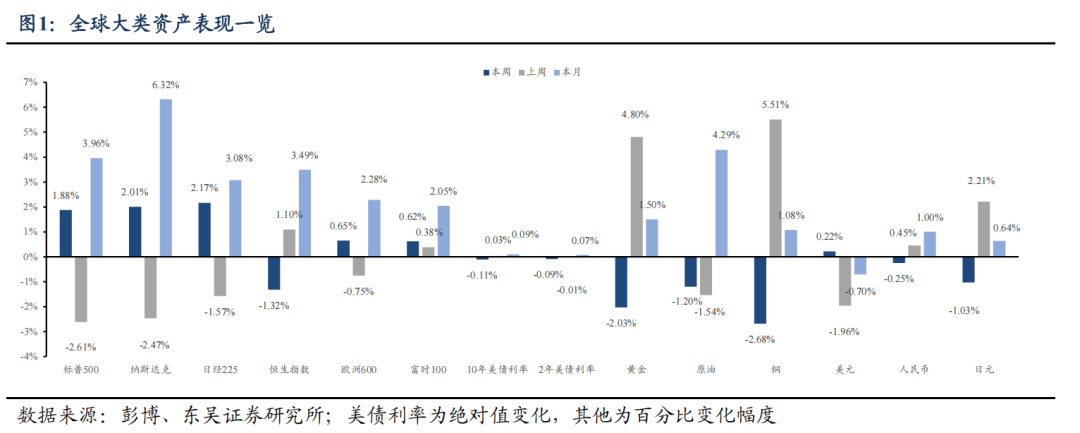
核心观点 核心观点:特朗普对欧洲额外加征50%关税延期一度提振市场情绪,本周美债利率大幅回落,10年期美债利率降至4.402%,美股上涨,黄金收跌2.03%。 本周公布4月美国商品贸易数据显示进口环比大幅走弱,特朗普关税政策带来的"抢进口"或开始放缓;同时FOMC纪要显示美联储对降息依旧保持谨慎态 度。政治方面,虽然特朗普援引IEEPA征收对等关税的行为遭美国国际贸易法院(CIT)驳回,但未来特朗普仍可通过122条款和338条款等贸易法案内容 对其他贸易伙伴大范围加征关税,因此本次CIT的裁决并不意味着未来全球贸易局势的缓和,短期内特朗普的关税政策走向依旧面临较大的不确定性。 大类资产:特朗普对等关税征收依据遭贸易法院驳回,美股美债利率上涨,黄金大跌。本周一美股美债因阵亡将士纪念日休市,全周市场受贸易局势改善 整体上行。首先是上周日(5月25日)特朗普宣布同意欧盟请求并将对欧盟额外征收的50%关税延期至7月9日;随后美国国际贸易法院裁定特朗普引用 《国际紧急经济权利法》(IEEPA)征收对等关税的行为超出法律授权范围并要求其撤回相关指示,不过特朗普随后立刻上诉巡回法院,对等关税暂时得 以继续征收。整体来看,全 ...
美国关税风波未止,马来西亚打造“亚洲半导体中心”之路遇阻
2 1 Shi Ji Jing Ji Bao Dao· 2025-06-02 01:51
21世纪经济报道记者胡慧茵广州报道 特朗普关税政策遭遇司法挑战仅一天,再迎来变数。 据新华社报道,当地时间5月29日,美国联邦巡回上诉法院批准特朗普政府的请求,暂时搁置美国国际 贸易法院此前做出的禁止执行特朗普政府依据《国际紧急经济权力法》对多国加征关税措施的行政令的 裁决。 前一天,美国国际贸易法院裁定禁止执行特朗普政府依据《国际紧急经济权力法》对多国加征关税措施 的行政令。当天,马来西亚半导体板块受此利好消息影响强势上涨。然而仅过去一天,据记者29日查询 Investing数据,马来西亚半导体与半导体设备基本转跌。马来西亚半导体股价受消息面反应之大,恰恰 反映出马来西亚半导体对全球贸易环境的依赖。 在近期举行的第46届东盟峰会上,马来西亚总理安瓦尔在"吉隆坡宣言"的签署仪式上表示,东盟国家将 紧密携手,巩固其作为全球稳定支柱与新兴经济体的重要地位。促进区域半导体供应链的发展,也是马 来西亚今年担任东盟轮值主席国期间的重要议程之一。 作为全球半导体产业的重要一环,马来西亚的目标是打造高端芯片,但美国频繁摇摆的关税政策很可能 会破坏这一计划。对马来西亚来说,美国的关税政策始终是"达摩克利斯之剑"。有专家认为, ...