下沉市场布局

Search documents
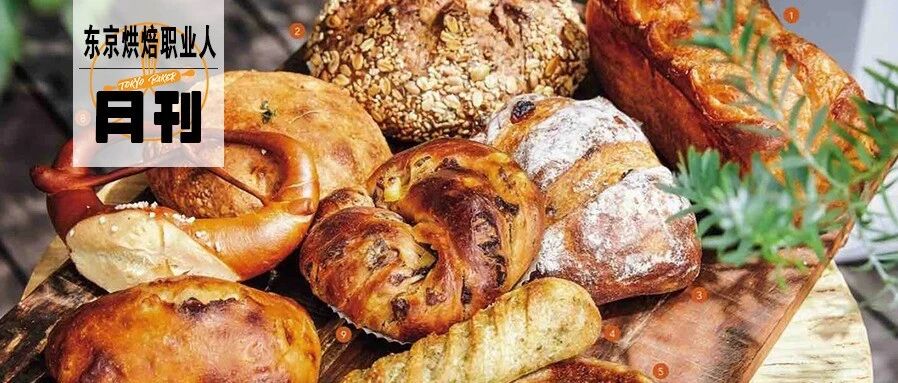
1 月月刊 | 开年烘焙第一课:向奶茶学爆款,跟社区要复购
东京烘焙职业人· 2026-01-31 08:33
Core Insights - The article emphasizes the importance of capturing industry dynamics and core values for baking professionals and enthusiasts, highlighting the launch of a monthly column by Tokyo Baking Professionals in 2026 to provide insights into global baking trends and domestic market dynamics [1] Domestic Hot Trends - The new tea beverage sector is increasingly integrating with baking, with leading brands introducing dessert-like flavors in their products, such as "super glutinous molten tapioca milk" and "thick lava cocoa mousse" [2] - 7-ELEVEn has launched new sandwiches, promoting a "baking day" discount to enhance immediate baking consumption scenarios, indicating a trend towards cross-industry integration and market penetration as key growth strategies [4] - The brand Bao Shifu is expanding its product offerings and global presence, opening its first bread specialty store in Wuhan and planning to open more than 30 stores worldwide by 2026, including in the U.S. and Southeast Asia [4] - The price of imported cream has surged by 27%, leading to a rise in the market acceptance of domestic baking ingredients, with brands like Yili gaining popularity due to stable pricing and suitable taste [4] - Community independent stores focusing on "freshness, convenience, and neighborhood relationships" are becoming a hot trend in entrepreneurship, filling the gap between large chains and community needs [5] Flavor and Ingredient Trends - The 2026 Food Flavor Trend Report indicates a rising consumer preference for fresh, spicy, and sour flavors, while the preference for sweet and salty flavors is declining [6] - Puratos has identified four major trends in baking: texture mixing, protein enhancement, smaller portions, and the rise of sour flavors, reflecting a consumer pursuit of balance between indulgence and health [10][13] - The popularity of the two-ingredient "Japanese cheesecake" on TikTok showcases a trend towards simple, visually appealing desserts that are easy to make [11] High-End Dining and Baking Integration - The Michelin-starred restaurant Noma is set to open a location in Los Angeles, indicating a deepening integration of high-end dining and baking, with unique fermentation techniques and flavor combinations that could influence the industry [12] Monthly Core Trends - Flavors like strawberry, chocolate, matcha, and cherry continue to dominate, with sweet and savory combinations becoming a core competitive advantage [27] - Two main innovation lines are emerging: holiday adaptations with auspicious themes and health upgrades incorporating low-calorie, low-sugar, and natural ingredients [27] Future Innovation Directions - The Chinese baking market is expected to focus on diverse scenarios, with affordable and premium products being developed simultaneously, and classic categories seeing innovation [29] - There is a strong emphasis on local and health-oriented ingredients, with a focus on traditional flavors and seasonal offerings [29] - The trend of frozen baking products is expected to increase due to their convenience and standardization, particularly in breakfast and office settings [29]

全年净利润超5亿元,沪上阿姨发布2025业绩预告
Nan Fang Nong Cun Bao· 2026-01-22 03:33
Core Viewpoint - The company, Hu Shang A Yi, forecasts a net profit of approximately 4.95 billion to 5.25 billion RMB for 2025, representing a year-on-year growth of 50% to 60% [2][8]. Financial Performance - The estimated net profit for 2025 is projected to be around 5.6 billion to 5.9 billion RMB, with a year-on-year increase of approximately 34% to 41% [3]. - The company reported a revenue of 18.18 billion RMB in the first half of 2025, with franchise-related income dominating the revenue structure [27]. Business Strategy - Hu Shang A Yi attributes its profit growth to a multi-brand development strategy, an all-channel operational model, diversified innovative products, and efforts to reduce costs and increase efficiency [6][7]. - The company has established a three-brand matrix covering a price range of 2 to 23 RMB, effectively matching different consumer demands and adapting to market fluctuations [14][15]. Market Positioning - The company focuses on the lower-tier market, aiming to provide high-cost performance ready-to-drink products to consumers in third-tier and below cities [16][19]. - As of June 30, 2025, Hu Shang A Yi has a total of 9,436 stores across over 300 cities, with 4,824 stores (51.1%) located in third-tier and below cities [19][20]. Franchise Model - The franchise model is a core support for Hu Shang A Yi's scale expansion, with franchise stores accounting for over 99.7% of the total store count [25]. - The company has implemented various incentives for franchisees, including subsidies and reductions to encourage new store openings [36][37]. Future Plans - The company plans to use funds raised from its IPO for digital upgrades, research and development, supply chain construction, and brand expansion, while continuing to deepen its existing market presence [28][29].

90%菜品不同、瞄准“漂亮饭” 麻六记再推新品牌寻增长线
Bei Jing Shang Bao· 2026-01-06 13:31
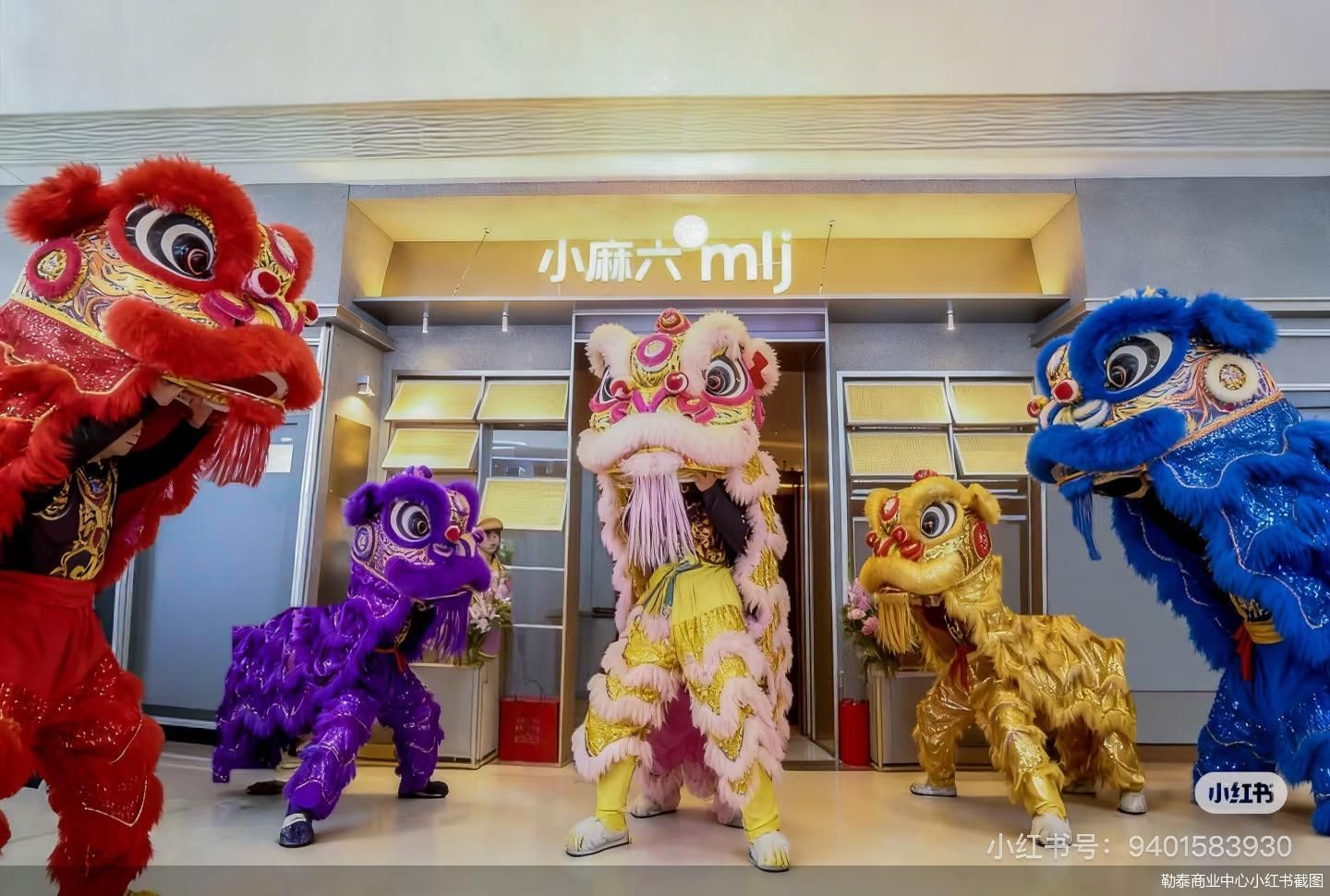
Core Viewpoint - The launch of the new brand "Xiao Ma Liu" by Ma Liu Ji aims to capture the non-first-tier market by offering a competitive advantage through 90% innovative dishes and a more affordable price point, complementing the main brand's pricing matrix [1][4][5]. Group 1: Brand Positioning and Strategy - Xiao Ma Liu's first store opened in Shijiazhuang, targeting young consumers with a focus on trendy dining experiences and a lower average spending of 60-70 yuan per person [3][4]. - The brand emphasizes a distinct identity from Ma Liu Ji, featuring a smaller store size and a more youthful ambiance, while maintaining a core offering of Sichuan cuisine [3][5]. - The introduction of Xiao Ma Liu is seen as a strategic move to expand into lower-tier markets and diversify consumer engagement, aligning with the rising demand for cost-effective dining options among younger demographics [5][6]. Group 2: Market Expansion and Competition - Ma Liu Ji has been actively exploring new market opportunities, including the successful launch of its "Ma Liu Ji Spicy Noodle" stores, which cater to a different consumer segment with lower pricing [4][6]. - The brand's expansion strategy includes leveraging its existing supply chain and brand recognition to penetrate smaller cities, where operational costs are lower, thus facilitating rapid replication of its business model [6][7]. - Despite the potential for growth, Xiao Ma Liu faces challenges in a competitive landscape, particularly in non-first-tier cities, where it must navigate local brand competition and maintain quality control to avoid price wars [6][7]. Group 3: Operational Considerations - The company is advised to focus on product innovation and local market adaptation to avoid homogenization and create unique selling points [7]. - Ensuring food safety and transparency in the supply chain is critical for maintaining brand reputation, especially in light of past incidents that raised consumer concerns [6][7]. - Future strategies may include enhancing digital operations, expanding multi-channel integration, and fostering emotional connections with consumers through storytelling and user experience [7].
沪上阿姨上半年营收净利双增长 下沉市场布局与多品牌战略助力长效发展
Zheng Quan Ri Bao· 2025-08-28 05:45
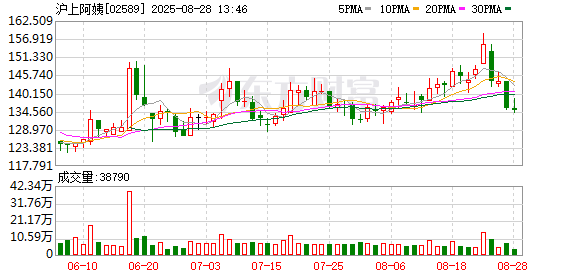
Financial Performance - In the first half of 2025, the company achieved operating revenue of 1.818 billion yuan, a year-on-year increase of 9.7% [2] - Gross profit reached 572 million yuan, up 10.4% year-on-year [2] - Net profit for the period was 203 million yuan, reflecting a year-on-year growth of 20.9% [2] - Adjusted net profit stood at 244 million yuan, with a year-on-year increase of 14.0% [2] - Basic earnings per share were 1.97 yuan, representing a year-on-year growth of 19.4% [2] - The company announced a mid-term dividend plan, proposing a distribution of approximately 71.12 million yuan [2] Market Strategy - The company has successfully implemented a down-market strategy, with 51.1% of its stores located in third-tier and below cities [3] - As of June 30, 2025, the total number of stores reached 9,436, an increase of nearly 1,000 stores year-on-year [3] - The down-market strategy has allowed the company to achieve stable growth despite industry uncertainties [3] Supply Chain and Franchise Model - The company has established a robust supply chain network, including 13 logistics bases, 4 equipment warehouses, 7 fresh produce warehouses, and 14 cold chain warehouses [4] - The supply chain supports the growing store network and ensures product quality and service stability [4] - The company has 5,706 franchisees operating 9,412 franchise stores, benefiting from a standardized and digitalized management system [4] - As of June 30, 2025, the company had 131.4 million registered members on its WeChat mini-program, with an average quarterly active membership of 15.8 million and a quarterly repurchase rate of 40.6% [4] Brand and Product Innovation - The company has developed a multi-brand strategy, including three main brands to enhance market reach and risk resilience [5][6] - The main brand "沪上阿姨" targets consumers in third-tier and below cities with cost-effective beverages, while "茶瀑布" focuses on a lower price range [5] - The introduction of "沪咖" in 2022 marks the company's entry into the coffee market, catering to diverse consumer needs [6] - The company launched 136 new products in the first half of 2025, maintaining a rapid pace of innovation [6] Market Recognition - The company has been included in the Hang Seng Composite Index, indicating strong market recognition of its business performance and value [7] - The solid performance in the semi-annual report further strengthens the company's position among leading players in the new tea beverage industry [7]
味之素投资v2food;京东拟开5家折扣店;Prada任命首席传播官
Sou Hu Cai Jing· 2025-08-08 02:02
Investment Dynamics - Ajinomoto Co., Inc. announced a strategic investment in Australian plant-based protein company v2food, aiming to build a global sustainable protein industry alongside its acquisition of the U.S. brand Daring Foods [3] - v2food's unique "v2 RepliTech™" technology optimizes the taste of plant proteins, and its collaboration with CSIRO enhances its R&D capabilities [3] - v2food plans to leverage Daring Foods' retail network and brand recognition in the U.S. to promote its product range [3] Brand Dynamics - Anta Group signed an agreement with South Korean e-commerce platform Musinsa to establish a joint venture in China, with Anta holding 40% and Musinsa 60% [5] - The joint venture allows Anta to share profits without heavy investment in store openings, reducing expansion risks while retaining options for future equity increases [5] Retail Developments - JD.com plans to open five discount supermarkets in Suqian, Jiangsu, and Zhuozhou, Hebei, marking its first large-scale discount supermarket format in China [8] - The discount supermarkets will feature a large store format with a wide range of SKUs, with the Zhuozhou store covering 5,000 square meters and offering over 5,000 competitively priced daily goods [8] - This move is part of JD.com's strategy to penetrate lower-tier markets, following successful pilot stores in Beijing [8] Real Estate Transactions - JLL announced the sale of eight prime retail properties in Hong Kong, all leased to McDonald's, providing stable income for investors [11] - The total market value of the assets is approximately HKD 1.2 billion, with options for full acquisition or individual bids [12] - The "sell and lease back" model employed by McDonald's may inspire other brands with substantial property holdings to consider similar strategies [12] Market Expansion - Bawang Tea Ji is accelerating its expansion in Asia, planning to enter the Japanese and South Korean markets after establishing a presence in Indonesia, Thailand, and Vietnam [16] - The company aims to leverage the growing consumer power in Asia, particularly among millennials, to replicate the success of coffee in the tea beverage sector [16] Financial Performance - Revolve reported a 9% increase in overall sales for Q2, reaching USD 309 million, with its department sales also growing by 9% to USD 268.4 million [19] - The growth is attributed to an increase in proprietary brand offerings, which help reduce costs and attract consumer attention [19] Collaborations and Product Launches - Starbucks collaborated with fragment design to launch a new beverage, "BBTEA by FRAGMENT," inspired by Hong Kong-style tea, along with a reusable cup featuring the fragment logo [21] - This collaboration emphasizes the creative integration of product offerings, enhancing brand engagement and consumer interest [21] Personnel Changes - Prada Group announced the promotion of Christopher Bugg to Chief Communications Officer, overseeing global communication strategies for the group and its brands [27] - Bugg's appointment is seen as a strategic move to strengthen the group's brand positioning following the acquisition of Versace [27] Board Appointments - a2 Milk Company appointed Grant Dempsey, former CFO of TPG Telecom and with a background in investment banking, to its board [29] - This appointment is viewed as a signal to enhance investor communication quality and provide diverse perspectives for future strategic expansion [29]







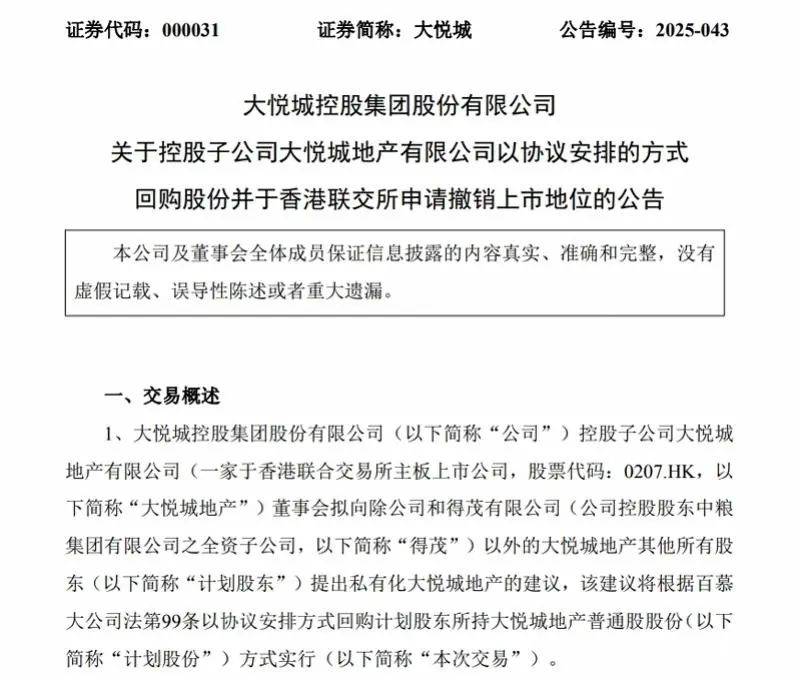
大悦城之困!
Sou Hu Cai Jing· 2025-08-05 08:35
Core Viewpoint - Dalian Wanda Group's subsidiary, Dalian Wanda Commercial Properties, announced plans to privatize and delist from the Hong Kong Stock Exchange due to insufficient stock liquidity and limited financing capabilities, aiming to streamline management and improve operational efficiency [1][13][15]. Group 1: Company Actions - Dalian Wanda Commercial Properties intends to repurchase shares through an agreement and has applied for delisting from the Hong Kong Stock Exchange, officially initiating the privatization process [1]. - The company resumed trading on August 1, with a closing price of HKD 0.54, marking a single-day increase of 45.95% [3]. - As of August 4, the stock price decreased to HKD 0.53, with a total market capitalization of HKD 75.42 billion [5]. Group 2: Financial Performance - Dalian Wanda Commercial Properties has faced continuous losses over the past three years, with net losses of RMB 2.883 billion, RMB 1.465 billion, and RMB 2.977 billion for 2022, 2023, and 2024 respectively, totaling RMB 7.325 billion [16]. - The company’s stock price has remained below HKD 1 since May 2018, with an average daily trading volume of less than HKD 3 million prior to suspension [13][14]. - The company reported a market capitalization of approximately HKD 76.85 billion as of August 1, with a price-to-book ratio of 0.24 [13]. Group 3: Market Context - The company is focusing on developing and managing urban complexes and commercial properties, primarily under the "Dalian Wanda" brand, in key cities such as Beijing and Shanghai [10]. - Dalian Wanda Commercial Properties has established a presence in major city clusters, including Beijing-Tianjin-Hebei, Yangtze River Delta, Guangdong-Hong Kong-Macao Greater Bay Area, Chengdu-Chongqing, and the Yangtze River middle reaches [11]. - The broader retail environment for high-end shopping malls is challenging, with other companies like Beijing SKP and Hang Lung Properties also experiencing significant revenue declines [22][23].