
中国入境游

Search documents
尽情“中国游” 尽享“中国购”
Zhong Guo Zhi Liang Xin Wen Wang· 2026-01-25 22:32
Core Insights - The Chinese inbound tourism market is experiencing unprecedented growth, with international visitors increasingly drawn to diverse cultural and experiential offerings across the country [1][6] Group 1: Policy Changes and Visitor Growth - The extension of the visa-free transit policy to 240 hours and its expansion to 55 countries by June 2025 has significantly increased the number of foreign visitors, with 292,000 entering under this policy during the New Year holiday, marking a 35.8% year-on-year increase [1] - The shift from merely inviting tourists to facilitating their entry reflects a deeper confidence in China's openness to the world [1] Group 2: Enhanced Visitor Experience - The integration of multilingual services at airports, AI translation in taxis, and the international version of Alipay connecting to 40 global e-wallets creates a seamless and welcoming experience for visitors [2] - Over 60% of inbound tourists are opting for multi-city deep travel experiences, indicating a shift from passive observation to active participation in cultural activities [2] Group 3: Shopping Trends - The appeal of shopping in China has evolved, with foreign tourists now seeking a wide range of products, from traditional items to high-tech gadgets and customized goods, reflecting a broader recognition of Chinese manufacturing quality and cultural aesthetics [3] - The convenience of payment and tax refund processes, with 12,000 tax refund stores and over 7,000 offering immediate refund services, has further stimulated consumer spending [4][5] Group 4: Cultural and Economic Impact - The ongoing boom in inbound tourism is a reflection of China's enhanced soft power, showcasing its cultural influence, industrial competitiveness, and welcoming national image [5] - To transition from a surge in visitor numbers to high-quality development, there is a need for refined services, unique local experiences, and a cohesive ecosystem that integrates travel, accommodation, and commerce [5]
第一批反季来中国的老外,爽歪了
3 6 Ke· 2026-01-14 03:33
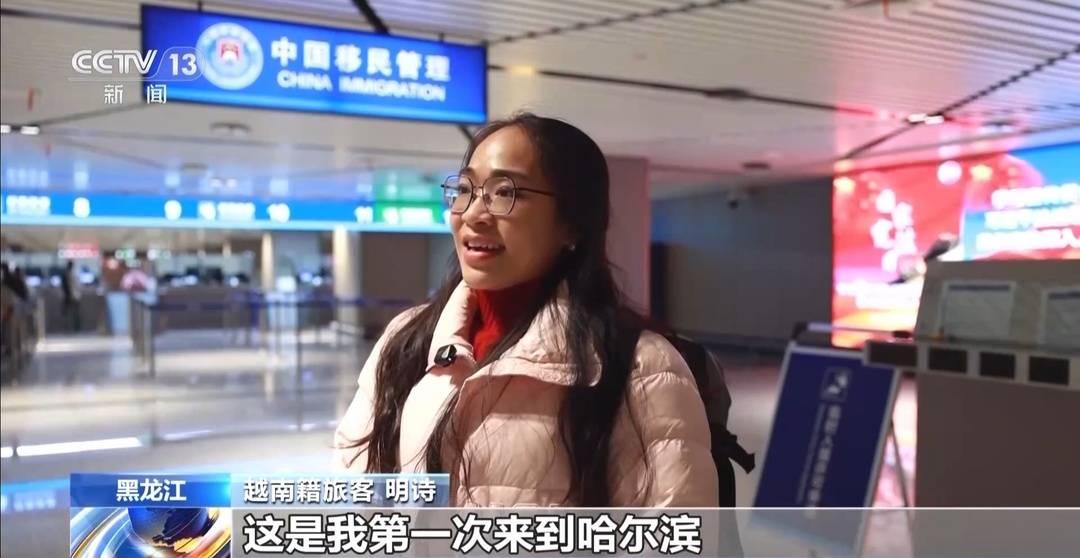
Core Insights - The influx of Russian tourists to Sanya has surpassed visitors from other countries, prompting local hotels to adapt by training staff in Russian language skills to enhance customer service [1][3] - The demand for Russian-speaking tour guides has surged, with daily wages reaching 500 yuan, reflecting a significant shift in the tourism landscape [3] - Sanya's hotel prices have increased due to the high demand from individual travelers booking through overseas platforms, despite a decrease in group bookings [3][9] Group 1: Sanya's Tourism Dynamics - Russian tourists are increasingly favoring Sanya as a vacation destination due to the challenges in obtaining Schengen visas, leading to a 200% increase in travel agency orders for Hainan [9][11] - The local economy is benefiting from the high spending power of Russian visitors, who are engaging in various activities such as dining and wellness treatments, significantly boosting hotel and restaurant revenues [3][11] - The introduction of direct flights from multiple Russian cities to Sanya has facilitated this tourism boom, with 25 weekly flights currently operating [11][12] Group 2: Harbin's Tourism Growth - Harbin is experiencing a surge in Southeast Asian tourists, with a 57% increase in bookings for winter tourism products, driven by the newly established direct flight routes [6][15] - The appeal of Harbin lies in its unique winter experiences, which are now more accessible due to reduced travel complexities, attracting tourists who previously found it difficult to visit [14][15] - Local businesses in Harbin are enhancing their services to cater to Southeast Asian visitors, including providing warm amenities and language support, which has improved the overall tourist experience [27] Group 3: Changing Consumer Behavior - Russian tourists are shifting from traditional beach relaxation to a deeper cultural engagement, seeking experiences that include local traditions and wellness practices [25][27] - The long-term stay of Russian families in Sanya is reshaping the local accommodation market, with increased demand for serviced apartments and long-term rentals [25] - In Harbin, the focus on customer service and comfort for Southeast Asian tourists is becoming a competitive advantage, with businesses adapting to meet the specific needs of these visitors [27]


第一批反季来中国的老外,最爱哈尔滨与三亚
3 6 Ke· 2026-01-14 02:17
Core Insights - The influx of Russian tourists to Sanya has significantly increased, surpassing visitors from other countries, leading to a shift in local hospitality practices and language training for staff [1][2] - Sanya has become a preferred destination for Russian travelers due to its favorable climate and cultural familiarity, while Harbin attracts Southeast Asian tourists seeking unique winter experiences [4][10] - The changing demographics of tourists are prompting local businesses to adapt their services and offerings to meet new consumer preferences [25][26] Group 1: Russian Tourists in Sanya - Russian tourists now dominate the visitor demographic in Sanya, with hotel staff learning Russian to cater to this market [1] - The demand for Russian-speaking tour guides has surged, with wages reaching 500 yuan per day, comparable to Japanese guides [1] - The number of Russian tourists booking trips to China has increased by 3.5 times since the introduction of visa-free entry, with Sanya accounting for 88% of bookings [2][3] Group 2: Changes in Tourist Behavior - Russian visitors are not just looking for leisure; they are interested in cultural experiences, leading to a rise in demand for local cultural activities and wellness services [20][21] - The average stay for Russian tourists has lengthened, with many opting for longer-term accommodations that allow for a more local lifestyle [19] - Approximately 35% to 40% of Russian families are traveling with children, increasing the demand for family-friendly activities in Sanya [20] Group 3: Southeast Asian Tourists in Harbin - Southeast Asian tourists are increasingly visiting Harbin, with a 57% year-on-year increase in bookings for winter tourism products [3] - Direct flights from Southeast Asia to Harbin have made travel more accessible, allowing tourists to experience winter activities without lengthy layovers [12] - Harbin is enhancing its service offerings to cater to the needs of Southeast Asian visitors, including providing warm amenities and language support [23][24] Group 4: Economic and Service Adaptations - The growth in Russian and Southeast Asian tourism is prompting local businesses to adjust their service protocols to better meet the needs of these new demographics [25][27] - The integration of local payment systems and services has improved the overall experience for Russian tourists, with 80% of transactions now conducted in local currency [9] - The hospitality industry is witnessing a shift from traditional Western markets to neighboring countries, highlighting the importance of regional tourism dynamics [16][26]
去中国旅游是新潮流
Ren Min Ri Bao· 2026-01-08 19:51
Core Insights - The report indicates a significant increase in inbound tourism to China, with a 100% growth in orders for the first three quarters of 2025, and a 153% average increase in orders from visa-free countries [5][6] - Inbound tourism is transitioning from a focus on quantity to quality, highlighting the potential for further growth in this sector [5] Group 1: Inbound Tourism Growth - The number of inbound tourists to Beijing exceeded 5 million in 2025, marking a critical transition towards high-quality development [6] - Major cities like Shanghai, Guangzhou, and Beijing are popular among foreign tourists, with significant increases in inbound flight bookings to cities like Haikou and Sanya, which saw growth rates exceeding 300% and 500% respectively [6][7] - The top source countries for inbound tourists in 2025 are South Korea, Singapore, and Malaysia, with Russia showing a remarkable annual growth of 205% [7] Group 2: Tourist Experience and Services - The introduction of one-stop service counters at airports in Beijing and Shanghai has improved the travel experience for foreign tourists, making it more convenient [9] - The report highlights that nearly 100% of overseas social media users view traveling to China as a trendy choice, with many tourists sharing their positive experiences on social media [7][8] - China's tourism services are increasingly seen as safe and suitable for families and women, with systematic standards and regulations enhancing the perception of safety [8] Group 3: Market Potential - The report emphasizes the substantial potential market growth for inbound tourism in China, supported by adequate supply capabilities in key areas such as hotels and transportation [9] - As the global tourism market faces supply shortages and rising costs, China's tourism services are becoming increasingly attractive to foreign visitors [9]

火热入境游,映照传统与现代交融的中国
Ren Min Ri Bao· 2026-01-05 03:15
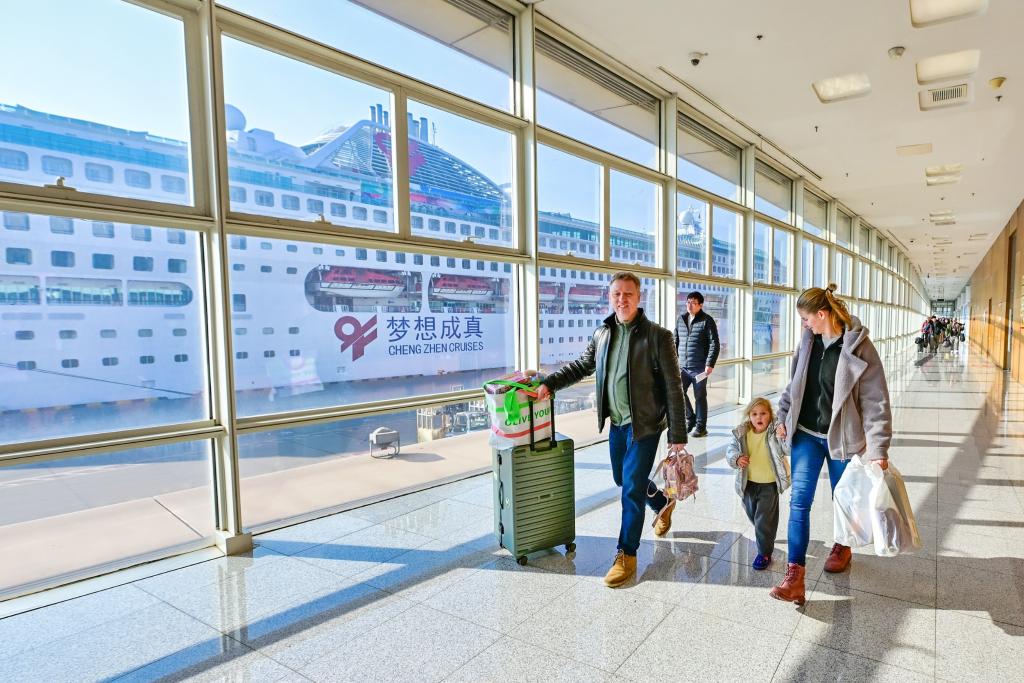
Group 1 - The inbound tourism market in China is experiencing strong growth, with ticket bookings increasing by 110% year-on-year and bookings for experiential products growing over 30 times [1] - New business models and products are providing fresh momentum for development, such as the "duty-free shopping + beach vacation" model in Hainan and themed tours like the "Panda Special Train" [1] - By 2025, bookings for immersive travel projects like intangible cultural heritage workshops and folk performances are expected to surge by 300% year-on-year, reflecting the rich cultural tourism resources in China [1] Group 2 - A series of facilitation measures for inbound tourism have been implemented, including visa exemptions for 76 countries and a 240-hour transit visa exemption policy expanded to 55 countries [2] - In the first three quarters of 2025, the number of foreign visitors under the visa exemption policy reached 20.89 million, a year-on-year increase of over 50% [2] - The World Travel and Tourism Council predicts that China's tourism industry will maintain an average annual growth rate of 7% over the next decade, positioning China to become the world's largest tourism market by 2031 [2] Group 3 - Foreign tourists' deep recognition of China's image is driving the sustained popularity of "China tours," with positive experiences challenging stereotypes [3] - Five Chinese cities ranked in the top 20 for tourism safety and five in the top 10 for smart tourism, indicating a vibrant and modern image of China [3] - The open and high-quality inbound tourism market serves as a bridge for the world to perceive the dynamic nature of China, enhancing cultural exchanges [3]
“中国游”“中国购”持续火热!入境游消费潜力无穷
Xin Hua Wang· 2026-01-05 00:13
Core Insights - The article highlights the increasing popularity of inbound tourism and shopping in China, driven by favorable policies and a growing number of foreign visitors [1][4][9] Group 1: Inbound Tourism Growth - During the New Year holiday, 828,000 foreign visitors entered and exited China, marking a 29.8% increase compared to the previous year [1] - The number of foreign visitors entering under visa exemption policies reached 292,000, a 35.8% increase year-on-year [1] - The 240-hour visa-free transit policy now applies to 55 countries and 65 ports, enhancing accessibility for international travelers [5] Group 2: Enhanced Visitor Experience - Cities like Harbin have improved services for foreign tourists, including bilingual signage and extended public transport hours during peak times [2] - Technological advancements, such as AI translation tools in taxis and smart platforms, are being implemented to address language barriers for inbound tourists [4] - The integration of mobile payment systems has made transactions easier for foreign visitors, with partnerships established with 40 electronic wallets across the Asia-Pacific region [4] Group 3: Shopping and Consumer Trends - The "immediate refund" policy for tax refunds has been well-received, with over 12,252 stores offering this service by November 2025, significantly boosting international shopping [9][11] - The Chinese government is selecting around 15 cities to pilot international consumption environment construction, aiming to enhance the shopping experience for global consumers [11] - A report indicates that inbound tourism bookings saw a 100% increase in the first three quarters of 2025, with orders from visa-exempt countries rising by an average of 153% [11]
火热入境游,映照传统与现代交融的中国(和音)
Ren Min Ri Bao· 2026-01-04 23:38
Group 1: Market Growth and Trends - The inbound tourism market in China has shown strong growth, with ticket bookings increasing by 110% year-on-year during the New Year holiday, and bookings for experiential products rising over 30 times [1] - New business models and products are providing fresh momentum for development, such as the "duty-free shopping + beach vacation" model in Hainan and themed tours like the "Panda Special Train" and "Silk Road Tea Aroma Tour" [1] - By 2025, bookings for immersive tourism projects like intangible cultural heritage workshops and folk performances are expected to surge by 300% [1] Group 2: Policy Support and Visitor Statistics - China has implemented a series of facilitation measures for inbound tourism, including visa exemptions for 76 countries and a 240-hour transit visa exemption policy for 55 countries [2] - In the first three quarters of 2025, the number of foreign visitors under the visa exemption policy reached 20.89 million, a year-on-year increase of over 50% [2] - The World Travel and Tourism Council predicts that China's tourism industry will maintain an average annual growth rate of 7% over the next decade, potentially making it the largest tourism market globally by 2031 [2] Group 3: International Perception and Experience - Foreign tourists' positive experiences in China are reshaping international perceptions, highlighting the country's friendly, efficient services and modern culture [3] - Five Chinese cities ranked in the top 20 for tourism safety and five in the top 10 for smart tourism in the World Tourism Cities Development Report [3] - The evolving image of China as an open, high-quality, and warm destination is expected to enhance cultural exchanges and allow people from various countries to experience a more authentic China [3]
全球瞭望丨英媒:中国入境游持续升温 世界看到真实中国
Xin Hua She· 2025-12-10 03:11
Core Viewpoint - In 2025, China's inbound tourism is expected to experience explosive growth, driven by policies such as visa-free entry, which are key factors in the strong expansion of the inbound tourism market [1] Group 1: Growth Drivers - The five main reasons foreign tourists choose to visit China include its unique and profound cultural heritage, advanced infrastructure such as high-speed rail and digital payment systems, convenient visa policies, high cost-performance ratio of inbound travel experiences, and a safe, friendly environment with hospitable Chinese people [1] Group 2: Broader Implications - The value of inbound tourism extends beyond economic benefits; as the number of inbound tourists rises, the international community gains a more authentic understanding of China, helping to break down stereotypes and misunderstandings that often lead to conflicts [1]
【光大研究每日速递】20251203
光大证券研究· 2025-12-02 23:06
Group 1 - The new stock fundraising scale has decreased month-on-month, with a total of 11 new stocks listed in November 2025, raising 10.188 billion yuan, but still maintaining a fundraising level above 10 billion yuan [4] - The average first-day increase for new stocks on the main board and the dual innovation board was 177.8% and 267.7%, respectively, indicating strong initial market performance [4] - The number of offline inquiry accounts continues to grow, reflecting sustained high demand for new stock subscriptions [4] Group 2 - The market sentiment has cooled slightly, with the proportion of rising stocks in the CSI 300 index decreasing month-on-month, although it remains above 50% [5] - Momentum indicators show a downward trend, suggesting a cautious outlook for the near future [5] - The CSI 300 index is currently in a non-prosperous emotional zone, indicating potential challenges ahead [5] Group 3 - The inbound tourism market in China is entering a high-quality development phase, driven by visa-free policies and cultural outreach, with significant growth potential [6] - Leading OTA companies like Ctrip and Trip.com are expected to benefit from the inbound tourism boom, while Tongcheng Travel is expanding into international markets [6] - Zhongxin Tourism is gradually starting its inbound tourism business, leveraging its rich domestic and international supply chain resources [6] Group 4 - The price of electrolytic cobalt reached 400,000 yuan per ton, with a month-on-month increase of 1.8%, indicating rising costs in the materials sector [7] - The price of carbon fiber remained stable at 83.8 yuan per kilogram, with a gross profit margin of -9.53 yuan per kilogram [7] Group 5 - The commercial aerospace sector is entering a new phase of rapid development, with the introduction of a three-year action plan and the establishment of a commercial aerospace department by the National Space Administration [7] - Investment opportunities in the commercial aerospace industry are being highlighted as a result of these developments [7] Group 6 - Xiaopeng Motors reported a year-on-year increase of 18.9% in deliveries, totaling 36,728 vehicles, while NIO saw a significant year-on-year increase of 147.9% [8] - Li Auto's deliveries decreased by 31.9% year-on-year, totaling 33,181 vehicles, indicating varying performance among new energy vehicle manufacturers [8] Group 7 - Shuiyang Co., Ltd. announced an employee stock ownership plan, reflecting long-term development confidence, with a funding source of up to 51.04 million yuan [8] - The plan involves a maximum of 938 participants and includes stock repurchased at a price of 20.46 yuan per share, accounting for 0.64% of the total share capital [8]

光大证券晨会速递-20251202
EBSCN· 2025-12-02 02:46
Group 1 - The report indicates that the sentiment in the market has cooled down, with a slight decrease in the proportion of rising stocks in the CSI 300 index, which remains above 50%, suggesting a cautious outlook for the near term [2] - The new stock fundraising scale has decreased month-on-month, with November 2025 seeing 11 new stocks listed and a total fundraising amount of 10.188 billion yuan, although it still maintains a level above 10 billion yuan [3] - The report predicts negative year-on-year profit growth for industries such as coal, cement, float glass, and ordinary steel, while fuel refining profits are expected to see slight positive growth [4] Group 2 - The inbound tourism market in China is entering a high-quality development phase, driven by visa-free policies and cultural outreach, with significant growth potential for leading OTA companies like Ctrip and Tongcheng Travel [5] - Ctrip is positioned as a leading OTA benefiting from the inbound tourism boom, while Tongcheng Travel is rapidly expanding its international business [5] - The report recommends a "buy" rating for Ctrip Group and maintains a "buy" rating for Tongcheng Travel, while also giving an "accumulate" rating for Zhongxin Tourism [5] Group 3 - The report highlights that China's copper smelting plants are expected to reduce production by over 10% in 2026, which is anticipated to support a bullish outlook for copper prices [6] - The copper market is facing a shortage that is affecting electrolytic copper, with imbalances in inventory potentially leading to increased tightness outside the US [6] - Recommendations include Zijin Mining, Luoyang Molybdenum, Western Mining, and Jinchuan Group, with a focus on companies like Tongling Nonferrous Metals and Jiangxi Copper [6] Group 4 - The report tracks high-frequency data on the real estate market, indicating a cumulative transaction of 706,000 new homes across 20 cities, reflecting a 13% decrease year-on-year [7] - In major cities, Beijing saw a 19% decline in new home transactions, while Shanghai and Shenzhen experienced decreases of 5% and 31%, respectively [7] - Conversely, the second-hand housing market showed a slight increase of 3.1% in transactions across 10 cities, with notable increases in Beijing, Shanghai, and Shenzhen [7]