
入境游

Search documents
上航旅游集团旗下三家旅行社获评5A级
Zhong Guo Min Hang Wang· 2026-02-26 13:24
Core Insights - Shanghai Airlines Tourism Group has successfully maintained its 5A rating for its subsidiaries "Shanghai Airlines Tourism" and "Shanghai Airlines Holidays," while "Eastern Airlines National Travel" has upgraded from 4A to 5A, showcasing the group's strong overall capabilities in the travel agency sector [1][2] Group 1 - The total number of travel agencies in Shanghai is nearly 2000, with only 17 achieving the highest 5A rating, indicating top-tier performance in operational scale, management, service quality, and social reputation [2] - Shanghai Airlines Tourism Group has been recognized as one of the top 20 tourism groups in China three times and has won accolades for being a leading comprehensive tourism operator with an aviation characteristic [2] Group 2 - The group is actively implementing a "2+3" diversification strategy, focusing on travel agencies and travel destinations as core components, while also developing business travel, conference awards, and airport services [3] - The travel agency segment covers outbound, inbound, and domestic tourism, serving over 700,000 customers annually and collaborating with more than 3000 channel partners [3] - The group is committed to enhancing brand synergy among its subsidiaries and innovating product offerings to support Shanghai's goal of becoming a world-renowned tourist city [3]

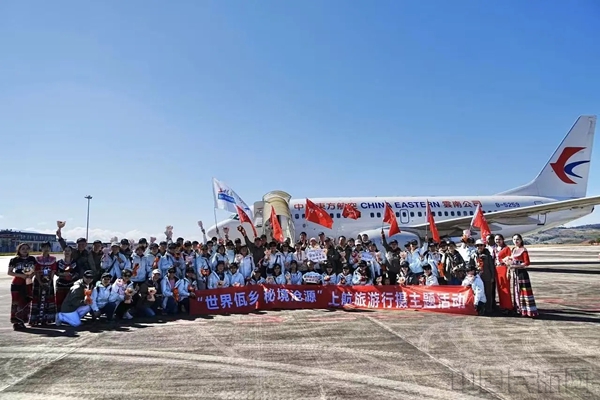
多地公布春节入境游成绩单,山西大同增速高达735%
Di Yi Cai Jing· 2026-02-26 12:37
Core Insights - The Spring Festival has become a globally shared cultural event, with inbound tourist numbers to China doubling year-on-year and foreign tourist flight bookings increasing by over 400% compared to the previous year [1][2] Group 1: Inbound Tourism Growth - Inbound tourism has seen a significant increase due to the implementation of visa-free policies, improved consumer environment, and high cost-performance ratio compared to foreign markets [2] - During the Spring Festival holiday, China attracted tourists from over 160 countries and regions, covering more than 300 cities, with an average daily growth of 28.5% compared to last year [1][2] - Flight bookings for inbound tourism during the Spring Festival increased nearly tenfold, with data showing a 20% year-on-year growth in domestic flight bookings by foreign passport holders [3] Group 2: Regional Highlights - Shanxi's Dalian reported a staggering 735% growth in inbound tourism, ranking first in the nation, while Hohhot saw a 1.8 times increase in flight bookings [4] - Beijing received 142,000 inbound tourists during the Spring Festival, with spending reaching 1.48 billion yuan, both figures showing over 40% growth [3][4] - Guangdong province welcomed 6.54 million inbound tourists, a 34.8% increase, with foreign tourist numbers rising by 42.2% [3][4] Group 3: Economic Impact - The inbound tourism market is expected to significantly boost consumption, with the average spending per inbound tourist projected to exceed that of 2025 [2] - Hainan's duty-free shopping during the Spring Festival reached 2.72 billion yuan, a 30.8% increase from the previous year, indicating a dual growth in both duty-free shopping and inbound tourism [5] Group 4: Challenges and Recommendations - Despite the growth, there is a disparity between the increase in inbound tourists and the growth in international tourism revenue, indicating a need for improved convenience in communication, accommodation, and payment processes [6] - The tourism industry should enhance product offerings to focus on experiential value, as both inbound tourists and domestic travelers share similar preferences [6] - There is a significant talent gap in foreign language guides, which needs to be addressed to support the growing inbound tourism market [6]
“Becoming Chinese”!入境游增速跑赢出境,2026年春节跨境游市场迎“开门红”
Xin Lang Cai Jing· 2026-02-25 11:46
Core Viewpoint - The Chinese Spring Festival has become a global phenomenon, attracting a significant number of foreign visitors to experience traditional Chinese culture, leading to a notable increase in both inbound and outbound tourism during the holiday period [2][8]. Group 1: Inbound and Outbound Tourism Data - During the Spring Festival holiday, a total of 17.8 million people entered and exited China, averaging 1.977 million daily, which is a 10.1% increase compared to the previous year [2]. - Inbound tourism saw 1.313 million foreign visitors, marking a 21.8% increase year-on-year, with 460,000 benefiting from visa-free policies, a 28.5% increase [8][9]. - Domestic travelers accounted for 9.514 million, reflecting a 10.2% increase from the previous year [3]. Group 2: Changing Travel Preferences - There is a shift in travel preferences among Chinese tourists from traditional sightseeing to immersive cultural experiences, with a growing interest in destinations like Russia and Turkey [7][11]. - The traditional group tours are expected to evolve towards more personalized and thematic travel experiences, catering to the demand for unique cultural explorations [7][11]. Group 3: Impact of Visa Policies - The expansion of visa-free policies has significantly influenced the travel landscape, with countries like Thailand regaining popularity among Chinese tourists, while Japan has seen a decline in visitors [4][6]. - The visa-free travel trend is expected to continue driving inbound tourism growth, particularly as China hosts various international cultural and sports events in 2026 [3][11]. Group 4: Economic Impact and Consumer Behavior - The influx of foreign tourists is contributing to a rise in spending on cultural experiences, healthcare, and wellness services, with a reported 73.2% increase in consumption by inbound tourists in Beijing [9][10]. - The trend of foreign visitors seeking medical services in China is gaining traction, with a 73.6% increase in international patients at key hospitals [10]. Group 5: Future Trends in Tourism - The tourism industry is expected to see three major trends: optimization of visitor demographics due to visa policy benefits, a shift towards deep experiential travel, and an expansion of consumption spaces beyond traditional tourist attractions [11].

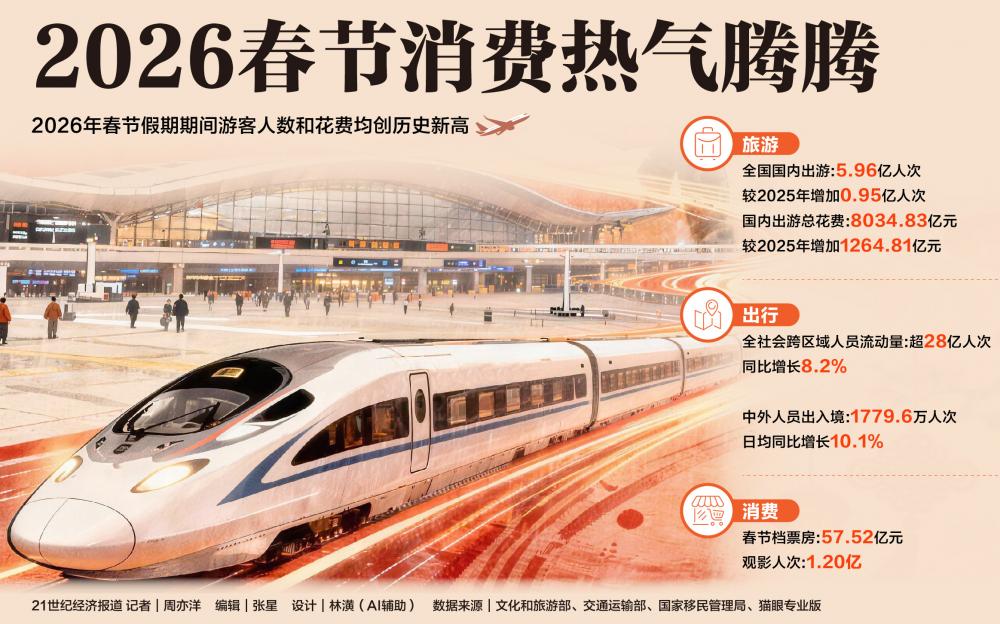
“史上最长春节假期”收官:5.96亿人次出游,文旅市场热气腾腾
2 1 Shi Ji Jing Ji Bao Dao· 2026-02-24 23:09
Core Insights - The 2026 Spring Festival holiday saw record-high travel activity, with over 2.8 billion trips taken, averaging 311 million daily, marking an 8.2% year-on-year increase [1] - Domestic tourism reached 596 million trips, with total spending of 803.48 billion yuan, an increase of 126.48 billion yuan compared to the previous year [1] - The trend of "reverse New Year" emerged, where younger generations take their parents on trips instead of traditional family gatherings, with significant increases in travel and accommodation bookings for older travelers [8][9] Group 1: Domestic Travel Trends - The Spring Festival holiday was characterized by a surge in traditional cultural tourism, with cities like Shantou and Fuzhou leading in popularity due to rich local customs [3] - Hotel bookings in popular destinations like Shantou increased by over 80%, driven by immersive cultural experiences [3] - Smaller cities with unique cultural offerings, such as Xingtai and Yongzhou, saw significant increases in flight bookings, with some destinations experiencing over 100% growth [4] Group 2: Reverse New Year Trend - The "reverse New Year" trend gained traction, with 18% of travelers flying to Beijing being over 50 years old, and a 20% increase in first-time flyers among those aged 60 and above [8][9] - Young travelers increasingly booked high-star hotels for their parents, leading to a 56% increase in hotel stays for seniors during the holiday [9] - Car rental orders surged by 52%, with SUVs being the most popular choice for family travel [9] Group 3: International Travel Dynamics - The Spring Festival holiday also saw a revival in international travel, with daily inbound and outbound travelers exceeding 1.97 million, a 10.1% increase from the previous year [10] - Thailand regained its position as the top outbound destination for Chinese tourists, with significant growth in travel to Southeast Asia and other long-haul destinations [10][11] - The influx of foreign tourists to China increased, with a 20% rise in domestic flight bookings by non-Chinese passport holders, covering 107 cities [12]
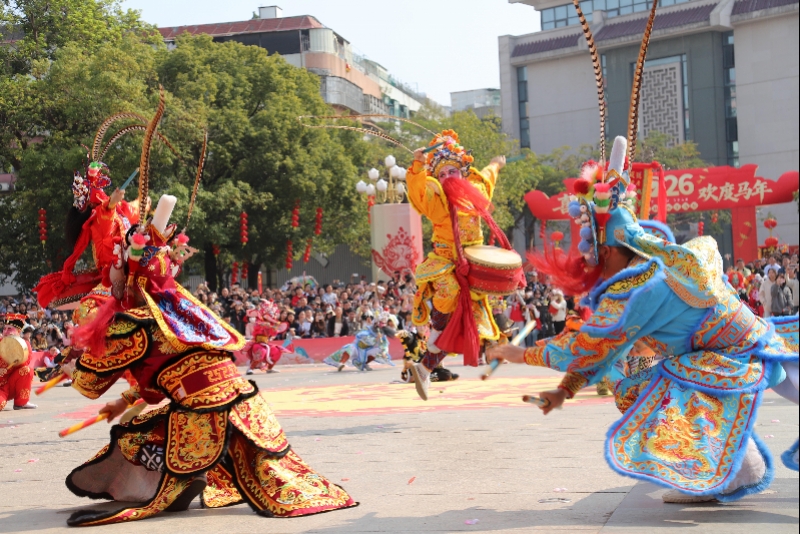
广东年俗游火爆:潮汕英歌舞吸睛,汕头领跑“黑马”目的地
Nan Fang Du Shi Bao· 2026-02-23 14:38
Group 1 - The core theme of the Spring Festival tourism market this year is the revival of traditional customs, with domestic travel orders reaching new highs [1][3] - Guangdong province, particularly Shantou, has emerged as a leading destination for traditional cultural experiences, with hotel bookings increasing over 80% year-on-year [3][4] - The popularity of traditional activities such as the "Yingge" dance and various local celebrations has significantly attracted tourists to Shantou and other cities in Guangdong [3][4] Group 2 - Nationwide, various regions are showcasing their unique cultural experiences, with Fuzhou hosting over 1,800 events during the Spring Festival [6] - Hainan has seen a surge in tourism, with hotel bookings increasing by over 70%, making it a top destination for island tourism during the holiday [6] - County-level tourism has also gained popularity, with places like Huangshan and Yangshuo experiencing hotel booking increases of over 400% [6] Group 3 - The demand for ice and snow tourism has surged, with indoor ski resorts becoming popular, and overall ice and snow travel orders increasing by over 200% [8][9] - The Milan Winter Olympics have further fueled interest in ice tourism, with hotel bookings in Italian cities like Milan and Venice seeing increases of over 200% [9][10] - Long-distance outbound travel has also seen significant growth, with destinations like Italy and Spain leading in popularity during the Spring Festival [10] Group 4 - Inbound tourism has experienced a remarkable increase, with flight ticket orders for inbound travel rising nearly tenfold during the Spring Festival [4][11] - Major cities such as Shanghai, Guangzhou, and Beijing have become preferred entry points for foreign tourists visiting China [4][11] - The growing interest from international visitors in experiencing Chinese New Year celebrations highlights the appeal of traditional culture [11]
春节假期首日上海接待游客256万人次,同比增近40%
Xin Lang Cai Jing· 2026-02-16 06:48
Core Insights - Shanghai's cultural and tourism market showed stable operation during the first day of the Spring Festival holiday, with a total of 2.5612 million visitors, representing a year-on-year increase of 38.97% compared to the same day in 2025 [1] Group 1: Visitor Statistics - The first day of the Spring Festival holiday in Shanghai welcomed 2.5612 million tourists, marking a 38.97% increase year-on-year [1] - Spring and Autumn Travel reported a significant increase in travel during the Spring Festival, with domestic travel up nearly 30% and outbound travel up nearly 20% compared to the previous year [3] - Inbound tourism saw a doubling in visitor numbers during the Spring Festival, with a focus on tourists from Greece, Slovenia, and Mexico [3] Group 2: Cultural Events and Activities - Shanghai organized a total of 2,570 unique activities during the Spring Festival, covering various sectors such as entertainment, sports, and technology [5] - The Yuyuan Lantern Festival showcased a blend of traditional culture and modern technology, presenting a visual feast themed "Dream as a Horse, Wilderness in Bloom" [5] - The Zhu Jia Jiao Ancient Town decorated key areas with festive themes, enhancing the New Year atmosphere for visitors [5]

新闻1+1丨从春节到全年 服务消费如何发力
Yang Shi Xin Wen Ke Hu Duan· 2026-02-10 13:38
Core Insights - The article discusses the increasing significance of service consumption in China, highlighting that by 2025, per capita service consumption expenditure will account for 46.1% of per capita consumption expenditure, indicating a need for quality upgrades in service consumption [1] Group 1: Changes in Supply and Demand - The demand for services is characterized by diversification, personalization, and quality, which drives supply innovation [1] - The supply side is innovating under policy guidance and technological empowerment, leading to new business models and enriched content in areas like cruise economy, inbound tourism, and winter sports consumption [1] - Service consumption is transitioning from a focus on goods to a balanced emphasis on both goods and services [1] Group 2: Key Areas of Service Consumption - Key service consumption areas include essential services like elderly care, childcare, and domestic services, which are in high demand [2] - Potential growth areas such as tourism, wellness, and entertainment are rapidly developing, especially during the nine-day Spring Festival holiday [2] - The nine key service areas identified by the State Council are crucial for service consumption and economic development, expected to become new growth points in the service economy [2] Group 3: Integration of Service Consumption and Livelihood - Service consumption in areas like elderly care, childcare, and domestic services is closely linked to daily life and is foundational to the service sector [4] - Policies should support and guide these sectors to expand supply while ensuring quality, which can stimulate enterprise engagement [4] - Companies can leverage big data to better understand consumer needs and provide more precise services [4]

从春节到全年 服务消费如何发力
Sou Hu Cai Jing· 2026-02-10 01:38
Core Viewpoint - The service consumption in China is expected to reach 46.1% of per capita consumption expenditure by 2025, indicating a significant shift towards service-oriented spending, particularly during the upcoming Spring Festival holiday [1]. Group 1: Changes in Supply Side - The demand for services is characterized by diversification, personalization, and quality, which drives continuous innovation in supply [1][2]. - New technologies and smart solutions are enhancing service offerings, particularly in areas like cruise economy, inbound tourism, and winter sports consumption, thereby improving consumer experience [1]. Group 2: Focus Areas of Service Consumption - Service consumption has shifted from being product-centric to a balanced focus on both goods and services, with strong demand in essential areas like elderly care, childcare, and domestic services [2]. - Potential growth areas include tourism, wellness, and entertainment, which are expected to see rapid development, especially during the nine-day Spring Festival holiday [2]. Group 3: Key Growth Areas - The nine key service sectors identified in the government's plan are crucial for the growth of service consumption and the overall service economy [3]. - Understanding service consumption is essential, as it fulfills both functional and emotional needs, enhancing consumer satisfaction through experiences like travel and leisure [3][4]. Group 4: Integration with Livelihood - Service sectors such as elderly care, childcare, and domestic services are closely linked to daily life and are foundational to service consumption [5]. - Policies aimed at supporting and regulating these sectors are necessary to expand supply while ensuring quality, which in turn can stimulate enterprise engagement and better meet consumer needs through data-driven insights [5].
岭南控股(000524):广州市属文旅企业,业务全国化及多元化发展并行
Hua Yuan Zheng Quan· 2026-01-25 11:30
Investment Rating - The report assigns an "Accumulate" rating for the company, marking its first coverage [4][6][9]. Core Insights - Lingnan Holdings is a comprehensive tourism company with a national and diversified business development strategy, focusing on travel agency operations, hotel management, and related tourism industry services [5][11]. - The tourism market is showing strong recovery, with domestic travel expected to reach 5.62 billion trips in 2024, a year-on-year increase of 14.8% [26][30]. - The company has completed a nationwide layout for its travel agency business, with over 200 stores across China, and is expanding its hotel business with new projects and rooms [5][40]. Summary by Sections Company Overview - Lingnan Holdings operates as a major tourism industry platform, integrating travel, accommodation, and other tourism-related services, with a focus on innovation and capital management [5][15]. - The company is controlled by the Guangzhou State-owned Assets Supervision and Administration Commission, ensuring a stable shareholding structure [16]. Business Performance - The company expects revenues of 4.967 billion, 5.602 billion, and 6.277 billion RMB for 2025, 2026, and 2027 respectively, with year-on-year growth rates of 15.26%, 12.80%, and 12.03% [9][10]. - The travel agency segment is projected to contribute over 70% of the company's revenue, with significant growth anticipated in both domestic and outbound tourism [40][49]. Market Trends - The inbound tourism market is recovering rapidly, with inbound visitors expected to reach 131.9 million in 2024, a 60.8% increase year-on-year [30][33]. - The company is actively leveraging new policies to boost inbound tourism, including tax refund policies and visa exemptions [50]. Financial Projections - The report forecasts a net profit of 135 million, 182 million, and 235 million RMB for 2025, 2026, and 2027, with growth rates of -10.22%, 35.04%, and 28.90% respectively [9][10]. - The current price-to-earnings (P/E) ratios are projected at 65.18, 48.27, and 37.45 for the next three years [9][10]. Strategic Initiatives - The company is expanding its hotel management and operation business, with a focus on brand development and strategic partnerships to enhance its market presence [55][70]. - Lingnan Holdings is diversifying its tourism offerings, including technology integration in travel services and expanding into duty-free operations [68][72].

人民财评:推动文旅惠民,释放春节消费“热”力
Ren Min Wang· 2026-01-21 08:01
Group 1 - The tourism market is experiencing a surge in demand as the winter holiday and the 2026 Spring Festival approach, with significant increases in hotel bookings and inbound travel ticket reservations [1] - Popular cities have seen hotel bookings rise by 70% year-on-year, while inbound travel ticket bookings have doubled, and tourism products featuring intangible cultural heritage experiences have increased by over 40% [1] - Local governments are encouraged to enhance cultural tourism offerings by integrating traditional elements with modern experiences, targeting specific demographics such as families and seniors [1] Group 2 - A quality market environment is essential for tourism consumption, with a focus on improving service quality and regulatory oversight to enhance consumer experiences [2] - Measures such as consumer vouchers and discounts are recommended to stimulate tourism spending, alongside collaboration with financial institutions to create convenient service packages [2] - The vibrant Spring Festival tourism market reflects economic vitality and public well-being, emphasizing the need for continuous innovation in supply, optimization of the environment, and enhancement of public services [3]