
全球流动性拐点

Search documents
全球流动性拐点出现,周五晚上迎来了集体暴跌,股市、贵金属、比特币全部重挫,因为新一任的美联储主席要来了,特朗普已经提名了沃什
Sou Hu Cai Jing· 2026-01-31 15:37
Core Viewpoint - The financial markets experienced a significant downturn following the announcement of Kevin Warsh's nomination as the next Federal Reserve Chairman, indicating a potential shift in monetary policy that could impact liquidity and asset prices [3][10]. Market Reaction - Global markets, including stock markets, precious metals, and cryptocurrencies, saw a sharp decline, with silver experiencing a historic single-day drop of 36% and gold prices falling below $4,700 per ounce [6][10]. - The U.S. dollar index surged by 1.01% on the day of the announcement, reflecting a flight to safety as investors reacted to the potential changes in monetary policy [8]. Policy Implications - Warsh's proposed policies include a combination of interest rate cuts and aggressive balance sheet reduction, which could create conflicting effects on the market, as lowering rates typically increases liquidity while reducing the balance sheet withdraws it [5][6]. - His hawkish stance on inflation suggests that he attributes rising prices to the Federal Reserve's own policies rather than external factors, indicating a potential shift in focus back to price stability and financial stability [5][10]. Historical Context - The nomination of Warsh may signify the end of an era where easy monetary policy was the norm, suggesting a restructuring of the financial order that has relied on liquidity for asset price support [12][13]. - The relationship between gold and U.S. Treasury yields, which had previously decoupled, may revert to historical norms under Warsh's leadership, as his policies could lead to rising yields and falling gold prices [8][10].

年度关键日!机构重仓杀入这个板块,成交破千亿透露明年布局玄机
Sou Hu Cai Jing· 2025-12-29 04:27
Core Viewpoint - The A-share market is experiencing a shift from broad-based gains to structural depth, with a clear focus on two main lines: resource sectors and technology [1] Group 1: Market Performance - The Shanghai Composite Index rose by 0.31%, while the ChiNext Index saw a slight decline, indicating a "strong Shanghai, weak Shenzhen" market dynamic [1] - The leading sectors include oil and petrochemicals, national defense, and electronics, while utilities, pharmaceuticals, and consumer sectors are declining [1] Group 2: Drivers of Nonferrous Metals - Global liquidity expectations are influencing resource pricing, with the U.S. CPI data reinforcing expectations for Federal Reserve rate cuts, benefiting precious metals like gold and silver, as well as copper [2] - The structural reshaping of demand in the new energy sector is providing a growth narrative for traditional industrial metals, with copper being termed the "electrification metal" and aluminum as the "lightweight metal" [2] - The rigid constraints of supply and demand fundamentals are a foundational element for price increases, particularly evident in silver, which has faced a significant supply shortage for five consecutive years [2] - Geopolitical risks and domestic policies are acting as dual catalysts, enhancing the safe-haven value of precious metals while supportive fiscal policies in China provide a potential recovery space for industrial metal demand [2] Group 3: Investment Outlook - The active nonferrous metals sector is not isolated but aligns with the strong performance of the technology growth sector, indicating two major investment strategies: "buy inflation/revaluation" (resources) and "buy growth/future" (technology) [3] - The upcoming cross-year market is expected to present more structural opportunities than index-based ones, with a focus on identifying where the opportunities lie [3] - Key areas to watch include nonferrous metals with tight supply-demand dynamics (copper, silver), hard technology sectors on the brink of domestic production and new technologies (semiconductor equipment, AI applications), and high-end equipment manufacturing capable of international expansion and upgrades [3]
年末关键日!1.4万亿资金暗战两大主线,跨年行情布局图清晰了!
Sou Hu Cai Jing· 2025-12-29 04:27
Core Viewpoint - The market is experiencing structural differentiation, with a strong performance in specific sectors, particularly in hard technology and resource revaluation, while some traditional sectors face pressure [1][2]. Market Overview - As of the midday close, the Shanghai Composite Index rose by 0.31% to 3975.92 points, while the Shenzhen Component Index saw a slight increase of 0.03%. The STAR 50 Index performed notably well, increasing by 0.91%, indicating strong momentum in the hard technology sector. The ChiNext Index, however, fell by 0.32% [1]. - The total trading volume across both markets reached nearly 1.4 trillion yuan, reflecting an active trading atmosphere despite a slight decrease from the previous day [1]. - The Hang Seng Technology Index surged by 1.55%, showing a strong correlation with the A-share technology sector [1]. Sector Performance - The leading sectors included oil and petrochemicals, defense and military, and electronics, which collectively drove market momentum. The metals sector, particularly non-ferrous metals, attracted significant attention with a trading volume exceeding 100 billion yuan, making it a focal point for capital [1][2]. - Conversely, sectors such as utilities, pharmaceuticals, and food and beverage faced temporary adjustments, indicating a clear "offensive and defensive" market sentiment [1]. Non-Ferrous Metals Sector Analysis - The non-ferrous metals sector is experiencing heightened activity driven by multiple macroeconomic and industrial factors. Expectations of global liquidity easing are strengthening, particularly following lower-than-expected U.S. CPI data, which bolsters predictions of a potential interest rate cut by the Federal Reserve [2]. - The ongoing energy revolution is creating long-term structural demand for various metals, not just lithium, cobalt, and nickel. The integration and price increases in the lithium battery separator industry reflect a reallocation of profits across the entire supply chain [2]. - Geopolitical uncertainties and proactive domestic fiscal policies provide dual support for both "safe-haven" investments in precious metals and potential demand for industrial metals [2]. Supply and Demand Dynamics - The silver market is facing a significant supply-demand gap, with the global shortfall expected to exceed 100 million ounces in 2025, marking the fifth consecutive year of expansion. Any marginal improvement in demand could significantly impact prices [3]. Investment Outlook - Three key areas for future investment focus include: 1. Non-ferrous metals such as copper, aluminum, and silver 2. Technology growth sectors supported by industrial policies, including semiconductors, artificial intelligence, and commercial aerospace 3. High-end manufacturing sectors that may benefit from fiscal stimulus and possess global competitiveness [4]. - The current market environment suggests that a cross-year rally may be underway, driven by sustained market trends, positive policy expectations, and improved overseas liquidity conditions [3][4].
沪指有望回补上方缺口
Sou Hu Cai Jing· 2025-12-01 12:05
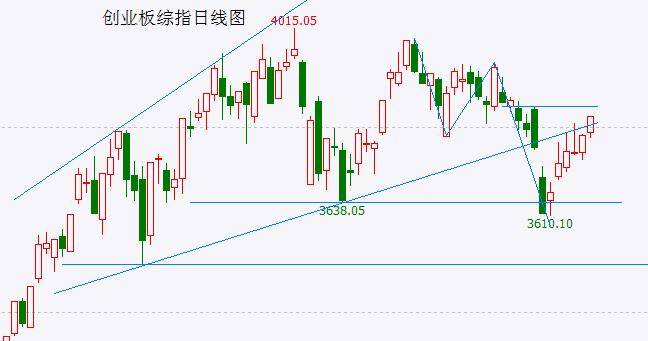
Group 1 - The ChiNext Composite Index has risen again, reaching a new rebound high, indicating a strong upward trend without a significant pullback [1] - The Shanghai Composite Index is also experiencing an increase, attempting to fill the gap, with a potential target of 3931 points [1][4] Group 2 - Bitcoin has seen a significant decline, with technical analysis suggesting it may have completed a 4-wave rebound and could be entering a 5-wave downtrend, targeting 74150 [3] - Bitcoin is viewed as a leading indicator for global risk assets, sensitive to liquidity changes, and its weakness may signal an impending shift in global liquidity, suggesting that the rally in U.S. stocks and other risk assets may be nearing its end [3]
【首席观察】美联储如期降息,市场却反向波动,怎么回事?
经济观察报· 2025-10-30 11:15
Core Viewpoint - The market's perception of the recent interest rate cut has shifted to a "hawkish cut," indicating that the extent of policy easing did not meet the market's expectations for a "liquidity feast" [3][4]. Group 1: Interest Rate Decision and Market Reaction - The Federal Reserve announced a 25 basis point rate cut, lowering the target range for the federal funds rate to 3.75%-4.00%, and will end quantitative tightening on December 1 [3]. - Despite the rate cut, the market reacted negatively, with the Dow Jones falling by 0.16% and the Nasdaq showing a slight increase of 0.55%, indicating a mixed response to the Fed's decision [3]. - The market's expectations for a December rate cut dropped significantly, with implied probabilities falling from over 90% to between 65%-71% [4][6]. Group 2: Market Dynamics and Economic Indicators - The market's prior optimism was evident with significant movements in various assets, including the Shanghai Composite Index surpassing 4000 points and gold prices breaching $4000 per ounce [6]. - The Fed's decision was complicated by the absence of key economic data due to government shutdowns, leading to a sense of uncertainty in decision-making [8][9]. - The Fed's statement reflected a cautious approach, acknowledging incomplete data and shifting from "growth slowdown" to "moderate expansion," indicating a more dovish stance [9]. Group 3: Global Liquidity and Reserve Changes - A significant shift in global liquidity dynamics is occurring, with central banks increasing their gold reserves from 24% to 30% since June [15]. - The attractiveness of U.S. Treasury bonds is declining due to factors such as high inflation and concerns over U.S. fiscal policies, leading to a potential reallocation of reserves towards gold [16]. - The international monetary system is undergoing changes, influenced by the weakening of dollar credit and the rise of alternative assets like gold [17][18]. Group 4: Investment Implications - Investors are advised to avoid betting against the Federal Reserve, especially during periods of data uncertainty, as the real risk lies in underestimating asset price vulnerabilities [21]. - The recent pullback in gold prices may present a buying opportunity for long-term investors, although short-term fluctuations are expected [21].

周末猛料!黄仁勋套现1.1亿,比特币崩了70%,但最狠的还在后面…(帮主郑重独家解读)
Sou Hu Cai Jing· 2025-10-12 12:47
Group 1: Nvidia and Executive Actions - Nvidia CEO Jensen Huang sold over $110 million worth of shares in October, which some interpret as a high-level cash-out, but it may indicate strategic positioning for future developments [3] - Following Huang's recent stock sale, Nvidia announced a significant order for 1.5 million H200 chips from Saudi Arabia, suggesting that the sale was part of a broader strategic plan rather than a simple exit [3] - Huang's stock sale represents less than 0.1% of Nvidia's total shares, and he still holds 70.6 million shares, indicating that this action may be more about tax strategy and ecosystem investment [3] Group 2: Bitcoin Market Collapse - On October 11, a significant market crash occurred in the Bitcoin sector, with $19 billion in liquidations affecting 1.64 million accounts, causing Bitcoin's price to drop from $120,000 to around $110,000 [4] - The crash was exacerbated by high funding rates above 0.15% prior to the event and a sudden increase in global risk aversion following Trump's announcement of a 100% tariff on China [4] - Post-crash, Bitcoin trading volume plummeted by 70%, indicating a severe liquidity crisis in the market [4] Group 3: China's Export Controls - On October 9, China implemented export controls on rare earth materials and related technologies, particularly targeting medium and heavy rare earths and semiconductor manufacturing technologies below 14 nanometers [4] - This move is seen as a strategic maneuver rather than a mere trade war response, as China controls 70% of global rare earth processing capacity, which is critical for military applications [4] - The export controls also apply to rare earth products produced overseas using Chinese technology, significantly impacting U.S. defense contractors that rely on Chinese rare earths for 75% of their critical components [4] Group 4: Market Trends and Investment Strategies - The overarching themes from these developments include the competition for technological supremacy and a potential turning point in global liquidity, with expectations of Federal Reserve interest rate cuts amid increasing internal divisions [4] - For long-term investors, focusing on sectors with high earnings certainty, such as Northern Rare Earth, which saw a 272% profit increase in the first three quarters due to rising rare earth prices, is advisable [4] - The narrative of domestic GPU replacement is just beginning, with companies like Moore Threads gaining traction, highlighting the importance of maintaining a clear perspective during market fluctuations [4]

数币迎重大落地事件,政策暖意初现
GOLDEN SUN SECURITIES· 2025-09-28 09:11
Investment Rating - The report maintains an "Accumulate" rating for the industry [4] Core Insights - The digital currency has entered a global implementation phase with the official operation of the Digital Renminbi International Operation Center, marking a shift from domestic trials to global financial infrastructure output [1][9] - The establishment of the operation center aims to enhance the internationalization of the Renminbi and strengthen Shanghai's position as an international financial hub [9] - The Federal Reserve's recent interest rate cut is expected to create a turning point for global liquidity, providing more room for monetary policy adjustments in China [2][13] Summary by Sections Digital Currency Development - The Digital Renminbi International Operation Center launched on September 24, 2023, introducing three major platforms: a cross-border digital payment platform, a blockchain service platform, and a digital asset platform [1][10] - These platforms aim to address traditional cross-border payment inefficiencies, enhance blockchain interoperability, and provide standardized services for financial-grade digital assets [10][12] Cross-Border Financial Infrastructure - The cross-border digital payment platform aims to reduce transaction costs by over 60% and shorten settlement times from 3-5 days to minutes through real-time tracking and integration with existing systems [11] - The blockchain service platform has successfully completed rapid settlements for supply chain payments, demonstrating the potential for cross-border digital currency applications [11] - The digital asset platform supports the issuance and trading of over 20 types of assets, enhancing settlement efficiency by 50% [11] Recommended Industry Chain - Key companies in the digital Renminbi IT system include Zhongke Jincai, Jingbeifang, and Hang Seng Electronics, among others [3][14] - Companies involved in cross-border payments include Xiaogoods City, Newland, and Lakala [3][14] - Securities IT firms include Tonghuashun, Great Wisdom, and Zhongxin Securities [3][14]
Doo Financial|全球流动性拐点下,黄金还能否守护资产安全?
Sou Hu Cai Jing· 2025-09-10 10:49
Core Viewpoint - The demand for safe-haven assets and stable returns is increasing as the global liquidity cycle approaches a turning point, highlighting the strategic importance of gold as a traditional risk-hedging tool [1]. Group 1: Gold's Valuation Logic - Gold's valuation is closely tied to liquidity conditions; in a loose monetary environment, its appeal is driven by ample funds and inflation hedging, while in tightening periods, gold may face short-term pressure but often sees renewed investment opportunities as real interest rates decline [3]. - The cyclical nature of gold makes it an essential component in multi-stage asset allocation, providing stability during tightening credit environments and liquidity instability [3]. Group 2: Geopolitical and Central Bank Factors - Geopolitical uncertainties and the increasing gold reserves held by global central banks provide long-term support for gold prices, reinforcing its role as a hedge against inflation and a stabilizing asset in investment portfolios [3]. Group 3: Investment Strategy - Investors are increasingly viewing gold as a critical direction for portfolio diversification to mitigate systemic risks associated with equities and bonds, especially in complex market conditions [5]. - The changing global liquidity environment has catalyzed a return to gold's defensive logic, offering a safety margin across cycles for investors seeking resilience in their asset allocations [5].

4只A股被“买爆”
第一财经· 2025-08-12 05:04
Core Viewpoint - The article discusses the increasing interest of foreign investors in A-shares, particularly in four stocks that have reached high foreign ownership levels, leading to trading restrictions due to regulatory limits [3][10]. Group 1: Foreign Investment Trends - As of August 8, four stocks—Siyuan Electric, Shuanghuan Transmission, Huaming Equipment, and Hongfa Technology—have foreign ownership ratios exceeding 24%, with Siyuan Electric reaching 26.83% [3][5]. - Siyuan Electric's foreign ownership rose from 24.64% on July 15 to 28.07% by the end of July, prompting a temporary halt on foreign purchases due to regulatory limits [7][8]. - The surge in foreign investment is attributed to global liquidity shifts, a weakening dollar, and a return of funds to emerging markets [3][18]. Group 2: Performance of Targeted Stocks - The four highlighted stocks are industry leaders: Siyuan Electric in power transmission equipment, Huaming Equipment in transformer tap changers, Hongfa Technology in relays, and Shuanghuan Transmission in precision gear systems [10]. - For the first half of the year, Siyuan Electric reported revenues of 8.497 billion yuan and a net profit of 1.293 billion yuan, marking year-on-year increases of 37.8% and 45.71% respectively [11]. - Hongfa Technology and Huaming Equipment also reported revenue growth, with Hongfa achieving 8.347 billion yuan in revenue and a net profit of 964 million yuan, both showing over 10% growth [11]. Group 3: Foreign Shareholder Insights - Notable foreign investors include Morgan Stanley and Temasek, which have appeared in the top ten shareholders of these companies [12][13]. - As of the end of June, Abu Dhabi Investment Authority held 22.12 million shares of Hongfa Technology, representing 1.52% of the company [14]. - Hong Kong Central Clearing increased its stake in Huaming Equipment significantly, holding 156 million shares by the end of June, a 54.34% increase from the previous quarter [14]. Group 4: Broader Market Context - The article highlights that foreign investment is concentrated in sectors like new energy, semiconductors, and medical devices, which are seen as having strong growth potential and favorable valuations compared to global peers [18]. - As of June 30, major companies like China Ping An, Wuliangye, and Kweichow Moutai had over 80 foreign institutional investors each, indicating a strong preference for industry leaders among foreign capital [19].


又有4只A股被“买爆”,外资加速进场扫货?
Di Yi Cai Jing· 2025-08-11 11:33
Group 1 - Foreign investors are increasingly buying into A-shares, with some stocks nearing the 30% ownership limit, leading to temporary trading suspensions [1][3] - As of August 8, four stocks had foreign ownership exceeding 24%, including Siyuan Electric (26.83%), Shuanghuan Transmission, Huaming Equipment, and Hongfa Technology [1][3] - Siyuan Electric's foreign ownership rose from 24.64% on July 15 to 28.07% by the end of July, triggering a suspension of foreign purchases [3][4] Group 2 - The stocks attracting foreign investment are industry leaders, with Siyuan Electric being a leader in power transmission and transformation equipment, and Huaming Equipment specializing in transformer tap changers [5] - The financial performance of these companies has been strong, with Siyuan Electric reporting a 37.8% increase in revenue to 8.497 billion yuan and a 45.71% rise in net profit to 1.293 billion yuan in the first half of the year [6] - Hongfa Technology and Huaming Equipment also reported revenue growth, with Hongfa achieving 8.347 billion yuan in revenue and a net profit of 964 million yuan, both showing over 10% growth [6] Group 3 - Prominent foreign investors such as Morgan Stanley and Temasek have been identified among the top shareholders of these stocks, indicating strong foreign interest [2][8] - As of the end of June, over 80 foreign institutions held shares in major companies like China Ping An, Wuliangye, and Kweichow Moutai, reflecting a trend of foreign investment in leading firms [11] - The banking sector and state-owned enterprises have also seen significant foreign investment, with major banks like Agricultural Bank and Industrial and Commercial Bank attracting substantial foreign holdings [12][13]