AI(人工智能)

Search documents
Goldman CIO on the Warp-Speed Improvements in AI
Youtube· 2026-03-31 18:50
Core Insights - The landscape of AI has shifted significantly in the past year, moving from a phase of experimentation to practical application in various sectors [1][2] - The capabilities of AI models have evolved rapidly, particularly in advanced reasoning, which has expanded their utility beyond just development to many other areas [2] - Confidence in using AI for daily work and mission-critical applications has increased, indicating that AI is now seen as a reliable tool rather than a novelty [3] Group 1 - The transition from using AI as a chat companion to a more integrated tool reflects a major change in its application [1] - The last six months have seen significant advancements in AI capabilities, particularly in reasoning, which has broadened its use [2] - AI is now considered essential in many roles within the company, indicating widespread adoption across departments [3]



Dimon Says There's Always Surprise in a 'Credit Cycle'
Youtube· 2026-02-24 22:23
Core Insights - Jamie Dimon expressed caution regarding market conditions and potential risks across various sectors, indicating a need for vigilance in investment strategies [1][5][6] - JPMorgan is actively exploring the use of AI to enhance efficiency for clients while also considering the implications for employees as AI technology evolves [2][10] - Dimon highlighted the bank's exposure to private credit, referencing past failures in the sector and suggesting that caution is warranted in credit cycles [3][4][10] Company Strategy - JPMorgan is taking a more cautious approach compared to competitors like Morgan Stanley, particularly in underwriting large projects [4][5] - Dimon believes that while JPMorgan aims to excel in multiple business areas, it must also recognize the importance of focusing on specific segments to compete effectively [6][7][8] - The bank is being careful with credit underwriting to manage risk exposure, especially in light of aggressive lending practices observed in the market [9][11] Market Sentiment - There is a prevailing sentiment of caution in the market, with Dimon indicating that many industries are currently overvalued [5][6] - Dimon anticipates that JPMorgan will succeed in 75 out of 100 areas, acknowledging the competitive landscape and the need to strategically choose battles [6][7] Leadership and Succession - Dimon clarified his intention to remain CEO as long as he and the board agree, with no definitive succession plan currently in place, despite shareholder interest [13][14] - The bank has a strong leadership team in place, which is a point of reassurance for investors amid concerns about succession [15]


全球股市遭遇“黑色星期二”,什么情况?
Guo Ji Jin Rong Bao· 2025-11-18 13:56
Market Overview - Global stock markets experienced a significant decline, with the Korean Composite Index and Nikkei 225 both dropping over 3% [1] - A-shares also fell, with 4,106 stocks closing down, particularly in coal, power equipment, steel, and non-ferrous metals sectors [1] - The Shanghai Composite Index closed down 0.81% at 3,939.81 points, while the ChiNext Index fell 1.16% to 3,069.22 points [2] Sector Performance - The TMT (Technology, Media, and Telecommunications) sector showed resilience, with the media sector rising by 1.6% [7] - Semiconductor, computer software, and Huawei HiSilicon concepts saw gains, while sectors like power battery recycling, phosphorus chemical, and coal experienced significant declines [4] - Among 31 first-level industries, 26 sectors closed down, with coal, power equipment, steel, and non-ferrous metals each dropping around 3% [5] Trading Activity - Daily trading volume slightly increased from 1.93 trillion yuan to 1.95 trillion yuan, indicating active leverage funds [2] - Margin trading balance in Shanghai and Shenzhen returned to 2.5 trillion yuan as of November 17 [2] Investment Sentiment - Market sentiment remains cautious due to external market declines and the need for A-shares to correct [1] - Investors holding heavy positions in technology stocks are advised to reduce their holdings, particularly in thematic technology stocks [1][11] Future Outlook - Analysts suggest a "dual-line layout" strategy, focusing on undervalued financial and dividend sectors while also participating in TMT segments with potential for rebound [12] - The long-term trend for technology remains positive, with ongoing support from policies and rapid development in AI and semiconductor sectors [11][13]




郑州再迎“企业家日”,超聚变、UU跑腿等谈最新布局
Sou Hu Cai Jing· 2025-11-01 10:36
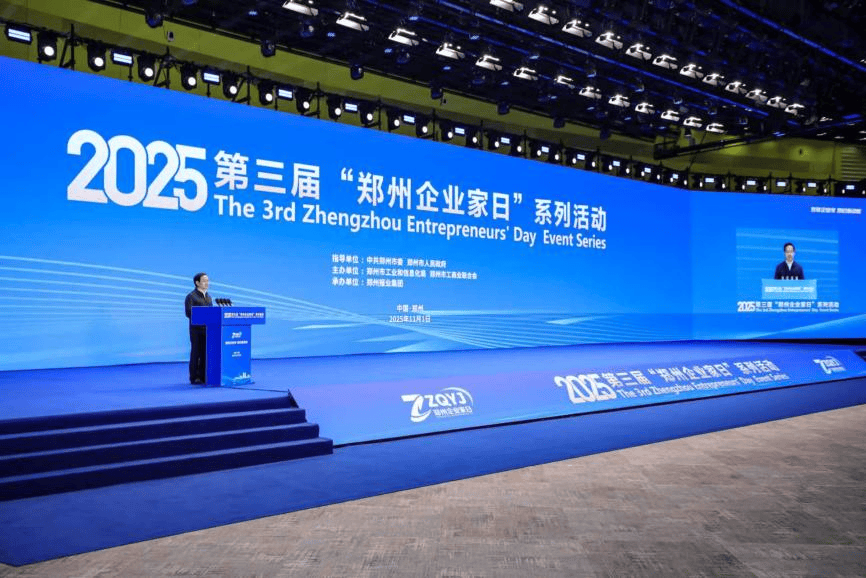
Group 1 - The third "Zhengzhou Entrepreneur Day" series of events opened on November 1, featuring prominent entrepreneurs discussing AI technology applications and future prospects [1][3] - UU Run's founder, Qiao Songtao, highlighted that the company has over 76 million registered users and that AI has significantly reduced costs by processing large amounts of data [3][4] - Qiao emphasized the importance of integrating AI into decision-making processes within companies, suggesting that AI should be treated as a collaborative employee rather than a cold tool [3][4] Group 2 - The Zhengzhou city government has established November 1 as "Zhengzhou Entrepreneur Day" to honor entrepreneurs, with the city achieving significant economic milestones, including a GDP ranking first among northern provincial capitals [4][5] - The city recognized 55 outstanding individuals and 200 exemplary enterprises during the event, showcasing the contributions of entrepreneurs to Zhengzhou's development [5] - The automotive sector, represented by SAIC Motor's Zhengzhou branch, reported cumulative production and sales exceeding 2.6 million vehicles and a total output value surpassing 200 billion [5]
【首席观察】美联储如期降息,市场却反向波动,怎么回事?
经济观察报· 2025-10-30 11:15
Core Viewpoint - The market's perception of the recent interest rate cut has shifted to a "hawkish cut," indicating that the extent of policy easing did not meet the market's expectations for a "liquidity feast" [3][4]. Group 1: Interest Rate Decision and Market Reaction - The Federal Reserve announced a 25 basis point rate cut, lowering the target range for the federal funds rate to 3.75%-4.00%, and will end quantitative tightening on December 1 [3]. - Despite the rate cut, the market reacted negatively, with the Dow Jones falling by 0.16% and the Nasdaq showing a slight increase of 0.55%, indicating a mixed response to the Fed's decision [3]. - The market's expectations for a December rate cut dropped significantly, with implied probabilities falling from over 90% to between 65%-71% [4][6]. Group 2: Market Dynamics and Economic Indicators - The market's prior optimism was evident with significant movements in various assets, including the Shanghai Composite Index surpassing 4000 points and gold prices breaching $4000 per ounce [6]. - The Fed's decision was complicated by the absence of key economic data due to government shutdowns, leading to a sense of uncertainty in decision-making [8][9]. - The Fed's statement reflected a cautious approach, acknowledging incomplete data and shifting from "growth slowdown" to "moderate expansion," indicating a more dovish stance [9]. Group 3: Global Liquidity and Reserve Changes - A significant shift in global liquidity dynamics is occurring, with central banks increasing their gold reserves from 24% to 30% since June [15]. - The attractiveness of U.S. Treasury bonds is declining due to factors such as high inflation and concerns over U.S. fiscal policies, leading to a potential reallocation of reserves towards gold [16]. - The international monetary system is undergoing changes, influenced by the weakening of dollar credit and the rise of alternative assets like gold [17][18]. Group 4: Investment Implications - Investors are advised to avoid betting against the Federal Reserve, especially during periods of data uncertainty, as the real risk lies in underestimating asset price vulnerabilities [21]. - The recent pullback in gold prices may present a buying opportunity for long-term investors, although short-term fluctuations are expected [21].

基金经理把脉三季报行情:科技主线仍将持续
Zheng Quan Ri Bao· 2025-10-29 17:15
Core Viewpoint - The third quarter reports of A-share listed companies show overall growth in both operating income and net profit compared to the same period last year, indicating a positive trend in the market and potential investment opportunities [1][2]. Financial Performance - As of October 29, 3073 listed companies reported a total operating income of 6.90 trillion yuan and a net profit of 580 billion yuan for the third quarter, representing year-on-year growth of 6.08% and 20.74% respectively [2]. - For the first three quarters, the total operating income reached 19.72 trillion yuan and net profit was 1.64 trillion yuan, with year-on-year growth of 3.15% and 9.66% [2]. Sector Highlights - Key sectors showing strong performance include AI, new energy, gaming, and financial services, with notable growth in companies related to overseas and domestic computing power, PCB, wind energy, and storage [3][4]. - The technology sector is identified as a core focus for investment, with solid performance in AI computing power, semiconductor equipment, and materials [5][6]. Investment Strategies - Fund managers suggest focusing on companies with strong performance indicators such as prepayments, inventory, and ongoing projects to assess future earnings certainty [4]. - There is an emphasis on identifying investment opportunities in technology and new energy sectors, particularly in areas benefiting from domestic substitution and price recovery [5][7]. Long-term Value - The third quarter reports serve as a critical reflection of companies' annual performance, helping to validate initial plans and expectations set at the beginning of the year [7]. - Investors are advised to analyze the quality of earnings growth and cash flow, as well as to compare quarterly performance trends to identify potential investment opportunities [8].
超六成私募机构“重仓过节” 科技主线获共识
Zheng Quan Ri Bao· 2025-09-29 16:10
Group 1 - Over 60% of private equity firms plan to maintain high positions (over 70% allocation) during the upcoming holidays, indicating a positive outlook for the market post-holiday [1] - 65.38% of surveyed private equity firms intend to keep positions above 70%, while 17.31% prefer a moderate allocation (50% to 70%) focusing on structural opportunities post-holiday [1] - Approximately 70% of private equity firms are optimistic about the A-share market's performance after the holiday, expecting gradual recovery after a period of consolidation [1] Group 2 - The technology growth sector remains the mainstream choice among private equity firms, with nearly 60% favoring sectors like AI, semiconductors, humanoid robots, smart driving, and innovative pharmaceuticals [2] - Some firms, such as Anhui Anjue Asset Management, express a neutral to positive outlook for the A-share market, anticipating that capital inflow and sentiment recovery will drive market fluctuations upward [2] - The overall sentiment among private equity firms is optimistic regarding the post-holiday market, with a consensus on technology growth as the leading direction while maintaining a balanced approach in structural rotation [3]
AI风暴中的欧洲银行
Sou Hu Cai Jing· 2025-09-22 18:17
Core Insights - The article emphasizes that artificial intelligence (AI) is crucial for the survival of the financial industry, marking a pivotal moment akin to the internet boom in 1996 [1][3] - A survey indicates that 17% of financial institutions have achieved over 10% efficiency gains through AI, with leading firms seeing investment returns five times higher than their peers [1][3] - AI enhances traditional banking advantages, such as trust and data, transforming them into new revenue streams [1][3] Efficiency and Cost Reduction - Institutions utilizing AI have significantly reduced loan approval processes from days to minutes, cutting costs by 70% while increasing revenue by 50% [1][3] - The disparity between banks that have adopted AI and those that are still hesitant is widening, with fintech companies capturing market share due to their rapid growth rates in retail brokerage and payments, often around 30% [1][3] Leadership and Strategy - True AI leaders in banking treat data as a product, view employees as AI partners, and engage their boards as technology advocates, focusing on tangible metrics like marginal costs and employee engagement [1][3] - The article highlights the successful application of AI in China across various sectors, including finance, healthcare, and manufacturing, showcasing its potential to enhance efficiency and create jobs [1][3] Future Outlook - AI is not expected to eliminate banks but will likely phase out those that fail to leverage AI effectively [1][3] - The current moment is seen as critical for banks to transition from pilot projects to profitability through AI integration [1][3]

明星基金经理普遍看好科技、医药等赛道
Zheng Quan Ri Bao· 2025-09-14 23:52
Group 1: Macro Economic Outlook - Multiple public fund institutions believe the economy is at a critical stabilization phase, with clear macro policy signals aimed at steady growth [2] - Monetary policy is moderately loose, and fiscal policy is increasingly proactive, covering areas from traditional investments to consumption and real estate [2] - Investment in new productive forces is on the rise, suggesting a favorable era for RMB assets [2] Group 2: Market Sentiment on A-shares and H-shares - Public fund institutions generally hold an optimistic view on A-share and H-share market trends, citing high attractiveness for equity assets based on stock-bond valuation indicators [3] - Confidence in the capital market's medium to long-term development is supported by government policies and improving corporate governance [3] - The expectation of increased foreign capital inflow into A-shares and H-shares is driven by a weakening US economy and excess savings entering various financial products [3][4] Group 3: Investment Focus Areas - Technology, pharmaceuticals, and gold are highlighted as key investment sectors in the autumn investment strategy meetings [3][4] - The technology sector remains a primary focus, with an emphasis on high-end manufacturing and hard technology, particularly AI [3][4] - The pharmaceutical sector is expected to perform well in the medium to long term, with growth potential in oncology, weight loss drugs, and autoimmune disease treatments [4] - Gold is seen as having significant allocation value due to a weak dollar trend and uncertainties in the global economy, although short-term fluctuations may occur [4]
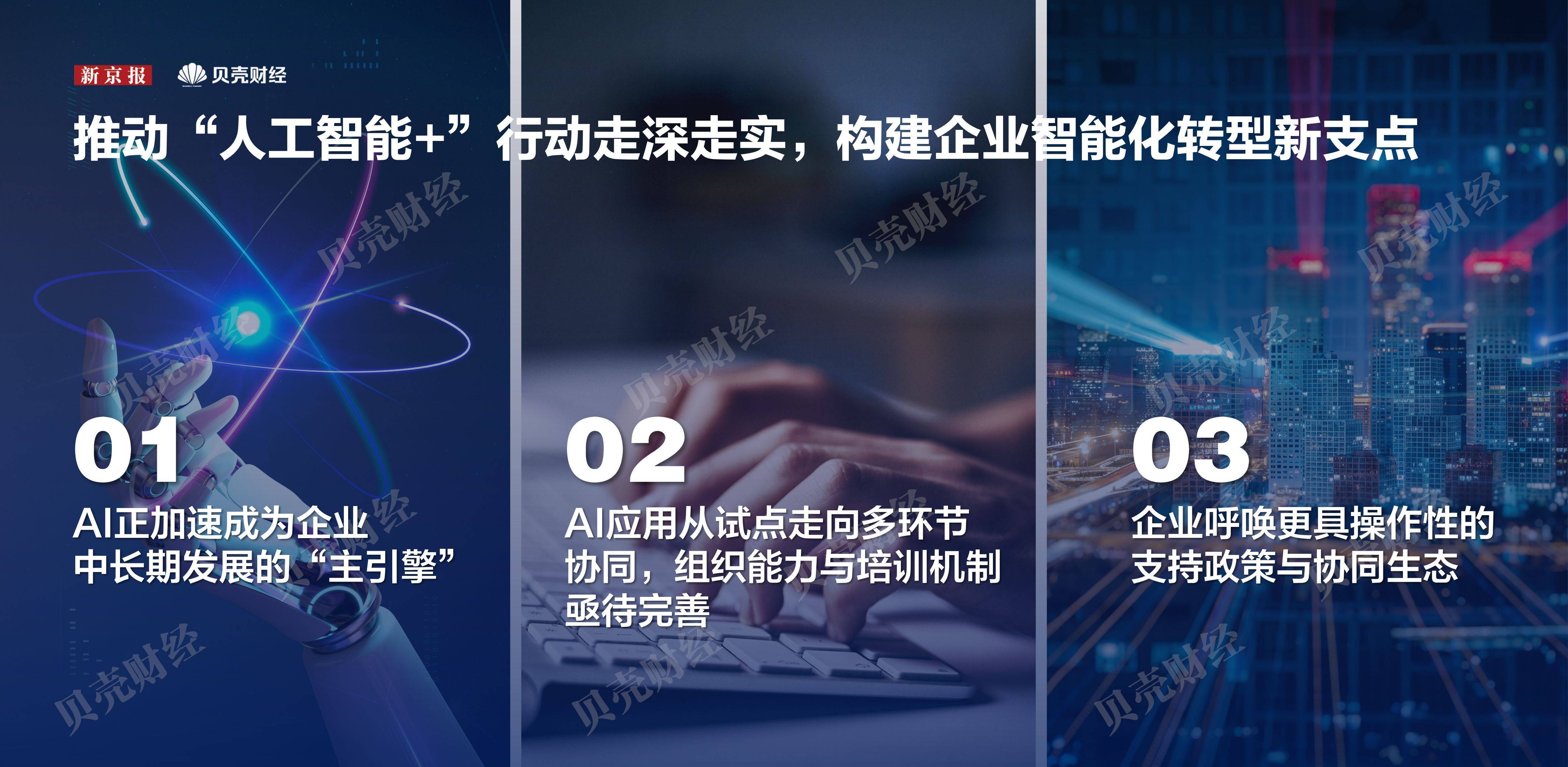
企业家人工智能应用报告⑤|企业AI破局 完善组织能力与培训机
Sou Hu Cai Jing· 2025-07-29 12:36
Core Insights - The integration of artificial intelligence (AI) into business management is accelerating, transforming from an auxiliary tool to a new "productivity system" in the context of a restructured global trade landscape and a stable Chinese economy [1] - The "2025 New Beijing News Beike Finance Annual Conference" revealed the "China Entrepreneur AI Application Research Report (2025)", highlighting ten trends in AI application among Chinese enterprises [1][2] Group 1: Key Trends in AI Deployment - Trend 1: AI is becoming the "main engine" for medium to long-term development, with 42.97% of enterprises incorporating AI into their strategic planning for three years or more, and over 60% of enterprises recognizing AI as a core variable for business restructuring and organizational transformation [3][4] - Trend 2: AI applications are moving from pilot projects to multi-faceted collaboration, with 89.84% of surveyed enterprises using AI across various operational segments, particularly in data analysis and decision support (57.03%) and product development (49.22%) [5] - Trend 3: Enterprises are calling for more actionable support policies and collaborative ecosystems, with 47.66% citing a lack of skilled AI talent as a primary barrier to AI application [7] Group 2: Recommendations for AI Development - Recommendation 1: Strengthen strategic guidance and consensus on pathways, as nearly 60% of enterprises have not yet integrated AI into their long-term strategic vision [13] - Recommendation 2: Establish a supportive capability enhancement system, focusing on AI training and reducing entry barriers for small and medium-sized enterprises [14] - Recommendation 3: Improve predictable governance rules and responsibility boundaries, as only 11.72% of enterprises have established AI governance systems [15] - Recommendation 4: Promote collaboration between industry, academia, and research to develop low-threshold solutions for AI implementation [16]