
内需结构性复苏

Search documents
兴业证券张启尧:更多行业步入盈利复苏通道
Zheng Quan Shi Bao· 2026-01-04 17:40
Core Viewpoint - The chief strategist of Industrial Securities, Zhang Qiyao, indicates that the recovery of fundamentals is expected to support further market growth by 2026 [1] Group 1: Market Performance - By analyzing the performance of listed companies in the first three quarters of 2025, it is observed that revenue has stabilized, but gross margins are still declining, indicating that pricing remains a major drag on profitability [1] - Since the second half of 2025, policies promoting "de-involution" have led to a rebound in prices in resource sectors, which has improved gross margins [1] Group 2: Economic Outlook - For 2026, nominal economic recovery and price increases are projected to be the most evident trends in the market [1] - According to the latest IMF forecast, China's nominal GDP growth rate in USD terms is expected to reach 6.45% in 2026, significantly higher than in 2025, with continued improvement in listed company profits [1] - The ongoing global liquidity easing is likely to result in a sustained upward trend in the A-share market in 2026 [1] Group 3: Industry Configuration - The market is currently in a structural recovery phase in 2025, with significant differentiation in industry prosperity, leading to a focus on eliminating weaker sectors [1] - As more industries enter the profitability recovery phase in 2026, the market allocation logic may shift from internal competition within sectors to identifying leading industries [1] - Key areas of focus include trends in the AI industry, the "price increase chain," the "overseas expansion chain," and the structural recovery of domestic demand [1]

更多行业步入盈利复苏通道
Zheng Quan Shi Bao· 2026-01-04 17:30
Core Viewpoint - The chief strategist of Industrial Securities, Zhang Qiyao, indicates that the recovery of fundamentals is expected to support further market growth by 2026 [1] Group 1: Market Performance - By analyzing the performance of listed companies in the first three quarters of 2025, it is observed that revenue has stabilized, but gross margins are still declining, indicating that pricing remains a major drag on profitability [1] - Since the second half of 2025, policies promoting "de-involution" have led to a rebound in prices in resource sectors, which has contributed to an improvement in gross margins [1] Group 2: Economic Outlook - For 2026, nominal economic recovery and price increases are expected to be the most evident trends in the market [1] - According to the latest IMF forecast, China's nominal GDP growth rate in USD terms is projected to reach 6.45% in 2026, significantly higher than in 2025, with continued improvement in listed company profits [1] - The ongoing global liquidity easing is likely to result in a sustained upward trend in the A-share market in 2026 [1] Group 3: Industry Configuration - The market is currently in a structural recovery phase in 2025, with significant differentiation in industry prosperity, leading to a focus on eliminating weaker sectors [1] - As more industries enter the profitability recovery phase in 2026, the market allocation logic may shift from internal competition within sectors to identifying superior industries [1] - Key areas of focus for investment include trends in the AI industry, the "price increase chain," the "overseas expansion chain," and the structural recovery of domestic demand [1]


本轮躁动行情有哪些潜在启动信号?
Sou Hu Cai Jing· 2025-12-21 23:57
Group 1 - The core viewpoint of the article is that the recent domestic and international policy validation has created a favorable foundation for market volatility, with expectations for a potential rally in the near future [1][4] - The U.S. employment and inflation data released this week did not trigger additional pessimism, instead providing more room for the Federal Reserve to consider further easing [1][4] - The recent interest rate hike by the Bank of Japan was not as hawkish as expected, alleviating concerns about liquidity impacts from carry trade unwinding [2][4] Group 2 - Historical experiences indicate that significant market rallies often require a catalytic event, which can be categorized into three types based on their initiation timing and factors [6][8] - The current market conditions align with the second category, where a strong performance throughout the year is followed by a rally after year-end disturbances are resolved [6][8] - Key indicators that could signal the start of a market rally include the resolution of uncertainties that previously suppressed the market, easing monetary policies, and positive data validating an improving economic outlook [16][20] Group 3 - The economic work conference has maintained a positive and expansionary policy tone, which supports the expectation of a market rally [10][20] - The upcoming data releases are expected to validate improvements in the domestic economic fundamentals, with macro indicators like PPI and micro indicators such as corporate earnings forecasts showing positive trends [10][20] - The market is anticipated to shift from a cautious stance to actively seeking opportunities, with a focus on sectors that benefit from both domestic recovery and international easing [4][20] Group 4 - The investment strategy should focus on sectors with high growth potential, such as AI, advanced manufacturing, and consumer services, which are expected to benefit from the current market conditions [17][20] - The technology growth sector is seen as a key driver for the upcoming market rally, with favorable conditions returning for investments in innovative technologies and related industries [22][20] - The emphasis on sectors benefiting from domestic demand recovery and international monetary easing suggests a strategic shift towards cyclical and growth-oriented investments [20][22]
A股分析师前瞻:备战躁动行情的共识正在凝聚,只待一个有效信号?
Xuan Gu Bao· 2025-12-21 13:39
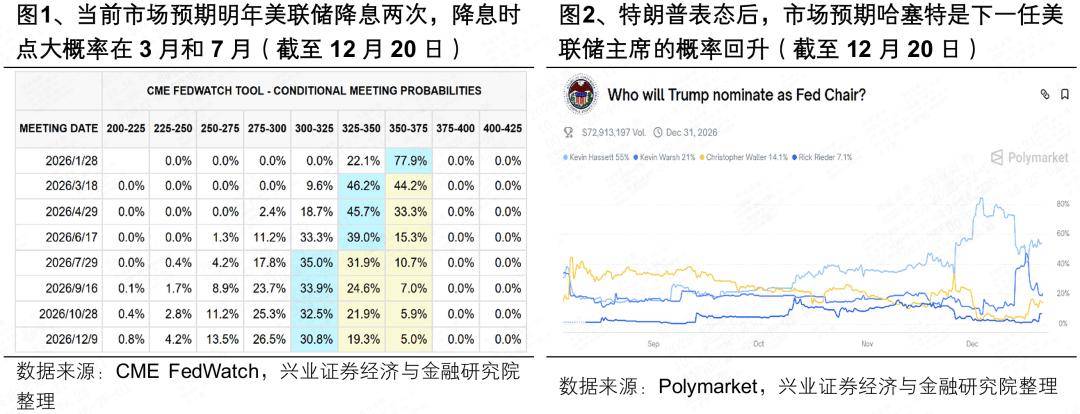
Core Viewpoint - The brokerage strategy analysts remain optimistic about the spring market rally, awaiting an effective signal to initiate the movement [1] Group 1: Market Signals and Economic Indicators - Analysts from Xingzheng Strategy highlight that the liquidity expectations are shifting positively due to recent overseas events and a supportive domestic policy environment, indicating a transition from cautious behavior to actively seeking opportunities [1] - Key signals to watch for the potential market rally include the possibility of interest rate cuts and reserve requirement ratio reductions at the end of the year and early next year, with observation windows in early next week and January [1][2] - Important economic indicators such as PPI, PMI, M1, social financing, and annual reports from listed companies are expected to uplift the basic economic outlook [1][2] Group 2: Investment Trends and Sector Focus - The Guangfa Strategy team anticipates that 2026 will resemble an enhanced version of 2025, with continued support from insurance capital and regulation, alongside an acceleration in the migration of deposits from residents, particularly among high-net-worth individuals [1][2] - The trend of high-net-worth residents moving their deposits has already begun to accelerate, with new private equity fund registrations reaching 386 billion yuan from January to October 2025, with monthly registration sizes nearing levels seen in 2021 [1][2] - The Xinda Strategy team emphasizes the increasing elasticity of non-bank financial sectors, suggesting a potential rotation of market focus from banks to non-bank financials, with insurance valuations appearing more attractive [1][3] Group 3: Sectoral Opportunities and Predictions - Analysts suggest that sectors benefiting from policy support, such as AI, advanced manufacturing, and consumer services, are likely to see significant growth, with a projected net profit growth rate exceeding 30% in 2026 [2] - The market is expected to experience structural opportunities driven by policy guidance and industrial momentum, particularly in the context of the upcoming "14th Five-Year Plan" [3] - The spring market rally is anticipated to be influenced by the performance of cyclical sectors, with a focus on commodities and consumer sectors benefiting from increased consumption and fiscal stimulus [3]

兴业证券:A股本轮躁动行情有哪些潜在启动信号?
智通财经网· 2025-12-21 12:49
Core Viewpoint - The report from Industrial Securities indicates that the A-share market typically exhibits a balanced style from December to January, with large-cap, low-valuation, and cyclical styles being relatively dominant. This is influenced by expectations of strengthened growth policies and the preferences of major institutional investors for large-cap and dividend styles as the year ends and begins [1][4]. Market Dynamics - As the Spring Festival approaches, the market style shifts towards small-cap and technology growth sectors, driven by liquidity and risk appetite [1][19]. - The report emphasizes the importance of high prosperity sectors for investment, particularly those with a projected net profit growth rate exceeding 30% in 2026, including AI industry trends, advantageous manufacturing, "anti-involution," and structural recovery in domestic demand [1][20]. High Prosperity Sectors - **AI Industry Trends**: Focus on hardware (communication equipment, components, semiconductor industry chain, consumer electronics) and software applications (IT services, software development, gaming, advertising) [1][20]. - **Advantageous Manufacturing**: Includes the new energy industry chain (lithium batteries, lithium mines, wind power equipment, new energy vehicles), military industry (ground equipment, aerospace equipment, military electronics), machinery (robots, machine tools), and pharmaceuticals (innovative drugs) [1][20]. - **"Anti-Involution"**: Covers sectors such as steel, building materials (cement, glass fiber, renovation materials, plastics), chemicals (chemical raw materials, chemical fibers, rubber), new energy (photovoltaics, silicon materials), and aviation airports [2][20]. - **Structural Recovery in Domestic Demand**: Encompasses service consumption (film and television, education, retail, e-commerce, hotel catering, tourism, hospitals), new consumption (snack foods, cultural and entertainment products), and home textiles [3][20]. Market Conditions and Signals - The report notes that the recent increase in market volatility reflects a series of significant domestic and international events impacting liquidity and fundamental expectations. The conclusion of the policy verification window is expected to provide a solid foundation for a potential market rally [4][8]. - Historical patterns suggest that market rallies often begin following the resolution of uncertainty, the implementation of easing policies, or the validation of positive economic data [9][18]. Investment Strategy - The report advises focusing on sectors that benefit from the current favorable conditions, including cyclical sectors and those aligned with domestic recovery trends. The emphasis is on sectors that are likely to experience valuation recovery due to supportive policies and improving economic fundamentals [19][23]. - Technology growth is highlighted as a critical driver for the upcoming market rally, with a favorable environment for investments in technology sectors as liquidity expectations improve [25].
兴证策略张启尧团队:本轮躁动行情有哪些潜在启动信号?
Xin Lang Cai Jing· 2025-12-21 10:30
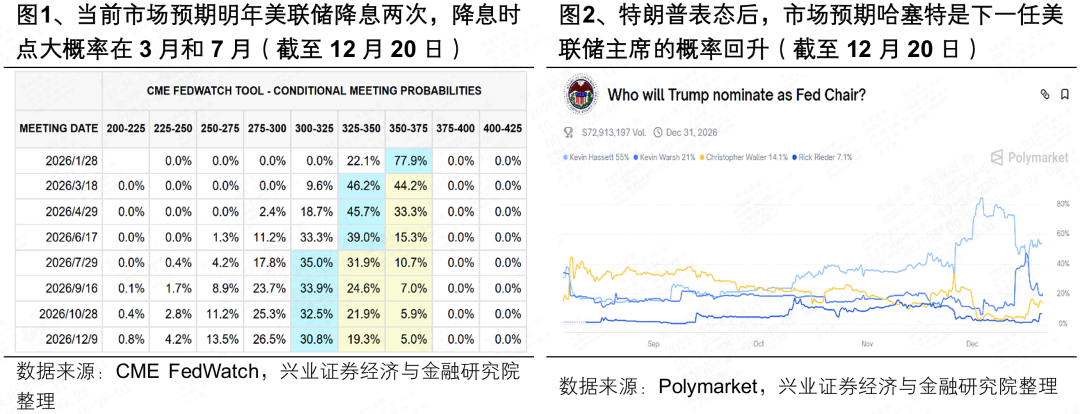
Group 1 - The market is experiencing increased volatility since December, reflecting a series of important events impacting liquidity and fundamental expectations, leading to a cautious and speculative sentiment among investors [1][27] - The recent Federal Reserve meeting and the domestic Central Economic Work Conference have set a more favorable overall tone than market expectations, laying a good foundation for a potential market rally [1][32] - The U.S. employment and inflation data released this week did not trigger further pessimism, instead providing more room for the Fed to consider further easing, with the November unemployment rate slightly rising and CPI data significantly below expectations [1][30] Group 2 - Japan's recent interest rate hike of 25 basis points did not lead to the anticipated liquidity shock from carry trade unwinding, as market expectations were already priced in [4][30] - The Bank of Japan's governor indicated that further data would be needed before making additional rate decisions, suggesting a cautious approach moving forward [4][30] - The convergence of various international events affecting liquidity expectations, combined with a supportive domestic policy environment, is expected to shift investor behavior from cautiousness to actively seeking opportunities [6][32] Group 3 - Historical patterns indicate that market rallies often require a catalytic event, with potential signals for the current rally categorized into three types: strong macro policy shifts, year-end market performance stabilization, and early-year market dynamics [7][33] - The current market conditions align with the second category, where strong performance throughout the year leads to a rally after year-end disturbances are resolved [7][33] - Key indicators to watch for potential rally signals include the possibility of interest rate cuts and improvements in fundamental data such as PPI, PMI, and corporate earnings forecasts [17][19] Group 4 - The investment strategy should focus on sectors benefiting from economic recovery and supportive policies, particularly in cyclical industries and new consumption trends [20][22] - High-growth sectors such as AI, renewable energy, and advanced manufacturing are expected to lead the market rally, supported by favorable liquidity conditions and risk appetite [24][22] - The market is anticipated to transition from a balanced style to favoring small-cap and technology growth sectors as the rally progresses [18][24]
兴证策略张启尧:十大外资如何看2026年A股?
Xin Lang Cai Jing· 2025-12-16 07:57
Economic Outlook - The GDP growth forecast for 2026 has been adjusted to 4.4%, with a quarterly increase expected in Q1 to 6.5% and a slight decrease in H2 to 3.6% [1] - The fiscal deficit is projected to expand by 1 percentage point in 2026, with a total budget deficit of 4% and special government bonds amounting to approximately 4.8 trillion yuan [9] - Inflation is expected to remain low, with CPI projected to rise slightly to 0.4% and PPI potentially turning positive by the end of 2026 [11] Stock Market Projections - The target levels for major indices by the end of 2026 are set at 100 points for MSCI China, 5200 points for CSI 300, and 16000 points for MSCI Hong Kong, indicating potential increases of 20%, 13%, and 20% respectively [2] - The expected EPS growth for MSCI China is around 15% for 2026, with a significant contribution from the consumer discretionary sector [4][6] Key Investment Themes - The four main investment themes identified are anti-involution, AI, overseas expansion, and structural recovery in domestic demand [1][6] - The easing of price wars among major companies is anticipated to improve profit margins, particularly in the consumer discretionary sector [4] - The demand for AI infrastructure is expected to drive performance for Chinese tech hardware suppliers, with significant capital expenditure growth projected for major cloud service providers [5] Industry Insights - The "anti-involution" policy is expected to enhance profit margins and return on equity (ROE) across various sectors, particularly in industries facing excessive competition [5] - The structural recovery in sectors such as healthcare, information technology, and communication services is showing signs of broadening, with over one-third of sub-sectors currently in a revenue expansion phase [3] - The automotive, consumer electronics, and AI-related hardware sectors are projected to see significant improvements in overseas revenue contributions [7] Policy Environment - The policy landscape is expected to support consumption and investment, with a focus on structural rebalancing between services and manufacturing [1][9] - Monetary policy is anticipated to remain moderately accommodative, with expectations of interest rate cuts and reserve requirement ratio reductions [9][15] - The government is likely to implement targeted measures to stimulate consumption, particularly in service and green sectors [9][10]
A股跨年行情蓄势待发
21世纪经济报道· 2025-12-16 02:11
Core Viewpoint - The A-share market is experiencing a recovery in sentiment following a significant meeting, with expectations for a potential year-end rally driven by structural market dynamics and capital market reforms [1][8]. Market Performance - A-share daily average trading volume increased to 19,530.44 billion yuan from the previous week, marking a rise of 2,568.66 billion yuan [4]. - The ChiNext Index and Shenzhen Component Index rose by 2.74% and 0.84%, respectively, while the Shanghai Composite Index fell by 0.34% during the same period [4]. - Key sectors such as aerospace equipment, communication devices, and electronic chemicals saw significant gains, with increases of 7.89%, 7.81%, and 6.99% respectively [4]. Fund Flows - Institutional and retail investors showed synchronized net inflows into the consumer sector, while there were divergent trends in other sectors [5][6]. - The financing balance increased to 2.48 trillion yuan, reflecting a rise of 196.21 billion yuan, indicating a relatively positive stance on leverage [5]. - Notably, the A500 ETFs attracted significant inflows, with top funds like Huatai-PB and Southern Fund seeing net inflows of 40.33 billion yuan and 37.64 billion yuan respectively [6]. Future Outlook - Analysts predict a potential year-end rally for A-shares, supported by improving liquidity and institutional fund flows [8][9]. - Key sectors expected to perform well in 2026 include AI, advantageous manufacturing, "anti-involution," and structural recovery in domestic demand, with projected net profit growth exceeding 30% [10]. - The macroeconomic environment is anticipated to remain supportive, with a combination of fiscal and monetary policies aimed at enhancing market liquidity [9][10].

政策定调催生新主线 A股跨年行情蓄势待发
2 1 Shi Ji Jing Ji Bao Dao· 2025-12-15 15:53
Market Overview - A-share market sentiment has improved following a significant meeting, with average daily trading volume increasing to 19,530.44 billion yuan, up by 2,568.66 billion yuan from the previous week [1][3] - The market has shown a mixed performance, with the ChiNext Index and Shenzhen Component Index rising by 2.74% and 0.84% respectively, while the Shanghai Composite Index fell by 0.34% [2] Fund Flows - Institutional and retail investors have shown synchronized net inflows into the consumer sector, while there are divergences in other sectors, with institutions reducing exposure to technology and cyclical manufacturing [5] - Northbound capital's average daily trading volume increased to 2,324.71 billion yuan, up by 397.27 billion yuan from the previous week [4] Investment Opportunities - Analysts suggest that A-shares may experience a year-end rally, driven by structural market dynamics and capital market reforms [8] - Key sectors expected to perform well in 2026 include AI industry trends, advantageous manufacturing, "anti-involution," and structural recovery in domestic demand, with predicted net profit growth exceeding 30% [11] ETF Trends - There is a notable divergence in ETF fund flows, with broad-based ETFs gaining significant attention, particularly the A500 ETFs, which saw net inflows of 40.33 billion yuan, 37.64 billion yuan, and 20.58 billion yuan from major fund houses [6][7] Future Outlook - The market is anticipated to benefit from continued economic policy support, with expectations of a reasonable growth rate and a favorable liquidity environment for capital markets [9][10] - The focus for 2026 will likely shift towards AI applications, with a significant emphasis on commercial viability and cross-industry investment opportunities [11]
政策定调催生新主线,A股跨年行情蓄势待发
2 1 Shi Ji Jing Ji Bao Dao· 2025-12-15 13:52
Market Overview - A-share market sentiment has improved following a significant meeting, with average daily trading volume increasing to 19,530.44 billion yuan, up by 2,568.66 billion yuan from the previous week [1][4] - The market has maintained a volatile trend in December, with the ChiNext Index and Shenzhen Component Index rising by 2.74% and 0.84% respectively, while the Shanghai Composite Index fell by 0.34% [3] Fund Flows - Institutional and retail investors have shown synchronized net inflows into the consumer sector, while there are divergences in other sectors, with institutions reducing outflows in technology and cyclical manufacturing [6] - Northbound trading volume increased to 2,324.71 billion yuan, up by 397.27 billion yuan from the previous week, indicating a positive shift in market sentiment [5] Sector Performance - The aerospace equipment, communication equipment, and electronic chemicals sectors saw significant gains, with increases of 7.89%, 7.81%, and 6.99% respectively [3] - Conversely, sectors such as coking coal, fisheries, automotive services, oil services, and pharmaceutical commerce experienced declines exceeding 4% [4] Investment Outlook - Institutions anticipate a potential year-end rally in the A-share market, driven by structural market dynamics and capital market reforms [8][9] - Key sectors expected to perform well in 2026 include AI industry trends, advantageous manufacturing, "anti-involution," and structural recovery in domestic demand, with predicted net profit growth exceeding 30% [11] ETF Trends - There is a notable divergence in ETF fund flows, with broad-based ETFs gaining popularity, particularly the A500 ETFs, which attracted significant net inflows [7][8] - The market is expected to see improved liquidity and active trading as institutions reallocate funds towards the end of the year [9]
