利率市场

Search documents
高盛宏观闭门会-地缘政治-金属-原油-发达市场利率及其他
Goldman Sachs· 2026-03-30 05:15
Investment Rating - The report indicates a cautious outlook on the energy sector, particularly regarding oil prices and geopolitical risks, suggesting a potential for strong performance in oil products despite current challenges [1][13]. Core Insights - The geopolitical situation in the Middle East, particularly Iran's strategic maneuvers, is expected to have long-term implications for global supply chains and energy markets [1][3]. - The energy market anticipates a six-week disruption in the Strait of Hormuz, leading to elevated oil prices and a projected 0.7% downward adjustment in Eurozone GDP [1][14]. - Central banks, particularly the European Central Bank, are expected to raise interest rates in response to inflationary pressures, with two rate hikes anticipated in April and June [1][14]. - The gold market narrative is shifting, with central banks potentially reducing their gold holdings to defend currency values, indicating a possible peak at $5,500 [1][5]. - The dollar has regained its status as a preferred safe-haven asset, particularly in the context of oil price shocks, outperforming other assets like bonds and gold [1][9]. Summary by Sections Geopolitical Risks - Iran's resilience and strategic decisions have shifted the balance of power, complicating U.S. military objectives and increasing risks in the Strait of Hormuz [2][3]. - The potential for a ceasefire remains uncertain, with both sides showing significant public disagreement but a lack of clear military solutions [2][3]. Energy Market Dynamics - The refining sector is facing supply challenges due to reduced crude oil availability, particularly in Asia, which is expected to impact global markets in the coming weeks [1][13]. - The report highlights a strong outlook for oil products, despite current supply chain disruptions, with a recommendation against shorting diesel due to critical supply lines being affected [1][13]. Economic Forecasts - Adjustments to economic forecasts for Europe and the UK are driven by energy market changes, with a projected cumulative GDP decline of 0.7% for the Eurozone [1][14]. - The report emphasizes the importance of monitoring energy dynamics and price surveys to gauge future economic conditions in Europe and the UK [1][15]. Market Sentiment and Strategies - The report notes a shift in market focus from inflation to long-term growth concerns, with potential strategies favoring duration and yield curve positioning [1][7]. - There is a recognition of the need for open-mindedness regarding bearish views on gold, as market dynamics may shift significantly post-conflict [1][6].
高盛闭门会-尾部对冲网络研讨会
Goldman Sachs· 2026-03-26 13:20
Investment Rating - The report maintains a tactical high cash allocation, with the US dollar as the preferred hedging tool against geopolitical and global risks [1][2] Core Insights - Credit assets exhibit significant negative convexity, suggesting a reduction in credit exposure through credit default swaps (CDS) or shorting high-yield bond ETFs like HYG for linear hedging [1][2] - Right-tail risk hedging is recommended through 1-2 year long call options on indices like S&P and Nikkei, utilizing low volatility tools to mitigate time decay and roll-over risks [1][2] - High energy prices are weakening the current account surpluses of Asian energy-importing countries, necessitating foreign exchange hedging focused on the euro, offshore RMB, and the depreciation risk of Asian currencies [1][2] - Gold's recent rise is attributed to speculative behavior, and it has shown weakness under liquidation pressure; the Swiss franc is more suitable for hedging European-specific inflation or extreme risks [1][2] Summary by Sections Tactical Adjustments - The current environment is characterized by rising implied volatility and increased hedging costs, necessitating structural hedging in investment portfolios to address negative supply shocks [2][3] - Defensive adjustments have been made, maintaining a high cash allocation, with a focus on hedging both left-tail and right-tail risks [2][3] Credit Market Analysis - Credit spreads are viewed as a direct indicator of risk premium, with significant re-pricing occurring due to geopolitical tensions and concerns over private credit and AI disruptions [2][3] - The report emphasizes reducing government bond hedges and credit exposure, particularly through CDS or high-yield corporate bond ETFs [2][3] Interest Rate Outlook - The report suggests a relatively optimistic view on duration, as higher real rates and restrictive policy rates support a bullish stance on rates, especially in the context of potential economic growth impacts [4][5] - Long-term interest rate futures are expected to create downward space, particularly for 10-year and 5-year rates, as the market adjusts to ongoing inflation concerns [4][5] Currency and Commodity Insights - The report ranks different safe-haven assets, highlighting the US dollar as the primary hedging tool against geopolitical and global risks, while the yen and Swiss franc serve specific roles under different economic conditions [4][5] - High energy prices are expected to alter previous expectations for Asian currencies, with a focus on potential rebounds in commodity-exporting countries [5][6] Credit Market Risks - The credit market faces technical risks due to ongoing capital outflows, which could lead to forced selling of bonds and significant negative convexity in credit assets [6] - The report suggests that credit should be viewed as a hedging tool, particularly for equity, interest rate, and foreign exchange investors, with a preference for European over US hedging tools [6]
利率市场周度回顾:超长端大幅上行,曲线进一步熊陡化-20260315
East Money Securities· 2026-03-15 14:52
1. Report Industry Investment Rating No relevant content provided. 2. Core Viewpoints - The yield of the 10Y Treasury bond active bond 250016 rose 2.90BP to 1.8170% compared with the previous week [2]. - The important concerns for the bond market next week are the release of core macro - data and the large supply of interest - rate bonds [3]. - The capital interest rate rebounded slightly, but the overall liquidity remained in a loose and balanced state, and the market leverage declined slightly from a high level. The central bank continued to net withdraw liquidity in the open market this week, and the capital interest rate center rose slightly compared with last week, while the overall liquidity was still loose and abundant. Meanwhile, institutional trading remained active, and the trading volume of inter - bank pledged repurchase decreased slightly from a high level [4]. - In terms of primary bond supply, the net financing scale of interest - rate bonds and certificates of deposit decreased significantly this week, showing an overall net repayment state. The net financing scale of interest - rate bonds decreased mainly due to the obvious reduction in the issuance of Treasury bonds and local bonds. The net financing scale of inter - bank certificates of deposit turned from positive to negative, with the net repayment scale of large - bank certificates of deposit increasing further and the net financing of joint - stock banks decreasing significantly [4]. - In terms of secondary market operation, the long - end was significantly pressured under the influence of a significant increase in the inflation center and export data far exceeding expectations, while the short - end continued to decline benefiting from the stable and loose capital market, and the yield curve steepened significantly [4]. 3. Summary According to the Directory 3.1. Money Market 3.1.1. Open - market Liquidity Injection - The central bank net withdrew 25.11 billion yuan of liquidity from the open market this week (2026.03.9 - 2026.03.13). Specifically, the injection was 17.65 billion yuan from reverse repurchases, and the withdrawals were 27.76 billion yuan from reverse - repurchase maturities and 15 billion yuan from the maturity of treasury cash fixed deposits. As of March 13, 2026, the balance of 7 - day reverse repurchases was 17.65 billion yuan, a decrease of 10.11 billion yuan compared with the previous week [11]. 3.1.2. Capital Market Operation - In terms of capital operation, the central bank continued to withdraw liquidity in the open market, and the capital interest rate center rose slightly compared with last week, but the overall liquidity was still loose and abundant. As of March 13, 2026, DR007 was 1.46%, up 4.67BP from the previous week, and R007 was 1.50%, up 1.13BP from the previous week. In terms of leverage, institutional trading remained active, and the trading volume of inter - bank pledged repurchase decreased slightly from a high level. As of March 13, 2026, the trading volume of inter - bank pledged repurchase (5DMA basis) was 8.57 trillion yuan, a decrease of 0.07 trillion yuan from the previous week [19]. 3.2. Cash Bond Market 3.2.1. Primary Supply - The total net supply scale of interest - rate bonds this week was - 8.6786 billion yuan, a decrease of 20.5065 billion yuan compared with the previous week. The cumulative net supply scale of interest - rate bonds this year as of this week was 265.264 billion yuan, among which Treasury bonds, policy - financial bonds, and local bonds were 53.386 billion yuan, 2.003 billion yuan, and 209.875 billion yuan respectively. The net financing scale of certificates of deposit this week was - 11.306 billion yuan, a decrease of 14.464 billion yuan compared with the previous week. Specifically, the net supply scale of Treasury bonds was - 29.4 billion yuan, a decrease of 29.3 billion yuan; the net supply scale of policy - financial bonds was 14.4 billion yuan, an increase of 28.095 billion yuan; the net supply scale of local bonds was 6.3214 billion yuan, a decrease of 19.3015 billion yuan. The net financing scale of state - owned banks was - 14.958 billion yuan, a decrease of 5.827 billion yuan; the net financing scale of joint - stock banks was 3.652 billion yuan, a decrease of 8.637 billion yuan [33]. 3.2.2. Secondary Operation - **Absolute Level**: The long - end performed worse than the short - end, and the interest - rate curve continued to steepen. For example, the yield curves of Treasury bonds and China Development Bank bonds tended to steepen. The yields of 10Y and 30Y Treasury bonds increased significantly, the yield of 20Y China Development Bank bonds increased significantly, the yields of local bonds at all maturities increased, and the yields of certificates of deposit at all maturities decreased slightly [38][41][49]. - **Term Spread**: Most of the long - end term spreads widened, and the spread between 9M/1Y certificates of deposit compressed. For example, the 10Y - 1Y Treasury bond term spread and the 30Y - 10Y Treasury bond term spread widened significantly, while the 1Y - 9M AAA certificate of deposit term spread narrowed [48][54]. - **Variety Spread**: All variety spreads narrowed this week. For example, the 1Y and 10Y China Development Bank/Treasury bond variety spreads, the 30Y local bond/Treasury bond variety spread, and the 1Y certificate of deposit/China Development Bank bond variety spread all narrowed [57]. - **Overseas Spread**: The 10Y China - US spread widened, and the 1Y China - US spread narrowed [62]. 3.3. Next Week's Bond Market Matters - On March 16 (Monday), 1 - 2 month economic data will be released, and it is necessary to pay attention to whether the economic recovery at the beginning of the year exceeds market expectations. - On March 20 (Friday), the 3 - month LPR quote will be released, which is likely to be the same as the previous month. - On March 19 (Thursday), the issuance scale of local bonds over 10Y is about 7.26 billion yuan, and it is necessary to pay attention to the primary issuance situation. - In addition, there are specific situations of open - market operation maturities, Treasury bond supply, and local bond supply every day next week [3][4][66][68].

利率市场周度回顾:流动性呵护下短端占优,而长端走势略显纠结
东方财富· 2026-03-09 03:15
Market Overview - The yield of the 10Y government bond remained stable at 1.7880% compared to the previous week[2] - The net financing amount of interest rate bonds decreased significantly to 1182.79 billion CNY, down by 2461.51 billion CNY from the previous week[33] Liquidity and Monetary Policy - The central bank conducted a net liquidity withdrawal of 17634 billion CNY in the open market this week[11] - Despite the liquidity withdrawal, the market remains in a loose state, with the DR007 rate down by 8.85 basis points to 1.41%[23] Supply and Demand Dynamics - The net financing scale of negotiable certificates of deposit (NCD) increased to 315.80 billion CNY, up by 1950.50 billion CNY from the previous week[33] - The net supply of government bonds was -10.00 billion CNY, a decrease of 3710.00 billion CNY week-on-week[33] Yield Curve and Market Trends - The yield curve for government bonds is becoming steeper, while the yield curve for policy financial bonds is showing a bull steepening trend[43] - Short-term yields are performing better than long-term yields, with the 1Y government bond yield at 1.29% and the 10Y yield at 1.78%[45] Risk Factors - Key risk factors include unexpected monetary and fiscal policy changes, better-than-expected economic recovery, and geopolitical conflicts[3]
就在今天|国泰海通非银&银行&地产3月专题论坛
国泰海通证券研究· 2026-03-05 22:26
Group 1 - The article discusses the upcoming trends in the REITs market for 2026, highlighting the importance of asset investment and research in this sector [5][6]. - It emphasizes the development and business opportunities related to the digital RMB, indicating a significant shift in financial transactions and investments [5]. - The forum includes insights on the 2026 interest rate market outlook, investment trends, and asset allocation strategies, which are crucial for financial institutions and investors [6][8]. Group 2 - The event features various experts discussing the operational outlook for banks in 2026, focusing on financial market business prospects [8]. - There is a segment dedicated to the high-quality development of the real estate sector during the 15th Five-Year Plan, indicating a strategic focus on sustainable growth [8]. - The importance of asset allocation is reiterated, stressing its significance from institutional to individual investors [6][8].


利率市场周度回顾:节后曲线整体走阔,关注两会前后市场博弈情况-20260303
East Money Securities· 2026-03-03 06:07
1. Report Industry Investment Rating No information provided in the text about the report industry investment rating. 2. Core Viewpoints of the Report - After the holiday, the overall yield curve widened. The 10Y Treasury bond active bond 250016 yield increased by 1.05BP to 1.7880% compared with the previous week [2]. - The post - holiday capital market was generally stable and broad, with minor cross - month disturbances and a slight rebound in the market leverage ratio. The central bank continuously net - withdrew liquidity in the open market, and the central level of capital interest rates slightly increased from the pre - holiday low [4]. - In terms of primary bond supply, the net financing volume of interest - rate bonds increased significantly this week, but certificates of deposit continued to be in a net repayment state [4]. - In the secondary market, affected by institutional profit - taking after the holiday and the introduction of the Shanghai real - estate policy, the bond market performed weakly this week [4]. - Next week's key points in the bond market include the release of February PMI data, the Fourth Session of the 14th National People's Congress, and the maturity of 1 trillion yuan of 91 - day reverse repurchases [4]. 3. Summary According to the Directory 3.1. Money Market 3.1.1. Open - market Liquidity Injection - This week (2026.02.24 - 2026.02.28), the central bank's open - market operations had a net liquidity withdrawal of 46.14 billion yuan. As of February 28, 2026, the balance of 7 - day reverse repurchases was 164.1 billion yuan, an increase of 78.86 billion yuan compared with the pre - holiday week [11]. - The injection included 164.1 billion yuan in reverse repurchases and 60 billion yuan in medium - term lending facilities; the withdrawal included 225.24 billion yuan in reverse repurchase maturities, 15 billion yuan in treasury cash fixed - deposit maturities, and 30 billion yuan in medium - term lending facility maturities [15]. 3.1.2. Capital Market Operation - After the holiday, the capital market smoothly crossed the month, being generally stable and broad. As of February 28, 2026, DR007 was 1.50%, up 18.23BP compared with the pre - holiday week, and R007 was 1.51%, up 16.27BP [24]. - After the holiday, the trading activity of institutions recovered, and the trading volume of inter - bank pledged repurchase increased significantly. As of February 28, 2026, the trading volume of inter - bank pledged repurchase (5DMA) was 6.71 trillion yuan, an increase of 0.57 trillion yuan compared with the previous week [24]. 3.2. Cash Bond Market 3.2.1. Primary Supply - The total net supply of interest - rate bonds this week was 36.443 billion yuan, an increase of 54.7814 billion yuan compared with the previous week. The cumulative net supply of interest - rate bonds this year was 262.1148 billion yuan, with 82.886 billion yuan for treasury bonds, 1.298 billion yuan for policy - financial bonds, and 177.9308 billion yuan for local bonds [36]. - The net supply of certificates of deposit this week was - 16.347 billion yuan, a decrease of - 11.67 billion yuan compared with the previous week. The net supply of treasury bonds was 37 billion yuan, an increase of 37 billion yuan; the net supply of policy - financial bonds was - 19.214 billion yuan, a decrease of 3.014 billion yuan; the net supply of local bonds was 18.657 billion yuan, an increase of 20.7954 billion yuan [36]. - The net financing of state - owned banks was - 17.18 billion yuan, a decrease of 12.579 billion yuan; the net financing of joint - stock banks was 0.833 billion yuan, an increase of 0.909 billion yuan [37]. 3.2.2. Secondary Market Operation - The performance of cash bonds was divergent, with only the 10Y Treasury bond and 7Y China Development Bank bond showing a slight decline [47]. - **Absolute Level**: The yield curve of Treasury bonds showed a divergent trend, with the 10Y Treasury bond performing better [49]. - **Term Spread**: Most term spreads widened this week, while the 10Y/1Y Treasury bond spread slightly narrowed [55]. - **Variety Spread**: The 1Y and 10Y China Development Bank bond/Treasury bond spreads widened, while the 30Y local bond/Treasury bond spread and 1Y certificate of deposit/China Development Bank bond spread narrowed [65][68]. - **Overseas Spread**: The 10Y and 1Y China - US spreads narrowed [71]. 3.3. Next Week's Bond Market Events - On Wednesday, February PMI data will be released, which can be used to assess the current fundamental recovery [75]. - On Thursday, the Fourth Session of the 14th National People's Congress will be held, and attention should be paid to the setting of various economic targets for the new year [75]. - On Friday, 1 trillion yuan of 91 - day reverse repurchases will mature, and attention should be paid to the central bank's liquidity hedging operations [75].
美银:沃什版“财政策”恐难掀风浪 利率市场影响微乎其微
智通财经网· 2026-02-13 01:28
Core Viewpoint - The nomination of Kevin Warsh as the Federal Reserve Chair raises discussions about a new agreement with the Treasury, but it is unlikely to significantly impact bond prices due to the existing close collaboration between the two institutions [1][2]. Group 1: Proposal and Historical Context - Warsh suggests revisiting the 1951 Treasury-Fed Accord, which previously limited the Fed's involvement in the bond market. Over the past decade, the Fed's balance sheet has expanded to $6.6 trillion due to continuous asset purchases [1]. - The proposal is seen as vague by Bank of America strategists, who believe most of its content is already reflected in current operations [1]. Group 2: Market Impact and Expectations - Significant market impacts are more likely to arise from the Treasury reducing long-term debt issuance or the Fed implementing a rate peg policy, although the latter is considered unlikely [1]. - Bank of America strategists conclude that unless the new agreement goes beyond technical adjustments, its impact on interest rates is expected to be minimal [2]. Group 3: Operational Adjustments - The Fed will manage bond purchases through reserve management operations, with the Treasury issuing new securities to replace maturing debt [2]. - The weighted average maturity of the Fed's balance sheet holdings may shorten as it rolls over long-term Treasury bonds, with market effects depending on the Treasury's issuance pace [2].
利率市场周度回顾:流动性宽松充裕,超长端国债表现亮眼-20260209
East Money Securities· 2026-02-09 08:30
Group 1 - The report indicates that the bond market has entered a bullish trend due to increased liquidity and a decline in risk appetite, with the 10Y government bond yield decreasing by 0.90 basis points to 1.8000% compared to the previous week [2][3] - The central bank's continuous reverse repurchase operations have maintained liquidity stability, leading to a significant increase in market leverage and a notable rise in interbank pledged repo transaction volume [24][29] - The net supply of interest rate bonds and certificates of deposit has increased significantly, with a total net supply of interest rate bonds reaching 8829.27 billion yuan, up 5024.12 billion yuan from the previous week [31][34] Group 2 - The report highlights that the yield curve for interest rate bonds is flattening, indicating a bullish trend, with the 10Y government bond yield showing a notable performance [42][43] - The report notes that the yield spreads across various maturities have generally narrowed, with specific spreads such as the 1Y National Development Bank bond to government bond and the 10Y National Development Bank bond to government bond also narrowing [54][56] - The upcoming week will see significant issuance of local government bonds, and attention will be paid to the issuance results across different maturities [3][39]
邦达亚洲:CPI数据符合市场预期 美元指数小幅收涨
Sou Hu Cai Jing· 2026-01-14 08:50
Group 1 - The core viewpoint of the article highlights that the U.S. Consumer Price Index (CPI) for December remained stable at 2.7% year-on-year, aligning with market expectations, while the core CPI, excluding food and energy, grew by 2.6%, slightly below the forecast of 2.7% [1] - Housing costs, which are a key factor in inflation persistence, increased by 0.4% in December, contributing significantly to the monthly rise, with this category accounting for over one-third of the CPI and showing a year-on-year increase of 3.2% [1] - The report indicates ongoing inflationary pressures, with food prices rising by 0.7% in December, although egg prices plummeted by 8.2%, marking a nearly 21% decline compared to the previous year [1] Group 2 - Morgan Stanley's global macro forum report suggests that the urgency for the Federal Reserve to stabilize the job market has decreased due to recent improvements in economic momentum and a decline in unemployment rates [1] - Future policy actions by the Federal Reserve will depend on two key signals: the comprehensive impact of tariff adjustments by the Trump administration on prices and whether inflation data shows a clear downward trend [1] - The report maintains the forecast for the Federal Reserve's final interest rate target range at 3.0%-3.25%, indicating that the interest rate market needs to reprice overly optimistic expectations for rate cuts [1]
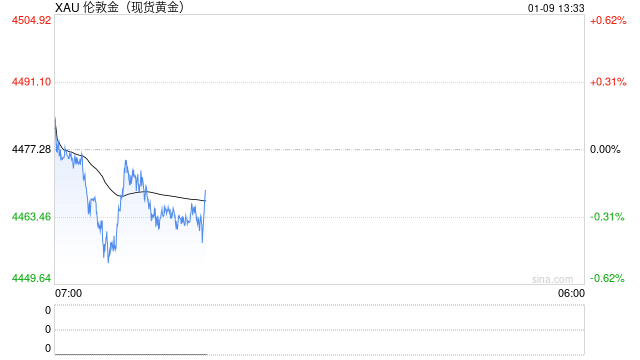
12月非农揭晓在即!黄金高位震荡,日元维持弱势
Xin Lang Cai Jing· 2026-01-09 05:35
Core Viewpoint - The upcoming U.S. non-farm payroll report for December is expected to shift market focus back to economic data and interest rate outlooks, following a period of geopolitical concerns [2][17]. Employment Data Summary - The U.S. job market shows signs of weakness, with November job openings dropping to 7.15 million, the lowest in 14 months, resulting in a ratio of 0.91 job openings per unemployed person, the lowest since March 2021 [3][17]. - The ADP report indicates that 41,000 private sector jobs were added in December, which is above the previous value but slightly below expectations, with four instances of negative growth since June [3][17]. - Initial jobless claims rose slightly to 208,000, up from 200,000, although the four-week average has significantly decreased [3][17]. Market Expectations - The market anticipates an addition of 60,000 jobs in the upcoming non-farm report, down from a previous value of 64,000, with the unemployment rate expected to decrease from 4.6% to 4.5% [3][17]. - Hourly wage growth is projected to rise to 3.6% [3][17]. Federal Reserve Perspective - The Federal Reserve acknowledges the downward risks in the job market, maintaining a forecast for one rate cut this year, although there are significant divisions among market participants [5][19]. - The interest rate market is leaning towards a more dovish stance, betting on two rate cuts this year, with an 86% probability that the January meeting will not result in a rate change [5][19]. Market Reactions - Traders are adopting a cautious approach ahead of the non-farm report, with both stock markets and precious metals slowing their upward momentum [5][19]. - If the employment data falls short of expectations, it could heighten rate cut anticipations, benefiting risk assets like stocks and cryptocurrencies, while gold and silver may aim for historical highs [5][19]. - Conversely, a strong report could lead to a rebound in the U.S. dollar index [5][19].