
地方隐性债务

Search documents
谁家的孩子谁来抱?国家出手整顿,不会再兜底地方的隐性债?
Sou Hu Cai Jing· 2025-12-21 13:07
Core Viewpoint - The article discusses the issue of local hidden debt in China, highlighting its emergence, implications, and the government's response to regulate and manage it effectively [1][6][10]. Group 1: Definition and Causes of Local Hidden Debt - Local hidden debt refers to debts incurred by local governments through non-transparent channels, avoiding formal and regulated financing methods [1][2]. - The primary reason for the emergence of hidden debt is the urgent need for funding for infrastructure projects amidst limited budget resources and lengthy approval processes [2][5]. - Local officials often resort to unconventional methods to secure financing quickly, leading to a lack of transparency and high-interest burdens [2][4]. Group 2: Mechanisms of Hidden Debt Accumulation - Hidden debt can arise from various mechanisms, including local governments delegating borrowing to financing platforms that operate under the government's credit [5][6]. - Public-Private Partnerships (PPP) are another method where private entities initially cover construction costs, with local governments later repaying through various revenues, though repayment capabilities are often uncertain [5][6]. - Direct borrowing from banks without formal inclusion in the bond system poses significant risks due to inadequate oversight [6]. Group 3: Government Response and Measures - The government has initiated measures to ensure full disclosure of all debts, mandating local governments to report both explicit and hidden debts accurately [7][8]. - It has prohibited local governments from using covert financing methods and encouraged the use of formal channels like bond issuance for funding [8]. - Local governments are required to create detailed repayment plans for existing hidden debts, ensuring a structured approach to debt resolution [8]. Group 4: Challenges and Implications - The push for transparency may lead to psychological challenges for local officials as they confront the reality of their debt situations [9][10]. - The normalization of financing channels could slow down infrastructure development due to restricted funding sources [9][10]. - The government's stance of "no more bailouts" places greater responsibility on local governments to manage their debts effectively, which could lead to increased fiscal pressure [9][10]. Group 5: Long-term Outlook - The policy aims to establish a more regulated and sustainable local financing system, encouraging local governments to align their borrowing with actual economic conditions [10][14]. - While the transition may involve short-term sacrifices, it is expected to lead to long-term stability and development in local economies [14]. - The article emphasizes the importance of monitoring local government compliance with new regulations to ensure effective debt management [11][14].

数据点评 | 财政的四大发力点(申万宏观·赵伟团队)
赵伟宏观探索· 2025-12-18 16:03
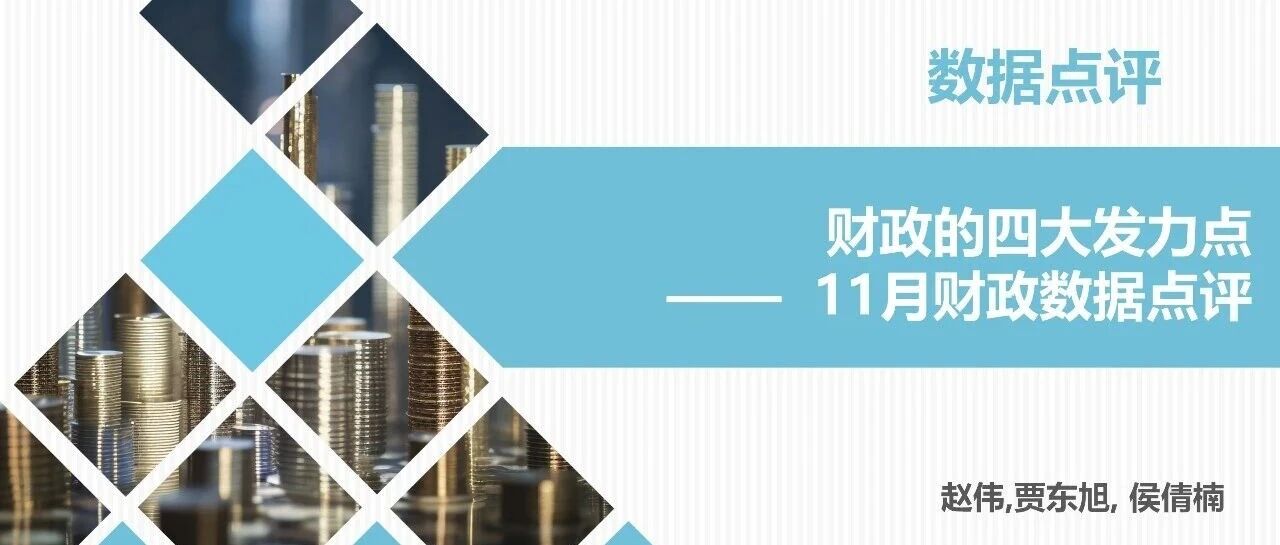
Core Viewpoint - The focus of future fiscal revenue and expenditure may be on maintaining deficits, standardizing tax incentives, supplementing local financial resources, and resolving hidden debts [2][48]. Group 1: Fiscal Revenue and Expenditure Overview - In the first eleven months of 2025, the national general public budget revenue reached 200,516 billion yuan, a year-on-year increase of 0.8%, while expenditure was 248,538 billion yuan, up 1.4% year-on-year [6][47]. - The divergence in fiscal revenue and expenditure in November showed improved expenditure but pressured income, with broad fiscal expenditure down 1.7% year-on-year, a significant narrowing of the decline by 17.5 percentage points compared to October [2][7]. - Broad fiscal revenue fell by 5.2% year-on-year in November, further declining by 4.6 percentage points from October [2][50]. Group 2: Factors Influencing Fiscal Performance - The divergence in fiscal revenue is partly due to base disturbances and the ongoing drag of land finance, with November 2024 broad fiscal revenue showing a recovery of 11% year-on-year, creating high base pressure [8][48]. - The income growth rate weakened, further constraining overall financial expansion space, while the low performance of land finance persisted [2][8]. Group 3: Support for Fiscal Expenditure - The 5,000 billion yuan limit on local special bonds and the implementation of financial tools became significant supports for broad fiscal expenditure in November, with government fund expenditure turning positive [10][49]. - Despite the ongoing drag from land finance and short-term pressure on income, the fiscal expenditure growth rate is expected to continue recovering due to the support from the local debt limit [10][49]. Group 4: Future Fiscal Strategy - Looking ahead to 2026, the focus of fiscal revenue may emphasize maintaining necessary fiscal deficits and standardizing tax incentives and fiscal subsidy policies [13][48]. - The expenditure side will prioritize addressing local fiscal difficulties and urging local governments to actively manage debts, targeting both the stock of hidden debts and the flow issues of local financial resources [13][48].
申万宏源:财政的四大发力点
Xuan Gu Bao· 2025-12-18 11:22
Core Viewpoint - The focus of future fiscal revenue and expenditure may be on maintaining deficits, standardizing tax collection, supplementing local financial resources, and resolving hidden debts [2][3][18] Fiscal Revenue and Expenditure Overview - In the first eleven months of 2025, the national general public budget revenue was 200,516 billion yuan, a year-on-year increase of 0.8%, while the expenditure was 248,538 billion yuan, up 1.4% year-on-year [5] - In November, the broad fiscal expenditure showed a year-on-year decline of 1.7%, a significant narrowing of the decline by 17.5 percentage points compared to October, while the broad fiscal revenue fell by 5.2%, further declining by 4.6 percentage points from October [2][6] Revenue and Expenditure Dynamics - The divergence in fiscal revenue and expenditure is partly due to base disturbances and the ongoing drag from land finance [11][19] - The government fund revenue in November saw a year-on-year decline of 15.8%, although the decline was narrowed by 2.6 percentage points compared to October [24][29] - The general fiscal expenditure budget completion rate in November was 8%, lower than the five-year average of 8.4% [38] Support for Fiscal Expenditure - The 5,000 billion yuan local special bond limit and the implementation of financial tools have become important supports for broad fiscal expenditure in November [15][49] - The government fund expenditure turned positive in November, reaching a growth of 2.8%, significantly improving from a negative growth in October [38][49] Future Fiscal Strategy - The fiscal revenue strategy for 2026 may focus on maintaining necessary fiscal deficits and addressing local fiscal difficulties while encouraging local governments to actively manage debts [18][19]

数据点评 | 财政的四大发力点(申万宏观·赵伟团队)
申万宏源宏观· 2025-12-18 06:51
Core Viewpoint - The focus of future fiscal revenue and expenditure may be on maintaining deficits, standardizing tax collection, supplementing local financial resources, and resolving hidden debts [2][48] Group 1: Fiscal Revenue and Expenditure Overview - In the first eleven months of 2025, the national general public budget revenue reached 200,516 billion yuan, a year-on-year increase of 0.8%, while expenditure was 248,538 billion yuan, up 1.4% year-on-year [1][6] - In November, the broad fiscal expenditure showed a significant improvement with a year-on-year decline of -1.7%, narrowing the drop by 17.5 percentage points compared to October, while fiscal revenue fell by -5.2%, a further decline of 4.6 percentage points [2][7][50] Group 2: Factors Influencing Fiscal Performance - The divergence in fiscal revenue and expenditure is partly due to base disturbances in the revenue side and the ongoing drag from land finance [2][8] - The broad fiscal revenue in November 2025 saw a year-on-year decline of -5.2%, with government fund revenue down by -15.8% and general fiscal revenue at -0.02% [4][14] Group 3: Support for Fiscal Expenditure - The 5,000 billion yuan limit on local special bonds and the implementation of financial tools have become important supports for broad fiscal expenditure in November [3][10] - The government fund expenditure turned positive in November, reaching a growth of 2.8%, significantly improving from a negative position in October, attributed to the 5,000 billion yuan local special bond limit [39][50] Group 4: Future Fiscal Strategy - Looking ahead to 2026, the fiscal revenue focus may include maintaining necessary fiscal deficits, standardizing tax incentives, addressing local fiscal difficulties, and urging local governments to actively manage debts [13][49] - The central economic work conference indicates that the revenue side will emphasize maintaining necessary fiscal deficits and standardizing tax incentives and fiscal subsidy policies [2][48]
部分城投公司不规范融资,谁在承担最后风险?
Sou Hu Cai Jing· 2025-12-10 02:53
Core Viewpoint - Local government-backed financing products from city investment companies are attracting individual investors with high returns, but this may lead to hidden debt risks and overdue payments as regulatory pressures increase [1][2][4] Group 1: Investment Trends - Some city investment companies are opening financing to individual investors, offering returns exceeding 8% [1] - Individual investors are increasingly purchasing directed financing products from city investment companies, with investments ranging from hundreds of thousands to millions [2] - High returns and short investment periods are being promoted, with some products offering annualized returns as high as 11.7% [2][3] Group 2: Risk Factors - The high yield and short duration of these financing products contradict the typical long-term, lower-yield nature of public infrastructure investments [3] - There are concerns about the lack of proper risk disclosure and the financial stability of the issuing companies, leading to overdue interest payments [5][6] - Many investors do not fully understand the risks involved and are misled by the perceived government backing of these products [5][7] Group 3: Regulatory Environment - The cross-regional sale of financing products by city investment companies raises regulatory blind spots, complicating risk management [4][6] - Local financial authorities can only intervene when risks reach a certain level, which may lead to delays in addressing issues [5] - There is a call for comprehensive reforms in fiscal and performance evaluation systems to improve debt repayment capabilities [6][7]
半月谈:部分城投公司不规范融资,谁在承担最后风险?
Sou Hu Cai Jing· 2025-12-03 00:15
Core Viewpoint - The investigation reveals that some local investment companies are engaging in non-standard financing practices, which may lead to the transfer of risks to individual investors despite appearing to diversify risks [1] Group 1: Investment Practices - Local investment companies are attracting individual investors by offering high returns exceeding 8%, often implying government backing [1][2] - Many investors have invested their life savings or borrowed money to purchase these investment products, drawn by the promise of high returns [2] - The investment products are marketed with high returns and short investment periods, which contradicts the typical long-term nature of public infrastructure investments [3] Group 2: Risk Factors - The high yield and short duration of these investment products raise concerns about their sustainability and the underlying projects' profitability [3] - Some investment companies are using mutual guarantees among local state-owned platforms to alleviate investor concerns, which may not reflect the actual risk [3] - The involvement of small intermediaries in promoting these products can lead to misrepresentation of risks and exaggerated returns [3] Group 3: Regulatory Issues - The non-standard financing practices are partly due to regulatory blind spots in cross-regional supervision and inadequate risk disclosure by issuers [4] - There is a lack of awareness among investors regarding the risks associated with these products, leading to poor investment decisions [5] - The regulatory framework allows for the continuation of these practices until risks reach a certain threshold, which can lead to local protectionism complaints from issuers [4] Group 4: Recommendations for Improvement - Experts suggest enhancing risk management capabilities and establishing a long-term government debt management mechanism to prevent systemic risks [6] - There is a call for comprehensive reforms in the fiscal and performance evaluation systems to improve debt repayment capabilities [6][7] - Financial literacy programs are recommended to improve public understanding of investment risks and to ensure that investment companies adhere to strict compliance standards [7]
发债快慢之间的财政线索——4月财政数据点评
一瑜中的· 2025-05-22 15:02
Core Viewpoints - The article emphasizes that under pressure on the revenue side, the government may rely more on debt issuance this year, as tax revenue has decreased by 2.1% year-on-year and land sales revenue has dropped by 11.4% [2][11] - It suggests that the fiscal policy will likely require incremental debt to maintain its strength throughout the year, especially if there is no significant improvement in revenue [2][6] Group 1: Debt Issuance and Fiscal Policy - The government has accelerated debt issuance since the beginning of the year, with net financing expected to reach 13.9 trillion yuan, an increase of 2.2 trillion yuan compared to last year [5][12] - As of May 20, the known net financing of government debt reached 6.2 trillion yuan, achieving 44.9% of the annual target, compared to 22.5% during the same period last year [5][12] - The article indicates that if the revenue side does not improve significantly, the government may need to increase its debt issuance to maintain fiscal strength [6][13] Group 2: Non-Deficit Debt and Investment Focus - In the second quarter, non-deficit debt is expected to accelerate, reflecting a marginal shift in fiscal support towards investment [8][22] - As of May 20, the net financing of non-deficit debt reached 2 trillion yuan, with a progress rate of 36.5%, indicating a focus on investment projects [22][23] - The article highlights that the acceleration of non-deficit debt issuance may signal increased fiscal support for infrastructure and other investment projects [23][28] Group 3: Special Refinancing Bonds and Local Government Debt - The issuance of special refinancing bonds has progressed rapidly, with a known progress rate of 77.8% as of May 20, indicating a focus on managing local government debt [28][29] - The article notes that local government hidden debts remain under strict control, with the central government expected to play a key role in increasing budgetary bonds and quasi-fiscal capital injections [29][31] - The emphasis is placed on the central government's commitment to not increasing hidden debts, reinforcing fiscal discipline [29][31] Group 4: Revenue and Expenditure Insights - In April, fiscal revenue showed a year-on-year increase of 1.9%, with tax revenue turning positive, particularly in the equipment manufacturing and technology sectors [31][33] - The article mentions that the expenditure progress for January to April was the fastest since 2020, with a notable increase in infrastructure spending in April [44][50] - The government’s focus on accelerating special bond issuance and enhancing fiscal support for projects is expected to continue, with a projected increase in government fund income [50][56]

4月财政数据点评:发债快慢之间的财政线索
Huachuang Securities· 2025-05-22 10:45
Group 1: Fiscal Performance Overview - In April, general fiscal revenue increased by 2.7% year-on-year, compared to a decline of 1.7% in March[2] - General fiscal expenditure rose by 12.9% year-on-year in April, up from 10.1% in March[2] - From January to April, tax revenue decreased by 2.1% year-on-year, while land sales revenue fell by 11.4%[3] Group 2: Debt Issuance Insights - The government bond issuance has accelerated, with net financing expected to reach 13.9 trillion yuan this year, an increase of 2.2 trillion yuan from last year[3] - As of May 20, net financing reached 6.2 trillion yuan, achieving 44.9% of the annual target, compared to 22.5% during the same period last year[3] - The cumulative net financing of government bonds has increased by 3.6 trillion yuan year-on-year, exceeding the expected annual increase of 2.2 trillion yuan[4] Group 3: Investment and Spending Trends - Non-deficit bonds are catching up in issuance, indicating a shift towards investment support in fiscal policy[7] - Infrastructure spending showed a significant increase in April, with urban community spending rising by 6.8% and transportation spending by 10.6%[8] - The progress of fiscal spending from January to April was the fastest since 2020, with a completion rate of 31.5% of the budget[54] Group 4: Revenue and Expenditure Dynamics - Tax revenue growth turned positive in April at 1.9%, while non-tax revenue hit a new low for 2024[34] - The growth in government fund income was driven by a recovery in land sales revenue, which increased by 4.3% in April[64] - The expenditure growth rate for government funds surged to 44.7% in April, significantly up from 27.9% in March[64]