
增加值

Search documents
中国制造何以碾压
投资界· 2026-01-11 08:11
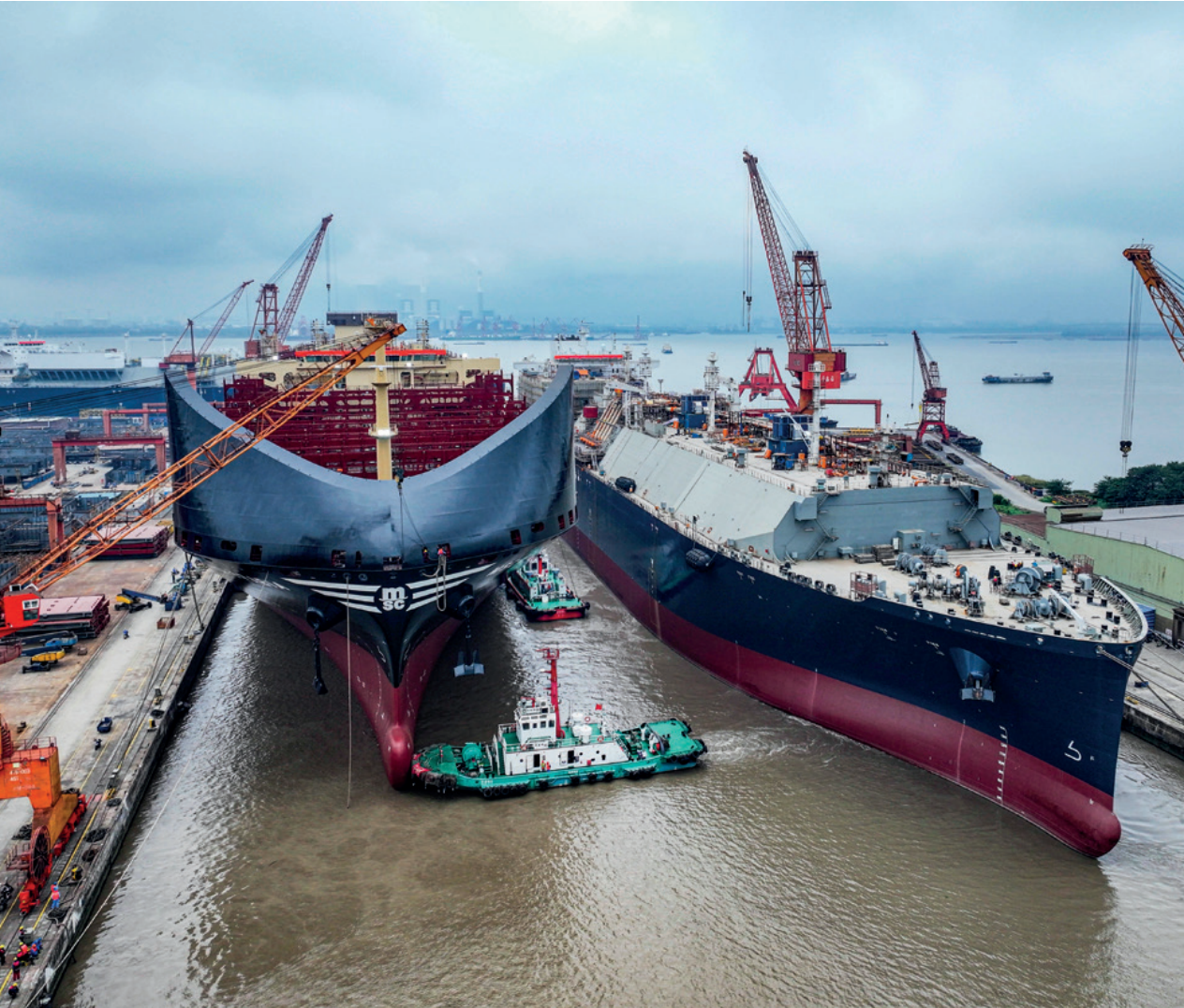
Core Viewpoint - The article emphasizes that China's manufacturing efficiency and cost-effectiveness have significantly improved, surpassing traditional perceptions of low labor costs as the primary reason for its manufacturing dominance. [3][6][19] Group 1: Manufacturing Efficiency Comparison - Tesla's Shanghai factory produces nearly 1 million vehicles in 2024 with a workforce of about 20,000, achieving an average output of 50 vehicles per worker annually, which is nearly double the output of the Fremont factory in California, which produces 560,000 vehicles with the same number of workers, averaging 28 vehicles per worker. [5] - The annual salary of a Tesla worker in Shanghai is approximately $14,000 to $15,000, while a worker in the U.S. earns about $82,500. This results in a labor cost-effectiveness ratio of 8 to 14 times in favor of the Chinese factory. [5][6] - The article highlights that this efficiency advantage extends throughout the supply chain, including batteries and components, with the Shanghai factory expected to produce 5 million battery packs by November 2025. [5] Group 2: Broader Industry Trends - China's shipbuilding industry is projected to account for 60-84% of global orders by 2025, a significant increase from 44% in 2020, with China building approximately 1,700 ships in 2024 compared to fewer than 5 by the U.S. annually. [7][8] - In the steel industry, China's production is expected to reach 955 million tons in 2025, while the U.S. will produce about 80 million tons, with Chinese steel mills achieving an average output of 1,000 tons per worker compared to 300-400 tons in the U.S. [8] - China produces 80% of the world's solar panels, with a 73% increase in exports expected by 2025. The average output per worker in China is about 500 megawatts, compared to 250 megawatts in the U.S. [9] Group 3: The Productivity Paradox - Despite the high efficiency observed in Chinese manufacturing, international organizations like the World Bank and IMF report that China's labor productivity is only 15-20% of that in the U.S., creating a paradox. [11][14] - The discrepancy arises from the method of calculating labor productivity, which is based on value-added rather than physical output. For example, a significant portion of the profit from an iPhone is attributed to Apple in the U.S., while the Chinese assembly contributes only a small fraction. [16] - Price distortions also play a role, as the same product can have different market values in China and the U.S., affecting reported productivity figures. [17] Group 4: Systemic Advantages of Chinese Manufacturing - The article argues that the true strength of Chinese manufacturing lies not only in low labor costs but also in a combination of high efficiency, a robust supply chain ecosystem, and a large pool of STEM graduates, which is four times that of the U.S. [18][19] - The ongoing transformation towards high-value industries like artificial intelligence and electric vehicles further enhances China's competitive edge in manufacturing. [18]



爱沙尼亚2025年第三季度经济同比增长0.9%
Shang Wu Bu Wang Zhan· 2025-12-02 17:21
Economic Overview - Estonia's GDP reached €10.49 billion in Q3 2025, showing a year-on-year growth of 0.9% and remaining stable quarter-on-quarter [1] - Private consumption decreased by 0.6% year-on-year, while government consumption increased by 3.4%, marking the fastest growth since Q2 2024 [1] - Overall investment fell by 0.7% year-on-year, with government investment rising by 8.8% and corporate investment declining significantly by 27.3% [1] - Household investment in housing grew by 12.1% year-on-year [1] Trade Performance - External trade continued to grow, with goods and services exports increasing by 5.7% year-on-year and imports rising by 5.6% [1] - Net exports achieved positive growth for the second consecutive quarter [1] Sector Performance - The energy sector experienced the highest value-added growth at 21.5% year-on-year [1] - Manufacturing sector value-added grew by 7.9% year-on-year [1] - The real estate sector saw a value-added increase of 4.4% year-on-year [1] - The accommodation and food services sector faced the largest decline in value-added, down by 8.8% year-on-year [1] - Transportation sector value-added decreased by 6.9% year-on-year [1] - Wholesale and retail trade sector value-added also fell by 6.9% year-on-year [1] - Health and social work sector value-added declined by 4.5% year-on-year [1]
澳门:10月整体行业增加值总额同比实质上升8.2% 第三产业增加值总额为3658.8亿澳门元
Zhi Tong Cai Jing· 2025-11-29 07:25
Core Viewpoint - The overall industry value added in Macau is projected to increase by 8.2% year-on-year to MOP 384.54 billion in 2024, indicating a continued economic recovery [1] Group 1: Industry Value Added - The value added by the tertiary sector (services, including wholesale and retail, food and beverage, finance, and gaming) is expected to reach MOP 365.88 billion, while the secondary sector (industry and construction) is projected at MOP 18.66 billion [1] - The tertiary sector's contribution to the overall industry value added is anticipated to be 95.1%, an increase of 0.8 percentage points from 2023, while the secondary sector's share will be 4.9% [1] - The non-gaming sector's value added is expected to account for 56.7% of the total value added, up by 7.8 percentage points compared to 2019 [1] Group 2: Income Distribution - In terms of initial income distribution, production and import taxes are projected to reach MOP 97.1 billion, with a year-on-year increase of 21.4% [1] - Operating surplus is expected to be MOP 155.03 billion, reflecting a 3.6% increase year-on-year [1] - Employee compensation is projected at MOP 133.31 billion, with a year-on-year growth of 6.1% [1] - The shares of these components in the local GDP are expected to be 25.2% for production and import taxes, 40.2% for operating surplus, and 34.6% for employee compensation [1]
制造业劳动生产率,中美孰高孰低?
Cai Jing Wang· 2025-11-28 08:13
Core Viewpoint - The article presents a paradox where China's manufacturing sector exhibits strong global competitiveness despite academic reports indicating its labor productivity is significantly lower than that of the United States. The author argues that the methodology used in these studies is flawed, leading to incorrect conclusions about China's labor productivity [1][15]. Methodological Issues - Traditional methods of measuring labor productivity through value-added calculations can obscure differences in product quality and types, leading to inaccurate comparisons between countries [2]. - The classification differences between U.S. and Chinese manufacturing statistics contribute to misleading productivity comparisons. U.S. statistics include companies that do not manufacture products, while China only includes actual manufacturers [3][4]. - The use of purchasing power parity (PPP) indices to compare value-added across countries may not accurately reflect price differences, complicating productivity assessments [5]. Industry Comparisons - The research focuses on five key industries: shipbuilding, steel, electric vehicles, solar photovoltaic components, and cement. It finds that Chinese workers' per capita output is 2 to 3 times that of their U.S. counterparts, while nominal value-added is about 20% lower due to price differences [7][8]. - In the cement industry, China's per capita output is slightly higher than that of the U.S., but its nominal value-added is only 28% of the U.S. level, primarily due to significant price disparities [8]. Labor Productivity Metrics - The analysis indicates that in shipbuilding, steel, and electric vehicles, China's labor productivity is superior when measured by physical output. For instance, in shipbuilding, China's per capita output is 2.5 times that of the U.S. [16]. - The average nominal wage for Chinese workers is significantly lower than that of U.S. workers, which is attributed to the overall lower wage levels in China rather than lower productivity [8][15]. Trade Barriers and Their Impact - Trade barriers, such as tariffs, inflate domestic prices in the U.S., leading to higher nominal value-added figures without necessarily improving labor productivity [9][11]. - The structural price differences between the U.S. and China further complicate productivity comparisons, particularly in industries like electric vehicles and pharmaceuticals [12][13]. Global Competitive Advantage - China's manufacturing sector is increasingly moving up the value chain, focusing on high-end manufacturing while outsourcing low-end production to countries with lower wages. This strategy enhances China's global competitiveness [17]. - The article suggests that the U.S. should focus on expanding its advantages in high-tech sectors rather than attempting to regain lost ground in general manufacturing, which may lead to adverse economic outcomes [17].
国务院国资委:将继续用好EVA考核,引导企业强化“先算再投”意识
Xin Hua Cai Jing· 2025-09-17 07:02
Core Viewpoint - The State-owned Assets Supervision and Administration Commission (SASAC) has introduced the "Five Values" framework to enhance the quality and efficiency of central enterprises, aligning with the central government's goals for high-quality development and new productive forces [1][2]. Group 1: Value Creation Metrics - The first value is "Value Added," which reflects the economic contribution of enterprises. In 2024, central enterprises are expected to achieve a value added of 10.7 trillion yuan, showing significant year-on-year growth [1]. - The second value is "Functional Value," which assesses the role of enterprises in promoting economic and social development. SASAC is establishing an evaluation system for state-owned enterprises to consider their strategic mission contributions in performance assessments and compensation [2]. - The third value is "Economic Value Added" (EVA), which accounts for capital costs to better reflect true value creation. Since 2010, EVA for central enterprises has increased from over 380 billion yuan to approximately 1.2 trillion yuan [2]. Group 2: Strategic Focus Areas - The fourth value is the proportion of revenue and value added from strategic emerging industries. In 2024, investments in these industries are projected to exceed 40% of total investments, with revenue nearing 30% [3]. - The fifth value is "Brand Value," which measures the intrinsic value of enterprises. In 2024, the total brand value of central enterprises is estimated to reach 8.6 trillion yuan, with an average annual growth rate exceeding 15% over the past three years [3].