
安全性

Search documents
北京经开区2026年度为企业和居民拟办实事
Xin Lang Cai Jing· 2026-02-15 05:19
Early Childhood Education - The Economic Development Zone has opened a comprehensive childcare service center, adding 120 inclusive childcare spots for residents [2] - The F1 plot has completed the construction of a kindergarten, increasing the supply of inclusive preschool places by 360 [3] Education - The construction of Beijing Primary School Yizhuang New City and Beijing No. 2 Middle School Economic Development Zone (East Campus) is underway, with plans for completion by 2026 [4] - The integration of robotics into educational teaching is being promoted, aiming for full coverage of humanoid robots in primary and secondary schools in the Economic Development Zone [5] - A collaborative education system involving families, schools, society, and enterprises is being established, with plans to add 10 new corporate social classroom resources and conduct regular science research activities [6] Elderly Care - The layout of elderly meal assistance points in the Economic Development Zone will be improved, with at least 2 new meal assistance points to be added [8] - The institutional elderly care facilities on the X31 plot are set to be completed [9] - Robotics will be integrated into elderly meal assistance, health care, and cultural entertainment services, creating a comprehensive robot-assisted elderly care service scenario [10] Healthcare - The regional grassroots health service system will be improved, with the Bohxing Community Health Service Center set to begin trial operations [11] - The construction of the Beijing Children's Hospital Yizhuang New Campus and the Tongren Hospital Yizhuang Campus (Phase III) is ongoing [12] Housing - Efforts to enhance housing security for young talents will continue, with plans to increase affordable housing units by 1,000, bringing the total to over 2,500 [13] - Renovation projects for four residential communities are set to be completed, along with upgrades to old elevators in residential areas [14][15] Employment - 60 specialized recruitment events will be organized, creating 12,000 quality job positions aligned with the industrial development direction of the Economic Development Zone [16] - 25 campus recruitment events will be held, generating 5,000 job positions for college graduates [17] - The "Model Worker Innovation Alliance" will be established, with skill enhancement activities planned to train at least 13,000 individuals throughout the year [18] Accessibility - The construction of a barrier-free environment will continue, with upgrades to four public places' accessibility facilities [19] Transportation - The construction of several road extensions and upgrades is planned, including the northern extension of Tonghui Canal Road and the western extension of Liangshui River Road [20][21] - New or optimized bus routes will be introduced to enhance commuting coverage in specific areas [22] - Three new parking lots will be added to alleviate parking difficulties for residents and employees [23] Urban Development - The construction of pocket parks and the renovation of existing parks will be completed, contributing to the development of a garden city [28][29] - The quality of slow-moving traffic services will be improved, with 30,000 square meters of pedestrian paths being repaired and enhanced [30] Sports and Culture - Upgrades to public fitness facilities will be carried out, including the construction and renewal of sports equipment in 10 parks [34] - The "Book Fragrant Yicheng" initiative will continue, with 300 community reading events planned [35] - The construction of the Yicheng Academy will be advanced to provide high-quality public cultural service spaces [36] Safety - Food production, circulation, and catering services will undergo monitoring, with at least 600 batches to be tested throughout the year [39] - The renovation of fire safety facilities in specific areas will be initiated [40] - The establishment of micro fire stations in five social units will enhance grassroots emergency response capabilities [41]

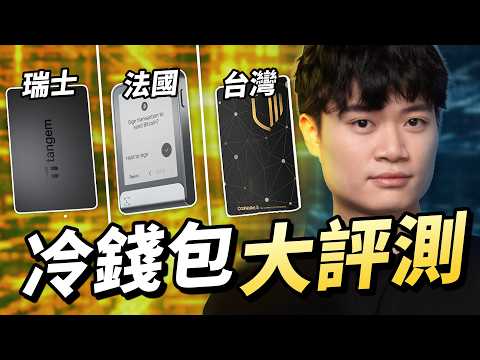
加密貨幣冷錢包全網最完整開箱評測:法國 Ledger, 瑞士 Tangem, 台灣 CoolWallet 安全性、操作性、性價比、防呆完整對比
腦哥 Chill塊鏈· 2026-02-12 10:45
你用的冷錢包,安全嗎? 法國 Ledger & 瑞士 Tangem 安心選購連結 https://bmai.app/a8dd273c (折扣碼 brainbro) 台灣 CoolWallet Go 官網購買連結 https://www.coolwallet.io/zh/collections/coolwallet-go (折扣碼 brain64) 🧧 2026 冷錢包金馬祭|幣圈防衛戰 🐎 現在到正成購物購買冷錢包, 就有機會抽 USDT 新春紅包 💰 結帳時使用腦哥推薦碼「BRAINBRO」 再享 95 折優惠! ⏰活動日期:2/12-3/19 ⭐總獎金 $3,000 USDT(約 NT$10 萬) ⭐共24 名得主,最高 $300 USDT ⭐兩波抽獎2/27(五) 、3/20(五) ,早買多一次抽獎機會 🚀 中獎機率最高 4 倍 ✔ 活動日期內在正成購物購買冷錢包就有抽獎資格 ✔ 買 Tangem 品牌或指定 KOL 連結 → 機率加倍 ✔ Tangem+KOL → 4 倍機率 活動說明:https://www.chengseng.com/news-view.php?id=794 購買連結:https: ...
新一代小米SU7预热,雷军强调安全性
Xin Lang Cai Jing· 2026-01-08 10:44
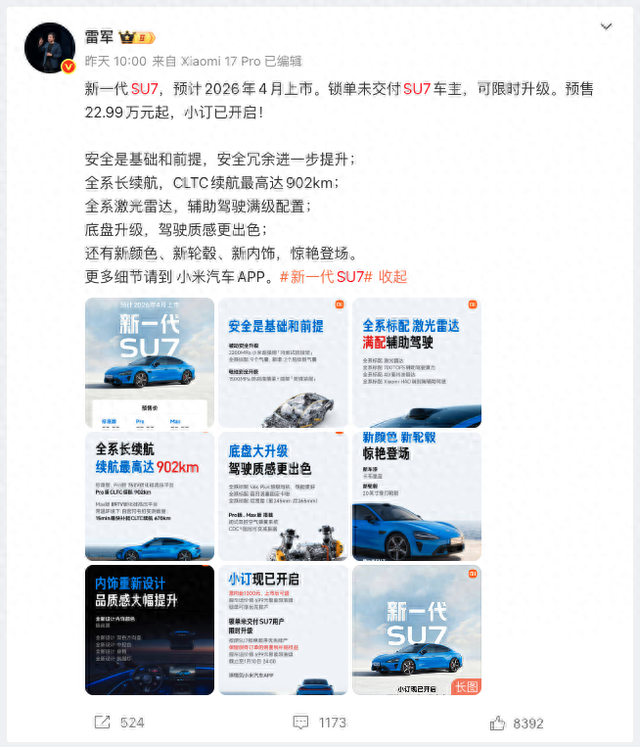
Core Viewpoint - The new generation of Xiaomi SU7 emphasizes safety over performance, with a planned release in April 2026 and a pre-sale price of 229,900 yuan, which is 14,000 yuan higher than the current model but still lower than Tesla Model 3's starting price of 235,500 yuan [1][3]. Group 1: Safety Features - The new Xiaomi SU7 features significant upgrades in passive safety, including a 2200MPa "Xiaomi super strong steel" embedded roll cage and a total of 9 airbags, with 2 additional side airbags for the rear [4]. - The vehicle also enhances battery safety with a 1500MPa anti-scratch bottom beam and a "bulletproof coating" on the underside [4]. Group 2: Advanced Driver Assistance Systems (ADAS) - The new model will come standard with laser radar and an increased computing power of 700 TOPS, compared to the current model's 84 TOPS for the base version and 508 TOPS for higher versions [4][5]. - All versions of the new Xiaomi SU7 will be equipped with 4D millimeter-wave radar, which offers better detection capabilities than traditional systems, aiming to improve the reliability of the ADAS [5]. Group 3: Performance and Specifications - The standard and Pro versions of the new Xiaomi SU7 will utilize a 752V silicon carbide high-voltage platform, while the Max version will feature an 897V platform, capable of recharging 670 km in just 15 minutes under CLTC conditions [5]. - The new model will also see upgrades in the motor, chassis, and braking systems, along with some enhancements in exterior and interior design [5]. Group 4: Sales Projections - Xiaomi's automotive division achieved a cumulative delivery of over 410,000 units in 2025, surpassing the initial target of 350,000 units, with a delivery goal of 550,000 units set for 2026 [5].

CZ:当前主要精力投入 Giggle Academy、YZi Labs、BNB Chain 及政府顾问工作
Xin Lang Cai Jing· 2025-12-20 06:42
Core Insights - Binance founder Zhao Changpeng is currently focusing on four main areas: Giggle Academy, YZi Labs, BNB Chain ecosystem, and providing advice to governments [1] Group 1: Market Predictions - Zhao emphasizes that the key criteria for predicting market success include usability, capital efficiency, transaction fees, security, and a certain level of yield performance [1] - He asserts that the true determinants of success are long-term execution capabilities and the team's willingness to maintain ongoing investment [1]
“得用户者得天下”
Mei Ri Jing Ji Xin Wen· 2025-11-20 13:04
Core Insights - In 2025, China's new energy vehicle (NEV) ownership is expected to exceed 38 million, accounting for over 10% of total vehicle ownership, with a market penetration rate projected to surpass 60% [1] - The shift in consumer purchasing motivations indicates a transition from reliance on policies and technology to a focus on user experience and comprehensive product value [1][4] User Decision-Making Changes - The core purchasing motivation has shifted from "policy" to "product," with driving experience, comfort, and smart features becoming the primary drivers [2] - The average number of factors considered by consumers during the purchasing process has increased from 4.2 to 5.9, with a heightened focus on vehicle safety and smart configurations [2] Competitive Landscape - The competitive landscape is evolving, with consumers comparing models like the Li Auto L6 against a range of pure electric and smart vehicles, indicating a shift to "cross-brand electric comparisons" [3] - The average range of pure electric vehicles has improved from 450 km in 2022 to 530 km in 2025, alleviating previous concerns about range anxiety [3] Industry Transformation - The industry is moving away from a policy-driven phase to a user-value-driven phase, as financial subsidies decline and market competition intensifies [4] - Key consumer demands include high cost-performance ratio, absolute safety, and advanced smart features, which are essential for purchasing decisions [5][6] Smart Features as a Market Differentiator - Smart features are becoming critical for high-end models, with excellent smart experiences helping products stand out, while mid-range models are rapidly evolving in this area [7] - The evolution of smart features is now a significant factor influencing user experience and attracting traditional fuel vehicle users to NEVs [7] Future Market Outlook - The automotive market is expected to become more competitive by 2026, facing challenges such as reduced subsidies and increased product homogeneity [8] - The implementation of new safety standards for electric vehicle batteries will raise safety benchmarks, while ongoing technological advancements will drive the industry towards a healthier value return phase [8]
X @Yuyue 🥊
Yuyue· 2025-11-08 13:58
从资管角度来说,BTC 如何生息其实是一个还没被完全发掘好的问题。有大量闲置的 BTC 存在一定的理财需求,但 BTC 本身并不是 POS 的机制,也没有原生的利息存在。绝大多数 BTC 的持有者第一关心的事情就是安全性,但传统的 DeFi 协议其实并没有匹配这部分群体的需求今天看见 @ArchNtwrk 说的这件事,那就是比特币正是大多数加密货币闲置资金的所在地,可靠的收益取决于可持续的流动性。这个思路我和 @Mercy_okx 之前聊 okx 的 xBTC 的时候就讨论过降息之后 BTC 假如能起到足够的抗通胀效果,那么肯定也有很多人想要最大化利用自己手上的 BTC 来打工,这部分理财需求怎么能得到安全性的保障是个难题Arch Network (@ArchNtwrk):Reliable yield depends on sustainable liquidity.High-yield opportunities driven by token airdrops are short-lived. Users quickly move to the next chain or protocol chasing ...
中国动力电池的演进:从续航里程、安全性到充电速度
Di Yi Cai Jing· 2025-10-15 05:13
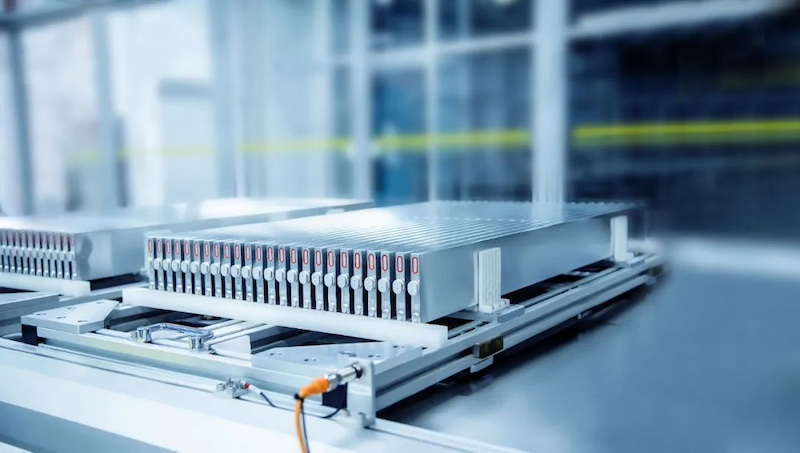
Core Insights - In 2023, China surpassed Japan to become the world's largest automobile exporter, with BYD overtaking Tesla as the largest pure electric vehicle manufacturer in the same year [1] - China's power battery industry has a global market share of 63.2%, with six out of the top ten global battery companies being Chinese, and CATL maintaining its position as the world's largest battery manufacturer for nine consecutive years [1] - The transition of China's power battery industry from labor-intensive to technology-intensive is highlighted as a successful model of industrial upgrade [1] Industry Development - The development of electric vehicles (EVs) has focused on addressing consumer pain points such as range and safety, with advancements in fast charging and performance in various climate conditions [2][3] - The initial focus was on electric buses and low-speed vehicles, which allowed for larger battery installations without energy density concerns, before moving to passenger vehicles where energy density became critical [3][4] - The introduction of subsidy policies linked to energy density has driven the shift from lithium iron phosphate (LFP) batteries to nickel-cobalt-manganese (NCM) batteries, which offer higher energy density [5][6] Safety Concerns - As NCM batteries gained market share, safety issues emerged, with incidents of fires and explosions reported, particularly in high-nickel variants [6][7] - Regulatory measures have been introduced to enhance battery safety, including mandatory standards for thermal runaway prevention [7] - The resurgence of LFP batteries is attributed to their superior thermal stability and safety, with innovations like BYD's blade battery achieving competitive energy density [8][9] Technological Innovations - The competition has shifted from a focus on battery chemistry to innovations in battery pack technology and safety systems [10] - New battery designs, such as GAC Aion's cartridge battery and CATL's Kirin battery, aim to enhance safety while maintaining energy density [10][11] - The industry is addressing new challenges related to performance in extreme weather conditions and charging speed, with ongoing research into thermal management systems and fast-charging solutions [12][13] Market Trends - The market is witnessing a significant shift in battery technology preferences, with LFP batteries regaining ground due to their cost-effectiveness and resource availability [9][10] - The demand for fast charging and battery swapping solutions is increasing, with companies exploring innovative business models to enhance consumer convenience [12][13] - The rapid growth of battery testing and R&D facilities reflects the industry's commitment to improving battery performance and safety [13][14]



全球与中国胰岛素笔针头市场现状及未来发展趋势(2025版)
QYResearch· 2025-10-15 02:20
Core Viewpoint - The insulin pen needle industry is experiencing rapid growth driven by the increasing prevalence of diabetes and the demand for convenient self-injection methods. Innovations in needle design and safety features are enhancing user comfort and safety, while market dynamics are shifting towards smart and sustainable solutions [5][6][11]. Industry Current Status - The insulin pen needle industry has evolved since the 1980s, transitioning from traditional syringes to more user-friendly pen-style injectors. The design of needles has improved significantly, focusing on comfort and safety, with shorter and thinner needles becoming the norm [5][6]. - The market is currently dominated by standard needles, but safety needles are gaining traction due to their protective features, reducing the risk of needlestick injuries and cross-contamination [6][11]. Development Trends - Key trends include the miniaturization and pain reduction of needles, with 4mm needles becoming mainstream. Future designs may incorporate advanced cutting techniques and lubricants to further enhance comfort [8][17]. - The rise of safety needles is a significant trend, driven by stricter regulations and the need for occupational safety in healthcare settings. These needles are expected to see increased adoption in home care scenarios as well [8][10]. - The industry is moving towards smart and digital integration, with potential for insulin pen needles to connect with smart devices for better medication management [8][17]. Market Size and Forecast - The global insulin pen needle market is projected to grow from $1.178 billion in 2024 to $1.799 billion by 2031, with a CAGR of 6.58% from 2025 to 2031. The Chinese market is expected to grow from $194 million in 2024 to $315 million by 2031 [14][15]. - The demand for insulin pen needles is primarily driven by the rising number of diabetes patients, which exceeds 500 million globally, and the increasing preference for home self-injection [14][15]. Challenges and Opportunities - The market faces challenges such as intense price competition, particularly from local manufacturers in countries like China and India, which may compress profit margins [15][16]. - Patient education and adherence to proper needle usage are critical for market growth, as some patients may not understand the importance of using new needles for each injection [16]. - The push for environmentally friendly materials and cost control is becoming increasingly important, with manufacturers exploring biodegradable and recyclable options [10][17]. Policy Analysis - Insulin pen needles are classified as Class II medical devices, requiring strict regulatory compliance in most regions, including certifications like ISO 13485 and local health authority approvals [18]. - Insurance coverage for insulin pen needles varies by region, with some countries providing reimbursement, which can significantly influence market demand [18].
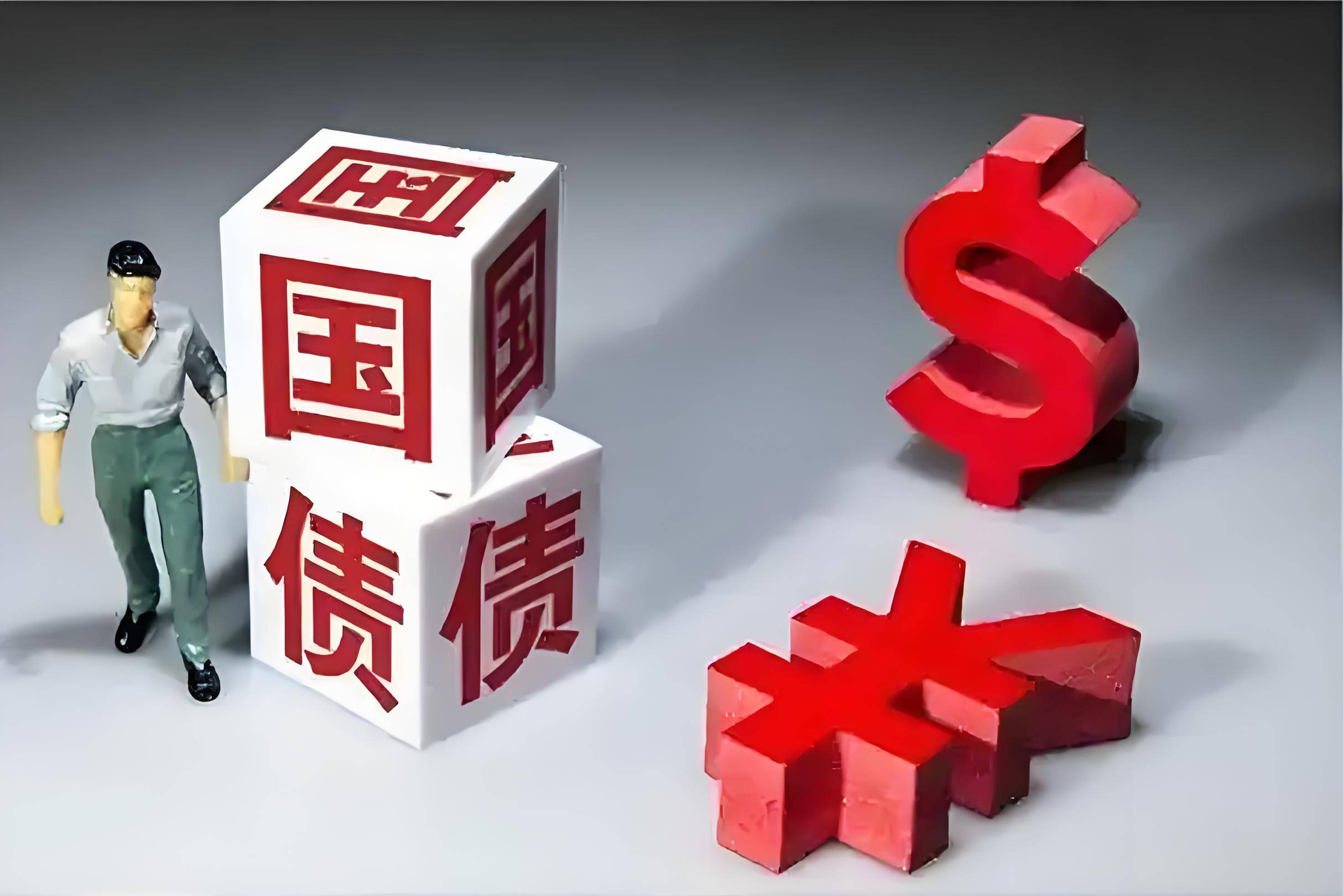
最新一批储蓄国债来了:2025年10月,50万三年比存定期更划算吗?
Sou Hu Cai Jing· 2025-10-08 14:45
Core Viewpoint - The upcoming issuance of savings bonds in China is expected to provide better investment returns compared to traditional bank fixed deposits, particularly for investors with a principal of 500,000 yuan [1][11]. Summary by Category Issuance Details - The new batch of savings bonds will be issued from October 10 to 19, with a total national quota of 26 billion yuan, split evenly between 3-year and 5-year bonds [1]. Investment Returns - The interest rates for the four major state-owned banks are 1.25% for 3-year fixed deposits and 1.3% for 5-year fixed deposits. For a principal of 500,000 yuan, the interest earned would be 18,750 yuan for 3 years and 32,500 yuan for 5 years [5]. - In comparison, the previous month's interest rates for savings bonds were 1.63% for 3 years and 1.7% for 5 years, yielding 24,450 yuan and 42,500 yuan respectively for the same principal [5]. - This indicates that the 3-year savings bond offers 5,700 yuan more than the fixed deposit, while the 5-year bond provides an additional 10,000 yuan [5]. Safety Comparison - Savings bonds are backed by national credit, making them safer than fixed deposits in state-owned banks, which are also insured up to 500,000 yuan [7]. Liquidity Analysis - The new savings bonds have a staggered interest calculation, where early redemption before six months yields no interest, while fixed deposits incur a penalty of receiving only the current savings account rate of 0.05% [9]. - This structure may lead to significant interest losses for those needing liquidity [9]. Limitations - The new savings bonds have limited availability, requiring investors to queue at banks for purchase, and they can only be bought at bank counters, not online [9][11]. - Additionally, interest on the bonds only begins to accrue after six months, which may deter some investors [9][11].
X @Yuyue
Yuyue· 2025-09-04 12:20
Tokenized Stock Platform & Security - The industry views tokenized stock platforms as a solution to avoid high transaction volumes caused by traditional high-frequency trading and swing trading [1] - Concerns exist regarding the security of tokenized stocks, with doubts about the actual mapping of these assets [1] - Ondo's Wall Street 2.0 is considered a solution with strong asset security, given Ondo's reputation as a compliant project [1] Ondo Global Markets & Tokenized Assets - Ondo Global Markets is now live, offering a large selection of tokenized U S stocks & ETFs on Ethereum [2] - Over 100 assets are currently available, with hundreds more planned for addition [2] Ethereum Ecosystem Integration - The platform's launch on the Ethereum mainnet enhances Ethereum ecosystem applications and enriches Ondo's ecosystem [1]