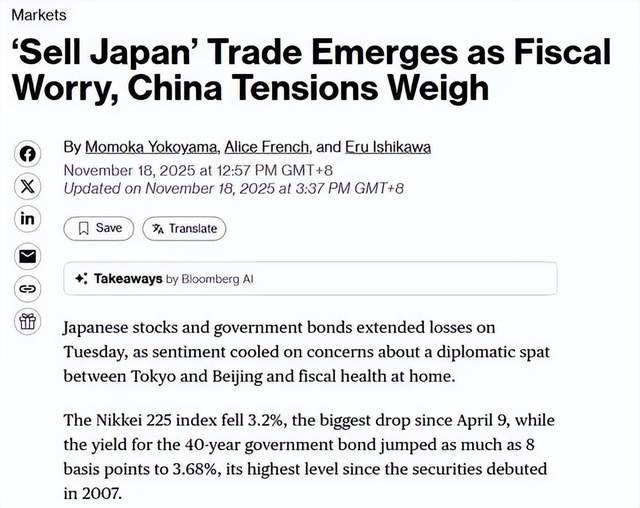
抛售日本

Search documents
高市早苗再出狂言 ,高市早苗借进击的巨人呼吁投资
Xin Lang Cai Jing· 2025-12-02 11:41
Core Viewpoint - Japanese Prime Minister Kishi Sanae's remarks at an international investment conference on December 1, urging investment in Japan, were met with mixed reactions, highlighting the current economic challenges facing the country [1] Economic Context - The Bank of Japan's Governor Ueda Kazuo hinted at a potential interest rate hike in December, leading to a significant drop in the Nikkei index by nearly 1000 points on the same day [1] - Following the announcement, U.S. stock markets also experienced volatility, and Bitcoin plummeted to approximately $84,000 [1] Currency and Debt Situation - The Japanese yen appreciated against the U.S. dollar, moving from the 156 yen range to the 154 yen range [1] - Japan's government debt has surpassed 200% of its GDP, the highest among developed countries, raising concerns about fiscal sustainability [1]
日本发出“最强烈警告”!高市妄为之“祸”来了:日本将损失超2万亿日元,债券和日元遭抛售,大米鸡蛋价格涨不停,GDP负增长……
Mei Ri Jing Ji Xin Wen· 2025-11-23 09:10
Group 1 - Japan's Prime Minister Sanna Takashi's remarks regarding Taiwan have severely damaged the political foundation of Sino-Japanese relations, leading to a significant decline in the atmosphere for personnel exchanges between the two countries. Economic experts in Japan estimate that a sharp reduction in Chinese tourist numbers could result in losses exceeding 2 trillion yen for Japan [1] - If the current state of Sino-Japanese relations persists for over a year, it could lead to a reduction of more than 2 trillion yen in Chinese tourist spending, which would have a substantial impact on Japan's tourism industry and local economies [1] - The Japanese government has approved a 21.3 trillion yen economic stimulus plan, which is the first major fiscal initiative under Prime Minister Takashi's administration. This plan includes 17.7 trillion yen in general account expenditures, marking a 27% increase from the previous year [21][24] Group 2 - The Japanese economy has entered a negative growth phase for the first time in six quarters, with a 0.4% decrease in real GDP for the third quarter of 2025, translating to an annualized decline of 1.8% [5][10] - Exports have seen a decline for the first time in six quarters, with a 1.2% drop in goods and services exports, largely attributed to increased tariffs imposed by the United States on Japanese automotive and manufacturing products [10][11] - Domestic demand has also been adversely affected, with private residential investment plummeting by 9.4%, nearly erasing the recovery gains made post-pandemic [10] Group 3 - The depreciation of the yen against the dollar has raised concerns, with the Japanese Finance Minister expressing worries about the rapid and one-sided decline of the yen, which has increased the cost of imported goods for households and small businesses [3] - The recent economic data has led to a significant sell-off in Japanese assets, with the 30-year government bond yield reaching a historical high, and the Nikkei 225 index erasing all gains since the new Prime Minister took office [5][13] - The market is reacting to the economic outlook, with the yen depreciating approximately 6% since the new administration took office, raising concerns about the credibility of Japan's fiscal policies [14][17] Group 4 - The tourism sector is facing a severe downturn, with over 540,000 flight cancellations to Japan since mid-November, leading to potential losses in the tourism industry amounting to trillions of yen [19][20] - Chinese tourists are a significant contributor to Japan's tourism revenue, accounting for approximately 30% of the total foreign travel spending in Japan, making the current decline particularly impactful [19] - The Japanese government has acknowledged that the optimistic economic forecasts are no longer sustainable, revising the GDP growth expectation for the fiscal year 2025 down from 1.2% to 0.7% [10][11]


“抛售日本”开始了?高市早苗执意“玩火”引发市场冲击波!
Sou Hu Cai Jing· 2025-11-22 17:18
Group 1 - Japan's Prime Minister, Taro Kono, made erroneous statements leading to heightened tensions in Sino-Japanese relations, prompting China to implement countermeasures such as suspending multiple exchanges and restricting Japanese seafood imports, which indirectly affects Japan's manufacturing supply chain [1] - Market risk aversion has surged, with investors concerned about regional stability, resulting in accelerated capital withdrawal from the Japanese market. Invesco strategist Kinoshita noted that the deterioration of Sino-Japanese relations is a significant driver of the "sell Japan" trend [1] Group 2 - On November 21, Kono's cabinet announced a 21.3 trillion yen (approximately 140 billion USD) economic stimulus plan aimed at revitalizing the sluggish economy, which has raised fears of worsening Japan's fiscal situation [3] - Japanese government bonds have faced sell-offs, with bond yields rising for several consecutive days, and the 30-year bond yield reaching a historic high, indicating a potential collapse risk for the world's third-largest bond market [3] - The yen is under devaluation pressure, nearing the 160 mark, which approaches the intervention threshold set by the Bank of Japan [3] - The Nikkei 225 index experienced a significant drop of over 2,500 points in a single week, erasing all gains since Kono took office [3] Group 3 - Investors are worried that Japan may repeat the "mini-budget crisis" seen during former UK Prime Minister Liz Truss's tenure, where aggressive fiscal policies led to a collapse in market confidence [4] Group 4 - Japan's GDP contracted at an annualized rate of 1.8% in the third quarter, marking a return to negative growth after the first quarter of 2024, primarily due to weak domestic demand and export challenges from U.S. tariffs [6] - High valuations in technology stocks have led to correction pressures, compounded by fiscal risks, creating a vicious cycle of "sell-off in stocks, bonds, and currency" [6] - Analysts warn that if Kono loses policy credibility, the sell-off could extend to all Japanese assets, indicating that the current "sell Japan" trend is still in its early stages [6] - There is a critical need for the Kono administration to balance fiscal expansion with debt management; otherwise, prolonged diplomatic stalemates could lead to systemic crises [6] - Bloomberg analysis suggests Japan must find a balance between policy credibility and market stability to avoid a repeat of the "lost decade" [6]

“抛售日本”才刚刚开始?日本遭遇股债汇“三杀”
2 1 Shi Ji Jing Ji Bao Dao· 2025-11-21 13:43
Core Viewpoint - Japan is facing significant market turmoil due to a combination of aggressive fiscal policies and expectations of prolonged monetary easing, leading to a sell-off in stocks, bonds, and the yen [1][2][3]. Economic Stimulus Plan - The Japanese government is preparing an economic stimulus plan exceeding 21.3 trillion yen (approximately 135.4 billion USD), marking the largest such measure since the pandemic began [5]. - This plan is being implemented despite Japan's economy contracting in the third quarter, which raises concerns about increasing debt burdens [1][8]. Market Reactions - As of November 21, the Nikkei 225 index fell by 2.4% or 1198.06 points, while the yen traded at 156.69 to the dollar, showing a slight recovery from previous lows [2]. - The yield on Japan's 10-year government bonds decreased by 2.04% to 1.779%, indicating some market stabilization after previous spikes [2]. Debt Concerns - Japan's debt burden has reached 250% of its GDP, with interest payments consuming about 23% of annual tax revenue, raising alarms about fiscal sustainability [4]. - Analysts warn that a 100 basis point increase in bond yields could add over 2.8 trillion yen to Japan's annual financing costs [4]. Monetary Policy Dilemma - The Bank of Japan is hesitant to raise interest rates, which complicates the balance between fiscal expansion and monetary normalization [2][3]. - There are fears that if the government and central bank do not manage this balance effectively, it could lead to a significant sell-off in the yen and Japanese bonds, impacting global liquidity [2][6]. Global Implications - The volatility in Japan's debt and currency markets raises concerns about potential spillover effects on global markets, particularly if Japanese investors begin to unwind yen carry trades [6][7]. - Analysts suggest that a sudden tightening of monetary policy or aggressive currency interventions could trigger widespread asset sell-offs, affecting global risk assets [7][6]. Economic Performance - Japan's GDP contracted by 0.4% in the third quarter, marking the first negative growth since early 2024, driven by weak domestic and external demand [8][9]. - The impact of U.S. tariff policies on Japan's export-driven sectors, particularly automotive, has been significant, contributing to the economic slowdown [9].
日本股债汇“连续三杀”:“高市早苗”交易再见,“抛售日本”交易才刚刚开始
Hua Er Jie Jian Wen· 2025-11-20 01:27
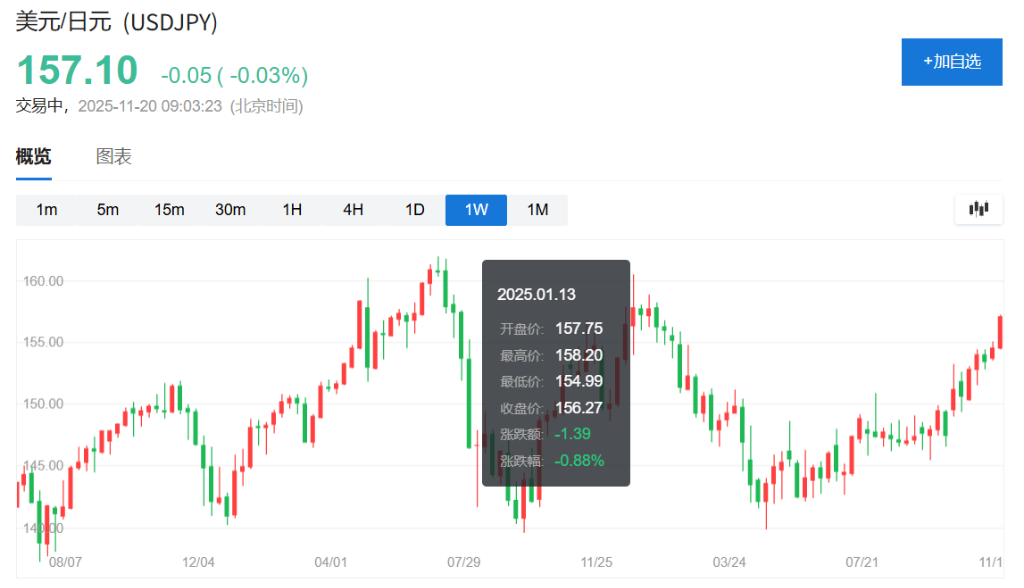
Core Viewpoint - Japanese Prime Minister Sanna Takashi is facing her first major market test since taking office, with an upcoming fiscal stimulus plan threatening to disrupt the market rally that followed her election [1][3]. Group 1: Market Reactions - The Japanese stock market, particularly the Nikkei 225 index, has erased all gains since Takashi's election, reflecting investor disappointment [3][10]. - The upcoming fiscal stimulus plan is expected to exceed the previous 13.9 trillion yen plan, with some lawmakers pushing for an additional budget of around 25 trillion yen, raising concerns about its necessity [4][11]. - The Japanese yen has depreciated significantly, with the USD/JPY exchange rate returning to 157, and analysts warn that further declines could prompt government intervention [5][8]. Group 2: Economic Implications - Concerns about the fiscal plan have led to fears of a "triple kill," where stocks, bonds, and the yen all decline simultaneously, reminiscent of market turmoil during Liz Truss's tenure in the UK [4][11]. - Rising long-term bond yields are anticipated if Takashi seeks a large budget, potentially pushing the yen weaker to 160 per dollar [8]. - Despite a weak yen typically supporting Japanese stocks, ongoing diplomatic tensions and a downturn in global tech stocks have hindered the performance of the Nikkei index [9]. Group 3: Policy Credibility - The market's negative sentiment is compounded by Takashi's recent decisions to abandon the annual budget balance target and reduce shareholder focus in corporate governance, raising investor concerns [10][11]. - The credibility of Takashi's economic agenda is under scrutiny, with analysts suggesting that a loss of confidence could lead to widespread asset sell-offs [11]. - Some investors still believe that Takashi's spending plans could ultimately support Japanese assets, potentially leading to economic overheating and necessitating interest rate hikes, which could strengthen the yen in the long term [11].
“抛售日本”,出现了!
Sou Hu Cai Jing· 2025-11-19 23:58
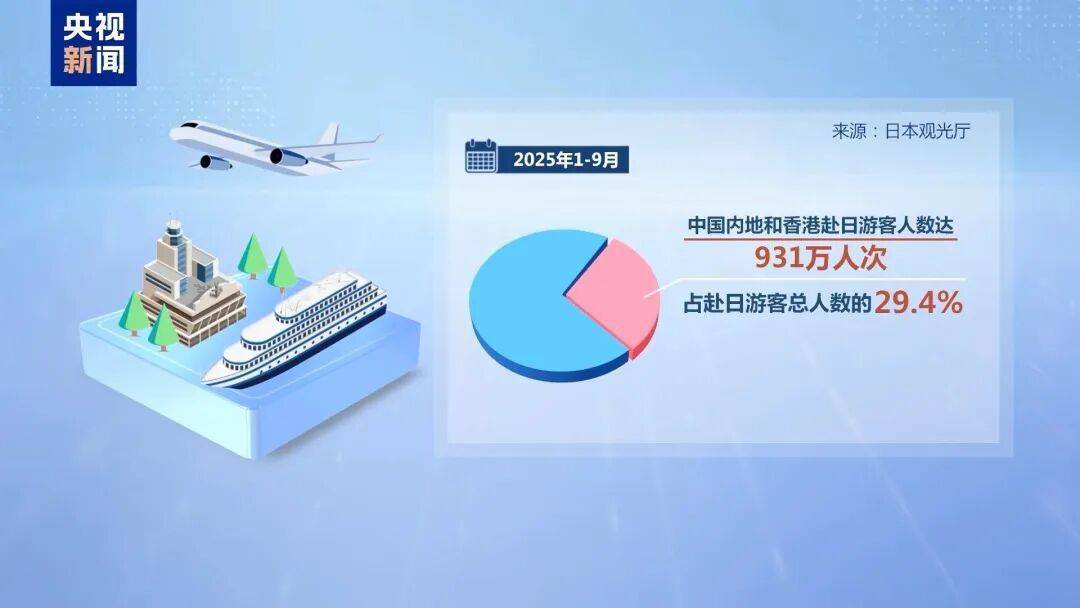
Market Impact - The Nikkei 225 index in Tokyo closed at 48,702.98 points on the 18th, marking a significant drop of 3.22%, the largest decline since early April this year [1] - On the same day, Japanese government bonds faced sell-offs, leading to a depreciation of the yen [1] - Concerns over Prime Minister Suga's proposed expansionary fiscal policies are causing investors to worry about worsening fiscal conditions, resulting in a continuous rise in long-term interest rates [1] Stock Performance - The Tokyo stock market indices continued to decline on the 19th, with the Nikkei index dropping by 165.28 points to close at 48,537.70 points, and the Topix index falling by 5.52 points to 3,245.58 points [3] - Over the previous three trading days, the Nikkei index had cumulatively dropped more than 2,500 points [1] Sector-Specific Concerns - Companies related to the Chinese market, such as Shiseido and Sony Group, are experiencing weak rebounds and continued declines due to deteriorating Sino-Japanese relations [2] - Analysts suggest that the current situation makes the performance outlook for these companies uncertain, leading investors to avoid their stocks [2] Economic Outlook - Japan's GDP contracted by 1.8% year-on-year in the third quarter, indicating a return to negative growth since the first quarter of 2024, which adds pressure to the market [5] - Experts express concerns that the worsening Sino-Japanese relations could further impact Japan's already struggling economy, potentially leading to another quarter of negative growth [6] Tourism and Consumer Impact - From January to September, foreign tourist spending in Japan reached 6.92 trillion yen, with contributions from mainland China and Hong Kong accounting for approximately 30% [7] - Predictions indicate that the Chinese government's travel advisories could reduce Japan's tourism revenue by about 2.2 trillion yen over the next year, which may decrease Japan's GDP by 0.36% [7] - The negative sentiment from Prime Minister Suga's remarks may also affect the export and sales of Japanese goods, as Chinese consumers might reduce their purchases of Japanese products [9]
“抛售日本”,出现了
Sou Hu Cai Jing· 2025-11-19 07:17
Core Viewpoint - The diplomatic dispute between China and Japan, along with concerns over Japan's fiscal outlook and comments from Prime Minister Kishi, has led to increased market activity in "sell Japan" trades, resulting in significant declines in Japanese stocks and bonds [1][3]. Group 1: Market Reactions - The Nikkei 225 index fell by 3.2%, marking the largest single-day drop since April 9 [1]. - The yield on Japan's 40-year government bonds rose by 8 basis points to 3.68%, the highest level since 2007 [1]. - Investor sentiment is deteriorating due to uncertainties surrounding the government's fiscal situation and the strained relationship with China, fueling the "sell Japan" trend [3]. Group 2: Economic Impact - Japan's economy, already weakened by U.S. tariffs and declining real estate investments, faces additional uncertainty due to the diplomatic dispute triggered by Prime Minister Kishi's comments [3]. - The number of Chinese tourists, who accounted for approximately 5.7 million visitors or nearly 23% of all foreign tourists to Japan this year, is expected to decline, impacting the tourism sector [3]. - Economic forecasts suggest that the ongoing tensions could lead to a contraction in Japan's GDP by 1.79 trillion yen, equivalent to a decrease of 0.29% within a year [3]. Group 3: Recent Economic Data - Japan's GDP contracted by 0.4% quarter-on-quarter in the third quarter, marking the first negative growth in six quarters [4].