
报行合一政策

Search documents
上市险企首份年报亮相!阳光保险寿险站上千亿台阶,财险陷承保亏损|银行与保险
清华金融评论· 2026-03-20 09:18
Core Viewpoint - Sunshine Insurance Group reported a total premium income of 150.72 billion yuan for 2025, marking a 17.4% year-on-year increase, and successfully crossing the 150 billion yuan threshold [3]. Group Performance - The total premium income for Sunshine Insurance Group reached 150.72 billion yuan in 2025, with a net profit attributable to shareholders of 6.31 billion yuan, reflecting a 15.7% increase year-on-year [3]. - The group's embedded value was 120.78 billion yuan, up 4.3% from the previous year, and the number of effective customers reached 29.828 million by the end of 2025 [3]. Life Insurance Business - The life insurance segment achieved a total premium income of 102.61 billion yuan, a significant increase of 27.5% year-on-year, with new business value soaring by 48.2% to 7.64 billion yuan [5]. - The growth was primarily driven by the bancassurance channel, which saw premium income of 67.455 billion yuan, up 34.8%, and new single premiums skyrocketing by 69% [5][7]. - In contrast, the individual insurance channel experienced a 7.6% decline in new single premiums, although total premiums grew by 13.6% due to product structure optimization [5]. Property Insurance Business - The property insurance segment reported a mere 0.1% increase in original premium income, totaling 47.89 billion yuan, with non-auto insurance premiums rising to 46.1% of the total [8]. - The underwriting performance faced significant pressure, resulting in an underwriting loss of 1.03 billion yuan and a combined cost ratio of 102.1% [8]. Investment Performance - As of the end of 2025, the total investment assets of Sunshine Insurance Group reached 640.2 billion yuan, a 16.7% increase from the previous year [10]. - The net investment income was 19.83 billion yuan, up 3.3%, while total investment income surged by 27.1% to 25.23 billion yuan [12]. - The net investment yield decreased to 3.7%, down 0.5 percentage points year-on-year, indicating a dilution effect from rapid asset expansion [10][12]. Future Outlook - Moving forward, Sunshine Insurance Group aims to optimize its business and product structure, enhance the underwriting performance of its property insurance segment, and continue to deepen its "one body, two wings" development strategy [10].


背靠大树好乘凉?十家银行系险企去年赚243亿元,分化加剧
Nan Fang Du Shi Bao· 2026-02-13 08:45
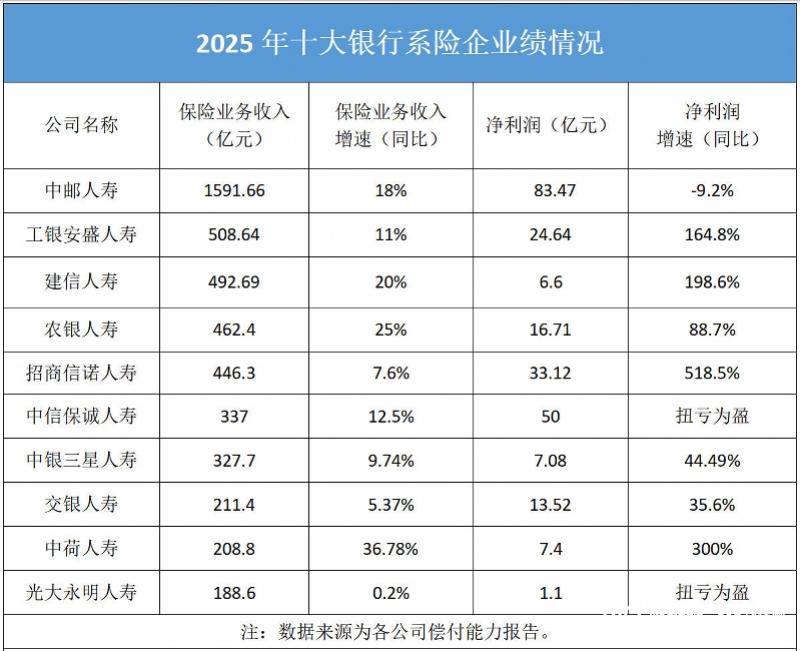
Core Viewpoint - The insurance sector backed by major banks in China has shown significant growth in 2025, with total premium income reaching 477.515 billion yuan, a year-on-year increase of 15.29%, while net profit soared to 24.364 billion yuan, up 145.06% from the previous year. However, disparities among companies are becoming more pronounced, raising questions about the sustainability of this growth and the impact of regulatory changes [1][5]. Premium Income - The ten bank-affiliated insurance companies achieved a total insurance business income of 477.515 billion yuan, significantly outperforming the overall life insurance industry's growth rate of 8.91% [1]. - China Post Life Insurance led the group with 159.166 billion yuan in insurance business income, marking an 18% year-on-year increase, and is the only company to surpass the 100 billion yuan mark [2][3]. - The second tier includes ICBC-AXA Life and CCB Life, with insurance business incomes of 50.864 billion yuan and 49.269 billion yuan, respectively, showing a competitive gap of less than 16 billion yuan [3]. Profitability - The ten companies collectively earned a net profit of 24.364 billion yuan, more than doubling from 9.942 billion yuan in 2024. Notably, CITIC Prudential Life turned a loss of 1.765 billion yuan in 2024 into a profit of 5 billion yuan in 2025 [5]. - The implementation of the "reporting and banking integration" policy in August 2023 has been a key factor in this profitability turnaround, leading to reduced liability costs for bank-affiliated insurers [5]. Investment Performance - The overall investment yield for the ten companies showed a slight increase, but the comprehensive investment yield declined across the board, averaging only 1.71%, down 8.004 percentage points from 2024 [6][8]. - The decline in comprehensive investment yield is attributed to market volatility and the underperformance of equity assets, alongside the impact of accounting changes in bond investments [8]. Asset Scale - By the end of 2025, total assets of the ten companies grew by 9.59% to 2.7 trillion yuan, but net asset disparities increased, with China Post Life and ICBC-AXA Life both exceeding 20 billion yuan in net assets [9][10]. - Several companies, including Zhongyin Samsung Life and Zhonghe Life, experienced significant declines in net assets, with decreases of 88.52% and 77.29%, respectively [9]. Regulatory and Strategic Considerations - Compliance risks have emerged, with penalties imposed on companies for regulatory violations, indicating the need for improved governance [11]. - Experts suggest that the strategic focus for bank-affiliated insurers should shift from scale to value, emphasizing the need for better asset-liability matching and capital management to enhance stability and profitability [12].
业绩持续恶化,长生人寿艰难求生
Xin Lang Cai Jing· 2026-02-02 16:59
Core Viewpoint - In 2025, despite a favorable overall performance in the insurance industry, Changsheng Life Insurance Company reported significant losses, raising concerns about its solvency and operational challenges [1][3]. Financial Performance - Changsheng Life achieved insurance business revenue of 1.926 billion yuan in 2025, a year-on-year decrease of 32.39% [6]. - The company reported a net loss of 512 million yuan in 2025, worsening from a loss of 192 million yuan in 2024 [6]. - As of the end of Q4 2025, the core solvency adequacy ratio was 64.8%, and the comprehensive solvency adequacy ratio was 79.7%, both below regulatory standards [3][4]. Regulatory Compliance - According to regulatory requirements, insurance companies must maintain a core solvency adequacy ratio of at least 50% and a comprehensive solvency adequacy ratio of at least 100% to be considered compliant [3]. - Changsheng Life's solvency ratios are close to the regulatory red line, with the comprehensive ratio significantly below the required threshold [3]. Capital Supplementation Efforts - The company is actively pursuing capital supplementation to improve its solvency situation, with shareholders accelerating related arrangements [4][5]. - The last capital increase occurred in July 2015, raising registered capital from 1.3 billion yuan to 2.167 billion yuan [5]. Investment Challenges - In 2025, Changsheng Life faced significant investment losses, including a 290 million yuan impairment on a real estate debt investment project, which negatively impacted its solvency ratios [7]. - The company has reported multiple investment losses in recent years, including impairments of 80 million yuan and 95 million yuan on two investment projects disclosed in the Q4 2024 solvency report [7]. Strategic Initiatives - To address its financial challenges, Changsheng Life plans to enhance profitability and reduce losses through various strategies, including optimizing asset allocation towards fixed-income investments and improving new business sales [8].

新华保险20260114
2026-01-15 01:06
Summary of Xinhua Insurance Conference Call Company Overview - **Company**: Xinhua Insurance - **Focus Year**: 2026 Key Points Industry and Strategic Focus - Xinhua Insurance's strategy for 2026 emphasizes dividend insurance, aiming to maintain overall value stability despite a slightly lower value rate compared to traditional insurance products [2][5] - The company plans to optimize its business structure and match high-value protection products to achieve steady growth in new business value through regular premium income [2][5] Performance and Market Position - The company reported that its performance in the 2026 opening period met established targets, with both individual and bank insurance channels showing strong growth in regular and value premiums [3][6] - Dividend insurance products have gained significant market acceptance, with their share increasing and the interest margin narrowing by 25 basis points compared to traditional insurance [3][5] Competitive Landscape - Xinhua Insurance acknowledges intense competition in the bank insurance channel but sees opportunities due to banks' increasing focus on insurance as a low-capital burden intermediary business [7][8] - The company aims to deepen existing networks, expand bank personnel, and open new outlets to capitalize on market opportunities [8] Financial Management and Cost Control - Strict cost management measures are in place, including rigorous oversight of bank fees and commissions, ensuring alignment with budgeted expenditures [9] - Xinhua Insurance has established strong partnerships with nearly 60 banks, enhancing its strategic cooperation to drive business growth in 2026 [9] Asset Allocation and Investment Strategy - The asset allocation for 2026 will primarily focus on fixed-income assets, maintaining an approximately 80% share, while equity assets will remain stable [10][11] - The company plans to respond to regulatory calls by moderately increasing the proportion of equity assets and enhancing long-term equity investments [10][11] Risk Management - Xinhua Insurance's exposure to Vanke is estimated at around 4-5 billion yuan, with no current risk events reported [12] - The company is actively assessing impairment risks based on new standards and actual repayment situations [12] Regulatory and Tax Implications - The new asset-liability matching management system is viewed positively, with the company already aligning its practices to meet regulatory requirements [16][17] - The impact of new tax regulations is expected to be limited, as the company has adequately accounted for future profit expectations and deferred tax liabilities [19] Future Product Development - Xinhua Insurance is optimistic about the market potential for new products like dividend-type critical illness insurance, which combines protection and savings features [18] - The company is currently in the development phase for these products, aiming to meet customer needs and optimize its business structure [18] Capital Planning and Solvency - The company maintains a strong solvency position above regulatory requirements, despite potential capital pressures from increased equity investment ratios [19] - Future capital planning includes issuing 20 billion yuan in perpetual bonds to supplement core capital and ensure stable solvency [19] Conclusion - Xinhua Insurance is strategically positioned to navigate competitive challenges and regulatory changes while focusing on sustainable growth through optimized product offerings and robust financial management practices [2][19]

保险业2025年11月保费点评:产寿险保费均边际改善,看好寿险开门红
HUAXI Securities· 2025-12-31 11:44
Investment Rating - The industry investment rating is "Recommended" [2] Core Insights - The report indicates that the premium income for life insurance and health insurance has shown a marginal improvement, with a year-on-year increase of 9.1% in original premium income for the first 11 months of 2025, totaling 414.72 billion yuan [1] - In November, the decline in premium income for personal insurance narrowed compared to October, with a monthly income of 154.8 billion yuan, down 2.4% year-on-year, an improvement from the previous month's decline of 4.6% [1] - The report highlights a positive trend in property insurance, with total premium income for the first 11 months of 2025 reaching 161.57 billion yuan, a year-on-year increase of 3.9%, and a monthly income of 124.8 billion yuan in November, up 2.3% year-on-year [2] - The total assets of the insurance industry reached 4.06463 trillion yuan by the end of November 2025, reflecting a robust growth of 13.2% compared to the end of 2024, driven by premium income growth and appreciation of investment assets [3] - The report suggests that the demand for savings insurance remains strong due to higher preset interest rates compared to bank deposits, which may attract some deposits into the insurance sector [4] - The supply side is expected to benefit from ongoing reforms in the insurance marketing system and the removal of certain restrictions, leading to a concentration of market share among leading insurance companies [4] Summary by Sections Personal Insurance - Original premium income for personal insurance companies from January to November 2025 was 414.72 billion yuan, with life insurance, health insurance, and accident insurance contributing 338.74 billion, 72.52 billion, and 3.46 billion yuan respectively [1] - The monthly premium income for November was 154.8 billion yuan, with life insurance at 112.6 billion yuan, health insurance at 40.2 billion yuan, and accident insurance at 2 billion yuan [1] Property Insurance - Original premium income for property insurance companies from January to November 2025 was 161.57 billion yuan, with motor insurance and non-motor insurance at 84.32 billion and 77.25 billion yuan respectively [2] - The monthly premium income for November was 124.8 billion yuan, with motor insurance at 82 billion yuan and non-motor insurance at 42.8 billion yuan [2] Asset Growth - Total assets of the insurance industry reached 4.06463 trillion yuan by the end of November 2025, with life insurance companies holding 3.57526 trillion yuan and property insurance companies holding 314.81 billion yuan [3] - Net assets totaled 367.97 billion yuan, reflecting a year-on-year increase of 10.7% [3]




保险业前11个月保费收入同比增长7.6%
Zheng Quan Ri Bao· 2025-12-30 15:53
Core Insights - The insurance industry in China achieved a total premium income of 57,629 billion yuan in the first 11 months of the year, representing a year-on-year growth of 7.6% [1] - Life insurance companies generated premium income of 41,472 billion yuan, with a growth rate of 9.1%, while property insurance companies reported 16,157 billion yuan, growing by 3.9% [1][2] Industry Performance - The growth in premium income is attributed to several factors, including the continuous decline in interest rates, optimization of product offerings, and reduced sales expenses [2] - Both life and property insurance companies experienced year-on-year growth in premium income, with life insurance companies maintaining a higher growth rate [2] Segment Analysis - In terms of specific insurance types, health and accident insurance from property insurers saw significant growth, while life insurers reported strong growth in life and investment-linked insurance [3] - Health insurance premium income for property insurers reached 2,187 billion yuan, growing by 11.4%, and accident insurance premium income was 546 billion yuan, growing by 11.3% [3] - Life insurance premium income was 33,874 billion yuan, with an increase of 11.5%, and investment-linked insurance saw a premium income of 188 billion yuan, growing by 16.7% [3] Product Trends - The competitive nature of the settlement rates for universal insurance is influenced by the ongoing decline in interest rates and the transformation of product structures within the industry [4] - The trend in product transformation is moving towards floating income products, which are becoming more popular due to their lower rigid costs and attractive designs for customers [4]
保险行业年度策略:重返1倍PEV修复途,资产负债两端开花
2025-12-24 12:57
Summary of Conference Call Records Industry Overview - The insurance industry is experiencing a recovery phase, with life insurance valuations reaching historical lows. The implementation of a mechanism linking preset interest rates to market rates is expected to lower liability costs, alleviating spread losses. It is anticipated that the EV growth rate will return to double digits between 2025 and 2027 [1][6][12]. Key Insights and Arguments - **New Business Value (NBV) Recovery**: The five major insurance companies are expected to restore their total NBV to approximately 70% of pre-pandemic levels by 2025, with full recovery projected by 2027-2028 [1][9]. - **Valuation Correlation with Long-term Rates**: Insurance stock valuations are closely tied to long-term interest rates. A stable difference of around 200 basis points between the 10-year government bond yield and investment returns could stabilize insurance stock valuations [1][10]. - **Improvement in Profitability Sources**: The life insurance sector is expected to benefit from improvements in spread, mortality, and expense margins, with liability costs projected to decrease further [1][12][13]. - **Growth in Participating Insurance Products**: The demand for participating insurance products is increasing, particularly among high-net-worth clients, driven by stable investment return assumptions and declining liability costs [1][19]. Important but Overlooked Content - **Impact of Regulatory Changes**: The implementation of new financial instruments and regulatory policies is expected to enhance the flexibility of insurance companies, allowing them to better manage their asset-liability mismatches [5][12]. - **Market Dynamics**: The shift in consumer behavior towards savings products, influenced by the "deposit migration" phenomenon, is driving demand for insurance products, particularly among risk-averse clients [20]. - **Individual Insurance Channel Trends**: The individual insurance channel is evolving, with a stable core workforce and a shift towards personalized health insurance products, potentially altering market dynamics in the coming years [21]. Company-Specific Recommendations - **Top Stock Picks**: The recommended stocks include China Life, Ping An, China Pacific Insurance, New China Life, and China Property & Casualty Insurance. China Life and Ping An are highlighted as top picks for 2026 due to their sensitivity to interest rates [3][37]. - **Performance Expectations**: China Life is expected to show strong performance due to its sensitivity to interest rates, while Ping An is anticipated to recover from previous underperformance. China Pacific Insurance is viewed as a reserve stock with good growth potential [3][4][37]. Future Projections - **EV Growth Forecast**: The EV growth rate is projected to return to the range of 10%-11% from 2025 to 2027, driven by improved investment returns and a significant rebound in NBV growth [6][7]. - **Insurance Product Sales Trends**: The preset interest rates are expected to stabilize, impacting the sales of insurance products. The anticipated rates for participating and traditional insurance products are crucial for market demand [15][16]. Financial Performance Insights - **Property and Casualty Insurance Outlook**: The property and casualty insurance sector is expected to perform well, with net profits projected to reach between 900 billion and 1,000 billion in 2025, benefiting from lower claims and expenses [23][27]. - **Emerging Trends in New Energy Vehicle Insurance**: The share of new energy vehicle insurance is expected to grow rapidly, reaching 26.6% by 2026 and nearly 46% by 2030, reflecting government support for new energy initiatives [24][25]. Conclusion - The insurance industry is poised for recovery, with significant improvements in profitability and growth potential driven by regulatory changes, market dynamics, and evolving consumer preferences. The focus on high-quality insurance products and strategic stock selections will be critical for investors in the coming years [36][37].
掌舵人身陷“失联”疑云,江泰保险经纪3年裁撤36家分支机构
Sou Hu Cai Jing· 2025-12-21 13:16
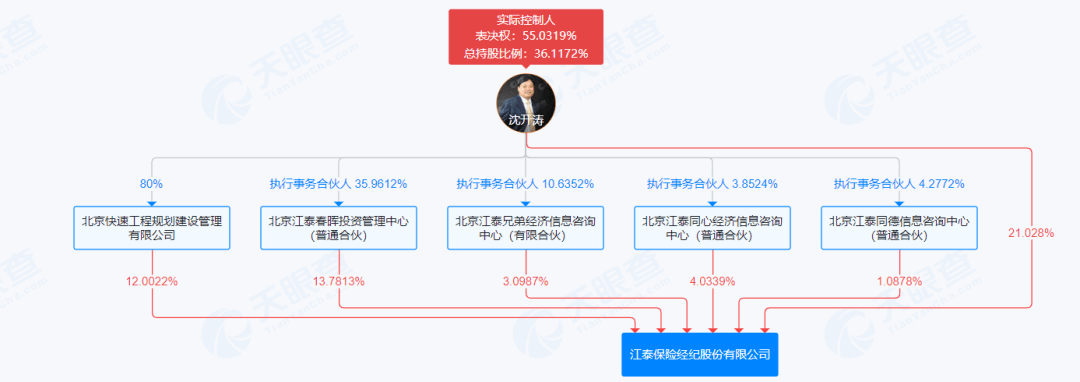
Core Viewpoint - Jiangtai Insurance Brokerage Co., Ltd. is facing uncertainty due to the suspected disappearance of its chairman, Shen Kaitao, which has raised concerns about the company's future and its operational stability [1][2]. Group 1: Company Background and Development - Jiangtai Insurance Brokerage, founded by Shen Kaitao in June 2000, is recognized as the first official insurance brokerage company in China, marking the beginning of professional brokerage services in the domestic insurance market [3][4]. - Shen Kaitao, often referred to as the "pioneer" of the insurance brokerage industry, has established multiple industry benchmarks, including the first risk management research institute and a comprehensive risk database [3][4]. - The company has a registered capital of 215 million yuan, with Shen holding a 36.12% stake and 55.03% voting rights [7]. Group 2: Challenges and Setbacks - Jiangtai's IPO aspirations were thwarted when the China Securities Regulatory Commission (CSRC) terminated its application for public offering in August 2021 due to failure to address regulatory feedback [11][12]. - Following the failed IPO, the company's performance began to decline, with revenues dropping from 12.25 billion yuan in 2020 to 11.79 billion yuan in 2024, and net profits decreasing from 8.48 million yuan to 3.49 million yuan in the same period [14]. - The company has been forced to adopt a "downsizing" strategy, closing 36 branches over three years, which has also led to a reduction in the number of insured clients [15]. Group 3: Industry Context and Future Outlook - The insurance brokerage industry is experiencing increased competition and regulatory scrutiny, with commission levels dropping by approximately 30% due to new policies, impacting revenue streams for companies like Jiangtai [15][17]. - Jiangtai has established partnerships with 32 insurance companies, utilizing online platforms for product sales and brokerage services, indicating a shift towards digitalization in response to market pressures [17][18]. - The future of Jiangtai Insurance Brokerage hinges on whether its leadership can navigate the challenges posed by market competition and regulatory changes, as well as the evolving landscape of the insurance industry [18].
阳光保险20251202
2025-12-03 02:12
Summary of Sunshine Insurance Conference Call Company Overview - **Company**: Sunshine Insurance - **Focus**: Insurance industry, specifically life insurance and investment strategies Key Points Industry and Market Position - Sunshine Insurance aims to maintain its market share and ranking in the bancassurance channel for 2026, while targeting positive growth in the individual insurance channel with a premium growth rate close to 10% to support new business value [2][5] - The company has initiated a transformation towards dividend insurance, expecting a significant increase in its proportion by 2026, while promoting a diversified sales strategy [2][7] Sales and Growth Strategies - The 2026 "opening red" strategy will focus on diversification, particularly favoring protection products, and guiding agents towards varied sales approaches [2][8] - Individual insurance channel sales on the first day of the 2026 opening red reached 300 million yuan, with a year-on-year growth rate of approximately 20% to 30% [3] Financial Performance and Projections - Sunshine Insurance's asset duration is 12.4 years, while the liability duration is between 18 to 19 years, with an effective duration of about 16 years [2][10] - The gap between asset and liability durations is estimated to be 6 to 7 years based on modified duration, and 3 to 4 years based on effective duration [11] Regulatory Impact - The recent personal insurance expense allocation guidelines are not expected to significantly impact Sunshine Insurance, as the company has always adhered to refined management and reasonable allocation principles [12] - The integration of the "reporting and operation in unison" policy is anticipated to have a short-term impact on premium growth but is expected to improve profitability in the long run [18][19] Investment Strategy - Over 60% of investment assets are placed in OCI accounts, including 84 billion yuan in secondary market stocks, which account for 14.1% of total investment assets [21] - The average dividend yield of the high-dividend strategy portfolio is projected to be between 5.5% and 5.8% [24] Challenges and Opportunities - The bancassurance channel faces increased competition following the removal of the 1+3 outlet restriction, but Sunshine Insurance plans to enhance its professional team's capabilities to improve productivity [15] - The company is currently experiencing slight losses in its new energy vehicle insurance segment but aims to achieve breakeven in household new energy models by increasing its market presence [20] Future Outlook - Sunshine Insurance expects interest rates to remain low and stable in the near term, which will influence its investment strategies, particularly in long-term bonds [26] - The company plans to maintain a stable dividend growth strategy, reflecting its commitment to shareholder returns while considering development needs and solvency [28] Additional Insights - The return of dividend-type critical illness insurance is seen as a positive development for sales of protection products, as traditional critical illness insurance has become less attractive due to lower preset interest rates [6] - Sunshine Insurance has begun a comprehensive transformation towards dividend insurance, with a significant increase in its proportion in new business structures [7] This summary encapsulates the key insights from the Sunshine Insurance conference call, highlighting the company's strategies, financial performance, regulatory impacts, and market outlook.
新华保险20251202
2025-12-03 02:12
Summary of Xinhua Insurance Conference Call Company Overview - **Company**: Xinhua Insurance - **Focus**: Life insurance, particularly dividend insurance products Key Points Industry and Market Dynamics - **Focus on Dividend Insurance**: In 2026, Xinhua Insurance will prioritize the sale of dividend insurance products, while 2025 will focus on traditional products [2][3] - **Bank Insurance Channel Preparation**: The bank insurance channel is actively preparing for growth, including channel expansion and product development to address high growth challenges [2][3] - **Impact of Regulatory Changes**: The shift to a unified reporting system (报行合一) has a significant impact on the bank insurance channel, while the individual insurance channel is less affected [2][8] Sales and Product Strategy - **Sales Performance**: The company has initiated pre-sales for the individual insurance channel, with initial data meeting expectations [3][5] - **Product Strategy Shift**: The individual insurance channel will shift focus to dividend insurance in 2026, while traditional products dominate in 2025 [3][5] - **Dividend Insurance Transition**: As of the latest reports, dividend insurance accounted for approximately 12% of new policies, with over 70% in the marketing channel by Q3 [2][11] Financial Performance and Investment Strategy - **Investment Returns**: Strong investment returns over the past two years have laid a foundation for the dividend realization rate, aiding acceptance of dividend products by banks and clients [2][6] - **Core Equity Asset Allocation**: The company maintains a high level of core equity asset allocation, with plans to consider further increases based on market conditions, though space for significant increases is limited [4][15] Competitive Landscape - **Increased Competition**: The removal of the 1+3 outlet restriction has intensified competition in the bank insurance sector, but it is seen as beneficial for larger companies like Xinhua Insurance [2][10] - **Expansion Plans**: The company plans to increase the number of outlets and enhance internal team capabilities to drive growth in 2026 [11] Regulatory and Policy Considerations - **Expense Management**: The company is optimizing back-office expenses to support front-end sales and agent commissions, ensuring stable overall value contribution [8][9] - **Future Profitability**: The individual insurance channel is expected to adapt well to the unified reporting policy, with limited impact on profitability compared to the bank insurance channel [9] Health Insurance Product Development - **New Product Research**: The company is exploring dividend-based critical illness insurance to enhance the attractiveness of health insurance products [4][12] Short-term Payment Strategy - **Short-term Payment Focus**: Short-term payment strategies have been a significant resource investment, with plans to maintain stable investment levels in 2026 [13] Long-term Investment Outlook - **Investment Yield Expectations**: The company anticipates a long-term investment yield of around 4%, with current market conditions exerting downward pressure on net investment income [22][23] Dividend Policy Considerations - **Dividend Policy Framework**: The specific dividend policy will be determined post-annual report, typically based on net profit ratios and other financial considerations [25] Tax and Accounting Standards - **Tax Treatment**: The company applies new accounting standards for tax calculations, which may differ from actual tax payments based on old standards [27] This summary encapsulates the key insights from the conference call, highlighting the strategic direction, market challenges, and financial outlook of Xinhua Insurance.