板块配置

Search documents
股降债升,板块偏向创业板:公募基金2025年四季报剖析
Xiangcai Securities· 2026-02-10 11:50
1. Report Industry Investment Rating - No relevant content provided. 2. Core Viewpoints - In 2025, the number and scale of existing public - funds increased, and the ETF market was much more popular. The new - issuance quantity and share of ETFs increased significantly, with annual growth rates of 114.79% and 119.10% respectively, far exceeding the 37.00% increase in the total number and - 0.69% change in the total share of public funds [2][17]. - In Q4 2025, stock - type, bond - type, and hybrid - type funds generally showed a decrease in stock positions and an increase in bond positions. Public funds shifted from Hong Kong stocks and the Science and Technology Innovation Board to the Growth Enterprise Market [3]. - In Q4 2025, the industries with a relatively large increase in the active position - adjustment ratio were non - banking finance, non - ferrous metals, and communications, while those with a relatively large decrease were electronics, media, and biomedicine. There was an obvious shift from growth and consumption styles to the cyclical style [4]. - Since 2025, the scale of FOF funds has increased against the trend, and the proportion of bond - type funds in the top - five heavy - position funds of FOF in the Q4 2025 report is relatively high [6]. 3. Summary by Directory 3.1 Public Fund Market Overview 3.1.1 Fund Market Composition and Issuance - As of the end of Q4 2025, there were 13,618 public funds in the market, with an increase of 1,259 this year. In terms of quantity, they were mainly composed of hybrid, bond, and stock - type funds, accounting for 35.33%, 29.32%, and 25.33% respectively. The total scale was 37.67 trillion yuan, an increase of 4.84 trillion yuan compared to the end of 2024, with a 12.85% increase in Q4 2025. In terms of scale, they were mainly composed of money - market, bond, and stock - type funds, accounting for 39.84%, 29.50%, and 16.06% respectively [14]. - From 2021 to 2025, the number and share of newly - issued public funds showed a downward trend, but they increased in 2025. In Q4 2025, 406 public funds were newly issued, with a total issuance share of 280.081 billion shares. In terms of quantity, stock - type funds accounted for 47.29%, and in terms of share, stock - type and bond - type funds accounted for 31.70% and 31.24% respectively [15]. - In 2025, the new - issuance volume and share of ETFs increased significantly. In Q4 2025, the quarterly growth rates of the cumulative number and share of ETFs were 5.81% and 12.17% respectively, exceeding the 2.38% and 3.15% growth rates of public funds. The annual growth rates of the new - issuance quantity and share of ETFs in 2025 were 114.79% and 119.10% respectively, far higher than those of public funds [17]. 3.1.2 Investor Structure - According to the semi - annual report of public funds in 2025, the proportion of institutional holders changed little compared to 2024. The increase in the proportion of institutional investors was mainly reflected in QDII funds and hybrid - type funds, while the proportion of institutional investors in bond - type and hybrid funds increased slightly. The proportion of individual investors increased mainly in alternative investment funds and FOF funds, and also increased in money - market funds [20]. - As of mid - 2025, the holding net values of institutional and individual investors were 16.51 trillion yuan and 17.71 trillion yuan respectively, accounting for 48.25% and 51.75%. Since H2 2017, the proportion held by individual investors has been slightly higher than that by institutional investors [23]. 3.2 Stock - type Funds 3.2.1 Q4 Position Changes - In Q4 2025, compared with Q3, stock - type, bond - type, and hybrid - type funds generally showed a decrease in stock positions and an increase in bond positions, while FOF funds increased their stock positions, mainly in stock - type FOF funds, with an increase of 1.83 pct [25]. - The stock positions of four types of active funds (partial - stock hybrid, flexible allocation, common stock, and balanced hybrid) decreased, and their positions in Hong Kong stocks also decreased, but their bond positions increased [27][28]. 3.2.2 Sector Allocation - In Q4 2025, public funds shifted from Hong Kong stocks and the Science and Technology Innovation Board to the Growth Enterprise Market. The allocation market value of the Growth Enterprise Market increased by 2.65%, and the allocation ratio increased by 1.98%, reaching 18.61% at the end of Q4, second only to the main board [37]. 3.2.3 Industry and Style Allocation - In Q4 2025, 16 Shenwan primary industries had an increase in the active position - adjustment ratio, and 15 had a decrease. The industries with a relatively large increase were non - banking finance, non - ferrous metals, and communications, while those with a relatively large decrease were electronics, media, and biomedicine [43]. - There was an obvious shift from growth and consumption styles to the cyclical style in Q4 2025. The cyclical style had the largest increase in market - value proportion after removing the passive increase caused by the increase in Q4, with an active position - adjustment ratio increase of 2.06% [48]. 3.2.4 Individual Stock Allocation - As of the end of Q4 2025, the top 3 stocks in terms of market value of shares held were Zhongji Innolight, Xinyisheng, and Contemporary Amperex Technology, and the top 3 in terms of the proportion of market value of shares held to the floating market value were BeiGene - U, Reagent Biotech, and Ninebot Inc. - WD [4][49]. - In Q4 2025, the top 3 stocks with active position - increases were Ping An Insurance (Group) Company of China, Shandong Precision, and Tianhua New Energy, and the top 3 with active position - decreases were Foxconn Industrial Internet, Alibaba Group Holding Limited, and Semiconductor Manufacturing International Corporation [4]. 3.3 Bond - type Funds - As of the end of Q4 2025, there were 3,993 bond - type funds, an increase of 57 compared to the previous quarter, with a total scale of 11.11 trillion yuan, an increase of 373.431 billion yuan compared to the previous quarter. The increase in the scale was mainly due to the increase in the scale of passive index - type bond funds and hybrid bond - type secondary funds [63]. - In Q4 2025, except for convertible bond - type funds and enhanced index - type bond funds, the durations of other types of bond - type funds changed little. The durations of mixed - level - 1 bonds, mixed - level - 2 bonds, medium - and long - term pure - bond funds, and partial - bond hybrid funds showed a downward trend in the second half of 2025 after reaching a historical high at the end of Q2 2025 [5]. 3.4 FOF Funds - Since 2025, the scale of FOF funds has increased against the trend. In Q4 2025, the total scale of FOF funds increased by 50.699 billion yuan, with a faster growth rate than in Q3. The top 3 FOF funds in terms of scale proportion were partial - bond hybrid, partial - stock hybrid, and target - date FOF funds, accounting for 60.92%, 14.50%, and 11.01% respectively [70]. - Among the 43 FOF funds issued in Q4 2025, 41 were hybrid - type FOF funds. E Fund Ruyi Ying'an 6 - month Holding A had the largest issuance share of 3.164 billion shares [71]. - According to the top - ten heavy - position funds of FOF funds in the Q4 2025 report, the top - five heavy - position funds were all bond - type funds, and most of the FOF heavy - position funds were bond - type funds, with Haifutong CSI Short - term Financing Bond ETF having the highest total holding market value of 5.976 billion yuan [76].




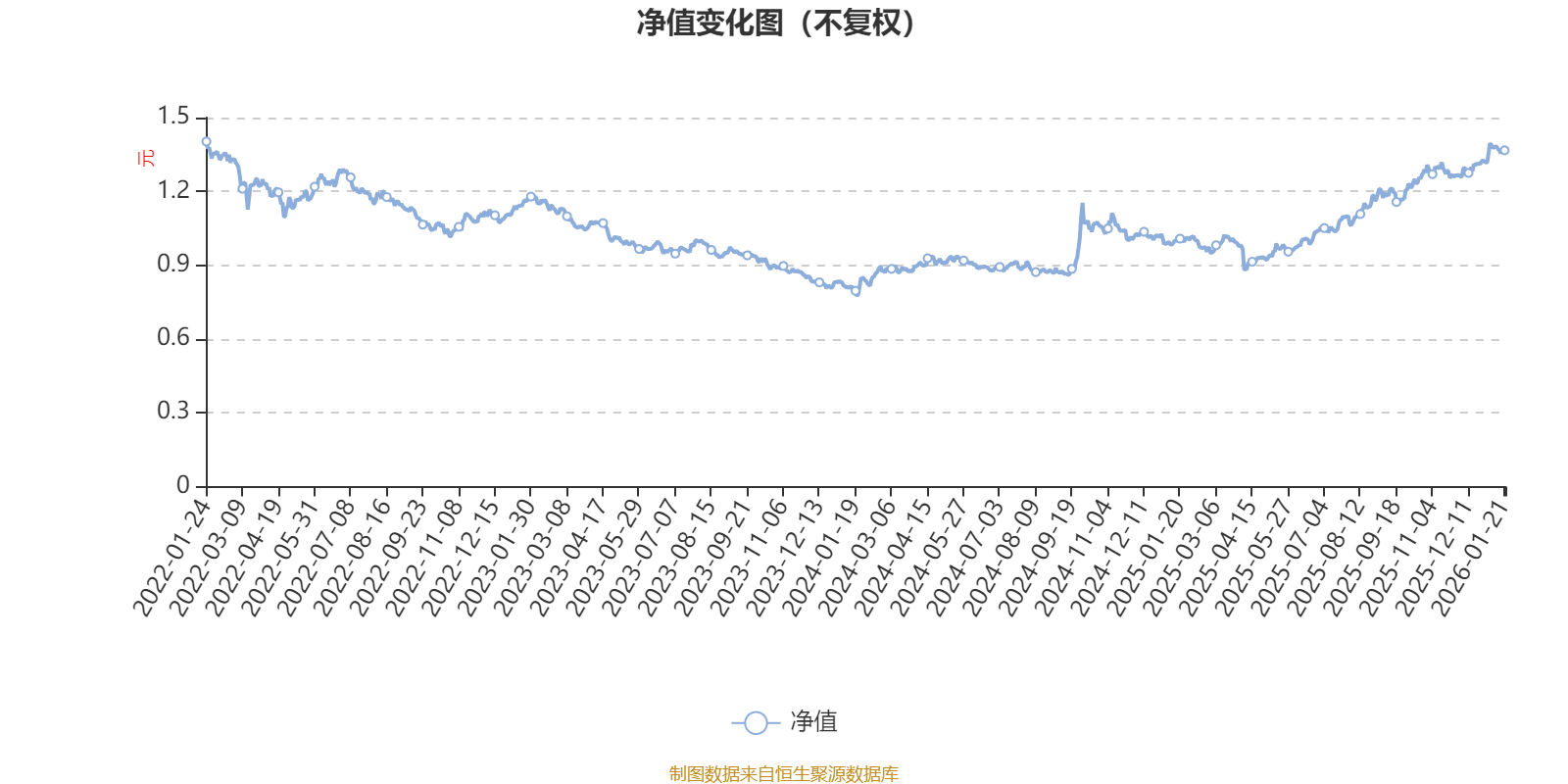
华安红利精选混合A:2025年第四季度利润1641.2万元 净值增长率9.39%
Sou Hu Cai Jing· 2026-01-24 09:56
Core Viewpoint - The AI Fund Huashan Hongli Selected Mixed A (005521) reported a profit of 16.41 million yuan for Q4 2025, with a net value growth rate of 9.39% during the reporting period, and a total fund size of 189 million yuan by the end of Q4 [2][17]. Fund Performance - As of January 21, the unit net value of the fund was 1.367 yuan, with a one-year cumulative net value growth rate of 36.22%, ranking 348 out of 613 comparable funds [4]. - The fund's performance over different periods includes a three-month growth rate of 8.76% (307/621), a six-month growth rate of 27.41% (257/621), and a three-year growth rate of 15.69% (272/535) [4]. Investment Strategy - The fund management indicated a strategy of reducing holdings in the already appreciated non-ferrous metal sector while increasing positions in select stocks within the chemical, travel, and consumer sectors. They continue to hold non-bank financials and shipbuilding sectors, which are viewed positively and not overvalued [3]. - The management noted that while non-ferrous metals saw significant price increases due to expectations of overseas liquidity easing, the valuations had risen to high levels, making future price movements difficult to predict. Conversely, sectors related to domestic demand are currently undervalued, presenting high potential for profit and valuation increases once market expectations shift [3]. Risk and Return Metrics - The fund's Sharpe ratio over the past three years is 0.6077, ranking 200 out of 526 comparable funds [10]. - The maximum drawdown over the past three years was 34.43%, with the largest single-quarter drawdown occurring in Q1 2022 at 23.47% [12]. Portfolio Composition - The fund has a high concentration of holdings, with the top ten positions including China Pacific Insurance, China Life Insurance, China Galaxy Securities, China Shipbuilding Industry, Midea Group, Southern Airlines, Huatai Securities, Focus Media, Ping An Insurance, and Baofeng Energy as of Q4 2025 [21]. - The average stock position over the past three years was 90.89%, with a peak of 93.16% at the end of H1 2025 and a low of 81.7% at the end of Q1 2021 [15].

吃喝板块逆市显韧性!细分行业涨跌互现,食品ETF(515710)微跌报收!机构:白酒或进入布局阶段
Xin Lang Ji Jin· 2025-10-30 11:26
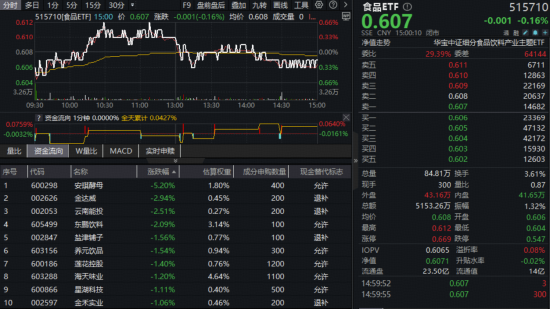
Group 1 - The food and beverage sector demonstrated resilience amid market corrections, with the Food ETF (515710) showing a maximum intraday increase of 0.66% before closing down 0.16% [1] - Major consumer goods stocks experienced declines, with Angel Yeast falling by 5.2%, and other companies like Jindawei and Yunnan Energy Investment dropping over 2% [1] - Conversely, some liquor stocks performed well, with Wujiafen Liquor rising by 2.59%, and other brands like Yanghe and Shanxi Fenjiu also showing significant gains [1] Group 2 - Kweichow Moutai reported a total revenue of 130.9 billion yuan for Q3 2025, reflecting a year-on-year growth of 6.3%, and a net profit of 64.63 billion yuan, up 6.2% [2][3] - The Q3 results indicated a slight revenue increase of 0.3% and a net profit growth of 0.5% compared to the previous year [2][3] - Analysts suggest that the liquor industry is showing signs of bottoming out, indicating a potential phase for investment, particularly in stable-performing high-end liquor brands [4] Group 3 - The food and beverage sector's valuation remains low, with the food ETF's underlying index PE ratio at 19.99, placing it in the 4.7% percentile of the last decade, suggesting a favorable long-term investment opportunity [3] - The food ETF (515710) primarily invests in leading high-end and mid-range liquor stocks, with approximately 60% of its portfolio allocated to these segments [5] - Investors can also consider food ETF linked funds to gain exposure to core assets in the food and beverage sector [5]

公募基金2025年三季报全扫描【国信金工】
量化藏经阁· 2025-10-29 00:08
Fund Position Monitoring - The median position of ordinary equity funds is 91.98%, and for mixed equity funds, it is 91.33%, showing an increase compared to the previous quarter. The current positions are at historical percentiles of 98.41% and 100% respectively [1][6][11] - The average Hong Kong stock allocation for ordinary equity funds is 13%, and for mixed equity funds, it is 17.11%, both slightly increased from the previous quarter. The number of funds allocating to Hong Kong stocks is 241 for ordinary equity funds and 1,671 for mixed equity funds, accounting for 59.55% of the total [1][11][9] Fund Holding Concentration Monitoring - The proportion of heavy-weight stocks in equity allocation is 54.96%, up from 52.46% in the previous period, indicating a significant increase in concentration. The total number of stocks held by fund managers decreased to 2,377 from 2,507, suggesting reduced diversity in holdings [10][1][6] Sector Allocation Monitoring - The main board allocation weight is 47.54%, the ChiNext board is 19.29%, the Sci-Tech Innovation board is 13.91%, and Hong Kong stocks are 19.26%. The main board weight has decreased significantly, while the ChiNext and Sci-Tech boards have increased [21][24] - The technology sector saw a substantial increase in allocation, rising by 12.97% to a historical high of 50.51%. In contrast, the consumer and financial sectors saw significant reductions of 6.08% and 3.48%, respectively, reaching historical lows [24][27] Industry Allocation Monitoring - The top three industries by allocation weight are electronics (23.93%), electric power equipment and new energy (10.27%), and pharmaceuticals (9.81%). The industries with the most active increases in allocation are communication, computer, and electronics, with increases of 2.93%, 1.97%, and 1.85% respectively [26][27][28] Individual Stock Allocation Monitoring - The three stocks with the highest absolute market value allocation are Ningde Times (740 billion), Tencent Holdings (682 billion), and Xinyi Technology (559 billion) [31][32] Performance Fund and Billion Fund Industry Allocation Monitoring - The top three industries allocated by performance funds are electronics (41.18%), communication (38.25%), and computer (8.57%). For billion-scale funds, the top three industries are electronics (26.6%), pharmaceuticals (13.97%), and food and beverage (11.41%) [35][36]


公募基金2025年三季报分析:三季度持股集中度明显提升,科技板块配置权重超50%
Guoxin Securities· 2025-10-28 12:00
- The report does not contain any quantitative models or factors for analysis
三季报在即,把握板块配置机遇
Changjiang Securities· 2025-10-12 23:30
Investment Rating - The report maintains a "Positive" investment rating for the industry [9] Core Insights - The upcoming Q3 reports are expected to show continued high growth in brokerage performance, enhancing the sector's allocation value. The insurance sector reflects a trend of deposit migration, increased equity allocation, and improved new policy costs, leading to a higher certainty of long-term ROE improvement and accelerated valuation recovery. Overall, the cost-effectiveness of allocations is gradually increasing [2][6] - Recommendations include companies with stable profit growth and dividend rates such as Jiangsu Jinzu, China Ping An, and China Pacific Insurance, as well as firms with significant advantages in business models and market positions [6] - The report recommends specific stocks including Xinhua Insurance, China Life, Hong Kong Stock Exchange, CITIC Securities, Dongfang Wealth, Tonghuashun, and Jiufang Zhitu Holdings based on performance elasticity and valuation levels [2][6] Market Performance - The non-bank financial index increased by 0.5% last week, with a relative excess return of +1.0% compared to the CSI 300, ranking in the middle of the industry [7] - Year-to-date, the non-bank financial index has risen by 7.4%, but with a relative excess return of -9.9% compared to the CSI 300, indicating a lower ranking [7] - The average daily trading volume in the market has increased to 26,029.82 billion yuan, up 18.98% week-on-week, with a daily turnover rate of 2.71%, up 42.99 basis points [7] Key Industry News & Company Announcements - The China Banking and Insurance Regulatory Commission issued a notice on strengthening the regulation of non-auto insurance business [8] - China Pacific Insurance's Chief Actuary Zhang Yuanhan has resigned [8]