
欧洲制造

Search documents
摩洛哥高度关注欧盟“欧洲制造”汽车新规走向
Shang Wu Bu Wang Zhan· 2026-02-28 02:31
Group 1 - The EU is planning to introduce new regulations linking public subsidies to the local manufacturing ratio of products in Europe, particularly in the automotive sector, where electric vehicles must have a 70% localization ratio for parts (excluding batteries) to qualify for subsidies [1] - This initiative is part of the Industrial Accelerator Act (IAA) framework, aimed at strengthening local supply chains and reducing reliance on external sources [1] - The announcement of the related proposal has been delayed from February 26 to March 4 due to internal disagreements on the geographical definition of "European manufacturing," indicating potential adjustments to the legislation [1] Group 2 - The European public subsidy policy is increasingly emphasizing local added value, with stricter environmental regulations leading automotive companies to focus investments on electric platforms, battery systems, and smart technologies [2] - Morocco's automotive industry is deeply integrated into the European supply chain, making its performance highly dependent on European market demand and policy changes, with signs of a year-on-year decline expected by 2025 [2] - If the "European manufacturing" standards tighten further and are linked to subsidy eligibility or market access, Moroccan automotive manufacturers may face risks of order migration and slowed new investments, impacting local employment stability and economic growth [2]
欧洲钢铁业怒斥“产能过剩” 推进低碳钢纳入“欧洲制造”
Zhi Tong Cai Jing· 2026-02-26 08:16
Core Viewpoint - The European steel industry is advocating for the inclusion of steel in the EU's upcoming regulations prioritizing the use of locally manufactured materials, with a narrow definition of "local" focusing primarily on EU member states and closely integrated neighboring countries like the UK and Norway [1][2]. Group 1: EU Regulations and Definitions - The EU plans to introduce the "Industrial Accelerator Act" next Wednesday, which will mandate the prioritization of locally manufactured products when using public funds [1]. - The focus on "European manufacturing" aims to cover key strategic industries, including batteries, solar and wind energy, hydrogen production, nuclear energy, and electric vehicles, although it remains unclear if low-carbon steel will be included [1]. - The definition of "local" may also encompass Norway, Iceland, and Liechtenstein, which are members of the EU single market and share similar internal market rules [2]. Group 2: Industry Perspectives - Axel Eggert, Director General of Eurofer, supports including countries with similar systems to the EU, such as the UK, but opposes including all Free Trade Agreement (FTA) countries due to concerns over excess capacity and differing decarbonization efforts [2][5]. - The steel industry is concerned that broadening the definition of "local" to include all FTA countries could undermine the effectiveness of policies aimed at promoting EU steel decarbonization and combating global overcapacity [5]. - Eggert noted that many other trading partners, including India, China, and the US, prioritize local products, but emphasized that the current discussion is specifically about low-carbon steel [4].
法国总统马克龙呼吁欧盟进行重大调整
Jin Rong Jie· 2026-02-10 18:55
Core Viewpoint - French President Macron calls for significant adjustments within the EU, warning that the continent is facing a "Greenland moment," signaling the need for countries to prepare for a challenging global environment and potential hostility from the U.S. [1] Group 1: Strategic Initiatives - Macron advocates for a "European manufacturing" strategy aimed at strengthening key areas such as defense, technology, and energy [1] - He urges EU member states to increase domestic investments to reduce reliance on external partners [1] Group 2: Economic and Financial Strength - Macron supports the idea of increased joint borrowing and collective investment to enhance Europe's economic and financial power [1]
6年损失近万亿欧元,德国反思竞争力:解决结构性缺陷,反对“筑贸易壁垒”
Huan Qiu Shi Bao· 2026-02-09 22:53
Core Insights - Germany's economy has suffered significant losses due to multiple crises since 2020, totaling nearly €1 trillion, driven by the pandemic, the Russia-Ukraine conflict, and tariff disputes [1][2] - The economic outlook remains bleak, with only a slight projected growth of 0.2% in 2025, overshadowed by stagnant labor markets and an unclear export future [1][4] Economic Losses - The estimated economic loss for Germany, adjusted for inflation, reached €940 billion from 2020 to 2025, with €1,850 billion lost in 2020 alone due to the pandemic [2] - The economic losses in 2022 were approximately €850 billion, with subsequent losses of €1,400 billion and €2,000 billion in the following years [2] - A quarter of the total losses occurred in the past year, with the peak loss projected at €2,350 billion in 2025 [2] Employment Impact - The crises have resulted in an average loss of over €20,000 per employed person, equating to about one-fifth of their annual economic output [3] Structural Challenges - To regain economic leadership, Germany must address structural issues such as high energy prices, rising social insurance costs, and bureaucratic inefficiencies [3] Export and Trade Dynamics - Despite a slight increase in exports by 1% in 2025, challenges remain due to U.S. tariff policies, euro appreciation, and intensified international competition [4] - Germany's exports of automobiles, machinery, and chemical products are expected to decline, highlighting ongoing structural weaknesses in the export sector [4] Policy Responses - Germany opposes the EU's plan to prioritize public procurement for European companies, arguing that competitiveness cannot be built through isolationist measures [5][6] - The German government advocates for a "Made with Europe" strategy, emphasizing collaboration with reliable global partners rather than erecting trade barriers [6]
马克龙如愿!欧盟敲定900亿欧元援乌贷款,乌需优先购买欧洲武器
Sou Hu Cai Jing· 2026-02-05 08:38
Core Viewpoint - The European Union has reached an agreement to provide Ukraine with a loan of €90 billion to meet its fiscal and military needs for 2026 and 2027, with the first payment planned for early April to prevent a sudden drop in foreign aid [1][5] Group 1: Loan Structure and Funding - The €90 billion loan will be raised through the issuance of common bonds, with the EU budget serving as collateral for investors [3] - The loan is divided into two main components: €30 billion for budget support and €60 billion for military assistance, with the possibility of changing this ratio if the war ends [3] Group 2: Member States' Contributions and Exemptions - Hungary, Slovakia, and the Czech Republic will be fully exempt from all financial obligations, including annual interest payments, despite previously opposing additional aid to Ukraine [3] - The remaining 24 member states are expected to contribute between €2 billion and €3 billion annually to cover related costs [3] Group 3: Procurement and Conditions - The procurement of weapons and ammunition will follow a "tiered distribution principle," prioritizing purchases from Ukraine, EU countries, Iceland, Liechtenstein, Norway, and Switzerland, with the option to source from the US if necessary [3] - The loan disbursement will be gradual and subject to strict conditions, including the suspension of aid if Ukraine regresses in anti-corruption efforts [4] Group 4: Repayment Terms - Ukraine will only need to repay the €90 billion if Russia ceases its invasion and agrees to compensate for the damages caused, with Brussels expecting repayment to be indefinitely postponed due to Russia's refusal to consider compensation [4] Group 5: Approval Process - The legal text agreed upon still requires approval from the European Parliament, which has committed to expedite the review process, aiming for the first payment in early April as requested by Kyiv [5]

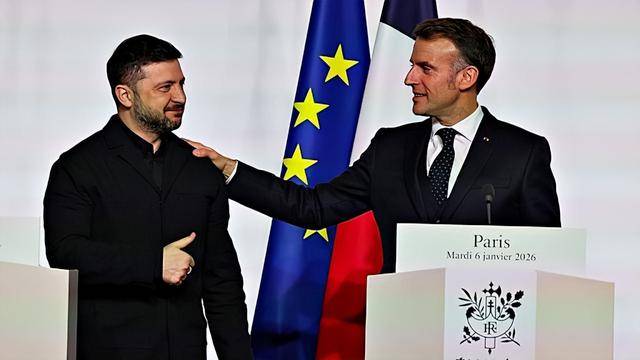
欧盟委员会“欧洲制造”战略引发分裂
Huan Qiu Shi Bao· 2026-02-03 22:57
Group 1 - The article emphasizes the need for a robust and pragmatic industrial policy in Europe to protect its industries, advocating for a "European manufacturing" strategy to establish true European priorities in strategic sectors [1] - The upcoming "Industrial Accelerator Bill" aims to promote decarbonization in energy-intensive industries and strengthen European manufacturing, although it has led to disagreements among EU member states [1][2] - The article highlights that over 1,100 CEOs and business leaders, including those from major companies like ArcelorMittal and Sanofi, have signed in support of this initiative, but the automotive sector is notably absent due to concerns over the narrow definition of "European manufacturing" [2] Group 2 - There is a lack of consensus within the EU regarding the specific local manufacturing percentage required by the new bill, with potential options ranging from 60% to 80% [2] - Several EU member states, including France, strongly advocate for the "European manufacturing" strategy, while others like Sweden and the Czech Republic warn that local product purchasing requirements could hinder investment and increase government tender prices [2] - The analysis indicates that Europe is already leading in setting stricter environmental standards, which has raised production costs, and the new law may further exacerbate these costs [3]
想要减少“对外依赖”,却恐增加企业成本,欧盟拟对“欧洲制造”设本地含量标准
Huan Qiu Shi Bao· 2025-12-04 22:51
Core Viewpoint - The EU is planning an ambitious industrial policy that sets a local content standard of up to 70% for key products like automobiles, aiming to reduce external dependencies, but this has sparked internal disagreements due to concerns over increased costs and competitiveness [1][2]. Group 1: Local Content Standards - The proposed "Industrial Accelerator Law" is expected to be officially announced on December 10, with incentives such as government subsidies tied to local content standards for products like electric vehicle batteries [2]. - Some EU officials express concerns that high local content requirements could lead to increased costs for manufacturers, potentially exceeding 10 billion euros annually [2][3]. Group 2: Employment and Industry Protection - Measures aimed at promoting "European manufacturing" are intended to prevent significant job losses in the manufacturing sector, particularly in the automotive industry, which is facing challenges due to uneven transitions to electric vehicles [3]. - The French government is advocating for moderate protection of the automotive sector, acknowledging the vulnerability of component suppliers to foreign competition [3]. Group 3: Supply Chain and Recycling Initiatives - The EU is also focusing on securing the supply of critical raw materials by limiting the export of rare earth and recyclable battery waste starting in 2026, as part of the REsourceEU plan [5]. - The EU aims to meet over 65% of its critical raw material needs independently, with projections indicating that recycling efforts could support the production of 200,000 electric vehicle battery packs annually [5]. Group 4: Industry Competitiveness - Factors contributing to the decline in European industrial competitiveness include rising operational costs due to energy supply decoupling from Russia and diminishing advantages in labor costs and technology [4]. - Industry experts suggest that Europe should adopt a more open and collaborative approach to economic issues, avoiding the politicization of trade and security matters [6].
报道:欧盟推动关键商品“70%欧洲制造”标准,企业年成本恐增超100亿欧元
Hua Er Jie Jian Wen· 2025-12-03 06:46
Core Points - The EU is planning an ambitious industrial policy that sets a local content standard of up to 70% for key products like automobiles, aiming to prioritize domestic goods and reduce external dependencies [1][2] - The proposal, known as the "Industrial Acceleration Law," is expected to be announced on December 10 and will be led by EU Commissioner Stéphane Séjourné, reflecting France's long-standing push for domestic production [1][2] - The policy is designed to provide government subsidies and public procurement incentives, with only vehicles meeting the local content benchmark eligible for government support [1][2] Group 1 - The local content threshold may reach 70%, but specific targets will vary based on the industry's criticality and dependency [2] - The automotive sector will be a primary focus, with incentives only for vehicles that meet the local content standards [2] - The policy will also analyze the EU's production capacity for each component, with potential requirements for solar panel inverters to achieve basic European manufacturing [2] Group 2 - There are concerns that the policy could impose significant financial burdens on companies, potentially increasing costs by over €10 billion annually for EU firms [4] - Officials worry that European-made products may be significantly more expensive than Asian imports, which could lead to higher costs for businesses and loss of market competitiveness for certain products [4][5] - The EU's heavy industries, including steel, are struggling to maintain profit margins against cheap Asian imports, exacerbated by high energy prices and tariffs [5]
“迄今最大反击”,盟友报复特朗普“竖中指”:要拒买F35
Guan Cha Zhe Wang· 2025-08-14 10:38
Core Viewpoint - The article discusses the growing frustration among U.S. allies regarding the Trump administration's tariffs and defense spending threats, leading to significant repercussions for U.S. defense contractors, particularly the F-35 fighter jet program [1][5]. Group 1: Impact on Defense Contracts - Spain has abandoned a multi-billion dollar F-35 procurement plan due to disputes over NATO's defense spending targets and U.S. tariffs [1][3]. - Switzerland is facing pressure to cancel its F-35 order, which is valued at approximately $15 billion, due to the impact of U.S. tariffs and rising costs [3][5]. - India is reportedly planning to retaliate against U.S. tariffs by suspending its purchase of American weapons, further threatening U.S. defense sales [1][5]. Group 2: Political and Economic Implications - The actions of Spain and Switzerland reflect a broader reevaluation of defense relationships with the U.S., indicating a significant backlash against U.S. tariff policies [1][3]. - The F-35 program, produced by Lockheed Martin, relies on a global supply chain, and reduced orders could lead to increased costs per aircraft [3][6]. - The article highlights that the Trump administration's tariffs are pushing European nations towards developing their own defense capabilities, potentially undermining U.S. military sales [7]. Group 3: Responses from U.S. Officials - Former Pentagon officials express that U.S. allies feel harmed by the tariffs, which could lead to long-term damage to U.S. defense relationships [1][6]. - Lockheed Martin attempts to downplay the impact of these cancellations, citing ongoing interest from other countries like the UK, Denmark, and Belgium [5][6]. - The White House defends the tariff policy as beneficial for the U.S. military-industrial base, claiming it will generate significant revenue for American companies [5].

