汽车消费政策

Search documents
2025年二手车年度数据出炉:交易量首破2000万辆
Xin Hua Cai Jing· 2026-01-13 10:07
Core Insights - The Chinese used car market achieved a record transaction volume of 20.108 million units in 2025, marking a year-on-year growth of 2.52% and a total transaction value of 1.28979 trillion yuan [1] - December 2025 saw a monthly transaction volume of 1.8711 million units, reflecting a month-on-month increase of 7.15%, although it experienced a slight year-on-year decline of 1.53% [1] - The market demonstrated a "low in the front, high in the back" trend throughout the year, with a recovery in consumer confidence and market activity in the second half of the year [1] Market Dynamics - The inter-regional circulation of used cars significantly increased, with a transfer rate of 34.9% in December 2025, up 4.7 percentage points year-on-year, indicating enhanced commodity attributes and broader circulation [2] - The share of used new energy vehicles rose steadily, with 1.6 million units traded in 2025, accounting for 7.9% of total transactions, an increase of 2.2 percentage points from the previous year [2] - The average transaction price of used cars remained stable at 64,500 yuan in December 2025, showing slight increases both month-on-month and year-on-year, reflecting a more balanced supply-demand relationship [2] - The inventory cycle for used cars stabilized at 45 days, with dealers adopting refined inventory management strategies to enhance operational efficiency [2] Segment Performance - In the passenger car segment, basic passenger cars (sedans) accounted for 11.2595 million units sold, a slight year-on-year decline of 0.44%, while MPVs saw a notable growth of 7.36% [3] - The commercial vehicle segment emerged as a significant growth area, with total transactions of 2.8692 million units, a year-on-year increase of 7.70%, particularly driven by an 8.98% rise in light trucks [3] - The age distribution of traded vehicles showed that cars aged 3-6 years remained the primary focus, comprising 42.97% of transactions, with increases in both newer and older vehicles [3] Future Outlook - The automotive industry is expected to maintain a stable competitive order, with policies like "trade-in for new" further promoting consumption, which will create a favorable environment for the used car market [4] - The used car market is projected to continue expanding steadily, focusing on improving circulation efficiency, developing the new energy used car segment, and optimizing service operations [4]
最新数据!新能源汽车零售渗透率已达57.8%
Yang Shi Xin Wen· 2025-10-14 06:12
Core Insights - The Chinese automotive industry has experienced significant growth in multiple economic indicators in the first nine months of the year, with production and sales reaching 24.33 million and 24.36 million vehicles, respectively, representing year-on-year increases of 13.3% and 12.9% [1] - New energy vehicles (NEVs) have seen remarkable performance, with production and sales exceeding 11 million units, both growing over 30% year-on-year, and NEVs accounting for 46.1% of total new vehicle sales [1] - The export of vehicles reached 4.95 million units, marking a 14.8% increase year-on-year, with NEV exports alone soaring to 1.758 million units, a staggering growth of 89.4% [1] Policy Impact - The growth in the automotive market is largely attributed to government policies such as trade-in programs, which have effectively stimulated consumer activity and exceeded expectations [1] - It is projected that by the end of the policy period, the total number of vehicles eligible for trade-in subsidies will surpass 12 million, directly driving new car sales worth approximately 1.7 trillion yuan [1] Consumer Behavior - A significant 60% of consumers applying for trade-in subsidies opted for purchasing NEVs, indicating a strong shift towards new energy vehicles and contributing to the transformation of market dynamics [2] - Retail sales of NEVs maintained a robust growth rate of 24.4% in the first nine months, with a retail penetration rate reaching 57.8% in September, showcasing the effectiveness of national policies in guiding consumption upgrades and promoting green transformation [2]
整车管家系列:如何看待政策阶段的旺季行情
Changjiang Securities· 2025-08-19 04:43
Investment Rating - The report maintains a "Positive" investment rating for the automotive industry [12]. Core Insights - The current conditions in the automotive industry are similar to those observed from 2015 to 2017, characterized by high base pressure, policy withdrawal, and index adjustments. The "old-for-new" policy is expected to significantly support demand growth in 2024-2025, with potential for a surge in new energy vehicle sales before the end of 2025, stabilizing overall volume despite high base pressures [4][11][29]. Summary by Sections Historical Context - The automotive industry has experienced three major consumption policy phases in the last decade: 1) 2015-2017: Vehicle purchase tax exemption; 2) 2022: Vehicle purchase tax exemption; 3) 2024-2025: "Old-for-new" subsidy policy. The current conditions reflect similarities to the 2015-2017 period, including high base pressure and policy withdrawal [7][25]. 2015-2017 Insights - During 2015-2017, two phases of subsidy policies positively impacted sales growth, with wholesale sales increasing by 15% in 2016 and still achieving a 2% increase in 2017 despite high base pressure. The end of the purchase tax exemption in 2018 led to a decline in sales [8][35]. 2022 Special Context - The 2022 vehicle purchase tax exemption was short-lived, lasting only seven months, and was significantly affected by macroeconomic factors, resulting in a rare total year-on-year decline in sales by the end of the policy period [9]. 2024-2025 Policy Support - The "old-for-new" subsidy policy has been implemented three times since 2024, with significant increases in subsidy amounts leading to a 7% year-on-year sales growth from August to December 2024, and a projected 13% growth from January to June 2025. The high base pressure expected in the latter half of 2025 may stabilize overall sales volume [10][11]. Investment Recommendations - The report suggests that strong sales growth, a robust new vehicle cycle, and good performance from alpha automotive companies may lead to favorable returns, similar to the 2015-2017 period. The "old-for-new" policy is anticipated to support demand growth, with potential for new energy vehicle sales to surge before the end of 2025 [11][29].
“内卷”降温、“淡季不淡”!乘联会上调2025年度预测:零售、出口、新能源全面增长
Hua Xia Shi Bao· 2025-08-07 12:27
Core Viewpoint - The Chinese automotive market is expected to recover significantly by 2025, driven by favorable policies and improved market order, with passenger car retail growth projected at 6%, exports at 14%, and new energy vehicle wholesale growth at 27% [1][2]. Market Recovery and Growth - The China Automobile Dealers Association (CADA) has raised its 2025 automotive industry forecast due to positive trends in the first half of the year, including a 10.8% increase in total passenger car retail and a 33.3% increase in new energy vehicle retail from January to June [2][4]. - The forecast for 2025 includes a retail volume of 24.35 million passenger cars, an increase of 300,000 units from previous estimates, and a wholesale volume of 34.04 million units, reflecting an 8% year-on-year growth [1][2]. Market Order Improvement - The phenomenon of "involution" and irrational price competition has significantly decreased, with the number of discounted models rising from 50 in 2020-2022 to 147 in 2024, but only 106 in the first half of 2025, indicating a return to rational pricing [2][4]. - The automotive industry's profit margin reached 6.9% in June, a notable increase from 3.8% in June of the previous year, reflecting improved market conditions [4]. Sales Performance - In July, all nine traditional car manufacturers reported year-on-year sales growth, with BYD and SAIC Motor leading with monthly sales around 340,000 units [4][5]. - Geely Auto showed the fastest growth rate in July, with sales exceeding 237,000 units, marking a 58% increase year-on-year [5][6]. New Energy Vehicle Outlook - The forecast for new energy vehicle wholesale in 2025 is set at 15.48 million units, with a penetration rate of 56%, despite a slight decrease from previous estimates [6][8]. - In July, the wholesale volume of new energy vehicles reached 1.18 million units, a 25% increase year-on-year, with significant contributions from brands like Leap Motor and Xpeng Motors [7][8]. Export Growth - The forecast for passenger car exports in 2025 is 5.46 million units, reflecting a 14% increase, with a total increase of 160,000 units from earlier predictions [9]. - In the first half of 2025, China's automotive exports reached 3.083 million units, a 10.4% increase year-on-year, with passenger cars accounting for 84% of total automotive exports [9].





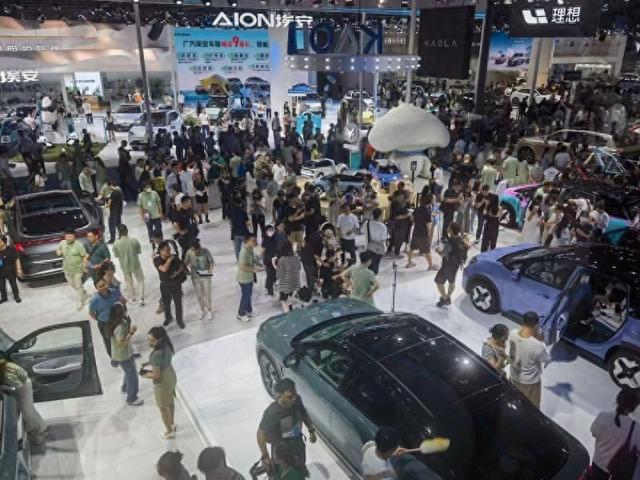
港股概念追踪 | 汽车消费政策利好不断 购车需求有望持续释放(附概念股)
智通财经网· 2025-05-07 23:29
Group 1: Policy and Market Dynamics - The Guangdong provincial government has announced measures to stimulate automobile consumption, including relaxing vehicle purchase restrictions and increasing purchase quotas [1] - The automotive industry has received strong momentum from various national and local policies aimed at boosting consumption, with first-quarter production and sales reaching 7.561 million and 7.47 million units, respectively, representing year-on-year growth of 14.5% and 11.2% [1] - New energy vehicles (NEVs) accounted for 41.2% of total new car sales, with production and sales of NEVs reaching 3.182 million and 3.075 million units, reflecting year-on-year growth of 50.4% and 47.1% [1] Group 2: Regional Promotions and Consumer Behavior - Regions such as Hunan, Fujian, and Sichuan are launching new automotive promotion policies to capitalize on the second quarter's consumption peak, enhancing subsidy details to better meet consumer needs [2] - The recent May Day holiday served as a significant opportunity for the automotive market, with several companies reporting substantial order increases, such as Hongmeng Zhixing achieving over 22,000 orders, doubling year-on-year [2] - GAC Trumpchi received 12,295 orders during the May Day holiday, a 10% increase year-on-year, while Geely Galaxy reported over 31,000 orders [3] Group 3: Company Performance and Sales Data - BYD reported April production of approximately 385,100 NEVs, a year-on-year increase of 15.28%, with total sales of about 380,100 units, up 21.34% [4] - Li Auto delivered 33,939 vehicles in April, marking a 31.6% year-on-year increase, with a cumulative delivery of 1,260,675 vehicles as of April 30, 2025 [4] - Xpeng Motors delivered 35,045 smart electric vehicles in April, a significant year-on-year growth of 273%, with total deliveries for the first four months reaching 129,053 units, up 313% [5] - NIO delivered 23,900 vehicles in April, a 53% increase year-on-year, with a total of 65,994 vehicles delivered in 2025 so far, reflecting a 44.5% growth [5]

【周度分析】车市扫描(2025年4月21日-4月27日)
乘联分会· 2025-04-30 10:21
点 击 蓝 字 关 注 我 们 本文全文共 3331 字,阅读全文约需 11 分钟 本文详细资讯可在中国汽车流通协会乘用车市场信息联席分会官网下载:www.cpcaauto.com 1.本周车市概述 乘用车: 4月1-27日,全国乘用车市场零售139.1万辆,同比去年4月同期增长10%,较上月同期下降 10%,今年以来累计零售651.8万辆,同比增长7%;4月1-27日,全国乘用车厂商批发156.9万辆,同比去年4月 同期增长10%,较上月同期下降16%,今年以来累计批发784.7万辆,同比增长11%。 新能源: 4月1-27日,全国乘用车新能源市场零售72.8万辆,同比去年4月同期增长24%,较上月同期下降 10%,全国新能源市场零售渗透率52.3%,今年以来累计零售314.8万辆,同比增长33%;4月1-27日,全国乘用 车厂商新能源批发84.6万辆,同比去年4月同期增长25%,较上月同期下降6%,新能源厂商批发渗透率53.9%, 今年以来累计批发369.5万辆,同比同期增长38%。 2.2025年4月全国乘用车零售市场平稳 | | 1-6日 | 7-13日 | 14-20日 | 21-27日 | 28- ...
国内汽车产销保持两位数增长 一季度汽车行业喜提“开门红”
Zhong Guo Chan Ye Jing Ji Xin Xi Wang· 2025-04-24 00:54
Core Viewpoint - The domestic automotive market in China has shown strong growth in the first quarter of this year, with double-digit increases in production and sales, laying a solid foundation for continued market improvement throughout the year [1][2]. Production and Sales Growth - In March, domestic automotive production and sales reached 3.006 million and 2.915 million units, respectively, marking year-on-year increases of 11.9% and 8.2% [2]. - For the first quarter, production and sales totaled 7.561 million and 7.47 million units, reflecting year-on-year growth of 14.5% and 11.2% [2]. - The growth rates for production and sales in the first quarter narrowed by 1.7 and 1.9 percentage points compared to January-February [2]. Market Dynamics - The passenger vehicle market has outperformed the commercial vehicle sector, with retail sales in March approaching the historical high levels of March 2018 [2]. - The "dual new" policies (trade-in and scrappage incentives) have positively influenced the market, leading to a more favorable competitive environment and improved retail growth in March [2][3]. Future Outlook - Experts maintain confidence in the automotive market's growth for the second quarter, supported by ongoing policy effects and promotional activities [4]. - The upcoming Shanghai International Auto Show is expected to catalyze consumer demand and further stimulate market growth [4]. - The implementation of the new scrappage policy on April 24, 2024, is anticipated to contribute to a gradual recovery in the market [4]. Policy Support - The National Development and Reform Commission and the Ministry of Finance have issued a notice to expand the scope of scrappage and trade-in subsidies for vehicles, including certain models meeting the National IV emission standards [5]. - Despite external pressures and changes in consumer sentiment, the government's policies aimed at boosting domestic demand are expected to continue to have a positive impact on the passenger vehicle market [5].
一季度新能源车产量318万辆增50% 政策利好赋能中国汽车产销两旺
Chang Jiang Shang Bao· 2025-04-13 23:59
Core Insights - The Chinese automotive market experienced significant growth in Q1 2025, with total production and sales reaching 7.561 million and 7.47 million vehicles, respectively, marking year-on-year increases of 14.5% and 11.2% [2] - The growth in the new energy vehicle (NEV) sector was particularly notable, with production and sales rising by 50.4% and 47.1% year-on-year [2][8] - The positive market performance is attributed to a series of consumer stimulus policies, enhanced consumer confidence, and a wave of new product launches [2][3] Automotive Market Performance - In the first three months of 2025, passenger vehicle production and sales totaled 6.513 million and 6.419 million units, reflecting year-on-year growth of 16.1% and 12.9% [4] - Domestic sales of passenger vehicles reached 5.241 million, up 14.5% year-on-year, while exports amounted to 1.178 million, increasing by 6.1% [4] - March 2025 saw production and sales of passenger vehicles at 2.574 million and 2.468 million, with month-on-month increases of 44.2% and 36% [4] Market Share of Domestic Brands - Domestic brands captured 68.1% of the passenger vehicle market in Q1 2025, with sales of 4.369 million units, a year-on-year increase of 28.8% [5] - In March 2025, domestic brands sold 1.629 million passenger vehicles, representing 66% of total sales, with a year-on-year growth of 22.8% [5] - The growth of domestic brands is attributed to technological innovation and improved product quality, allowing them to move up the value chain [5] Commercial Vehicle Market - The commercial vehicle sector also showed signs of recovery, with production and sales reaching 1.048 million and 1.051 million units in Q1 2025, reflecting year-on-year increases of 5.1% and 1.8% [4][6] - In March 2025, commercial vehicle production and sales were 431,000 and 447,000 units, with month-on-month increases of 35.8% and 42.8% [6] New Energy Vehicle Growth - The NEV market continued to thrive, with production and sales of 3.182 million and 3.075 million units in Q1 2025, marking year-on-year growth of 50.4% and 47.1% [8] - NEVs accounted for 41.2% of total new vehicle sales in Q1 2025, with March sales reaching 1.237 million units, a year-on-year increase of 40.1% [8] - The growth in NEVs is driven by strong demand for both pure electric and plug-in hybrid vehicles, with significant increases in sales and exports [8][9] Export Performance - Total vehicle exports reached 1.42 million units in Q1 2025, a year-on-year increase of 7.3%, with NEV exports growing by 43.9% to 441,000 units [9] - Chery and BYD led the export rankings, with Chery exporting 254,000 units and BYD 214,000 units, reflecting significant year-on-year growth [9] Future Outlook - The automotive industry is expected to maintain its growth trajectory, with a projected total sales volume of 32.9 million vehicles in 2025, representing a year-on-year increase of 4.7% [9] - NEV sales are anticipated to reach 16 million units, growing by 24.4% year-on-year, while exports are expected to hit 6.2 million units, up 5.8% [9]