
油运周期

Search documents
中信证券:霍尔木兹海峡有限通行的讨论
智通财经网· 2026-03-27 00:31
Core Viewpoint - The report from CITIC Securities indicates initial signs of "partial recovery" in the transit capacity of the Strait of Hormuz, with Iran beginning to establish a "safe corridor" for shipping through its territorial waters, anticipating a partial restoration of compliant oil tanker transit capacity [1][2]. Group 1: Current Situation and Data - Since March 1, Iranian oil exports have accounted for nearly three-quarters of the transit volume through the Strait of Hormuz, with CITIC Securities estimating that Iranian oil exports have exceeded 2 million barrels over the past 20 days, surpassing the average daily export of 1.59 million barrels projected for 2025 [2]. - In the last three days, two product tankers have passed through the Strait, with transit volumes recorded at 2, 1, 5, 7, and 3 vessels from March 20 to 24, compared to 127 vessels on February 27 [2]. - A preliminary vessel registration system has been established by the Islamic Revolutionary Guard Corps to approve safe passage for ships, with at least nine vessels reported to have used this new route [3]. Group 2: Demand and Supply Dynamics - The demand gap caused by limited transit is expected to be manageable, with a hypothetical recovery of transit volume to 40% of pre-conflict levels leading to a reduction in the actual demand gap to below 10% [4]. - The EIA data indicates that the oil shipping volume through the Strait of Hormuz is approximately 14.2 million barrels per day, with 74.6% of this oil destined for Asia [4]. - The U.S. plans to gradually release 172 million barrels of strategic oil reserves over 120 days, which could further reduce the demand gap if all were directed to the Far East [4]. Group 3: Short-term and Mid-term Outlook - In the short term, rerouting and the release of strategic reserves are expected to alleviate the oil supply gap, although the increased shipping distance may lead to longer transit times and potential congestion at ports [5]. - In the mid-term, once stable transit through the Strait of Hormuz is restored, there will be a need to replenish oil reserves that were consumed during the closure, which may support demand for oil transportation and keep VLCC rates relatively high [5].

中信证券:2026年油运企业利润有望创新高
Di Yi Cai Jing· 2026-03-27 00:21
Core Viewpoint - The report from CITIC Securities indicates a partial recovery in the traffic capacity of the Strait of Hormuz, with implications for oil transportation and pricing dynamics in the industry [1]. Group 1: Traffic and Capacity - From March 20 to 24, the number of vessels passing through the Strait of Hormuz was 2/1/5/7/3, compared to 127 vessels on February 27 [1]. - In the last three days, two product oil tankers passed through the strait, while some crude oil tankers turned off their AIS signals, leading to missing positioning data [1]. - There are initial signals of "partial recovery" in the traffic capacity of the strait [1]. Group 2: Oil Demand and Supply Dynamics - Based on previous reports, the rerouted crude oil volume through alternative ports like Fujairah and Oman is estimated to be between 6 to 7 million barrels per day [1]. - If traffic volume recovers to 40% of pre-conflict levels, the actual demand gap is expected to narrow to within 10%, considering demand replacement from the Red Sea and the Gulf of Mexico [1]. Group 3: Pricing and Profit Outlook - The marginal changes in the traffic capacity of the Strait of Hormuz are noteworthy, as short-term adjustments in supply chain methods may lead to longer shipping distances [1]. - The release of U.S. strategic reserves is anticipated to drive up the TD22 (Gulf of Mexico to China) freight rates [1]. - A partial recovery in the strait's traffic capacity could catalyze replenishment demand, potentially leading to record-high profits for oil transportation companies by 2026 [1].
中信证券:VLCC集中度提升重塑运价机制 2026年油运龙头利润有望创新高
智通财经网· 2026-03-19 00:55
Group 1 - The core viewpoint emphasizes the structural opportunities in oil transportation valuation and assets, driven by supply chain restructuring due to geopolitical conflicts [1] - The rapid expansion of Sinokor's capacity is leading to unprecedented changes in VLCC supply, forming a quasi-alliance with MSC and Trafigura, which may establish a precedent for "lay-up pricing" in the tanker market [1] - The VLCC market is relatively small compared to container and dry bulk markets, making the trends of quasi-alliance and lay-up pricing more significant and lasting in reshaping freight rate mechanisms [1] Group 2 - The report highlights the importance of the increased concentration in the VLCC market, which is expected to reshape freight rate mechanisms, with rising charter rates currently exceeding $110,000 per day [1] - The supply side of the industry is evolving from a fragmented market to a quasi-alliance structure, enhancing bargaining power significantly [1] - The geopolitical factors, such as events in Iran, are reinforcing the cyclical momentum of the oil transportation industry, with leading companies expected to achieve record profits by 2026 [1] Group 3 - The analysis of the BDI index shows a significant increase from 882 points in 2002 to a peak of 11,793 points in 2008, driven by China's infrastructure boom and subsequent demand for dry bulk shipping [2] - TMT's capacity expansion during the dry bulk cycle saw a growth from 12-15 vessels to approximately 105 vessels, reflecting a sevenfold increase [2] - The demand for Capesize vessels surged, with TMT placing orders for 5, 15, and 20 vessels in consecutive years from 2004 to 2006, contributing to the overall increase in the BDI index [2] Group 4 - The report notes the marginal changes in the passage through the Strait of Hormuz, with a significant reduction in vessel traffic impacting energy supply dynamics [3] - The normal passage capacity is estimated at 15 million barrels of oil per day, with a conservative estimate indicating a shortfall of 6-7 million barrels per day due to disruptions [3] - Adjustments in supply chain methods and extended shipping distances are evident, with increased distances of 18% from the Delim port and over 30% from the Gulf of Mexico [3]
中信证券:关注霍尔木兹海峡通行的边际变化
Sou Hu Cai Jing· 2026-03-11 00:58
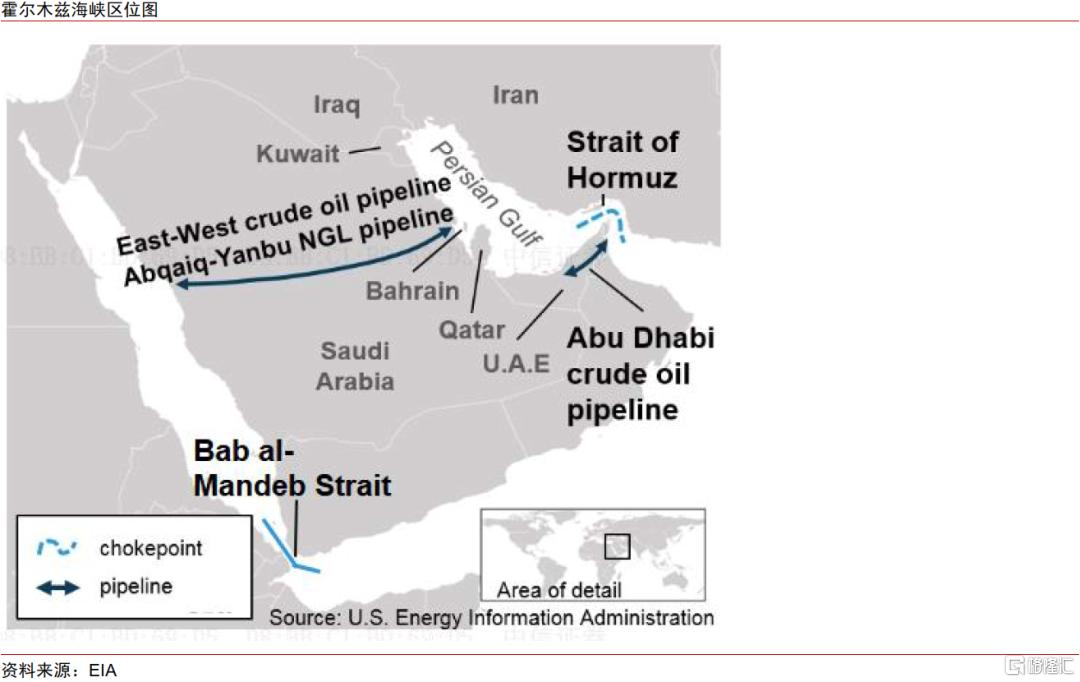
Core Viewpoint - The blockage of the Strait of Hormuz is reshaping the energy supply chain, leading to increased shipping distances and potential high freight rates due to geopolitical tensions [1][2][5]. Group 1: Energy Supply Chain Impact - The Strait of Hormuz accounts for approximately 35.9% of global crude oil maritime transport, with Saudi Arabia, Iraq, and the UAE being the top three exporters [2]. - The shipping distance from Yanbu Port to Qingdao Port has increased by about 18%, and when considering the output capacity of Yanbu and Fujairah ports, the demand gap is expected to widen shipping distances by over 30% [2][3]. - The anticipated arrival of around 10 oil tankers at Yanbu Port is expected to alleviate concerns of "price without market," potentially benefiting from risk premiums associated with geopolitical conflicts [1][2]. Group 2: Freight Rate Dynamics - Short-term strategies include releasing strategic reserves and adjusting supply chains to mitigate the geopolitical impacts of the US-Iran conflict, while partial restoration of the Strait's passage capacity remains crucial [2][3]. - If the Strait of Hormuz is reopened, Asian countries are likely to engage in compensatory crude oil procurement, which could lead to increased freight rates if vessel utilization is limited [3][5]. - The concentration of VLCC (Very Large Crude Carrier) capacity is historically high, and the pricing mechanism for freight rates is being restructured, enhancing shipowners' bargaining power [3][4]. Group 3: Industry Outlook - Sinokor has expanded its VLCC capacity significantly, controlling nearly a quarter of the global VLCC fleet, which has led to a more consolidated market structure and improved pricing power [4]. - The oil shipping cycle is expected to benefit from the ongoing geopolitical tensions, with projections indicating that leading oil shipping companies may achieve record profits by 2026 [5]. - The changing freight rate formation mechanism is expected to diminish seasonal characteristics, with companies like China Merchants Energy and COSCO Shipping Energy projected to exceed profits in Q1 2026 compared to Q4 2025 [5].
中信证券:地缘冲突强化油运周期动能 2026年油轮龙头利润有望创新高
智通财经网· 2026-03-03 01:00
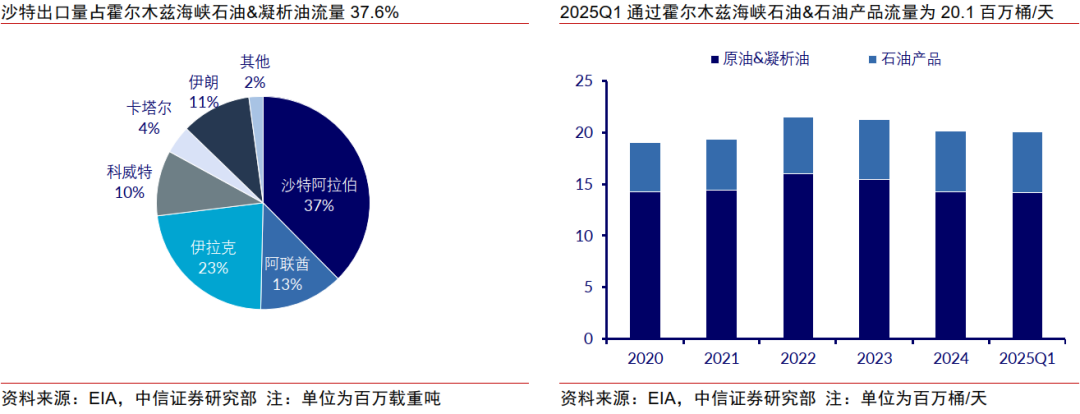
Core Viewpoint - The report from CITIC Securities indicates that structural opportunities in oil shipping valuations and assets are expected to continue, driven primarily by supply chain restructuring due to geopolitical conflicts, which is becoming the core driver of the current oil shipping cycle [1]. Group 1: Geopolitical Impact on Oil Shipping - The Strait of Hormuz accounts for approximately 30% of global crude oil and petrochemical transportation, and any fluctuations in this area are likely to act as a "bullish option" for the tanker cycle, with VLCCs (Very Large Crude Carriers) leading in elasticity [1]. - Historical analysis shows that geopolitical conflicts often lead to a rapid short-term increase in VLCC rates and valuations, suggesting that current VLCC rates and valuations may further rise, with the potential for accelerated disruptions [2][8]. - Geopolitical factors are becoming the dominant influence on oil shipping rates and valuations, with increased concentration among overseas shipowners reshaping the pricing mechanism for oil tankers [1][8]. Group 2: Future Projections and Market Dynamics - According to EIA data, in Q1 2025, crude oil transported through the Strait of Hormuz to China accounted for 46% of China's imports, indicating a significant shift in trade routes due to geopolitical tensions [14]. - The report anticipates that the profits of leading oil tanker companies may reach new highs by 2026, driven by the ongoing geopolitical dynamics and the resulting adjustments in supply chains [2][8]. - The concentration of VLCC capacity is expected to reach historic highs, with the pricing mechanism being restructured, enhancing shipowners' bargaining power and potentially leading to increased operational cash flow for fleets [8]. Group 3: Historical Context and Rate Changes - During the Gulf War, VLCC TCE (Time Charter Equivalent) rates surged from $27,400 per day in November 1990 to a peak of $65,300 per day by February 1991, highlighting the significant impact of energy security concerns on shipping rates [2]. - As of March 1, 2026, one-year charter rates have surpassed $100,000 per day, with spot rates for TD3C approaching historical highs of nearly $200,000 per day, indicating a robust market for VLCCs [2]. - The report notes that geopolitical events have historically influenced oil shipping rates, with significant increases observed in rates following conflicts, such as the Russian-Ukrainian conflict and the recent tensions in the Red Sea [19].

中信证券:伊朗地缘冲突强化油运周期动能,2026年油轮龙头利润有望创新高
Ge Long Hui· 2026-03-03 00:56
Core Insights - Geopolitical factors are becoming the dominant influence on oil shipping cycle rates and valuations, with overseas shipowners driving concentration increases that are reshaping the pricing mechanism for oil tankers [1][2][10] - The weekly rental rate for VLCCs surpassed $100,000 per day as of March 1, 2026, with the TD3C spot rate approaching a historical high of nearly $200,000 per day [1][2] - The formation of a quasi-alliance among shipowners and major traders, including Sinokor, MSC, and Trafigura, has led to a significant control of VLCC capacity, potentially exceeding 25% of global VLCC capacity [1][10] Group 1: Geopolitical Influence - Historical analysis shows that geopolitical conflicts often lead to rapid short-term increases in VLCC rates and valuations, with current conditions suggesting further potential for price increases [2][10] - The Strait of Hormuz is a critical global energy passage, with EIA data indicating that crude oil and condensate flows account for 35.9% of global shipping volume, primarily directed towards Asian countries [2][14] - Geopolitical tensions are expected to drive up premiums and create imbalances in regional supply and demand, serving as accelerators for rapid price increases [2][10] Group 2: Market Dynamics - The concentration of VLCC capacity is expected to reach historic highs, with the pricing mechanism being reshaped as shipowners gain enhanced bargaining power [10][20] - The operational difficulties for non-compliant vessels under geopolitical tensions are increasing, making compliant capacity more desirable [10][20] - Clarksons projects that 35 VLCCs are scheduled for delivery in 2026, but if geopolitical conflicts persist, operational efficiency in the Iranian market may decline significantly [10][20] Group 3: Supply Chain and Demand Shifts - In Q1 2025, crude oil transported through the Strait of Hormuz accounted for 46% of China's imports, indicating a shift in trade routes due to geopolitical tensions [14][20] - The ongoing geopolitical conflicts are expected to reshape supply chains, accelerating the shift towards compliant oil transportation demands in East Asia [14][20] - Data from customs indicates a significant shift in China's crude oil import structure, with increased imports from the Middle East and the Americas, while imports from Malaysia and the U.S. have decreased [14][19] Group 4: Investment Strategy - The structural opportunities in oil shipping valuations and asset structures are expected to continue, driven by supply chain restructuring due to geopolitical conflicts [20] - The Strait of Hormuz, which handles about 30% of global crude and petrochemical transport, is likely to become a bullish indicator for the tanker cycle in the event of disruptions [20] - The pricing mechanism for oil shipping is undergoing a transformation, with seasonal characteristics diminishing, and geopolitical events reinforcing cyclical momentum [20]

多只油气ETF大涨!机构持续看好油运周期丨ETF基金日报
2 1 Shi Ji Jing Ji Bao Dao· 2026-02-25 03:27
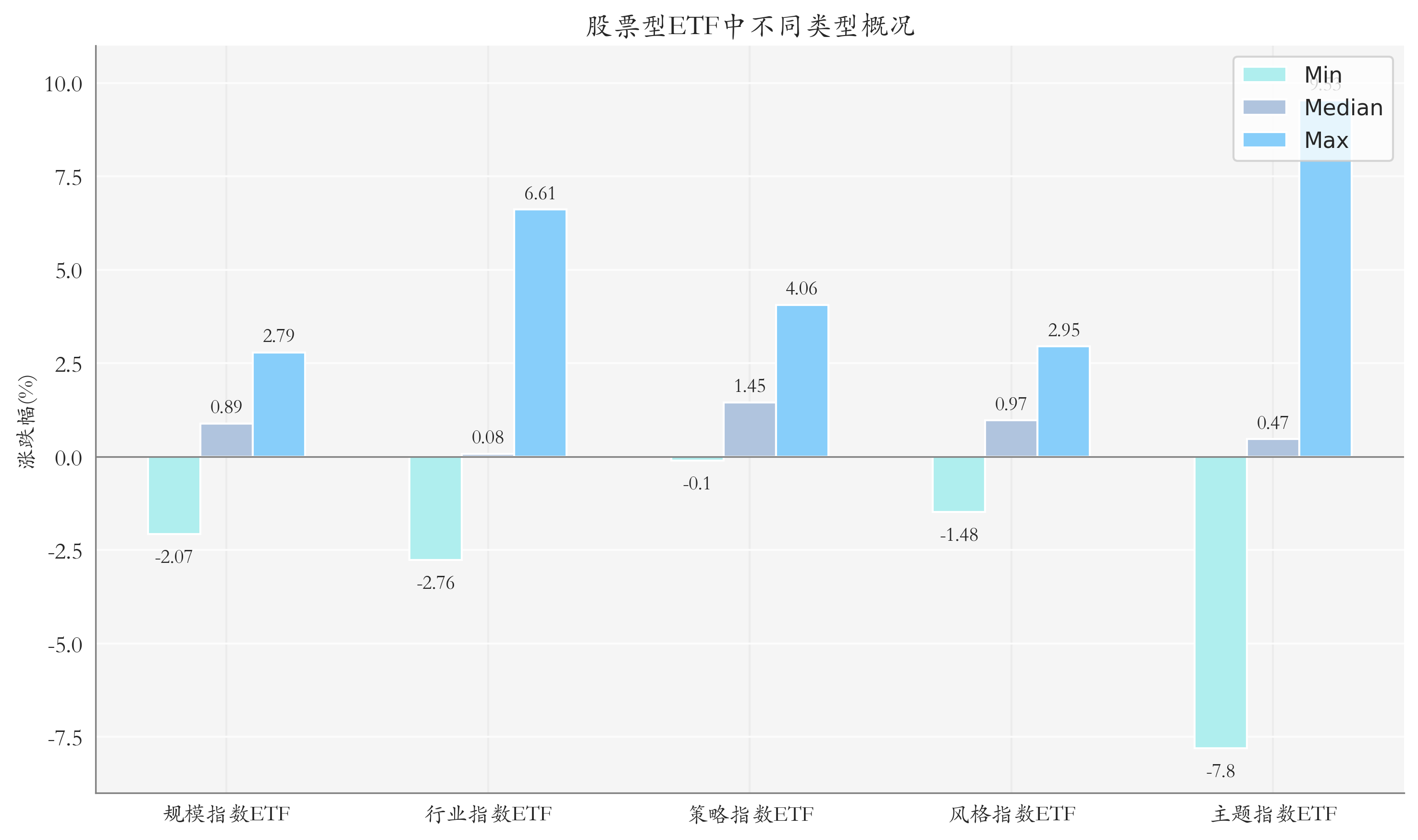
Market Overview - The Shanghai Composite Index rose by 0.87% to close at 4117.41 points, with a daily high of 4131.55 points [1] - The Shenzhen Component Index increased by 1.36% to close at 14291.57 points, reaching a high of 14376.96 points [1] - The ChiNext Index gained 0.99%, closing at 3308.26 points, with a peak of 3343.24 points [1] ETF Market Performance - The median return of stock ETFs was 0.77% [2] - The highest return among scale index ETFs was from the Wanji Zhongzheng 800 Free Cash Flow ETF at 2.79% [2] - The oil and gas fund led the industry index ETFs with a return of 6.61% [2] - The top-performing strategy index ETF was the Rongtong Zhongzheng Chengtong State-owned Enterprise Dividend ETF at 4.06% [2] - The best-performing thematic index ETF was the oil and gas resources ETF, achieving a return of 9.53% [2] ETF Performance Rankings - The top three ETFs by return were: - Yinhua Zhongzheng Oil and Gas Resources ETF: 9.53% [5] - Bosera Zhongzheng Oil and Gas Resources ETF: 8.42% [5] - Huatai-PB Zhongzheng Oil and Gas Resources ETF: 7.72% [5] - The largest declines were seen in: - Guotai Zhongzheng Film and Television Theme ETF: -7.8% [5] - Film and Television ETF: -7.37% [5] - Game Animation ETF: -4.8% [5] ETF Fund Flows - The top three ETFs by inflow were: - Huaxia Zhongzheng Electric Grid Equipment Theme ETF: 454 million yuan [7] - Huaxia Zhongzheng Robot ETF: 447 million yuan [7] - Guotai Zhongzheng All-Index Securities Company ETF: 323 million yuan [7] - The largest outflows were from: - E Fund ChiNext ETF: 754 million yuan [8] - Guotai Zhongzheng All-Index Communication Equipment ETF: 482 million yuan [8] - GF Zhongzheng Media ETF: 446 million yuan [8] ETF Margin Trading Overview - The highest margin buy amounts were: - Nanfang Zhongzheng 500 ETF: 347 million yuan [10] - Huaxia Shanghai Stock Exchange Sci-Tech Innovation Board 50 ETF: 298 million yuan [10] - Guotai Zhongzheng All-Index Securities Company ETF: 270 million yuan [10] - The largest margin sell amounts were: - Huatai-PB CSI 300 ETF: 56.55 million yuan [11] - Nanfang Zhongzheng 500 ETF: 46.79 million yuan [11] - Huaxia Shanghai 50 ETF: 28.56 million yuan [11] Institutional Insights - Guojin Securities recommends focusing on upstream companies with oil and gas resources and offshore oil and gas service engineering sectors due to expected high volatility in oil prices driven by geopolitical risks [13] - Founder Securities highlights strong demand and supply fundamentals in the VLCC market, predicting continued upward trends in oil shipping cycles [14]
交通运输物流:航运“贤”谈(20):产业信号显示油运周期有望维持higher for longer
2026-02-10 03:24
Summary of the Transportation and Logistics Industry Research Report Industry Overview - **Industry Focus**: Transportation and Logistics, specifically the shipping sector - **Key Metrics**: - VLCC (Very Large Crude Carrier) freight rate at $102,897/day, down 11.0% week-over-week, up 213.2% year-over-year - MR (Medium Range) freight rate at $25,025/day, down 9.2% week-over-week, up 52.4% year-over-year - SCFI (Shanghai Containerized Freight Index) for routes to the US West Coast, Europe, and Southeast Asia down 5.0%, 4.8%, and 3.7% respectively week-over-week - BDI (Baltic Dry Index) up 14.9% week-over-week, BCI (Baltic Capesize Index) up 19.0%, BSI (Baltic Supramax Index) up 5.8% [4][5][6] Core Insights - **Market Dynamics**: The oil shipping cycle is expected to remain "higher for longer" due to structural changes in demand from older vessels to compliant fleets following tightened sanctions from Europe and the US [5][6] - **Market Concentration**: The VLCC market is traditionally fragmented, with the top 10 companies holding a 44.1% market share. However, recent transactions and long-term charters have led to increased concentration, particularly with new entrants like Sinokor, which has acquired over 30 VLCCs [6] - **Asset Prices**: Second-hand VLCC prices have increased, with 10-year and 15-year-old vessels rising by 11.1% and 16.1% respectively since the beginning of the year [6] - **Charter Rates**: Frontline announced a one-year charter for 7 VLCCs at $76,900/day, exceeding the Clarkson quote of $71,750/day [6] Company Recommendations - **Companies to Watch**: - COSCO Shipping Energy Transportation (中远海能-A) with a target price of 13.50 and P/E ratios of 11.1 for 2026E and 19.2 for 2027E - China Merchants Energy Shipping (招商南油-A) with a target price of 3.70 and P/E ratios of 10.8 for 2026E and 16.6 for 2027E - Zhonggu Logistics (中谷物流-A) with a target price of 13.87 and P/E ratios of 10.6 for 2026E and 9.7 for 2027E - Seaspan Corporation (海丰国际-H) with a target price of 36.00 and P/E ratios of 9.1 for 2026E and 10.3 for 2027E [4][7] Risks - **Geopolitical Risks**: Changes in geopolitical conditions could impact the shipping industry significantly - **Economic Risks**: A substantial slowdown in global economic growth poses a risk to shipping demand [8] Additional Insights - **Valuation and Outlook**: The report maintains its profit forecasts and target prices for covered companies, indicating a positive outlook for the shipping sector [7] - **Market Trends**: The report highlights the importance of monitoring the supply-demand dynamics in the shipping market, particularly in light of recent geopolitical developments and market concentration trends [5][6]



等了16年,油运超级周期杀回来了?
Jin Shi Shu Ju· 2026-01-22 13:02
Core Viewpoint - The oil shipping sector has shown strong performance since early 2026, with a cumulative increase of over 20%, positioning it as a leading sector in the A-share market amid rising prices [3][4]. Group 1: Market Performance - The leading oil shipping company, China Merchants Energy Shipping, has seen its stock price surpass the historical high set in 2007, nearly doubling from its low in 2025. Another major player, COSCO Shipping Energy, has also increased by nearly 50% from its 2025 low [5]. - The rise in stock prices for these leading companies aligns closely with the increase in oil shipping rates, which reached a five-year high in the fourth quarter of 2025 after hitting a multi-year low in July 2025 [5][7]. - In 2025, China Merchants Energy Shipping reported a net profit of 6-6.6 billion yuan, a year-on-year increase of 17%-29%, with the fourth quarter net profit showing a significant increase of 55%-90% [7]. Group 2: Supply and Demand Dynamics - The oil shipping market is characterized by a cyclical nature, requiring positive changes in both supply and demand to initiate a new cycle. Currently, the supply side is influenced by the age of vessels and operational efficiency, with a significant portion of the fleet being older than 20 years [8][9]. - The global fleet of Very Large Crude Carriers (VLCC) is experiencing a decline in overall capacity, with older vessels facing operational inefficiencies and potential exit from compliant markets [9][12]. - On the demand side, the lifting of OPEC+ production cuts and increased production from countries like Brazil and Guyana have positively impacted oil shipping demand, extending average shipping distances and enhancing demand for oil transport [14][15]. Group 3: Industry Outlook - The oil shipping industry is showing signs of entering a new upward cycle, supported by a tightening supply and recovering demand. Historical patterns suggest that significant price increases can occur when supply is reduced and demand increases simultaneously [15][19]. - The consolidation within the domestic oil shipping market has led to increased market concentration, with China Merchants Energy Shipping and COSCO Shipping Energy being the top players globally [17][19]. - The current geopolitical landscape emphasizes energy security, which adds intrinsic value to the oil shipping sector, further supported by the cyclical recovery in shipping rates [19].

招商轮船(601872):25年归母净利预告中值63亿,同比+23%,业绩创新高,继续看好油轮上行景气:招商轮船(601872):2025年业绩预告点评
Huachuang Securities· 2026-01-09 03:44
Investment Rating - The report maintains a "Recommend" rating for China Merchants Energy Shipping Company (招商轮船) [1] Core Views - The company is expected to achieve a net profit attributable to shareholders of 60 to 66 billion yuan in 2025, representing a year-on-year increase of 17% to 29%, with a median forecast of 63 billion yuan, which is a 23% increase year-on-year [1] - The report highlights the sustained optimism regarding the oil shipping cycle, driven by supply dynamics and geopolitical factors affecting oil trade [2] Financial Summary - Total revenue is projected to increase from 25,799 million yuan in 2024 to 26,878 million yuan in 2025, reflecting a growth rate of 4.2% [3] - Net profit attributable to shareholders is forecasted to rise from 5,107 million yuan in 2024 to 6,303 million yuan in 2025, indicating a growth rate of 23.4% [3] - Earnings per share (EPS) is expected to increase from 0.63 yuan in 2024 to 0.78 yuan in 2025 [3] - The target price for the stock is set at 12.0 yuan, with the current price at 9.60 yuan, indicating a potential upside of 25% [3] Industry Insights - The report notes that as of January 2026, the order backlog for Very Large Crude Carriers (VLCC) accounts for 17.2% of the fleet, while over 20-year-old vessels represent 19% of the capacity, indicating a tightening supply environment [2] - The report also mentions that the share of VLCC capacity under sanctions has risen to 16.57%, which is expected to create inefficiencies in non-compliant oil trade, benefiting compliant market demand [2]