流动性过剩

Search documents
惊魂120小时后,黄金变成风险资产?
财富FORTUNE· 2026-02-04 13:05
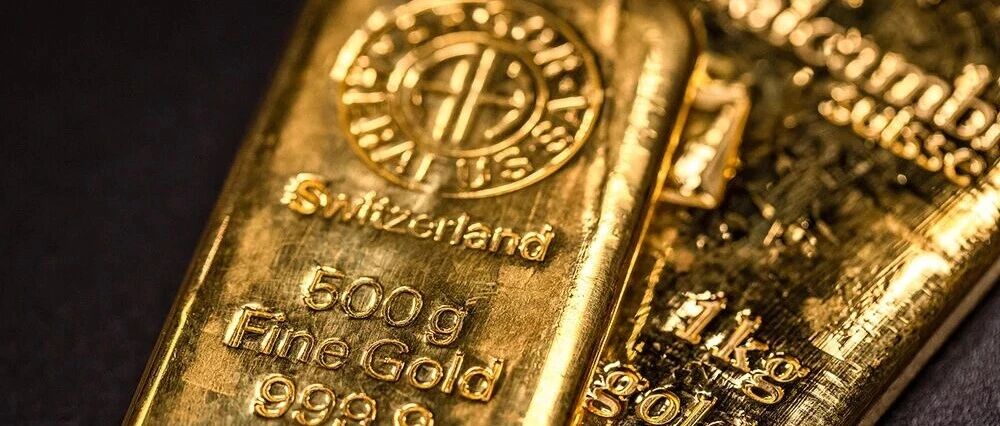
Core Viewpoint - The recent dramatic fluctuations in gold prices highlight a shift in market dynamics, where gold's traditional role as a safe haven asset is being challenged by increased correlation with equity markets, particularly tech stocks [3][4][6]. Group 1: Market Dynamics - On January 30, gold prices plummeted over 12%, dropping from nearly $5600 to around $4400 within a single day, marking one of the darkest days for gold in nearly 40 years [3]. - Following this drop, gold prices rebounded to above $5000 within a few trading days, indicating high volatility in a short time frame [3]. - Trading volume for gold futures on January 30 surged to over three times the usual level, exceeding $200 billion in contract turnover, reflecting extreme market activity [3]. Group 2: Investor Behavior - The significant drop in gold prices was attributed to an unprecedented level of crowded trading, with non-commercial net long positions reaching a historical high of 94% just before the crash [5]. - Market sentiment indicators showed that the 14-day Relative Strength Index for gold exceeded 90 before the drop, indicating an extreme overbought condition [5]. - The nomination of Kevin Warsh as Fed Chair by Trump was seen as a catalyst for the market's reaction, interpreted as a potential shift towards a more hawkish monetary policy [6]. Group 3: Changing Role of Gold - Analysts noted that the correlation between gold and U.S. equities, especially the Nasdaq index, has significantly increased over the past three months, altering gold's role from a stabilizer to a potential amplifier of market volatility [4]. - The investment logic surrounding gold is evolving from a traditional "safe-haven" narrative to a more complex framework that includes macroeconomic hedging and responses to liquidity changes [6]. Group 4: Future Outlook - Despite the recent volatility, UBS maintains that declining real yields and ongoing macroeconomic uncertainty should support gold's attractiveness, with potential price targets of $5400 per ounce if political or financial risks escalate [8]. - Barclays predicts that gold prices and related assets may enter a consolidation phase over the next 1-3 months, suggesting a strategy of waiting for prices to stabilize before making new investments [8]. - The overall market environment indicates a growing interconnectedness among different asset classes, with systemic risks becoming more pronounced, particularly in times of market panic [6][9].

被贴脸开大了
表舅是养基大户· 2026-01-22 13:45
Market Overview - The market is currently experiencing a situation of short-term liquidity excess, with the micro-cap stock index continuously reaching new highs compared to the declining performance of the Shanghai 50 index, indicating a combination of liquidity surplus and structural cooling [22][25]. - The financing market has shown signs of recovery, with net buying returning after two consecutive days of net selling, which aligns with historical patterns observed since the 924 market [15][18]. Company Cases - Liou Co., which had a significant funding order of over 10 billion, continued to hit the limit down, with the sell order value decreasing from over 100 billion to around 80 billion due to market conditions [4][5]. - Guosheng Technology, which previously faced five consecutive limit downs, experienced a dramatic turnaround, hitting the limit down in the morning and then reaching the limit up in the afternoon [5][6]. - Xunwei Communication saw a significant price increase of 10% due to a rumor about a large order with SpaceX, which was later debunked, yet the stock price remained unaffected [9][11]. ETF and Fund Trends - The wide-based ETFs have seen net selling exceeding 100 billion, with cumulative net selling surpassing 410 billion since last Thursday, indicating a significant outflow of capital [18][19]. - The chemical sector has gained increased attention from fund managers, with notable inflows into chemical ETFs, reflecting a growing interest in this sector [34][35]. Future Market Strategies - The market may implement various strategies to address the current liquidity situation, including enhancing short-selling mechanisms, accelerating the pace of share reductions, and managing the current internet trading practices [27][28]. - The overall sentiment suggests a cautious approach towards investment, emphasizing the importance of quality equity investments and maintaining a balanced portfolio [30][31].




汇添富基金邵佳民:2026年固定收益投资,心动还是幡动
Sou Hu Cai Jing· 2026-01-13 09:18
Group 1 - The year 2025 is marked by significant geopolitical changes and economic developments, with China demonstrating strong national power amidst tariff frictions, the Shanghai Composite Index surpassing 4000 points, and the renminbi appreciating significantly [1] - Wealth disparity is evident globally, with high housing prices becoming a common feature in major cities, and the AI and semiconductor industries thriving compared to traditional sectors [1] - The ongoing geopolitical tensions, such as the Russia-Ukraine conflict, have led to increased military spending in the EU and a focus on manufacturing revival in the US [2] Group 2 - The renminbi is showing resilience and is positively evaluated based on government stability, policy continuity, fiscal sustainability, and trade surplus, which enhances its attractiveness for internationalization [2] - Global liquidity is on the rise despite wealth and cognitive disparities, with traditional credit demand declining due to varying industry performances [2] - The adjustment of long-term bonds in 2025 reflects concerns over potential mild inflation and the need for sufficient liquidity compensation in a secure investment environment [3] Group 3 - The public fund industry in 2025 is undergoing profound changes, emphasizing investor returns and a return to performance benchmarks [3] - Fixed income investments are expected to remain attractive in a stable renminbi environment, despite the changing risk preferences of investors [3] - The bond market in 2026 is anticipated to experience wide fluctuations influenced more by expectations and investor behavior than by fundamental conditions [3]
Gold's traditional inverse link to stocks has broken down, says Breakout Capital CIO Ruchir Sharma
Youtube· 2025-10-20 15:58
Core Viewpoint - The simultaneous rally of gold and stocks is unusual and may be driven by excessive liquidity in the market, rather than traditional safe-haven dynamics [2][6][12] Group 1: Market Dynamics - Historically, gold and stocks tend to move in opposite directions, but currently, both are rising together, indicating a unique market condition [1][9] - The current market resembles the tech boom of 1999 and the inflationary environment of 1979, with significant liquidity fueling momentum trades across various market segments [2][4] - There is over $1.5 trillion in excess liquidity in money market mutual funds, a remnant of pandemic-era monetary policies [4][15] Group 2: Gold Demand and Investment Trends - Recent demand for gold has shifted towards ETF investments, with the last quarter seeing the highest inflows into gold ETFs ever recorded [3][10] - The increase in gold prices is not solely driven by traditional investors seeking a hedge but rather by retail investors participating in a liquidity-driven speculative frenzy [6][12] - The correlation between gold and stocks may lead to unexpected outcomes if market conditions change, particularly if inflation resurfaces and central banks withdraw liquidity [6][14] Group 3: Future Outlook - If inflation returns and the Federal Reserve raises interest rates, both gold and stocks may decline simultaneously, contrasting with their current upward trend [14][15] - The current market environment is characterized as an "everything rally," where various asset classes are rising together, but this may not be sustainable in the long term [9][15]

中国金融板块 - 评估流动性上涨的可持续性及其对券商和银行的影响-China Financials Assessing sustainability of the liquidity rally and implications to brokers and banks
2025-08-26 13:23
Summary of Key Points from the Conference Call Industry Overview - **Industry**: China Financials - **Focus**: Banks and Brokers Core Insights and Arguments 1. **Positive Outlook on Financials**: A positive outlook is held for both China banks and brokers, recommending a barbell strategy for investments in China financials. The rally in equities is driven by asset rotation and increased liquidity, with an estimated potential injection of Rmb14 trillion into the equities market, representing approximately 16% of the tradable market cap [2][12][23]. 2. **Investment Recommendations**: - **Top Picks for Brokers**: CICC-H, East Money, and Huatai A/H are recommended for increased beta exposure. CICC-H is seen as a strong proxy for IPO flows, while East Money is viewed as a laggard play with potential upside due to retail activity improvements [3][23]. - **Top Picks for Banks**: CMB-A is highlighted for its attractive dividend yield and market beta, along with ICBC-H, BOC-H, and BoCom-A, which could see approximately 20% upside in share price from dividend yield compression [3][39]. 3. **Sustainability of the Liquidity Rally**: The liquidity rally is deemed sustainable as leverage and valuations remain moderate. Margin financing as a percentage of A-share tradable market cap is currently at 2.3%, significantly lower than the 8% peak in 2015 [7][11]. 4. **Equity Allocation Trends**: - Insurance companies have increased their equity allocation from 12.5% at the end of 2024 to 13.3% in 1H25. In contrast, wealth management products (WMPs) and households have seen flat allocations [12]. - A shift in asset allocation is expected to result in an additional Rmb14 trillion in fund flows into the equities market over the next three years [12][21]. 5. **Yield Stocks and Banks**: Despite a 50% re-rating of China banks since the end of 2023, the dividend yield of CSI 300 banks remains higher than other asset classes. High-yield stocks are expected to replace shadow banking assets as quasi-fixed income products, leading to increased equity allocations by insurance companies [35][37][39]. 6. **Potential Upside for Banks**: - The potential upside for H-share banks is estimated at around 10% on average, with ICBC offering the highest upside at 23%. For insurance companies, the dividend yield compression implies a 35% upside for H-share banks [39][47]. - A-share banks also show potential upside, with BoCom-A offering a 22% upside among SOE banks [48]. Other Important Insights 1. **Market Dynamics**: The equities market rally is primarily driven by improving growth outlook, rising liquidity, and asset rotation into equities. The macro outlook is currently weak, but recent policy adjustments could enhance medium- to long-term growth confidence [7][39]. 2. **Regulatory Guidance**: Regulators have guided state-owned insurance companies to allocate 30% of new investable assets into the equities market, which is expected to further support the liquidity rally [12][21]. 3. **Brokerage Revenue Outlook**: The increase in A-share average daily trading (ADT) from Rmb1.34 trillion in June to Rmb2.07 trillion in August is expected to positively impact brokerage revenues and investment income, with upside risks to brokers' 3Q earnings [23][24]. 4. **Shadow Banking Decline**: The balance of shadow banking assets has significantly decreased from Rmb38.2 trillion in 2017 to Rmb17.7 trillion in 1H25, indicating a shift in the investment landscape [37][42]. 5. **Valuation Metrics**: The TTM PE of the CSI 300 is currently at 15.6x, in line with the median PE since 2016, suggesting that while valuations are not demanding, there is a risk of policy intervention if macro growth diverges from market performance [7][39]. This summary encapsulates the key points discussed in the conference call, providing insights into the current state and future outlook of the China financials sector, particularly focusing on banks and brokers.