
白银供需失衡

Search documents
邦达亚洲:美联储降息预期降温 黄金回落收跌
Xin Lang Cai Jing· 2026-02-11 09:24
Group 1: Retail Sales Data - In December, U.S. retail sales remained unchanged month-on-month at 0%, significantly below the expected 0.4% and lower than November's 0.6% increase [1][6] - Core retail sales, excluding automobiles and gas stations, decreased by 0.1% month-on-month [1][6] - Out of 13 retail categories, 8 experienced a decline in sales, with notable drops in clothing and furniture stores, as well as automobile dealers [1][6] Group 2: Consumer Spending Concerns - The report heightened concerns about consumer spending momentum, which is a key driver of U.S. economic growth [1][6] - Despite stock market gains potentially supporting high-income household spending, low-income groups reliant on wage growth showed weak consumption performance [1][6] Group 3: Silver Market Insights - Silver prices have stabilized around $80 per ounce, although still below last month's historical highs [2][7] - The World Silver Association reported a structural supply shortage expected to last until 2026, with a projected gap of 67 million ounces [2][7] - Key factors supporting silver prices include tight physical supply in London, geopolitical tensions, U.S. policy uncertainties, and concerns over the independence of the Federal Reserve [2][7] Group 4: Gold Market Overview - Gold prices experienced slight declines, trading around 5060, influenced by profit-taking and hawkish comments from Federal Reserve officials [3][8] - Market risk aversion continues to limit the downside potential for gold prices [3][8] Group 5: Currency Exchange Rates - The USD/JPY pair fell to a seven-day low at approximately 153.10, affected by concerns over potential intervention by the Bank of Japan and weak U.S. economic data [4][9] - The USD/CAD pair also saw a slight decline, trading around 1.3520, influenced by weak retail sales data and high oil prices due to supply concerns [5][10]
涨超13%,白银大逆转来了?
3 6 Ke· 2026-02-03 12:08
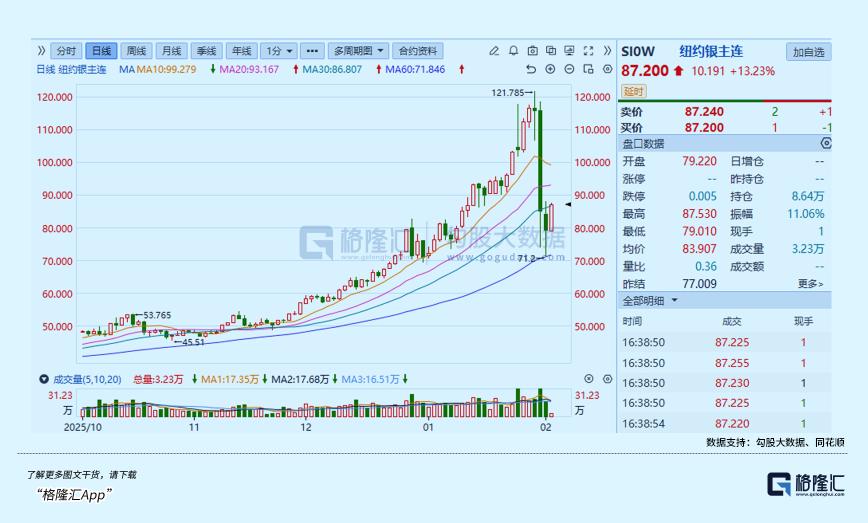
Core Viewpoint - The silver market is experiencing extreme volatility, with significant price fluctuations and a potential for a major turning point in the coming months [1][5][23]. Group 1: Recent Market Movements - On February 3, domestic silver futures contracts fell sharply, with a daily drop of 16.71% and a cumulative decline of over 30% in two days [1]. - The National Investment Silver LOF (161226) continued to hit the daily limit down after resuming trading, closing at 4.25 yuan, with a premium rate of 88.94%, corresponding to a net value of only 2.25 yuan [1][2]. - In contrast, the international silver market saw a strong rebound, with silver prices rising by 13.23% to $87.2 per ounce, also boosting gold prices by 6.5% to $4,963 per ounce [3]. Group 2: Market Dynamics and Future Outlook - The upcoming March period is expected to be a critical battleground for bulls and bears, driven by concentrated position liquidations and new market entries [6][8]. - Data indicates that iShares Silver Trust added over 1,023 tons of silver on February 2, bringing total holdings back to 16,546.59 tons, recovering all previous reductions [6]. - The silver market is facing a systemic inventory crisis, with COMEX silver total inventory dropping from 16,550 tons in September 2025 to 12,624.5 tons by the end of January 2026, a decrease of 23.7% [13]. Group 3: Supply and Demand Imbalance - The global silver market has been in a supply shortage for six consecutive years, with a projected shortfall of 3,660 tons in 2025 and an expected increase to 7,000-8,000 tons in 2026 [21]. - The industrial demand for silver is surging, with the photovoltaic industry projected to use 6,146 tons in 2024 and the electric vehicle sector expected to consume 2,566 tons in 2025 [21]. - The ongoing consumption of silver from financial markets to industrial applications is expected to exert significant pressure on future contract deliveries, leading to a tightening supply situation [21][23].

涨超13%!白银大逆转来了?
Ge Long Hui· 2026-02-03 11:17
Core Viewpoint - The silver market is experiencing a significant reversal, with a recent sharp decline followed by a strong rebound, indicating a potential shift in market dynamics and investor sentiment [1][3][5]. Group 1: Recent Market Movements - On February 3, domestic silver futures contracts fell sharply, with a daily drop of 16.71% and a cumulative decline exceeding 30% over two days [1]. - The National Investment Silver LOF (161226) continued to hit the daily limit down after resuming trading, closing at 4.25 yuan, with a premium rate of 88.94%, corresponding to a net value of only 2.25 yuan [1][2]. - In contrast, the international silver market saw a strong rebound, with silver prices rising by 13.23% to $87.2 per ounce, also boosting gold prices by 6.5% to $4,963 per ounce [3]. Group 2: Market Dynamics and Future Outlook - The upcoming March period is expected to be a critical battleground for both bulls and bears, driven by concentrated position liquidations from both sides [6]. - Data shows that iShares Silver Trust increased its holdings by over 1,023 tons on February 2, bringing total holdings back to 16,546.59 tons, indicating renewed interest from investors [7]. - The recent volatility in silver prices was triggered by a combination of factors, including concerns over delivery pressures and increased margin requirements from exchanges [10][11]. Group 3: Supply and Demand Factors - The COMEX silver inventory has seen a significant decline, dropping from a peak of 16,550 tons in September 2025 to 12,624.5 tons by the end of January 2026, a decrease of 23.7% [14]. - The silver market is facing a systemic inventory crisis, with delivery volumes reaching historical highs, indicating a severe supply-demand imbalance [15][21]. - The global silver market has been in a state of supply shortage for six consecutive years, with a projected shortfall of 7,000-8,000 tons in 2026 [21]. Group 4: Institutional Perspectives - There is a notable divergence in views among institutions regarding silver's price trajectory, with many expressing long-term optimism despite recent volatility [20]. - Factors supporting silver's long-term value include ongoing industrial demand growth, particularly in the photovoltaic and electric vehicle sectors, and a robust investment interest from various market participants [21]. - The ongoing consumption of available silver inventory is expected to exert upward pressure on prices, reinforcing bullish sentiment in the market [23].
银价月内涨超70%!国投白银LOF两连板 溢价率高达64%
2 1 Shi Ji Jing Ji Bao Dao· 2026-01-29 08:10
Core Viewpoint - The global silver market has experienced a significant surge since the beginning of 2026, driven by rising prices in both the spot and futures markets, leading to increased interest in related investment products [1][2]. Group 1: Market Performance - On January 29, 2026, the only domestic fund focused on silver futures, Guotou Silver LOF (161226.SZ), hit its daily limit, with a price of 5.247 yuan per share and a trading volume exceeding 2.8 billion yuan, achieving a premium rate of 64.26% [1]. - COMEX silver and London silver prices reached new historical highs of $120.205 per ounce and $119.107 per ounce, respectively, with year-to-date increases exceeding 65% [1]. - The Shanghai Futures Exchange's main silver contract rose over 8.5%, closing at 30,891 yuan per kilogram, with a peak of 31,488 yuan per kilogram, marking a cumulative increase of over 70% since the start of 2026 [1]. Group 2: Price Increase Drivers - The price increase is attributed to a combination of factors, including the U.S. government's prolonged shutdown, rising unemployment, and subsequent interest rate cuts by the Federal Reserve, which created a liquidity-friendly environment for silver prices [2]. - A significant supply-demand imbalance is identified as a core support for the rising silver prices, with supply growth stagnating while demand from emerging industries like photovoltaics, electric vehicles, and AI data centers continues to increase [2]. - The World Silver Survey 2025 indicates that global silver usage in photovoltaics is expected to reach 7,560 tons, a 23% year-on-year increase, accounting for about 25% of total silver demand and 33%-35% of industrial silver demand [2]. Group 3: Future Outlook - Emerging industries are expected to create structural and sustained growth in silver demand, with silver being recognized as a strategic asset by various economies, including its inclusion in the U.S. Geological Survey's critical minerals list [3]. - The Reserve Bank of India has implemented new regulations allowing silver to be used as collateral by banks and non-bank financial institutions, potentially increasing silver reserves in certain economies [3]. - However, there are warnings about the short-term market exuberance, with concerns that silver prices may have experienced excessive short-term gains, necessitating caution regarding potential price corrections [3].
startrader:白银月涨超60% 产业链冷暖不均
Sou Hu Cai Jing· 2026-01-28 01:47
Core Viewpoint - The international silver market has experienced a significant surge, with prices exceeding $117 per ounce, marking a cumulative increase of over 60%, driven by structural supply-demand imbalances and financial market dynamics [1][3]. Supply and Demand Dynamics - The core logic behind the silver price surge is a structural supply-demand imbalance, with the supply side tightening continuously, leading to a global silver shortfall for five consecutive years, reaching a deficit of 3,660 tons in 2025 and expected to expand to 7,000-8,000 tons in 2026 [3]. - Approximately 70%-80% of silver is produced as a byproduct of mining for other metals, which constrains production and results in a long expansion cycle of 5-10 years; global silver supply is projected to slightly decline in 2026, while recycling efforts can only partially fill the gap [3]. - Industrial demand for silver has surged, now accounting for 58% of total demand, with the photovoltaic (PV) industry being the largest consumer, expected to demand 198 million ounces in 2024, despite a slight decrease in silver usage per watt for N-type batteries [3]. Industry Impact - The upstream mining sector is thriving, with companies like Shengda Resources reporting a 61.97% year-on-year increase in net profit for the first three quarters of 2025, and several firms accelerating their silver mining project developments and acquisitions to capitalize on the market [4]. - Midstream silver paste companies are managing to maintain stable profits through a back-to-back pricing model that mitigates risks from silver price fluctuations [4]. - Conversely, downstream industries, particularly in the photovoltaic sector, are facing significant cost pressures, with silver paste accounting for over 50% of non-silicon costs in solar cells, leading to severe price discrepancies and anticipated large losses for major companies like Tongwei Co. and Trina Solar in 2025 [4]. Market Sentiment and Future Outlook - There is a notable divergence in market sentiment regarding the future of silver prices, with optimistic views suggesting that the expanding supply-demand gap and industrial demand growth will drive prices towards $120 per ounce, supported by the U.S. government's classification of silver as a critical mineral [4]. - Conversely, cautious perspectives highlight potential risks, including extreme overbought conditions in the technical landscape, the possibility of accelerated adoption of alternative technologies in photovoltaics, and the impact of U.S. monetary policy on silver's financial attributes [5].
白银陷“模因交易”争议:前摩根大通策略师预警价格或腰斩
Huan Qiu Wang· 2026-01-27 02:28
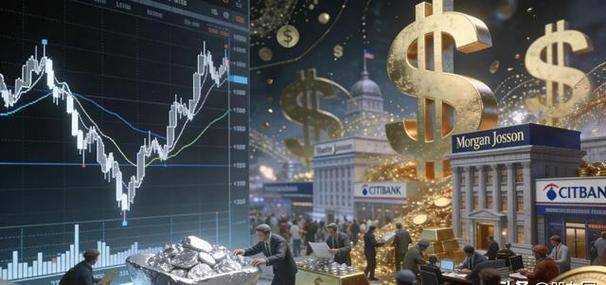
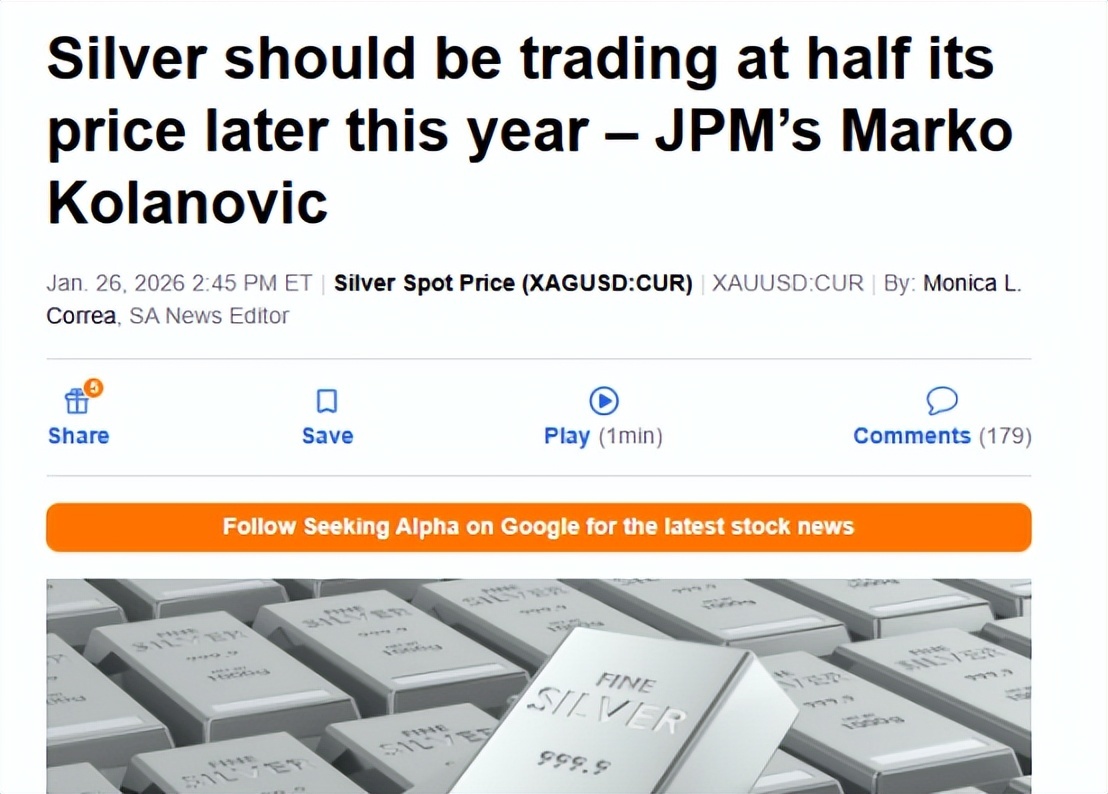
Group 1 - The recent surge in silver prices is attributed to "meme trading" rather than fundamental factors, as noted by Marko Kolanovic from JPMorgan [3] - Silver prices have increased approximately 54% this year and 264% over the past year, but Kolanovic predicts a potential decline of about 50% by late 2026 [3] - Trading volumes for popular silver ETFs and related options have reached historical highs, indicating speculative trading behavior [3] Group 2 - Mike Antonelli from Baird compares silver to GameStop, questioning the sustainability of its price increase despite unchanged industrial demand [4] - Warren Patterson from ING highlights that silver's dual role as both an industrial and investment metal amplifies price volatility, while macroeconomic factors remain supportive [4] - Long-term bullish sentiment on silver is driven by increasing industrial demand in sectors like photovoltaics and electric vehicles, alongside supply constraints [4] Group 3 - Geopolitical uncertainties, including potential U.S. government shutdowns, have increased demand for traditional safe-haven assets like silver [5] - The silver market is at a crossroads, facing speculative trading pressures and fundamental support, which will determine its price trajectory [5]
金银比跌破50关口后 白银市场波动或进一步加剧
Xin Hua Cai Jing· 2026-01-20 06:21
Core Viewpoint - Precious metal prices, particularly silver, have surged significantly since 2026, driven by multiple risk factors and a structural supply-demand imbalance [1][2][3] Group 1: Price Movements - As of January 19, 2026, London spot gold prices fluctuated around $4,670 per ounce, with a year-to-date increase of nearly 8% [1] - Silver prices reached a high of $94.72 per ounce, with a year-to-date increase exceeding 30% [1] - The gold-silver ratio has dropped significantly from a peak of 105 in 2025 to below 50, indicating that silver is nearing its highest valuation relative to gold in 13 years [1] Group 2: Factors Driving Silver Prices - Analysts attribute the rise in silver prices to geopolitical tensions, expectations of Federal Reserve interest rate cuts, and a tightening supply-demand situation [2][3] - Investment demand for silver remains strong, with financial institutions and retail investors stepping in as new buying forces [2] - Structural supply-demand imbalances are evident, with a projected global silver demand of 1.12 billion ounces in 2025 against a supply of only 1.01 billion ounces, resulting in a deficit of approximately 110 million ounces [3] Group 3: Future Outlook - Analysts suggest that the core logic of the current precious metals bull market remains intact, with potential for further upward movement in the medium term [4] - Short-term volatility is expected due to overbought market conditions and potential policy adjustments [5] - The strategic value of silver is being reassessed globally, with countries recognizing its importance as a strategic asset, further driving demand [3][5]
白银突然高台跳水,什么原因?
Sou Hu Cai Jing· 2025-12-29 15:03
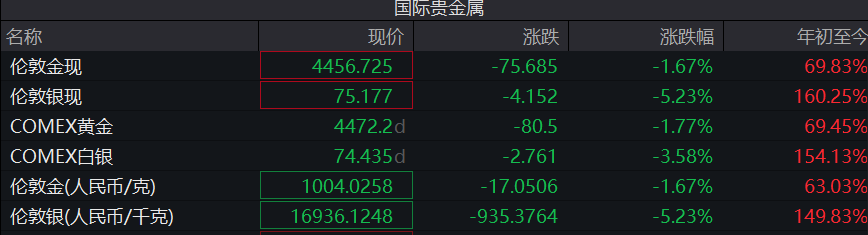
Core Viewpoint - Silver prices experienced significant volatility on December 29, with a peak of $83.971 per ounce followed by a sharp decline to $74.215, resulting in a daily fluctuation of 12.3% [1]. Despite this, silver has shown an annual increase of over 160%, outperforming gold's approximately 70% rise [1][2]. Price Movements - On December 29, London silver was reported at $75.177 per ounce, down 5.23% for the day, while year-to-date gains stood at 160.25% [2]. - COMEX silver also saw substantial fluctuations, reaching a high of $82.67 and a low of $73.71 on the same day [3]. - Shanghai silver futures experienced a 10% increase before closing with only a 0.51% gain, indicating high volatility in the market [3]. Market Dynamics - The recent price movements are attributed to increased margin requirements set by exchanges, which raised trading costs and prompted profit-taking among investors [3]. - Analysts noted that the silver market is experiencing a "generational bubble" due to significant capital inflows and a severe supply-demand imbalance, leading to a rush for physical silver [4]. - The demand for silver is driven not only by its role as a financial hedge but also by its industrial applications, particularly in technology and renewable energy sectors [4]. Supply Constraints - Silver production has struggled to keep pace with demand, with global demand exceeding supply for five consecutive years [5]. - Concerns over potential tariffs on silver and the depletion of inventories in major trading centers have further exacerbated supply issues [5]. - The cost of borrowing silver has surged to historical highs, leading to increased demand for physical silver and driving prices higher [5]. Short-term Risks - Despite a generally optimistic outlook for silver, short-term market overheating signals pose potential risks [6]. - Analysts suggest caution in trading silver due to high implied volatility and upcoming risk events that could impact prices [6]. - The market is expected to face adjustments as various factors, including potential regulatory changes and geopolitical developments, could influence silver's price trajectory [6].
突发!白银直线跳水
Shang Hai Zheng Quan Bao· 2025-12-29 00:54
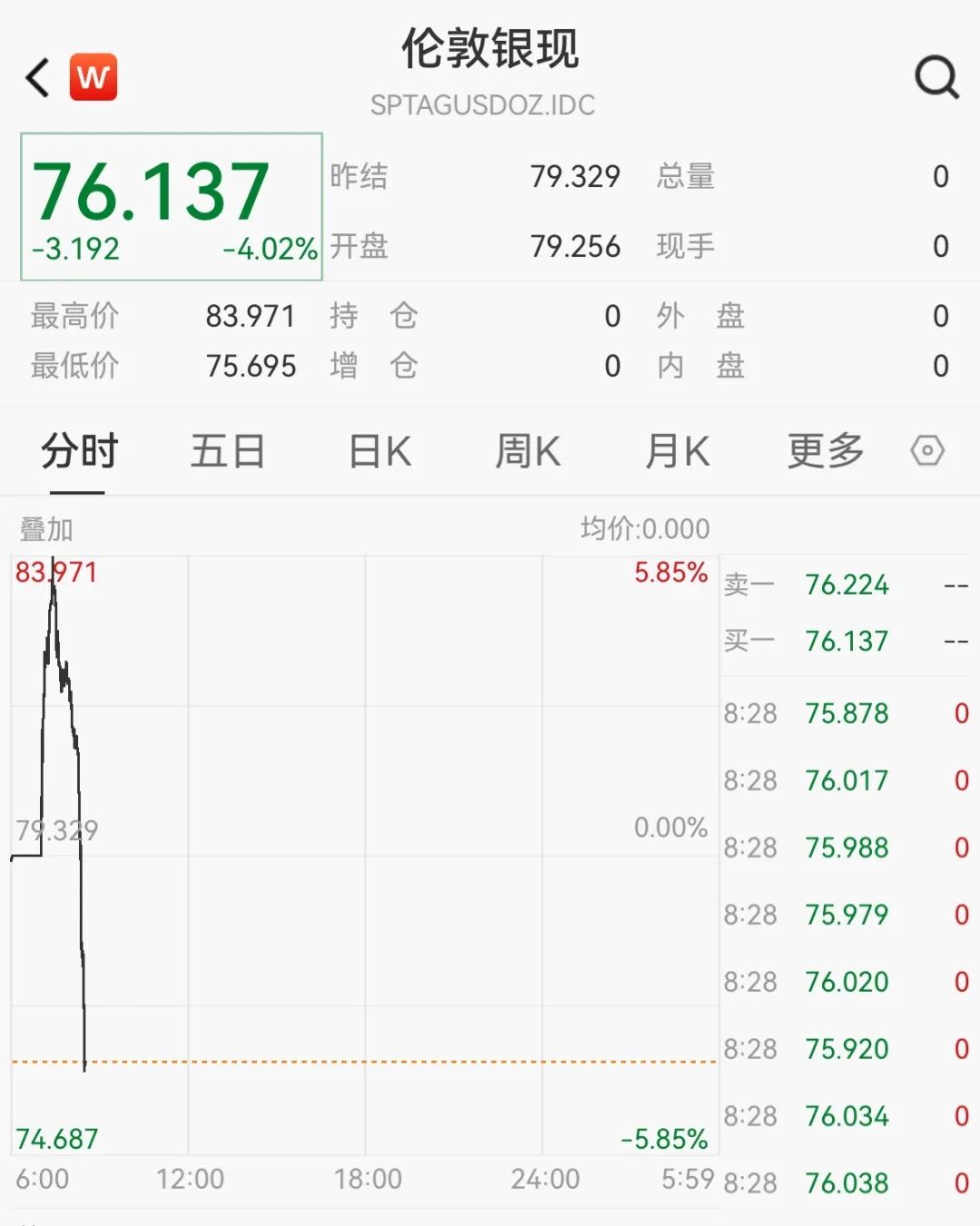
Group 1: Silver Market Dynamics - Spot silver opened with a rapid increase, breaking the $83 per ounce mark before experiencing a sharp decline, closing at $76.137 per ounce, down over 4% for the day [3][4] - Recent trends show a significant rise in precious metals, with COMEX silver futures and spot silver both increasing over 10% and approximately 18% for the week [4] - The price of silver has surpassed that of a barrel of U.S. crude oil for the first time since April 2020, indicating a severe supply shortage in the silver market [5] Group 2: Federal Reserve Leadership Speculation - President Trump is expected to announce a new Federal Reserve chairperson in the first week of January, with three candidates in the running: Kevin Hassett, Kevin Walsh, and Christopher Waller [8] - The upcoming Federal Reserve meeting minutes are anticipated to reveal strong internal disagreements regarding short-term policy paths, following a recent rate cut [8] Group 3: Warren Buffett's Transition - Warren Buffett will officially step down as CEO of Berkshire Hathaway at the end of the year, with Greg Abel set to take over on January 1, 2026 [10] - Under Buffett's leadership, Berkshire Hathaway has transformed from a near-bankrupt textile company to a conglomerate with a market value exceeding $1 trillion, achieving a cumulative return of 55,022 times since 1965 [10]
年内涨幅翻倍 白银投资成“香饽饽”
Sou Hu Cai Jing· 2025-12-19 15:00
Core Viewpoint - Silver prices have surged over 120% in 2025, driven by supply-demand imbalances, industrial demand, and investment inflows, with expectations for continued upward movement in 2026 despite short-term volatility risks [1][2][3]. Group 1: Price Trends - As of mid-December 2025, silver prices reached approximately $64.74 per ounce, up from about $30.1 per ounce at the beginning of the year [1]. - On December 17, silver futures in Shanghai hit a record high of 15,477 yuan per kilogram, while COMEX silver peaked at $65.909 per ounce, marking a year-to-date increase of over 125%, significantly outperforming gold [2]. - Silver prices have shown a consistent upward trend, breaking through key psychological levels, including $40, $50, and $60 per ounce within a few months [2]. Group 2: Supply and Demand Dynamics - The global silver market is projected to face a supply gap of approximately 95 million ounces by 2025, with industrial demand expected to account for 58.5% of total demand in 2024 [3][5]. - Industrial silver demand is forecasted to grow at a compound annual growth rate (CAGR) of 5.4% from 2019 to 2024, contributing to 98% of the total increase in silver demand during this period [5]. - Major silver-producing countries have seen reduced output, while global inventories are at a ten-year low, indicating a tightening supply situation [6]. Group 3: Market Influences - The expectation of Federal Reserve interest rate cuts is a key driver of silver's price surge, as lower interest rates enhance the appeal of non-yielding assets like silver [4]. - A decline in the U.S. dollar index is also expected to support silver prices, with historical data indicating that a 1% drop in the dollar typically results in a 1.5% to 2% increase in silver prices [4]. - The increasing industrial applications of silver, particularly in the photovoltaic sector and electric vehicles, are reshaping traditional demand structures [6]. Group 4: Future Outlook - Analysts predict that silver prices may continue to rise, with major investment banks adjusting their price targets upward, with UBS forecasting a target price of $58 to $60 per ounce for 2026 [6]. - The ongoing demand from sectors such as renewable energy and electronics is expected to maintain upward pressure on prices, despite potential short-term corrections [6][7]. - Institutions have raised concerns about the volatility in the silver market, suggesting that large trades can significantly impact prices, necessitating cautious risk management from investors [7][8].