硫磺价格上涨

Search documents
未知机构:荣盛石化我国民营炼化龙头企业看好聚酯链与炼油利润修复硫磺价格上涨后利润弹-20260228
未知机构· 2026-02-28 02:35
Summary of Conference Call on Rongsheng Petrochemical Company Overview - Rongsheng Petrochemical is a leading private refining and chemical enterprise in China, with its core Zhejiang Petrochemical project having a crude oil processing capacity of 40 million tons, 8.8 million tons of PX, and 4.2 million tons of ethylene processing capacity [1] - The company has a total capacity of 10.4 million tons of PX, 21.5 million tons of PTA, and 13.66 million tons of refined oil, making it the largest producer of PX and PTA globally [1] - Since 2022, the company has been advancing its "strong chain and supplement chain" strategy, focusing on new energy and high-end materials, with projects in high-end new materials, high-performance resins, and other areas scheduled to be operational between 2026 and 2027 [1] Industry Insights - PX pricing power is expected to improve, with domestic PX capacity showing almost zero expansion from 2024 to 2025, and only 5.5 million tons planned for the second half of 2026 [2] - The demand side is seeing continuous growth in downstream PTA, polyester, and filament capacity, which, combined with the widening overseas price differentials, is expected to enhance PX pricing power [2] - As of December 19, 2025, the PX-N price spread reached $332 per ton, an increase of 88% from the beginning of the year [2] - PTA processing fees are currently at 218 RMB per ton, with room for improvement as no new capacity is expected in 2026 [2] Profitability Drivers - The company is positioned to benefit from the dual profit drivers of enhanced PX pricing power and the recovery of profitability in the polyester chain, given its substantial capacities in PX and PTA [2] - Global gasoline and diesel price differentials have surged due to disruptions in overseas refineries, with significant increases in price spreads observed [3] - The company has a flexible refined oil production capacity of 13.66 million tons and an export quota of 3.5 million tons per year, allowing it to capitalize on price differentials and tax rebates [3] Sulfur Price Dynamics - Sulfur prices have seen significant increases, with domestic solid and liquid sulfur prices reaching 3,936 RMB per ton and 3,993 RMB per ton, respectively, both showing over 160% year-on-year growth [3] - The company has a sulfur production capacity of 1.21 million tons, ranking third in the industry, and as sulfur is a by-product with fixed costs, price increases will significantly enhance profitability [3]

硫磺价格持续走高 产业链上下游冷暖分化
Zheng Quan Ri Bao· 2026-01-23 16:25
Group 1 - The core viewpoint of the article highlights a significant increase in sulfur prices, with a benchmark price of 4160.00 CNY/ton as of January 23, reflecting a 13.63% rise from the beginning of the month and a staggering 116.50% increase projected for 2025, indicating a shift in the supply-demand dynamics within the industry [1] - Industry experts believe that the substantial rise in sulfur prices is not a short-term fluctuation but a result of a restructured supply-demand landscape, signaling the industry is entering a new development cycle [1] - The price trajectory for sulfur in 2025 shows a clear pattern of "bottoming out—stepwise increase—year-end stabilization," with the lowest price recorded at 1661 CNY/ton in February before a significant upward trend began [1] Group 2 - The current international demand for sulfur is primarily driven by traditional phosphate fertilizers, which struggle to absorb high sulfur prices due to low profit margins, while emerging demands from nickel wet smelting and new energy sectors can accommodate higher prices, thus supporting further price increases [2] - Analysts maintain a bullish outlook on sulfur prices, with some institutions suggesting the industry has entered a "super cycle," while domestic sulfur production is expected to grow steadily but with limited increases [2] - The price fluctuations of sulfur, a crucial chemical raw material, significantly impact the cost and profit structures of upstream and downstream industries, particularly in the phosphate fertilizer sector [2] Group 3 - Upstream sulfur production companies are set to benefit directly from rising prices, with companies like Rongsheng Petrochemical reporting a positive impact on their sulfur business due to the sustained price increase since 2025 [3] - The rising sulfur prices pose significant challenges for the downstream phosphate fertilizer industry, which relies heavily on sulfur as a core raw material, prompting industry associations to take measures to stabilize supply and prices [3] - Downstream companies are encouraged to diversify their raw material supply channels and consider flexible adjustments or extending their industrial chains to mitigate the impact of rising sulfur costs [3]
成品油出口高利润叠加硫磺涨价 荣盛石化双重受益锁定高业绩弹性
Sou Hu Cai Jing· 2026-01-08 07:12
Group 1 - The Ministry of Commerce has issued the first batch of refined oil export quotas for 2026, totaling 19 million tons, which is the same as the amount for the same period in 2025 [1] - State-owned enterprises dominate the export quotas, with Sinopec and PetroChina together receiving 13.76 million tons, accounting for 72.4% of the total quota [1] - Rongsheng Petrochemical is currently the only private refining enterprise in China with refined oil export qualifications, with its subsidiary Zhejiang Petrochemical receiving an export quota of 1.56 million tons [1] Group 2 - In the second half of 2025, overseas refined oil crack spreads significantly increased, with gasoline crack spreads in Europe and Singapore reaching five-year highs due to various factors, including reduced Russian oil processing and U.S. refinery shutdowns [2] - The crack spreads for gasoline in November reached $27, $17, and $25 per barrel in Europe, Singapore, and the U.S., respectively, showing increases of 286%, 125%, and 92% compared to the beginning of the year [2] - The International Energy Agency (IEA) projects a net increase of 1.15 million barrels per day in global refining capacity in 2026, primarily driven by China and India [2] Group 3 - High overseas refined oil crack spreads provide a profitable export window for Chinese refined oil, benefiting companies with export qualifications, particularly Rongsheng Petrochemical [3] - Zhejiang Petrochemical, as a core asset of Rongsheng Petrochemical, has an integrated refining capacity of 40 million tons per year, making it the largest single refinery globally [4] - The company has maintained a stable export quota of around 3.5 million tons per year, allowing for flexible export arrangements based on market conditions [4] Group 4 - The sulfur price has been rising steadily, contributing to profit growth for Rongsheng Petrochemical, with the company holding a design capacity of 1.21 million tons for sulfur [5] - As of December 23, 2025, liquid sulfur prices in East China reached 3,610 yuan per ton, and solid sulfur prices reached 3,815 yuan per ton, reflecting increases of 127% and 141% respectively since the beginning of the year [5] - The company is expected to achieve a gross profit of 3.4 billion yuan from sulfur sales, significantly enhancing its overall profitability [5]
国信证券点评荣盛石化:炼化利润有望修复,硫磺提供业绩增量
Quan Jing Wang· 2025-12-29 06:16
Group 1 - The core viewpoint of the report highlights that Rongsheng Petrochemical (002493.SZ) is a leading private refining giant in China, with its core Zhejiang Petrochemical project having a capacity of 40 million tons of crude oil processing, 8.8 million tons of PX, and 4.2 million tons of ethylene processing [1] - The industry is currently experiencing a gradual improvement in prosperity, with refining capacity stabilizing and demand increasing, which is expected to significantly restore the profitability of the PX-PTA-polyester chain [1] - The company has a sulfur production capacity of 1.21 million tons, which will significantly enhance its profits due to the rapid increase in sulfur prices driven by supply-demand mismatches [1] Group 2 - The report indicates that the significant increase in domestic and international sulfur prices provides profit elasticity for the company, with solid and liquid sulfur prices reaching 3,936 yuan/ton and 3,993 yuan/ton respectively as of December 11, showing a year-on-year increase of over 160% [2] - The demand for sulfur is driven by the growth in phosphate fertilizer and new energy acid production, leading to a tight supply-demand balance, with prices expected to continue rising from the second half of 2024 [2] - The company ranks third in the industry for sulfur production capacity, and as a by-product, the cost is primarily fixed, meaning price increases will significantly boost the company's profits [2]
硫磺价格创新高 云天化倡议磷肥保供稳价护春耕
Zhong Guo Jing Ying Bao· 2025-12-11 11:04
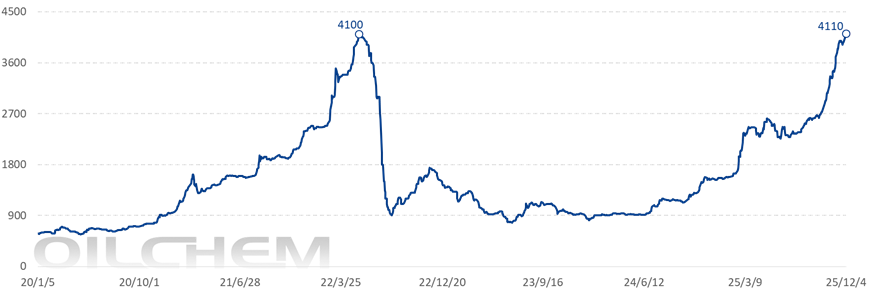
Core Viewpoint - The domestic phosphate fertilizer industry is facing severe challenges due to the continuous rise in sulfur prices, prompting Yunnan Yuntianhua to issue an initiative to stabilize supply and prices [2][3]. Group 1: Industry Challenges - Sulfur prices have surged from 1500-1800 RMB/ton at the beginning of the year to approximately 4300 RMB/ton currently, representing an increase of over 100% [2]. - As of November 20, 2025, the average sulfur price reached 2298.36 RMB/ton, up 110.51% from 2024, and has remained above the upper limit of the price range for the past five years since the third quarter [3]. - The price of sulfur at Zhenjiang Port increased from 2620 RMB/ton in mid-September to around 4000 RMB/ton recently [3]. Group 2: Company Response - Yunnan Yuntianhua's initiative emphasizes multiple measures to ensure supply and stabilize prices, leveraging its full industry chain and production capacity [2]. - The company is committed to maintaining full production capacity and absorbing cost increases without passing them onto downstream customers [3]. Group 3: Market Dynamics - The current high sulfur prices are driven by external market influences, recovering downstream demand, and a bullish sentiment within the industry [3]. - As of December 4, the mainstream granular sulfur price at Zhenjiang Port reached 4110 RMB/ton, marking a 3.79% increase from the end of November [4]. - The phosphate fertilizer market is under pressure, with losses reported for monoammonium phosphate and diammonium phosphate production [3]. Group 4: Future Outlook - Short-term expectations indicate that the sulfur spot market will likely maintain a high-level consolidation, with cautious purchasing behavior from end-users and traders [5]. - Analysts predict a potential continued upward trend in sulfur prices, with the possibility of domestic prices exceeding 5000 RMB/ton due to ongoing demand and limited supply [5].


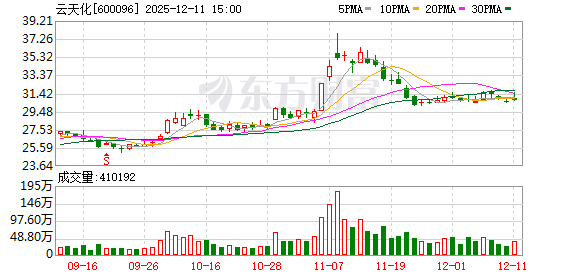
硫磺价格涨至近十年高位:下游磷肥保供稳价,钛白粉集体跟涨
Xin Lang Cai Jing· 2025-12-10 13:45
Core Viewpoint - The recent surge in sulfur prices has reached a nearly ten-year high, significantly increasing cost pressures for downstream industries such as phosphate fertilizers, which are crucial for food security in China [1][2]. Group 1: Sulfur Price Trends - Sulfur prices have been on the rise since last year, with a notable spike in October 2023. As of December 5, the price of granular sulfur at the Yangtze River port reached 4,115 RMB/ton, marking a nearly 200% year-on-year increase [1]. - The average import price of sulfur in China rose from $175.79/ton in January to $314.94/ton in October, reflecting a 79.21% increase [2]. - Recent contracts from Qatar, Kuwait, and the UAE for December sulfur have reached FOB $495/ton, surpassing historical highs [3]. Group 2: Impact on Downstream Industries - Sulfur is primarily used to produce sulfuric acid, with phosphate fertilizers being the largest consumer, accounting for over half of sulfur consumption [3]. - The price of industrial-grade monoammonium phosphate (MAP) has surged since November, with an increase of approximately 500 RMB/ton, leading to a current average price of around 6,500 RMB/ton, a year-on-year increase of 12.07% [3]. - The domestic sulfuric acid market average price reached 930 RMB/ton by the end of November, up 124% from the beginning of the year [3]. Group 3: Company Responses and Market Adjustments - Yuntianhua has called for measures to mitigate the impact of rising sulfur costs, ensuring sufficient supply of phosphate fertilizers and stabilizing market prices [1]. - The phosphate fertilizer industry is expected to see a reduction in production capacity utilization, projected to drop to 50.86%, a decrease of 5.8 percentage points year-on-year [3]. - The rising sulfur prices have prompted the titanium dioxide industry to initiate its sixth round of price increases this year, with leading companies raising prices by up to 700 RMB/ton [4]. Group 4: Future Market Outlook - The domestic sulfur market is anticipated to experience a volatile upward trend, with no new domestic sulfur production facilities planned and tight import conditions expected to persist [4]. - The demand for sulfur is likely to remain strong as phosphate fertilizer production resumes and winter storage needs increase [4]. - Global sulfur production is expected to grow slowly due to supply constraints, particularly in high-sulfur crude oil regions like the Middle East [5].

硫磺价格暴涨超320%创新高:谁在助推、谁在承压?
Xin Lang Cai Jing· 2025-12-10 07:37
Group 1 - Recent sulfur prices have surpassed 4000 yuan/ton, with mainstream prices at Zhenjiang Port reaching 4150 yuan/ton, marking a 320% increase from the low of under 1000 yuan/ton in the second half of last year [1][2][29] - The surge in domestic prices is primarily driven by strong performance in the international market, particularly due to the relationship between sulfur production and fossil fuel consumption [5][32] - Global high-sulfur crude oil production is expected to decline due to OPEC's decision to halt production increases and geopolitical factors affecting supply, particularly from Russia [7][34] Group 2 - Major exporting countries have raised sulfur prices, with Qatar and Kuwait both announcing December contract prices at FOB 495 USD/ton, a significant increase of approximately 24% [9][10][36] - China's sulfur import dependency remains high at around 50%, with projections indicating an import volume of approximately 9.95 million tons in 2024 [13][40] - The domestic sulfur market is heavily influenced by international pricing trends due to China's high reliance on imports from countries like the UAE, Qatar, and Kuwait [12][41] Group 3 - The sulfur price increase is impacting various downstream industries, particularly the fertilizer sector, which accounts for over 50% of sulfur consumption [18][45] - The production of titanium dioxide, which requires sulfuric acid, is also affected, leading to price increases among domestic titanium dioxide producers [21][49] - The indirect demand for sulfur from the lithium iron phosphate sector is rising, driven by the growing demand for energy storage batteries [26][53] Group 4 - Market sentiment remains bullish, with 71% of participants expecting further price increases due to tight international supply and rising import costs [27][54] - Short-term price pressures are anticipated, with potential for a slight correction before the Spring Festival, although a rebound in March could occur due to seasonal demand [28][56] - The overall profit margins for downstream industries are limited, which may restrict the potential for prices to reach 5000 yuan/ton [28][56]
硫磺市场后续走势 是先跌后涨还是单边上行?
Mei Ri Jing Ji Xin Wen· 2025-12-09 14:54
Core Viewpoint - Sulfur prices have surged dramatically, reaching new highs and breaking historical records, driven by strong external market influences and increased demand from the downstream phosphate fertilizer industry [1][2][4]. Group 1: Price Trends - As of December 8, domestic sulfur manufacturers raised prices by 100 CNY/ton, with prices reaching 4180 CNY/ton for sulfur and 4350 CNY/ton for solid sulfur [2][3]. - The price of sulfur has more than doubled in 2025, with significant increases noted from January 1 prices of 1750 CNY/ton for solid sulfur and 1700 CNY/ton for liquid sulfur [3]. - The total sulfur port inventory in China is reported at 2.2028 million tons, with high inventories not suppressing prices due to strong market expectations [4]. Group 2: Market Dynamics - The increase in sulfur prices is attributed to strong external market performance, particularly from Qatar, where the December sulfur contract price rose to 495 USD/ton [4]. - A significant portion of market participants (71%) maintain a bullish outlook for December, driven by tight international supply and rising prices [4]. - The phosphate fertilizer industry is recovering, with production capacity utilization rates for monoammonium phosphate and diammonium phosphate improving, providing support for sulfur prices [6]. Group 3: Industry Challenges - Rising sulfur prices are increasing production costs for major fertilizer companies like Yuntianhua, which reported a 21.88% decline in revenue and a 2.81% drop in net profit due to higher raw material costs [7]. - Yuntianhua is implementing strategies such as centralized procurement to mitigate the impact of rising sulfur prices on their operations [7]. - Analysts predict that while the market may experience high-level consolidation, the long-term outlook remains bullish due to limited supply growth and steady demand [5][9].
硫磺市场后续走势,是先跌后涨还是单边上行?
Mei Ri Jing Ji Xin Wen· 2025-12-09 14:19
Core Viewpoint - Sulfur prices have surged dramatically, reaching new highs and breaking historical records, driven by strong external market influences and increased demand from the downstream phosphate fertilizer industry [1][2][4]. Group 1: Price Trends - As of December 5, 2025, sulfur prices have more than doubled compared to the beginning of the year, with major producers like Shandong Shenchi and Dongming Petrochemical raising prices to 4180 CNY/ton and 4350 CNY/ton respectively [3][4]. - The price increase is attributed to strong external market performance, with Qatar's sulfur contract price rising significantly, leading to higher import costs for China [4]. - Despite high port inventories of 2.2028 million tons, the market sentiment remains bullish, with 71% of surveyed participants expecting further price increases [4][5]. Group 2: Demand and Supply Dynamics - The phosphate fertilizer sector is recovering, with production capacity utilization rates for monoammonium phosphate and diammonium phosphate improving, providing support for sulfur prices [6]. - However, rising sulfur prices are squeezing profit margins for major fertilizer companies like Yuntianhua, which reported a 21.88% decline in revenue due to increased production costs [7]. - The market is expected to maintain high price levels through early 2026, driven by seasonal demand for spring planting and limited supply growth [9]. Group 3: Market Outlook - Analysts predict that while there may be short-term price corrections due to year-end inventory adjustments, the long-term outlook for sulfur prices remains bullish, with potential peaks as high as 5000 CNY/ton [6][9]. - The market is characterized by a cautious approach from end-users and traders, who may refrain from aggressive purchasing at record high prices [8]. - The supply side is expected to remain tight, with no new domestic production facilities and limited import growth due to cost pressures [9].
硫磺冲上4000元,磷酸铁锂又迎成本压力?
高工锂电· 2025-12-08 09:44
Core Viewpoint - The recent surge in sulfur prices, which have increased by over 300% since mid-2024, is expected to raise the costs of lithium iron phosphate (LFP) and other related materials, potentially impacting the overall cost structure of the lithium battery industry [2][3]. Group 1: Sulfur Price Dynamics - Domestic solid sulfur prices have risen from approximately 915 yuan/ton to around 4100 yuan/ton, with some forecasts predicting prices could reach 6000 yuan/ton [3]. - The price increase is driven by a supply-demand imbalance, with rising contract prices in the Middle East and decreasing domestic port inventories, alongside growing demand from downstream sectors such as phosphate fertilizers and lithium batteries [3][4]. Group 2: Cost Implications for Phosphate Fertilizers - For phosphate fertilizers, a 100 yuan increase in sulfur prices leads to an approximate 50 yuan increase in production costs [6]. - Current estimates suggest that the cost of producing monoammonium phosphate has exceeded 4200 yuan/ton, while the selling price is around 3650 yuan/ton, indicating a loss of nearly 600 yuan per ton [6]. Group 3: Impact on Lithium Iron Phosphate Production - The production of one ton of lithium iron phosphate requires about 0.23 tons of sulfur, translating to a cost increase from approximately 210 yuan to 940 yuan per ton of LFP as sulfur prices rise [10]. - The overall cost structure of LFP shows that raw materials account for over 80% of total costs, with lithium sources and iron phosphate being significant components [11]. Group 4: Market Reactions and Future Considerations - The increase in sulfur costs is seen as a pressure point for LFP producers, who are already facing thin margins due to prolonged price declines and industry losses [16][17]. - The market is currently witnessing a rebound in processing fees for LFP, but the fundamental issues of profitability remain unresolved [16]. - The industry must focus on managing costs and pricing strategies, particularly in light of potential further increases in sulfur prices and their implications for overall production costs [24].