美元价值

Search documents
美联储米兰:不担心关税会损害美元价值。
Sou Hu Cai Jing· 2026-02-09 20:06
Core Viewpoint - The Federal Reserve's Milan expressed confidence that tariffs will not negatively impact the value of the US dollar [1] Group 1 - The Federal Reserve maintains a positive outlook on the dollar's strength despite ongoing tariff discussions [1] - Concerns regarding tariffs affecting the dollar's value are deemed unfounded by the Federal Reserve [1]
每日投行/机构观点梳理(2026-01-14)
Jin Shi Shu Ju· 2026-01-14 14:22
Group 1: Inflation and Economic Outlook - Morgan Stanley's chief economic strategist noted that inflation has not re-accelerated but remains above target, indicating insufficient grounds for the Federal Reserve to lower interest rates in January [1] - JPMorgan's CEO highlighted the resilience of the U.S. economy despite a slowdown in the labor market, with consumer spending remaining strong and businesses generally healthy [1] - Credit Agricole's forex strategist suggested that the market has already priced in negative factors related to interest rate cuts, indicating that the dollar may be undervalued [1] Group 2: Currency and Monetary Policy - Barclays reported that the Japanese yen may face downward pressure due to rising concerns over Japan's fiscal situation, potentially leading to further monetary easing [2] - Mitsubishi UFJ noted that a significant depreciation of the yen could raise concerns among policymakers, with speculation about government intervention to support the currency [3] - Julius Baer indicated that despite narrowing interest rate differentials, the yen is expected to remain weak due to concerns over Japan's fiscal policies and high public debt levels [4] Group 3: UK Economic Outlook - ING analysts warned that the British pound's recent gains against the euro may not be sustainable, as the Bank of England could lower interest rates sooner than expected [5][6] Group 4: U.S. Inflation and Federal Reserve Predictions - CICC reported that the U.S. December CPI rose by 2.7% year-on-year, aligning with market expectations, while core CPI was slightly below expectations [7] - CITIC Securities projected that the Federal Reserve would pause interest rate cuts in January and implement two cuts of 25 basis points each later in the year [8] Group 5: Strategic Metals and Investment Opportunities - CITIC Jiantou emphasized the bullish outlook for strategic metals due to rising resource nationalism and significant changes in demand dynamics [9] - Galaxy Securities highlighted the potential for a super copper cycle driven by the intersection of AI advancements and global order restructuring, suggesting significant upside for copper prices [11][12] Group 6: Brain-Computer Interface Industry - Galaxy Securities reported that brain-computer interface technology is moving towards industrial production, with significant policy support in China facilitating its commercialization [13]

Gold price today, Tuesday, January 13, 2026: Gold opens above $4,600 after setting new high
Yahoo Finance· 2026-01-12 12:53
Core Viewpoint - The price of gold is influenced by various factors, including interest rates, political pressures, and market speculation, with current prices showing a slight decline from recent highs. Price Trends - Gold futures opened at $4,610 per troy ounce, down 0.1% from the previous closing price of $4,614.70, with an all-time high reached at $4,620 [1][4] - Over the past year, gold has seen a significant increase of 74.5% as of December 29, with a weekly increase of 3.6% and a monthly increase of 7.8% [4][7] Market Influences - The investigation into Fed Chair Jerome Powell by the Trump administration may continue to impact gold prices in 2026, as it raises concerns about the Federal Reserve's independence and its ability to control inflation [2] - Lower interest rates are beneficial for gold, as they reduce the income from competing assets like cash [3] Investment Considerations - Investors should be aware of price risk when purchasing gold at high prices, as buying high in hopes of short-term gains can be a challenging strategy [9] - Gold is increasingly viewed as a diversification asset for both central banks and individual investors, recovering from decades of low prices [9] - It is advised that gold should primarily act as a stabilizer in a diversified portfolio rather than a driver of high returns [10] Speculation Risks - Positions in gold, whether in bullion, coins, or ETFs, should be viewed as speculative due to the unpredictable nature of commodity prices influenced by macroeconomic and political factors [11]
投资者称:哈塞特执掌美联储可能给美元带来压力
Sou Hu Cai Jing· 2025-11-26 20:55
Core Viewpoint - The potential nomination of Kevin Hassett as the next Federal Reserve Chair raises concerns about a possible inclination towards interest rate cuts, which could weaken the value of the US dollar [1] Market Reactions - Following the news about Hassett, market bets on him succeeding Powell have increased, with his odds rising by 18 points to 53% on the betting site Polymarket [1] - Waller and Wosh follow with odds of 22% and 16% respectively for the position [1] Expert Opinions - Mike Riddell, Chief Portfolio Manager at Fidelity International's Strategic Bond Strategy, suggests that Hassett's nomination could bring interest rate cuts back into consideration, exerting bearish pressure on the dollar [1] - Riddell notes that the market's muted reaction may be due to Hassett already being viewed as a leading candidate and the recent decline in US Treasury yields [1]
美联储理事米兰:稳定币的广泛使用可能会增加触及零利率下限的风险
Sou Hu Cai Jing· 2025-11-07 20:21
Core Viewpoint - The widespread use of stablecoins may increase the risk of hitting the zero lower bound on interest rates, potentially lowering the neutral interest rate and affecting monetary policy [1] Group 1 - The rise of stablecoins could lead to a broader use of the US dollar, which may increase its value [1] - The Federal Reserve's interest rates could be lowered as a result of the increased use of stablecoins [1]
一文讲清楚,特朗普强势降息意味什么,为什么是中国难得的机遇
Sou Hu Cai Jing· 2025-08-26 05:47
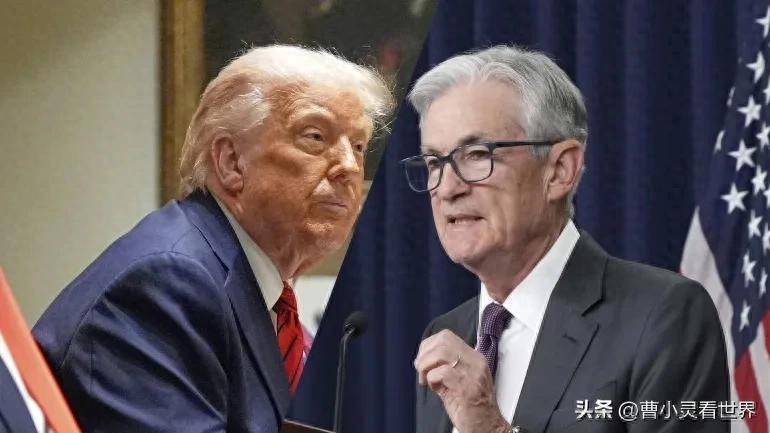
Core Viewpoint - The article discusses the implications of U.S. interest rates and the potential benefits and risks of interest rate cuts, particularly in the context of Trump's criticism of the Federal Reserve and its chairman Powell [1][3][11]. Group 1: U.S. Interest Rates and Economic Impact - Trump has been vocal about the need for lower interest rates, arguing that current rates are too high and impose significant economic costs, estimating a $360 billion annual cost for each percentage point of high interest rates [5][7]. - High interest rates lead to reduced borrowing and spending, which can result in job losses and lower economic growth, as evidenced by the disappointing non-farm payroll data [8][10]. - Lowering interest rates could stimulate economic activity by making borrowing cheaper, which is crucial for consumer spending and business expansion [7][11]. Group 2: Global Trade and Currency Dynamics - A reduction in interest rates could weaken the dollar, making U.S. exports more competitive while also mitigating the impact of tariffs on consumers [10][11]. - However, a weaker dollar could also lead to a stronger yuan, potentially harming China's export competitiveness and accelerating the shift of low-end manufacturing to Southeast Asia [21][23]. Group 3: Opportunities and Risks for Emerging Markets - Historically, U.S. rate cuts have led to increased capital inflows into emerging markets, which could benefit markets like China's A-shares [19]. - The influx of capital could also create asset bubbles and financial volatility, particularly in sectors like technology [21][24]. - To mitigate risks, China could enhance its import reserves and support high-tech industries while upgrading its manufacturing capabilities to counteract the effects of a weaker dollar [23][24].

4.27周评 黄金会不会延续跌势?
Sou Hu Cai Jing· 2025-04-27 07:07
Group 1 - The article discusses the recent performance of gold, highlighting a long upper shadow candlestick pattern and a drop from the 3500 level to around 3260, questioning whether the downward trend will continue [3] - It mentions that the Federal Reserve's financial report identifies global trade wars and policy uncertainty as major risks to financial stability, contributing to concerns about the value of the US dollar [3] - The article notes that comments from Federal Reserve officials about a potential interest rate cut in June, along with geopolitical instability, provide short-term support for gold prices [3] Group 2 - The technical analysis indicates that after the drop from 3500, gold has experienced three consecutive days of significant fluctuations, with clear support and resistance levels identified at 3385 and 3260 [3] - For trading strategies, the initial support level is set at 3300, with strong support noted between 3260-70, while key resistance is at 3385 [5] - The article suggests that if the price does not continue to rise after 10 AM, a downward trend may occur, particularly if the upper boundary of the daily fluctuation at 3385 is not breached [3][5]