
血糖管理

Search documents
每14个年轻人就有1个糖尿病患者:我们与“糖”的战争,提前了四十年
3 6 Ke· 2026-02-27 05:04
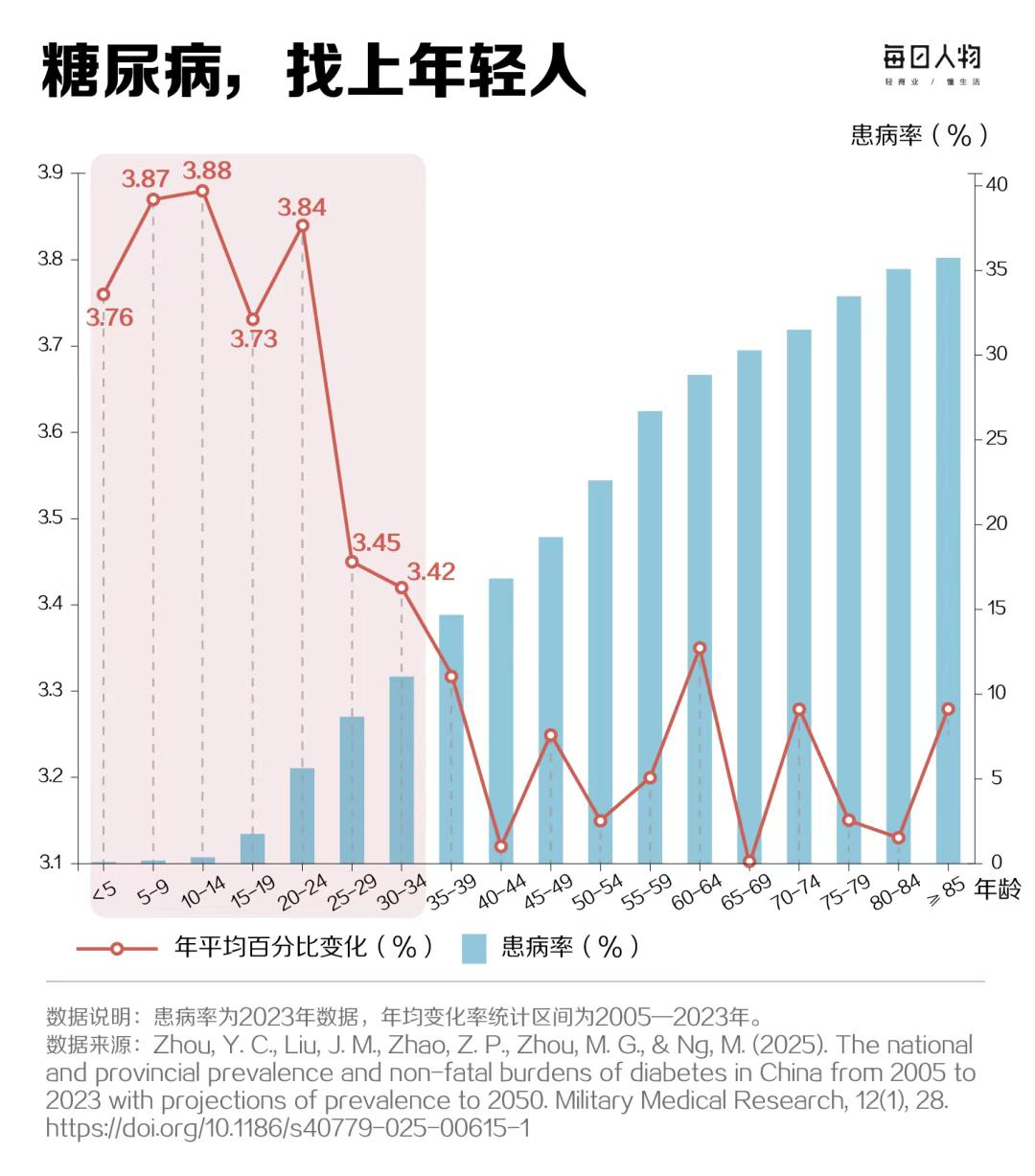
Group 1 - The core issue highlighted is the alarming trend of diabetes becoming more prevalent among younger populations, with 1 in 14 individuals aged 20-24 diagnosed with diabetes and 20% of those under 35 being pre-diabetic [1][2] - The number of diabetes patients over 20 in China has reached 233 million, accounting for a quarter of the global total [1] - The rise in diabetes cases among young people has increased by approximately 50% over the past decade, with urban professionals and sedentary lifestyles being significant contributors [3] Group 2 - The awareness of pre-diabetes among those under 35 is only about 40%, despite a detection rate of 20% [5] - Misconceptions about diabetes treatment, particularly the fear of lifelong medication, hinder early intervention [5] - The impact of lifestyle choices is emphasized, with 60% of diabetes cases attributed to lifestyle rather than genetics [2] Group 3 - Practical dietary recommendations include balanced meals with protein, fats, and carbohydrates, altering the order of food consumption, and increasing dietary fiber intake [6][12] - The role of medication, such as GLP-1 receptor agonists, is acknowledged, but lifestyle changes are deemed crucial for effective diabetes management [9][12] Group 4 - The importance of physical activity is stressed, with only 18.3% of adults meeting the recommended exercise levels, leading to a cycle of insulin resistance and fatigue [14] - Combining aerobic and strength training is recommended as the optimal strategy for blood sugar control [15][20] Group 5 - Emerging research on gut microbiota suggests its significant role in metabolic health and blood sugar management [19][22] - The concept of "reversal" of diabetes is discussed, emphasizing sustainable lifestyle changes rather than a cure [23][25] Group 6 - The social stigma surrounding diabetes management can create psychological barriers for young patients, impacting their health choices [28][31] - Encouraging a supportive community and open communication about health needs is vital for effective diabetes management [31]

用着司美格鲁肽,突然发现怀孕了?别慌,先把这几步做对
GLP1减重宝典· 2026-02-26 04:08
Core Viewpoint - The article discusses the implications of using Semaglutide, a GLP-1 receptor agonist, during pregnancy, highlighting the risks of unintended pregnancy and the necessary precautions for women using this medication [5][6]. Group 1: Semaglutide Overview - Semaglutide is a GLP-1 receptor agonist that improves blood sugar levels, reduces appetite, and delays gastric emptying, making it useful for treating type 2 diabetes and weight management [6]. - There is insufficient data on the safety of Semaglutide during pregnancy, leading to conservative clinical recommendations against its use during this period [6]. Group 2: Risks of Unintended Pregnancy - The likelihood of unintended pregnancy while using Semaglutide is increased due to several factors, including irregular ovulation in women with obesity or PCOS, gastrointestinal side effects affecting oral contraceptive absorption, and a lack of long-term contraceptive planning [8]. - Women using Semaglutide should prioritize contraception as a necessary safety measure if they do not plan to conceive [8]. Group 3: Recommendations for Pregnancy Planning - It is advised to stop using Semaglutide at least two months before attempting to conceive to minimize the risk of early embryo exposure to the drug [9]. - This recommendation aims to distance the fertilization and early embryonic development stages from the potential drug exposure window [9]. Group 4: Actions After Unintended Pregnancy - Upon discovering an unintended pregnancy, the first step is to stop Semaglutide and seek professional evaluation, noting the last injection date, dosage, and purpose of the medication [10]. - It is crucial not to discontinue all diabetes medications without professional guidance, especially for those with pre-existing conditions like diabetes or abnormal glucose tolerance [10]. Group 5: Monitoring and Management During Pregnancy - Regular prenatal checks should focus on key screening points, including early pregnancy assessments for chromosomal abnormalities and mid-pregnancy structural ultrasounds [11]. - Continuous monitoring of maternal metabolic status and fetal growth is essential, as underlying conditions like obesity and insulin resistance pose more significant risks than the medication itself [11]. - Post-discontinuation of Semaglutide, it is important to manage weight and metabolic health proactively to avoid complications during pregnancy [11].

过年一大桌子菜,应该先吃啥?血糖高的人群尤其要注意!
Sou Hu Wang· 2026-02-17 09:07
Core Viewpoint - The article emphasizes the importance of dietary management for individuals with high blood sugar during the Spring Festival, focusing on the role of the spleen in nutrient metabolism and blood sugar regulation. Dietary Recommendations - **Balanced Meat and Vegetable Pairing**: It is advised to combine lean meats like beef, skinless chicken, and fish with vegetables to provide nutrition while stabilizing blood sugar levels. Recommended meats are low in fat and high in quality protein, which helps prevent the accumulation of "phlegm and dampness" that can hinder spleen function [1]. - **Recommended Vegetables**: Vegetables such as yam, winter melon, broccoli, spinach, celery, and snow peas are suggested. These vegetables are believed to support spleen health and have a low glycemic index, which helps in controlling blood sugar levels by slowing down the absorption of carbohydrates [2]. - **Eating Order**: For individuals with high blood sugar, a recommended eating sequence of "vegetables first, then meat, followed by carbohydrates" can help stabilize post-meal blood sugar levels [2]. - **Cooking Techniques**: It is recommended to use steaming, boiling, or light stir-frying instead of frying or heavy sauces to preserve nutrients and reduce the burden on the spleen [2]. Beverage Choices - **Sugar-Free Beverages**: It is advised to avoid sugary drinks like milk tea, fruit juices, and carbonated beverages. Instead, choosing sugar-free drinks that can help regulate blood sugar, such as the patented "Jinliwang" beverage, is recommended. This drink contains herbal ingredients aimed at supporting spleen function and blood sugar management [3]. Lifestyle Recommendations - **Physical Activity**: Engaging in light physical activities, such as walking after meals, is encouraged to aid digestion and help manage blood sugar levels [5]. - **Regular Sleep Patterns**: Maintaining a regular sleep schedule is important, as irregular sleep can negatively impact spleen function and blood sugar stability [5].

一定要在这个年龄前,就开始控糖!很多人都晚了
Zhong Guo Jing Ji Wang· 2025-12-09 01:44
Core Viewpoint - The article emphasizes the importance of early blood sugar management, particularly before the age of 35, due to rising diabetes rates among younger populations in China and the associated health risks [1][2]. Group 1: Rising Diabetes Rates - The diabetes prevalence among males aged 20-24 in China has surged from 1.99% to 7.42%, with a threefold increase in the incidence rate for those under 40 [1]. - The American Diabetes Association and the latest Chinese diabetes prevention guidelines have lowered the recommended age for blood sugar testing from 40 to 35, reflecting a significant shift in health recommendations [2]. Group 2: Biological and Lifestyle Factors - Metabolic function declines sharply after age 30, with muscle mass decreasing by 1% annually, which impairs the body's ability to process glucose [2]. - By age 35, pancreatic beta cells that secrete insulin age more rapidly, leading to decreased insulin production and increased blood sugar levels [2]. - Modern lifestyle factors such as work stress, sedentary behavior, and high sugar intake contribute to insulin resistance, increasing the risk of developing type 2 diabetes by 5% to 10% annually if not managed [3]. Group 3: Early Intervention Benefits - Early blood sugar control can protect pancreatic beta cell function, allowing them to recover and maintain their ability to regulate blood sugar effectively [5]. - Starting blood sugar management before age 35 can reduce the risk of cardiovascular diseases by 20%, with specific reductions in heart attack and stroke risks of 25% and 31%, respectively [6]. - Early intervention can also lower the risk of microvascular complications, such as retinal disease and diabetic kidney disease [7][8]. Group 4: Cost-Effectiveness of Early Management - Managing blood sugar early can significantly reduce healthcare costs associated with diabetes medications and complications, such as dialysis and surgeries [10]. Group 5: Practical Tips for Blood Sugar Control - Dietary adjustments include a balanced meal ratio of carbohydrates, vegetables, and proteins, and opting for low glycemic index foods while avoiding sugary drinks [11]. - Incorporating fragmented exercise into daily routines can help meet physical activity recommendations without requiring large time commitments [12]. - Replacing high-sugar snacks with healthier options like nuts, yogurt, and fresh fruits can aid in maintaining stable blood sugar levels [13].
四大控糖“陷阱” 你掉进几个
Bei Jing Qing Nian Bao· 2025-12-02 01:28
Core Viewpoint - The article discusses common misconceptions about sugar control diets and emphasizes the importance of understanding food labels and nutritional content for individuals managing their blood sugar levels [1] Group 1: Misconceptions about Sugar Control - Misconception 1: Consuming "sugar-free" foods is completely safe. "Sugar-free" only indicates sugar content ≤0.5g/100g, but these foods may still contain starch and sugar alcohols that can raise blood sugar levels [2] - Misconception 2: Avoiding staple foods will lower blood sugar. Not consuming staple foods can lead to low blood sugar, nutrient imbalance, and muscle loss, ultimately making weight control more difficult [3][4] Group 2: Fruit Consumption and Alcohol Intake - Misconception 3: Diabetics should not eat fruit. Fruits provide essential vitamins and fiber, and when consumed wisely, can aid in blood sugar management. It is important to choose low glycemic index fruits and control portion sizes [5][6] - Misconception 4: Stable blood sugar allows for increased alcohol consumption. Alcohol can significantly impact blood sugar levels and may lead to complications. It is recommended that diabetics limit alcohol intake and avoid drinking on an empty stomach [7]
雅培瞬感携iCGM高标准亮相进博会,中国血糖管理进入“精准导航”时代
Cai Jing Wang· 2025-11-10 05:39
Core Insights - The article highlights Abbott's innovative iCGM technology, which represents a significant advancement in diabetes management, transitioning from mere monitoring to comprehensive management of blood glucose levels [1][2][4]. Product Innovation - Abbott showcased its new iCGM products, including the Libre Select and FreeStyle Libre 2 Plus sensors, at the China International Import Expo, emphasizing their compatibility with insulin pumps and clinical decision support [1][3]. - The iCGM technology is positioned as a non-auxiliary tool that directly informs diabetes treatment decisions, marking a critical evolution in the industry [2]. Clinical Impact - The introduction of iCGM is expected to enhance patient experience by providing continuous and trend-based data, shifting the perception of blood glucose monitoring from a burdensome task to a seamless part of daily life [4][5]. - iCGM also improves clinical efficiency for healthcare providers, allowing for easier access to continuous data and better communication with patients regarding treatment adjustments [5]. Market Strategy - Abbott is deepening its market presence in China through strategic partnerships, such as with WeDoctor, to create a comprehensive digital diabetes management system [6]. - The company aims to make advanced diabetes management technologies more accessible to patients, with a focus on localizing its iCGM digital connectivity capabilities [6]. Future Outlook - The article notes the challenges Abbott faces, including cost reduction, increasing insurance coverage, and educating healthcare providers and patients in grassroots markets [7]. - The significance of Abbott's high-standard technology and industry collaboration extends beyond commercial value, contributing to improved quality of life and aligning with China's "Healthy China 2030" strategic vision [7].

这7个不起眼的日常习惯,竟成血糖"隐形推手"!
GLP1减重宝典· 2025-08-31 03:37
Core Viewpoint - The article highlights the alarming rise of blood sugar issues in China, with approximately 120 million adults battling diabetes and 40% of adults at pre-diabetes risk. It emphasizes that common daily habits, rather than just sugary foods, are significant contributors to this crisis [5][6]. Group 1: Eating Habits and Blood Sugar - Eating speed significantly impacts diabetes risk; for every minute faster in eating, the risk increases by 13% [6]. - Slowing down eating by chewing each bite 20 times and taking breaks can reduce post-meal blood sugar peaks by 30% [6]. - The traditional Chinese practice of consuming congee can lead to higher blood sugar levels, with its glycemic index (GI) potentially increasing by over 30% compared to regular rice [8]. - Adjusting the order of food intake—starting with fiber, then protein, and finally carbohydrates—can lower post-meal blood sugar fluctuations by over 40% [9]. Group 2: Beverage Choices - Drinking fruit juice can be more harmful than eating whole fruits, with juice causing a blood sugar spike comparable to sugary drinks. Daily juice drinkers have a 21% higher risk of diabetes compared to those who consume whole fruits [10]. - Beer has a surprisingly high glycemic index of 119, which is higher than that of soda and white rice, increasing the risk of abnormal fasting blood sugar levels by 41% for regular drinkers [13]. Group 3: Lifestyle Factors - Prolonged sitting can decrease glucose uptake by 40%, leading to significant blood sugar fluctuations. The average office worker sits for about 9.3 hours a day, contributing to the younger onset of diabetes [14][15]. - Simple habits like standing up every 25 minutes can lower post-meal blood sugar peaks by 28% [15]. - Maintaining 70% healthy habits can significantly reduce diabetes risk by 73%, emphasizing the importance of sustainable lifestyle changes rather than perfection [16].
卫健委答人民网记者提问 关于血糖的三个误区你要知道
Ren Min Wang· 2025-08-22 11:12
Core Viewpoint - The article discusses three common misconceptions about diabetes management, emphasizing the importance of comprehensive blood sugar control and understanding insulin use [1]. Group 1: Misconceptions about Blood Sugar Management - Misconception 1: "As long as fasting blood sugar is normal, there is no problem." Fasting blood sugar only reflects levels after at least 8 hours and does not represent overall blood sugar stability. Other important indicators include postprandial blood sugar and glycated hemoglobin, which provide insights into glucose handling and average blood sugar over the past two to three months [2]. - Misconception 2: "As long as blood sugar is lowered, it is sufficient." While managing blood sugar is crucial, it is not the only factor. Other risk factors such as weight, blood pressure, blood lipids, and kidney function also play significant roles in the development of diabetes complications and cardiovascular diseases. A multi-faceted management approach is necessary for diabetes patients [3]. Group 2: Understanding Insulin Use - Misconception 3: "Using insulin will lead to addiction." Insulin is essential for managing blood sugar levels, especially when the body's insulin production is impaired. The notion of insulin addiction is a misunderstanding; proper use under medical guidance can restore pancreatic function, potentially reducing the need for insulin or transitioning back to oral medications [4].


美好医疗(301363):公司事件点评报告:订单交付影响季度业绩,新增长点正逐步形成
Huaxin Securities· 2025-08-22 09:03
Investment Rating - The report maintains a "Buy" investment rating for the company [1] Core Views - The company experienced a revenue increase of 3.73% year-on-year in the first half of 2025, with total revenue reaching 733 million yuan, but net profit decreased by 32.44% to 114 million yuan [4] - The second quarter saw a revenue growth of 2.86% year-on-year, while net profit fell by 43.83%, primarily due to the impact of increased tariffs affecting order deliveries and a decline in high-margin product sales [5] - The company anticipates a recovery in net profit in the second half of the year as tariff increases have been suspended and deliveries are resuming [5] - The establishment of a new industrial base in Malaysia is expected to enhance the company's risk resilience by the end of 2025 [5] Summary by Sections Revenue and Profitability - The company forecasts revenues of 1.94 billion, 2.36 billion, and 2.81 billion yuan for 2025, 2026, and 2027 respectively, with corresponding EPS of 0.76, 0.90, and 1.10 yuan [8] - The projected P/E ratios for the current stock price are 30.9, 26.0, and 21.2 for the years 2025, 2026, and 2027 respectively [8] Growth Opportunities - The company is developing new growth points in blood glucose management, with advancements in products such as disposable injection pens and continuous glucose monitoring devices [6] - The non-medical sector has seen a significant revenue increase of 35.69% year-on-year in the first half of 2025, indicating successful expansion into personal care and consumer electronics [7] Financial Projections - The company expects a revenue growth rate of 21.8% in 2025, with net profit growth rates of 18.5% and 18.8% for 2026 and 2027 respectively [10] - The gross margin is projected to be 41.8% in 2025, gradually decreasing to 39.9% by 2027 [10]
美好医疗(301363):业绩受产能转移影响短期承压,期待新业务拓展潜力
EBSCN· 2025-08-22 07:36
Investment Rating - The report maintains a "Buy" rating for the company [5] Core Views - The company's performance is currently under pressure due to capacity transfer, but there is potential for new business expansion [1][2] - The core business, which includes home respiratory devices and cochlear implant components, has experienced short-term revenue declines due to capacity transfer to Malaysia and export controls [2] - Despite the challenges, the company has stable relationships with key customers and is developing next-generation products [2] - New product revenues are growing rapidly, with other medical components seeing a 54.4% year-on-year increase and home and consumer electronics components up 35.7% year-on-year [2] - The company is making progress in global expansion, particularly in blood glucose management projects and new customer acquisitions [3] - The company has established a production base in Malaysia, with plans for further capacity expansion expected to be operational by the end of 2025 [3] Financial Summary - For the first half of 2025, the company reported revenue of 733 million yuan, a year-on-year increase of 3.73%, and a net profit attributable to shareholders of 114 million yuan, a year-on-year decrease of 32.44% [1] - The revenue from core home respiratory components was 436 million yuan, down 2.76% year-on-year, while cochlear implant components generated 60 million yuan, down 7.53% year-on-year [2] - The company has adjusted its net profit forecasts for 2025-2027 to 361 million, 468 million, and 564 million yuan, respectively, reflecting a downward revision of 18.6%, 13.2%, and 14.1% [3] Valuation Metrics - The company is projected to have a revenue growth rate of 12.95% in 2025, with a net profit margin of 20.0% [4] - The estimated P/E ratio for 2025 is 37, and the P/B ratio is 3.5 [4][12]