
银行负债成本

Search documents
商业银行同业存单及负债梳理:1Y 同业存单利率有望小幅下行-20260223
Hua Yuan Zheng Quan· 2026-02-23 07:32
1. Report Industry Investment Rating - No information about industry investment rating is provided in the report. 2. Core Viewpoints of the Report - The balance of inter - bank certificates of deposit (CDs) has declined significantly since the second half of 2025. The 1Y inter - bank CD rate is expected to decline slightly, and the 1Y inter - bank CD rate of large banks may fall below 1.55% in the next few quarters. The long - term bond yield has room for further decline, with the 10Y Treasury bond yield expected to oscillate between 1.6% - 1.9% in 2026, and the bond market trend may be significantly stronger than the early - year expectations [1][2][3]. 3. Summary of Related Contents 3.1 Inter - bank CD Balance and Structure - As of the end of January 2026, the balance of inter - bank CDs was 19.03 trillion yuan, a decrease of 2.77 trillion yuan compared to the end of May 2025. Among them, the balance of state - owned large banks was 6.34 trillion yuan, a decrease of 1.36 trillion yuan compared to the first half of 2025; the balance of joint - stock banks was 5.59 trillion yuan, a decrease of 0.6 trillion yuan; the balance of city commercial banks was 5.81 trillion yuan, a decrease of 0.13 trillion yuan; the balance of rural commercial banks was 1.14 trillion yuan, with little change [1]. - Since the beginning of 2025, the proportion of 1Y inter - bank CDs has decreased from 63.2% at the end of 2024 to 50.2% at the end of January 2026 [1]. 3.2 Reasons for the Decline in Inter - bank CD Balance of Large Banks - Since the second quarter of 2025, the growth rate of general deposits of the four major banks has rebounded from 3.7% at the end of March 2025 to 7.6% at the end of January 2026, alleviating the liability pressure of large banks [1]. - Since the second half of 2025, the central bank has increased the medium - and long - term liquidity injection. As of the end of January 2026, the central bank's claims on other depository corporations reached 21.69 trillion yuan, an increase of 4.55 trillion yuan compared to the end of May 2025. The large banks obtained a large amount of funds through repurchase and MLF, significantly reducing their demand for issuing inter - bank CDs [1]. - The preference of wealth management products for investing in deposits and the growth of non - bank inter - bank deposits due to the active stock market may also reduce the demand of some banks for issuing inter - bank CDs [1]. 3.3 Deposit Situation - Since 2022, although the deposit interest rate has been significantly reduced multiple times, the balance of personal time deposits has steadily increased from 68.2 trillion yuan at the end of December 2021 to 123.8 trillion yuan at the end of January 2026. The impact of the significant reduction of the time deposit interest rate in May 2025 on personal time deposits has weakened [1]. - The "current - deposit - oriented" trend of bank deposits is not obvious. As of the end of January 2026, the proportion of current deposits in personal deposits was only 26.3%, slightly lower than 26.8% at the end of September 2024. Since the beginning of 2025, the proportion of current deposits has stabilized, which is beneficial for banks to reduce liability costs [2]. 3.4 Investor Structure of Inter - bank CDs - As of the end of December 2025, policy banks held 0.44 trillion yuan of inter - bank CDs, accounting for 2.2%, a decrease of 4.2 percentage points compared to the end of 2020; depository financial institutions held 4.72 trillion yuan, accounting for 24.0%, a decrease of 12.4 percentage points; non - legal person products held 12.53 trillion yuan, accounting for 63.7%, an increase of 14.4 percentage points. The investment demand for inter - bank CDs is mainly from broad - based funds such as bank wealth management products and money market funds [2]. 3.5 Interest Rate Analysis - The money market interest rate is greatly affected by the central bank's actions. The inter - bank CD rate is related to the marginal winning bid rates of repurchase and MLF. The short - term interest rate still has room to decline, and the 1Y inter - bank CD rate of large banks may fall below 1.55% in the next few quarters [2]. - The long - term bond yield has room for further decline. The 10Y Treasury bond yield is expected to oscillate between 1.6% - 1.9% in 2026, and the 30Y Treasury bond active bond may return below 2.2%. The 1Y inter - bank CD rate of large banks may fall below 1.55% [3].
固收点评20260112:2026年一季度会否出现降准降息?
Soochow Securities· 2026-01-12 06:32
Group 1: Investment Rating - No information provided about the industry investment rating Group 2: Core Viewpoints - There is a possibility of RRR cuts and interest rate cuts in Q1 2026, but the likelihood of a rate cut is lower than that of an RRR cut [3] - The bond market is in a headwind period, and the downward space for interest rates driven by loose policies is limited [3] Group 3: Summary by Related Catalogs Event - The Central Economic Work Conference held from December 10th to 11th, 2025, set the tone for policies in 2026. The implementation timing of RRR cuts and interest rate cuts has become a point of contention in Q1 [1] Factors for RRR Cuts - To supplement the seasonal liquidity gap, the liquidity gap in January 2026 is about 190 billion yuan after considering fiscal deposits, cash flow, and bank reserve requirements [3] - The local government bond issuance plan in Q1 2026 is front - loaded compared to the previous year, with the total quarterly issuance decreasing but a need to hedge the high issuance in January [3] - To reduce bank liability costs, RRR cuts have the lowest capital cost for banks, and can help stabilize the net interest margin and create conditions for subsequent interest rate cuts [3] Factors for Interest Rate Cuts - From the fundamental perspective, the economy in 2025 showed a "high - first - then - low" trend, and an interest rate cut can help achieve a good start in 2026 [3] - If an RRR cut is implemented, it can reduce bank liability costs and open up space for interest rate cuts [3]
岁末揽储博弈升级:大行停售长期存单 中小行逆势加息
Di Yi Cai Jing· 2025-12-03 11:42
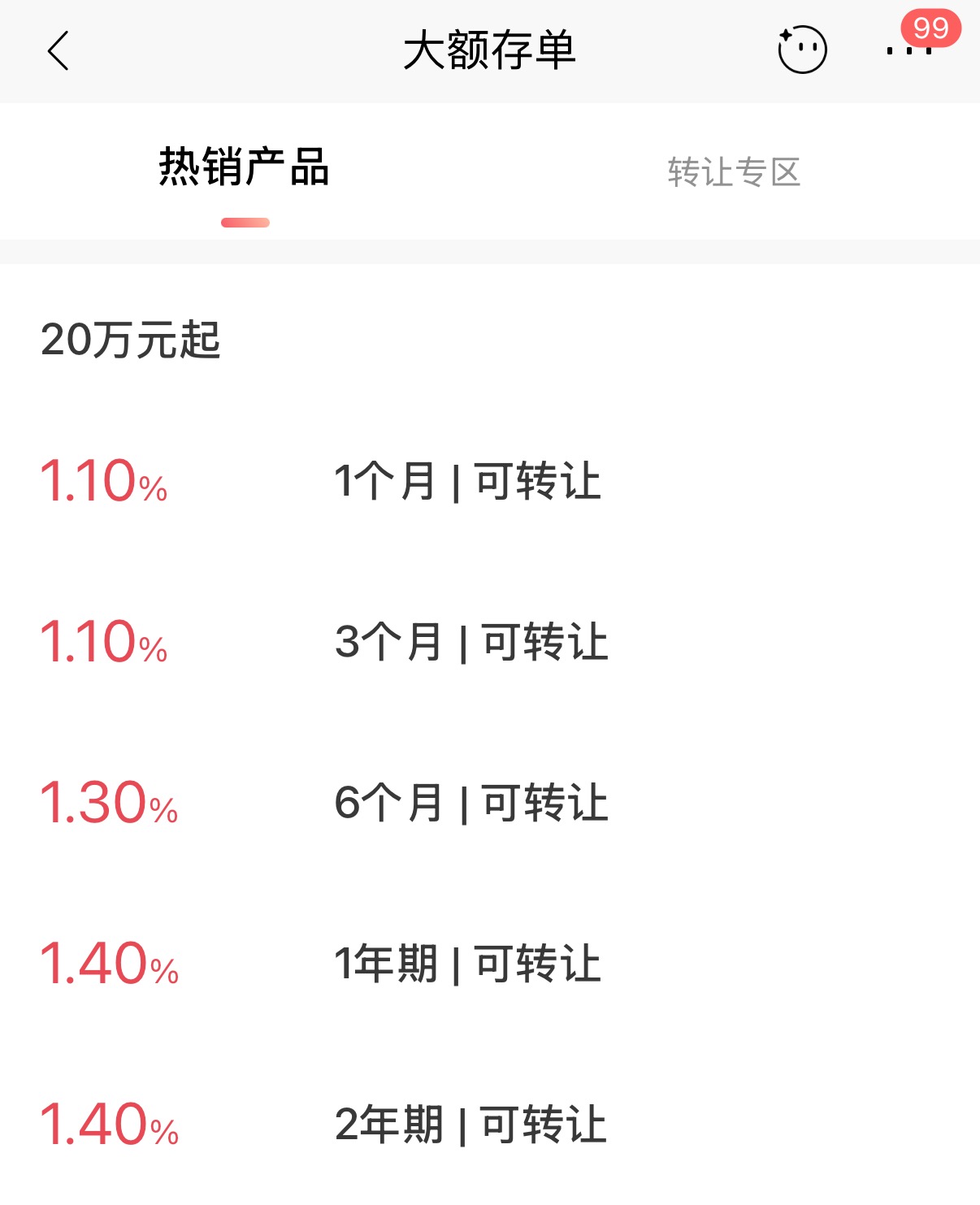
Core Viewpoint - The banking industry is experiencing a structural adjustment in deposit products as the net interest margin remains under pressure, leading to differentiated competition among banks [1][14]. Group 1: Changes in Deposit Products - The five-year large denomination certificates of deposit (CDs) are gradually exiting the market, with major state-owned banks collectively removing these products [2][5]. - Currently, only shorter-term CDs (one year, two years, three years, and six months) are available, with interest rates for three-year CDs at 1.55% and one-year/two-year CDs at 1.20% [2][11]. - Some banks have raised the minimum investment threshold for large CDs, with examples including a minimum of 100,000 yuan for certain products, while maintaining lower thresholds for others [6][12]. Group 2: Interest Rate Trends - There is a growing prevalence of interest rate inversion, where shorter-term deposits offer higher rates than longer-term ones, challenging traditional pricing logic [4][17]. - The average net interest margin for commercial banks was reported at 1.42% as of the end of Q3 2023, reflecting a year-on-year decrease of 11 basis points [17]. Group 3: Strategies of Different Banks - While large banks are reducing high-cost long-term deposits, smaller banks are increasing deposit rates to attract customers during the year-end savings season [14][15]. - For instance, Shengjing Bank has raised its one-year deposit rate to 1.65% and three-year rate to 1.8%, indicating a competitive strategy to enhance deposit attraction [15][16]. Group 4: Future Outlook - The ongoing pressure on net interest margins is expected to drive banks to continue lowering funding costs, with a trend towards reducing deposit interest rates likely to persist [17][18]. - Analysts suggest that banks will not only lower deposit rates but also adjust the structure of their deposit products to manage costs effectively [17].

2026年度债市策略 - “慢熊”与“分岔”中的“相对价值”
2025-11-28 01:42
Summary of Key Points from Conference Call Industry Overview - The focus is on the bond market strategy for 2026, characterized by a "slow bear" and "divergence" in "relative value" [1] - The real estate industry is expected to bottom out in Q2 2026, with sales, inventory, and new construction growth rates having reached their lowest points [1][6] Core Insights and Arguments - The projected upper limit for interest rates in 2026 is 2.25%, driven primarily by nominal GDP recovery, which is expected to exceed 5% [1][3] - The current policy framework emphasizes stability to address uncertainties and structural challenges, avoiding large-scale stimulus while supporting emerging industries [1][7] - The CPI is forecasted to center around 0.8% next year, while PPI is expected to recover to above -1%, influenced by monetary activation and the bottoming out of real estate investment [1][8] - The market's focus on the lower limit of interest rates is determined by the cost of bank liabilities, which is currently stable at around 1.6% [1][9] Important but Overlooked Content - The phenomenon of monetary activation is reflected in the M1-M2 differential, which has decreased from over 8% to 1%-2% recently, indicating a shift from time deposits to demand deposits [4][5] - The real estate sector is currently experiencing negative growth across all metrics, but improvements are expected as investment growth bottoms out [6] - The sales regulations are aimed at protecting investors and promoting long-term holding, which has led to behavioral changes in the market [21][22] - Non-bank institutions are facing challenges due to new sales regulations and valuation adjustments, leading to potential liquidity opportunities [14] - The macro trading strategy for 2026 will focus on the expected recovery of fundamentals and the panic caused by new redemption fee regulations [15] Market Dynamics - The bond market in 2026 will be characterized by "trading," with structural gaming opportunities arising from the rotation between interest rates and credit [20] - The current monetary policy is expected to have limited room for rate cuts, with only 1-2 potential cuts anticipated [11] - The anticipated rise in funding prices for 2026 is expected to be around 1.5%, slightly higher than the current levels [12] Conclusion - The bond market strategy for 2026 will require a focus on trading and structural opportunities, with an emphasis on liquidity and the impact of regulatory changes on market behavior [20][21]
恢复国债买卖对银行资负影响如何?
Tianfeng Securities· 2025-10-29 23:44
Investment Rating - Industry Rating: Outperform the Market (maintained rating) [8] Core Insights - The resumption of government bond trading will primarily lead to asset replacement rather than extending the duration of liabilities for commercial banks. The operations will adjust the asset structure without expanding the balance sheet [2][3][19]. - The impact on the Net Stable Funding Ratio (NSFR) from government bond trading is minimal due to the low net buying scale and the 5% coefficient for government bonds in the NSFR calculation [4][5][26]. - Government bond trading can help alleviate pressure on banks' interest rate risk indicators, providing a feasible option for managing the increasing supply of government bonds [6][28][29]. - The improvement in banks' funding costs from government bond trading is limited, with a potential cost reduction of approximately 1 basis point if the central bank buys 1 trillion yuan of bonds [7][30][32]. Summary by Sections 1. Impact of Government Bond Trading on Bank Asset and Liability Structure - The essence of government bond trading for commercial banks is asset replacement, with liquidity from bond sales being utilized in various ways, including maintaining excess reserves or replacing other monetary policy tools [2][15][19]. - The operations do not lead to a balance sheet contraction but may tighten overall liquidity due to reduced excess reserves [16][19]. 2. Limited Improvement in NSFR - The resumption of government bond trading may not significantly alleviate the pressure on banks' funding costs, as the current high balances of MDS and MLF remain a concern [4][21][22]. - The potential for NSFR improvement is small, with estimates suggesting a reduction in required stable funding of about 500 billion yuan from a net buying scale of 1 trillion yuan [26][27]. 3. Alleviation of Interest Rate Risk Pressure - The increasing supply of government bonds necessitates strategies to manage interest rate risk, including the use of government bond trading as a tool to absorb some of the supply [6][28][29]. 4. Limited Effect on Funding Cost Improvement - The mechanism for improving funding costs involves replacing MDS and MLF with liquidity from bond sales, with a projected minimal impact on overall funding costs [7][30][31].

央行料持续完善市场化利率形成传导机制
Zhong Guo Zheng Quan Bao· 2025-07-21 20:16
Group 1 - The core viewpoint of the articles highlights the trend of increased liquidity in corporate and household deposits, indicating a shift towards demand deposits while maintaining a significant level of time deposits [1][2] - In June, the proportion of demand deposits in new corporate and household deposits reached 83% and 95% respectively, compared to historical ranges of 40% to 70% [1] - The decline in deposit interest rates is identified as a key factor driving the trend towards liquidity in deposits, as banks adjust rates to stabilize interest margins [1][2] Group 2 - Despite the trend towards liquidity, the proportion of time deposits remains high, with household time deposits accounting for 73.5% as of mid-year, showing only a slight decrease from the previous month [2] - The asset side of banks has seen a more significant decline in interest rates compared to the liability side, contributing to a narrowing net interest margin [2][3] - The average interest rate for new corporate loans was approximately 3.3%, down about 45 basis points year-on-year, while personal housing loan rates were around 3.1%, down about 60 basis points [2] Group 3 - Financial regulatory authorities emphasize the importance of maintaining a reasonable net interest margin to support both the real economy and the health of the banking system [3][4] - The People's Bank of China aims to enhance the market-oriented interest rate transmission mechanism to support banks in lowering their funding costs [3][4] - Structural monetary policy tools are expected to play a more significant role in supporting key sectors and weak links in the economy, thereby reducing banks' funding costs [3]