
住宿餐饮业

Search documents
新华指数研究院监测显示:1月份小微企业融资与经营景气度连续攀升
Zheng Quan Ri Bao Wang· 2026-02-27 10:50
分维度来看,2026年1月份,融资景气度指数为55.10点,环比上升0.28点,自2025年下半年以来一直保持在54点以上。当 月,经营景气度指数为48.52点,较2025年12月份上升0.08点。1月份,全国居民消费价格指数(CPI)同比上涨0.2%,环比上涨 0.2%,居民消费需求持续恢复。叠加各项促消费政策持续显效,以及临近春节等因素影响,商品消费与服务消费均显现较好增 长势头,小微企业订单、利润等多项核心经营指标同步向好。政策发力与市场回暖的双重支撑下,小微企业市场信心持续巩 固。 本报讯 (记者吕东)2026年1月份,普惠金融-景气指数达49.60点,较2025年12月份上升0.12点,近期连续2个月实现上 升。信贷旺季叠加财税金融政策发力,企业融资环境持续优化;消费需求恢复,政策带动小微企业经营指标向好,市场信心进 一步巩固。 据了解,普惠金融-景气指数由中国经济信息社、中国银行业协会、中国建设银行、中国中小企业协会共同推出,由中国 工商银行、中国邮政储蓄银行、招商银行、江苏银行、浙江农商联合银行等单位共同参与,由新华指数研究院运营。 分行业来看,1月份,九大行业经营景气度指数呈6升3降。临近春节 ...
本市经营主体发展质量连续三年全国第一
Xin Lang Cai Jing· 2026-02-07 22:52
Core Insights - The city aims to reach 2.8697 million business entities by the end of 2025, with a year-on-year growth of 6.83%, and over 40% of these being technology-based enterprises [1] - The survival rate of enterprises has remained above 75% for the past three years, marking the highest quality of business development in the country for three consecutive years [1] - The city has implemented a credit repair "cloud service" that has benefited 80,000 business entities, and has returned 108 million yuan to alleviate the financial burden on enterprises [1] Business Development - In 2025, the city is expected to see a continuous enhancement in the competitiveness of business entities, characterized by simultaneous growth in quantity and quality, structural optimization, and robust momentum [1] - A total of 380,100 new business entities are projected to be established in the year [1] Regulatory Enhancements - The city has achieved a 100% scanning rate for the "scan check" mechanism, with non-on-site inspections accounting for 70.6% of total inspections, significantly improving regulatory efficiency [1] - The city is focusing on the accommodation and catering industries, creating an eight-category negative list to comprehensively address "involution" competition among platforms [2] Food Safety and Compliance - The city has taken the lead in opening full access to restaurant licensing data for food delivery platforms, aiding real-time qualification audits [2] - A risk-oriented food safety inspection and monitoring mechanism is being established, with special rectification actions focusing on online dining safety [3] Market Order and Competition - This year, the city plans to intensify the crackdown on monopolistic behaviors in public utilities and platform economies, addressing issues such as counterfeit goods, false advertising, and predatory pricing [2] - The city aims to construct 100 consumer rights protection service stations and 50 consumer education bases, enhancing consumer protection and education [4]
今年北京将重点查处平台经济领域垄断行为
Bei Jing Shang Bao· 2026-02-07 11:48
Core Insights - Beijing's market regulatory meeting announced that by the end of 2025, the number of business entities in Beijing is expected to reach 2.8697 million, representing a year-on-year growth of 6.83%, with over 40% being technology-based enterprises [1] - The city will focus on investigating monopolistic behaviors in public utilities and platform economy sectors, while also addressing issues such as counterfeit goods, false advertising, predatory pricing, and illegal advertisements to foster a competitive market environment [1] - Additionally, new measures will be developed this year to promote high-quality development in the innovative pharmaceutical sector, and there will be a further deepening of the comprehensive regulation of "involution" competition among accommodation and catering platform enterprises [1]
刘小涛主持召开政企恳谈会认真听取意见建议扩大供给优化结构提高质量 推动生活性服务业更好发展
Xin Hua Ri Bao· 2026-02-07 00:15
Group 1 - The provincial governor emphasized the importance of high-quality development in the service industry, particularly in the life service sector, to support Jiangsu's modernization efforts [1][2] - Various service industry companies, including Yuanhe Holdings and Jiuyi Network, provided feedback on their operational conditions and development needs during the government-enterprise discussion meeting [1] - The governor highlighted the life service industry as a key provider of employment and essential services for residents, indicating a strong connection to daily life [1] Group 2 - Jiangsu has the conditions and potential to develop its life service industry, which requires a focus on enhancing quality, diversity, and convenience to meet the growing needs of the population [2] - Specific sectors such as accommodation, retail, cultural tourism, health, and elderly care services are prioritized for policy improvement and development [2] - The government aims to create a supportive environment for businesses, including establishing a database for service industry enterprises and fostering local brands in various sectors [2]
赵伟:综合整治“内卷式”竞争:背景、成因、影响及应对
申万宏源宏观· 2025-12-23 16:05
Core Viewpoint - The article discusses the phenomenon of "involution" in the Chinese economy, highlighting its causes, impacts, and policy responses, emphasizing the need for structural reforms to enhance economic quality and stability [3][5][6]. Group 1: Causes and Impacts of Involution - The current "involution" is characterized by long-term negative growth in the Producer Price Index (PPI) and low capacity utilization rates in mid- and downstream industries, which squeeze corporate profits and hinder industrial upgrades [3][5]. - The deep-rooted causes of this "involution" include the differentiation of old and new economic drivers during the economic transition period and the chaotic competition among local governments pursuing GDP and fiscal revenue [5][6]. - The "involution" phenomenon has created a spiral contraction cycle of "price-income-consumption," severely restricting healthy economic development and transformation [5][6]. Group 2: Policy Responses and Recommendations - To address the "involution," policies should focus on both supply and demand sides, combining growth stabilization with reform promotion, which benefits both the present and the long term [6][11]. - Supply-side measures include production adjustment, elimination of backward production capacity, and improving product quality to restore prices and enhance competitiveness [6][11]. - Demand-side strategies should promote resident service consumption through fiscal subsidies and social security improvements to unleash consumption potential, while guiding employment from manufacturing to services [6][11]. Group 3: Evolution of Anti-Involution Policies - Since mid-2024, high-level meetings have consistently addressed the need to combat "involutionary" competition, with significant policy decisions made to regulate local government and corporate behaviors [7][8]. - The 2025 government work report outlined specific actions to establish a unified national market and comprehensively address "involutionary" competition [8][11]. - The current anti-involution policies are characterized by a higher stance, broader coverage, and stronger synergy compared to previous supply-side reforms, with a focus on both local governments and enterprises [11][12]. Group 4: Macroeconomic Context and Industry Characteristics - The macroeconomic environment is under pressure from continuously declining prices, with the PPI experiencing negative growth for 33 consecutive months, and industrial capacity utilization rates at historical lows [14][16]. - The profitability of industrial enterprises is under significant pressure, with many industries, particularly in the mid- and downstream sectors, experiencing negative profit growth [16][19]. - The "involution" is more pronounced in mid- and downstream industries, where the competition has intensified, leading to a decline in profitability and increased cost pressures [19][21]. Group 5: Structural Issues and Future Directions - The article emphasizes the need for structural reforms to break the cycle of "price-income-consumption" contraction, advocating for a shift from an investment-driven to an innovation-driven economy [20][42]. - The service sector is identified as a key area for absorbing employment and addressing structural unemployment, with significant potential for growth in service consumption [42][43]. - Policies should focus on enhancing service sector development, improving social security systems, and optimizing service industry regulations to stimulate demand and support economic transformation [37][42].


新华指数|11月普惠金融-景气指数:融资环境改善 企业经营韧性凸显
Xin Hua Wang· 2025-12-23 09:40
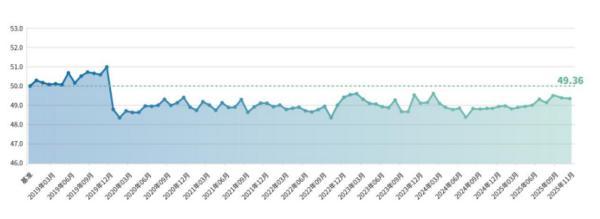
Core Insights - The Inclusive Finance Prosperity Index reached 49.36 points in November 2025, a slight decrease of 0.03 points from October, but up 0.51 points year-on-year [1] Financing Dimension - The financing prosperity index rose to 54.83 points in November, an increase of 0.14 points from October [2] - The average interest rate for newly issued loans (in both domestic and foreign currencies) was approximately 3.1%, down about 30 basis points year-on-year [2] - The balance of inclusive micro and small loans and medium to long-term loans in the manufacturing sector grew by 11.4% and 7.7% year-on-year, respectively, both exceeding the growth rate of other loans [2] Operating Dimension - The operating prosperity index slightly decreased to 48.28 points in November, down 0.07 points from October, with the decline rate narrowing compared to the previous month [3] - The performance and investment indices showed slight month-on-month increases, driven by the "Double Eleven" shopping festival, which stimulated consumer demand [3] - The business vitality index decreased by 0.13 points, indicating that market confidence among enterprises still needs to be strengthened [3] Industry Prosperity - Among nine major industries, four showed an increase in operating prosperity while five experienced a decline [6] - The construction and real estate sectors saw slight increases in their operating indices due to accelerated project construction and policy support [6] - The agriculture, industry, transportation, accommodation, and social services sectors experienced declines in their operating indices [6] Regional Prosperity - Among seven regions, four experienced an increase in operating prosperity while three saw a decline [7] - The Northeast, North China, East China, and Northwest regions reported increases in their indices, while South China, Central China, and Southwest regions saw declines [7]
金融支持北京消费升级 12部门联合印发实施方案
Yang Shi Xin Wen· 2025-11-19 08:32
Core Viewpoint - The People's Bank of China and 12 departments have jointly issued an implementation plan to enhance financial support for consumption in Beijing, aiming to improve financial service levels in the consumption sector by 2030 [1] Group 1: Financial Support for Key Consumption Areas - The implementation plan emphasizes increasing credit support for consumer goods, particularly in the automotive sector, by optimizing loan issuance ratios, terms, and interest rates [2] - Financial institutions are encouraged to innovate financial products for various car purchasing scenarios, including new and used vehicles, with a focus on electric vehicles [2] - The plan includes support for consumer finance in home appliances, green smart home renovations, and electronics, promoting consumer loan offerings and credit card installment discounts [2] Group 2: Infrastructure and Service Sector Support - The plan incorporates financial support for consumer infrastructure and commercial circulation systems, urging financial institutions to optimize products and services for commercial upgrades and infrastructure investment [2] - Key consumer service sectors identified for financial support include cultural tourism, hospitality, and elder care services [2] Group 3: Tailored Services for Specific Demographics - The implementation plan outlines financial support for employment-related groups, the elderly, and foreign visitors, focusing on enhancing financial services for these demographics [3] - Support for small and micro enterprises includes interest subsidies for first-time loans and entrepreneurial loans, promoting job creation [3] - Financial institutions are encouraged to develop services tailored to the elderly, such as convenient payment options and specialized financial products [3] Group 4: Enhancing Financial Institutions' Service Capabilities - A multi-faceted financing support system is established, including credit, bonds, and equity financing [4] - Banks are encouraged to increase support for service consumption sectors through various loan types, including first loans and credit loans [4] - The plan promotes bond issuance for qualified enterprises in cultural, tourism, and education sectors, as well as equity financing for quality enterprises in the consumption industry [4]
刚刚!利好,来了!
中国基金报· 2025-11-18 11:12
Core Viewpoint - The article discusses the implementation plan by the People's Bank of China and 12 other departments to boost and expand consumption in Beijing, aiming for significant improvements in financial services for various sectors by 2030 [1][18]. Group 1: Overall Goals - The plan aims to enhance financial service levels in Beijing's consumption sectors, including accommodation, dining, cultural tourism, education, and elder care, with a focus on increasing loan balances and credit investments [2][19]. Group 2: Financial Support for Key Areas - Increased credit support for consumer goods, particularly in automotive loans, with measures to reduce penalties for early loan settlements during trade-ins [3][20]. - Enhanced financial backing for the purchase of new energy vehicles and other consumer goods, encouraging financial institutions to participate in promotional activities [4][5][20]. - Promotion of cultural, tourism, and sports consumption by leveraging Beijing's status as a cultural center, with innovative financing models for events and activities [6][20]. - Development of financial services for the accommodation and dining sectors, supporting the creation of unique cultural and culinary brands [7][21]. - Support for the growth of domestic services like housekeeping and elder care, with financial solutions tailored to meet the needs of service providers [8][22]. Group 3: Infrastructure and Employment Support - Support for the construction of consumer infrastructure and trade circulation systems, optimizing financial products for major projects [9][22]. - Continued financial support for small and micro enterprises in Beijing, including interest subsidies for first-time loans [11][24]. - Initiatives to enhance financial services for the elderly, including specialized banking products and payment solutions [12][24]. - Improvement of services for foreign visitors, focusing on payment solutions in key commercial areas [13][24]. Group 4: Financial Institution Engagement - Encouragement for financial institutions to provide differentiated and convenient services in the consumer sector, enhancing risk management capabilities [14][25]. - Support for bond market financing for cultural, tourism, and educational enterprises, promoting the issuance of bonds to enhance funding [15][26]. - Promotion of equity financing for quality enterprises in the consumer industry through various market mechanisms [16][26]. Group 5: Policy Coordination and Consumer Environment - Strengthening monetary policy to incentivize financial institutions to increase credit in key consumption sectors [27][30]. - Implementation of fiscal policies to lower consumer credit costs and support service sector financing [27][30]. - Development of insurance products tailored to the needs of the elderly and other specific groups, enhancing financial security [28][30]. - Continuous improvement of the payment environment to facilitate consumption, including the promotion of digital currency [29][30]. Group 6: Organizational Support - Emphasis on coordination among financial departments and other relevant authorities to ensure effective implementation of the consumption support plan [30][31]. - Encouragement for financial institutions to promote their consumption-related policies and products to increase awareness and access [32][31].

利好!北京,重磅发布!
Zheng Quan Shi Bao· 2025-11-18 10:15
Core Viewpoint - The implementation plan aims to enhance financial support for consumption in Beijing, focusing on various sectors to stimulate economic growth and establish a diversified consumer finance service system by 2030 [1][5][6]. Financial Support for Consumption - The plan emphasizes increasing credit support for consumer goods, particularly in the automotive sector, by optimizing loan terms and reducing penalties for early loan settlements [2][7]. - Financial institutions are encouraged to innovate products for various purchasing scenarios, including new and used cars, and to support green home appliances and electronics [2][8]. - The plan also promotes equity financing for quality enterprises in the consumption industry through public listings and private equity investments [2][12]. Key Areas of Focus - The plan outlines specific areas for financial support, including: - Enhancing cultural and sports consumption by leveraging Beijing's cultural resources and promoting events [8][9]. - Supporting the hospitality and dining sectors through innovative financial products and promotional activities [9][10]. - Encouraging the development of domestic services such as housekeeping and elder care by providing tailored financial services [10][11]. Infrastructure and Market Development - Financial institutions are urged to engage in infrastructure projects that support consumption, optimizing loan conditions based on borrower profiles [10][12]. - The plan aims to improve employment and income for residents by supporting small and micro enterprises with favorable loan policies [11][12]. Policy Coordination and Implementation - The plan stresses the importance of policy coordination among various government departments to enhance the effectiveness of financial support for consumption [14][18]. - It also highlights the need for financial institutions to develop specific implementation plans to align with the overall objectives of boosting consumption in Beijing [18][34].
10月份中国中小企业发展指数为89.0 保持稳中有进发展态势
Zheng Quan Ri Bao· 2025-11-10 16:24
Core Insights - The China Small and Medium Enterprises Development Index (SMEDI) for October stands at 89.0, unchanged from September and the same as the previous year [1] - Macro policies are showing positive effects, with a gradual improvement in domestic demand and market vitality, leading to a stable development trend for SMEs [1][2] Index Summary - In October, the comprehensive operation index, market index, cost index, and investment index increased by 0.3, 0.1, 0.1, and 0.2 points respectively compared to September [1] - The macroeconomic sentiment index and funding index remained stable, while the labor and efficiency indices decreased by 0.1 points each [1] Industry Performance - The indices for the industrial sector, transportation, real estate, and accommodation and catering sectors rose by 0.1, 0.3, 0.1, and 0.4 points respectively [1] - The transportation sector's index has increased for two consecutive months, indicating a recovery in economic activity [2] - Conversely, the construction, wholesale and retail, social services, and information transmission software sectors saw declines of 0.1, 0.1, 0.3, and 0.3 points respectively [1] Regional Development - In October, the development indices for the central and northeastern regions were 89.8 and 81.6, reflecting increases of 0.2 and 0.3 points from September [1] - The eastern and western regions maintained indices of 90.0 and 88.4, remaining unchanged from the previous month [1]