
动漫衍生品

Search documents
“谷子年货”俏 国产IP占据C位
Xin Lang Cai Jing· 2026-02-21 20:16
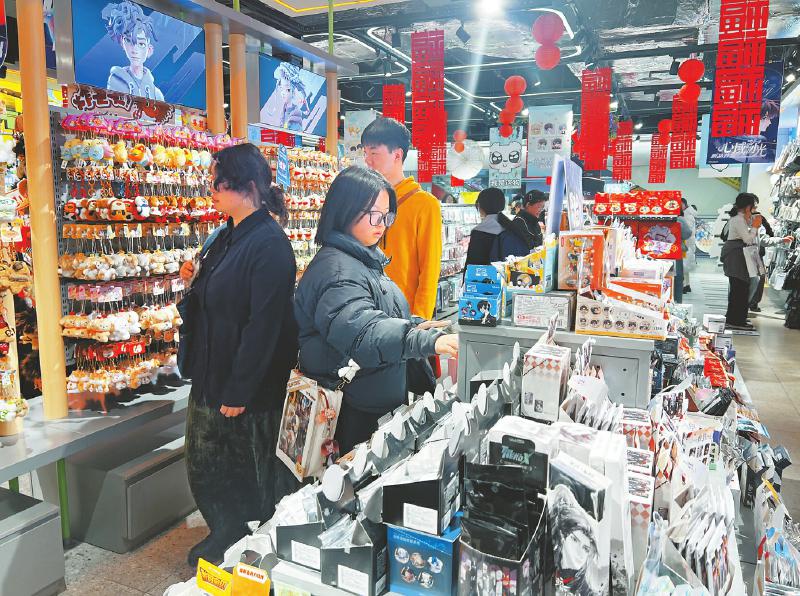
Core Insights - The "Guzi economy" is experiencing significant growth during the Spring Festival, with various "Guzi stores" attracting large crowds and launching new products to capitalize on holiday traffic [2] - There is a noticeable shift from Japanese anime IPs to domestic Chinese animation IPs, which are gaining popularity among consumers [2] Group 1: Consumer Behavior - During the Spring Festival, "Guzi" products, which are related to anime and gaming, are becoming popular gifts among young people [2] - The number of customers visiting stores is increasing daily, with some stores reporting over 700 visitors per day during the holiday [2] - Sales figures are also rising, with some stores averaging sales of 30,000 yuan per day in the first three days of the holiday [2] Group 2: Market Trends - The demand for domestic IP derivative products is on the rise, with more "Guzi" products from Chinese animation being featured prominently in stores [2] - The second-hand "Guzi" market is thriving, with many consumers actively trading and selling their items, indicating a clear target market among buyers [2][3] - Some stores are offering personal consignment services, allowing individual sellers to rent space to sell their "Guzi" products directly to consumers [3]

广州一个区,造出全球1/7的显示屏,广东又要出现一个万亿赛道
21世纪经济报道· 2026-01-18 23:38
Core Viewpoint - The article highlights the emergence of Guangdong's industrial clusters, particularly in the display technology and new energy vehicle sectors, showcasing their potential to evolve into significant economic powerhouses in the future [1][12]. Summary by Sections Display Technology Industry - Guangzhou's Huangpu District is a leading hub for display technology, producing one-seventh of the world's display screens and one-third of television main control boards within an area of less than 500 square kilometers [1]. - The new display industry in Huangpu has over 130 regulated enterprises, with an industry output value nearing 130 billion yuan (approximately 18.5 billion USD) in the first eleven months of 2025 [5]. - The proximity of suppliers and customers within the industrial cluster allows for rapid product development and market entry, enhancing competitiveness [5]. Robotics and Automotive Industries - Shenzhen is noted for its concentration of robotics companies and research institutions, while the city is projected to produce one-fifth of the nation's new energy vehicles by 2025 [9][12]. - BYD has surpassed Tesla in pure electric vehicle sales, becoming the global leader in this sector [12]. Broader Industrial Clusters - Guangdong is home to numerous industrial clusters, including over 8,000 toy manufacturing companies in Dongguan, which produce one-third of the world's anime derivatives [12]. - The article emphasizes that these industrial clusters are not merely geographical but are innovation-driven ecosystems that attract talent, technology, and capital, facilitating the rapid development of new industries [12][14]. Future Prospects - Guangdong aims to establish three international-level trillion-yuan digital industry clusters by 2027, indicating a strong future for its economic landscape [14]. - The article suggests that products and technologies developed in Guangdong will become integral to everyday life, influencing various sectors from software to robotics [14].

谷子大逃杀?“一折清仓”成风,市场洗牌新生
3 6 Ke· 2025-12-23 00:22
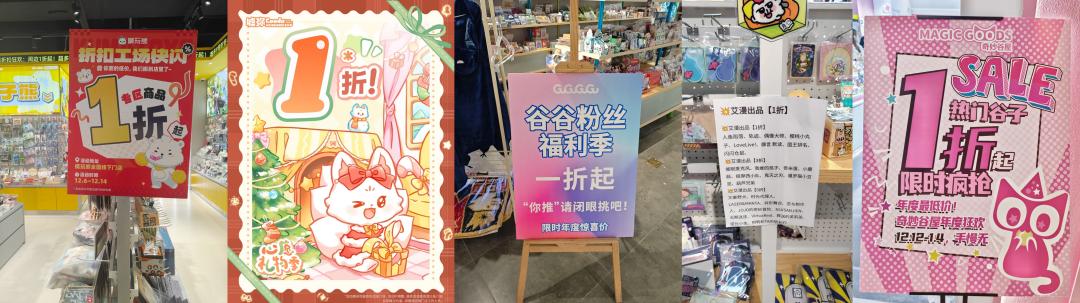
Core Insights - The "millet market" is experiencing a significant downturn, with many stores reporting sales insufficient to cover basic expenses like electricity bills [1][2] - A trend of deep discounts has emerged, with products being sold at prices as low as one yuan, indicating a market collapse [2][21] - Major brands and stores are participating in clearance sales, leading to a saturation of discounted products in the market [1][4] Group 1: Market Dynamics - The phenomenon of "one yuan millet" is becoming common, with some stores advertising prices as low as 9.9 yuan per kilogram [2] - The market has seen a shift where even well-known brands are struggling, leading to a reduction in store numbers and a pivot towards different product lines [14][15] - The initial boom in the millet economy was driven by the popularity of blind box products, which has now led to overproduction and subsequent market saturation [12][22] Group 2: Consumer Behavior - Consumers are increasingly aware of the declining value of previously sought-after products, leading to a decrease in purchasing willingness [21][22] - The market is witnessing a shift in consumer focus, with some stores moving away from millet products to other categories like K-pop and accessories [7][10] - The perception of value has changed, with consumers now viewing early purchases as mistakes due to the drastic price drops [1][2] Group 3: Brand Strategies - Some brands are adapting by recruiting franchisees and slowing down the expansion of self-operated stores [14][19] - The market is seeing a consolidation phase where only brands with strong product offerings and IP management will survive [35][45] - The trend of "one yuan millet" reflects a broader issue of overproduction and the need for brands to focus on quality and scarcity to regain consumer trust [32][33]
布鲁可早盘涨近5% 近日多产品矩阵亮相巴西圣保罗动漫展览会
Xin Lang Cai Jing· 2025-12-15 03:13
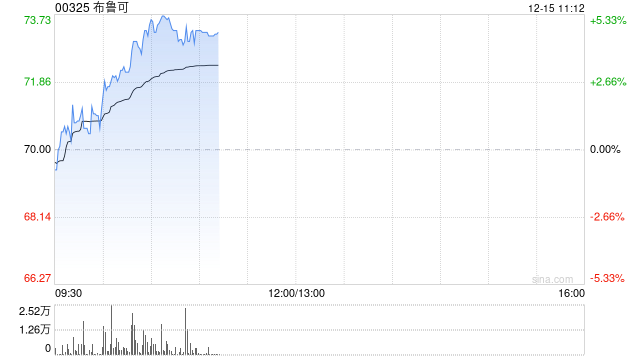
Group 1 - The core viewpoint of the article highlights Bruco's stock performance, which increased by 4.57% to HKD 73.20, with a trading volume of HKD 31.14 million [5] - Bruco showcased nearly 60 products from over 10 globally recognized IPs, including Transformers, Saint Seiya, and Jurassic World, at the São Paulo Anime Expo [5] - The global premiere of Bruco's Saint Seiya figure, the third edition of the Golden Twelve Palaces, attracted significant attention from attendees and will be launched in other countries and regions subsequently [5] Group 2 - Wanlian Securities noted the rapid development of the IP economy in the media industry, driven by the rise of Generation Z consumers and the increasing demand for emotional value [5] - The derivative market is experiencing strong growth in formats such as blind boxes, cards, and collectibles [5] - The firm believes that as high-quality IPs are further developed across different media, there is substantial growth potential for commercializing these IPs, indicating a promising future market size for the IP economy [5]
2025谷子经济市场前景及供需两端详细梳理分析报告
Sou Hu Cai Jing· 2025-10-16 08:53
Group 1 - The core viewpoint of the report highlights the rapid growth of the "Guzi" economy, driven by a shift from niche subculture to mainstream consumer market, with a market size of 168.9 billion yuan in 2024 and an expected growth to over 300 billion yuan by 2029, reflecting a compound annual growth rate (CAGR) of 17.79% from 2017 to 2024 [1][22][21] - The "Guzi" products, which are affordable and range from 10 to 200 yuan, have gained popularity among younger consumers, with an average single purchase of 102 yuan and an increase in monthly purchase frequency from 2.3 times in 2023 to 2.9 times in 2025, indicating strong user engagement [1][2][3] - The user base for the "Guzi" economy is substantial, with over 500 million individuals in the pan-anime demographic in China as of 2024, and 88.71% of anime enthusiasts expressing willingness to purchase "Guzi" products [2][29] Group 2 - The supply side of the "Guzi" economy is being optimized, with a notable shift from Japanese IP dominance to the rise of domestic IPs such as "Love and Deep Space" and "Identity V," which are now leading in sales, showcasing the improvement in domestic IP creation capabilities [3][4][5] - The IP licensing system in China has seen significant growth, with retail sales of licensed products reaching 155.09 billion yuan in 2024, doubling since 2017, and the licensing fees increasing from 3.82 billion yuan in 2019 to 5.99 billion yuan [4][30] - The diversification of sales channels, including online platforms like Tmall and JD.com, as well as offline stores, has enhanced consumer access to "Guzi" products, with a rapid expansion of retail outlets in the sector [4][5][22] Group 3 - The "Guzi" economy is expected to benefit from the cultural confidence and the ongoing development of domestic IPs, which are becoming increasingly relevant in the context of rising spiritual consumption among younger generations [5][21][22] - The market is currently concentrated in high-tier cities, with over 55.25% of consumers located in first-tier cities, but there is significant potential for growth in lower-tier cities, where GDP growth is projected to be 6.1% annually from 2023 to 2028 [3][4][22] - The social attributes of "Guzi" products amplify their market impact, with over 70% of consumers sharing their purchases on social media, transforming these products into social media tools that attract new users [2][3][4]

“小谷子拉动大消费”:谷子经济发展特征、趋势与相关建议
Zhong Guo Yin Hang· 2025-09-04 07:39
Group 1: Market Growth and Trends - The "Guzi economy" market size in China is projected to grow from 58 billion yuan in 2020 to 168.9 billion yuan by 2024, nearly tripling in size[9] - By 2029, the overall market size is expected to reach 308.9 billion yuan[9] - The number of related enterprises in the Guzi economy has increased from 78,900 in 2015 to nearly 7 million by mid-2025, an increase of 87 times[9] Group 2: Consumer Demographics - Consumers aged 18 to 40 account for over 78% of Guzi product purchases, with the Gen Z demographic contributing more than 50%[13] - Female consumers' share in the Guzi economy is projected to rise from 67% in 2023 to 78% by 2025[13] - High-tier cities account for over 80% of Guzi consumption, indicating potential growth in lower-tier markets[13] Group 3: Challenges and Recommendations - Insufficient copyright protection is harming the interests of original creators and consumers, necessitating stronger IP protection measures[34] - Market disorder due to irrational speculation is disrupting the Guzi economy, highlighting the need for regulatory oversight[34] - The industry faces challenges from homogenized competition, which limits growth potential, suggesting a need for innovation in IP development and product differentiation[36]

100抽1,谷圈混池是销售升级还是新“消费陷阱”?
3 6 Ke· 2025-08-27 13:21
Core Viewpoint - The article discusses the growing trend of blind box sales in Japan, particularly focusing on the challenges and consumer behavior associated with mixed pools of merchandise, highlighting the low probability of obtaining desired items and the psychological factors driving consumer purchases [2][4][21]. Group 1: Blind Box Sales in Japan - Japan has a unique culture of blind box sales, where consumers often face low probabilities of obtaining specific items, with chances as low as 1.4% to 2% for popular products [2][4]. - The concept of mixed pools in blind box sales increases the difficulty of obtaining specific items, leading to mixed reactions from consumers, who both criticize and participate in group purchases [4][21]. - Popular IPs (Intellectual Properties) like "Haikyuu" and "Detective Conan" frequently release merchandise with a large number of variations, making mixed pools a common practice [9][11]. Group 2: Consumer Behavior and Market Dynamics - The mixed pool sales model appears to be driven by the desire for higher sales volumes and repeat purchases, transforming consumer spending from "small money for happiness" to "more small money for happiness" [21][34]. - In contrast to Japan, domestic consumers often express dissatisfaction with mixed pool sales, leading to adjustments in pricing and marketing strategies by local IP holders to better align with consumer expectations [22][37]. - The success of mixed pool sales in Japan is attributed to the strong influence of popular IPs and a mature fan economy, which contrasts with the more cautious reception in the domestic market [22][35]. Group 3: Future Prospects and Challenges - The article suggests that while mixed pool sales have proven successful for high-profile IPs, the sustainability of this model in the domestic market remains uncertain due to consumer backlash and the need for continuous optimization [34][37]. - The potential for mixed pool sales to become a mainstream commercial model in the domestic market hinges on addressing consumer concerns and improving the overall purchasing experience [35][39]. - The mixed pool sales strategy has shown promise in increasing revenue for companies, as evidenced by significant year-on-year growth in related merchandise sales [32][34].

上海市中心静安区全力为民营经济打开广阔发展空间
Zhong Guo Xin Wen Wang· 2025-06-11 14:51
Core Insights - The private economy in Jing'an District is expanding significantly, with a focus on high-quality development and innovation in key sectors such as blockchain, new retail, and semiconductors [1][2] - A total of 34 key measures have been outlined in the "Implementation Plan for Promoting High-Quality Development of the Private Economy in Jing'an District," including 11 unique initiatives aimed at enhancing the local private sector [1] Economic Impact - By 2024, the private economy is expected to contribute nearly 30% of the total tax revenue in Jing'an District [2] - The district will host 560 high-tech enterprises by the end of 2024, with nearly 80% being private companies [2] - There are 203 specialized and innovative small and medium-sized enterprises, with 85% being private [2] - The district has attracted 26 private enterprise headquarters across various industries, including software, human resources, and logistics [2] Innovation and Development - The establishment of the "Shu Tong Lian Gu" national blockchain application demonstration zone has led to a more than 300% increase in the number of enterprises over the past year [2] - The "Mei Chuang Jing Jie" skin health management innovation center has been launched, showcasing a collaborative development model among state-owned, foreign, and private enterprises [2] Support and Resources - Companies in Jing'an District benefit from a supportive development environment, resource aggregation, and talent acquisition, enhancing their ability to expand nationally and globally [3]
掘金“谷子经济”的核心是什么?
Zhong Guo Zheng Quan Bao· 2025-06-04 21:16
Group 1 - The core viewpoint of the articles highlights the emergence of the "谷子" economy in China, projected to reach a market size of 168.9 billion yuan in 2024, with a year-on-year growth of 41% [1][2] - The "谷子" market encompasses a variety of products including badges, cards, figurines, and other IP-licensed merchandise, with a structured supply chain involving upstream IP creators, midstream developers, and downstream retailers [1][2] - The demand for "谷子" products is driven by the expanding community of fans in the ACGN (Animation, Comics, Games, Novels) sector, with the user base expected to grow from 212 million in 2017 to 503 million by 2024 [4] Group 2 - The IP landscape in China's "谷子" market is dominated by Japanese and American IPs, which account for 38% and 22% of the top IPs respectively, while Chinese IPs make up 36%, primarily from gaming content [2][3] - The potential for growth in the "谷子" industry is significant, with improvements in IP conversion rates and an increase in the number of specialized players in the supply chain, including copyright agents and retail stores [4] - The interaction between "谷子" consumption and gaming content, along with the rise of social platforms for second-hand trading and community engagement, is expected to further stimulate demand [4]
生产“可拆卸服饰”手办被定淫秽物品,工厂12人被判刑
Guan Cha Zhe Wang· 2025-05-06 06:35
Core Viewpoint - The Shanghai Baoshan District People's Court has ruled on a case involving the production and sale of pornographic figurines, sentencing 12 defendants, including the factory owner and clerks, for profit from the crime of producing and selling obscene materials, with prison terms ranging from four years and nine months to probation [1][6]. Group 1: Legal and Judicial Context - The court's determination of the figurine as obscene was based on police assessments and testimonies from two underage witnesses who felt embarrassed to display the figurine, indicating its pornographic nature [3][6]. - The case reflects a modern transformation of the "leniency and severity" criminal policy, with strict penalties for main offenders and more lenient treatment for accomplices, demonstrating a balanced approach to justice [6][8]. Group 2: Industry Background - The figurine in question is a female character in a kneeling position, wearing removable lingerie, with wings on her back, and simplified anatomical features, which has sparked controversy [1][3]. - The figurine industry, particularly in Dongguan, is significant, with over 4,000 toy manufacturing companies and nearly 1,500 supporting enterprises, making it a major hub for toy exports in China [4][6]. - The rise of "2D" culture has led to increased popularity of figurines, but some businesses have blurred the lines between "2D" and "soft pornography," resulting in a surge of pornographic figurines in the market [6][8].
