
国际航运

Search documents
服务业开放提速!宁波、合肥、苏州纳入试点
Guo Ji Jin Rong Bao· 2026-01-13 16:34
Core Viewpoint - The Chinese service industry is accelerating its opening up, with a broader range of benefits, as the Ministry of Commerce has issued a comprehensive pilot task for nine cities, including three in the Yangtze River Delta region, enhancing regional integration and development [1][2]. Group 1: Expansion of Pilot Cities - The number of pilot cities in the Yangtze River Delta has reached six, with the inclusion of Ningbo, Hefei, and Suzhou, which fills key gaps in the regional open layout and forms a comprehensive open network [2][3]. - By the end of 2024, the actual foreign investment in the service sector is projected to reach 8,262.5 billion yuan, with the service industry accounting for 7,845.6 billion yuan, representing over 70% of total foreign investment [2]. Group 2: Regional Economic Development - The expansion of service industry pilot programs is seen as a crucial engine for high-quality regional economic development, particularly in the Yangtze River Delta, which is one of the most active and open regions in China [3][4]. - The pilot program encourages cities to develop unique tasks based on their strengths, fostering a complementary open structure among the cities [4]. Group 3: City-Specific Strategies - Ningbo, leveraging its world-class port resources, focuses on technology services, digital trade, and international shipping, aiming to attract high-end manufacturing enterprises and enhance its cross-border trade environment [4][5][6]. - Hefei is positioned as a regional technology innovation hub, concentrating on reforms in the technology service sector to support high-tech achievements and deepen integration with advanced manufacturing [6][7]. - Suzhou aims to integrate modern services with advanced manufacturing, particularly in the biopharmaceutical sector, and explore mechanisms for efficient and secure cross-border data flow [7][8]. Group 4: Collaborative Development - The inclusion of these three cities in the pilot program is a significant milestone for collaborative opening in the Yangtze River Delta, promoting a multi-layered, differentiated, and high-level open structure [9][10]. - The cities are expected to complement each other, with Hefei focusing on high-tech services, Ningbo on manufacturing and export trade, and Suzhou on service outsourcing, enhancing the overall competitiveness of the region [9][10]. Group 5: National Economic Implications - The pilot exploration in these three cities will support the construction of a higher-level open economy in China, improving international competitiveness and attracting quality foreign investment and talent [11].
锐财经丨服务业扩大开放“路线图”上新
Ren Min Ri Bao Hai Wai Ban· 2026-01-12 03:44
Core Viewpoint - The expansion of China's service industry opening-up pilot program is accelerating, with the recent issuance of a roadmap for nine cities, indicating a significant push towards enhancing service sector openness and reform [1][2]. Group 1: Pilot Program Achievements - The national service industry opening-up pilot program has shown remarkable results since its initiation in 2015, with 412.6 billion USD in foreign investment absorbed by 11 provinces and cities in 2024, accounting for 50.2% of the national total in the service sector [2]. - The new pilot cities are expected to promote service industry openness, with the central economic work conference emphasizing the need for orderly expansion of self-initiated openness in the service sector [2]. Group 2: Differentiated Exploration - The pilot cities are encouraged to develop tailored tasks based on their unique resources and industrial strengths, fostering innovation and complementary achievements [3]. - For instance, Ningbo is focusing on technology services and digital trade, while Dalian aims to leverage its position as an international shipping center to support the revitalization of Northeast China [3][4]. Group 3: Project Implementation for Regional Development - The pilot program aims to facilitate regional development through the implementation of specific projects, with the Ministry of Commerce emphasizing the importance of practical execution and coordination among departments [6][7]. - The Ministry will enhance communication with business entities and conduct evaluations of the pilot program's effectiveness to promote high-quality experiences and innovations [7].
服务业扩大开放“路线图”上新(锐财经)
Ren Min Ri Bao Hai Wai Ban· 2026-01-11 23:00
Core Insights - The article discusses the acceleration of service industry opening in China, particularly through the implementation of a comprehensive pilot program in nine cities, including Dalian, Ningbo, and Suzhou, aimed at enhancing foreign investment and promoting various service sectors [4][5][9]. Group 1: Pilot Program Overview - The pilot program for expanding service industry openness has been significantly effective since its initiation in 2015, with 412.6 billion USD in foreign investment absorbed by 11 provinces and cities in 2024, accounting for 50.2% of the national total in the service sector [5][9]. - The latest pilot program, outlined by the Ministry of Commerce, aims to further enhance the role of the nine cities by implementing common tasks and encouraging tailored initiatives based on local advantages [5][6]. Group 2: City-Specific Initiatives - Each of the nine pilot cities is encouraged to develop unique tasks that leverage their specific resources and industrial strengths, focusing on key service areas such as telecommunications, healthcare, and finance [6][8]. - For instance, Suzhou will explore the import of biomedical research materials, while Shenzhen will optimize its free trade account functions [8][9]. Group 3: Expected Outcomes and Future Directions - The shift in consumer behavior from goods to services necessitates the expansion of service industry openness to cultivate new growth drivers and enhance international competitiveness [9][10]. - The Ministry of Commerce plans to strengthen communication with businesses, provide targeted policy guidance, and evaluate the effectiveness of the pilot programs to ensure successful implementation and regional development [10].

产业聚势增活力
Hai Nan Ri Bao· 2025-12-18 03:49
Core Insights - Hainan is focusing on enhancing its four leading industries: tourism, modern services, high-tech industries, and tropical efficient agriculture, to create a modern industrial system with Hainan characteristics and advantages [9][10][15] - The province is witnessing significant growth in its economic contributions from these industries, with their combined value added accounting for 67.2% of the provincial GDP as of the first three quarters of 2025 [16] - The implementation of the new offshore duty-free policy has led to a record shopping amount of 2.38 billion yuan in the first month, marking a year-on-year growth of over 27% [17] Industry Developments - The tourism sector is evolving towards a comprehensive experience, with new business models such as medical tourism and low-altitude flight emerging, enhancing Hainan's appeal as a vacation destination [9][10] - The modern services industry is expanding rapidly, with significant developments in aircraft maintenance, international shipping, and cross-border finance, contributing to higher levels of service trade [9][10] - The high-tech industry is gaining momentum, with advancements in digital economy, blockchain technology, and commercial aerospace, positioning Hainan as a hub for innovation [11][12] Agricultural Advancements - The tropical agriculture sector is undergoing transformation, with a focus on high-tech and brand development, aiming for a production value of 18 billion yuan in the seed industry by 2024 [10][15] - New agricultural varieties are being introduced, enhancing the region's agricultural output and supporting rural revitalization [10] Innovation and Future Industries - Hainan is positioning itself as a center for future industries, including hydrogen energy and brain-machine interfaces, leveraging its unique policy advantages [14][15] - The province is actively fostering innovation in biotechnology and intelligent systems, aiming to enhance its core competitiveness in technology and industry [15]

海南本周封关!120万家企业已前往淘金,哪些行业最能挣钱?
Yang Zi Wan Bao Wang· 2025-12-16 13:12
Core Insights - Hainan Free Trade Port will officially enter a new phase of full island closure on December 18, 2025, implementing a customs supervision special area with liberalization policies characterized by "one line open, one line controlled, and free movement within the island" [4] Group 1: Economic Impact - As of December 9, 2025, Hainan has 3.6645 million existing business entities, with nearly 50% of the 1.21 million enterprises belonging to the wholesale and retail sector, accounting for 46.29% [1] - The closure will significantly reduce trade costs for businesses, attract investments, and provide residents with cheaper access to imported goods, increasing employment and entrepreneurial opportunities [6] - The wholesale and retail sector has seen the largest growth in business entities, with increases of 328.04%, followed by cultural, sports, and entertainment industries at 264.61%, and scientific research and technical services at 238.66% compared to 2020 [5] Group 2: Policy Changes - A series of regulatory documents will be implemented upon the full closure, including tax policies for goods entering and exiting the island, and a list of prohibited and restricted goods [4] - The zero-tariff policy will expand to approximately 6,600 tax items, covering about 74% of all goods, which is an increase of nearly 53% compared to before the closure [7] - The new policies will allow for the sale of various domestic products in duty-free shops, including clothing, ceramics, and electronics, with tax exemptions on these items [7] Group 3: Sectoral Opportunities - Industries such as import-export trade, international shipping, and logistics will directly benefit from customs facilitation and tax incentives [6] - High-value industries like high-end manufacturing, biomedicine, and green technology are expected to gain from the zero-tariff and low-tax policies, presenting significant market opportunities [6] - The concentration of A-share listed companies in Haikou exceeds 80%, indicating a strong local economic presence [5]

《2025年有效碳率:能源使用税与碳定价的最新趋势》:全球碳定价日趋灵活以平衡不同的政策目标
Xin Lang Cai Jing· 2025-12-09 05:44
Core Insights - The OECD report titled "Effective Carbon Rates 2025: Recent Trends in Taxes on Energy Use and Carbon Pricing" highlights the expansion and diversification of carbon pricing mechanisms across countries and industries from 2018 to 2023, aiming to balance emission reductions, public revenue, energy affordability, energy security, and competitiveness [1][2]. Group 1: Effective Carbon Rates (ECR) - Since 2018, Effective Carbon Rates (ECR) have been on the rise [1]. - In 2023, approximately 16% of greenhouse gas emissions were subject to an ECR exceeding €30 per ton of CO₂ equivalent, and about 11% exceeded €60 per ton [2][6]. Group 2: Global Expansion of Carbon Pricing - As of 2023, over 50 countries have implemented carbon pricing tools, with ongoing expansions in Asia, Europe, Latin America, and the Caribbean [2][7]. - The coverage of carbon pricing is deepening in established sectors like industry and electricity while expanding into new sectors such as international shipping and agriculture [7]. Group 3: Emission Trading Systems (ETS) - The share of emissions covered by Emission Trading Systems (ETS) has more than doubled from 10% to 22% between 2018 and 2023, while carbon tax coverage has remained stable at around 5% [3][7]. - In 2023, carbon taxes primarily covered emissions from the building and transportation sectors, accounting for 11% and 13% of their CO₂ emissions, respectively, while ETS covered 58.5% of emissions from the electricity sector and 15% from industry [3][7]. Group 4: Design of ETS - ETS designs are increasingly considering production fluctuations, shifting from fixed cap-and-trade systems to intensity-based systems that set reduction targets based on carbon intensity without fixed total limits [8]. - In 2018, only 2 out of 20 ETS were intensity-based; by 2023, this number increased to 12 out of 34, with intensity-based ETS covering approximately 70% of the emissions under ETS [8].
潮起北外滩 上海虹口树立新时代都市发展新标杆
Zhong Guo Fa Zhan Wang· 2025-11-14 02:14
Core Viewpoint - Hongkou District is positioning itself as a "new benchmark for urban development in the new era," focusing on high-quality development, high-level reform and opening up, high-quality living, and efficient governance, leading to significant economic breakthroughs and enhanced core competitiveness [1] Group 1: Economic Development - The development strategy in Hongkou emphasizes "point breakthroughs" to drive "overall enhancement," with the North Bund development leading to a comprehensive growth model [2] - During the 14th Five-Year Plan, the GDP of Hongkou increased from 100 billion to 150 billion, while the district's general public budget revenue rose from 10 billion to 20 billion, and fixed asset investment expanded from 20 billion to 30 billion [2] Group 2: Industrial Upgrade - Hongkou's industrial upgrade focuses on integrating technological and industrial innovation, creating a modern industrial system characterized by high-end pillar industries, emerging industry clusters, and branded specialty industries [4] - The high-end shipping and financial sectors contribute over 40% to the district's economy, with significant developments including the establishment of the International Shipping Association and the first foreign-funded financial technology company [4] Group 3: Cultural and Tourism Development - Hongkou is enhancing its cultural tourism brand by creating engaging experiences for domestic and international visitors, exemplified by events like the International Coffee Culture Festival and the North Bund Music Carnival [5] - The district is also promoting its historical and cultural resources through initiatives like the "CityWalk" digital guide, connecting various cultural heritage sites [7] Group 4: Social Welfare and Quality of Life - The development in Hongkou prioritizes improving the quality of life for residents, focusing on comprehensive services for all age groups and enhancing living standards [8] - The district has established 34 new elderly care service stations and 37 senior meal service locations, increasing the number of elderly care facilities by 38% since the end of the 13th Five-Year Plan [8] Group 5: Future Outlook - Hongkou aims to continue its transformation from an "old district" to a "new benchmark," contributing to Shanghai's development as a modern socialist international metropolis with global influence [9]
“十四五”期间,上海虹口地区生产总值年均增长4.8%
Guo Ji Jin Rong Bao· 2025-11-12 06:19
Core Insights - The article highlights the significant economic and developmental progress in Hongkou District, Shanghai, under the "14th Five-Year Plan," with a focus on high-quality development and urban transformation [1][6]. Economic Performance - The district's GDP has increased from 100 billion to 150 billion, with an average annual growth rate of 4.8% [1]. - The general public budget revenue has surpassed 20 billion, growing at an average annual rate of 15.0% [1]. - Fixed asset investment has expanded from 20 billion to 30 billion, with an average annual growth rate of 7.8% [1]. Urban Development - The North Bund development has been a key driver, with over 70 urban renewal projects completed, representing 20% of the total [4]. - A new landmark, 480 meters tall, is under construction, expected to exceed 100 meters by the end of the year [3]. - The district is actively creating a national-level tourism resort along the 3.4-kilometer waterfront [3]. Investment and Innovation - The area has seen a fourfold increase in foreign investment countries, with 112 headquarters established, a fivefold increase [4]. - The shipping and finance sectors contribute over 40% to the regional economy, with significant foreign projects launched [4]. - The district has established innovation hubs, including the "Tian Gong Kai Wu Incubation Center" and "Beike Biotechnology Industrial Park," attracting over 240 specialized enterprises [4]. Social and Cultural Development - The district has completed significant housing renovations, enhancing living conditions for residents [5]. - Cultural events and activities have increased, with over 3,000 performances held annually [5]. - Public service investments account for 45.3% of the district's fiscal expenditure, improving community services [5]. Governance and Community Engagement - A new conflict resolution mechanism has been implemented, achieving a 98.9% on-site resolution rate [6]. - The district is focusing on enhancing community safety and satisfaction through innovative governance strategies [6]. - Future plans aim to position Hongkou as a model for urban development and modernization by 2035 [6].
青岛海发国贸揭牌,加速国际航运中心建设
Jing Ji Guan Cha Bao· 2025-09-01 08:23
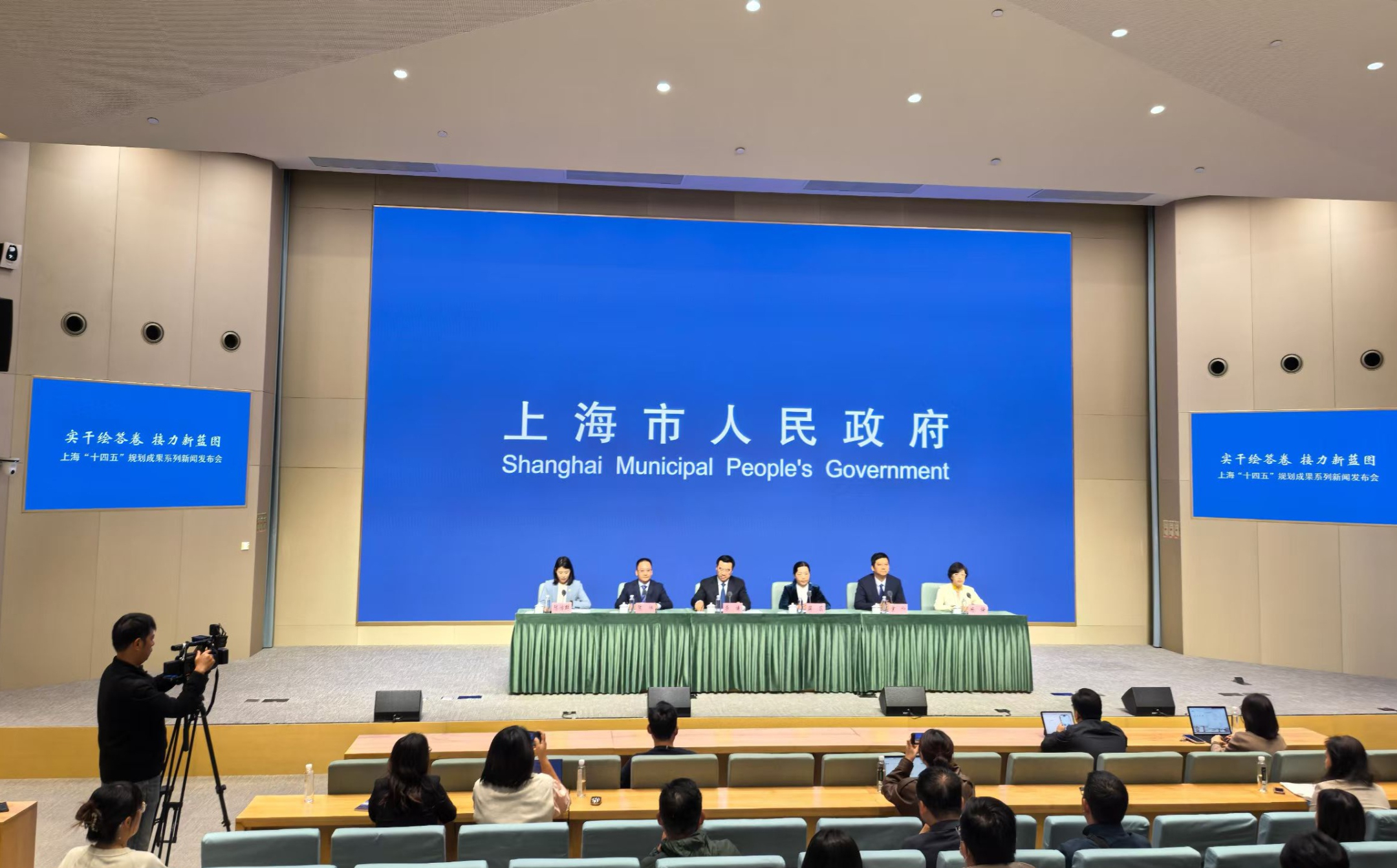
Core Viewpoint - The establishment of Qingdao Haifa International Trade Co., Ltd. marks the official entry of state-owned capital in Qingdao into the operational phase of the shipping, trade, and finance sector, aiming to create a comprehensive service platform for maritime trade finance [1] Group 1 - The unveiling and strategic project cooperation signing ceremony took place on August 30, attended by key officials and representatives from various sectors [1] - A seminar was held prior to the ceremony to discuss the planning of the Qingdao Maritime Trade Finance Comprehensive Service Platform, focusing on aligning with leading domestic trade enterprises and integrating city resources [1] - The establishment of Haifa International Trade signifies a new momentum for Qingdao's strategic layout in the maritime trade finance sector through the integration of bonded logistics centers and other domestic and international resources [1]
学习笔记|向海图强,广东推动海洋经济高质量发展
2 1 Shi Ji Jing Ji Bao Dao· 2025-07-31 15:42
Core Viewpoint - The article emphasizes the importance of advancing the construction of a unified national market and high-quality development of the marine economy in Guangdong, which is crucial for building a new development pattern and promoting high-quality growth [1][4]. Group 1: Policy and Regulation - Guangdong has implemented the "Regulations on Promoting High-Quality Development of the Marine Economy," effective from July 1, which focuses on industrial development and extending marine industries to non-coastal areas [2]. - The regulations highlight the need for government planning and guidance to cluster marine enterprises in designated economic zones and explore the establishment of marine industrial parks [2][3]. - The regulations also stress the importance of innovation, supporting the establishment of modern marine ranch innovation pilot zones [2]. Group 2: Industry Development - Guangdong aims to enhance its high-end manufacturing capabilities in the marine sector, particularly in marine engineering equipment, by promoting R&D and application of new technologies and materials [2]. - The article points out the significance of new technologies in the marine field, encouraging electronic information companies to expand into marine sectors and improve high-end marine electronic equipment [3]. - The regulations call for the promotion of large-scale offshore wind power development and the establishment of offshore wind power industrial bases [3]. Group 3: Economic Integration and Infrastructure - The article discusses the potential for further development of the port economy in Guangdong, emphasizing the need for optimizing port resource integration and promoting regional port cluster development [3]. - It highlights the support for cultivating modern shipping service institutions and developing international shipping service hubs, which are essential for the marine economy [3]. - Guangdong has invested nearly 2 billion in marine economic development projects over the past seven years, indicating strong financial backing for the marine economy [4].