日料

Search documents
寿司郎吃出寄生虫卵?刚开业1个月就被立案,预约却爆满,菜品仍在售
新浪财经· 2026-03-05 09:55
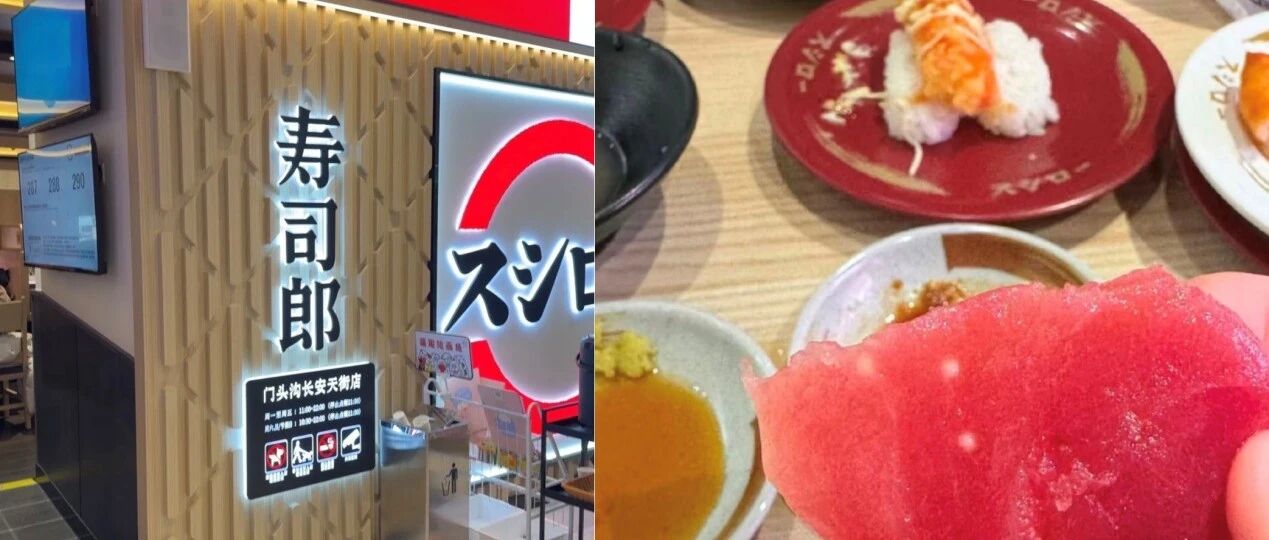
Core Viewpoint - The recent incident involving suspected parasite eggs found in tuna at a Sushi Ramen restaurant has raised significant concerns about food safety, leading to an official investigation and public scrutiny of the brand's ingredient sourcing practices [3][9][29]. Group 1: Incident Overview - A consumer reported finding suspected parasite eggs in tuna at the Sushi Ramen restaurant in Beijing's Mentougou District, prompting widespread public concern about food safety [3][9]. - The restaurant, which opened in February 2026, has the lowest rating among 18 Sushi Ramen locations in Beijing, with some consumers labeling it as the "worst Sushi Ramen in Beijing" [4][12]. - Following the incident, the restaurant continued normal operations, with high demand reflected in fully booked reservations despite the ongoing investigation [15][18]. Group 2: Previous Food Safety Issues - This is not the first food safety issue for Sushi Ramen; since 2025, multiple locations have faced complaints and penalties for problems such as foreign objects in food and pest sightings [5][26]. - Consumer complaints primarily focus on food freshness, foreign objects, service quality, and marketing disputes [29]. Group 3: Company Background and Market Position - Sushi Ramen, established in 1984 and part of FOOD & LIFE Companies, has rapidly expanded in China since entering the market in 2021, with 65 locations across 13 cities as of September 2025 [21][22]. - The company reported a 43% year-on-year revenue increase in overseas markets for the fiscal year ending September 2025, highlighting the importance of the Chinese market for its growth strategy [22]. - Despite the recent food safety incident, the brand's popularity remains high, with significant consumer interest and long wait times at various locations [21][29].

寿司郎赢得毫不费力
36氪· 2026-01-15 13:24
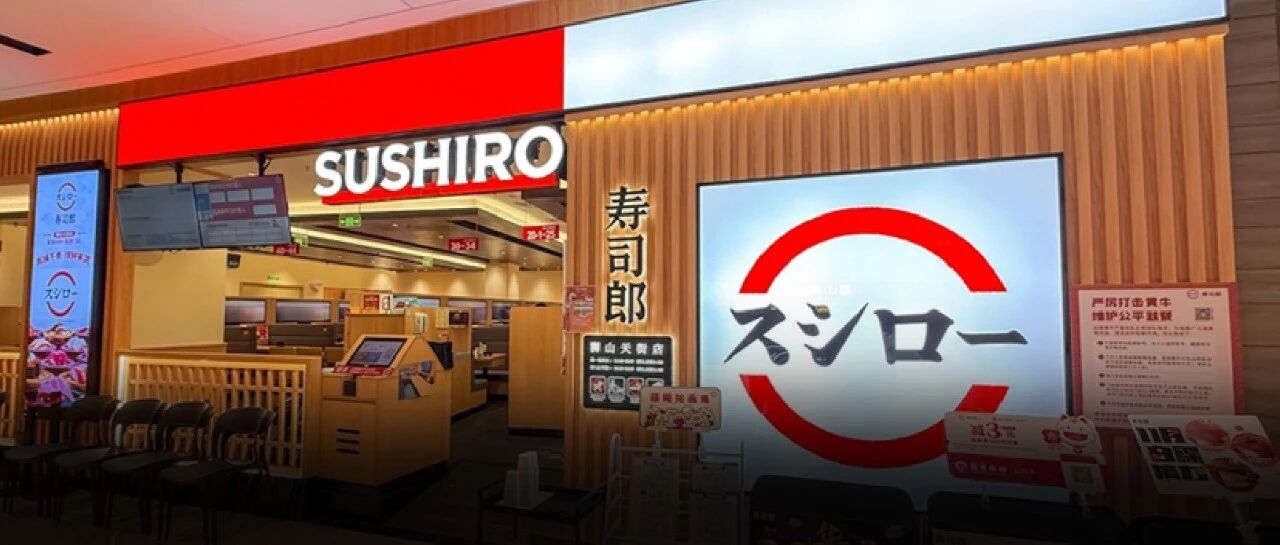
Core Viewpoint - Sushi Ramen has emerged as a standout success in the restaurant industry, particularly in China, where it has achieved remarkable growth and popularity despite challenges faced by other dining brands [4][10]. Group 1: Company Performance - Sushi Ramen's parent company, F&LC, reported a record sales revenue of 429.5 billion yen for the fiscal year 2025, with an overall operating profit increase of 54.4% [7]. - The overseas market, led by China, contributed significantly to this growth, with a revenue increase of 42.6%, making up 30% of total business [7]. - Sushi Ramen aims to open 500 stores in China by the fiscal year 2035, a target that took competitors like Salvia 23 years to achieve [7]. Group 2: Market Positioning - Unlike other sushi brands that have struggled, Sushi Ramen has maintained a strong presence in the market, with a unique operational model that emphasizes efficiency and technology [12][18]. - The brand has successfully adapted to consumer preferences, offering a combination of high-quality ingredients at competitive prices, which has resonated with Chinese consumers [27][36]. - Sushi Ramen's pricing strategy allows it to charge around 10 yuan per sushi piece, significantly higher than the original price of 5 yuan, while still being perceived as a value option by consumers [46]. Group 3: Operational Efficiency - Sushi Ramen has implemented advanced technology in its operations, including robots capable of producing 3,600 sushi pieces per hour and a data-driven system for predicting customer demand [12][18]. - The introduction of the "Sushi New Shinkansen" model has further improved efficiency, reducing food waste from an industry average of 10-15% to nearly 0% and decreasing customer wait times from 5 minutes to 3 minutes [18]. - The restaurant's layout and management practices have also enhanced customer capacity and turnover rates, allowing for up to 15 table turnovers per day during peak hours [18]. Group 4: Supply Chain and Ingredient Sourcing - Following the nuclear wastewater incident in 2023, Sushi Ramen accelerated the localization of its supply chain in China, sourcing ingredients from local suppliers to maintain quality and reduce costs [29][30]. - The cost of domestic ingredients, such as sea urchin and eel, is significantly lower than imported options, allowing Sushi Ramen to offer high-quality sushi at competitive prices [29][30]. - The brand has developed a diverse product lineup with over 200 SKUs, enhancing its appeal and allowing for strategic pricing that attracts a wide range of customers [33][34].
寿司郎赢得毫不费力
虎嗅APP· 2026-01-10 13:26
Core Viewpoint - Sushi郎 stands out in the restaurant industry, achieving remarkable success amidst a challenging market, with long queues and high customer demand, particularly in China [5][6]. Group 1: Company Performance - Sushi郎's parent company, F&LC, reported a record sales revenue of 429.5 billion yen for the fiscal year 2025, with an overall operating profit increase of 54.4% [6]. - The overseas market, especially China, contributed significantly to this growth, with a revenue increase of 42.6%, making up 30% of total business [6]. - Sushi郎's revenue growth in 2024 was 13.6%, reaching a historical high [10][11]. Group 2: Market Strategy - Sushi郎 utilizes advanced technology in its operations, including robots that can produce 3,600 sushi pieces per hour and a data-driven system to predict customer preferences, enhancing efficiency [8][9]. - Following a public relations crisis, Sushi郎 shifted to a "Sushi Shinkansen" model, improving food waste rates from 10%-15% to nearly 0% and reducing customer wait times [10][11]. - The restaurant's design allows for high customer capacity and turnover rates, with peak times achieving 10-15 table turns per day [11]. Group 3: Competitive Landscape - Sushi郎's success contrasts with other sushi brands like KURA, which struggled in the Chinese market due to high pricing and lack of localization [15][16]. - The brand's pricing strategy positions it as a "value for money" option, with a customer perception of high quality at a reasonable price, despite higher costs compared to local competitors [12][20]. - Sushi郎's product mix includes over 200 SKUs, allowing for strategic pricing and customer attraction through popular items while maintaining profitability on lower-cost items [20]. Group 4: Industry Context - The Japanese sushi market has seen significant growth, with the conveyor belt sushi segment experiencing a doubling in size from 2000 to 2019 [22]. - Sushi郎's operational model capitalizes on the dichotomy in the restaurant industry, appealing to both budget-conscious consumers and those seeking quality [26]. - The brand's ability to adapt to local tastes and preferences has been crucial in establishing its presence in the competitive Chinese market [19][27].
寿司郎赢得毫不费力
远川研究所· 2026-01-09 07:07
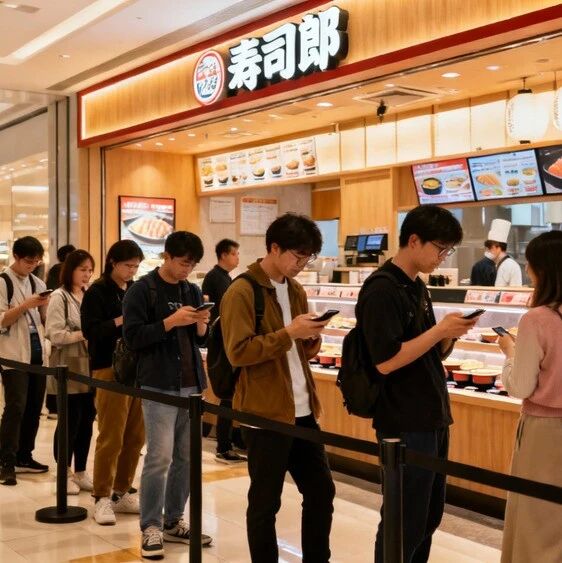
Core Viewpoint - Sushi郎 stands out in the restaurant industry, experiencing significant success despite challenges faced by other dining brands, with long queues and high demand in its locations [2][4]. Group 1: Financial Performance - In the fiscal year 2025 (2024.9-2025.9), Sushi郎's parent company F&LC achieved record sales of 429.5 billion yen, with an overall operating profit increase of 54.4% [4]. - The overseas market, particularly China, contributed significantly to this growth, with a revenue increase of 42.6%, making up 30% of total business [4]. - After implementing the "Sushi New Shinkansen" model, Sushi郎's revenue grew by 13.6%, reaching a historical high [10]. Group 2: Market Position and Strategy - Sushi郎's entry into the Chinese market has been marked by a unique approach, contrasting with other sushi brands that have struggled [7][13]. - The brand has adopted advanced technology in its operations, including robots capable of producing 3,600 sushi pieces per hour and a data-driven system for predicting customer preferences [10]. - Sushi郎's efficiency improvements have led to a significant reduction in food waste, from an industry average of 10%-15% to nearly 0% [10]. Group 3: Consumer Perception and Brand Identity - Sushi郎 has successfully positioned itself as a "value for money" option, with a customer perception that aligns with affordability despite higher average prices compared to competitors [12][18]. - The brand's marketing strategy includes a diverse product range, with over 200 SKUs, allowing it to attract various customer segments [17]. - The brand's identity benefits from the perception of sushi as a high-quality, low-effort meal, appealing to consumers seeking convenience without compromising on quality [14][15]. Group 4: Competitive Landscape - Other sushi brands, such as KURA Sushi, have struggled in the Chinese market, highlighting the challenges of local adaptation and competition [13]. - Sushi郎's success contrasts with the difficulties faced by mid-range dining brands that fail to find a balance between affordability and quality [13][19]. - The brand's ability to leverage local supply chains for ingredients has further enhanced its competitive edge, especially in light of recent events affecting seafood sourcing [15].

寿司郎怎么这么狂?
半佛仙人· 2025-12-28 03:40
Core Viewpoint - The article discusses the unique market position of Sushi Lang, highlighting its ability to attract long queues even during weekdays in a competitive city like Hangzhou, suggesting a strong consumer demand for its offerings [2][3]. Group 1: Market Position and Consumer Perception - Sushi Lang is perceived as a value-for-money option in the sushi market, with an average spending of around 100 yuan per person, which is considered reasonable compared to other Japanese restaurants that lack distinctive features [2][3]. - The restaurant's pricing strategy is effective, as it contrasts favorably with other less reputable Japanese dining options, leading consumers to feel they have previously overpaid for inferior quality [3][5]. Group 2: Product and Supply Chain - Sushi is less affected by the pre-prepared food trend, as consumers do not typically question whether sushi is pre-made, similar to how they perceive hot pot [5][6]. - The supply chain for sushi, particularly seafood, is advantageous for Sushi Lang due to its numerous outlets, allowing for cost-sharing and access to quality ingredients [5][6]. Group 3: Industry Dynamics - The sushi industry has a low technical barrier, with standardization being key; Sushi Lang has embraced this by utilizing machines for sushi preparation, which sets it apart from competitors who still rely on traditional methods [6][9]. - The article suggests that Sushi Lang has transcended the traditional sushi business model by focusing on efficiency and cost-effectiveness, while competitors continue to maintain a façade of artisanal preparation [6][9].
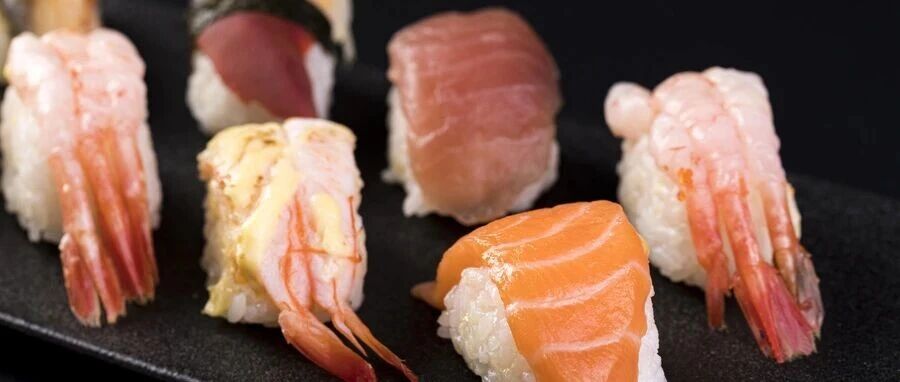
喊着开战的人在排队,骂着日货的人在扫码,寿司店揭消费真相
Sou Hu Cai Jing· 2025-12-01 10:36
Core Viewpoint - The article highlights the paradox of rising demand for Japanese sushi restaurants in China, particularly Sushi郎, amidst political tensions and calls for boycotts against Japanese goods. This phenomenon reflects a deeper shift in consumer behavior and preferences, emphasizing value and experience over political sentiments [1][9][42]. Group 1: Consumer Behavior - Despite online calls to boycott Japanese products, consumers are queuing for Sushi郎, demonstrating a disconnect between online sentiments and offline actions [9][42]. - Young consumers prioritize affordable and enjoyable dining experiences, valuing cost-effectiveness over political discussions [11][42]. - The willingness to pay for shorter wait times, with queue numbers being sold for up to 80 yuan, indicates a strong demand for Sushi郎's offerings [7][11]. Group 2: Market Dynamics - Sushi郎 has experienced significant growth, reporting a 40% increase in overseas market revenue, even as the broader Japanese cuisine sector faced challenges due to the nuclear wastewater incident [13][15]. - The restaurant's total market value has surpassed 1 trillion yen, approximately 500 billion yuan, positioning it as a leading player in the Chinese dining market [15]. - Sushi郎's strategic location choices and pricing strategies have contributed to its success, allowing it to cater effectively to the local market [15][19]. Group 3: Supply Chain and Pricing Strategy - Sushi郎's ability to offer low prices, such as 10 yuan for red plates and 15 yuan for white plates, is attributed to its industrialized approach to food preparation, utilizing automation to reduce labor costs [19][32]. - The restaurant's supply chain is largely based on local sourcing, with many ingredients not originating from Japan, challenging traditional notions of authenticity in Japanese cuisine [20][22]. - The transparency in sourcing and the shift towards a global supply chain model have become selling points, especially in the context of safety concerns following the nuclear wastewater incident [24][22]. Group 4: Competitive Landscape - The competitive environment is intensifying, with local dining brands entering the sushi market, offering lower prices and innovative products [38]. - The shift in consumer preferences towards value and efficiency is reshaping the dining landscape, where traditional brand loyalty is being challenged by price sensitivity [40][42]. - The article suggests that future competition will focus on operational efficiency and customer satisfaction rather than authenticity or brand heritage [44][45].

日本餐饮品牌,在中国市场猛猛赚钱?
虎嗅APP· 2025-11-21 14:04
Core Viewpoint - Japanese restaurant brands are experiencing significant success in the Chinese market, with Sushi Ramen's parent company reporting record sales and operating profits, increasing by 19% and 54.4% respectively [4][5]. Group 1: Market Performance - Sushi Ramen and Bin Sushi have become extremely popular, often leading to long queues in shopping malls, indicating a surge in consumer interest in Japanese cuisine [5][9]. - Sushi Ramen's new stores in Shanghai are fully booked for two weeks in advance, showcasing the high demand for affordable sushi chains [7][9]. - The rapid expansion of local sushi brands and the entry of more Japanese brands into China have intensified competition in the Japanese cuisine sector [5][10]. Group 2: Competitive Landscape - Several Japanese brands are setting ambitious goals for expansion in China, with some aiming for "hundred-store" targets [11]. - Local restaurant giants, such as Haidilao, are entering the sushi market, indicating a trend towards localization in the Japanese cuisine sector [22]. - The competitive landscape is expected to become more intense as local brands adopt similar pricing strategies to attract consumers [21][22]. Group 3: Consumer Trends - The perception of Japanese cuisine has shifted, with consumers now more focused on price and value rather than just the origin of ingredients [17][25]. - The trend of "localization" in Japanese cuisine is growing, with domestic suppliers increasingly providing ingredients, reducing reliance on Japanese imports [23][25]. - The market for Japanese cuisine in China is projected to continue growing, with estimates suggesting a market size of 70 billion yuan by 2025 [24].
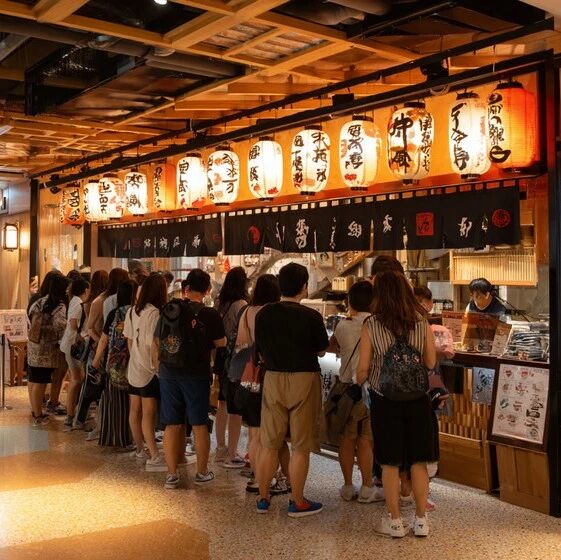
『探寻日本好味,美食巡礼in北京』金杉大使打卡冠军店丨特别策划
日经中文网· 2025-11-14 03:08
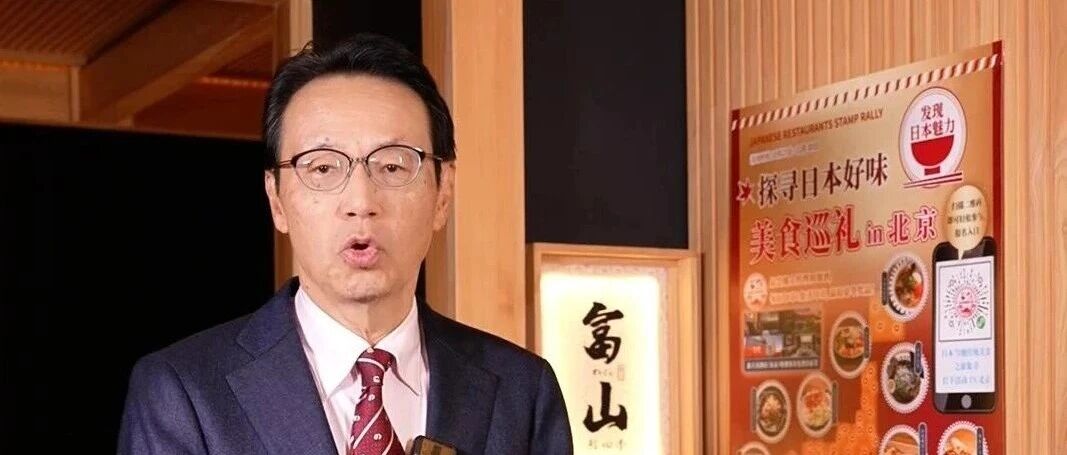
Group 1 - The event "Exploring Japanese Flavors, Culinary Tour 2025 in Beijing" is being held with 28 Japanese restaurants participating, offering authentic Japanese cuisine and specialty sake from various regions of Japan [1] - The event will officially start on October 27, 2025, and will last until November 30, 2025, encouraging participation to enjoy Japanese culinary delights [1] - The Japanese ambassador visited the champion restaurant "Toyama Sushi Shiki," engaging with the chef and experiencing traditional Japanese flavors [3] Group 2 - During the event, a stamp rally will be held where participants can taste designated Japanese dishes and drinks to collect stamps for a chance to win prizes such as hotel accommodation vouchers in Japan [3][10] - The prizes include free accommodation vouchers for the New Otani Hotel in Tokyo and the Hamamatsu Mercure Hotel, among others [4][6] - The event is organized by the Embassy of Japan in China and supported by the Beijing Japanese Culinary Association [10]
海底捞入局,寿司郎、滨寿司加速扩张,百亿日料市场回暖了?
3 6 Ke· 2025-10-31 03:17
Core Insights - The launch of "如鮨寿司," the first sushi brand incubated by Haidilao, in Hangzhou is seen as a signal of industry recovery and structural opportunities in the sushi market [1][3] - The sushi market, particularly the affordable segment, is becoming increasingly competitive with multiple players expanding aggressively [2][5] Market Dynamics - Haidilao's entry into the sushi market is a strategic move to capture market share, with "如鮨寿司" positioned under its "红石榴计划" to diversify its dining offerings [3][8] - The new store in Hangzhou has over 500 square meters and offers more than 200 SKUs, with price points ranging from 8 to 28 yuan, primarily focusing on 9.9 and 15 yuan items [3][8] - The market is witnessing a bifurcation where high-priced sushi brands like Sushi Lang are expanding cautiously, while lower-priced brands like Bin Sushi are aggressively increasing their store counts [5][21] Competitive Landscape - Bin Sushi plans to open over 70 new stores in the 2025 fiscal year and aims for more than 100 in the following year, with a long-term goal of 1,000 stores nationwide [5][8] - Sushi Lang aims to increase its total stores in Greater China to approximately 190 by 2026, with a cautious expansion strategy [4][5] - The sushi market's recovery is driven by consumer demand for high cost-performance sushi, supported by a localized supply chain [8][21] Strategic Positioning - Brands are focusing on high-line cities and premium shopping centers, with over 90% of Sushi Lang and Bin Sushi's stores located in first and new first-tier cities [9][12] - The competition is not yet saturated, allowing leading brands to proactively position themselves for future growth [15][16] - The market is shifting towards a "high cost-performance" competition rather than just low pricing, indicating a structural growth opportunity in the sushi segment [18][23] Future Outlook - The sushi market in China is projected to recover to a scale of 700 billion yuan by 2025, with sushi becoming a key growth direction due to its standardized preparation and high turnover rates [18][21] - The competition will intensify between foreign brands with established supply chains and local brands that can innovate and adapt to consumer preferences [21][22] - The trend towards affordable, localized, and digitalized sushi offerings is expected to deepen, although brands will face challenges in maintaining growth and brand trust [23][24]

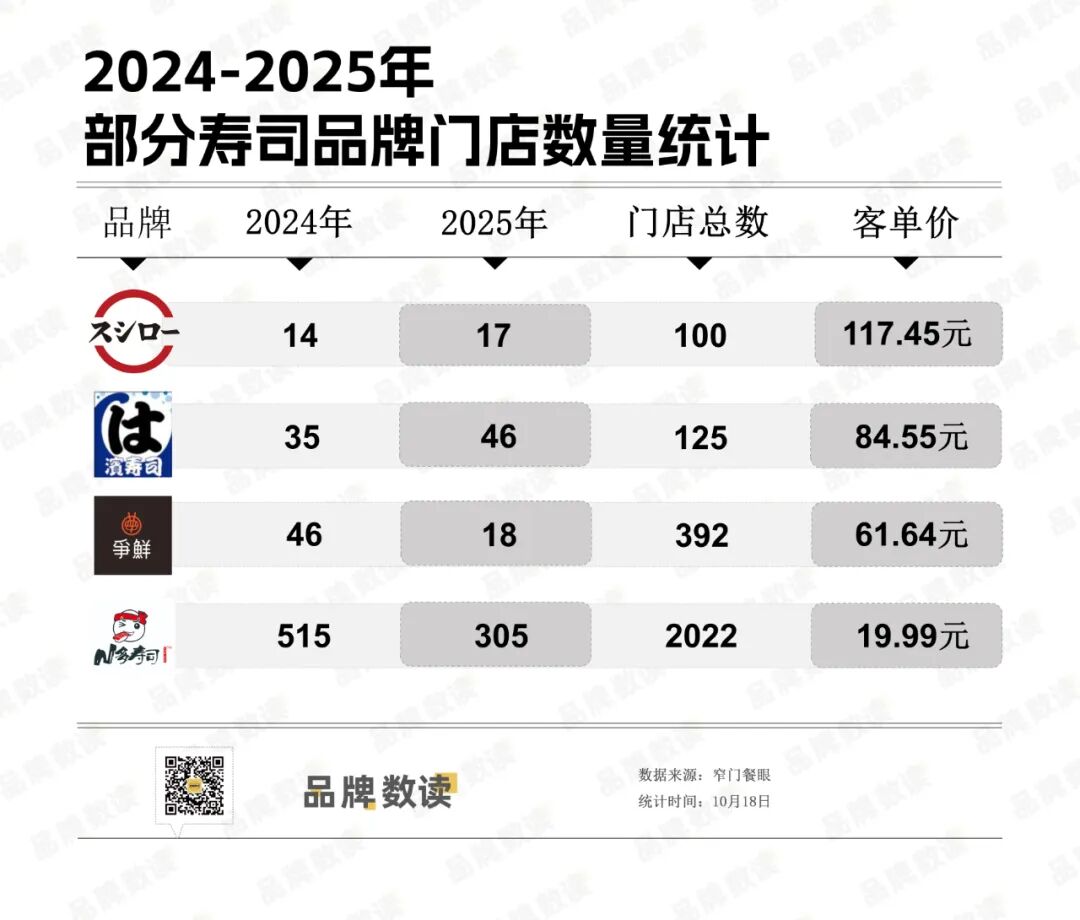
海底捞旗下如鮨寿司杭州首店开业,周末翻台率8轮
Mei Ri Jing Ji Xin Wen· 2025-10-24 08:39
Core Viewpoint - Haidilao's sushi brand "Rushi Sushi" has opened its first store in Hangzhou, Zhejiang, positioning itself as a strong competitor in the affordable sushi market against brands like Sushi Lang and Murakami House [1] Company Summary - Rushi Sushi's main products are priced at 9.9 yuan and 15 yuan, targeting the budget-conscious consumer segment [1] - The store has reported an average of 800 to 1000 customers on weekends, with a table turnover rate of up to 8 times [1] Industry Summary - The sushi market has diversified into various formats, including single-item sushi, conveyor belt sushi, and takeout options [1] - As of March 2025, the number of sushi restaurants in China is projected to exceed 23,000, with over 50% of these establishments having an average consumer spending of less than 35 yuan [1] - Data from the Restaurant Eye Research Institute indicates a decline in the total number of Japanese cuisine brands in China, from 52,276 in August 2023 to 28,631 by August 2024 [1]