轻食

Search documents
聚关键资源/抢健康食品增长先机,2026 EBC轻食大会定档4.17-18,杭州见!
Zhong Guo Shi Pin Wang· 2026-02-26 02:08
2026年EBC轻食大会正式定档2026年4月17-18日,杭州国际博览中心!!! 随着《健康中国2030》、体重管理年等国家政策的引导与支持,食品行业不断向着营养健康的方向发展,2026年EBC轻食大会以"Easy(便捷)""Balanced(均 衡)""Clean(洁净)"为核心理念,致力于通过"热点论坛+创新展览+体验互动+ENERGY AWARDS食品健康配方奖"形成4大核心引擎,打造中国健康食品产业创新 与增长生态圈。 营养师论坛集结完毕! 餐饮/运动营养/硬折扣私域电商等5大论坛出炉 EBC轻食大会作为专业级行业盛会,历年来受到了中国食品工业协会、国家疾控中心、中国食品发酵工业研究院、中粮、淘宝闪购、京东超市、天图资本、 元气森林、王老吉等机构与品牌的关注与参与。2026年更是受到华餐会、唯秉健康、丛子星球、食极星、维拉多、灵橄健康、ffit8等机构与品牌的支持,受 到了《中国消费者》杂志、新华网、零售圈、新经销、营养素制造网、食品展会网、安全食报、展讯网、展大人等媒体机构的关注。 2026届轻食大会的论坛板块,汇聚了超40+产品经理、营养学家、消费洞察专家、餐饮品牌,围绕"营养师/餐饮/运动营养 ...


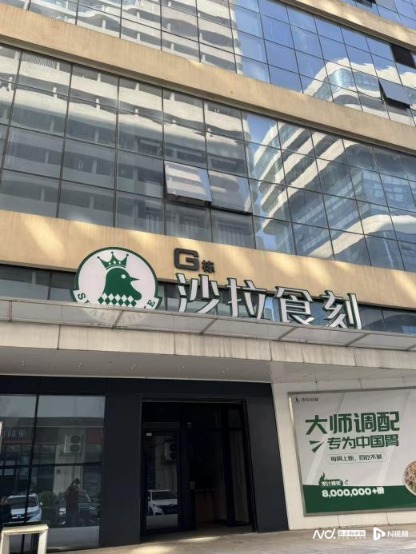
沙拉食刻陨落记:1.5亿融资、周杰伦代言 难敌商业模式致命缺陷
Xin Lang Cai Jing· 2026-02-03 09:45
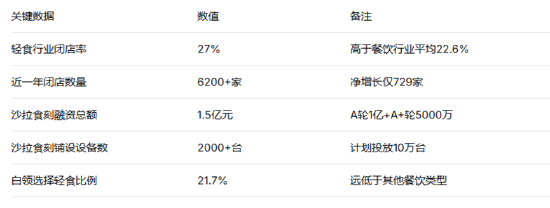
Core Insights - The dramatic downfall of "Salad Time" reflects the challenges faced by the healthy food industry, highlighting the contradictions between health and convenience in its business model [2][18][19] Company Overview - "Salad Time" was founded in 2020 in Dongguan, leveraging an "AI vending machine + light meal salad" model, quickly becoming a capital darling [2][12] - The company aimed to deploy 100,000 AI vending machines within five years, with over 2,000 machines installed by April 2025 in major cities [2][12][19] Financial Performance - The company raised a total of 1.5 billion yuan in funding, including 100 million yuan in Series A and 50 million yuan in Series A+ [8][19] - Despite ambitious revenue projections of at least 1 billion yuan annually, actual operational performance lagged significantly behind expectations [3][13] Operational Challenges - The company's aggressive expansion strategy led to operational inefficiencies, with reports of unpaid wages and delayed payments to franchisees surfacing by March 2025 [3][13][16] - By October 2025, "Salad Time" was officially declared bankrupt, with the founder facing legal issues due to debt disputes [14][16] Business Model Flaws - The company's reliance on a fixed-location vending machine model failed to meet the dynamic lunch needs of office workers, leading to a mismatch between consumer behavior and service delivery [15][16] - The franchise model, which included complex revenue-sharing arrangements, contributed to financial instability and management difficulties [16][19] Industry Context - The healthy food sector is characterized as a "high-risk category," with a closure rate of 27% from 2023 to 2024, surpassing the average closure rate of 22.6% in the broader restaurant industry [18][19] - The market is witnessing an influx of non-healthy food brands entering the light meal segment, increasing competition for independent healthy food brands [20][19] Lessons Learned - The collapse of "Salad Time" serves as a cautionary tale for the healthy food industry, emphasizing the need for a balance between health and convenience in product offerings [18][19] - Successful brands are now focusing on localized innovations that cater to traditional Chinese tastes, moving away from the rigid vending machine model [19][20]
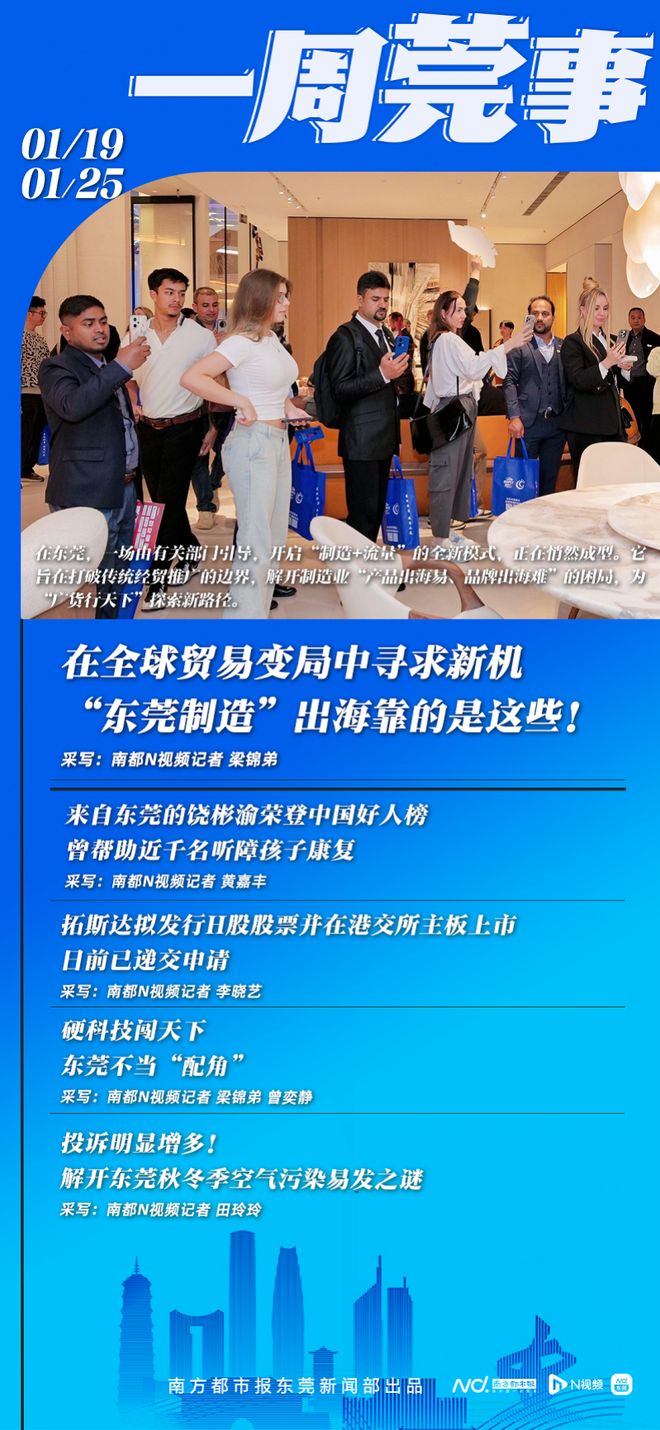
出海新战法!东莞在全球贸易变局中的主动破局|东莞一周
Nan Fang Du Shi Bao· 2026-01-25 13:06
Group 1 - Dongguan is adapting its export strategy in response to changing global trade dynamics, focusing on a new model that combines manufacturing with social media influence to promote local products internationally [4] - The city is exploring new pathways for its manufacturing sector, addressing the challenges of product and brand exportation, and positioning itself as a proactive player in the global market [4] Group 2 - Dongguan has established itself as a significant player in the Greater Bay Area's innovation landscape, with 12 unicorn graduates and 4 unicorns listed, making it the third city in Guangdong province in terms of high-value enterprises [8] - The city is leveraging its manufacturing strength to carve out a unique growth path, demonstrating its capability beyond being a mere supporting role in the region [8] Group 3 - The launch of the quadruped robot "Xingzai" by Dongguan's TuoSiDa represents a significant advancement in practical applications of embodied intelligence, capable of operating in challenging environments and addressing high-risk scenarios in emergency services [9] - The robot's features include all-terrain mobility and a wide temperature adaptability, indicating a shift towards integrating advanced technology into real-world applications [9] Group 4 - TuoSiDa has submitted an application for H-share stock issuance and listing on the Hong Kong Stock Exchange, indicating its intent to expand its capital base and market presence [10][11] Group 5 - The light food brand "Salad Shike" from Dongguan is facing significant backlash and operational challenges, with reports of its vending machines disappearing and claims of financial losses from consumers and franchisees [19] - Once a promising brand with substantial investment and celebrity endorsements, it has now become a case of consumer grievances and financial instability, leading to its operational halt [19]

知名品牌被曝跑路!失联、储值不退、人去楼空……创始人遭“悬赏”
Xin Lang Cai Jing· 2026-01-24 04:13
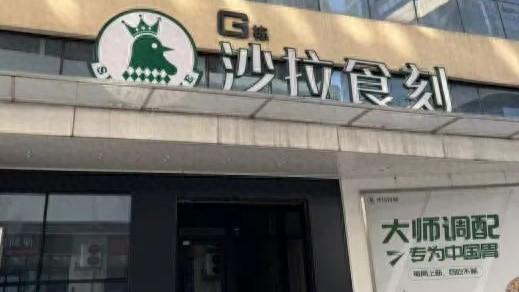
Core Viewpoint - The company "Salad Time" has faced significant backlash from consumers and franchisees due to operational failures, including the disappearance of vending machines, unfulfilled service promises, and financial insolvency, leading to bankruptcy proceedings for its parent company [3][21][22]. Company Operations - "Salad Time" was established in 2020, focusing on AI vending machines for healthy food options, and expanded rapidly with significant capital investment, including a notable endorsement from celebrity Jay Chou [10][14]. - The company had ambitious growth plans, aiming to deploy 100,000 vending machines by 2025, but faced operational challenges and market misjudgments that led to ineffective locations and increased pressure on operations [13][14]. Financial Issues - The company has been reported to have a strained financial situation, with delayed salary payments to employees and unresolved financial obligations to franchisees, leading to legal actions against it [15][20][18]. - Despite securing multiple rounds of funding, the rapid expansion and high operational costs have resulted in a cash flow crisis, ultimately leading to bankruptcy [14][22]. Consumer and Franchisee Reactions - Consumers have expressed frustration over unrefunded prepaid balances and poor customer service, with many vending machines reported as non-operational [5][17]. - Franchisees have reported significant losses, with some facing legal battles to recover investments and unpaid earnings, highlighting the company's failure to meet contractual obligations [17][18][20]. Legal Proceedings - The parent company has entered bankruptcy proceedings, and the founder has been subject to a public reward notice for information regarding his assets due to outstanding debts [22][23]. - Legal experts suggest that the operations of the subsidiary "Shenzhen Chef Easy Era" may be scrutinized for potential asset concealment and evasion of financial responsibilities [27].
被曝跑路,老板遭“悬赏”!周杰伦曾代言,一现象级品牌申请破产
Nan Fang Du Shi Bao· 2026-01-23 05:08
Core Viewpoint - The company "Salad Time" has faced significant backlash from consumers and franchisees due to operational failures, including the disappearance of vending machines and unfulfilled service commitments, leading to bankruptcy proceedings for its main operating entity [2][11][16]. Group 1: Company Operations and Financial Status - "Salad Time" has seen its smart vending machines largely out of service, with many locations reported as permanently closed or non-operational, resulting in consumer complaints about unrefunded stored value balances [3][4][11]. - The company has applied for bankruptcy, with its main operating entity, Salad Time (Guangdong) Food Technology Co., Ltd., entering judicial proceedings, while its wholly-owned subsidiary, Shenzhen Chuyi Times Food Technology Co., Ltd., continues to open new stores [2][16]. - The rapid expansion and operational mismanagement have led to a cash flow crisis, with significant investments in marketing and infrastructure failing to yield timely returns [11][12]. Group 2: Franchisee and Employee Issues - Franchisees have reported severe delays in revenue sharing and refunds, with some taking legal action due to unfulfilled financial commitments from the company [12][14]. - Employees have also faced delayed salary payments, with some reporting unpaid wages for up to nine months, leading to widespread dissatisfaction and calls for accountability [12][14][16]. - The company's promises to resolve these financial issues have not materialized, further exacerbating the operational crisis and damaging its reputation [16][19]. Group 3: Market Position and Future Prospects - "Salad Time" was initially positioned as a high-value brand in the light meal sector, leveraging AI vending machines to serve urban professionals, but its market strategy has faltered due to poor demand forecasting and ineffective site placements [9][11]. - Despite previous successes, including significant funding and celebrity endorsements, the brand's operational model has proven unsustainable, leading to its current predicament [10][11].
现象级品牌破产跑路,老板遭“悬赏”!周杰伦曾代言
Nan Fang Du Shi Bao· 2026-01-23 04:24
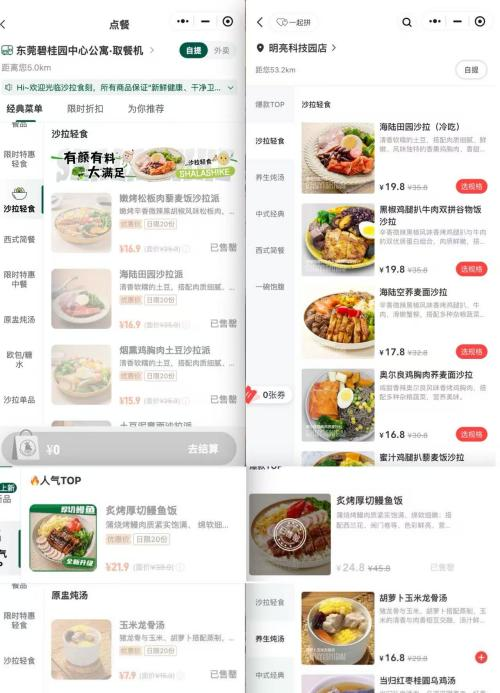
Core Viewpoint - The company "Salad Time" has faced significant backlash from consumers and franchisees due to operational failures, including the disappearance of vending machines and inability to refund stored value balances, leading to its bankruptcy application [1][31]. Group 1: Company Operations and Financial Status - "Salad Time" has seen its smart vending machines largely out of service across multiple cities, with complaints focusing on unfulfilled orders and unrefunded stored value [3][24]. - The company has applied for bankruptcy, with its operational entity "Salad Time (Guangdong) Food Technology Co., Ltd." entering judicial proceedings [31][34]. - Despite the bankruptcy, the wholly-owned subsidiary "Shenzhen Chuyi Times Food Technology Co., Ltd." has opened new stores, raising questions about asset concealment [1][35]. Group 2: Expansion and Investment History - Founded in 2020, "Salad Time" rapidly expanded its presence in the Guangdong-Hong Kong-Macau Greater Bay Area, leveraging AI vending machines to offer a variety of meals at competitive prices [17][22]. - The company received significant funding, including a 100 million yuan A-round investment and a 50 million yuan A+ round, and secured celebrity endorsement from Jay Chou [19][22]. - At its peak, "Salad Time" aimed to deploy 100,000 AI vending machines within five years, serving millions of users daily [22]. Group 3: Franchisee and Employee Issues - Franchisees have reported difficulties in receiving timely revenue shares, with many facing significant financial losses due to the company's operational misjudgments [24][29]. - Employees have experienced delayed salary payments, with some reporting unpaid wages for up to nine months, leading to widespread dissatisfaction [27][31]. - Legal actions have been initiated by franchisees and employees against the company for unpaid dues and contractual breaches [30][31].
米村拌饭布局,轻食赛道又翻红?
3 6 Ke· 2026-01-05 05:51
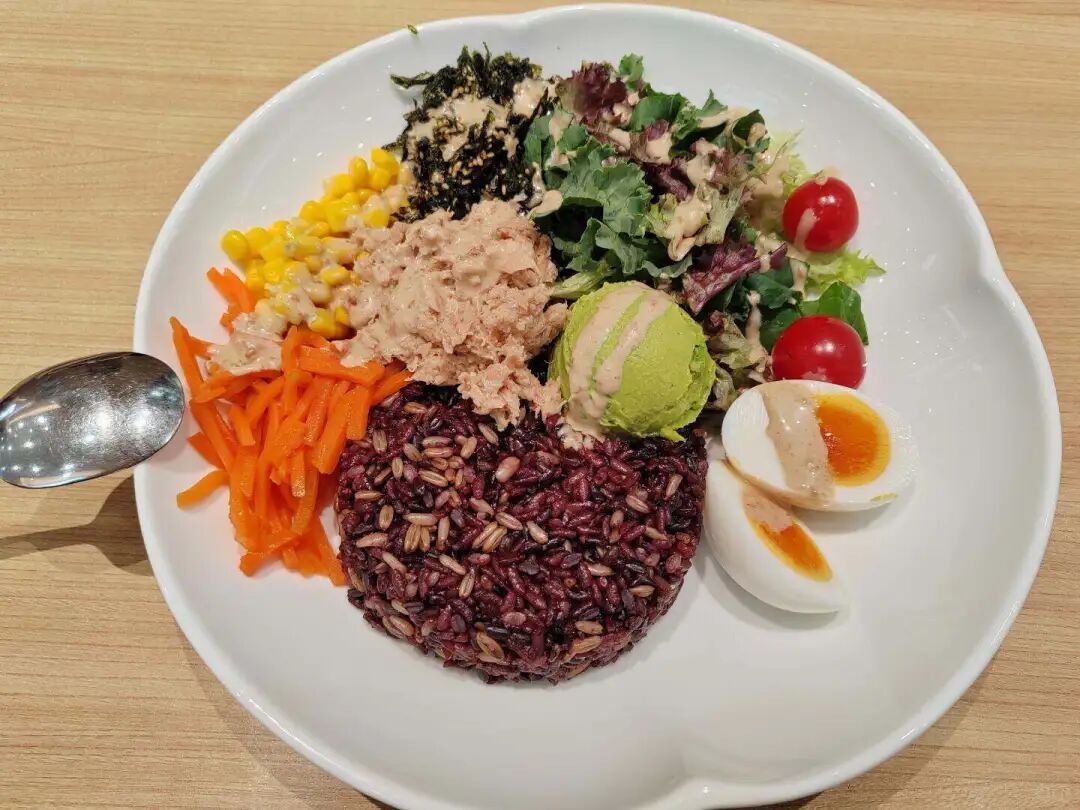
Core Viewpoint - The light meal segment is gaining traction among various restaurant brands, with a focus on health-conscious offerings and competitive pricing, but the market faces challenges such as high closure rates and consumer skepticism regarding portion sizes and satisfaction [9][13][15]. Group 1: Market Trends - The light meal category is becoming a new selling point for brands, with 米村拌饭 launching a new line of light meals priced between 20.9 yuan and 33.9 yuan, filling a gap in the mid-range market [3][5]. - Other brands like Tims and 奈雪的茶 are also introducing light meal options, with prices generally around 30 yuan, indicating a trend towards affordable healthy eating [5][7]. - The light meal market in China is projected to grow significantly, with an expected market size of over 320 billion yuan by 2024, reflecting a 41.7% annual growth rate [15]. Group 2: Industry Challenges - Despite the growth potential, the light meal segment has a high closure rate, with over 6,200 stores shutting down in the past year, leading to a net increase of only 729 stores [13]. - The survival rate of light meal brands is concerning, with a closure rate of 27% compared to the average of 22.6% in the restaurant industry, indicating it is a high-risk category [13]. - Consumer feedback often highlights issues with portion sizes and energy satisfaction, which affects repeat purchase rates and overall brand loyalty [13][15]. Group 3: Consumer Behavior - Light meal consumption is highly dependent on specific scenarios such as workdays and dieting periods, making it vulnerable to shifts in consumer preferences [13][15]. - Brands are exploring local adaptations of light meals to cater to Chinese tastes, which may enhance consumer engagement and repeat purchases [16][17]. - The transition from light meals being a trendy choice to a regular dietary option remains a significant challenge for the industry [17].
5000亿大市场,“漂亮饭”不是一门好生意?
3 6 Ke· 2025-12-20 01:15
Core Insights - The light food industry is facing significant challenges, with several brands, including "Salad Time," filing for bankruptcy and experiencing operational difficulties [1][2] - Despite the potential for growth in the light food market, the reality is that many businesses are struggling to remain profitable [8][9] Group 1: Industry Overview - The light food concept was introduced to China around 2014, leading to a surge in entrepreneurial activity, but many brands have failed since then [2] - As of December 15, there are approximately 17,000 light food stores in China, with over 6,200 closures in the past year [2] - The light food market is projected to exceed 320 billion yuan in 2024, with an annual growth rate of 41.7%, potentially reaching 500 billion yuan by 2026 [8] Group 2: Brand Performance - "Salad Time" has been identified as a prominent brand that has recently filed for bankruptcy, with 107 risk warnings and 42 legal cases against it [1] - Other brands like "Light Food Talk" are also struggling, with many previously successful brands having closed down in recent years [1][2] - The leading light food brands, such as "Cai Wei" and "Jin Shi," have a market share of only 3.42% and 3.37%, respectively, indicating a highly fragmented market [3] Group 3: Financial Dynamics - Light food products typically have a high gross margin, with some brands achieving margins of 40%-60%, but many franchisees report difficulties in recouping their investments [6][9] - The average cost of a light food meal ranges from 6 to 12 yuan, while selling prices are between 20 to 100 yuan, leading to varying profit margins depending on the season [6][9] - The closure rate for light food establishments is 27%, higher than the average for the restaurant industry, indicating a challenging business environment [8] Group 4: Market Challenges - Increased competition and changing consumer habits are impacting sales, with many consumers opting for lower-priced alternatives [7][9] - Seasonal fluctuations significantly affect order volumes, with reports of a 50% drop in orders during winter months [4][5] - The reliance on delivery services has led to concerns about food quality and safety, further complicating the industry's reputation [8][9] Group 5: Strategic Responses - Brands are exploring new growth strategies, such as "Super Bowl" collaborating with local partners to expand their store count [10] - "Cai Wei" is lowering franchise entry barriers to attract more franchisees, indicating a shift in strategy to maintain market presence [10]
【前瞻分析】2025年中国轻食企业融资轮次及行业发展趋势分析
Sou Hu Cai Jing· 2025-12-02 11:08
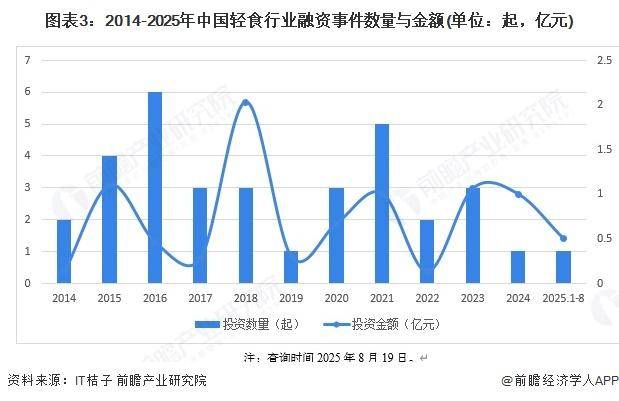
Financing Scale Analysis - From 2014 to August 2025, the financing events and amounts in China's light food industry showed fluctuations, with a total of 34 events. The highest number of events occurred in 2016 (6 events), while 2019, 2024, and January-August 2025 had the least (1 event each). Overall, there was no significant upward or downward trend in the number of events [1] - The total financing amount reached 867 million yuan, with the highest amount in 2018 (203 million yuan) and the lowest in 2014 and 2022 (both 13 million yuan) [1] Mergers and Acquisitions - The current number of mergers and acquisitions in China's light food sector is very limited, with a notable event on September 20, 2022, when Anhong Capital announced the acquisition of 60% of Wagas from its founder, who will continue to manage daily operations. This collaboration aims to expand market presence and strengthen brand development, including product supply and menu research, as well as operational infrastructure [2] Industry Distribution - The distribution of enterprises in the light food industry is concentrated in economically developed regions with active consumer markets and well-established industrial chains, covering both domestic and international capital market listed entities [4] Industry Development History - The light food concept officially entered the Chinese market in 2013, gradually gaining public awareness and understanding. From 2015 to 2017, the industry experienced a critical phase of concentrated capital investment, leading to rapid growth. However, from 2018 to 2019, the industry faced a deep reshuffling period due to immature development models and market regulations, resulting in accelerated capital withdrawal and slowed growth [5][8] - Since 2020, the light food industry has entered a new development phase, driven by a significant increase in the number of supply-side enterprises and a shift in consumer dietary habits towards healthier and lighter options due to the pandemic. This dual push has led to unprecedented attention on the industry [5][8] Industry Development Stages - Brand Incubation (2013-2014): Light food began to enter the Chinese market, with initial consumer exposure [8] - Capital Intensive Investment Period (2015-2017): The industry saw a surge in capital investment, leading to rapid development [8] - Cooling Period (2018-2019): The industry faced a reshuffling phase due to immature development, resulting in quick capital withdrawal [8] - Rising Attention Period (2020-Present): The industry has regained momentum with a rapid increase in supply-side enterprises and changing consumer habits, leading to unprecedented focus [8]



烧光1亿、资金断裂、老板被悬赏!周杰伦代言的品牌也撑不住了?
Xin Lang Cai Jing· 2025-11-17 15:22
Core Viewpoint - The salad giant "Salad Time" is facing a comprehensive trust crisis, transitioning from a capital darling to a company in debt and operational turmoil [2][10]. Group 1: Company Background and Growth - Founded in 2020 by Qiu Yuansheng, "Salad Time" aimed to revolutionize the dining experience in office buildings with AI vending machines, offering affordable and convenient meals [12][15]. - The company achieved significant milestones, including over 100 million yuan in financing and selling over 10 million fresh meals within three years [18][20]. - The ambitious plan included deploying 100,000 AI vending machines to serve 10 million people daily [20]. Group 2: Current Challenges - Since March 2023, "Salad Time" has been embroiled in a salary arrears crisis, with employees reporting unpaid wages for up to nine months [20][21]. - The company is reportedly in a state of operational halt, facing debt claims from employees, franchisees, and suppliers, with the founder publicly issued a bounty by the court due to debt disputes [21][24]. - Despite these issues, the company signed a contract for a 1 billion yuan super factory in Kunshan, aiming for a daily production capacity of 1 million meals, raising questions about financial management [27][28]. Group 3: Market and Operational Issues - The business model, which relies on a "central kitchen + unmanned sales" approach, has faced criticism for not aligning with Chinese dietary preferences, leading to low customer retention rates [30][31]. - The operational challenges include high food waste due to the "daily supply and daily clearance" model, which significantly impacts profitability [35][36]. - The founder's strategic misjudgment in expanding the business rapidly without addressing fundamental operational issues has led to a cycle of financial distress [36][38].