人工智能

Search documents
“超智融合算力平台”,今天启动
财联社· 2026-03-29 03:37
Core Viewpoint - The launch of the "Super Intelligence Fusion Computing Power" platform aims to address the challenges of dispersed computing resources and fragmented scientific data, providing unified computing power and foundational support for AI training data [1] Group 1 - The "Super Intelligence Fusion Computing Power" platform was initiated by the Shanghai Artificial Intelligence Laboratory in collaboration with relevant entities [1] - The platform will release a comprehensive "Scientific Data Base" that encompasses all modalities and the entire lifecycle [1] - The initiative includes plans for collaborative projects focused on computing power, data, and scientific application scenarios [1]


人类研究员首次全线落败——AI架构、数据、算法三战获科学发现级突破
机器之心· 2026-03-29 02:54
Core Insights - The development of AI has entered a critical phase where the competition is centered around the acceleration of AI's self-evolution [2][3] - DeepMind's mission emphasizes that intelligence is the key to unlocking significant breakthroughs across various fields, and achieving true self-evolution in AI is essential for this [2] - The ASI-Evolve framework from the GAIR team demonstrates that AI can independently complete the research cycle without human intervention, marking a significant advancement in AI capabilities [5][6] Group 1: Breakthroughs in AI Research - ASI-Evolve has achieved scientific-level breakthroughs in three core areas: architecture, data, and algorithms, driving advancements in mathematics, biomedicine, and physics [5][6] - AI has successfully optimized its own model architecture, discovering over 105 new architectures that outperform the human-designed DeltaNet by nearly three times in performance [13] - In data pre-processing, AI has autonomously designed data cleaning strategies, resulting in significant performance improvements across various benchmarks, including an 18.64-point increase in MMLU [17][18] Group 2: Algorithm Innovations - ASI-Evolve has not only fine-tuned hyperparameters but has also invented new reinforcement learning algorithms, achieving consistent improvements across multiple tasks compared to the GRPO baseline [20][21] - The AI-designed algorithms have shown enhancements in mathematical and coding tasks, with notable score increases such as +12.5 points on AMC32 and +11.67 points on AIME24 [20][21] Group 3: Efficiency and Application - The ASI-Evolve framework incorporates a closed-loop system of learning, designing, experimenting, and analyzing, which significantly enhances research efficiency [22][24] - In real-world applications, AI-optimized architectures have demonstrated practical value in drug discovery tasks, achieving higher AUROC and F1 scores compared to traditional methods [31][37] - The framework's ability to autonomously research and optimize not only improves AI performance but also indicates a shift in the research paradigm, allowing humans to focus on defining problems rather than executing solutions [36]

超越Video Depth Anything!视频深度估计新SOTA来了,163倍数据效率解锁生成式先验
机器之心· 2026-03-29 01:29
Core Insights - The article discusses the introduction of a new video depth estimation framework called DVD (Deterministic Video Depth Estimation with Generative Priors), led by Professor Chen Yingcong from the Hong Kong University of Science and Technology (Guangzhou) [4] - DVD is noted for its ability to achieve high data efficiency, requiring only 367,000 frames of training data compared to 60 million frames used by other models, resulting in a remarkable 163 times improvement in data efficiency [5][24] - The framework addresses the challenges of balancing geometric detail and temporal stability in dynamic videos, which has been a longstanding issue in the computer vision community [4][8] Group 1: Background and Motivation - Prior to DVD, mainstream video depth estimation methods faced inherent trade-offs between generative and discriminative models, leading to a core question of how to design a framework that balances stability and rich spatiotemporal priors while maintaining efficiency [8] - The research team identified the need for a framework that could effectively combine the strengths of both model types without the drawbacks of each [8] Group 2: Methodology - DVD innovatively adapts pre-trained video diffusion models into a deterministic framework for single-pass depth regression, eliminating the geometric hallucinations caused by traditional generative models [5][12] - The framework incorporates three core designs: 1. Time-step driven structural anchors to balance global stability and local detail [15] 2. Latent Manifold Rectification (LMR) to align predicted latent variables with target variables, restoring sharp boundaries and coherent motion [16] 3. Global Affine Coherence to ensure seamless alignment of adjacent windows in long video processing [18] Group 3: Experimental Results - DVD achieved state-of-the-art (SOTA) performance in geometric fidelity and temporal coherence across multiple real-world benchmarks, outperforming both generative and discriminative baseline models [20][22] - The framework demonstrated the lowest absolute relative error (AbsRel) on standard datasets such as ScanNet and KITTI, showcasing its superior accuracy [22][24] - DVD's design allows for high fidelity depth estimation with significantly less training data, proving that effective strategies can unlock the geometric priors of foundational models without the need for extensive labeled datasets [24][28] Group 4: Implications and Future Directions - The introduction of DVD establishes a highly scalable and data-efficient paradigm for dynamic 3D scene understanding and future perception technologies [29] - The open-source nature of the project encourages further exploration and validation by the research community [30]

宏观点评20260328:今年财政到底是弱还是强?-20260328
Soochow Securities· 2026-03-28 14:59
Fiscal Performance Indicators - The narrow deficit ratio for 2026 is expected to decrease by approximately 0.04 percentage points compared to 2025, while the broad deficit ratio is projected to decline by about 0.67 percentage points[1] - If the 2026 fiscal revenue and expenditure are completed as budgeted, the year-on-year growth rate of narrow fiscal expenditure is expected to reach 4.6%, up from 3.7% in 2025, an increase of about 0.9 percentage points[2] - The year-on-year growth rate of broad fiscal expenditure is anticipated to be 5.3%, an increase of approximately 0.8 percentage points from 4.5% in 2025[2] Expected Growth in Physical Fiscal Expenditure - The expected year-on-year growth rate of physical broad fiscal expenditure is projected to be 4.8%, significantly higher than the 0.6% growth rate in 2025, marking an increase of about 4.2 percentage points[2] - The reasonable expected value for physical broad fiscal expenditure in 2026 is anticipated to achieve a year-on-year growth of around 2.6%, which is an increase of approximately 2 percentage points compared to the previous year[2] Sources of Growth in Fiscal Expenditure - The expected growth in physical broad fiscal expenditure is primarily driven by three factors: anticipated tax revenue growth, increased utilization of general public budget funds, and more allocations of "quasi-fiscal funds"[3] - It is estimated that physical broad fiscal expenditure will increase by approximately CNY 1.01 trillion in 2026 compared to 2025, with contributions of about CNY 474.6 billion from general public budget adjustments and CNY 465.5 billion from tax revenue growth[3] Investment Focus and Risks - The 2026 fiscal budget is expected to provide stronger support for physical work output compared to 2025, with a focus on expanding investment areas beyond traditional sectors[4] - Risks include potential underperformance of the fiscal budget execution, practical challenges in supporting equity investments, and inaccuracies in the expected surplus of government funds[4]
海外压力仍在,聚焦安全主线
Orient Securities· 2026-03-28 14:57
Group 1: Global Market Trends - The Middle East situation has led to significant fluctuations in oil prices and global equity markets, while U.S. Treasury yields continue to rise steadily, indicating a tightening liquidity environment[5] - The VIX index, which reflects market uncertainty, is currently below 30, significantly lower than its peak of over 50 in the past two years, suggesting that extreme panic has not yet been priced into the market[8] - Despite fluctuations, the global equity market has not priced in extreme war risks, indicating a moderate level of market fear[8] Group 2: Domestic Market Insights - The domestic equity market should focus on safety rather than excessive optimism or pessimism, as geopolitical disturbances have less negative impact on it[13] - The correlation between high-safety sectors and geopolitical risks has significantly decreased, indicating improved resilience in the domestic economy[13] - The strong domestic industrial chain and efforts to overcome key challenges have enhanced the economy's ability to withstand external pressures[13] Group 3: Risk Factors - There are risks that market performance may fall short of expectations due to various geopolitical and economic factors[14] - The pricing of geopolitical risks may not be fully reflected in the market, leaving it vulnerable to sudden shocks[15] - Potential underperformance in emerging industries due to technological iterations and commercialization challenges poses additional risks[16]
制造成长周报(第49期):Meta签下史上最大单笔算力合同,宇树科技披露IPO申报材料
Guoxin Securities· 2026-03-28 10:45
Investment Rating - The report maintains an "Outperform" rating for the machinery equipment sector [7][14]. Core Insights - Meta has signed the largest single AI computing power contract in history, valued at up to $27 billion, indicating explosive growth in demand for AI infrastructure [2][3][21]. - Yushutech has officially disclosed its IPO application materials, which is expected to strengthen China's leading position in the humanoid robot market [4][10]. Summary by Relevant Sections Key Events - Meta signed a five-year AI infrastructure supply agreement with Nebius on March 17, 2026, with a total value of up to $27 billion, providing $12 billion in dedicated computing capacity [2][21]. - Yushutech disclosed its IPO application materials on March 20, 2026, having completed preliminary reviews by the Shanghai Stock Exchange [2][4]. Industry Dynamics - The AI infrastructure sector is experiencing rapid growth, with significant investments in energy supply chains for AI data centers, particularly in gas turbine and liquid cooling technologies [3][12]. - The humanoid robot sector is dominated by Chinese companies, which account for over 85% of global shipments, and Yushutech's IPO is expected to accelerate technological advancements and mass production [4][12]. Company Dynamics - Key companies to watch in the AI infrastructure space include: - Gas turbine components: Yingliu Co., Wanzhe Co. - Liquid cooling systems: Ice Wheel Environment, Hanzhong Precision [3][12]. - In the humanoid robot sector, focus on companies with strong supply chains and market positions, such as Hengli Hydraulic, Wuzhou New Spring, and Blues Technology [4][12]. Key Company Earnings Forecasts and Valuations - Several companies are rated "Outperform," including: - Yingliu Co. (SH:603308) with a projected EPS of 0.44 in 2025 and a PE ratio of 34 [14][28]. - Hengli Hydraulic (SH:601100) with a projected EPS of 0.81 in 2025 and a PE ratio of 44 [14][28]. - Blues Technology (SZ:300433) with a projected EPS of 0.41 in 2025 and a PE ratio of 21 [14][28].

“AI+”产品趋势洞察-炼丹炉
炼丹炉· 2026-03-28 06:35
Investment Rating - The report does not explicitly state an investment rating for the industry [2]. Core Insights - The "AI+" consumer products sector is entering an explosive growth phase driven by policy and technological advancements, with 2025 marked as the year of hardware integration for AI [6][8]. - The report identifies three clear value pathways: new interaction points (e.g., AI glasses, smart rings), enhanced experiences (e.g., AI health monitoring), and new ecosystems (e.g., integrated home systems) [6]. - Differentiated growth characteristics are observed across segments: AI wearables, AI toys, AI imaging, and AI home appliances are all projected to reach significant market sizes by 2030 [6][8]. Summary by Sections Research Background Assessment - The report is published by Lian Dan Lu (Hangzhou Zhi Yi Technology Co., Ltd.), a professional data service platform focused on e-commerce data analysis and market insights [3]. - The research covers the year 2025 and includes market size forecasts for 2030, with a strong emphasis on the timeliness of the data [3]. Scope and Boundaries - The report focuses on "AI+" consumer-grade products, including AI wearables, AI toys, AI imaging devices, and AI home appliances, primarily within the Chinese market [4][5]. - It targets a diverse consumer base, including students, Z-generation parents, single adults, and seniors, analyzing user motivations and usage scenarios [4]. Key Data Extraction and Presentation - The projected market size for China's AI wearable devices by 2030 is estimated at 215 billion yuan [10]. - The global AI toy market is expected to exceed 35 billion USD by 2030, with a compound annual growth rate (CAGR) of over 50% [10]. - The report highlights that educational and programming toys will account for 56% of retail sales in the domestic AI toy category by 2025 [10].
血洗内存股900亿刀的谷歌AI论文,竟涉嫌学术造假
机器之心· 2026-03-28 06:33
Core Viewpoint - The article discusses a significant academic controversy surrounding Google's TurboQuant paper, which claims to revolutionize memory efficiency in AI models but is accused of plagiarism and misrepresentation of prior work [2][4][6]. Group 1: TurboQuant and Its Impact - TurboQuant is a compression algorithm that reportedly reduces memory usage by at least 6 times and increases speed by up to 8 times without loss of accuracy [6][8]. - The announcement of TurboQuant led to a significant drop in the stock prices of memory-related companies, with a market value loss exceeding $90 billion on the day of the blog post [8][12]. Group 2: Allegations of Academic Misconduct - Dr. Gao Jianyang from ETH Zurich claims that TurboQuant's core mechanisms were previously introduced by his team in the RaBitQ papers, which were published in 2024 [14][17]. - The TurboQuant authors allegedly avoided discussing the similarities with RaBitQ and misrepresented its theoretical results as suboptimal without providing evidence [25][27]. Group 3: Technical Discrepancies - The TurboQuant paper is accused of creating unfair experimental conditions by using a non-official implementation of RaBitQ and limiting its performance tests, while TurboQuant was tested on advanced hardware [28]. - Despite acknowledging the limitations in private communications, the TurboQuant paper did not correct these misrepresentations during its review and publication process [27][31]. Group 4: Response and Future Actions - Dr. Gao's team has formally complained to the ICLR Program Committee and plans to publish a detailed technical report on the discrepancies between TurboQuant and RaBitQ [30][31]. - The controversy has garnered significant attention, with many in the academic community supporting Dr. Gao's claims against Google's practices in AI research [33][34].

华为盘古大模型负责人王云鹤离职,被曝Agent创业
量子位· 2026-03-28 05:17
Core Viewpoint - Wang Yunhe, the head of Huawei's Pangu large model, has announced his departure from the company, marking a significant change in leadership within Huawei's AI research division [1][14]. Group 1: Career Progression - Wang Yunhe joined Huawei's Noah's Ark Lab as an intern during his PhD studies at Peking University and officially started working there after graduating in 2018 [2][6]. - Over his 8-year tenure, he held various positions including Senior Engineer, Chief Engineer, and Technical Expert, eventually becoming the head of the algorithm application department by the end of 2021 [2][12]. - In 2025, he is set to succeed Yao Jun as the director of Noah's Ark Lab, taking charge of the Pangu large model development [2][12]. Group 2: Academic Contributions - Wang's academic focus during his PhD was artificial intelligence, specifically in machine learning and computer vision, under the guidance of Professors Xu Chao and Tao Dacheng [5][6]. - He has a notable citation count of 33,109 and an h-index of 68, indicating significant impact in his research field [7]. - His highest cited paper, "Ghostnet: More features from cheap operations," addresses deploying convolutional neural networks on embedded devices with limited resources [12][13]. Group 3: Awards and Recognition - Wang Yunhe received Huawei's "Top Ten Inventions" award for innovations that have the potential to create new product lines and significant commercial value [13]. - His research has contributed to practical applications, such as assisting in the discovery of hundreds of fast radio burst samples using the Chinese Tianyan FAST telescope [13]. Group 4: Future Plans - Following his departure from Huawei, Wang Yunhe plans to venture into entrepreneurship focused on Agent technology and is currently engaged in underwater financing [15].

推理提速 10 倍,成功率暴涨 30%!极佳视界发布全新世界模型GigaWorld-Policy
机器之心· 2026-03-28 04:45
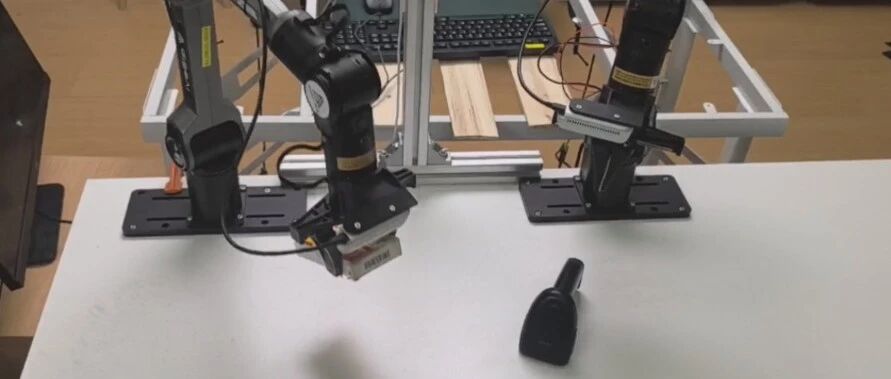
Core Insights - GigaAI has launched a new World-Action Model (WAM) called GigaWorld-Policy, which addresses industry pain points of slow inference and difficult training, achieving a 10x increase in inference speed, a 10x improvement in training efficiency, and a 30% increase in real-world task success rates [2][12][17] Group 1: Model Architecture - GigaWorld-Policy introduces an "Action-Centered" architecture that eliminates high computational delays associated with traditional WAMs by unifying multimodal representations [5] - The model utilizes a lightweight world model, GigaWorld-0.5, and employs a single Transformer backbone for collaborative modeling, significantly reducing structural computational redundancy [5][15] - Compared to current mainstream models like Motus and Cosmos Policy, GigaWorld-Policy achieves a 10x increase in inference speed while maintaining high-quality policy outputs [5][17] Group 2: Training Efficiency - GigaWorld-Policy employs a three-stage efficient training pipeline that maximizes the value of vast video data, achieving a 10x increase in overall training efficiency compared to traditional VLA training methods [8] - The model incorporates a causal mask mechanism during training to unify action tokens with future visual tokens, enhancing the action prediction task with high-density supervisory signals [9] - The training process includes pre-training on general physical laws using extensive internet video data, followed by fine-tuning with minimal real-world action labels [10] Group 3: Real-World Performance - In practical tests, GigaWorld-Policy has achieved an average success rate of nearly 85% in various robotic tasks, outperforming competitors like Cosmos-Policy by over 30% in absolute success rates [12][17] - The model's ability to maintain high success rates while achieving high real-time control frequencies positions it as a leading solution in the field of embodied intelligence [13][17] - GigaWorld-Policy's rapid response capability is crucial for effectively handling dynamic disturbances and execution errors in real-world environments, contributing to its high success rates [17]