液冷

Search documents
数据复盘丨78股获主力资金净流入超1亿元 龙虎榜机构抢筹14股
Zheng Quan Shi Bao Wang· 2025-12-23 10:46
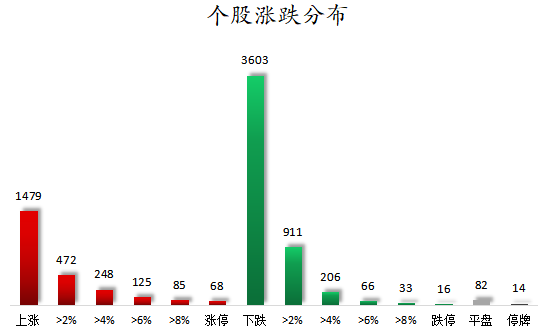
Market Overview - The Shanghai Composite Index closed at 3919.98 points, up 0.07%, with a trading volume of 806.9 billion yuan [1] - The Shenzhen Component Index closed at 13368.99 points, up 0.27%, with a trading volume of 1092.987 billion yuan [1] - The ChiNext Index closed at 3205.01 points, up 0.41%, with a trading volume of 498.642 billion yuan [1] - The STAR Market 50 Index closed at 1340.02 points, up 0.36%, with a trading volume of 52.8 billion yuan [1] - The total trading volume of the Shanghai and Shenzhen markets was 1899.887 billion yuan, an increase of 37.904 billion yuan compared to the previous trading day [1] Sector Performance - Strong sectors included construction materials, electric equipment, electronics, banks, and insurance [2] - Active concepts included fluorine chemicals, liquid cooling, organic silicon, composite flow batteries, and lithium mining [2] - Weak sectors included education, national defense, beauty care, retail, computing, automotive, real estate, and telecommunications [2] Individual Stock Performance - A total of 1479 stocks rose, while 3603 stocks fell, with 82 stocks remaining flat and 14 stocks suspended [2] - Among the stocks that hit the daily limit, 68 stocks rose to the limit, while 16 stocks fell to the limit [2] - Notable stocks with consecutive limit-ups included Victory Energy with 8 consecutive limit-ups, and several others with 5, 4, and 3 consecutive limit-ups [3] Capital Flow - The net outflow of main funds in the Shanghai and Shenzhen markets was 32.218 billion yuan, with the ChiNext seeing a net outflow of 8.934 billion yuan [4] - The electric equipment sector had the highest net inflow of main funds at 3.656 billion yuan, followed by chemicals and construction materials [4] - The defense industry saw the largest net outflow of main funds at 5.769 billion yuan, followed by electronics and telecommunications [4] Major Stocks with Fund Inflows - A total of 2141 stocks saw net inflows, with 78 stocks receiving over 1 billion yuan in net inflows [8] - The stock with the highest net inflow was Multi-Fluorine with 1.248 billion yuan, followed by Invech and CATL [8][9] Major Stocks with Fund Outflows - A total of 3016 stocks experienced net outflows, with 145 stocks seeing over 1 billion yuan in net outflows [11] - The stock with the highest net outflow was Shanzigaoke with 1.134 billion yuan, followed by Shanghai Hanxun and Lingyi Zhizao [11][12] Institutional Trading - Institutional investors had a net buy of approximately 528 million yuan, with Multi-Fluorine being the top net buy stock at about 210 million yuan [14] - The stocks with the highest net sell by institutions included Meie Technology and Xihua Technology [14]




人民币爆拉要升破7了!A股高位题材突发跳水,年底小心题材退潮
Sou Hu Cai Jing· 2025-12-23 09:34
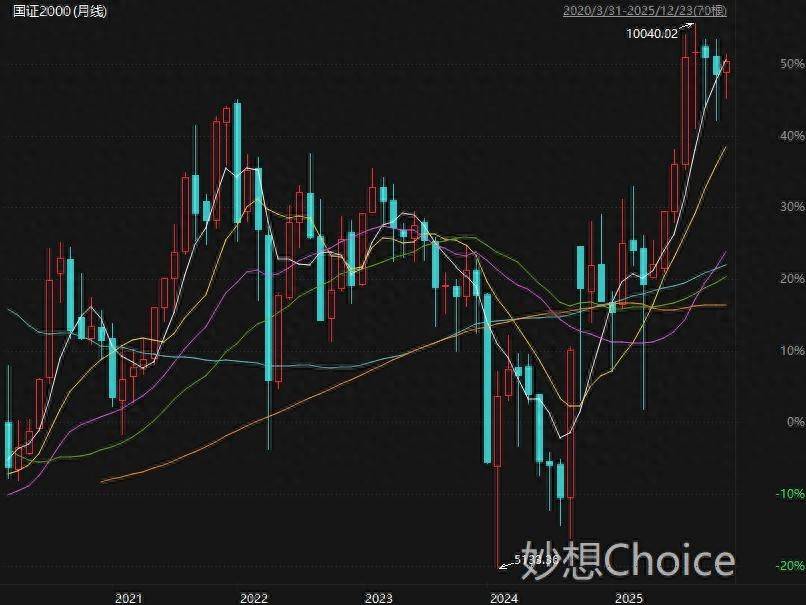
Market Trends - The A-share market has a pattern of small-cap stocks facing declines at year-end, with the Guozheng 2000 index showing a drop of 2.88% in December 2023 and a further decline of 20% at the beginning of 2024 due to liquidation pressures from retail investors and institutional rebalancing [1] - The commercial aerospace sector is experiencing a downturn, with stocks like Shunhao Co. and Huati Technology hitting their daily limit down [5] Economic Indicators - The U.S. Federal Reserve is expected to appoint a new chairman in January 2024, with current chairman Powell's term ending in May. There are concerns about potential economic recession if interest rates are not lowered [3] - The offshore RMB exchange rate is nearing the "7" mark, indicating potential currency fluctuations [9] Sector Performance - The lithium battery materials sector saw a sudden surge, with stocks like Duofluo and Tianji Co. hitting their daily limit up, driven by rising lithium carbonate futures prices [7][8] - The electric equipment, construction materials, electronics, and non-ferrous metals sectors are leading the market, while social services, beauty care, and retail sectors are lagging behind [11] Company Developments - Nvidia is seeking to export its H200 series chips to China, with initial orders expected to be between 5,000 to 10,000 modules, translating to approximately 40,000 to 80,000 chips [3] - Huawei's Ascend concept stocks have surged, with companies like Huafeng Technology and Shenling Environment seeing significant price increases [8]
A股年成交额首破400万亿元,A500ETF易方达(159361)盘中净申购超20亿份
Mei Ri Jing Ji Xin Wen· 2025-12-23 06:56
截至12月22日,A500ETF易方达(159361)今年以来年化跟踪误差仅0.34%,相对指数超额收益为 2.74%、在规模百亿以上的同类产品中位居第一,可助力投资者一键打包A股代表性公司。 (文章来源:每日经济新闻) 12月23日午后,A股三大指数红盘震荡,盘面上,银行、券商板块冲高回落,液冷、固态电池等板块涨 幅扩大,截至13点55分,中证A500指数上涨0.3%,成份股中,多氟多、英维克、天赐材料涨停。相关 ETF交投活跃,其中A500ETF易方达(159361)盘中成交额超80亿元,资金净申购超20亿份。 申万宏源证券认为,2026年有春季行情,且启动在即。一方面,12月全球货币政策关键验证期,有望平 稳收官,A股面临的海外环境可能趋于平稳;另一方面,春季股市流动性仍宽松,且春节前反弹是A股 胜率最高的日历特征之一。 A股近日又创新纪录,截至昨日,A股今年总成交额超过405万亿元,为历史上首次年成交额超过400万 亿元。A股整体换手率也明显向好,年内平均换手率接近1.74%,有望创出2016年来新高。 中证A500指数选择各行业市值较大、流动性较好的500只股票组作为指数样本,聚焦A股龙头公司,从 ...
液冷概念股集体活跃,龙蟠科技涨超8%
Ge Long Hui· 2025-12-23 06:36
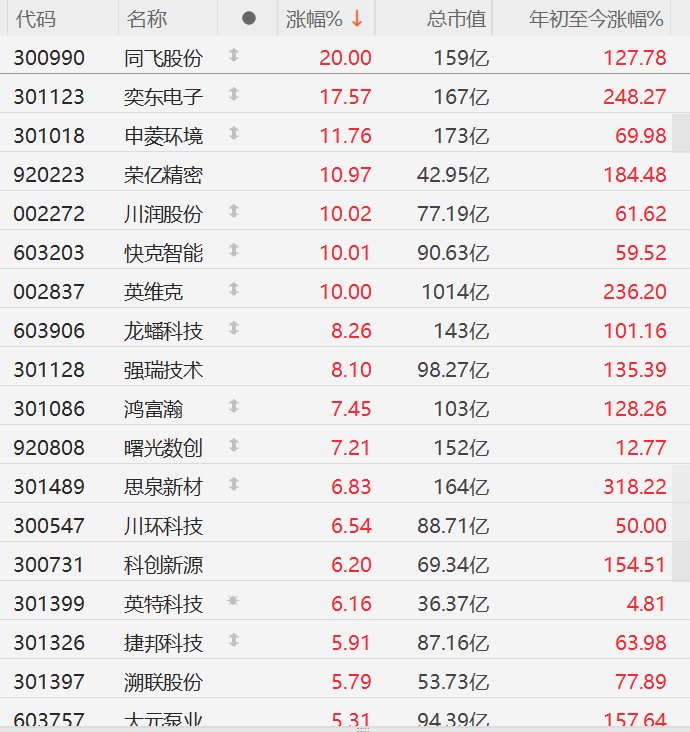
Core Viewpoint - The A-share liquid cooling concept stocks experienced significant activity on December 23, with multiple stocks reaching their daily limit up, indicating strong investor interest in this sector [1]. Group 1: Stock Performance - Tongfei Co., Ltd. (300990) saw a 20% increase, reaching a market capitalization of 15.9 billion [2]. - Yidong Electronics (301123) rose by 17.57%, with a total market value of 16.7 billion [2]. - Shenling Environment (301018) increased by 11.76%, with a market cap of 17.3 billion [2]. - Rongyi Precision (920223) gained 10.97%, valued at 4.295 billion [2]. - Chuanrun Co., Ltd. (002272) rose by 10.02%, with a market capitalization of 7.719 billion [2]. - Kuaike Intelligent (603203) increased by 10.01%, with a market cap of 9.063 billion [2]. - Yingweike (002837) saw a 10% rise, reaching a market value of 101.4 billion [2]. - Longpan Technology (603906) increased by 8.26%, with a market cap of 14.3 billion [2]. - Qiangrui Technology (301128) rose by 8.1%, valued at 9.827 billion [2]. - Shuguang Digital Innovation (920808) increased by 7.21%, with a market cap of 15.2 billion [2]. - Six other companies, including Siquan New Materials (301489) and Chuanhuan Technology (300547), also showed notable increases ranging from 6.16% to 6.83% [2]. Group 2: Year-to-Date Performance - Yidong Electronics (301123) has seen a year-to-date increase of 248.27% [2]. - Siquan New Materials (301489) has experienced a remarkable year-to-date growth of 318.22% [2]. - Rongyi Precision (920223) has a year-to-date increase of 184.48% [2]. - Yingweike (002837) has shown a year-to-date growth of 236.20% [2]. - Other companies like Chuanrun Co., Ltd. (002272) and Longpan Technology (603906) have also reported significant year-to-date increases of 61.62% and 101.16%, respectively [2].


A股液冷概念股集体活跃,龙蟠科技涨超8%
Ge Long Hui· 2025-12-23 06:31
格隆汇12月23日|A股液冷概念股今日集体活跃,其中,同飞股份20CM涨停,奕东电子涨超17%,申 菱环境涨超11%,荣亿精密涨近11%,川润股份、快克智能、英维克10CM涨停,龙蟠科技、强瑞技术 涨超8%,鸿富瀚、曙光数创涨超7%,思泉新材、川环科技、科创新源、英特科技涨超6%。 ...
放量阳包阴,这个底部确认了?
Jin Rong Jie· 2025-12-23 03:38
Group 1 - The core viewpoint is that the upcoming resumption of trading for CICC may lead to a potential price surge, similar to the previous case with Guotai Junan, but the overall market sentiment remains cautious due to the current phase of market correction [1] - The market's recent rise is attributed to the influence of brokerage firms and external factors, including comments from a former Japanese central bank deputy governor about avoiding premature interest rate hikes, and speculation about large-scale purchases of index ETFs by Huijin [1] - The market is currently experiencing a divergence, with a significant number of stocks declining, particularly due to regulatory extensions on high-profile stocks, which has negatively impacted market sentiment [1] Group 2 - In terms of sector performance, the strongest performers today are optical modules and liquid cooling, which align with the preferences of institutional investors and show some market momentum [2] - Commercial aerospace is expected to continue its trend, but it requires the release of negative sentiment before any significant recovery can be anticipated, while consumer stocks should be approached with a high sell-low buy strategy until they align with the index [2] - The lithium battery sector is currently viewed as a potential rebound opportunity following the cancellation of 27 mining rights in Yichun, indicating a reaction to oversold conditions [2]

英伟达、SK海力士与群联电子共同开发AI固态硬盘,AI人工智能ETF(512930)多空胶着
Xin Lang Cai Jing· 2025-12-23 02:16
数据显示,截至2025年11月28日,中证人工智能主题指数(930713)前十大权重股分别为中际旭创 (300308)、新易盛(300502)、寒武纪(688256)、中科曙光(603019)、澜起科技(688008)、科大讯飞 (002230)、海康威视(002415)、豪威集团(603501)、金山办公(688111)、浪潮信息(000977),前十大权重 股合计占比63.92%。 中信证券研报称,2025年以来,在AI服务器功耗和芯片功率大幅提升的背景下,液冷方案凭借更高的 散热效率、更低的PUE,正逐步成为数据中心节能降耗的主流技术路径。该机构预测,随着液冷加速渗 透叠加技术升级ASP提升,2027年全球液冷市场空间将达到218亿美元。从行业竞争格局看,当前液冷 产业链以台系厂商为主。随着芯片厂商逐步参与液冷供应链选择,国产厂商迎来重大机遇。看好国产厂 商充分受益AIDC液冷需求放量,推荐具备液冷核心组件量产能力及整体解决方案的厂商。 AI人工智能ETF紧密跟踪中证人工智能主题指数,中证人工智能主题指数选取50只业务涉及为人工智能 提供基础资源、技术以及应用支持的上市公司证券作为指数样本,以反映人工智 ...

双融日报-20251223
Huaxin Securities· 2025-12-23 01:36
Market Sentiment - The current market sentiment score is 79, indicating an "overheated" market condition, which suggests caution for investors as high sentiment levels can lead to resistance in market movements [5][8]. Hot Themes Tracking - **Liquid Cooling Theme**: The fifth International AIDC Liquid Cooling Industry Chain Conference will be held on December 18-19. Major AI companies are shifting towards liquid cooling technology, with Nvidia's recent chips adopting this system. Related stocks include Yinvik (002837) and Feilong Co., Ltd. (002536) [5]. - **Banking Sector**: Bank stocks are characterized by high dividend yields, with the China Securities Bank Index yielding 6.02%, significantly higher than the 10-year government bond yield. This makes bank stocks attractive for long-term investors during economic slowdowns. Related stocks include Agricultural Bank of China (601288) and Ningbo Bank (002142) [5]. - **Brokerage Sector**: The China Securities Regulatory Commission is focusing on enhancing regulatory measures for quality institutions while easing restrictions for them. This shift aims to promote high-quality development in the securities industry. Related stocks include CITIC Securities (600030) and Guotai Junan (601211) [5]. Capital Flow Analysis - The top net inflow stocks include Zhongji Xuchuang (300308) with a net inflow of 144.27 million, Xinyi Sheng (300502) with 107.25 million, and Tianfu Communication (300394) with 89.32 million [9]. - The top net outflow stocks include Xue Ren Group (002639) with a net outflow of 117.11 million and Pingtan Development (000592) with 98.02 million [10]. - The financing net buy analysis shows that Zhongji Xuchuang (300308) had a net buy of 158.17 million, indicating strong investor confidence [11]. Industry Insights - The banking sector is highlighted for its stability and high dividend yields, making it a preferred choice for long-term institutional investors during periods of economic uncertainty [5]. - The brokerage sector is undergoing a transformation towards quality over quantity, with a focus on enhancing risk control and capital efficiency [5].
AI算力浪潮下,2026年还可以关注这三大方向丨每日研选
Shang Hai Zheng Quan Bao· 2025-12-23 00:57
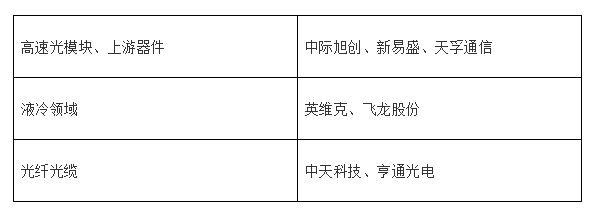
2.液冷领域:重点关注具备全栈解决方案能力、已获头部客户认证并拥有大规模交付经验的龙头企业, 将成为此轮产业确定性红利的主要受益者,如英维克、飞龙股份。 3.光纤光缆领域:关注在特种光纤、海洋通信等领域技术领先,且产能规模占优的龙头企业,如中天科 技、亨通光电。 最后,算力集群内部海量的数据交换,以及跨数据中心的互联DCI,显著带动了光纤光缆的用量;与此 同时,全球供应链的产能瓶颈(尤其体现在光纤预制棒环节)与国内"东数西算"等工程对特种光纤的集 中需求相叠加,共同推动了光纤光缆市场的供需关系趋紧,行业价格步入复苏通道。 在这一趋势下,机构提示投资逻辑应聚焦于两个层面:一是选择直接受益于规格升级且需求弹性大的环 节;二是筛选在量产能力、客户认证和供应链地位上已建立壁垒的龙头企业。具体收益方向如下: 1.光模块与上游器件:聚焦已实现800G大规模交付、并率先推进1.6T产能爬坡的龙头公司,如中际旭 创、新易盛;同时关注直接受益于技术迭代和客户需求上修的上游光器件公司,如天孚通信。 在12月8日的FORCE原动力大会上,火山引擎总裁谭待介绍,近日豆包大模型日均Tokens使用量已突破 50万亿,居中国第一、全球第 ...
国盛证券:从预期到兑现 液冷迈向第二发展阶段
智通财经网· 2025-12-22 06:11
Core Insights - The liquid cooling industry is transitioning from a "first development stage" focused on concepts and expectations to a "second development stage" characterized by order confirmations, capacity realization, and performance delivery [1][4] Group 1: Industry Transition - The liquid cooling system is moving towards performance realization, with high-power cabinets (100kW+) becoming the new norm, and the GB300 series AI servers expected to start mass production by the end of 2025 [2][4] - The market focus is shifting from discussions about liquid cooling concepts to actual performance metrics and market space evaluations, marking the end of the expectation-driven phase [1][2] Group 2: Competitive Landscape - The competitive landscape is evolving from individual component competition to a comprehensive thermal management system that spans servers, cabinets, and data center equipment, increasing customer reliance on solution providers [3][4] - Industry leaders are expected to benefit from their comprehensive solutions, large-scale delivery capabilities, and established relationships with major clients, reinforcing a "stronger gets stronger" dynamic in the market [3][4] Group 3: Market Opportunities - The liquid cooling market is being systematically re-evaluated as the application boundaries expand from GPU servers to switches and ASIC devices, indicating a significant growth potential [2][4] - Companies with full-stack solution capabilities and certifications from leading clients are positioned to capture the upcoming industry benefits, particularly those with extensive global delivery experience [4]