智能汽车

Search documents
小米集团-W(01810):手机大盘承压,汽车毛利率超预期
HTSC· 2025-08-20 06:42
Investment Rating - The report maintains a "Buy" rating for Xiaomi Group with a target price of HKD 65.4, down from the previous HKD 67.8 [1][4][14]. Core Insights - Xiaomi's total revenue for Q2 2025 reached RMB 116 billion, representing a year-on-year growth of 30.5% and a quarter-on-quarter increase of 4.2%. Adjusted net profit grew by 75.4% to RMB 10.8 billion [1][4]. - The overall gross margin for the group was 22.5%, up 1.8 percentage points year-on-year but down 0.3 percentage points from Q1 2025 [1]. - The automotive business showed strong performance with a gross margin of 26.4%, benefiting from scale effects and a higher proportion of high-end model deliveries [2][3]. Summary by Sections Automotive Business - Q2 2025 saw a record delivery of 81,302 vehicles, with revenue increasing by 14% quarter-on-quarter to RMB 20.6 billion. The gross margin for the automotive segment improved significantly from 15.4% to 26.4% year-on-year [2]. - The company is optimistic about the automotive business's profitability, especially with its high-end strategy, and anticipates potential profitability in upcoming quarters [2][3]. Smartphone/IoT/Internet Business - The smartphone segment faced challenges, with revenue declining by 2.1% year-on-year to RMB 45.5 billion and a gross margin contraction to 11.5% [3]. - IoT revenue grew by 44.7% year-on-year to RMB 38.7 billion, driven by high-value smart home appliances, maintaining a strong gross margin of 22.5% [3]. - Internet services continued to show stable growth, with a 10.1% year-on-year revenue increase to RMB 9.1 billion and a high gross margin of 75.4% [3]. Profit Forecast and Valuation - Due to weak global smartphone demand, revenue forecasts for 2025-2027 were adjusted downwards by 2.2%, 0.5%, and 0.2%, respectively. However, net profit forecasts were raised by 9.5%, 4.3%, and 7.8% for the same period [4]. - The target price of HKD 65.4 corresponds to a 30x PE ratio for 2026, reflecting the company's strong IoT and AI ecosystem value [4][14]. Financial Metrics - The report projects a revenue increase to RMB 479.9 billion in 2025, with a net profit of RMB 44.3 billion, representing a 62.2% year-on-year growth [9][12]. - The gross margin is expected to stabilize around 22.7% in 2026, with a projected net profit margin of 9.1% [12][13].

智能汽车ETF(159889)涨超1.7%,行业景气度与政策利好共振
Mei Ri Jing Ji Xin Wen· 2025-08-20 05:55
Group 1 - The article highlights the recovery of the third batch of "old-for-new" national subsidies in August, anticipating a strong automotive market in September and October, known as "Golden September and Silver October" [1] - Current tax exemption for new energy vehicles is 30,000 yuan, which will be adjusted to a 50% reduction (15,000 yuan) in 2026-2027, indicating a shift in government policy [1] - The article suggests that the automotive industry is experiencing a "de-involution" alongside a preemptive demand for new energy vehicles, benefiting strong new car cycles and high-end brands priced above 300,000 yuan [1] Group 2 - The L2 autonomous driving national standard is expected to be implemented soon, further strengthening industry trends under concentrated catalysts [1] - The commercial vehicle sector is seeing a recovery in domestic demand and an increase in overseas exports, leading to better-than-expected performance from leading companies in the first half of the year [1] - The L4 autonomous driving industry is approaching a turning point in costs and technology, with ongoing evolution in technology iterations, industry structure, and new business models [1] Group 3 - The Smart Car ETF (159889) tracks the CS Smart Car Index (930721), focusing on high-quality listed companies closely related to core technologies in smart driving and vehicle networking [2] - The index's component stock weight distribution is 31.0%, 20.6%, and 16.6%, covering core aspects of the smart car industry chain, including perception, decision-making, and execution layers [2] - The index systematically reflects the overall performance of listed companies in the smart car sector [2]
小米集团-W(01810):Q2收入及利润续创新高,关注大家电出海与二期工厂爬坡
Shenwan Hongyuan Securities· 2025-08-20 05:45
Investment Rating - The report maintains a "Buy" rating for Xiaomi Group [6][8] Core Insights - Xiaomi Group's Q2 revenue and adjusted net profit reached new highs, with revenue of RMB 116 billion, a year-on-year increase of 30.5%, marking three consecutive quarters of over RMB 100 billion [8] - The adjusted profit was RMB 10.8 billion, exceeding Bloomberg's expectation of RMB 10.2 billion, and represented a year-on-year increase of 75% [8] - Key growth drivers include strong performance in IoT business, improved EV gross margins from the delivery of high-value models, and a slight offset from a decline in smartphone revenue [8] - The management reiterated the R&D expense guidance for 2025 at RMB 30 billion, with a quarter allocated to AI [8] Financial Data and Profit Forecast - Revenue projections for 2025-2027 are revised to RMB 4,854 billion, RMB 5,972 billion, and RMB 7,258 billion respectively, with adjusted net profit forecasts of RMB 436 billion, RMB 512 billion, and RMB 649 billion [2][8] - The expected growth rates for revenue are 33% in 2025, 23% in 2026, and 22% in 2027 [2] - The expected earnings per share for 2025 is RMB 1.63, with a net asset return rate of 20.1% [2] Market Data - As of August 19, 2025, Xiaomi's closing price was HKD 52.40, with a market capitalization of HKD 136.37 billion [3] - The stock has a 52-week high of HKD 61.45 and a low of HKD 17.10 [3] Business Segments Performance - Smartphone revenue in Q2 was RMB 45.5 billion, a year-on-year decrease of 2%, with a gross margin of 11.5% [8] - IoT revenue grew by 45% year-on-year to RMB 38.7 billion, with a gross margin of 22.5% [8] - The electric vehicle segment reported revenue of RMB 21.3 billion with a gross margin of 26.4%, and a delivery of 81,300 units [8]
雷军晒出“成绩单”
天天基金网· 2025-08-20 05:07
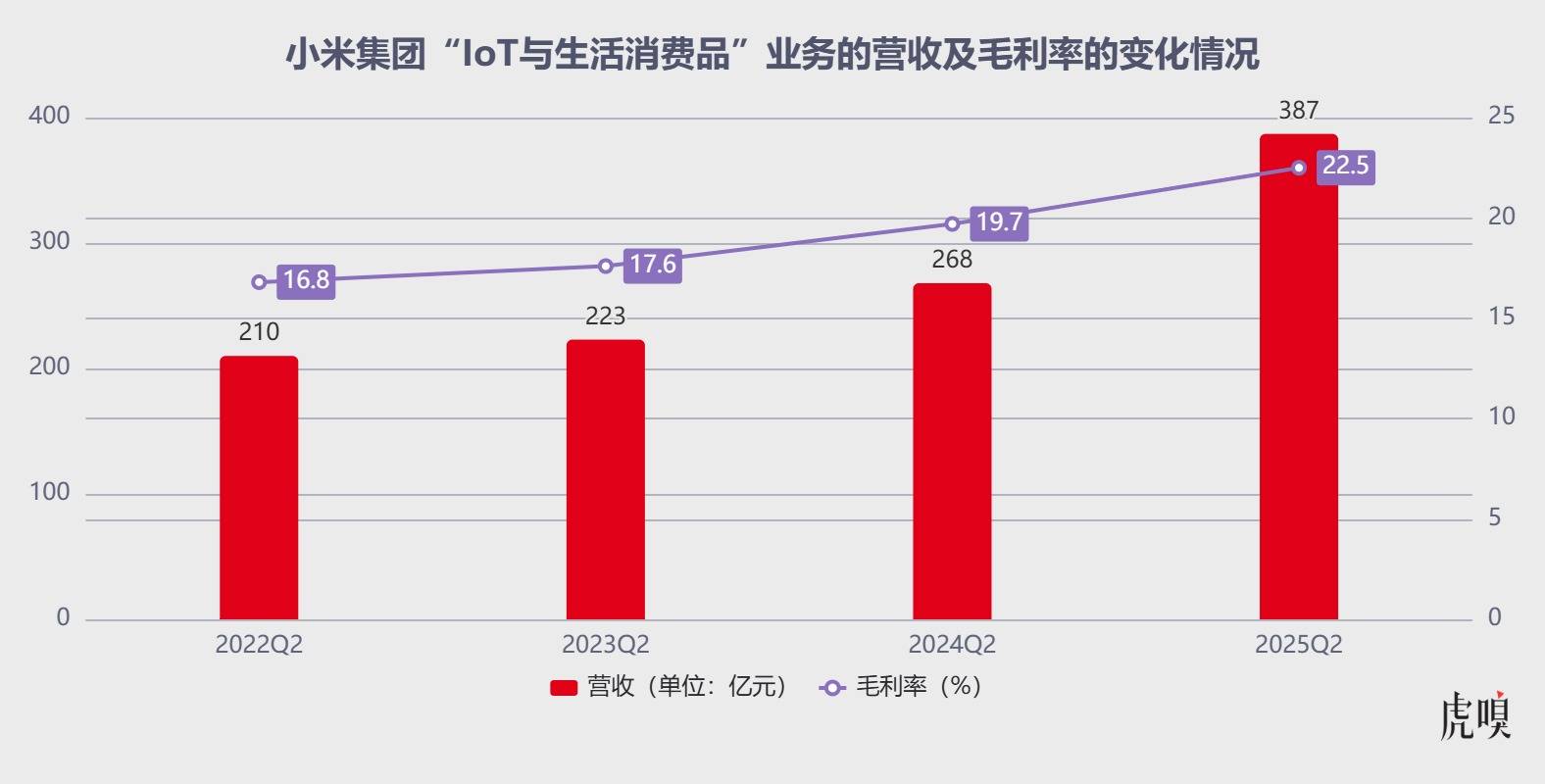
Core Viewpoint - Xiaomi Group reported strong financial results for Q2 2025, with total revenue reaching 1160 billion RMB, a year-on-year increase of 30.5%, and net profit of 119 billion RMB, up 134.2% [2][4]. Financial Performance - Total revenue for Q2 2025 was 115,956.1 million RMB, a 30.5% increase from 88,887.8 million RMB in Q2 2024, and a 4.2% increase from 111,293.3 million RMB in Q1 2025 [5]. - Gross profit reached 26,101.0 million RMB, up 41.9% year-on-year [5]. - Adjusted net profit was 10,830.7 million RMB, reflecting a 75.4% increase compared to 6,175.4 million RMB in Q2 2024 [5]. Business Segments - The smartphone segment saw a 27.6% share of high-end smartphone sales in mainland China, a 5.5% increase year-on-year, with significant market share gains in the 4000-5000 RMB and 5000-6000 RMB price segments [5][7]. - The automotive segment reported revenue exceeding 200 billion RMB, with Q2 deliveries reaching 81,302 units, totaling over 300,000 units delivered by July 10 [7][8]. - The IoT and consumer products segment generated 387 billion RMB in revenue, a 44.7% increase, with smart home appliances growing by 66.2% [8]. R&D and Future Strategy - R&D investment in Q2 reached 78 billion RMB, a 41.2% increase, with an expected total investment of 300 billion RMB for the year [8]. - Xiaomi plans to open 1,000 new stores annually overseas, aiming for 10,000 stores in five years, enhancing its retail strategy [9].


小米业绩再创新高,汽车业务或在下半年迎来拐点
Huan Qiu Lao Hu Cai Jing· 2025-08-20 03:46
Core Insights - Xiaomi Group reported a strong performance in Q2 2025, achieving revenue of RMB 115.96 billion, marking a 30.5% year-on-year increase, and a net profit of RMB 11.9 billion, with adjusted net profit reaching a record high of RMB 10.8 billion, up 75.4% year-on-year [1] Revenue Performance - For the first half of 2025, Xiaomi's total revenue reached RMB 227.25 billion, reflecting a 38.2% year-on-year growth, with adjusted profit at RMB 21.51 billion, a significant increase of 177.5% [1] - The gross profit for the first half was RMB 51.5 billion, up 46.2% from RMB 35.22 billion in the same period last year [1] Business Segment Analysis - The revenue from the smart electric vehicle and AI innovation segment in Q2 was RMB 21.3 billion, with smart electric vehicle revenue at RMB 20.6 billion and a gross margin of 26.4%. Operating losses narrowed from RMB 500 million in Q1 to RMB 300 million, with expectations of profitability in the second half of the year [1] - Xiaomi delivered 81,300 vehicles in Q2 2025, bringing the total for the first half to 157,000, nearing half of the annual target of 350,000 [1] IoT and Consumer Products - The IoT and consumer products segment achieved revenue of RMB 38.7 billion, a 44.7% increase from RMB 26.7 billion year-on-year, accounting for 33.4% of total revenue, with a gross margin improvement of 2.8% to 22.5% [2] - Major appliances saw significant growth, with air conditioner shipments exceeding 5.4 million units (over 60% growth), refrigerators at over 790,000 units (over 25% growth), and washing machines at over 600,000 units (over 45% growth) [2] Smartphone Business - The smartphone segment reported revenue of RMB 45.5 billion, a decline of 2.1% year-on-year, representing 39.3% of total revenue, down from 52.3% the previous year, with a gross margin of 11.5% [2] - Despite the revenue decline, Xiaomi remains among the top three smartphone manufacturers globally, with a market share of 14.7% and global shipments of approximately 4.24 million units [2] R&D Investment - Xiaomi increased its R&D spending in Q2 by 41.2% to RMB 7.8 billion, reflecting the company's commitment to enhancing its chip development capabilities [3]
小米、腾讯盈利高增,“大空头”斥6000万美元做多阿里、京东!港股科技迎业绩与资金面共振?
Ge Long Hui· 2025-08-20 02:42
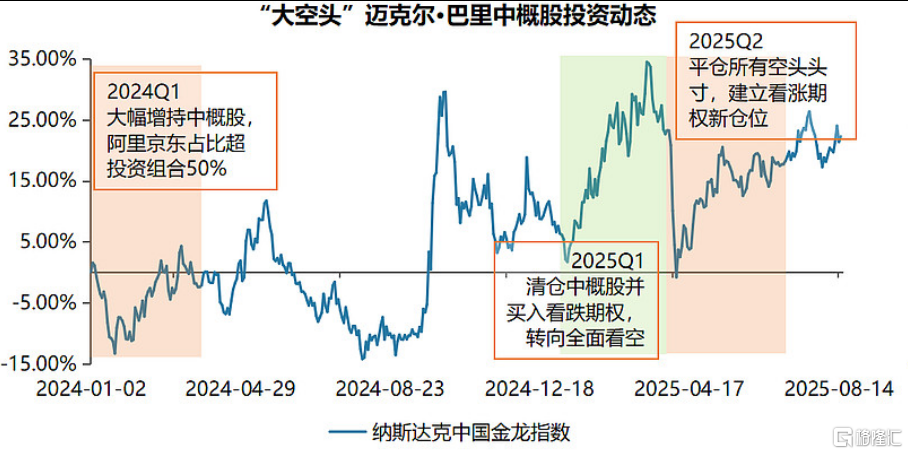
Group 1: Financial Performance of Companies - Xiaomi Group reported total revenue of 116 billion yuan for Q2 2025, a year-on-year increase of 30.5%, and adjusted net profit of 10.8 billion yuan, up 75.4% [2] - Tencent Holdings reported total revenue of 184.5 billion yuan for the first half of the year, a year-on-year increase of 15%, with operating profit of 60.1 billion yuan, up 18% [3] Group 2: Investment Trends and Market Sentiment - International investors are increasingly buying Chinese stocks, with global hedge funds purchasing at the fastest rate since the end of June [4][11] - Michael Burry, known for his role in "The Big Short," has shifted his strategy to a bullish stance on Chinese stocks, investing $60.6 million in call options for Alibaba and JD.com [6][9] - Goldman Sachs noted that the recent stock purchases are primarily driven by long positions, with a ratio of approximately 9:1 compared to short covering [11] Group 3: ETF and Market Indices Performance - The Hong Kong Technology 50 ETF (159750) has seen a net inflow of over 687 million yuan this year, continuously setting new highs since its listing [5][16] - The Hong Kong Technology Index has outperformed, with a cumulative increase of 33.25% as of August 19, 2025, while the Hang Seng Technology Index rose by 24.04% [13][15] Group 4: Economic and Policy Factors - Factors contributing to the recent rise in Chinese stocks include easing tariff uncertainties, better-than-expected economic data for Q2, and strong capital inflows [11][12] - The recovery in the Hong Kong stock market is supported by improved liquidity and a rebound in fundamental expectations, driven by stronger domestic policies compared to the previous year [12]


三条曲线狂飙:小米凭什么成中国科技最稳增长极?
Ge Long Hui· 2025-08-20 02:12
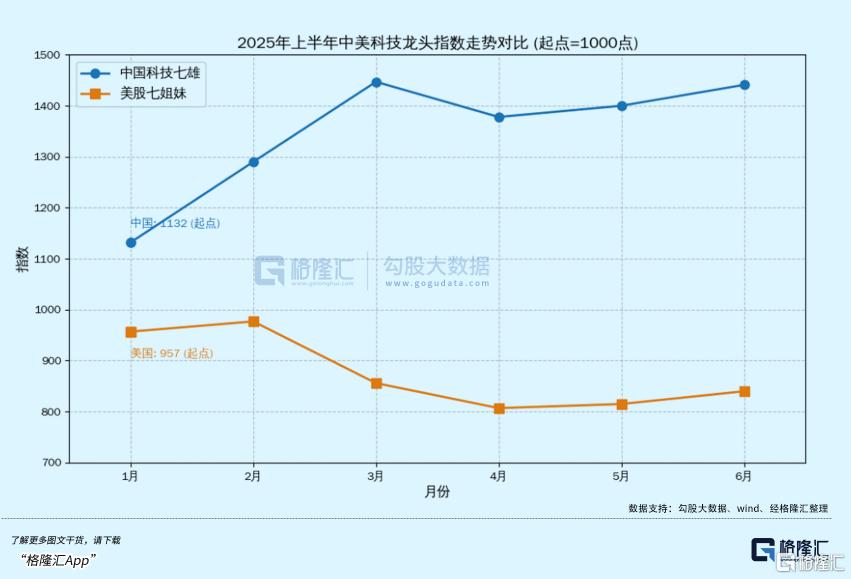
Core Viewpoint - The article highlights the strong growth potential of Xiaomi Group, which has attracted significant foreign investment due to its unique competitive advantages in technology, e-commerce, and new energy sectors. The company is compared to the "Magnificent Seven" of the US stock market, with a notable increase in its stock index and contributions from its various business segments [1][3]. Financial Performance - In Q2 2025, Xiaomi reported a revenue of 116 billion RMB, a year-on-year increase of 30.5%, marking the fifth consecutive quarter of record highs. Net profit reached 11.9 billion RMB, with adjusted net profit at 10.8 billion RMB, reflecting year-on-year growth of 134.2% and 75.4% respectively [5][6]. - The revenue growth is attributed to the operational leverage effect, where fixed costs are diluted by scale, allowing revenue increases to translate into higher profit margins [5]. Business Segments Smartphones - Xiaomi's smartphone revenue in Q2 2025 was 45.5 billion RMB, accounting for 39.3% of total revenue, down from 61.5% in Q1 2024. Despite the decline in revenue share, smartphones remain a critical revenue driver, with global shipments of approximately 4.24 million units [6][7]. Automotive - The automotive segment saw significant growth, with over 157,000 units delivered in the first half of 2025. The launch of the YU7 model generated substantial demand, with over 240,000 orders within 18 hours, surpassing Tesla's Model Y sales in the same period [7][8]. Home Appliances - Revenue from IoT and consumer products reached nearly 38.7 billion RMB in Q2 2025, a year-on-year increase of over 44.7%. The growth was primarily driven by the home appliance category, which has seen Xiaomi rise to the top three in the domestic market [9][10]. Ecosystem and Technology - Xiaomi's business model focuses on creating an integrated ecosystem through its "smartphone + automotive + home appliances" strategy, which enhances user experience and brand loyalty [12][13]. - The company is leveraging AI, self-developed chips, and its operating system to create a robust technological foundation, enabling seamless connectivity across devices [19][20]. Market Potential - The combined market size of the smartphone, automotive, and home appliance industries is approximately 28 trillion RMB, with Xiaomi's current penetration rate below 2%, indicating substantial growth potential [14][27]. - Xiaomi's unique position in multiple high-value markets allows it to maintain a competitive edge and pursue long-term growth strategies [21][22]. Competitive Landscape - Xiaomi's valuation potential is underscored by its multi-sector approach, which is difficult for competitors to replicate. The company is positioned to challenge industry giants like Apple and Tesla while also disrupting traditional home appliance manufacturers [23][24][25].
高盛:全球对冲基金正加速买入中国股票,配置缺口支撑后市
Jin Rong Jie· 2025-08-20 01:56
Group 1 - Major Chinese companies are entering a busy earnings disclosure period, with Xiaomi Group reporting total revenue of 116 billion yuan for Q2 2025, a year-on-year increase of 30.5%, and adjusted net profit of 10.8 billion yuan, up 75.4% [1] - Tencent Holdings reported total revenue of 184.5 billion yuan for the first half of the year, a year-on-year increase of 15%, with operating profit of 60.1 billion yuan, up 18% [1] - Foreign capital is accelerating its purchase of core Chinese assets, with notable investors like Michael Burry turning bullish on Chinese stocks in Q2 [1][2] Group 2 - According to Goldman Sachs, global hedge funds are buying Chinese stocks at the fastest pace since the end of June, primarily driven by long positions, with a ratio of long to short buying at approximately 9:1 [6] - Factors contributing to this buying spree include easing tariff uncertainties, better-than-expected economic data for Q2, continued "anti-involution" policies, a recovering Hong Kong IPO market, and strong capital inflows [6] - Despite increased interest from overseas investors, their allocation levels remain conservative, suggesting potential for further market growth [6] Group 3 - The Hong Kong Technology Index has seen a cumulative increase of 33.25% year-to-date as of August 19, while the Hang Seng Technology Index has risen by 24.04% [7] - The Hong Kong Technology Index covers a broader range of AI applications compared to the Hang Seng Technology Index, including sectors like smart vehicles and innovative pharmaceuticals [9] - The Hong Kong Technology 50 ETF has attracted over 687 million yuan in net inflows this year, continuously setting new highs since its listing [10]
小米仍在狂飙
虎嗅APP· 2025-08-20 00:22
Core Viewpoint - The article discusses Xiaomi's recent financial performance and its strategic moves across various industries, highlighting its growth in the home appliance and smart car sectors while facing challenges in the smartphone market [5][8][21]. Financial Performance - Xiaomi reported a revenue of 116 billion yuan for Q2 2025, marking a 30.5% year-on-year increase, with adjusted net profit rising by 75.4% to 10.8 billion yuan [5]. - The company has achieved six consecutive quarters of record-breaking financial results, indicating strong operational performance [5]. Home Appliance Sector - In the home appliance segment, Xiaomi's air conditioner, washing machine, and refrigerator shipments grew by 60%, 25%, and 45% respectively [5]. - The "IoT and Lifestyle Products" segment saw a revenue increase of 44.7% to 38.7 billion yuan, with wearable products growing by 70.9% and tablet sales increasing by 41.4% [11][12]. Smart Car Business - Xiaomi's smart car revenue reached 21.2 billion yuan, with a gross margin of 26.4%, exceeding market expectations [6]. - The operating loss in the smart car business narrowed to 300 million yuan, with expectations of achieving profitability in the second half of the year [7]. Smartphone Market Challenges - Xiaomi's smartphone revenue declined by 2.1% to 45.5 billion yuan, ending a streak of seven consecutive quarters of growth [21]. - Despite the overall market decline, Xiaomi was the only domestic manufacturer to achieve positive growth in Q2, with a 3.4% increase in shipment volume [22][21]. Strategic Approach - Xiaomi employs a "hit product model," focusing resources on creating standout products, which has proven effective in the air conditioning market [15]. - The company is also pushing for ecosystem integration, enhancing user stickiness through interconnected devices [16]. Market Dynamics - The smartphone market is experiencing a slowdown, with a longer replacement cycle for consumers, leading to a strategic focus on maintaining market share through competitive pricing [25][26]. - Xiaomi's high-end smartphone strategy is showing results, with increased market share in the 4000-5000 yuan and 5000-6000 yuan price segments [26].

小米仍在狂飙
Hu Xiu· 2025-08-19 23:44
Core Viewpoint - The article discusses the competitive dynamics in the air conditioning industry, highlighting Xiaomi's rapid growth and market share gains against traditional players like Gree, amidst a backdrop of broader industry challenges and Xiaomi's financial performance. Group 1: Xiaomi's Market Position - Xiaomi's air conditioning market share reportedly surpassed Gree's in July, leading to public disputes over data accuracy between the companies [1] - The competitive landscape indicates that Xiaomi has become a significant threat to traditional manufacturers in the air conditioning sector [1] Group 2: Financial Performance - Xiaomi's Q2 2025 revenue reached 116 billion yuan, a 30.5% year-on-year increase, with adjusted net profit rising 75.4% to 10.8 billion yuan [2][3] - The company has achieved six consecutive quarters of record financial performance, with notable growth in non-core businesses such as home appliances [3] Group 3: Product Performance - In the home appliance sector, Xiaomi's air conditioners, washing machines, and refrigerators saw shipment increases of 60%, 25%, and 45% respectively [3] - Xiaomi's smart car business generated 21.2 billion yuan in revenue, with a gross margin of 26.4%, exceeding market expectations [3] Group 4: Strategic Approaches - Xiaomi employs a "hit product model," focusing resources on a few standout products to dominate market segments, as seen with the "Mijia Air Conditioner Pro" [11] - The company is also enhancing its ecosystem, with 20.5 million users connecting five or more devices to its AIoT platform, reflecting a 26.8% year-on-year growth [11] Group 5: Challenges in Smartphone Business - Xiaomi's smartphone revenue declined by 2.1% to 45.5 billion yuan, marking the end of seven consecutive quarters of growth [4][16] - Despite being the only domestic manufacturer to achieve positive shipment growth in Q2, the company faces a dilemma between maintaining volume and pricing strategies [4][22] Group 6: Market Dynamics - The overall smartphone market in China saw a 4.1% decline in shipments, with Xiaomi's performance being relatively strong compared to competitors [16][17] - The company is navigating a challenging environment where consumer demand has been affected by previous promotional activities and longer replacement cycles for smartphones [18][26]