消费电子

Search documents
大手笔!小米斥资25亿港元回购护盘
Sou Hu Cai Jing· 2026-01-23 16:42
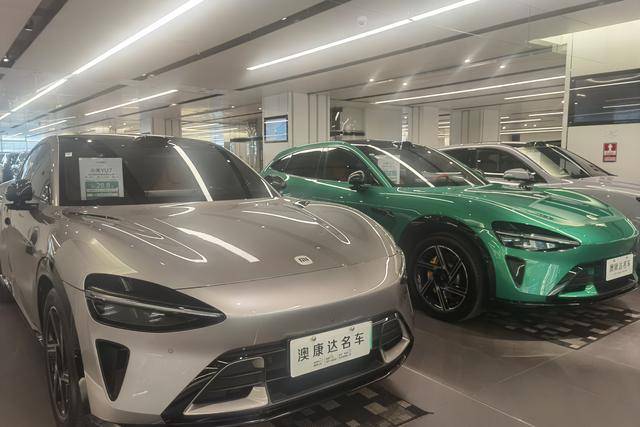
1月22日,小米集团于港交所发布公告,宣布启动一项规模不超过25亿港元的自动股份购回计划。根据 公告,小米已与独立经纪商订立协议,将在香港联交所购回本公司B类普通股。小米在公告中明确表 示:实施自动股份购回计划展示公司对自身业务前景充满信心,符合公司及股东的整体最佳利益,所有 购回股份后续将予以注销。1月23日,小米股价盘中上涨超3%,收盘报36.240港元,全日涨幅达 2.84%。 记者注意到,小米此次回购为"自动回购",即公司委托经纪商,按照预设的价格区间、时间周期等参数 执行回购操作。根据公告,此次回购计划将于1月23日正式启动,结束时间以"2026年股东周年大会前一 日、购回总代价达25亿港元上限、依据协议提前终止"三者中最早发生之日为准。 值得注意的是,此次回购将全部注销,实质性增厚股东权益。此次回购的标的是小米B类普通股,股份 注销后,公司总股本将相应减少,在净利润不变的前提下,每股收益会随之提升,股东持股比例也将间 接增加,核心权益得到增厚。这与部分公司回购股份用于员工持股计划的模式不同,注销式回购更能直 接体现公司对股东回报的重视。 深圳商报·读创客户端首席记者 吴蕾 文/图 记者注意到,小米 ...

美股开盘涨跌不一,英特尔跌超13%
Feng Huang Wang Cai Jing· 2026-01-23 14:41
Group 1: Market Performance - US stock market opened mixed with Dow Jones down 0.35%, Nasdaq up 0.02%, and S&P 500 down 0.08% [1] - Semiconductor sector weakened, with Intel dropping over 12% as the company projected first-quarter revenue guidance below market expectations of $12.51 billion [1] Group 2: Company-Specific News - Intel's stock plummeted 13% pre-market due to disappointing earnings guidance, with CEO Pat Gelsinger stating that the company's 18A process yield has not met expectations and that they are currently in a "just-in-time" production state, severely limiting supply capacity [3] - Moderna's stock fell over 3% as the company announced it would not invest in new late-stage vaccine trials [1] - Ericsson's stock rose 8% after the company reported fourth-quarter net sales and adjusted EBIT that exceeded expectations [1] Group 3: Financial Sector Developments - Bank of America and Citigroup are considering responding to President Trump's proposal for a 10% cap on credit card interest rates, with discussions ongoing about potential consumer cost reduction strategies [4] Group 4: Leadership Changes - Apple's CEO successor candidate, John Ternus, has had his responsibilities expanded, solidifying his position as a potential replacement for Tim Cook, as he now oversees the design team, a role historically held by senior leaders [5] Group 5: Short Selling and Stock Performance - Short sellers of SanDisk have incurred losses of approximately $3 billion since early November, as the stock has surged 112% year-to-date, leading to increased short squeeze risks [6] Group 6: IPO Highlights - Czechoslovak Group (CSG), a European ammunition manufacturer, saw its stock rise over 29% on its first day of trading in Amsterdam, raising €3.3 billion, marking the largest IPO in the history of pure defense companies [7]

1月23日行情解读:美超级风暴周,Fed决议+科技巨头财报双重对决,反弹遇压下的生死局
Xin Lang Cai Jing· 2026-01-23 13:09
Group 1 - The core viewpoint of the article highlights that the recent market rebound in U.S. stocks is merely a technical correction and does not signify a reversal of the prevailing weak trend [1][5] - Major tech companies such as Nvidia, Oracle, Microsoft, Meta, Apple, and Amazon have shown signs of fatigue, with some stocks even facing downward break risks [1][5] - The upcoming earnings reports from key players like Microsoft, Meta, Tesla, Apple, and Amazon will be critical in assessing the real economic conditions of the AI industry, consumer electronics, and cloud computing sectors [2][7] Group 2 - The Federal Reserve's interest rate decision is anticipated to have significant implications, with the U.S. GDP revised up to 4.4%, indicating stronger-than-expected economic resilience [3][7] - The market's expectations for interest rate cuts have been pushed back to June, as the core PCE remains moderate, and any indication from Powell of not rushing to cut rates could lead to further market volatility [3][7] - Investors in Nasdaq and Dow ETFs should be cautious, as the current rebound may be limited, and there are potential risks associated with the upcoming "seasonal line defense" [3][7]
国补后性价比高的笔记本有哪些?华为PC稳价不涨更享多重优惠
Xin Lang Cai Jing· 2026-01-23 12:57
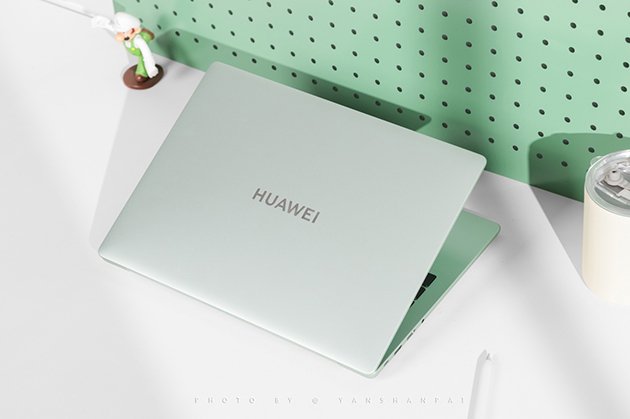
Core Viewpoint - The PC market at the beginning of 2026 is experiencing a "price increase wave," with mainstream laptop prices rising by 12%-16% due to tight supply of key components like storage chips and memory, leading many consumers to postpone their upgrade plans. However, a new round of government subsidies totaling 62.5 billion yuan is set to alleviate some of this pressure, particularly for energy-efficient computers [1][25][26]. Group 1: Market Dynamics - The price increase in the PC market is attributed to global supply chain issues affecting key components, resulting in a general price rise of 12%-16% for mainstream laptops [1][25]. - The government is introducing a subsidy program that offers a 15% rebate on the price of energy-efficient computers, with a maximum subsidy of 1,500 yuan per unit, which aims to counteract the price increases [26]. Group 2: Consumer Opportunities - Huawei is offering significant discounts and promotions on its laptops, including the MateBook series, which are designed to offset the price increases and provide consumers with attractive purchasing options [1][26]. - The Huawei MateBook 14, for example, has a final price reduction of 1,010 yuan compared to last year's Double 11 sales, making it a compelling option for consumers looking to take advantage of the current market conditions [26]. Group 3: Product Features and Benefits - The Huawei MateBook 14 is highlighted for its stylish design, balanced configuration, and advanced AI capabilities, making it a strong contender in its price range [2][29]. - The MateBook D 14 is positioned as a high-value entry-level option, featuring a lightweight metal body and eye-care display, suitable for students and entry-level professionals [8][32]. - The MateBook GT 14 is designed for high-performance users, featuring a powerful Intel Core Ultra processor and advanced cooling technology, catering to professionals in design, engineering, and gaming [19][45]. Group 4: Promotional Offers - Huawei's New Year promotions run until January 25, 2026, offering discounts on various models, including up to 400 yuan off the MateBook 14 and 200 yuan off the MateBook D 14, along with additional government subsidies [8][43]. - The MateBook Fold offers a unique three-in-one design, combining a laptop, tablet, and notebook, with significant promotional offers including a 1,400 yuan trade-in subsidy [24][47].
联想首席财务官:公司拟与多家人工智能模型企业建立合作
Xin Lang Cai Jing· 2026-01-23 12:34
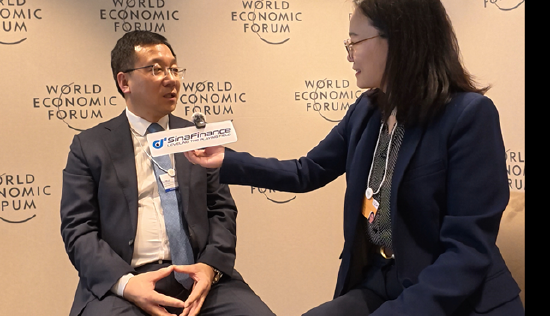
Core Viewpoint - Lenovo is seeking partnerships with major language model companies to enhance its devices and establish a presence in the global AI sector [1][3]. Group 1: Company Strategy - Lenovo plans to integrate AI technology across its entire product range, including personal computers, smartphones, and wearable devices [1][3]. - The company recently launched a cross-device intelligent system called "Kira," which can integrate with partners' large language models [1][3]. - Lenovo's CFO, Winston Cheng, stated that apart from Apple, Lenovo is the only company with significant market shares in both personal computers and mobile devices while operating in both open Android and Windows ecosystems [1][3]. Group 2: Potential Collaborations - Lenovo aims to sign cooperation agreements with several large language model developers, including Humain from Saudi Arabia, Mistral AI from Europe, Alibaba, and DeepSeek from China [1][3]. Group 3: Cost Management and Partnerships - Cheng mentioned that Lenovo adopts a "resource integrator" strategy, opting for partnerships rather than developing large language models in-house, mainly due to varying global regulatory policies [2][4]. - In response to rising memory chip prices affecting the consumer electronics sector, Lenovo plans to pass on the increased costs to consumers [2][4]. - Lenovo has partnered with NVIDIA to develop a liquid-cooled hybrid AI infrastructure to support AI cloud service providers in rapidly deploying data centers [2][4].

市场洞察:苹果全线产品焕新,供应链是否被重塑、端侧AI进展如何?
Tou Bao Yan Jiu Yuan· 2026-01-23 12:18
Product Launch Highlights - The iPhone 17 series includes four models: iPhone 17, iPhone 17 Air, iPhone 17 Pro, and iPhone 17 Pro Max, covering a price range from 6000 to over 10,000 yuan[2] - iPhone 17 targets the mass market with a focus on cost-effectiveness, while iPhone 17 Air emphasizes its ultra-thin design at 5.6mm[2] - The Pro models focus on imaging and computational power upgrades, catering to professional creators and high-end consumers[2] Apple Watch Series Update - Apple launched three new models: Apple Watch SE3, Series 11, and Ultra 3, enhancing health management and fitness tracking capabilities[4] - SE3 is positioned as an entry-level model, Series 11 targets mainstream health management, and Ultra 3 is aimed at high-end outdoor and extreme sports users[4] AirPods Pro 3 Enhancements - The new AirPods Pro 3 features a 67% improvement in noise cancellation and adds heart rate monitoring and hearing detection capabilities[6] Supply Chain Diversification - Apple is shifting towards a global distributed manufacturing model, with the iPhone 17 series being produced in India for the first time, marking a significant change in its supply chain strategy[9] - In Q2 2025, 44% of smartphones assembled in India were for the U.S. market, up from 13% year-on-year, with nearly 80% of U.S. iPhones produced in India[11] Manufacturing Cost and Infrastructure - Manufacturing costs in India are 5%-10% higher than in China, and challenges remain in infrastructure and supply chain stability[11] - China is transitioning to a high-value manufacturing hub, focusing on core components while India handles mid-range assembly[14] AI Functionality and Competitive Landscape - Apple introduced the Apple Intelligence system, integrating AI features across multiple devices, but the rollout is cautious and limited to specific models and regions[20] - Compared to competitors like Samsung and Huawei, Apple lags in the breadth of AI applications and ecosystem integration, which may impact user engagement[26] Supply Chain Impact from AI - The push for AI functionality necessitates upgrades in chip performance, storage, and sensor quality, creating new opportunities for suppliers[28] - Suppliers must meet higher technical standards to secure contracts, emphasizing the importance of privacy and data security in component design[28]

后乔布斯时代结束了,这是库克的接班计划
3 6 Ke· 2026-01-23 11:49
Group 1 - Tim Cook has turned 65, prompting discussions about succession at Apple, with John Ternus and Craig Federighi emerging as potential successors [1] - Apple has undergone significant management restructuring since Steve Jobs' passing, with a clear focus on Ternus and Federighi as key figures in the company's future [1][27] - Ternus has been given a unique title of "Executive Sponsor" for design, allowing him to bridge the gap between designers and executives, while also serving as Senior Vice President of Hardware Engineering [8][11] Group 2 - The design team at Apple has faced fragmentation and talent loss since Jony Ive's departure, leading to a lack of clear leadership and direction [5][6] - Ternus represents a shift towards a product-driven and engineering-focused Apple, moving away from the design-centric approach of the past [10][29] - Federighi, now overseeing AI after taking over from John Giannandrea, has been characterized as a cost-conscious leader, focusing on practical solutions and outsourcing AI capabilities to remain competitive [12][26] Group 3 - The combination of Ternus and Federighi signifies a new "duopoly" at Apple, with Ternus managing hardware and design, while Federighi oversees software and AI [27][29] - Their differing management philosophies reflect a transition from a design-first mentality to a more pragmatic approach, potentially impacting Apple's innovation trajectory [29][31] - The upcoming transition in leadership marks the end of the Cook era and the beginning of a new chapter for Apple as it approaches its 50th anniversary [31]

直击达沃斯|对话海信视像总裁李炜:真正的国际化,是在当地“扎下去”
Xin Lang Cai Jing· 2026-01-23 11:07
Core Insights - The discussion at the 2026 World Economic Forum highlighted the evolution of Hisense's internationalization strategy, emphasizing the importance of local integration rather than merely exporting products [1][3][14]. Group 1: Internationalization Strategy - Hisense's internationalization has transitioned from a supply chain focus to a model centered on local integration and coexistence [3][14]. - The company established its first overseas production base in South Africa in 1996 and has since maintained a long-term strategy focused on technological depth and integrated production, sales, and research [3][14]. - Hisense has set up production bases in Mexico, Slovenia, South Africa, and Vietnam, along with marketing headquarters and R&D centers in key regions, enhancing regional competitiveness and responsiveness to local market needs [3][14]. Group 2: Brand Globalization - The logic of Chinese brands going global has shifted from price competitiveness to a focus on technology and brand value over the past decade [4][15]. - Current competition is determined by understanding user needs and delivering superior technology rather than just offering lower prices [4][16]. - Challenges for Chinese brands in global markets now include ESG compliance, user data privacy, and adherence to patent and technology standards [4][16]. Group 3: AI and Industry Transformation - AI is reshaping the consumer electronics industry, particularly in the display sector, transforming devices into user-friendly partners [5][17]. - Hisense has made significant R&D investments, transitioning from a follower to a leader in display technology, exemplified by its RGB Mini LED technology, which outperforms competitors in quality and energy efficiency [7][19]. - The introduction of AI algorithms allows for real-time optimization of display quality across various content and applications, enhancing user experience [7][19]. Group 4: Technological Innovation Driven by Standards - Stringent energy efficiency and environmental standards in the European market are seen as drivers of technological innovation rather than mere cost burdens [8][20]. - Hisense's RGB Mini LED technology demonstrates a 30% improvement in energy efficiency compared to traditional Mini LED solutions, achieving higher energy efficiency ratings than QLED products in Europe [9][20]. - These advancements not only enhance market competitiveness but also contribute to environmental sustainability and reduced consumer energy costs [9][20]. Group 5: Smart Manufacturing and User-Centric Approach - Hisense's Qingdao factory has been recognized as a "lighthouse factory" by the World Economic Forum, emphasizing a user-centered approach to smart manufacturing [10][21]. - The factory employs over 40 AI technologies, significantly reducing the time from user demand recognition to product functionality conversion by 62% [10][21]. - Production efficiency for 85-inch televisions has improved to a cycle time of 20 seconds, showcasing significant advancements in manufacturing processes [10][21].

印度或罚苹果380亿美元
Guan Cha Zhe Wang· 2026-01-23 09:37
Core Viewpoint - India's antitrust agency has issued an ultimatum to Apple, threatening to proceed with an investigation that could result in fines up to $38 billion if the company continues to delay its response [1][2]. Group 1: Antitrust Investigation - The case against Apple dates back to 2022 when Match Group and several Indian startups accused the company of abusing its dominant market position by imposing unfair commissions on app developers, known as the "Apple tax" [1]. - The Indian Competition Commission (CCI) has preliminarily found that Apple has abused its market dominance, affecting developers' returns and growth [1]. - In 2024, India revised its antitrust laws to increase penalties for violations, allowing fines to be based on a company's global revenue, with a cap of 10% of the average global turnover over the past three years [1]. Group 2: Legal Proceedings - Following the CCI's findings, Apple filed a lawsuit in the Delhi High Court, claiming that the penalty regulations are unconstitutional and disproportionate [2]. - The CCI has pressured Apple to submit objections to the investigation results and provide global financial data for penalty assessment, but Apple has repeatedly requested extensions [2]. - The CCI issued a final ultimatum to Apple, stating that if no response is received within a week, it will unilaterally advance the case [2]. Group 3: Global Context - The legal challenges Apple faces in India are part of a broader trend, as regulatory bodies in regions like the EU and the US have also taken action against the "Apple tax" [3]. - In 2020, the EU initiated an antitrust investigation against Apple, resulting in a €1.84 billion fine in 2024 and new regulations requiring Apple to allow software downloads from outside its app store [3]. - In the US, Epic Games has successfully pushed for a court ruling requiring Apple to allow external payment links, leading to changes in Apple's App Store guidelines [4]. Group 4: Compliance Measures - In response to regulatory pressures, Apple has relaxed its App Store policies in Japan, reducing the commission rates for the "Apple tax" to between 10% and 21% [5].

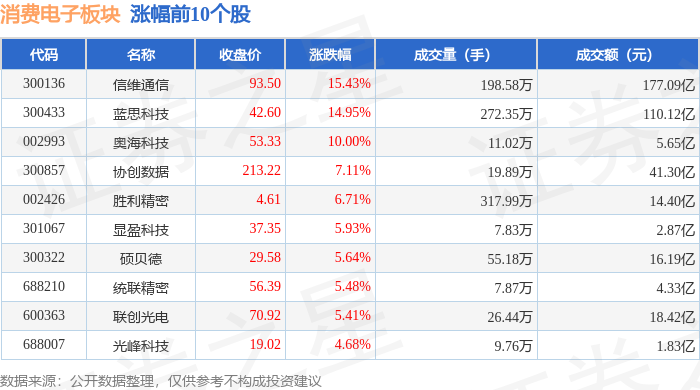
消费电子板块1月23日跌0.27%,科森科技领跌,主力资金净流出23.67亿元
Zheng Xing Xing Ye Ri Bao· 2026-01-23 09:04
Core Viewpoint - The consumer electronics sector experienced a decline of 0.27% on January 23, with Kosen Technology leading the drop, while the Shanghai Composite Index rose by 0.33% and the Shenzhen Component Index increased by 0.79% [1] Group 1: Stock Performance - XW Communication (300136) saw a significant increase of 15.43%, closing at 93.50 with a trading volume of 1.9858 million shares and a transaction value of 17.709 billion [1] - Lens Technology (300433) rose by 14.95%, closing at 42.60 with a trading volume of 2.7235 million shares and a transaction value of 11.012 billion [1] - Aohai Technology (002993) increased by 10.00%, closing at 53.33 with a trading volume of 110,200 shares and a transaction value of 5.65 billion [1] - Kosen Technology (603626) led the decline with a drop of 7.30%, closing at 22.34 with a trading volume of 860,000 shares and a transaction value of 1.971 billion [2] - Industrial Fulian (601138) decreased by 4.21%, closing at 60.11 with a trading volume of 2.033 million shares and a transaction value of 12.295 billion [2] Group 2: Capital Flow - The consumer electronics sector experienced a net outflow of 2.367 billion from institutional investors, while retail investors saw a net inflow of 2.553 billion [2] - Blue Technology (300433) had a net inflow of 1.576 billion from institutional investors, while it faced a net outflow of 0.912 billion from speculative funds [3] - XW Communication (300136) recorded a net inflow of 724 million from institutional investors, with a net outflow of 253 million from speculative funds [3]