家电

Search documents
“五十万亿元”展现的中国大市场(和音)
Sou Hu Cai Jing· 2026-01-22 22:48
Core Viewpoint - China aims to transition from being the "world's factory" to becoming the "world's market," accelerating its development as a major consumer economy, which will inject strong new momentum into mutually beneficial cooperation with countries worldwide [1][3]. Group 1: Domestic Demand and Economic Growth - Domestic demand has become the main driving force and stabilizing anchor for China's economic growth, contributing an average of 93.1% to economic growth from 2013 to 2024 [2]. - In 2025, final consumption expenditure is expected to contribute 52% to economic growth, an increase of 5 percentage points from the previous year [2]. - The share of service consumption expenditure in per capita consumption is projected to reach 46.1% in 2025, indicating a structural optimization in consumption [2]. Group 2: Investment Opportunities and Market Potential - China's market is characterized by its large scale, diverse levels, and significant potential, with substantial investment opportunities in new urbanization, technology industries, and improving livelihoods [3]. - The current consumer rate in China is about 40%, with a potential increase of 10-20 percentage points compared to developed countries, indicating room for growth [3]. - The policy of replacing old consumer goods is expected to benefit over 360 million people, showcasing market size and policy effectiveness [3]. Group 3: Global Economic Impact - Over the past five years, China has imported goods and services worth over $15 trillion, establishing itself as the world's second-largest consumer market [3]. - As income levels rise, the demand for a better quality of life will drive new consumption and supply, creating vast investment opportunities [3]. - China's commitment to expanding domestic demand will provide new opportunities for global cooperation, enhancing its role as a major consumer market [4].
总裁辞职、资产整合、借款逾期 华润入主,康佳“新生”路向何方
Shen Zhen Shang Bao· 2026-01-22 22:40
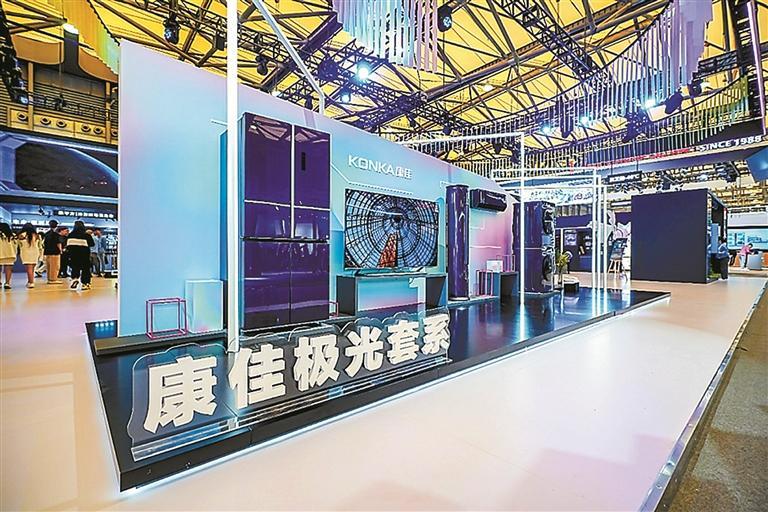
Core Viewpoint - Konka Group is facing significant financial challenges, including leadership changes, overdue loans, and a projected net loss for 2025, indicating a critical need for restructuring and strategic realignment [2][3][4]. Leadership Changes - Konka's president, Cao Shiping, has resigned due to work arrangements but will remain with the company. Vice President Yang Bo also submitted a resignation, and Dong Gang, with a background in China Resources, has been appointed as the new vice president [2]. Financial Performance - Konka's revenue for the first three quarters of 2025 was 7.679 billion yuan, a decrease of 5.43% year-on-year. The company reported a net loss of 982 million yuan, with a debt-to-asset ratio of 96.78% [2][4]. - By the end of 2025, Konka anticipates a negative net profit attributable to shareholders, with overdue loans to affiliated companies totaling 824 million yuan [2][3]. Loan Defaults - Konka has three overdue loans to its affiliated companies, totaling approximately 824 million yuan. The overdue loans are primarily linked to real estate projects that have not progressed as expected [3][4]. - The overdue loans include 395 million yuan to Chuzhou Kangxin Health Industry Development Co., 233 million yuan to Yikang Technology Co., and 196 million yuan to Dongguan Guankang Yuhong Investment Co. [3][4]. Financial Strategy and Support - China Resources has become the new controlling shareholder of Konka, holding 30% of the shares. The company has provided 3.97 billion yuan in low-interest loans to alleviate financial pressure [5]. - Konka has also initiated a perpetual bond financing plan with China Resources, aiming to raise up to 5 billion yuan [5]. Industry Challenges - The company has struggled with a lack of successful business strategies and management instability, leading to a decline in brand image and competitiveness [7]. - Analysts suggest that Konka must focus on core business areas and improve operational efficiency to achieve profitability [6][8]. Future Directions - To achieve a "new life," Konka is advised to streamline its operations, focusing on high-margin products and leveraging partnerships for growth in the PCB and semiconductor sectors [8]. - The company must address its financial shortfalls and improve its operational strategies within the next 12 to 18 months to avoid further crises [8].

16年规模第一,中国制造当更强
Jing Ji Ri Bao· 2026-01-22 21:58
Core Insights - China's manufacturing sector is expected to maintain its position as the world's largest for 16 consecutive years, with a complete industrial system becoming increasingly evident [1][2] - The transition of Chinese manufacturing towards high-end, intelligent, and green production is a key focus for upgrading and enhancing quality and efficiency [1][3] Manufacturing Scale - China's manufacturing value added has been the highest globally since 2010, accounting for nearly 30% of global manufacturing value added, significantly surpassing other countries [1] - Among 504 major industrial products worldwide, China leads in the production of most, including basic materials like steel and cement, as well as high-end equipment like industrial robots and electric vehicles [1] Industrial System Completeness - China is the only country with a complete industrial classification system recognized by the United Nations, covering 41 major industrial categories and ensuring a stable and efficient production chain [2] - This comprehensive industrial system enhances China's ability to respond quickly to diverse global market demands [2] High-end Manufacturing - High-end manufacturing is crucial for addressing weaknesses in core technologies and components, enhancing the quality and technology level of Chinese products, and extending into higher value chains [2] - By 2025, the value added of major equipment manufacturing and high-tech manufacturing is projected to grow by 9.2% and 9.4% respectively, increasing their share of total industrial output [2] Intelligent Manufacturing - Intelligent manufacturing, driven by AI, big data, and industrial internet technologies, allows China to compete on equal footing with developed countries [3] - China's advantages in new information technologies and extensive application scenarios position it well for leadership in intelligent manufacturing [3] Green Manufacturing - The shift towards green manufacturing focuses on low-carbon technologies and circular economies, addressing sustainability challenges and creating new growth opportunities [3] - By 2025, the production of new energy vehicles is expected to exceed 16 million units, maintaining global leadership for 11 consecutive years, alongside rapid growth in green products like wind turbines [3] Conclusion - China's sustained position as the world's largest manufacturing nation serves as a foundation for its ongoing transition towards a more advanced manufacturing powerhouse [3]
去年我国对外直接投资比上年增长7.1%
Xin Lang Cai Jing· 2026-01-22 18:09
Group 1: China's Foreign Investment - As of the end of 2025, China will have established over 50,000 enterprises abroad, spanning 190 countries and regions, maintaining a top-three position in global foreign investment stock for nine consecutive years [1] - China's foreign direct investment is projected to reach $174.38 billion in 2025, representing a 7.1% increase from the previous year, solidifying its leading position globally [1] - Chinese enterprises are actively fulfilling social responsibilities, creating over 2 million jobs annually and investing in various public facilities, earning widespread praise from host countries [1] Group 2: Consumer Market Trends - In 2025, the number of consumers purchasing first-level energy-efficient or water-efficient appliances increased by 20%, with smart glasses, smartwatches, and smart bands each growing over 40% [2] - The retail sales of consumer goods in China reached 50.1 trillion yuan in 2025, marking a 3.7% growth, with retail goods sales increasing by 3.8% and dining revenue growing by 3.2% [2] - Final consumption expenditure contributed 52% to economic growth, continuing to serve as a primary engine for economic development [2] Group 3: Response to EU Regulations - The Chinese government expressed serious concerns regarding the EU's recent decision to classify certain Chinese companies as high-risk suppliers, which is seen as discriminatory [3] - Chinese enterprises have been operating in Europe in compliance with laws, providing quality products and services that support the development of the European telecommunications and digital industries [3] - The Chinese government opposes the EU's use of non-technical standards to restrict market access for Chinese companies, arguing that such actions distort competition and threaten supply chain security in the digital industry [3]
头部家电企业剧透2026年发展规划:AI、全球化是关键词
Zheng Quan Ri Bao· 2026-01-22 16:29
Group 1 - In 2025, retail sales of home appliances reached 1.1695 trillion yuan, and communication equipment reached 1.0076 trillion yuan, both surpassing the trillion yuan mark [2] - The shift in consumer structure towards greener products is evident, with over 90% of sales in the 12 categories of appliances under the trade-in policy being energy-efficient or water-efficient products [2] - Major home appliance companies are planning to consolidate their advantages in 2026 through technological innovation, business streamlining, and global expansion [2] Group 2 - Gree Electric's Vice President stated that the company is replacing welding work with self-developed robots and is enhancing its capabilities in smart industrial fields [3] - Midea Group's Chairman emphasized maintaining strategic focus on robotics, energy, and medical businesses, which have vast market potential, while also streamlining redundant operations [3] - Haier Smart Home is committed to a global and high-end strategy, indicating a shift from scale expansion to quality and efficiency [4] Group 3 - The market opportunities created by policies are accelerating the transformation of home appliance companies from scale expansion to quality and efficiency [4] - Leading companies are leveraging the policy window to build core competitiveness through technological innovation and strategic focus, aiming for sustainable development amid intense market competition [4]



广告“大字吸睛、小字免责”游戏,终于玩到头了?
Sou Hu Cai Jing· 2026-01-22 16:22
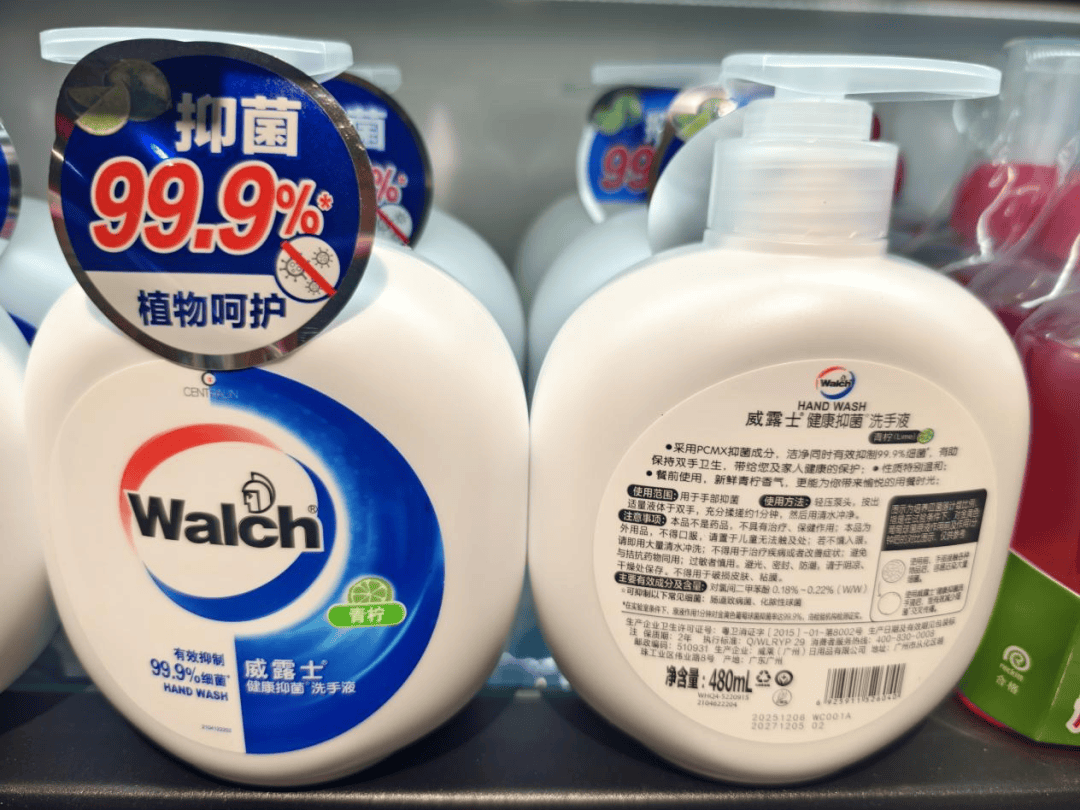
Core Viewpoint - The article highlights the deceptive advertising practice of using prominent claims while burying critical limitations in small print, which misleads consumers and has drawn regulatory scrutiny [1][2][10]. Group 1: Advertising Practices - The "big letters attract attention, small letters disclaim" strategy is prevalent across various consumer sectors, including digital, financial, food, and beauty products [1][10]. - In the personal care sector, products like a hand sanitizer claim to "effectively inhibit 99.9% of bacteria," but the fine print specifies that this is under laboratory conditions against a specific strain [2][4]. - Similar tactics are observed in electronics, where a sports camera advertises "200 minutes of battery life," but the conditions for this claim are hidden in small print [4][8]. Group 2: Legal and Regulatory Context - Legal experts argue that such advertising practices may violate consumer protection laws by failing to provide "true and comprehensive" information [4][11]. - The market regulatory authority has begun addressing these misleading practices, emphasizing that advertising must present information clearly and accurately [10][15]. - New guidelines have been proposed to ensure that font size and color do not obscure critical product information, aiming to reduce consumer confusion and false advertising risks [15][16]. Group 3: Industry Implications - The prevalence of misleading advertising can distort competition, erode consumer trust, and increase compliance costs for businesses [12][13]. - Experts suggest that the focus on attention-grabbing marketing tactics detracts from genuine product quality and brand integrity [13][14]. - The rise of such practices has prompted calls for stricter regulations and better enforcement to protect consumer rights and ensure fair competition [16].

商务部:2025年我国消费市场规模与质量实现双提升
Zheng Quan Ri Bao· 2026-01-22 16:13
Group 1 - The core viewpoint of the article emphasizes the stable development of China's consumption market in 2025, highlighting a dual improvement in scale and quality, with significant advantages of a super-large market [1] Group 2 - In 2025, the total retail sales of social consumer goods will exceed 50 trillion yuan for the first time, reaching 50.1 trillion yuan, with a growth rate of 3.7%, and final consumption expenditure contributing 52% to economic growth [1] - The implementation of the old-for-new consumption policy will drive related sales to 2.61 trillion yuan, benefiting 366 million people [1] - Retail sales of major household appliances, furniture, cultural office supplies, and communication equipment will grow by 11%, 14.6%, 17.3%, and 20.9% respectively [1] - New types of consumption, such as green and smart products, are thriving, with retail sales of new energy vehicles growing by 17.6%, and by the end of 2025, 6 out of every 10 passenger cars sold will be new energy vehicles [1] - The number of consumers purchasing first-level energy-efficient or water-efficient appliances will increase by 20% compared to the previous year, with smart glasses, smartwatches, and smart bands each growing over 40% [1] - Retail sales of health-related products, including sports and entertainment goods, will grow by 15.7% [1] Group 3 - In terms of foreign investment, Chinese enterprises will maintain healthy and orderly development, with over 50,000 companies established abroad across 190 countries and regions by the end of 2025 [2] - The stock of foreign direct investment will remain among the top three in the world for nine consecutive years, with a direct investment of 174.38 billion USD in 2025, an increase of 7.1% from the previous year [2] - Chinese enterprises "going out" are actively fulfilling social responsibilities, creating over 2 million jobs annually and contributing to the construction of education, health, and environmental facilities, earning widespread praise from host countries [2]
新一轮国补拉动高端家电销量翻倍涨 100英寸电视送装有招
Nan Fang Du Shi Bao· 2026-01-22 15:09
Group 1 - The core viewpoint of the articles highlights the significant boost in consumer electronics sales, particularly large appliances, driven by the 2026 national subsidy policy for replacing old appliances, with Tmall reporting a more than 90% month-on-month increase in sales of large appliances [1] - The 2026 national subsidy policy focuses on six categories of products: refrigerators, washing machines, televisions, air conditioners, computers, and water heaters, which is expected to release consumer potential and raise service standards in the aftermarket [2] - The introduction of integrated delivery and installation services for large appliances, including 100-inch televisions, has improved customer experience and increased sales, with a reported 95% success rate for delivering large televisions to homes [2] Group 2 - New product innovations such as wall-mounted televisions, air conditioners with fresh air functions, and multi-zone washing machines are anticipated to experience explosive growth due to the national subsidy policy and brand innovation [3] - Tmall plans to continue driving the "renewal" of home appliances through platform subsidies, brand activities, and collaboration with logistics providers to enhance the integrated delivery and installation services [3]
阿尔及利亚非油气出口加速增长多元化战略成效显现
Shang Wu Bu Wang Zhan· 2026-01-22 14:42
Core Insights - Algeria's non-hydrocarbon exports are experiencing accelerated growth, reflecting the effectiveness of the new economic policy aimed at diversification [2] Group 1: Economic Policy and Export Growth - The country has restructured its foreign trade management system and optimized export rules and processes, which has significantly boosted non-hydrocarbon export growth [2] - Various facilitation measures in administration, taxation, and customs have been introduced to support this growth [2] Group 2: Export Performance and Future Goals - Non-hydrocarbon export value increased from $2.2 billion in 2020 to $5.1 billion in 2023, with projections of reaching $7 billion in 2024 [2] - The Algerian Cement Group announced an export target of 5 million tons by 2025, increasing to 6 million tons by 2026 [2] - Key industries such as steel, agricultural products, home appliances, mining, and pharmaceuticals have shown outstanding performance [2] Group 3: Collaboration and Market Expansion - Enhanced communication and collaboration between the government and enterprises have been crucial in eliminating barriers and expanding market opportunities [2] - This collaboration marks a new phase of high-quality development for Algeria's non-hydrocarbon exports [2]
70岁黄宏生谋变,创维再闯关
Guo Ji Jin Rong Bao· 2026-01-22 14:38
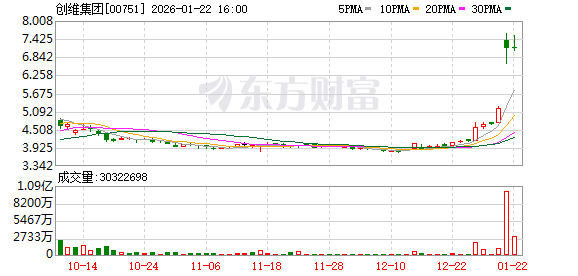
Core Viewpoint - The decision by Skyworth Group to spin off its solar energy business and apply for a listing on the Hong Kong Stock Exchange marks a strategic shift towards focusing on high-growth sectors, particularly solar energy, while alleviating the burden of traditional home appliance operations [2][7]. Group 1: Corporate Strategy - Skyworth Group's board decided on January 4, 2026, to spin off Skyworth Solar and apply for a listing, while the original company will undergo a share buyback to withdraw from the stock market [2]. - This move is seen as a way for founder Huang Hongsheng to fully commit to what he views as the "second growth curve" of the company, emphasizing solar energy [7]. - The company aims to create an ecosystem platform and plans to spin off 5 to 8 subsidiaries for independent listings over the next five years [9]. Group 2: Financial Performance - In the first half of 2025, Skyworth's renewable energy (solar and storage) business generated revenue of 13.836 billion yuan, a year-on-year increase of 53.5%, accounting for 38% of total revenue [7]. - The company's market capitalization was reported at 13.5 billion HKD, significantly lower than industry peers like Midea Group and Haier [9]. - The proposed spin-off is expected to provide substantial arbitrage opportunities for minority shareholders, with a combined value of approximately 10.16 HKD per share, representing a premium of 96% over the pre-suspension closing price [11]. Group 3: Market Response - Following the announcement, Skyworth Group's stock resumed trading on January 21, 2026, opening over 40% higher and closing at 7.13 HKD per share [7]. - The capital market has reacted positively to the "one spin-off and one retreat" strategy, indicating strong investor interest in the company's future direction [7]. Group 4: Business Transition - Skyworth Group, founded in 1988, has historically been a leader in the Chinese television industry but is now pivoting towards solar energy as traditional appliance markets become saturated [7][15]. - The company has seen rapid growth in its solar business, with revenues increasing from 4.101 billion yuan in 2021 to 20.334 billion yuan in 2024 [16]. - Despite the growth in revenue, the company's net profit has faced challenges, highlighting the difficulty of balancing scale and profitability in the competitive renewable energy market [16].