
生物医药

Search documents
【川股每日董秘问答】涉泸州老窖、四川双马、中密控股、金石亚药、厚普股份等公司
Xin Lang Cai Jing· 2026-01-28 10:12
Group 1: Company Performance and Revenue - Luzhou Laojiao's overseas revenue is approximately 186 million yuan, accounting for 0.60% of total revenue [1][14] - Sichuan Shuangma focuses on biomedicine and has established a portfolio of innovative drugs in various disease areas, with a strong global supply capability for peptide raw materials [2][15] - Sichuan Shuangma's peptide products are exported to countries including the USA, Brazil, India, and Spain, with a significant presence in the chronic disease treatment market [2][15] Group 2: Product Applications and Market Expansion - Sichuan Shuangma produces over a hundred types of beauty peptides, collaborating with leading global cosmetic brands to enhance product innovation [3][16] - Zhongmi Holdings has applied its high-speed mechanical seals in commercial aerospace, although this segment's revenue is relatively low compared to its traditional petrochemical market [4][17] - Zhongmi Holdings is monitoring the demand for sealing products in the large aircraft sector but has not identified significant market needs yet [5][18] Group 3: Technological Development and Future Prospects - Jinshi Yaya's vacuum coating technology is not currently applied in space photovoltaic equipment but the company is exploring potential collaborations in other fields [6][19] - Houpu Co. has experience in distributed energy projects in both natural gas and hydrogen applications [7][20] - Zhimin Da is developing a high-radiation-resistant computing platform for space applications, although this technology is still in the research phase [8][21] Group 4: Market Strategy and Competitive Position - Sichuan Jiuzhou has successfully entered the overseas market with its Wi-Fi routers, while focusing on domestic sales for its camera products [12][25] - Jiuzhou's subsidiary is actively pursuing opportunities in the low-altitude economy, with significant progress in technology and product development [12][25] - Kexin Mechanical and Electrical is concentrating on high-end process equipment in energy and chemical sectors, while exploring new growth points in intelligent manufacturing [10][24]


华人学者一天发表了6篇Cell论文:AAVLINK、细胞内精准药物递送、系统性气孔免疫、尿液检测膀胱癌...
生物世界· 2026-01-28 10:00
Group 1 - The article highlights the publication of seven papers in the prestigious journal Cell, with six authored by Chinese scholars, indicating a significant contribution to the field of scientific research [3]. - AAVLINK, a new strategy for gene therapy, was developed to overcome delivery size limitations, achieving efficient gene recombination and expression of autism-related gene Shank3 and epilepsy-related gene SCN1A in mouse models [5][7]. - The POCKET device, a flexible bioelectronic patch, was created for precise intracellular delivery, demonstrating high delivery efficiency and spatial control in various organs, which could enhance drug delivery and gene transfection [10][12]. Group 2 - A study revealed a novel GPCR-G protein-β-arrestin megacomplex regulated by a versatile allosteric modulator, which could lead to new therapeutic approaches targeting GPCRs, crucial for many clinical drugs [19][21]. - The research on systemic stomatal immunity in plants identified a mobile peptide that transmits danger signals from infected to uninfected leaves, enhancing plant defense mechanisms against pathogens [25][27]. - An innovative urine liquid biopsy method for bladder cancer was developed, improving specificity by removing field effect mutations, which could guide personalized treatment strategies for non-muscle invasive bladder cancer patients [30][32].


面对尼帕病毒,别急着炒作“有效药物”
Guan Cha Zhe Wang· 2026-01-28 09:37
Core Viewpoint - The emergence of the Nipah virus in India has raised concerns due to its high mortality rate and proximity to countries with open flights, leading to significant public interest and media coverage regarding potential treatments [1][2]. Group 1: Nipah Virus Overview - Nipah virus (NiV) is classified under the family Paramyxoviridae and has a high mortality rate ranging from 40% to 75% [5][6]. - The virus was first identified in Malaysia in 1998 and is primarily transmitted through direct contact with infected animals or their bodily fluids [6][7]. - Previous outbreaks have shown limited scale due to the virus's transmission characteristics, which are not as efficient as airborne viruses [5][6]. Group 2: Treatment and Research - The drug VV116, previously approved for COVID-19 treatment, has been suggested as a potential candidate for Nipah virus, although its efficacy against NiV remains unproven [2][8]. - VV116 has shown antiviral activity in animal models, but its effectiveness in humans and against Nipah virus specifically requires further clinical validation [10][12]. - The media's portrayal of VV116 as an "effective drug" has led to market fluctuations, highlighting the impact of misinformation on public perception and stock prices [13][15]. Group 3: Public Health Response - Public health experts emphasize that while Nipah virus poses a threat, its transmission is manageable with existing healthcare capabilities, particularly in monitoring and controlling outbreaks [7][8]. - The Chinese healthcare system is noted for its strengths in contact tracing and infection control, which are crucial in managing potential Nipah virus cases [7][8].
中国第一个2万亿经济大区,要来了
商业洞察· 2026-01-28 09:23
Core Viewpoint - The article discusses the economic performance of major cities, districts, and counties in China, highlighting Shanghai as the leading city and the significant economic contributions of districts like Pudong and counties like Kunshan [4][5][12]. Group 1: Economic Rankings - Shanghai retains its position as China's largest economy with a GDP of 5.67 trillion, ranking among the top five globally [5]. - Beijing follows closely, surpassing the 5 trillion mark, becoming the second city to achieve this milestone [6]. - Pudong New District is recognized as the leading economic district, with a projected GDP of approximately 1.88 trillion by 2025, accounting for about one-third of Shanghai's total GDP [8][9]. Group 2: Economic Districts and Counties - Shenzhen's Nanshan District is identified as the top economic district outside of direct-controlled municipalities, with a projected GDP of around 1 trillion by 2025 [11]. - Jiangsu province boasts the only two counties with GDPs exceeding 500 billion, namely Kunshan and Jiangyin, with Kunshan expected to reach 560 billion by 2025 [13]. - Kunshan aims for a GDP of 600 billion by 2026, significantly contributing to the economic growth of its parent city [14]. Group 3: Importance of Economic Districts - There are over 300 prefecture-level cities in China, but fewer than 30 have GDPs exceeding 1 trillion, with only 13 surpassing 1.8 trillion [16]. - Pudong's GDP is projected to reach 1.88 trillion by 2025, positioning it as a critical economic hub [17]. - Pudong is not only a financial and trade center but also a manufacturing and technology innovation hub, with key industries like integrated circuits and biomedicine expected to reach a combined scale of 970 billion by 2025 [20][22]. Group 4: Characteristics of Economic Strongholds - Economic districts are characterized by their concentration of resources and talent, with examples including Pudong's Lujiazui and Beijing's Zhongguancun [33]. - A balanced regional development is essential, with multiple strong districts within a city to ensure sustainable growth [35].

粤两会聚焦生物医药 全链条施策培育新质生产力
Zhong Guo Xin Wen Wang· 2026-01-28 08:50
Core Insights - Guangdong is intensifying its focus on the biopharmaceutical industry, leveraging policy benefits and innovation, but still faces deep-seated bottlenecks in R&D, commercialization, market access, and internationalization [1] Group 1: Innovation Mechanisms - The biopharmaceutical R&D process is characterized by high investment, long cycles, and significant risks, necessitating a more inclusive and precise innovation mechanism [1] - A typical original drug takes an average of 12 years from compound selection to market, with R&D costs exceeding $2 billion and a clinical trial failure rate of 90%, highlighting the need for a fault-tolerant mechanism [1] - Establishing a fault-tolerant mechanism could effectively encourage pharmaceutical companies to explore and innovate while maintaining stable growth [1] Group 2: Financial Support and Risk Compensation - A proposal for a provincial biopharmaceutical innovation risk compensation fund aims to provide subsidies for failed R&D projects and support companies purchasing clinical trial insurance [2] - Encouragement for banks to offer credit support to companies with fault-tolerant records and to pilot asset securitization for fault-tolerant projects in Guangzhou and Shenzhen [2] Group 3: Technology and Industry Integration - Emphasis on creating a source of original innovation by leveraging national laboratories and addressing major disease prevention and core technology needs [2] - Increased support for AI-driven innovative drug projects and precise funding for the discovery of original drugs to enhance the global competitiveness of Guangdong's pharmaceutical companies [2] Group 4: Market Access and Internationalization - The importance of market access and internationalization for high-quality industry development is highlighted, with suggestions to utilize the Guangdong-Hong Kong-Macao Greater Bay Area to enhance internationalization levels of pharmaceutical companies [2] - Recommendations to establish a GLP platform recognized internationally to support local pharmaceutical companies in Hong Kong and Macao [2] Group 5: Regulatory and Legal Framework - Proposal to include the Hengqin Guangdong-Macao Deep Cooperation Zone in the "Healthy China" pilot area, allowing for the use of drugs and medical devices already approved in Hong Kong and Macao [3] - Suggestions for establishing a collaborative mechanism for international trademark disputes, integrating resources from various departments to support companies in legal matters [3]
今年或是港股IPO小年
雪球· 2026-01-28 08:50
Core Viewpoint - The article discusses the performance of the Hong Kong IPO market in 2025, highlighting its record fundraising and contrasting it with the US market, while predicting a decline in IPO activity for 2026 due to various factors [3][5]. Group 1: 2025 Hong Kong IPO Market Performance - In 2025, the Hong Kong IPO market saw 117 new listings, raising a total of 286.7 billion HKD (approximately 36.8 billion USD), marking a four-year high [3]. - The article claims that while many reports state Hong Kong led global IPOs in 2025, the US market raised over 70 billion USD, indicating a significant difference in scale [3]. - The fundraising intensity in Hong Kong, measured as new funds raised relative to total market capitalization, was 57.5 basis points, compared to just 10 basis points in the US [3]. Group 2: Factors Influencing 2025 Performance - A significant portion of the 2025 fundraising came from 19 A-share companies that also listed H-shares in Hong Kong, accounting for half of the total fundraising [4]. - The Hong Kong Stock Exchange (HKEX) benefited greatly, with projected net profits for 2025 expected to exceed 18 billion HKD, a 40% increase from 2024 [4]. Group 3: Predictions for 2026 - The article predicts that the IPO activity in 2026 will not match the levels seen in 2025, citing the unique circumstances of 2025 as an outlier [5][6]. - The supply of potential IPOs is expected to diminish, with only a few large companies like Ant Group and ByteDance likely to go public, while most upcoming IPOs will be smaller mid-cap or small-cap companies [6][7]. - The anticipated IPOs in 2026 are expected to have lower fundraising amounts, with many projects estimated to raise around 5 to 10 billion HKD, making it difficult to reach the previous year's total [7]. Group 4: Market Dynamics and Investor Sentiment - The article notes that the large IPOs from 2025 will lead to a liquidity release in 2026, as many of these stocks will face a lock-up expiration, potentially increasing selling pressure in the market [8]. - Despite concerns about excessive IPOs, the article suggests that the market dynamics will limit the ability of the HKEX to flood the market with new listings [9].


科创100ETF鹏华(588220)V型反弹,科技板块利好不断
Xin Lang Cai Jing· 2026-01-28 07:01
Group 1 - The "14th Five-Year Plan" emphasizes support for strategic emerging industries, with eight departments promoting "AI + manufacturing" and the establishment of a commercial aerospace office, providing strong support for key areas such as AI chips and reusable rockets [1] - The market is experiencing a surge in interest due to breakthroughs in AI large models and expectations for the commercialization of aerospace, leading to a differentiated market performance [1] - A price increase trend is spreading across the storage sector, influenced by supply-demand dynamics and rising raw material costs, with several manufacturers continuing to raise prices [1] Group 2 - By 2026, investment in the Sci-Tech Innovation Board should focus on the theme of technological self-reliance, with specific attention to AI-related infrastructure, hardware, and vertical applications, as well as opportunities in commercial aerospace [1] - The top ten weighted stocks in the Sci-Tech Innovation Board 100 Index as of December 31, 2025, include Huahong Semiconductor, Dongxin Technology, and Yuanjie Technology, collectively accounting for 26.21% of the index [2] - The leading sectors in the Sci-Tech Innovation Board are electronics (37.42%), power equipment (14.02%), and biomedicine (13.79%) [2]
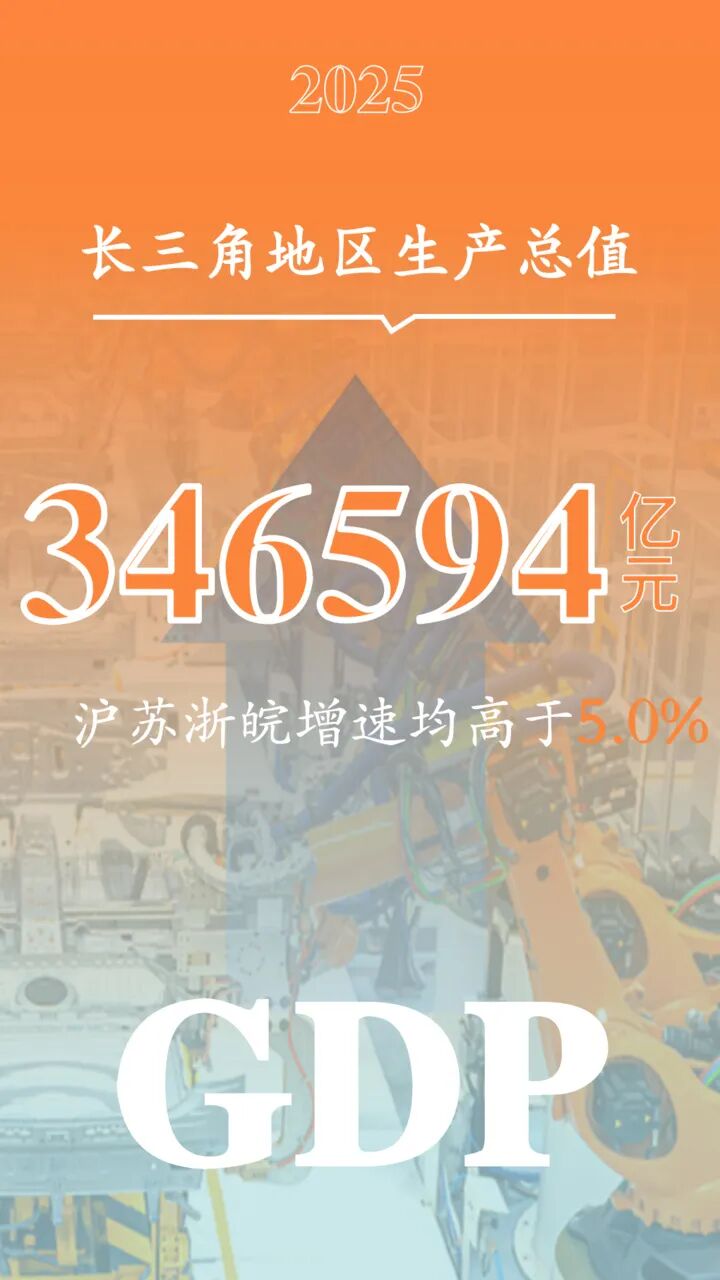
34.66万亿元!长三角GDP总量再创新高,万亿城市又扩容
Xin Hua Ri Bao· 2026-01-28 06:59
Core Viewpoint - The Yangtze River Delta (YRD) region has achieved a record GDP of 34.66 trillion yuan in 2025, with all provinces and cities reporting satisfactory economic performance, surpassing the national growth rate of 5.0% [5][6]. Economic Performance - Shanghai's GDP reached 56,708.71 billion yuan, growing by 5.4% year-on-year - Jiangsu's GDP was 142,351.5 billion yuan, with a growth of 5.3% - Zhejiang's GDP stood at 94,545 billion yuan, increasing by 5.5% - Anhui's GDP was 52,989 billion yuan, also growing by 5.5% - The total economic output of the YRD increased by 1.49 trillion yuan from the previous year and by 7.06 trillion yuan since the beginning of the 14th Five-Year Plan [5][6]. Changes in Growth Drivers - The economic model is shifting from factor and investment-driven to innovation and efficiency-driven - Key industries in Shanghai, including integrated circuits, biomedicine, and artificial intelligence, saw a total output value growth of 9.6%, surpassing 2 trillion yuan for the first time - In Zhejiang, the core AI industry generated 629.4 billion yuan in revenue, marking a 21.6% increase [6]. Consumption Trends - New products, business models, and consumption scenarios are emerging - In Jiangsu, the "Su Chao" event demonstrated a leverage effect where 1 yuan in ticket sales generated 7.3 yuan in consumption, contributing over 38 billion yuan to the economy - Shanghai's retail sales grew at a rate of 4.6%, outpacing the national average, with significant growth in both physical goods and service consumption [6]. Foreign Trade Developments - Shanghai's foreign trade reached 4.51 trillion yuan, growing by 5.6%, with all trade metrics hitting historical highs - Jiangsu's foreign trade enterprises exceeded 100,000 for the first time - Anhui became the first province in Central China to surpass 1 trillion yuan in foreign trade, exporting over 1 million vehicles [7]. - The YRD region's logistics efficiency improved significantly, with a 60% increase in transport speed and a 30% reduction in operational costs due to new logistics hubs [7]. Expansion of Major Cities - Wenzhou's GDP surpassed 1 trillion yuan, officially recorded at 10,213.9 billion yuan - Xuzhou is projected to exceed 1 trillion yuan in GDP with a growth rate of approximately 5.8% - The YRD now has 10 cities with GDPs exceeding 1 trillion yuan, including Shanghai, Suzhou, Hangzhou, and others [8].
成都先导:预计2025年度净利润为1.04亿元至1.29亿元,主营业务稳健增长和新技术业务板块的商业转化逐步显现
Cai Jing Wang· 2026-01-28 06:39
Core Viewpoint - Chengdu Xian Dao expects to achieve a net profit attributable to shareholders of 104 million to 129 million yuan in 2025, representing an increase of 52.64 million to 75.64 million yuan compared to the previous year, with a year-on-year growth of 102.50% to 147.29% [1] Financial Performance - The expected net profit after deducting non-recurring gains and losses is projected to be between 106 million and 129 million yuan, an increase of 48.56 million to 71.56 million yuan year-on-year, reflecting a growth of 84.55% to 124.59% [1] - The main reasons for the performance change include steady growth in core business and gradual commercialization of new technology business segments [1] Business Segments - The core business segment, DEL, continues to grow steadily, and the UK subsidiary's FBDD/SBDD platform has achieved phased progress [1] - The decrease in fair value change losses in non-operating gains and losses is primarily due to reduced impacts from changes in the fair value of trading financial liabilities [1]

弼领生物完成超2亿元B轮融资,加速纳米偶联药物研发进程
Cai Jing Wang· 2026-01-28 06:38
近日,上海弼领生物技术有限公司(以下简称"弼领生物")完成超2亿元B轮融资。本轮融资由宏诚投 资及关联方(阳光诺和、弘曜科创)与涌铧投资联合领投,泰达科投、中科创星跟投,老股东龙磐投资 和泰煜投资持续加码,丰和资本担任本轮融资独家财务顾问。 此次募集资金将重点用于核心临床管线的快速推进、早期创新项目的研发迭代及跨学科核心团队的扩 充,进一步巩固公司在纳米偶联药物领域的全球技术领先地位,加速突破性疗法的临床转化与商业化布 局。 (弼领生物公众号) ...