脑机接口

Search documents
脑机接口迈向产业化:从“实验室”走向“门诊室”
Shang Hai Zheng Quan Bao· 2025-12-26 18:58
Core Insights - The brain-computer interface (BCI) industry is rapidly advancing, with significant clinical applications emerging, particularly for high-level paraplegics who can now control devices using their thoughts [4][5][6] - The establishment of the "Brain Intelligence World" in Shanghai marks a significant step in creating a hub for BCI technology, integrating research, clinical trials, and industry collaboration [9][11] - The industry is experiencing a surge in investment and innovation, driven by supportive policies, technological breakthroughs, and the integration of artificial intelligence [10][17] Industry Development - The BCI industry is transitioning from laboratory research to real-world applications, with a clear clinical pathway and increasing commercialization [4][5] - By 2025, China aims to be the second country globally to enter the clinical trial phase for invasive BCI technologies, with significant advancements already reported [5][6] - The market is witnessing a proliferation of innovative companies, with several expected to receive regulatory approval for their products by 2026 [6][11] Technological Advancements - Invasive BCI technologies have reached a critical development point, leading to a notable increase in clinical trials and applications [5][6] - Non-invasive BCI products are also becoming more accessible, with clinics opening in major cities to cater to patients with various neurological conditions [7][10] - Future applications of BCI technology are expected to expand into areas such as visual restoration for the blind and addiction treatment, with clinical trials anticipated to start by 2026 [8][14] Investment Trends - Investment in the BCI sector has intensified, with significant funding rounds reported, including a notable A-round financing of over 300 million RMB for a leading company [11][17] - The investment landscape is shifting towards a focus on clinical viability and regulatory compliance, reflecting a growing interest from both medical and tech investors [17] - The Shanghai government and various organizations are actively fostering the BCI ecosystem, aiming to position the region as a global leader in BCI innovation [11][16] Policy Support - The Chinese government has released multiple supportive policies to promote the BCI industry, emphasizing the importance of technological breakthroughs and the establishment of industry standards [9][13] - By 2027, the goal is to achieve significant advancements in BCI technology and establish a robust industrial framework, with a focus on creating globally influential companies [13][14] - The integration of BCI with artificial intelligence is seen as a critical factor for future growth, with expectations for deeper collaboration between the two fields [14][15]

国家创业投资引导基金启动 为新质生产力培育注入强劲动能
Xin Lang Cai Jing· 2025-12-26 16:58
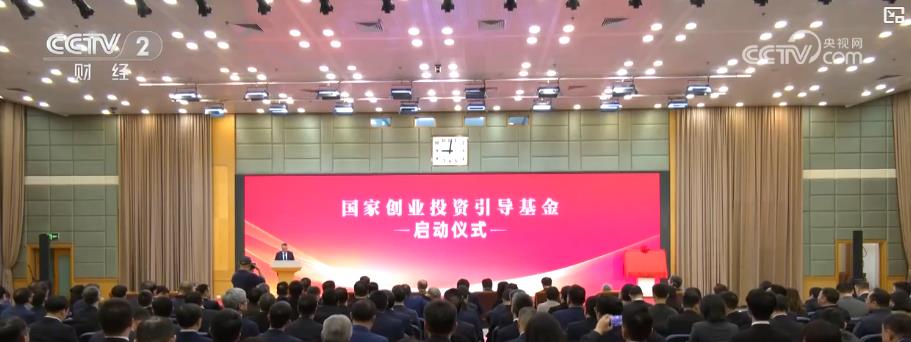
转自:央视网 央视网消息:12月26日,国家创业投资引导基金启动仪式在北京举行。目前,引导基金已经出资成立三只区域基金,并且签署一批 投资项目,推动创业投资高质量发展、培育壮大发展新质生产力。 国家创业投资引导基金由国家发展改革委、财政部推动设立,发挥中央资金引领带动作用,吸引社会资本共同参与。目前,引导基 金已出资成立"京津冀创业投资引导基金""长三角创业投资引导基金""粤港澳大湾区创业投资引导基金"3只区域基金。3只区域基金 已在集成电路、量子科技、生物医药、脑机接口、航空航天等领域签署一批意向子基金和直投项目。 引导基金将与已设立的各类政府投资基金、市场化基金错位发展,不搞重复投资、不与市场争利,重在解决创投行业长期资本短缺 的问题。国家发展改革委创新和高技术发展司司长 白京羽:引导基金将与私募股权二级市场基金、区域性股权市场等加强沟通协 作,努力丰富和拓宽退出渠道,确保资金安全。通过搭建综合性服务平台,打造理念创新、机制灵活、政策务实的"试验田",更好 引领创投行业高质量发展。 来源:央视网 编辑:周震 国家发展改革委相关负责人表示,国家创业投资引导基金将种子期、初创期、早中期企业作为投资重点,支持企 ...

脑机接口行业深度报告:解码大脑交互密码,开启人机协同纪元
EBSCN· 2025-12-26 11:02
Investment Rating - The report maintains an "Overweight" rating for the biomedical sector [4] Core Insights - The brain-computer interface (BCI) industry is at a critical stage of policy support, rapid technological iteration, and accelerated commercialization, with a global market approaching $10 billion [3][9] - The industry is driven by both policy and technology, with significant investments from major countries, including approximately $4.5 billion from the U.S. BRAIN Initiative and hundreds of billions in China [1][51] - The medical application of BCI technology is the most mature segment, focusing on neurorehabilitation, functional replacement, and disease treatment, with a dual growth curve emerging from medical and consumer applications [2][45] Summary by Sections Industry Overview - BCI is defined as a technology that creates a communication channel between the brain and external devices, enabling direct information exchange [16] - BCI can be categorized into invasive, semi-invasive, and non-invasive types, each with distinct applications in medical rehabilitation, consumer interaction, and military use [17][19] - The global BCI market is projected to grow from $1.2 billion in 2019 to approximately $7.63 billion by 2029, with a compound annual growth rate (CAGR) exceeding 13% [24] Policy Guidance - Major countries have launched BCI-related initiatives, with the U.S. and EU leading in funding and research efforts [52][53] - China's "Brain Plan" aims to enhance brain science and BCI technology, with significant funding expected in the coming years [54][57] Clinical Applications - The medical sector is the primary focus for BCI applications, with significant demand driven by conditions such as stroke and disabilities [45][48] - Clinical trials for BCI products are accelerating globally, with notable advancements in both invasive and non-invasive technologies [3][19] Industry Progress - The report highlights the competitive landscape, noting that while foreign companies like Neuralink and Synchron have a head start, domestic firms are making significant strides in key areas such as flexible electrodes and real-time language decoding [2][4][30] - The BCI industry is characterized by a complex supply chain, with upstream components like electrodes and chips, midstream product supply, and downstream applications across various sectors [30][33] Investment Recommendations - Investors are advised to focus on companies with strong technological barriers and clinical application capabilities, particularly in the medical sector, which is the most developed area for BCI commercialization [3][9] - Specific companies to watch include medical scene integrators and leaders in invasive/semi-invasive technologies, such as Xiangyu Medical, Weisi Medical, and Brain Tiger Technology [3][9]




宏观纵览 | 国家创业投资引导基金启动,资本与创新“双向奔赴”
Sou Hu Cai Jing· 2025-12-26 09:30
在国家层面由财政出资1000亿元,在区域基金、子基金层面积极鼓励社会资本参与。 经国务院批准,国家发展改革委、财政部发起设立了国家创业投资引导基金,发挥中央资金引领带动作 用,广泛吸引地方政府、中央企业、金融机构、民间资本等多方参与,形成万亿资金规模,通过投基 金、投企业、投项目,加大对战略性新兴产业和未来产业支持力度,加快培育和发展新质生产力。 白京羽介绍,引导基金将种子期、初创期、早中期企业作为投资重点,支持企业聚焦前沿领域开展原创 性、颠覆性的技术攻关,为企业搭建成果转化的平台和桥梁,促成资本与创新的"双向奔赴"。 白京羽表示,科创企业成长壮大是一场旷日持久的"马拉松",需要资本的耐心陪伴。引导基金设置20年 存续期,其中10年投资期、10年退出期,这样通过更长久的投资期限,为企业提供长周期的资金供给; 又通过更宽松的退出时限,为企业提供更多的发展空间,用耐心资本陪伴企业"长跑",培育千行百业 的"小巨人"和"独角兽"。 财政出资1000亿 12月26日,国家创业投资引导基金正式启动运行。这是发展创业投资、壮大耐心资本的重要举措,引导 金融资本投早、投小、投长期、投硬科技。 国家创业投资引导基金采用引导 ...
航母级创投“国家队”启动!
券商中国· 2025-12-26 07:48
Core Viewpoint - The National Venture Capital Guidance Fund has been officially launched, aiming to stimulate investment in early-stage innovative enterprises and leverage social capital to support technological innovation [1][2]. Group 1: Fund Structure and Capital - The Guidance Fund is established with a three-tier structure: "Fund Company - Regional Fund - Sub-Fund," with a total fiscal contribution of 100 billion yuan at the national level, expected to mobilize over 1 trillion yuan in social capital [2][7]. - Three regional funds have been set up in the Beijing-Tianjin-Hebei, Yangtze River Delta, and Guangdong-Hong Kong-Macao Greater Bay Area, with 49 sub-funds and 27 investment projects already signed [2][7]. Group 2: Investment Strategy - The fund focuses on "early, small, and hard technology" investments, targeting high-growth seed, startup, and early-stage innovative SMEs, with at least 70% of investments directed towards these stages [3][4]. - Investment in small enterprises is capped at a valuation of 500 million yuan, with individual investments not exceeding 50 million yuan, ensuring funds reach the grassroots level [3][4]. Group 3: Long-term Commitment - The Guidance Fund has a long-term investment horizon of 20 years, comprising a 10-year investment period and a 10-year exit period, allowing for sustained support of innovative enterprises [5]. - This long-term approach contrasts with traditional venture capital funds, which typically have a lifecycle of 7-10 years, emphasizing a commitment to "long-termism" in sectors like innovative pharmaceuticals [5]. Group 4: Exit Strategy - A diversified exit system has been established to ensure the fund can effectively realize returns, addressing the current reliance on IPOs for exits [6]. - The fund will collaborate with private equity secondary market funds and regional equity markets to broaden exit channels [6]. Group 5: Market Impact - Since the announcement of the Guidance Fund, the venture capital market has shown signs of recovery, with a 9% increase in investment amounts and nearly a 20% increase in investment cases in the first three quarters [7]. - The innovative three-tier structure is designed to maximize the leverage effect of central funds, aiming to attract substantial social capital and create a robust market ecosystem [7][8].

新华社出图·年度记忆丨闪耀世界的中国科技之光
Xin Hua She· 2025-12-26 06:24
Group 1 - China's innovation index has entered the global top ten for the first time, showcasing rapid growth in technological innovation capabilities [1] - The year 2025 marks the conclusion of the "14th Five-Year Plan," with a focus on achieving breakthroughs in key core technologies and enhancing the integration of technological and industrial innovation [20] - Significant advancements in space exploration have been made, including successful tests of manned lunar exploration vehicles and the launch of major space science satellite missions [3][5][17] Group 2 - The 2025 World Internet Conference showcased advancements in robotics and artificial intelligence, indicating a strong presence of innovative technologies in various sectors [6][21] - The launch of a new generation of ultra-high-speed real-time oscilloscopes, achieving bandwidths exceeding 90GHz, highlights China's leadership in the global electronic communication industry [9] - The successful operation of the Jiangmen Neutrino Experiment, the world's first large-scale neutrino facility, represents a significant milestone in high-precision scientific research [14]

国泰海通晨报-20251226
国泰海通· 2025-12-26 05:09
Group 1: Zhongsheng Pharma - The core business of Zhongsheng Pharma has stabilized after experiencing centralized procurement, with innovative drug research and development gradually yielding results, particularly in respiratory and metabolic fields [2][4] - The company reported a revenue of 1.889 billion yuan for the first three quarters of 2025, a year-on-year decrease of 1.01%, while net profit attributable to shareholders increased by 68.40% to 251 million yuan [4] - The core products of traditional Chinese medicine have maintained stable growth post-collective procurement, with sales resilience supported by volume compensating for price reductions [4][5] - The innovative pipeline includes RAY1225 injection, a dual-target drug for weight loss and blood sugar reduction, which has shown positive results in clinical trials [5] Group 2: Medical Device Industry - The brain-computer interface (BCI) industry in China has achieved rapid development under policy support, with a focus on establishing a robust technological and industrial framework by 2027 [6][8] - The National Medical Products Administration held a meeting to discuss the advancement of BCI medical devices, emphasizing safety and effectiveness as primary considerations [17] - By 2030, the BCI industry aims to cultivate globally influential leading enterprises and a competitive industrial ecosystem, with significant advancements expected in technology and application [18]

脑机接口行业近况更新
2025-12-26 02:12
脑机接口行业近况更新 20251225 摘要 Q&A 脑机接口产业的发展历程及当前现状如何? 脑机接口产业在全球范围内的发展历程可以分为几个主要阶段。美国是该领域 的先行者,早在 2004 年,罗得岛医院进行了全球首例嵌入式脑机接口临床试 验,为一名上肢瘫痪患者植入装置,使其能够控制机械臂。这标志着脑机接口 技术的重大突破。2013 年,美国正式颁布了"脑计划",确立了七个优先研 究方向,主要集中在阿尔茨海默症、精神分裂症、孤独症、癫痫和创伤性脑损 伤等疾病的治疗。到 2018 年,该计划进入第二阶段,由美国国立卫生研究院 (NIH)主导组建 ACD 咨询委员会,对后续发展提供专业指导。2022 年,美 2024 年,美国 FDA 加入协作计划,构建技术验证、审批和商业化闭环体系。 截至 2024 年,美国政府累计投入超过 40 亿美元,资助了 1,300 多个研究项 国的研究方向转向应用验证,包括 DBS 和 SCS 等技术,并取得显著效果。 全侵入式脑机接口每例费用约 30-40 万元,半侵入式约 10-20 万元。大 规模商业化后,全侵入式成本预计降至 10 万元以内,半侵入式更低, 数据采集与建模时间 ...
脑机接口板块大涨,建议加强重视十五五规划医疗科技方向
2025-12-26 02:12
脑机接口板块大涨,建议加强重视十五五规划医疗科技方 向 20251225 摘要 中国在脑机接口领域处于全球相对领先地位。中国拥有大量医院和病人资源, 积极推动先进疗法的临床试验。此外,中国在医疗器械制造方面积累了丰富经 验,有望实现厚积薄发。目前,中国有许多团队从事脑机接口研究,数量甚至 可能超过美国。未来,中国有望涌现出具有全球竞争力的脑机接口公司,并逐 步走向国际市场。 目前有哪些公司在布局脑机接口领域? 在上游零部件供应方面,美好医疗等公司为脑机接口企业提供代工服务。在康 复医疗器械领域,公司如翔宇医疗、迈兰德、韦斯和诚益通等都在积极布局。 此外,下游医院如三博脑科也非常重视这一方向。在非侵入式脑机接口方面, 强脑科技等公司备受关注。一级市场中,如博瑞康等公司也被寄予厚望,有望 通过上市形成更强的板块效应。 明年(2026 年)可以期待哪些政策支持? 中国脑机接口领域发展迅速,受益于庞大的医院和病人资源以及医疗器 械制造经验,涌现出众多研究团队,数量或超美国,未来有望出现具全 球竞争力的公司。 政策支持力度加大,预计 2026 年将迎来国家顶层设计、资金支持以及 药监局绿色通道等多方面政策利好,加速产品 ...
国泰海通 · 晨报1226|脑机接口医疗器械工作推进会召开
国泰海通证券研究· 2025-12-25 12:53
Core Viewpoint - The article discusses the recent advancements and strategic importance of brain-computer interface (BCI) medical devices, highlighting the government's commitment to fostering innovation and establishing a robust industry framework by 2030 [3][4]. Group 1: Policy and Strategic Importance - The National Medical Products Administration held a meeting on December 18, 2025, to discuss the development of BCI medical devices, emphasizing the need for safety and effectiveness as primary considerations [3]. - The meeting called for enhanced collaboration across various sectors, including academia, research, and medical institutions, to address key technical challenges and improve the supply chain [3]. - The Ministry of Industry and Information Technology, along with six other departments, previously issued guidelines to promote innovation in the BCI industry, recognizing it as a frontier technology merging life sciences and information sciences [3]. Group 2: Industry Development Goals - By 2027, significant breakthroughs in BCI technology are expected, with the establishment of advanced technical, industrial, and standard systems, aiming for products to reach international standards in performance [4]. - The BCI industry is projected to expand significantly, creating 2 to 3 industrial clusters and exploring new applications and business models by 2027 [4]. - By 2030, the BCI industry aims to enhance its innovation capabilities, develop a reliable industrial ecosystem, and nurture 2 to 3 globally influential leading companies alongside a number of specialized small and medium enterprises [4].