光伏

Search documents
太空光伏有望成为2026年投资主线!光伏ETF华夏(515370)连续两日净流入近3000万元
Xin Lang Cai Jing· 2026-02-09 06:07
Core Viewpoint - The space photovoltaic concept is gaining momentum, with significant price increases in photovoltaic components and a positive outlook for the industry in 2026 [1] Group 1: Market Performance - The photovoltaic ETF Huaxia (515370) rose by 3.63%, with its constituent stocks such as 聚合材料 (20CM) hitting the daily limit, and both 协鑫集成 and TCL 中环 (10CM) also reaching the daily limit [1] - The Huaxia photovoltaic ETF has seen a net inflow of nearly 30 million yuan over the past two days [1] Group 2: Industry Developments - Photovoltaic component prices have continued to rise at the beginning of the year, with leading companies collectively adjusting their prices [1] - Major photovoltaic companies TCL 中环 and 爱旭股份 have reached a settlement regarding BC patents, ending their patent dispute [1] Group 3: Investment Insights - 中银证券's research report highlights "anti-involution" and "space photovoltaic" as the two main investment themes for the photovoltaic sector in 2026 [1] - Elon Musk's team has begun investigating domestic manufacturers, indicating an increase in demand for photovoltaic equipment, with short-term equipment orders expected to rise [1] - The long-term outlook remains positive for domestic materials to realize overseas incremental profits [1] Group 4: ETF and Index Information - The Huaxia photovoltaic ETF (515370) and its linked funds (012885/012886) track the CSI photovoltaic industry index, covering upstream, midstream, and downstream companies in the photovoltaic supply chain [1] - The index includes various components such as silicon wafers, polysilicon, solar cells, cables, photovoltaic glass, battery modules, inverters, photovoltaic brackets, and solar power plants, providing a comprehensive reflection of the photovoltaic industry's overall performance [1] - The space photovoltaic content in the tracking index is 18.49%, ranking first in the market dimension [1]

一笔16.5亿元的专利“和解” 让两大光伏龙头盘中涨停
2 1 Shi Ji Jing Ji Bao Dao· 2026-02-09 06:04
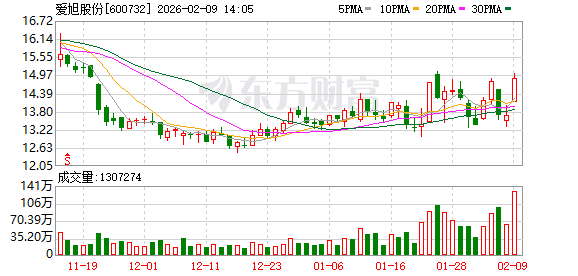
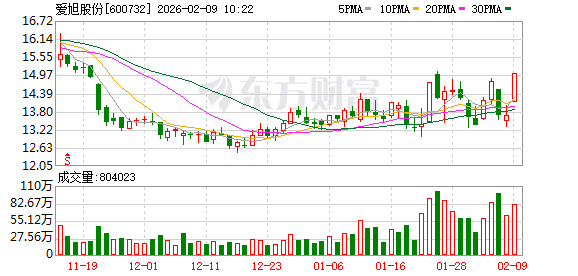
Core Viewpoint - Shanghai Aiyu New Energy Co., Ltd. has signed a patent licensing agreement with Maxeon Solar Pte. Ltd., acquiring all BC battery and component patents outside the U.S. for the next five years, with a total licensing fee of RMB 1.65 billion [3][4]. Group 1: Patent Licensing Agreement - The agreement allows Aiyu to obtain past and future patents from Maxeon, excluding reverse licensing [3][4]. - The total licensing fee is RMB 1.65 billion, to be paid in installments over five years, with the first-year fee set at RMB 250 million [3][4]. - Both parties have agreed to withdraw or terminate all ongoing or pending legal proceedings related to the licensed patents and products [3][4]. Group 2: Market Impact - Following the announcement, the A-share photovoltaic sector experienced a surge, with multiple companies, including Aiyu and TCL Zhonghuan, hitting the daily limit [4]. - The licensing agreement is seen as a resolution to previous patent disputes between Aiyu and Maxeon, which had involved litigation in Europe [5][6]. Group 3: Industry Context - Patent disputes are common in the photovoltaic industry, with many leading companies involved in such conflicts [7]. - Aiyu anticipates that the licensing fees will be covered by projected sales exceeding 165 GW over the next five years, with an average cost of less than 1 cent per watt for the licensing [7]. - The focus on intellectual property rights is becoming a consensus in the photovoltaic industry, with calls for enhanced protection and risk management [8].


直线拉升,集体涨停!马斯克,彻底引爆!还有重大利好袭来
券商中国· 2026-02-09 05:47
Core Viewpoint - The photovoltaic concept stocks in A-shares experienced a significant surge, driven by two main positive factors: Tesla's increased investment in photovoltaic manufacturing and positive signals in the industry fundamentals, leading to improved market confidence in supply-demand dynamics [1][3][6]. Group 1: Market Performance - A-shares photovoltaic concept stocks collectively surged, with nearly 30 stocks hitting the daily limit or rising over 10% by midday [1]. - The Space Photovoltaic Index rose over 6%, while other indices such as the BC Battery Index and Photovoltaic Glass Index increased by more than 5% [3]. Group 2: Positive Drivers - Tesla is reportedly evaluating multiple sites in the U.S. to expand its solar cell manufacturing capacity, aiming for an annual production capacity of 100 GW over the next three years [3][5]. - The Chinese photovoltaic equipment leaders are expected to meet Tesla and SpaceX's high standards, potentially capturing significant shares of their supply chains [5][8]. Group 3: Industry Fundamentals - Since 2026, leading manufacturers have repeatedly raised component prices, indicating a recovery in the photovoltaic industry after a prolonged downturn [6]. - The "anti-involution" policy and expectations of capacity clearance have enhanced market confidence regarding supply-demand improvements [6]. Group 4: Future Market Potential - The global demand for space photovoltaics is projected to reach 1 GW and a market space of over 80 billion yuan by 2030 under conservative scenarios, with optimistic scenarios suggesting demand could reach 70 GW and nearly 3 trillion yuan [8][9]. - The domestic photovoltaic industry is well-positioned to benefit from increased orders and profit growth as global demand for satellite launches and space photovoltaic technology expands [9].



政策与产业共振驱动,创业板新能源ETF国泰(159387)大涨超3%
Mei Ri Jing Ji Xin Wen· 2026-02-09 05:45
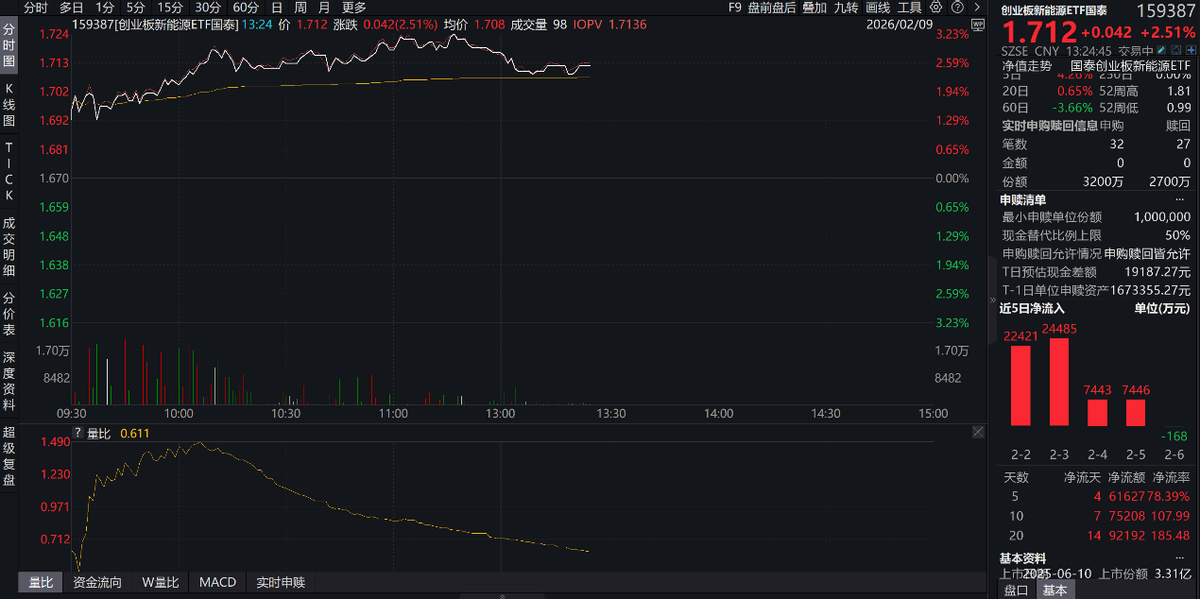
Core Viewpoint - The recent performance of the new energy sector indicates a recovery phase, driven by supply-side adjustments, demand recovery, and technological upgrades, creating structural investment opportunities [3][6]. Group 1: Market Performance and Trends - The ChiNext New Energy ETF (159387) saw an intraday increase of over 3.2%, with a net inflow of over 600 million yuan in the past five trading days, indicating a clear sentiment recovery [1]. - The new energy sector is stabilizing after a period of volatility, with signs of bottoming out in the industry chain, particularly in solid-state batteries and space photovoltaic themes [3]. Group 2: Catalysts and Policy Support - Key catalysts for the renewed interest in the new energy sector include advancements in solid-state battery technology and increasing attention on themes like space photovoltaics and energy storage systems [4]. - The new energy sector remains a core focus of the "dual carbon" strategy and the construction of a new power system, with policies emphasizing electric equipment, grid transformation, and new energy storage [5]. Group 3: Supply Chain Adjustments and Profitability - The solar and lithium battery supply chains are showing signs of supply-side adjustments, with significant price corrections leading to a gradual stabilization of the industry [7]. - The lithium carbonate price has significantly dropped, and the profitability of battery manufacturers is recovering, while energy storage demand is emerging as a new growth driver [7]. Group 4: Investment Opportunities and Structural Changes - The current market offers three levels of investment logic: clear cyclical advantages, structural differentiation among companies, and the integration of new energy with AI, electrification, and digitalization [8]. - The new energy industry is expected to unlock new growth spaces due to technological breakthroughs, with the ChiNext New Energy ETF tracking companies involved in clean energy production, storage, and application [9].

周期淬炼龙头韧性,永臻股份多维蓄力拓新程
Quan Jing Wang· 2026-02-09 05:42
Core Viewpoint - The photovoltaic industry is undergoing a phase of adjustment, and companies are focusing on how to navigate through cycles, accumulate momentum, and explore new opportunities [1] Group 1: Company Performance - Yongzhen Co., a leading manufacturer of aluminum alloy structural components, expects a net profit of -235 to -175 million yuan for 2025, reflecting the industry's overall performance during this cyclical adjustment [1] - Despite the challenging environment, Yongzhen has expanded its market share in the photovoltaic sector, leveraging its advantages in cost control, financial strength, and capacity layout [1] Group 2: Strategic Initiatives - Yongzhen's strategic initiatives include a stock incentive plan with clear shipment targets, indicating management's confidence in the long-term growth prospects of its photovoltaic business [1] - The company has established a production base in Vietnam, which has significantly higher profitability compared to domestic operations, and is expected to contribute strong profit potential moving forward [2] Group 3: Diversification and New Ventures - Yongzhen's acquisition of Zhejiang Jienow Automotive Lightweight Technology Co. allows it to enter the thermal management liquid cooling sector, expanding its applications in electric vehicle battery trays and liquid cooling systems [3] - The company is also investing in a new energy storage project in Inner Mongolia, which is expected to benefit from stable revenue models and long-term policy support [3] Group 4: Emerging Technologies - Yongzhen is becoming a key supplier in the humanoid robotics sector, leveraging its expertise in aluminum alloy materials to supply critical components [4] - The company plans to collaborate with downstream clients to innovate new materials for robotics, positioning itself for future growth as the industry moves towards mass production [4] Group 5: Industry Outlook - The photovoltaic industry is expected to recover as supply-demand structures improve through capacity control, price stabilization, and innovation [1] - Yongzhen's diverse business layout and strategic foresight are being re-evaluated in the context of energy transition and industrial upgrades, providing a model for other companies navigating similar challenges [4]
太空光伏,能否成为新蓝海?
Ren Min Ri Bao· 2026-02-09 05:40
Core Insights - The recent exploration of China's photovoltaic industry chain by Musk's team has garnered attention, particularly with Musk's plan to deploy a 100 GW solar AI satellite energy network annually, which represents about one-sixth of the global new photovoltaic installations [1] Group 1: Space Photovoltaics Overview - Space photovoltaics involves equipping spacecraft or satellites with photovoltaic components to convert solar energy into electricity, with long-term goals of wireless energy transmission to Earth [1] - The advantages of space photovoltaics include higher solar intensity, no day-night or weather impacts, and energy density that can reach 7-10 times that of ground systems [1] Group 2: Market Dynamics - The interest in space photovoltaics has surged due to advancements in reusable rocket technology, which lowers launch costs, and the rapid development of the commercial space economy [2] - The increasing demand for electricity and cooling from data centers is also driving interest, as the efficiency of photovoltaic generation in space is significantly higher than on the ground [2] Group 3: Current Challenges - Space photovoltaics is still in the exploratory and validation phase, with industrialization hindered by technological and economic factors [2] - The current cost of electricity generated from space photovoltaics is approximately $2-3 per kWh, compared to $0.03-0.05 per kWh for ground-based photovoltaics, indicating a potential cost disparity of up to 100 times [2] Group 4: China's Competitive Advantages - The Chinese photovoltaic industry has multiple advantages, including significant advancements in technology, with 27 breakthroughs in efficiency records during the 14th Five-Year Plan, increasing global share to 55% [2] - Manufacturing capacity has surged, with photovoltaic cell production during the 14th Five-Year Plan being 5.5 times that of the previous plan, and projected capacity to account for over 90% of global output by 2025 [2] - Cost advantages have been realized, with an 80% reduction in average electricity generation costs for global photovoltaic projects over the past decade [2] Group 5: Industry Initiatives - Chinese photovoltaic companies are actively pursuing advancements in space photovoltaics, with notable achievements such as the world record for large-area perovskite/silicon tandem components and the establishment of future energy space laboratories [3] - Collaborations are underway to promote the research and industrialization of perovskite tandem battery technology, indicating a commitment to developing competitive high-efficiency photovoltaic products [3] - The future of space photovoltaics is viewed as a long-term endeavor, with expectations for breakthroughs in commercial space transportation and reduced launch costs, potentially unlocking a trillion-dollar market [3]
苏州固锝2026年2月9日涨停分析:光伏银浆技术+半导体业务+海外市场布局
Xin Lang Cai Jing· 2026-02-09 05:31
Group 1 - The core viewpoint of the news is that Suzhou Gude (SZ002079) reached its daily limit with a price of 11.81 yuan, marking a 9.96% increase and a total market capitalization of 9.573 billion yuan [1] Group 2 - The reasons for the stock surge include the company's strategic transformation, with a neutral to positive overall outlook. It is a leader in photovoltaic silver paste technology and has advantages in new battery materials like TOPCon and HJT, with silver-coated copper paste already in mass production [2] - The semiconductor business is developing steadily, with world-class diode manufacturing capabilities and increased production capacity for small signal devices to meet domestic substitution demands [2] - The company has established an overseas production base in Malaysia, which is expected to benefit from the growth of the overseas photovoltaic market [2] - The company has strong R&D capabilities, holding 237 authorized patents and continuously investing in next-generation technology development [2] - The photovoltaic and semiconductor sectors have recently attracted market attention, with significant capital inflows into these sectors on February 9, leading to a correlated rise in related stocks [2] - Technical analysis indicates that if the stock price breaks through significant resistance levels with increased trading volume, it reflects active capital involvement. Major funds significantly flowed into the stock on that day, driving the price limit [2] - The company's refinancing matters have been approved by the Shenzhen Stock Exchange, which, if successfully implemented, will enhance its financial strength and boost market confidence [2]

暴力拉升,大面积涨停!
天天基金网· 2026-02-09 05:18
Market Overview - A-shares experienced a collective surge, with the Shanghai Composite Index rising by 1.17%, the Shenzhen Component Index by 2.07%, and the ChiNext Index by 3.11% as of the morning close. Over 4,400 stocks in the market rose, with a half-day trading volume exceeding 1.5 trillion yuan [2]. Overseas Market Influence - The overseas stock market saw significant gains, boosting market sentiment. On February 6, U.S. stock indices collectively rose, with the Dow Jones increasing by 2.47%, surpassing the 50,000-point mark for the first time. Chinese concept stocks also surged, with the Nasdaq Golden Dragon China Index rising by 3.71%. Additionally, the Nikkei 225 and KOSPI indices both saw substantial increases, with the Nikkei 225 reaching a new historical high [4]. Solar Energy Sector - The solar energy sector saw explosive growth, with over ten component stocks hitting the daily limit. GCL-Poly Energy achieved a "four consecutive limit-up" with a stock price of 5.04 yuan. As of the midday close, there were over 1.97 million hands of sealed orders on the limit-up board [4][12]. - GCL-Poly announced that its stock price had deviated significantly over two consecutive trading days, indicating abnormal trading activity. The company is currently exploring "space photovoltaic" technology, which remains in the exploratory phase, and has not yet secured relevant orders in this field [4]. CPO Concept Stocks - CPO concept stocks collectively surged, with leading stocks such as Zhongji Xuchuang, Xinyi Sheng, and Tianfu Communication experiencing significant increases. Tianfu Communication's stock price reached a historical high of 303.56 yuan, with a total market value exceeding 230 billion yuan [6][8]. - The rise in CPO stocks is attributed to several factors, including a recent surge in overseas computing power stocks, with Nvidia's stock rising by 7.87%. Major tech companies like Microsoft, Meta, Amazon, and Google have announced plans to continue expanding investments in AI, with projected capital expenditures reaching approximately 650 billion dollars by 2026 [11]. Patent Licensing Agreement - Two major photovoltaic BC technology companies recently signed a patent licensing agreement, authorizing nearly a thousand patents in the BC technology field. TCL Zhonghuan's subsidiary signed a five-year agreement worth 1.65 billion yuan with Aiko Solar, which includes an initial payment of 250 million yuan [15]. - This agreement is expected to enhance the competitive position of domestic photovoltaic equipment manufacturers, potentially allowing them to enter the supply chains of companies like Tesla and SpaceX, thereby opening new growth opportunities [15].

光伏专利大和解 爱旭股份16.5亿元“史上最贵专利费”买到什么
Xin Lang Cai Jing· 2026-02-09 05:02
Core Viewpoint - The long-standing BC patent litigation between Aiko Solar (爱旭股份) and TCL Zhonghuan (TCL中环) has concluded with a settlement, allowing Aiko to obtain a comprehensive patent license from Maxeon for BC battery and component technologies outside the U.S. for the next five years [2][8]. Group 1: Settlement Details - Aiko Solar and Maxeon signed a patent licensing agreement worth 1.65 billion yuan, with Aiko to pay in installments over five years, starting with 250 million yuan in the first year [9]. - The total licensing fee is fixed and will not be adjusted based on Aiko's sales volume or market changes [9]. - Both parties agreed to withdraw or terminate all ongoing or pending legal proceedings related to the licensed patents during the five-year agreement [2][8]. Group 2: Financial Implications - The licensing fee is the highest publicly disclosed in China's solar industry, posing a financial challenge for Aiko, which is projected to incur losses of 1.2 to 1.9 billion yuan in 2025 [9][11]. - Aiko's ABC technology, which is among the highest efficiency solutions globally, is seen as a critical asset that necessitates this licensing agreement to access international markets [11]. Group 3: Market Context and Competition - Maxeon has actively pursued legal actions against Aiko and other companies in the solar industry, indicating a competitive landscape where patent disputes can disrupt market dynamics [3][10]. - The settlement allows Aiko to mitigate risks associated with ongoing patent disputes, which could deter customers from placing large orders due to compliance concerns [10]. - The agreement may shift the competitive balance within the BC technology sector, particularly affecting other players like LONGi Green Energy (隆基绿能), which may face increased pressure regarding patent issues [13][14]. Group 4: Future Considerations - The agreement is set to last for five years, after which the renewal terms will need to be negotiated, leaving uncertainty about future licensing arrangements [12]. - Aiko plans to differentiate its patent licensing strategy by region and product, aiming to establish a comprehensive patent ecosystem in the BC industry [11].
太空光伏最新8大核心龙头企业,这篇文章帮你梳理清楚
Xin Lang Cai Jing· 2026-02-09 04:51
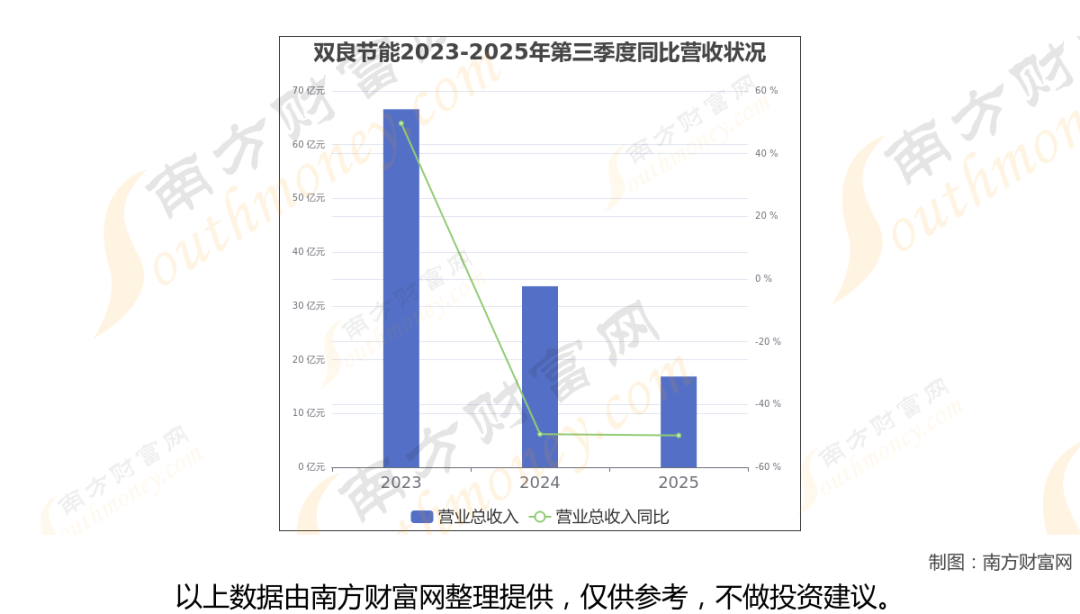
Core Concept - Space photovoltaic technology captures solar energy in space and transmits it to Earth, providing stable and efficient power supply regardless of ground conditions Group 1: Company Performance - Shuangliang Energy reported a main business revenue of 1.688 billion yuan, a decrease of 49.86% year-on-year [3] - Shuangliang Energy achieved a net profit of 53.18 million yuan, with a year-on-year growth rate of 164.75% and a gross margin of 20.43% [4] - Saiwu Technology's main business revenue reached 687 million yuan, an increase of 4.84% year-on-year [8] - Saiwu Technology reported a gross margin of -2.18%, a net margin of -6.78%, and a net profit of -44.89 million yuan, with a year-on-year growth of 43.92% [9] - JinkoSolar's revenue for the third quarter was 16.155 billion yuan, a decline of 34.11% year-on-year [13] - JinkoSolar reported a net loss of 1.012 billion yuan, with a gross margin of 3.76% [15] - GCL-Poly's revenue was 3.998 billion yuan, an increase of 3.12% year-on-year [17] - GCL-Poly reported a net loss of 228 million yuan, with a year-on-year growth rate of -691.81% and a gross margin of 2.52% [19] - Qianzhao Optoelectronics achieved a main business revenue of 1.007 billion yuan, an increase of 65.8% year-on-year [21] - Qianzhao Optoelectronics reported a net profit of 18.72 million yuan, with a year-on-year growth of 56.01% and a gross margin of 9.08% [23] - Dongfang Risen's revenue was 3.024 billion yuan, a decrease of 31.95% year-on-year [25] - Dongfang Risen reported a net loss of 254 million yuan, with a year-on-year growth of 57.39% and a gross margin of 1.4% [27] - Jiejia Weichuang's revenue was 4.734 billion yuan, a decline of 17.26% year-on-year [29] - Jiejia Weichuang reported a gross margin of 28.06%, a net margin of 18.13%, and a net profit of 858 million yuan, with a year-on-year growth of 7.72% [31] - Maiwei's revenue reached 1.991 billion yuan, a decrease of 31.3% year-on-year [33] - Maiwei reported a net profit of 26.9 million yuan, with a year-on-year decline of 9.42% and a gross margin of 39.81% [35]