
智能制造

Search documents
“十四五”以来我国发布4000余项先进制造标准支撑制造业高质量发展
Zhong Guo Jing Ji Wang· 2025-09-04 08:37
Group 1 - The core viewpoint emphasizes the importance of advanced manufacturing standards in driving high-quality development in the manufacturing sector, which includes reducing costs, ensuring product quality, promoting international trade, and enhancing competitiveness [2][3] - Since the beginning of the 14th Five-Year Plan, over 4,000 national standards have been released in key industries such as integrated circuits, new materials, new energy vehicles, robotics, and aerospace equipment [1][2] - In the smart manufacturing sector, 491 national standards have been established to support the digital and intelligent transformation of manufacturing enterprises [2] Group 2 - In 2023, more than 600 national standards have been published, significantly supporting the high-end, green, and intelligent transformation of the manufacturing industry [3] - New standards in high-end transformation include the "Inspection Precision of Moving Beam EDM Machine Tools," which enhances processing precision for large aerospace components [3] - The implementation of the "Technical Specifications for Carbon Dioxide Recovery and Disposal in Metallurgical Lime Kilns" standard promotes carbon capture technology and resource utilization in steel production, reducing CO2 emissions by 140 kilograms per ton of steel [3] Group 3 - The Jiangsu Provincial Market Supervision Bureau is actively developing a three-year action plan for future industry standardization, aiming to establish over 100 new standards by 2027 [4][5] - The province has initiated the establishment of standardization technical organizations for future industries, focusing on areas such as synthetic biology and drones, to enhance collaboration among technology organizations, universities, industry associations, and enterprises [4][5] - Jiangsu has led the development of 4 international standards and 28 national and industry standards, contributing to the empowerment and efficiency of future industry development [5]
市场监管总局:中国累计建成230余家卓越级智能工厂,生产效率平均提升22.3%
Xin Lang Cai Jing· 2025-09-04 08:21
Group 1 - The core viewpoint of the articles highlights the significant advancements in China's intelligent manufacturing sector, with over 30,000 basic intelligent factories, 1,200 advanced intelligent factories, and 230 excellent intelligent factories established, leading to improved product development cycles, production efficiency, defect rates, and carbon emissions reductions [1][2] - The average product development cycle in excellent intelligent factories has been shortened by 28.4%, production efficiency has increased by 22.3%, defect rates have decreased by 50.2%, and carbon emissions have been reduced by 20.4% [1] - The role of standards in supporting the transformation and upgrading of the manufacturing industry is emphasized, with the establishment of a comprehensive intelligent manufacturing standard system to enhance industry competitiveness [1][2] Group 2 - The intelligent equipment and industrial software form the technical system of intelligent manufacturing, with the introduction of standards for performance testing, safety requirements, and functional specifications to improve technology levels and product quality in the manufacturing sector [2] - Since the 14th Five-Year Plan, over 4,000 national standards have been published in key industries such as integrated circuits, new materials, new energy vehicles, robotics, and aerospace equipment, contributing to the stability of supply chains [2] - During the 14th Five-Year period, China has taken on 26 secretariat positions in international standard organizations and proposed 880 international standard proposals in fields like new energy vehicles and aerospace [3]
“十四五”期间我国发布新能源汽车等重点行业国家标准4000多项
Yang Shi Xin Wen· 2025-09-04 07:09
Group 1 - The core viewpoint of the article highlights the significant role of national standards in supporting high-quality development in key industries such as integrated circuits, new materials, new energy vehicles, robotics, and aerospace equipment since the start of the 14th Five-Year Plan, with over 4,000 relevant national standards published [1] Group 2 - In the field of intelligent manufacturing, 491 national standards have been released, providing high-quality references for the digital and intelligent transformation of manufacturing enterprises [1] - In the new energy vehicle sector, 95 national standards have been established, playing an important role in enhancing collaboration across the automotive industry chain and improving production efficiency while reducing costs [1] - The solar photovoltaic sector has seen the publication of 221 national standards, which actively contribute to preventing irrational competition and promoting high-quality industry development [1] Group 3 - Nearly 20% of the total group standards focus on advanced manufacturing fields such as new-generation information technology and high-end equipment manufacturing, providing crucial support for industrial upgrading and technological innovation [1]
盘古智能股价涨5.06%,银华基金旗下1只基金重仓,持有1.57万股浮盈赚取2.15万元
Xin Lang Cai Jing· 2025-09-04 05:32
Group 1 - Pangu Intelligent's stock price increased by 5.06% on September 4, reaching 28.47 CNY per share, with a trading volume of 182 million CNY and a turnover rate of 10.81%, resulting in a total market capitalization of 4.283 billion CNY [1] - The stock has experienced a continuous rise for three days, with a cumulative increase of 3.71% during this period [1] - Pangu Intelligent Manufacturing Co., Ltd. was established on July 23, 2012, and went public on July 14, 2023, focusing on the research, development, production, and sales of centralized lubrication systems and their core components [1] Group 2 - According to data, a fund under Yinhua Fund holds a significant position in Pangu Intelligent, with the Yinhua Specialized and New Quantitative Preferred Stock Initiation A (014668) holding 15,700 shares, accounting for 0.71% of the fund's net value, ranking as the ninth largest holding [2] - The fund has generated an estimated floating profit of approximately 21,500 CNY today, with a floating profit of 15,200 CNY during the three-day increase [2] - The Yinhua Specialized and New Quantitative Preferred Stock Initiation A (014668) was established on July 20, 2022, with a latest scale of 31.8804 million CNY, achieving a year-to-date return of 38.77% and a one-year return of 85.85% [2]
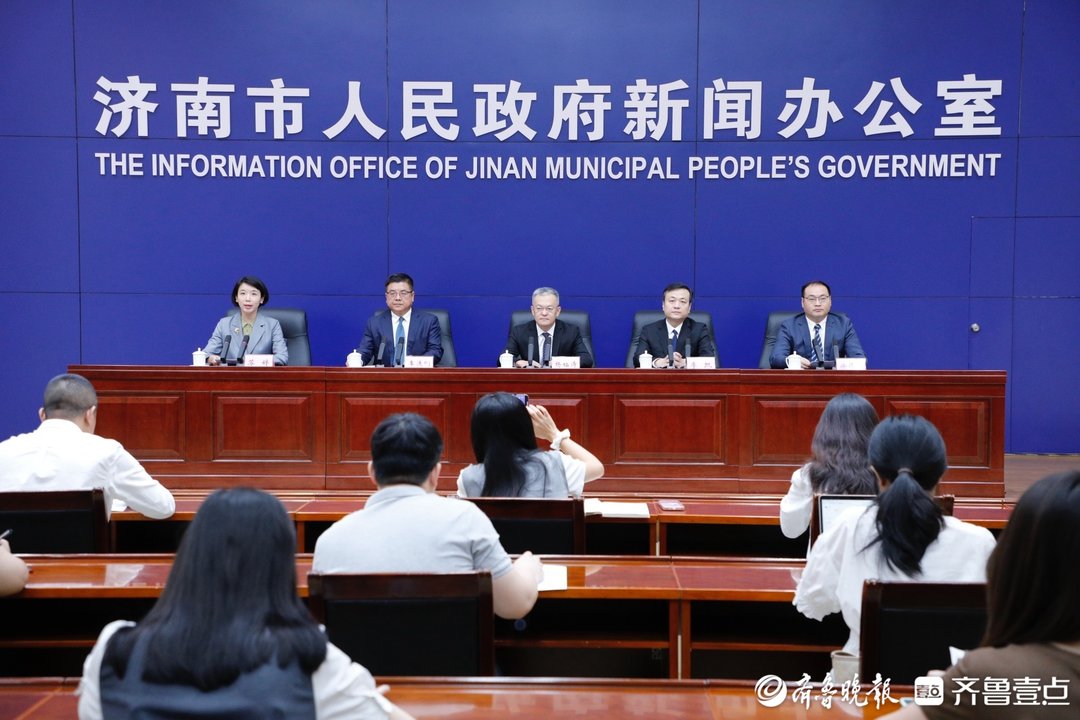
济南高新区已累计培育国家级和省级、市级绿色工厂60家
Qi Lu Wan Bao Wang· 2025-09-04 03:52
Core Viewpoint - The Jinan High-tech Zone is implementing a strategy focused on new industrialization, emphasizing both quantitative growth and qualitative improvement to enhance its industrial strength and competitive advantages [3]. Group 1: Smart Transformation - The High-tech Zone aims to establish itself as a leading demonstration area for "smart transformation and digital upgrade" in the province [3]. - Three clusters have been selected as the first batch of provincial digital industry clusters, and four companies have been recognized as provincial digital industry pioneers [3]. - The zone has been awarded seven provincial "industrial brains" and has recognized 318 first-version software and 20 first-set electronic products over the past three years [3]. - More than 5,000 5G base stations have been built, and 51 "Morning Star Factories" have been recognized at the provincial level [3]. - A total of 31 smart manufacturing pilot demonstrations and smart factories have been established, with 24 projects selected for the provincial "Manufacturing Digital Transformation Pilot" initiative [3]. Group 2: Green Development - The High-tech Zone has developed a three-tiered green manufacturing cultivation mechanism at the national, provincial, and municipal levels [3]. - The zone has implemented energy efficiency and water efficiency "leader" actions, creating a green manufacturing development landscape driven by leading enterprises [3]. - A total of 60 national, provincial, and municipal green factories have been cultivated, along with eight green supply chain management demonstration enterprises [3]. - The energy consumption per unit of industrial added value in the High-tech Zone has consistently maintained a leading level among national high-tech zones [3]. - This year, the Jinan High-tech Zone has been approved as a national-level green industrial park, further enhancing its "green" industrial profile [3].

每一红利期都有 4 种赚钱模式
创业家· 2025-09-03 10:09
Core Viewpoint - The article discusses four profit-making models during every dividend period: Laborers, Winners, Arbitrageurs, and Trendsetters, each with distinct characteristics and earning potentials [1]. Group 1: Profit-Making Models - Laborers earn the average social wage and envy the winners [1] - Winners make money from temporary dividends and envy the arbitrageurs [1] - Arbitrageurs profit from information asymmetry by studying the patterns of dividend emergence, remaining sensitive to opportunities but needing to start anew each time, and they envy the trendsetters [1] - Trendsetters earn money from innovation, managing to survive in every era by seizing each wave of dividends, leading to long-term sustainability [1] Group 2: Investment Opportunities - The article highlights an upcoming offline learning event led by Wu Shichun, aimed at exploring innovative growth engines in Sichuan, with participation from 100 entrepreneurs [2][6] - Wu Shichun is expected to invest no less than 1.5 billion in the second half of the year [5] - The event will cover various sectors including robotics, smart manufacturing, low-altitude economy, and satellite communication, indicating a focus on high-growth industries [7][20][21] Group 3: Event Details - The event will take place from September 21 to 23, featuring activities such as networking dinners, guided explorations, and lectures on technology innovation and industry breakthroughs [17][18] - Participants will engage in deep learning experiences and discussions with industry leaders, enhancing their understanding of capital trends and strategic methodologies [8][18] - The event is priced at 12,800 yuan per person for early birds, including accommodation and meals [23]

普天科技(002544) - 002544普天科技投资者关系管理信息20250903
2025-09-03 06:40
Group 1: Company Overview - China Electronics PuTian Technology Co., Ltd. (PuTian Technology) is a high-tech enterprise specializing in public network communication, private network communication, smart applications, and intelligent manufacturing, listed on the Shenzhen Stock Exchange since January 28, 2011, with a registered capital of 680 million yuan [3]. - The company is a key player in the national cybersecurity system development and is actively involved in satellite internet as part of its strategic direction [4]. Group 2: Business Performance - In the first half of 2025, the public network communication segment faced revenue pressure due to a decline in operator investments, prompting the company to enhance its digital consulting and design capabilities [3]. - The private network communication and smart applications segment is under pressure from intensified competition and service structure adjustments, with a focus on stabilizing core markets in transportation, safety, and energy [3]. - The intelligent manufacturing segment saw significant order growth in the first half of 2025, although manufacturing costs increased due to rising precious metal prices, leading to a decline in gross margins [3]. Group 3: Core Competencies - The company offers integrated project services in the mobile communication sector and has a first-mover advantage in autonomous research and development of 5G core networks and terminals [5]. - It has pioneered the use of domestically produced TETRA digital cluster equipment in rail transit and developed a multi-level emergency command narrowband wireless communication network [5]. - The company specializes in high-reliability, short-lead-time, and special process requirements for manufacturing printed circuit boards, with products widely used in high-end fields such as aerospace and power [5]. Group 4: Data Governance and Innovation - The company is committed to data governance, focusing on building core capabilities in data integration, governance, development, sharing, security, and operations, targeting government and enterprise sectors [7]. - A strategic partnership was formed with Helium Star Light Co., Ltd. and Beijing Yixin Technology Co., Ltd. to establish a joint R&D center aimed at advancing satellite internet strategies and key technologies in space computing [7].

江苏北人上半年亏损,核心业务承压计提减值准备3000万
2 1 Shi Ji Jing Ji Bao Dao· 2025-09-03 02:40
Core Insights - Jiangsu Beiren (688218.SH) reported a significant decline in revenue and net profit for the first half of 2025, with revenue at 206 million yuan, down 28.25% year-on-year, and a net loss attributable to shareholders of 23.72 million yuan [1][2] Group 1: Business Performance - The decline in performance is primarily attributed to two main business segments: the smart manufacturing sector and the commercial energy storage business [1] - The smart manufacturing segment faced revenue shrinkage due to the strategic decision to abandon low-margin orders and prolonged conversion cycles for overseas orders [1] - The commercial energy storage business is under pressure from intensified industry price wars, stricter policies leading to increased costs, and a shrinking market demand, prompting the company to strategically reduce its scale [1] Group 2: Operational Challenges - The smart manufacturing sector is expanding its overseas presence, but long delivery cycles for overseas projects have delayed revenue realization, while domestic price competition in the automotive supply chain continues to squeeze profit margins [1] - The energy storage business has become a significant pain point, with intensified competition and technological iterations impacting the pricing of existing products, leading to margin pressure [1] - Upgrading government standards has increased project implementation costs, resulting in fewer project completions and extended timelines, while reduced investment willingness from asset holders has further contracted market demand [1] Group 3: Financial Health - During the reporting period, the company recognized impairment provisions totaling 30.996 million yuan, including inventory impairment of 25.4742 million yuan and investment impairment related to joint ventures [2] - The book value of inventory reached 805 million yuan, accounting for 55.77% of current assets, primarily consisting of non-standard customized products, which, combined with increased financial pressure on downstream automotive parts manufacturers, has created dual asset quality pressures from inventory impairment risks and accounts receivable collection risks [2]

惠阳“刷新”政策为企业“撑腰”
Sou Hu Cai Jing· 2025-09-03 01:36
Core Points - The "2025 Version Measures" aims to support the high-quality development of the real economy in Huiyang District, revising previous policies to enhance industrial growth and innovation capabilities [1][2][3] Group 1: Financial Incentives for Industrial Growth - New policies include financial rewards for industrial enterprises achieving significant growth, with a maximum reward of 180,000 yuan for those exceeding 100 billion yuan in annual output [1][2] - The criteria for rental factory rewards have been relaxed, with support for companies achieving a 30% growth rate on an annual output of 50 million yuan or more [2] - Additional rewards are provided for newly recognized "newly upgraded" industrial enterprises, with 60,000 yuan for those achieving over 1 billion yuan in output [2] Group 2: Support for Innovation and Technology - The measures include support for the establishment of technology innovation platforms, with financial incentives for recognized incubators and research centers [3] - National-level incubators can receive up to 30,000 yuan, while provincial and municipal accelerators can receive 50,000 yuan and 30,000 yuan respectively [3] - New awards are available for enterprises recognized as national-level "specialized and innovative" small giants, with a reward of 20,000 yuan [3] Group 3: Foreign Trade Development - Huiyang District has allocated 1 million yuan annually to support foreign trade enterprises, including subsidies for participation in international trade fairs [4] - Companies can receive up to 5,000 yuan for exhibition fees and full reimbursement for travel expenses for government-organized trade events [4] Group 4: Talent Attraction and Support - Significant funding is available for technology innovation teams and talent recognized at the municipal and national levels, with project funding reaching up to 1 million yuan [5] - Support is also provided for teams selected for major talent programs, with matching funds available [5] Group 5: Support for Commerce and Retail - New incentives for commercial enterprises include a reward of 36,000 yuan for businesses newly included in statistical reporting [7] - Specific rewards are outlined for retail and wholesale businesses based on sales growth, with a maximum reward of 60,000 yuan for significant sales increases [7] - A one-time reward of 100,000 yuan is available for new brand dealerships entering the Huiyang market [6]
聚力产改新征程 共筑联盟新篇章 大港街道开展智能智造产业培训
Zhen Jiang Ri Bao· 2025-09-02 23:23
Core Points - The article discusses a training activity organized by the Zhenjiang Economic Development Zone Trade Union in collaboration with the Dagang Street Trade Union, focusing on the reform of the industrial workforce and the implementation of the spirit of the 20th National Congress of the Communist Party of China [1] - The training included a special lecture on the "Two Healthy" important thought, emphasizing the role of trade unions in uniting workers and promoting stable enterprise development for the modernization of Zhenjiang [1] Summary by Categories - **Training Content**: The training covered various topics, including collective negotiation, employee mutual assistance insurance, and health and wellness lectures, providing practical knowledge and skills to participants [1] - **Participant Feedback**: Attendees expressed that the training was beneficial, broadening their work perspectives and clarifying their development directions [1] - **Industry Development Initiatives**: Dagang Street has been actively promoting over ten local enterprises to join the Zhenjiang Economic Development Zone's New Energy and New Materials Reform Alliances, fostering innovation and integration of education and industry to drive high-quality regional economic development [1]