芯片制造

Search documents
2025全球独角兽榜发布!广州企业数全球第11位
Nan Fang Du Shi Bao· 2025-06-26 12:44
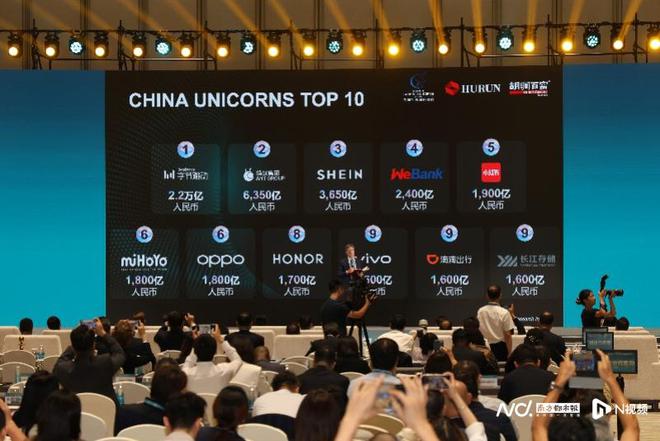
Group 1 - The core viewpoint of the article highlights the release of the "2025 Global Unicorn List," showcasing the growth and significance of unicorn companies globally, particularly in Guangzhou and the Guangdong-Hong Kong-Macau Greater Bay Area [1][3][4] - Guangzhou ranks 11th globally with 24 unicorns, maintaining the same number as last year, while the Greater Bay Area has 72 unicorns, accounting for 21% of the national total [1][3] - The report indicates that the total number of global unicorns has reached a record 1,523, marking a 5% increase from the previous year, with the United States leading with 758 unicorns, followed by China with 343 [4] Group 2 - Notable changes in Guangzhou's unicorn landscape include the successful IPOs of WeRide and Pony.ai, which are no longer on the list, with WeRide valued at 16 billion yuan and Pony.ai at 34 billion yuan [3] - Two new unicorns have emerged in Guangzhou: Xinyue Energy, a manufacturer of automotive-grade silicon carbide chips, and Quwan, an innovative tech company involved in social networking, AI, and esports [3] - The article emphasizes that the presence of unicorns in a region reflects its innovation capacity and entrepreneurial ecosystem, with Guangzhou's unicorns being comparable to the total number in South Korea and Japan combined [3]

内卷的解药不是涨价
创业邦· 2025-06-26 03:26
Core Viewpoint - The article discusses the evolution of business competition from price-cutting strategies to concerns about "low-price internal competition," highlighting the negative impact of relentless price reductions on quality, profitability, and employee wages [3][4][5]. Group 1: Price Dynamics and Market Structure - The article argues that the decline in prices is often a result of increased market scale and fragmented market structures, where larger production volumes lead to lower costs [15][16]. - It cites the example of air purifiers, where the average price dropped by 34% while production increased by 53% from 2016 to the present, indicating that market expansion drives price reductions [17]. - The competitive landscape in the air conditioning market has shifted from chaotic price wars to a stable oligopoly, with major players like Midea establishing dominance [25][22]. Group 2: Value Creation and Consumer Behavior - The article emphasizes that true consumption upgrades occur when previously unaffordable products become accessible to a broader audience, rather than merely shifting from one premium product to another [36][35]. - It highlights that the real challenge lies in creating new value beyond raw materials and production processes, which is essential for sustainable economic growth [40][41]. - The success of brands like Nvidia and Prada is attributed to their ability to create significant added value through design, innovation, and branding, rather than relying solely on manufacturing efficiencies [44][51]. Group 3: Labor and Productivity - The article posits that escaping low-price competition requires improving labor productivity rather than eliminating low-cost goods [54]. - Historical examples, such as Ford's introduction of assembly lines, illustrate how technological advancements can drastically reduce production time and costs, benefiting both consumers and producers [55][56]. - The narrative suggests that societal progress is linked to recognizing and rewarding individual skills and knowledge, which can lead to higher market valuations for products and services [61][67].

【环球财经】纽约股市三大股指25日涨跌不一 英伟达、微软股价盘中创历史新高
Xin Hua Cai Jing· 2025-06-25 23:00
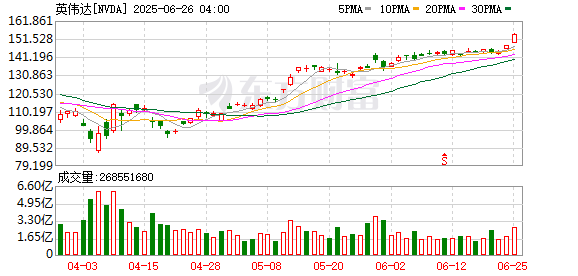
Market Performance - On June 25, the New York stock market showed mixed results with the Dow Jones Industrial Average down by 106.59 points, closing at 42,982.43 points, a decline of 0.25% [2] - The S&P 500 index fell slightly by 0.02 points to 6,092.16 points, nearly unchanged, while the Nasdaq Composite Index rose by 61.02 points, closing at 19,973.55 points, an increase of 0.31% [2] - Among the S&P 500 sectors, eight out of eleven sectors declined, with the real estate and consumer staples sectors leading the losses at 2.46% and 1.39% respectively, while the technology and communication services sectors led the gains at 1.18% and 0.51% respectively [2] Economic Indicators - The U.S. Department of Commerce reported that new home sales in May were at an annual rate of 623,000, significantly below the market expectation of 694,000, with April's data revised down from 743,000 to 722,000 [4] Company Highlights - Nvidia's stock surged by 4.33%, becoming the largest gainer of the day, following its breakthrough of historical highs, positively impacting related tech companies like Alphabet and AMD, which rose by 2.3% and 3.6% respectively [3] - Bumble's stock jumped nearly 20% after announcing a plan to cut approximately 30% of its workforce, aiming to save $40 million annually to invest in new products and technology development [4] - Robinhood's stock increased by over 3%, reaching a new historical high of $85.55, with a year-to-date gain of 127% [4] - Microsoft and Netflix also reached new historical highs, contributing to the overall rise in the technology sector [4]

一家公司,放弃AI芯片业务
半导体芯闻· 2025-06-24 10:03
Core Viewpoint - The company Canaan Inc. (CAN) is gradually abandoning its artificial intelligence (AI) semiconductor business to refocus on its core cryptocurrency operations, particularly Bitcoin mining [1][2]. Group 1: Company Strategy - Canaan's AI division is projected to generate only $900,000 in revenue for 2024, compared to total revenue of $269.3 million, indicating a misalignment with the company's long-term strategy [1]. - The CEO, Zhang Nengeng, emphasized that reinforcing the company's core strengths in cryptocurrency infrastructure and Bitcoin mining is the most strategically significant path forward [1]. - The decision to exit the AI sector follows years of attempts to enter the edge computing chip market, reflecting a shift in focus back to Bitcoin mining amid rising interest in "Made in America" Bitcoin [2]. Group 2: Financial Performance - Canaan's stock price experienced a slight decline, with a year-to-date drop of 71%, while the overall digital asset and stock markets have shown an upward trend [2]. - The Bitcoin mining ETF WGMI has also seen a decline of approximately 20% [2]. Group 3: AI Chip Development - Canaan launched its first AI chip, K210, in 2018, targeting the IoT market with capabilities in machine vision and auditory processing [3]. - The K210 chip features a RISC-V CPU and supports various applications, including real-time object detection and recognition [4]. - Canaan has developed four generations of AI chips, with the K510 being a high-precision AI edge inference chip and the K230 designed for low-power, high-performance applications in smart products [6].

鼎捷数智(300378):AI软基建助力数字产业融合 加速企业级AGENT创变
Xin Lang Cai Jing· 2025-06-24 04:41
Group 1 - The core viewpoint of the articles highlights the successful hosting of the Dingjie Smart 2025 Digital Future Summit, which gathered nearly 1,000 participants to discuss the acceleration of AI in driving business scenarios and productivity innovation [1] - The company is leveraging its multi-modal large model and Agent development platform to empower enterprises and ISV partners to quickly build AI Agent applications, integrating capabilities from various general large models [2] - Dingjie Smart has established a collaborative initiative with Wuhan City and Huazhong University of Science and Technology to promote the integration of the digital economy industry [2] Group 2 - The chip manufacturing industry is seeing strengthened advantages, with successful implementations in automotive parts and other sectors, showcasing replicable benchmark cases across various industries [3] - Dingjie Smart has deepened cooperation with semiconductor packaging company Zhongke Zhixin, implementing a series of digital solutions, and has also introduced its PLM system to IC design company Jichuang Beifang [3] - The company serves over 600 industry clients, with 37% being top IC design firms, indicating a growing accumulation of client and solution advantages in the semiconductor sector [3] Group 3 - Dingjie Smart is actively expanding its presence in the Chinese market while also extending into broader overseas markets, focusing on integrated solutions for enterprises [4] - The company has achieved over 90% localization in its Southeast Asia teams, enhancing its local talent pool in Thailand, Vietnam, and Malaysia [4] - Revenue projections for 2025-2027 are estimated at 2.669 billion, 3.067 billion, and 3.465 billion yuan, with corresponding net profit forecasts of 202 million, 269 million, and 336 million yuan, reflecting significant growth rates [4]

Wolfspeed官宣:破产重组
半导体行业观察· 2025-06-23 02:08
Core Viewpoint - Wolfspeed is restructuring under Chapter 11 bankruptcy to consolidate its debt, aiming to eliminate approximately 70% of its total debt of $6.7 billion, which equates to about $4.6 billion [2][6]. Group 1: Restructuring Details - The company has reached a restructuring support agreement (RSA) with major creditors, including those holding over 97% of its secured notes and over 67% of its convertible notes [6][8]. - The RSA is expected to reduce annual cash interest expenses by about 60% [6]. - If approved, the restructuring plan will allow Wolfspeed to emerge from bankruptcy by the end of September and prepare for long-term growth [5][9]. Group 2: Financial Challenges - Wolfspeed is facing challenges due to weak semiconductor demand and the transition from outdated facilities [3]. - The uncertainty surrounding the CHIPS and Science Act, which was expected to provide approximately $1.75 billion in federal funding and tax credits, adds to the company's difficulties [3]. Group 3: Market Position and Future Outlook - The CEO, Robert Feurle, emphasized Wolfspeed's leadership in silicon carbide technology and the importance of a stronger financial foundation for future growth [7]. - The company plans to continue operations and provide leading silicon carbide materials and devices during the restructuring process [9].

一颗功败垂成的RISC-V芯片
半导体行业观察· 2025-06-22 03:23
Core Viewpoint - The article discusses the ambitious development of the SG2380, a RISC-V SoC designed by SOPHGO, aiming to create a desktop-level chip that integrates general computing, AI acceleration, and desktop I/O capabilities, marking a significant step for RISC-V in the desktop market [3][4][6]. Group 1: Introduction to SG2380 - The SG2380 is positioned as the first desktop-level RISC-V SoC, featuring a 64-core architecture and advanced specifications aimed at running large models and performing local AI inference [3][4]. - SOPHGO, previously known for AI inference chips, has transitioned to developing the SG2380, which is designed to be a commercially viable product rather than just a development board [4][5]. Group 2: Technical Architecture - The SG2380 employs a "sandwich architecture" combining SiFive's P670 cores, X280 vector cores, and SOPHON TPU for AI acceleration, aiming for a balanced performance across various computing tasks [7][10]. - The architecture includes 16 cores with a maximum frequency of 2.5GHz, supporting advanced vector instructions and high memory bandwidth, which is crucial for desktop applications [10][11]. Group 3: I/O and Peripheral Support - The SG2380 features a PCIe Gen4 ×16 interface, allowing for high bandwidth connections to GPUs and other peripherals, which is a significant advantage over competitors [16][17]. - It supports a wide range of I/O options, including LPDDR5 memory, multiple USB ports, and various display outputs, making it suitable for a comprehensive desktop ecosystem [18][19]. Group 4: Community and Market Response - The launch of the SG2380 generated significant interest in the RISC-V community, with a partner company, Milk-V, quickly moving to develop a compatible motherboard, indicating strong market demand [21][22]. - The pre-sale of the Milk-V Oasis motherboard was met with enthusiasm, selling thousands of coupons based solely on the SG2380's specifications, reflecting a belief in the potential of RISC-V for desktop applications [23][24]. Group 5: Challenges and Setbacks - Despite the initial excitement, the project faced numerous challenges, including complex scheduling issues and the need for robust software support, which could hinder its successful implementation [27][29]. - The SG2380's tape-out was delayed multiple times due to supply chain issues and technical challenges, leading to growing skepticism within the community [33][34]. Group 6: Regulatory Impact - The project faced a significant setback when SOPHGO was added to the U.S. Entity List, which prohibited access to essential technologies and services, effectively halting the SG2380's development [41][43]. - The announcement of the entity listing led to the cancellation of the SG2380 project and the refund of pre-sale deposits, marking a disappointing end to the ambitious initiative [45][46]. Group 7: Conclusion and Implications - The SG2380's story highlights the challenges faced by domestic RISC-V projects in navigating technical, market, and geopolitical landscapes, emphasizing the need for a supportive ecosystem for successful chip development [66][70]. - The project serves as a reminder that achieving a viable product in the semiconductor industry requires not only innovative design but also the ability to overcome external pressures and logistical hurdles [69][70].
中方警告全球:不允许配合!美媒直言:中国已到超越的“分水岭”
Sou Hu Cai Jing· 2025-06-21 19:16
Group 1 - The article highlights the increasing urgency in the U.S. as it perceives China is on the verge of surpassing it, marking a significant turning point in global dynamics under Trump's administration [3][10][31] - The U.S. is concerned about China's advancements in emerging technologies, particularly in areas like artificial intelligence and electric vehicles, where companies like BYD are outperforming Tesla [4][5] - The article argues that Trump's short-sighted policies, particularly the tariff wars, have weakened U.S. innovation and competitiveness, leading to a decline in its global market position [5][27] Group 2 - China is taking a strong stance against U.S. attempts to restrict its advanced technology, warning that any country cooperating with the U.S. will face consequences [12][14] - The Chinese government has enacted laws, such as the Anti-Foreign Sanctions Law, to counteract U.S. sanctions and protect its interests [16] - The article suggests that the U.S. is increasingly resorting to aggressive policies out of fear, as it can no longer rely on its previous advantages in the global market [20][23] Group 3 - The article critiques the notion that Trump's policies are solely responsible for America's decline, arguing that the U.S. would still struggle against China even without these tariffs due to China's growing technological and industrial capabilities [25][30] - It posits that the trend of China's rise and America's decline is inevitable, regardless of who is in power in the U.S. [28][31]

HBM不敌SK海力士,三星押注1c DRAM
半导体芯闻· 2025-06-20 10:02
Group 1 - Samsung aims to reverse the downturn in the HBM4 era by making significant progress in its 1c DRAM sector, achieving a yield rate of 50% to 70% in its sixth-generation 10nm DRAM wafers, up from less than 30% last year [1] - Samsung plans to increase the production of 1c DRAM at its Hwaseong and Pyeongtaek factories, with investments expected to begin by the end of the year [1] - The progress in 1c DRAM is seen as a precursor to Samsung's mass production plans for HBM4, which are set to start later this year [1] Group 2 - Samsung has redesigned its chips, accepting a delay of over a year to enhance performance, with the new DRAM to be produced at the Pyeongtaek Line 4 for mobile and server applications [3] - The production facilities related to HBM4 for the sixth-generation 10nm DRAM are located at Pyeongtaek Line 3 [3] - Samsung may reconsider its old strategy of leveraging economies of scale to cut costs and instead focus on performance in the HBM4 era [3] Group 3 - SK Hynix is taking a more cautious approach to 1c DRAM investments, planning to expand production only after the mass production of HBM4E [5] - SK Hynix completed the development of 1c DRAM by August 2024, achieving impressive test yields averaging over 80%, with a peak of 90% [6] - TrendForce predicts that HBM total shipments will exceed 30 billion gigabits by 2026, with HBM4 expected to become the mainstream solution by the second half of 2026 [6]